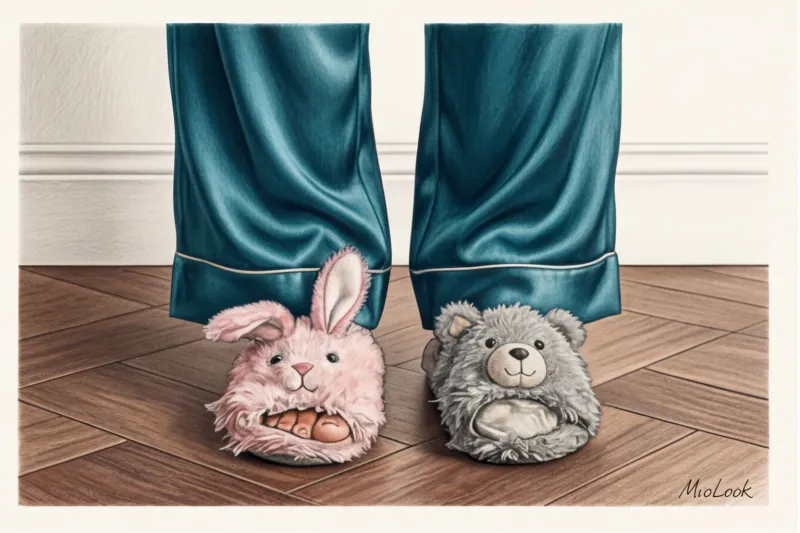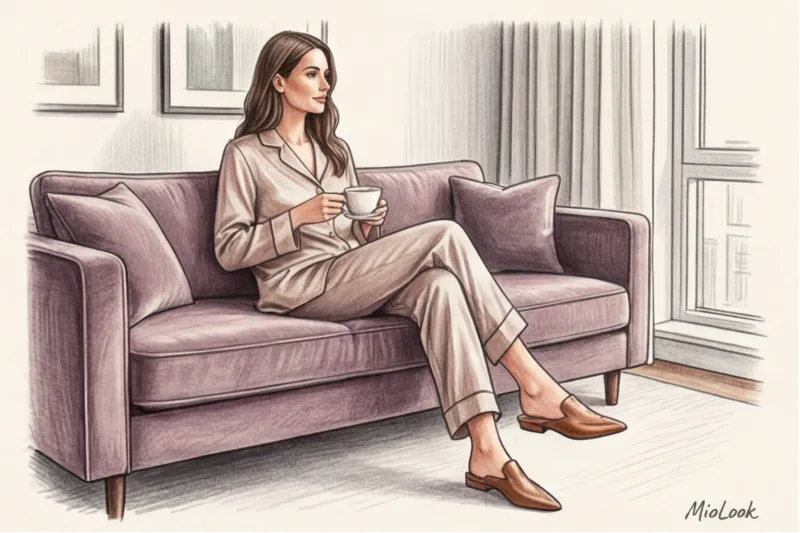
Have you ever noticed how most women reflexively shove their slippers under the banquette in the hallway seconds before guests arrive? We can spend hours poring over mood boards, choosing the perfect pumps for a corporate event or ankle boots for a date. But at home, in our own private space, where we spend half our lives, we continue to wear the worn-out plush things we bought on sale at the nearest supermarket.
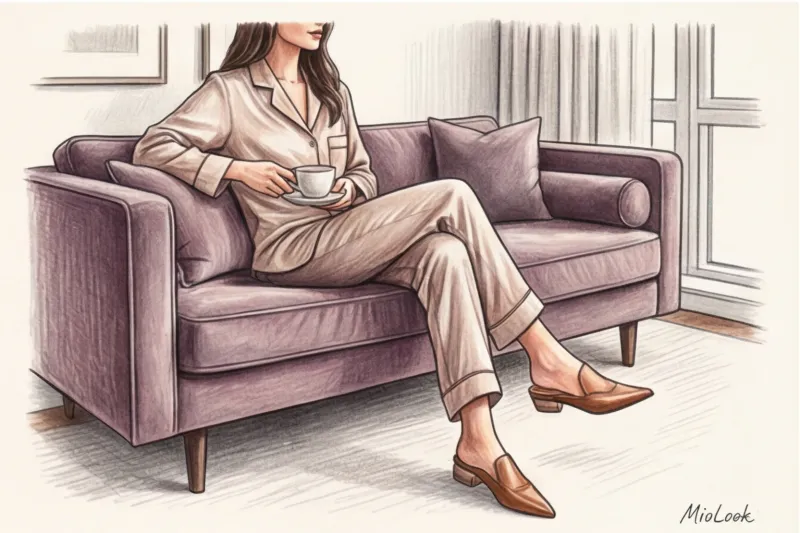
The average woman takes 3,000 to 4,000 steps a day, indoors only. And for this invisible marathon beautiful house shoes — not a whim, not an excess, but a basic need of the body and psyche. I wrote in more detail about the architecture of comfortable images in our a complete guide to home wardrobe and creating a stylish capsule wardrobe , but today we're talking about the foundation. Literally.
From Cinderella Syndrome to Queen: Why House Shoes Change Everything
Over 12 years of working as a personal stylist and analyzing wardrobes in Paris, Milan, and Moscow, I've learned one immutable rule: loungewear is almost always a "blind spot." Ninety percent of my clients feel physically awkward when I ask them to show me what they wear around the house. The paradox is clear: we're used to dressing for strangers, but we desperately skimp on the person we spend the most time with—ourselves.
One of my clients, Anna, a remote IT recruiter, complained of constant burnout, apathy, and an inability to focus on tasks. My first piece of advice had nothing to do with time management. It was stylistically radical: ditch the ever-present fleece pajamas, throw away the worn-out Uggs, and put on a flowing viscose suit paired with stiff leather mules. The result? Productivity skyrocketed within the first week.
"Structured shoes with a clear shape send a clear signal to our brain: we're focused, we're in control. Soft, shapeless slippers literally whisper: relax, time for the couch."
Elegant house slippers act as a psychological switch, switching you from a domestic routine to a state of confidence.
The Myth of Barefoot Benefits: A Podiatrist and Stylist's View
Naturalists often argue with me, insisting that walking around the house barefoot or in soft socks is healthy and physiological. This assertion would be absolutely true if the floors in our apartments were covered with sea sand, damp earth, or forest grass.
Evolution didn't prepare the biomechanics of the human foot for the impact of perfectly smooth, impenetrably hard porcelain stoneware and parquet flooring. As experts from the American Podiatric Medical Association (APMA) noted in their 2023 reports, regularly walking barefoot on hard artificial surfaces is a sure path to arch flattening and microtrauma to the fascia (the same plantar fasciitis that causes burning heel pain in the morning).
Your perfect look starts here
Join thousands of users who look flawless every day with MioLook.
Get access — €0.99 onceFlat plush slippers are little better. They lack arch support completely, causing the heel to "sway" from side to side, and the ligaments in the foot to strain trying to keep the shoe on the foot. That's why house shoes for those walking 4,000 steps a day must have anatomical relief, a slight rise in the heel area, and a secure fit.
Beautiful House Slippers: 4 Statement Silhouettes
Historically, house slippers were a definitive marker of class. In 18th-century Europe, peasants walked around the house barefoot or in rough wooden clogs. But elegant mules with small heels, embroidered with silk, were the preserve of the French aristocracy, who spent their days in luxurious boudoirs. Today, according to a 2024 report by the WGSN trend bureau, the "elevated loungewear" segment is experiencing a historic boom. We no longer want to divide life into "rough draft" and "finished draft."
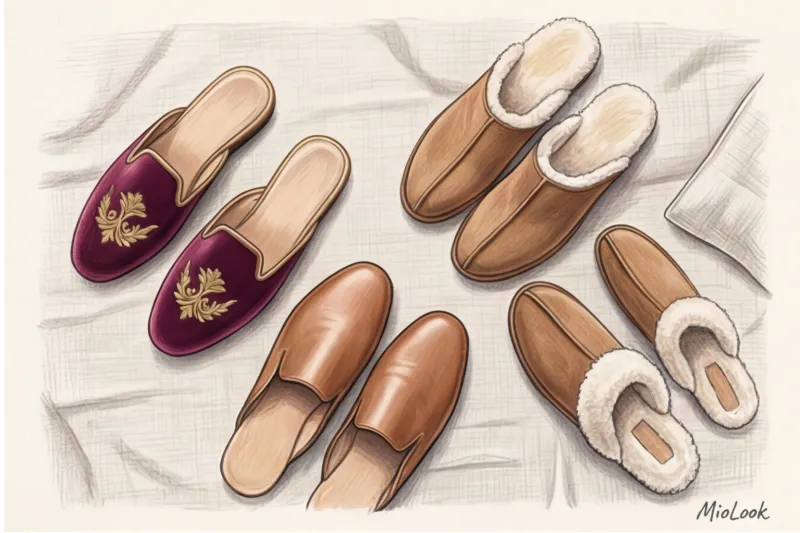
Elegant mules and clogs
Mules have come a long way from the boudoirs of Marie Antoinette to minimalist modern apartments. The main advantage of this style is a small, stable heel (1-2 cm) or an elegant wedge. From a medical perspective, this height difference is ideal for relieving the Achilles tendon. Stylistically, leather or suede mules pair flawlessly with silk slips, Tencel palazzo shoes, and minimalist shirt dresses.
Moroccan Babouches: Bohemian Chic
Babouches are backless (or collapsible) shoes made of incredibly soft leather, originating from North Africa. Over the past few years, they've become a favorite at-home uniform for creatives, gallery owners, and fashion influencers. Their unique feature is that the soft leather literally molds to the shape of your foot over time. I recommend pairing them with linen kimonos, oversized chunky cashmere cardigans, and wide-leg cotton trousers.
Slippers and velvet loafers
If you're aiming for an old-money aesthetic in the comfort of your own living room, opt for slippers. A rigid frame, closed toe, and deep shades of velvet or fine suede. These are the choice for those who need maximum polish, for example, for Zoom calls, with a tailored shirt on top and comfortable trousers on the bottom. For the ultimate in style, have your initials embroidered on the toe. This transforms ordinary shoes into a family heirloom.
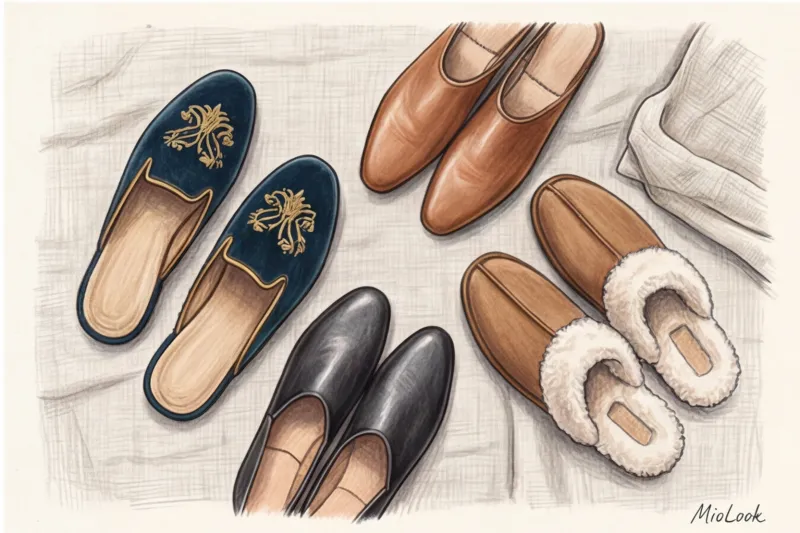
Orthopedic sandals (Birkenstock style)
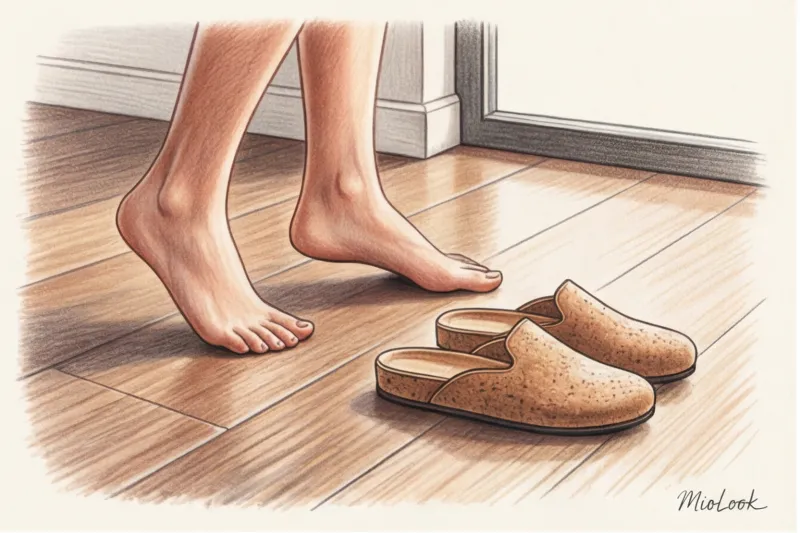
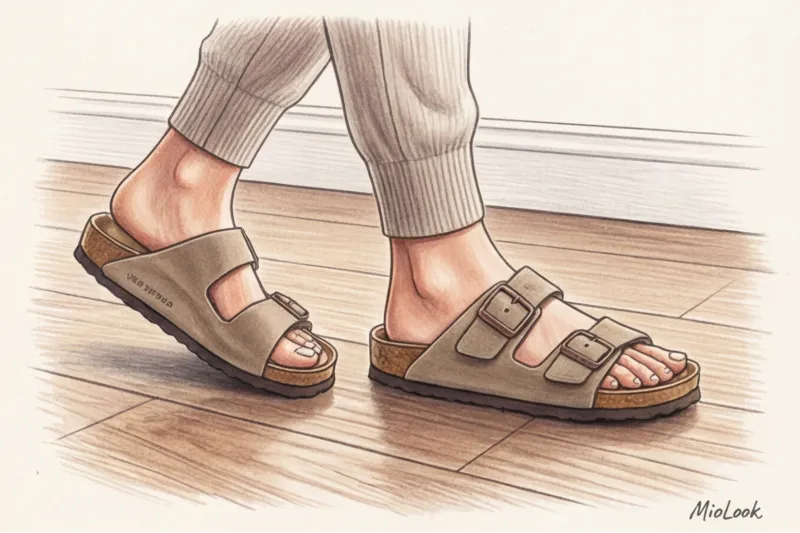
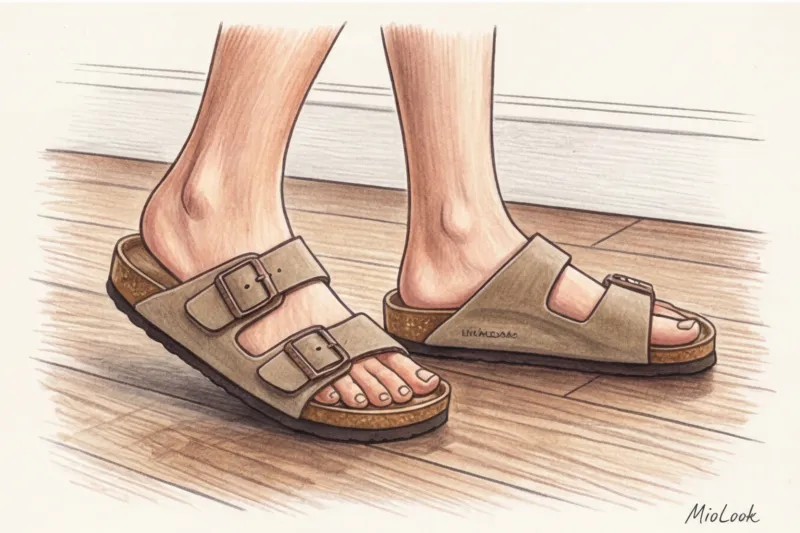
An anatomical cork insole with a deep heel cup is a lifesaver for tired backs. Yes, they were once called "ugly shoes," but today they're a total ugly chic trend. If your floors are cold, the secret to styling these sandals correctly lies in pairing them with thick, textured ribbed cashmere socks. They look Scandinavian, cozy, and expensive.
Access to MioLook for €0.99 — one-time payment
A smart AI stylist will choose the perfect look for you.
Get access — €0.99 onceWardrobe Math: Why $150 Mules Are a Better Value Than Stilettos
When shopping with clients, I often encounter a psychological barrier: "Spend $150 on slippers? That's crazy! I'd rather buy new shoes for going out!" Let's take a cold, hard look and apply the cost-per-wear formula.
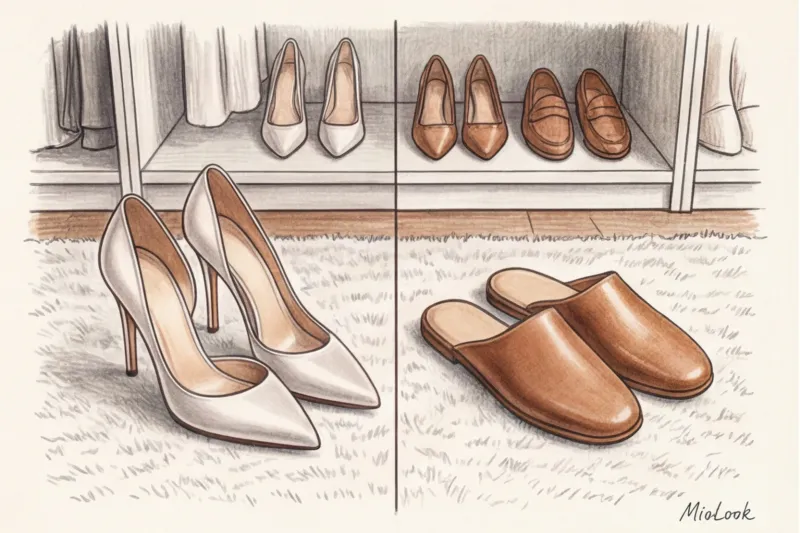
Imagine buying a luxurious pair of evening pumps for $150. You'll wear them to a corporate New Year's party, a friend's birthday party, and maybe even to the theater. Three times a year. The cost per wear is $50. Now, consider a pair of high-quality leather house loafers for the same $150. You'll wear them at least 300 nights a year. The cost per wear is only 0.50 cents. Moreover, high-quality leather house shoes, unlike mass-market polyester slippers that lose their shape after a month, will last you for years, aging beautifully and acquiring a vintage charm.
Styling: How to Incorporate Shoes into Your Home Capsule
Creating a harmonious home look follows the same principles as street styling. The key lies in the rule of contrast. If you're wearing voluminous, fluffy clothing (for example, a thick oversized sweater and wide-leg knit pants), your shoes should be sleek and understated—for example, leather slippers. Conversely, textured shearling clogs are a perfect complement to a flowing, form-fitting silk suit.
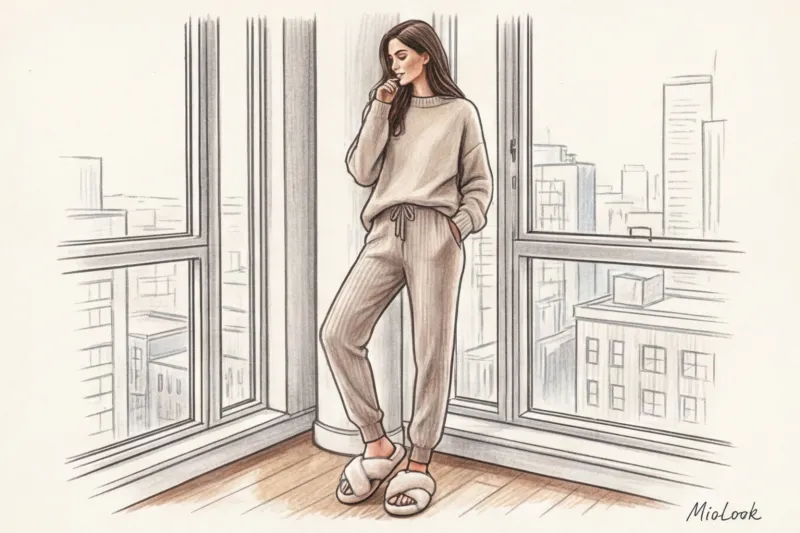
The color palette plays a crucial role. Avoid acidic, loud colors and childish prints—they'll dull the look. Choose sophisticated, natural shades: deep burgundy, taupe, rich camel, emerald, or classic black. By the way, if you're unsure how to pair the shades of your loungewear with your new pair of shoes, upload your items to MioLook smart wardrobe — algorithms will suggest optimal color combinations for every day.
Pre-purchase checklist: 5 signs of the perfect pair of home furnishings
Before you click "Pay" or go to the checkout, check your chosen pair using my professional stylist checklist:
- Clutch reliability: The sole should be non-slip. Check the material of the grips—thin rubber or elastomer will protect you from injury on slippery hardwood floors.
- Presence of instep support: A completely flat sole inside is a red flag. Look for a slight anatomical curve in the arch area.
- Natural lining: The outside of the shoes may be made of thick textile, but the inside (where they touch bare skin) should only be made of genuine leather, suede, sheepskin, or high-quality cotton. Synthetics will create a greenhouse effect within 15 minutes.
- Cape season: The closed toe retains heat on cool floors, while the open toe is ideal for hot summers or apartments with strong heating.
- Silence: A heavy wooden sole (like that of classic clogs) looks stylish, but the loud clacking sound on the laminate floor will disturb both you and your neighbors below.
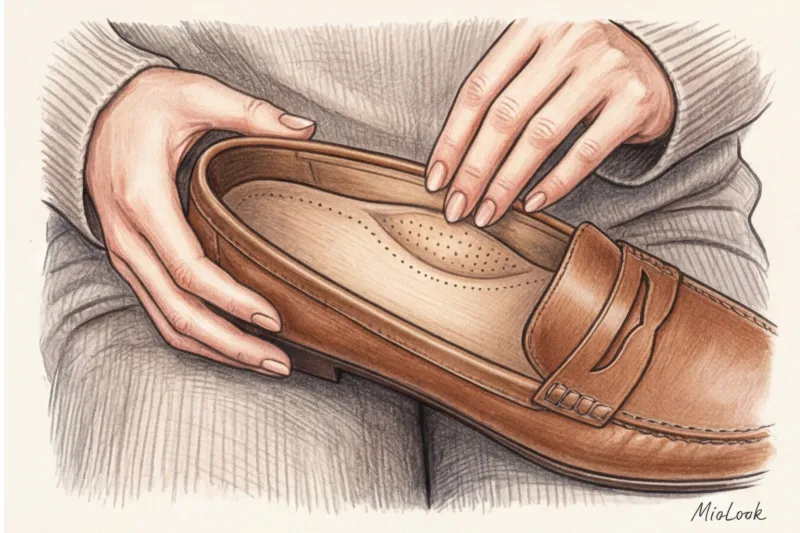
I must make an important disclaimer here: this checklist doesn't work If you've already been diagnosed with serious orthopedic problems (such as severe hallux valgus or diabetic foot). In such cases, even the most expensive designer mules won't replace shoes custom-made by a specialist.
Your home wardrobe is the most honest reflection of your self-image. When choosing home shoes, you're buying more than just a piece of leather or suede. You're buying a sense of status, comfort for a tired body, and, most importantly, respect for the person who looks back at you in the mirror every evening.