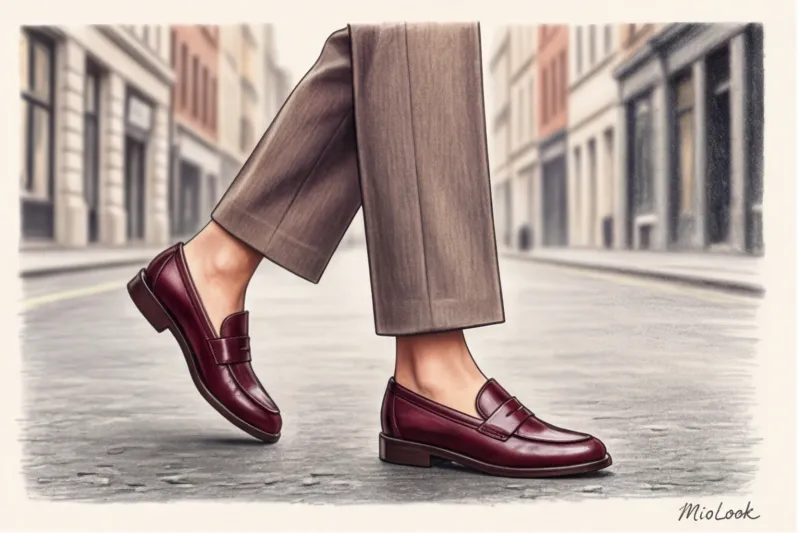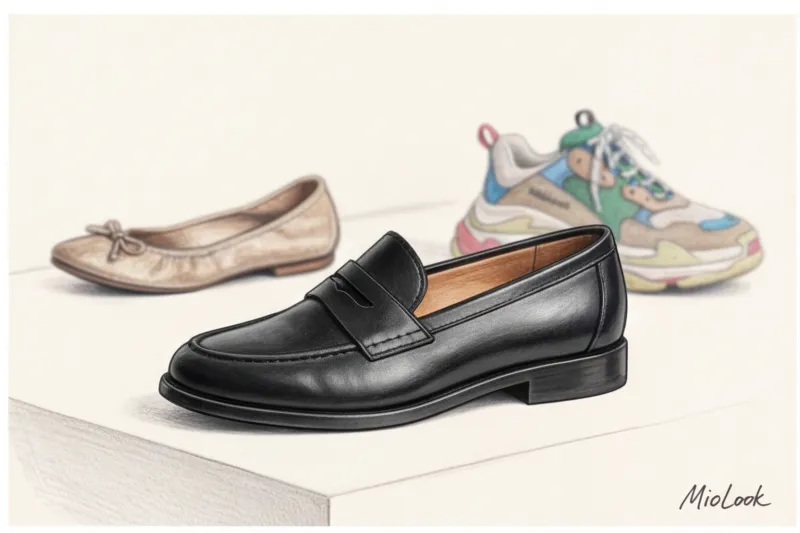
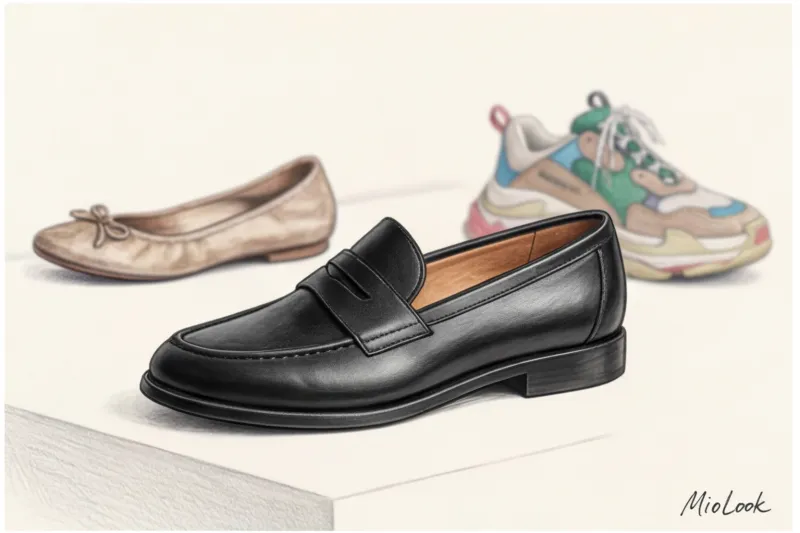
Last Friday, I conducted an experiment: I walked 10,000 steps on cobblestones and asphalt in ultra-fashionable soft, slipper-style loafers without a rigid frame. The next day, I repeated the same route, but this time in classic, structured, thick leather penny loafers. The result was predictable, but revealing: in the first case, my knees ached by evening, and the flattened shoes visually weighed down my legs. In the second case, I didn't even remember what I was wearing. If you ask me, as a digital stylist and minimalist, which pair to start a smart wardrobe with, I'll answer without a doubt: women's basic loafers — this is the best investment in your comfort.
I have already talked in more detail about the fundamental approach to shoes in our The Complete Guide: A Basic Shoe Wardrobe and Creating the Perfect Capsule But today we'll focus specifically on loafers, calculate their actual cost per outing, and figure out why the currently popular soft styles are a waste of money.
The Death of Ballet Flats and the Limit of Sneakers: Why Basic Women's Loafers Have Become a Wardrobe Foundation
We live in an era of hybrid schedules. You might be having coffee with a client in the morning, working from an open-plan office during the day, and heading to an exhibition in the evening. Despite the global love for athleisure, sneakers often fall flat in formal and semi-formal situations. They're too relaxed. Ballet flats with completely flat soles are the other extreme. They detract from the collected look and, worse, are harmful to our feet.
Let's turn to physiology. According to the American Podiatric Medical Association (APMA, 2023), wearing shoes with completely flat and thin soles (like classic ballet flats or sneakers) every day leads to Achilles tendon strain and the development of plantar fasciitis. Proper everyday shoes should have a micro-heel height of 1.5–2.5 cm and a moderately rigid sole to absorb the impact of walking on pavement.
"A structured loafer with a small stacked heel acts as a shock absorber. It's more natural than any flat shoe and looks appropriate where sneakers would violate the dress code." This is a rule I repeat to every client who complains of tired feet by the evening.
This is why loafers have become a bridge between orthopedic comfort and the demands of women's office shoes and etiquette.
Digital Wardrobe: Calculating Cost-Per-Wear
I love numbers. In style, there's nothing more sobering than the Cost-Per-Wear (CPW) metric. The formula is simple: divide the price of an item by the number of days you've worn it.
Statistics collected by app analysts MioLook A study conducted for 2023-2024 reveals astonishing data: basic loafers are worn an average of 112 times per season (spring-summer-fall). This makes them the footwear with the highest return on investment (ROI) in a woman's wardrobe.
Let's compare: you buy high-quality leather loafers for $90. You wear them 112 times. Your CPW is only $0.80 per outing. Meanwhile, you wear trendy kitten heels for the same $90 just six times per season. Their CPW is $15 per outing. That's a nearly 20-fold difference! A basic pair pays for itself in the first two months because it covers three styles at once: business, casual, and minimalist evening wear.
Your perfect look starts here
Join thousands of users who look flawless every day with MioLook.
Get access — €0.99 onceThe Anatomy of the Perfect Base: How to Choose Loafers That Will Last 5 Years
If loafers are a foundation, they need to be durable. I often see women buying suede loafers as their first and only pair. Suede is beautiful, but it capitulates with the first spring rain. The ideal base is smooth, chrome-tanned calfskin with a light matte finish. It's resistant to chemicals, easily restored with cream, and adapts to the shape of the foot.
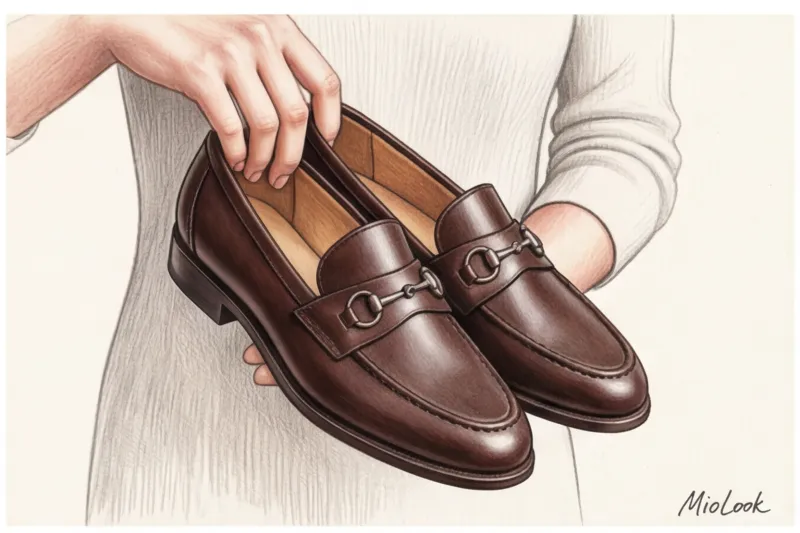
Here are three technical markers that distinguish shoes that are good for 5 years from shoes that are good for one season:
- Sole attachment method: Mass-market shoes almost always use cemented soles—it's cheap, but the soles can't be repaired. Look for Blake stitch or Goodyear welt construction. Yes, such a pair is initially more expensive, but the stitched sole can be replaced by a shoemaker, giving the shoe a second or third life.
- Toe shape: Avoid extremely pointed toes or exaggerated duck-foot squares. An almond-shaped toe or a very soft, slightly rounded square is a timeless geometric style.
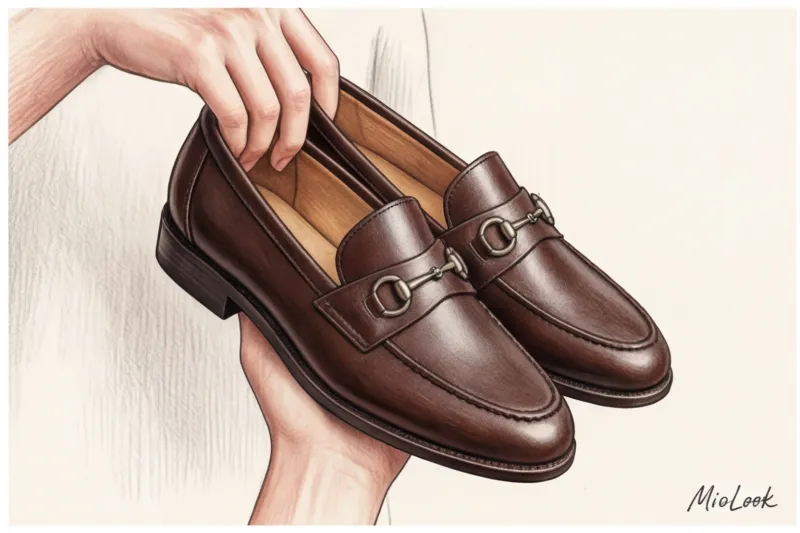
- Fittings: Minimalism wins. Accentuated gold Gucci-style chains strongly tie you to the color of the rest of your jewelry (if your loafers are gold and you're wearing silver, there's a visual clash). Choose classic penny loafers (with a slit in the leather strap) or styles with simple, slightly darkened hardware.
The biggest mistake when buying: the myth of "slipper-soft" loafers
I'm going to say something that many will disagree with, but it's proven in practice. Ultra-soft, frameless loafers are a terrible investment in a basic wardrobe. Brands sell them as "24/7 comfort," but in reality, they wrinkle, wear out, and visually "cheapen" any look.
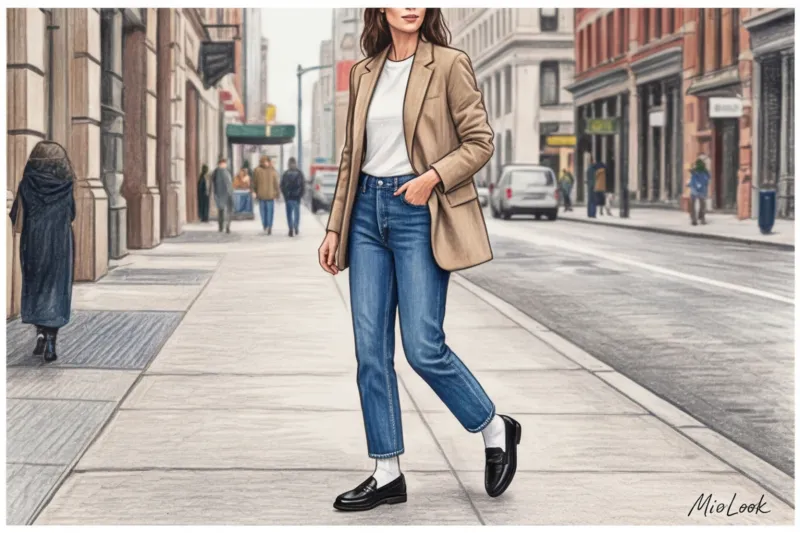
Basic women's loafers obliged Have a rigid heel counter and a reinforced toe. This "rigid heel" rule is what makes a relaxed look (like wide joggers and a bulky sweater) look stylish, smart casual, and not like pajamas. Shapeless shoes create a shuffling gait and flatten the feet. The exception? This advice does NOT work for people with severe foot deformities (such as hallux valgus, or "bunion"), who require adaptive softness in the upper for medical reasons. Everyone else needs a frame.
Universal Soldier: What to Wear with Basic Loafers in 2024-2025
The main superpower of structured loafers is their ability to balance oversize looks. Today, we wear voluminous menswear-inspired jackets, wide palazzo pants, and dropped-shoulder shirts. Add chunky sneakers to the mix, and the look becomes too bulky. Add stiletto heels, and the effect is disproportionate. Loafers with a medium-thick sole (about 1.5-2 cm) perfectly balance this bulk.
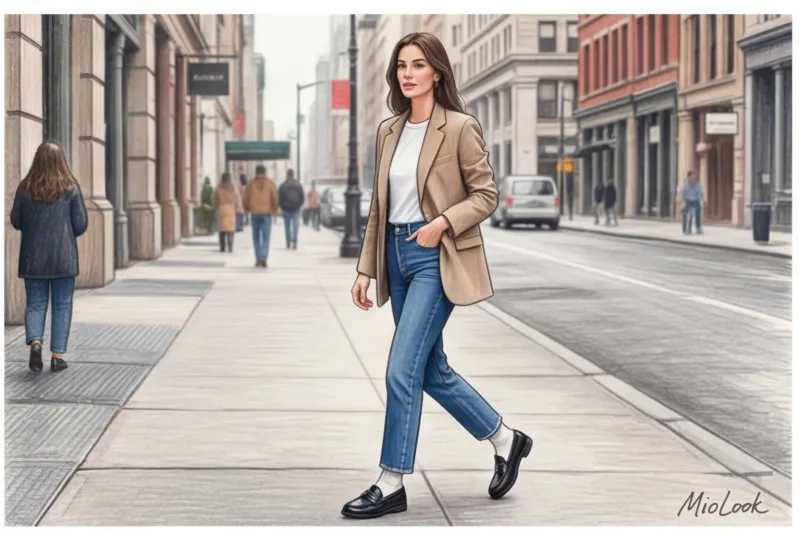
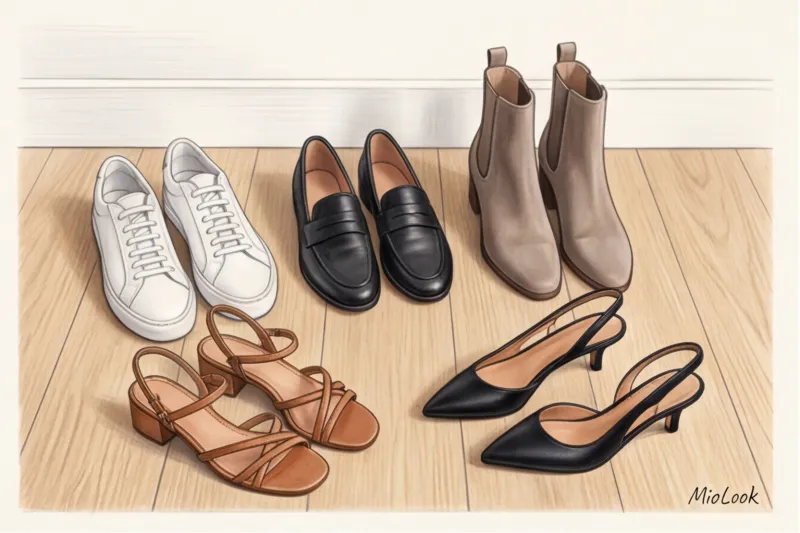
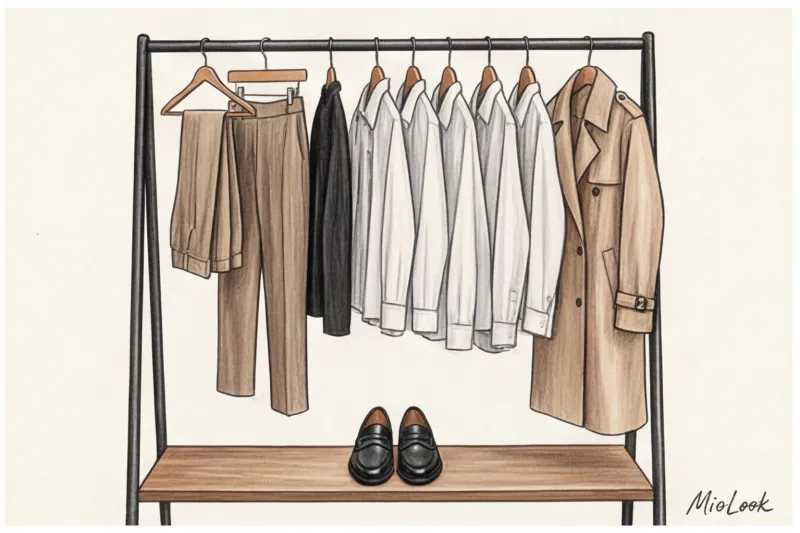
One of my clients, IT executive Anna, complained that she spent 20 minutes every morning choosing shoes to match her dress code. She had five pairs: pumps (too painful), sneakers (too easy), Chelsea boots (too hot in the office), and two pairs of weird slip-ons. We purged everything and bought a single pair of high-quality black Penny loafers. The result? Her morning routine was cut by 10 minutes. We put together a pair for her. smart-casual capsule collection A loose-fitting pantsuit, a basic white T-shirt, and loafers. This look works flawlessly in the office and on a business trip.
When pairing with denim, pay attention to the length. Straight or slightly tapered jeans should end exactly where your ankle begins (about 2-3 cm above the edge of your shoe). This reveals the narrowest part of your leg, making your silhouette appear lighter.
Socks and tights: rules for stylish warmth
A 2024 study by trend bureau WGSN confirms that socks and loafers have finally moved from the realm of street style experimentation to the realm of modern classics. But how can you avoid looking like a Japanese schoolgirl?
The secret is in the texture. White preppy socks shouldn't be thin nylon, but thick cotton (ribbed). They perfectly tone down the formality of black shoes. If you're pairing loafers with thick tights in the cold season, stick to the monochrome rule: black shoes + black opaque tights (60 denier and above) + a skirt. Avoid nude nylon with black loafers—it creates a horizontal line across the leg and looks outdated.
Access to MioLook for €0.99 — one-time payment
A smart AI stylist will choose the perfect look for you.
Get access — €0.99 oncePre-Purchase Checklist: Test Drive Your Capsule
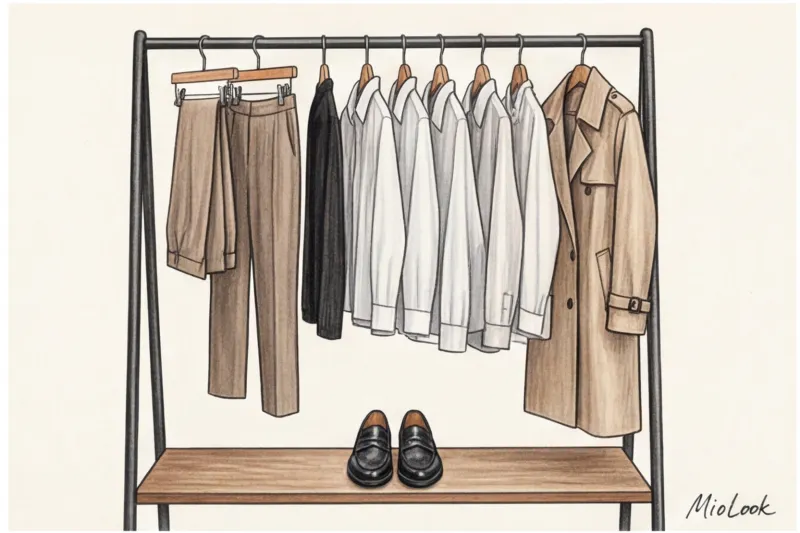
I never let clients go to the checkout unless we can immediately come up with at least three looks using the new item and what's already in their closet. It's the golden "3 Look Rule." To make loafers truly a staple, test them out right in the store:
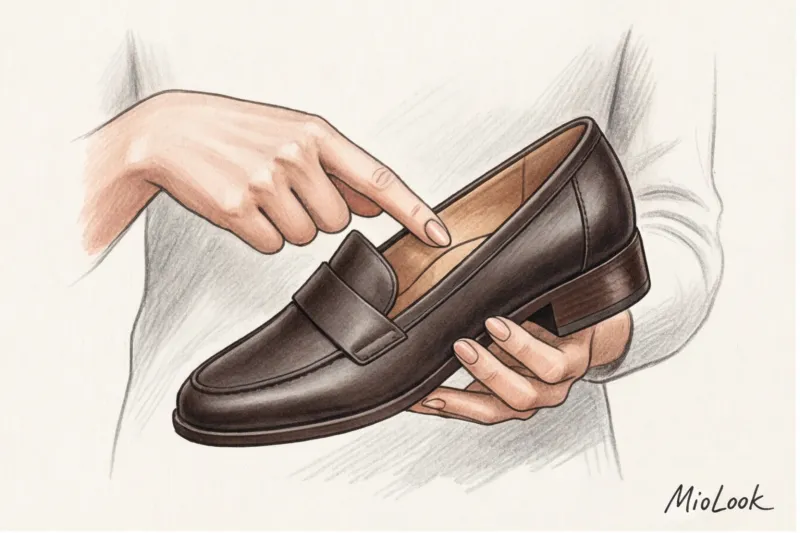
- Flexibility test: Grasp the shoe with both hands and bend the toe slightly toward the heel. A quality sole should bend in the front third (where the metatarsophalangeal joints are located), not straight down the middle. A firm midsole provides arch support.
- Fitting time: Always try on shoes after 4:00 PM. By evening, feet naturally swell and increase by half a size.
- Sock Rule: Bring the sock or socks you plan to wear with your shoes to the fitting room. The thickness of a cotton sock can take up a whole shoe last size.
Add the purchased pair to the MioLook app and use the look generator feature. The AI stylist will show you unobvious combinations with your favorites. business casual style items that you might not even have guessed about.
Technological care: to make your basic pair last forever
Buying good shoes is only 20% of success. The other 80% is how you take care of them. A client once contacted me asking for a replacement for her favorite Massimo Dutti loafers, which had "died" after just one season. After looking at them, I realized they had simply dried out and become misshapen due to improper storage. We saved them in three days with a good beeswax-based cream and cedar shoe trees.
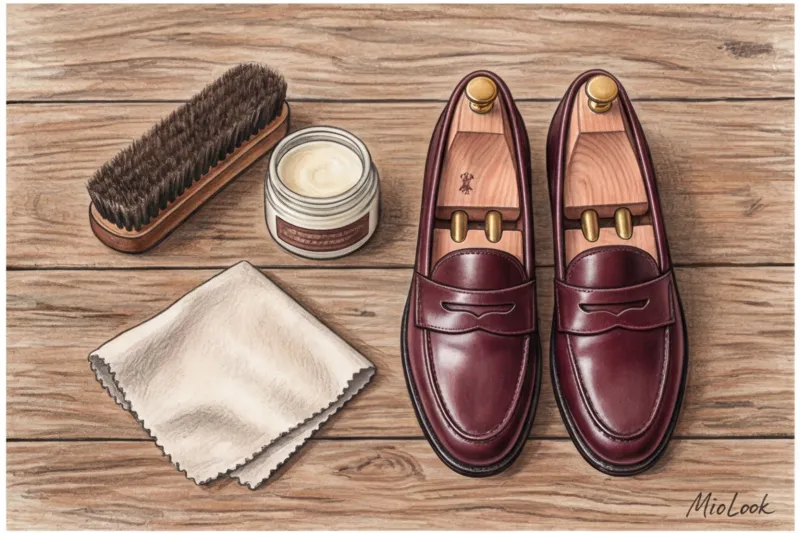
If you want your basic women's loafers to last for years, incorporate three simple rules into your routine:
- Cedar tree shapers: This isn't a luxury, but a necessity. Cedar absorbs excess moisture (feet produce up to 20 ml of sweat per day) and smooths out creases in the leather while the shoe "rests." Plastic shoe trees don't work—they simply stretch the leather, trapping moisture inside.
- 24-hour rule: Leather shoes need exactly 24 hours to dry completely at room temperature. Never dry loafers near a radiator—the leather will crack irreparably.
- Sole prevention: If you bought loafers with leather soles, have them thinly rubber-soled by a professional immediately after wearing them for the first time (the sole should be lightly scratched on the pavement to allow the adhesive to set). This will double the life of the shoe and prevent slipping on tile.
Integrating basic loafers into your wardrobe isn't a matter of following passing trends. It's a matter of creating a smart, functional base that works for you, not demanding constant attention. Start with one perfectly structured pair, add cedar shoe trees, and you'll notice how the morning "I have nothing to wear these with" problem disappears.