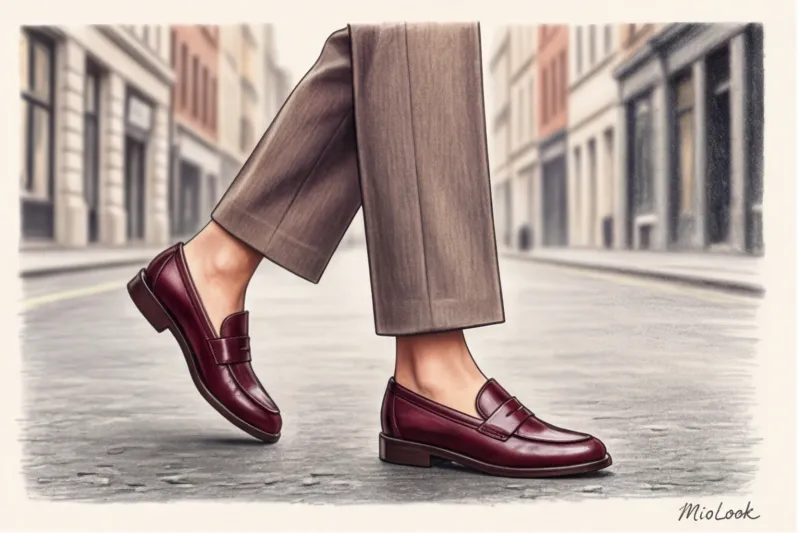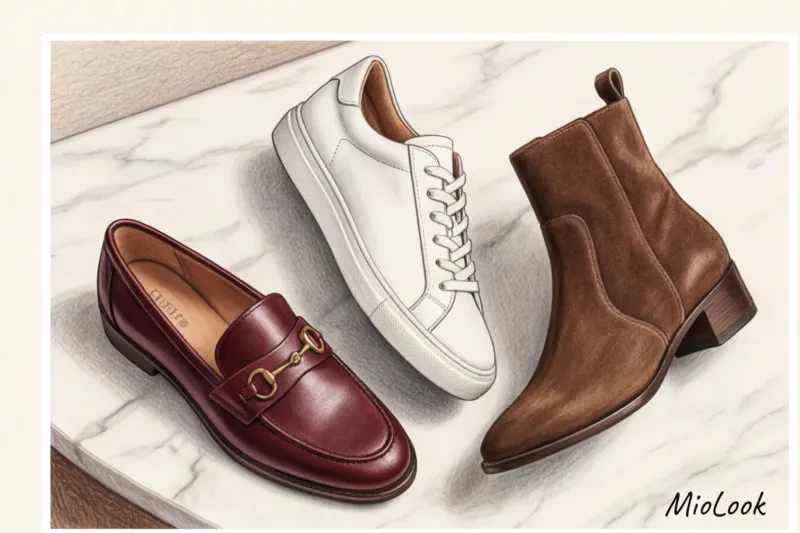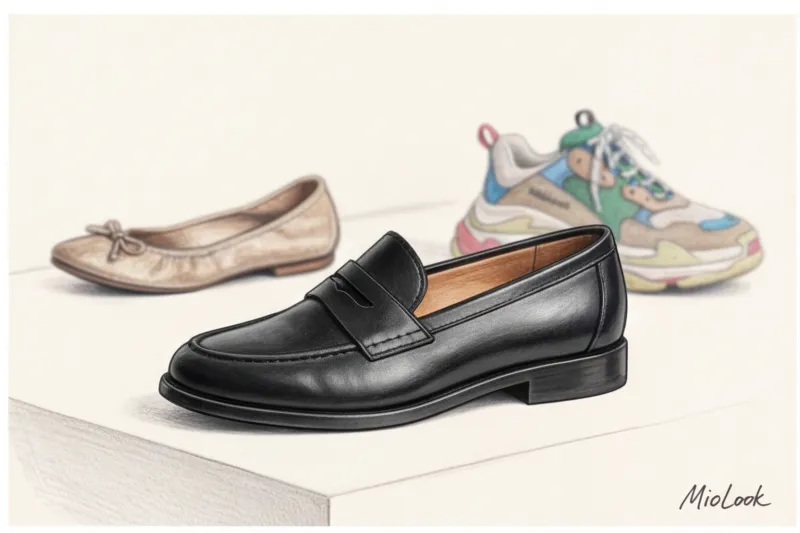
I remember vividly the moment when I became completely disillusioned with the concept of "one-season shoes." It was about seven years ago: I was standing in the middle of the street in an icy November rain, and the soles of my ultra-fashionable (and completely impractical) ankle boots were starting to peel off. That's when I started collecting statistics and analyzing which shoes truly deliver value for money. The answer was clear. If you ask me where to start with smart closet organization, I'll tell you: you need the right ones. Basic women's Chelsea boots No compromises.
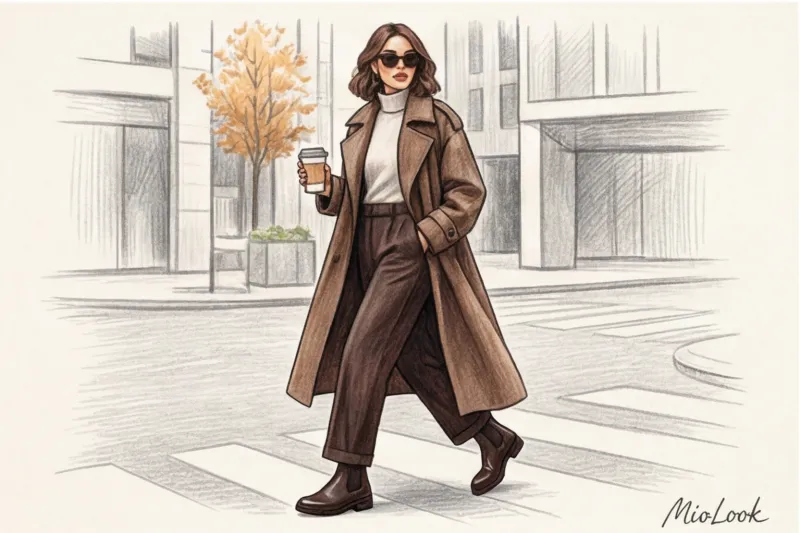
We talked about the systemic approach to footwear in more detail in our The complete guide to creating the perfect shoe capsule collection , but today we'll talk about a specific tool—shoes—that can replace half your shelf.
Why women's basic Chelsea boots have become a wardrobe staple.
Let's look at the numbers. We recently analyzed anonymized user statistics for the MioLook app. The results are impressive: during the fall and winter, Chelsea boots are the absolute leader in terms of frequency of use. On average, they are worn 4.2 days per week. No other sneaker or classic boot shows such consistent popularity.
I like to use the story of my client Anna as an example. Anna is a project manager at a large IT company. When we first sorted through her wardrobe, we counted 15 pairs of "going-out shoes," 12 of which were mercilessly rubbing her feet or weren't suited to her daily routine. We took a radical decision: we cleared out this chaos and assembled a capsule wardrobe of just four pairs. High-quality Chelsea boots became the foundation of her smart-casual wardrobe. Now she doesn't waste 15 minutes in the morning wondering "what to wear," and her lifestyle index (the ratio of real-life activities to appropriate clothing) has finally reached balance.
"The secret to a smart wardrobe is the Cost-Per-Wear metric. A pair of premium $200 Chelsea boots that you'll wear 500 times over five years will cost you 40 cents per outing. Cheap, trendy $50 boots that will fall apart after 20 wears are $2.50 per outing. A quality basic always saves money."
The Anatomy of a Perfect Couple: A Picky Stylist's Checklist
Not every boot with elastic on the sides is worthy of becoming your go-to. Technical design is everything. Thin soles freeze and quickly wear out on the pavement, and the giant "tractor" platform that was a hit a couple of years ago is already looking like an outdated micro-trend. Look for the happy medium: a dense sole 1.5–2 cm thick with moderate tread.
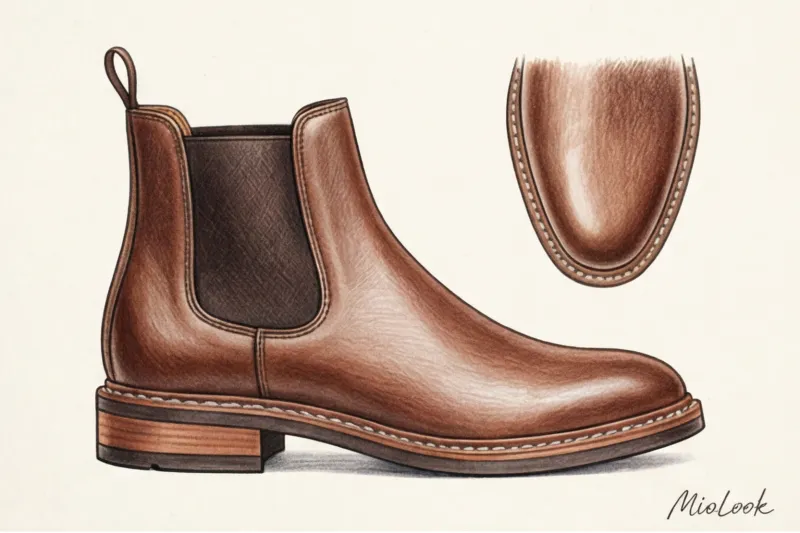
Pay attention to the sole attachment method. The ideal option is the Goodyear welt, where the upper, insole, and sole are stitched together using a special leather edging. Unlike traditional bonding, these boots are resistant to chemicals and puddles, and last for decades.
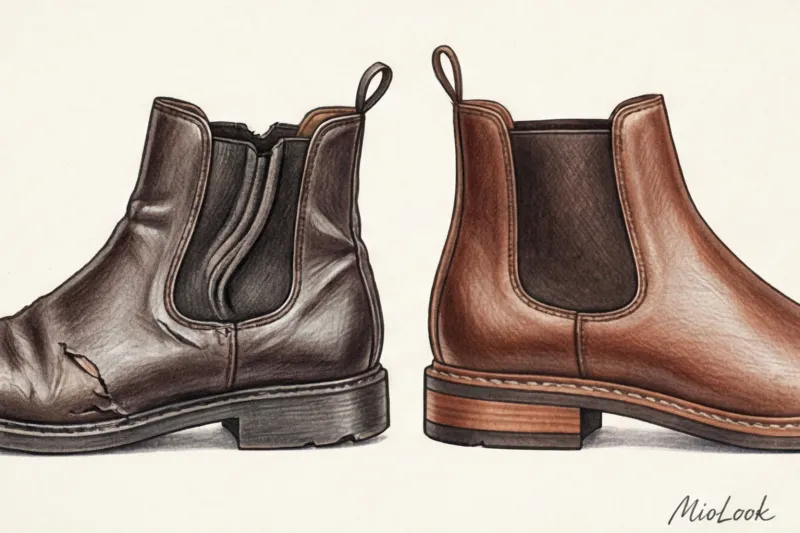
But Chelsea boots' main Achilles' heel is the quality of the elastic band. Last season, I conducted an experiment: I measured the degree of elastic degradation in 20 pairs, from budget to premium. On the cheaper models, the elastic bands would lose tension and become wavy after just a month of active wear, visually cheapening the entire look. A good elastic band should be so tight that you might need a shoehorn for the first few days.
And don't forget about orthotics. According to the 2023 guidelines of the American Podiatric Medical Association (APMA), completely flat soles are harmful to the spine. To comfortably walk 10,000 steps on city cobblestones, you need the correct heel drop (the difference in height from the heel to the toe)—it should be that same 1.5-2 cm.
Boot Shaft Height and Width: The Secret to Long Legs
There's a pernicious myth that a boot that's extremely narrow and ankle-hugging makes you look slimmer. In reality, it's quite the opposite. If the boot clings to your leg like a second skin, the calf appears thicker by contrast.
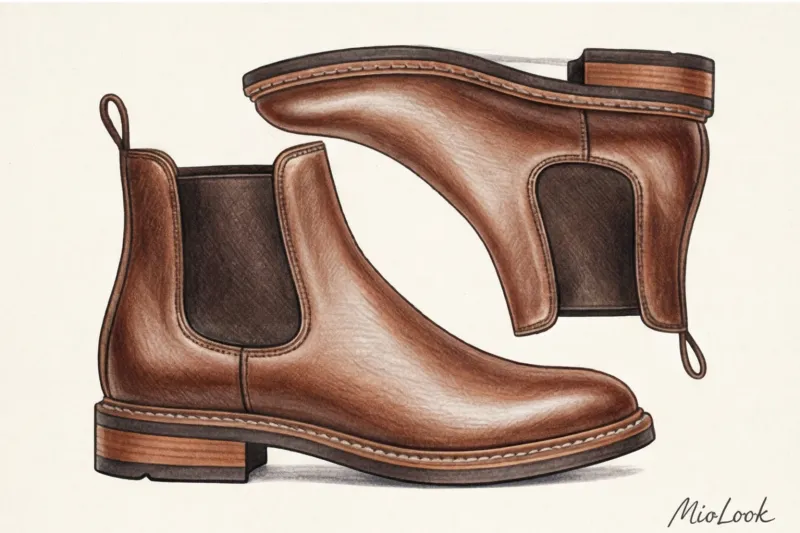
The "gap rule" applies: there should be 1-1.5 cm of air space between your foot (or tights) and the edge of the boot. This space creates the illusion of a fragile ankle. As for the height, the boot should end at the narrowest point of the leg, never reaching the beginning of the calf muscle, otherwise you'll visually "cut" your leg.
Cape Shape: How to Choose the Right One
- Almond-shaped cape: A timeless classic. It elongates the leg, looks neat, and goes with 90% of your wardrobe. The safest investment.
- Soft square: A modern staple with a nod to '90s aesthetics. A great choice for those who prefer architectural tailoring.
- Sharp Cape: It requires caution, but if you want maximum elegance for strict office capsules, this is your option.
Access to MioLook for €0.99 — one-time payment
A smart AI stylist will analyze your shoes and select the perfect looks for every day.
Get access — €0.99 onceBusting the myths: why black Chelsea boots aren't always the best base
Most style articles will tell you, "Buy black boots, they go with everything." I strongly disagree. In 12 years of working as a stylist, I've learned that black is one of the most tricky colors in footwear.
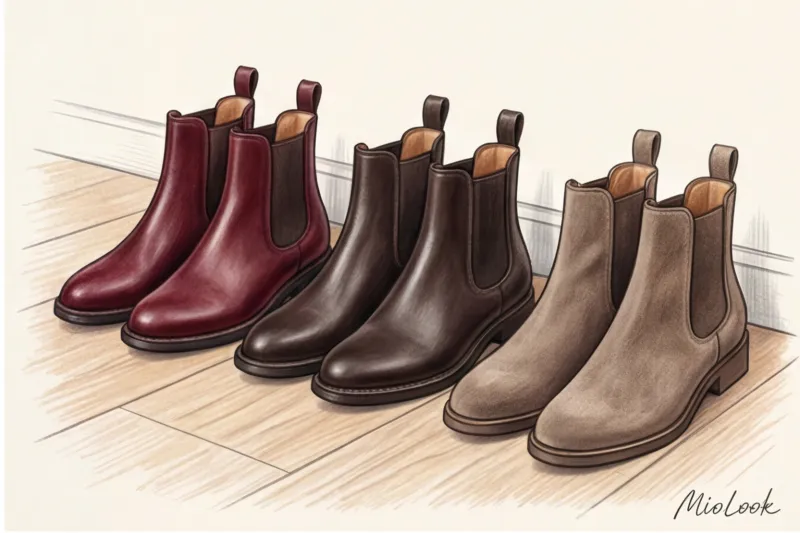
When you wear black Chelsea boots with light-colored jeans, beige trousers, or a skirt, you create a stark visual contrast. A sharp horizontal line is created that mercilessly cuts off your height. Black only works flawlessly when paired with black tights or trousers.
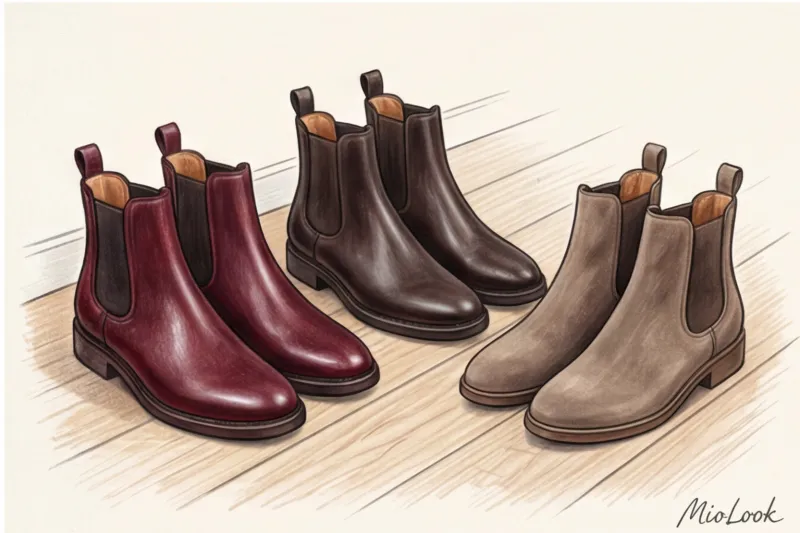
What's the alternative? My absolute favorite is Dark Chocolate. It's the "new black"—it looks significantly more expensive, doesn't create harsh edges, and pairs beautifully with both light denim and dark office fabrics. Another luxurious option is rich burgundy or oxblood. According to Pantone Color Institute and WGSN, these complex mahogany shades work as the perfect neutral base in a wardrobe, adding depth without being overwhelming.
Style Formulas: How to Integrate Chelsea Boots into Any Capsule
From theory to practice. Basic women's Chelsea boots are unique in that, when styled correctly, they blur the lines between casual and formal.
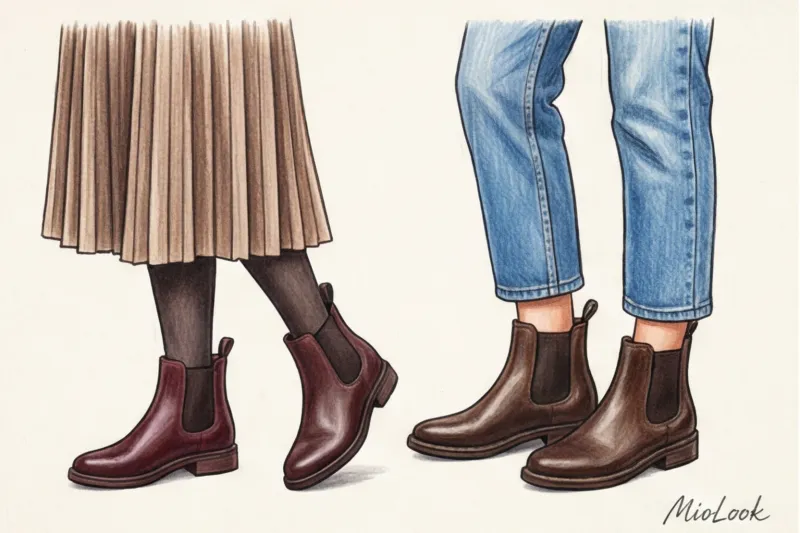
Office and Business Casual. The key here is the "butt-to-butt rule." Pair Chelsea boots with straight, cropped trousers. The leg should end exactly where the boot begins (or a couple of millimeters higher). Add a structured jacket, and you've got the perfect look. smart casual for women , appropriate for any negotiations.
Everyday chic and romance. Play with contrasting textures. Rough, smooth Chelsea leather looks stunning paired with flowing fabrics. A pleated midi skirt or silk slip dress paired with a chunky, chunky knit sweater is a timeless formula.
Denim base. If you wear wide-leg or flared jeans, their length should almost completely cover the boot, leaving only the toe visible—this will infinitely lengthen your legs. If you prefer straight or mom cuts, follow the ankle gap rule. What you should definitely avoid: skinny jeans pulled over the boot shaft, or long straight legs that bunch up untidily over the boot.
The Main Mistakes When Choosing (And How They Eat Up Your Budget)
Even with the right theory, it's easy to give in to impulse buying in a store. Here are three traps my clients most often fall into:
- Ignoring the fullness of the foot. We're used to looking only at the size (length), forgetting about the width of the last (usually marked with the letters F, G, or H). If you have a wide foot (width H) and squeeze into a narrow last (F), no amount of "natural leather that stretches" will save you. The shoes will become misshapen, and your joints will ache.
- Hidden synthetics in the lining. This is a case where the advice doesn't work: you buy boots made of excellent genuine leather on the outside, but the manufacturer cut corners on the inside by using "eco-leather" or cheap fabric. These shoes compromise thermal exchange: your feet will sweat indoors and instantly freeze outside, even if you're wearing a thick wool sock.
- Morning fitting. Anatomical fact: by evening, a city dweller's feet swell and increase in size by an average of half a shoe size. Basic everyday shoes should only be tried on in the afternoon and with the exact sock you plan to wear them with in winter.
Your perfect look starts here
Join thousands of users who look flawless every day with MioLook, optimizing their wardrobe.
Get access — €0.99 onceChecklist: Incorporating Chelsea Boots into Your Footwear System
To make the transition from chaos to control, smart capsule wardrobe was successful, I propose a specific plan of action for the coming weekend.
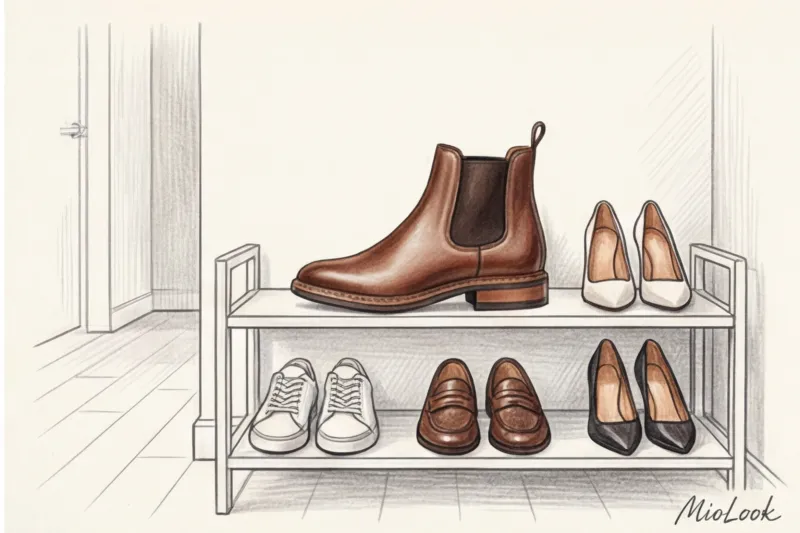
Step 1: Conduct a thorough inventory. Take out all your fall and winter shoes. Put aside anything that rubs, requires repairs you've been putting off for six months, or wasn't worn at all last season. Get rid of the clutter.
Step 2: Consider your dominant bottom color palette. If you wear blue jeans, beige trousers, and light skirts, look for Chelsea boots in dark chocolate or taupe. If you wear predominantly graphite, black, and emerald, then black or cool burgundy.
Step 3: After purchasing your shoes, invest 5% of their purchase price in proper care. This is the most important rule for reducing your cost-per-wear. Buy cedar shoe trees (they absorb moisture and smooth out creases in the leather while you sleep) and high-quality wax to protect against chemicals.
Your shoes are the foundation on which your entire look, and sometimes your entire day, is built. Don't settle for uncomfortable compromises. Find your perfect Chelsea boots, take good care of them, and they'll reward you with years of impeccable service, turning your morning routine from stressful to enjoyable.