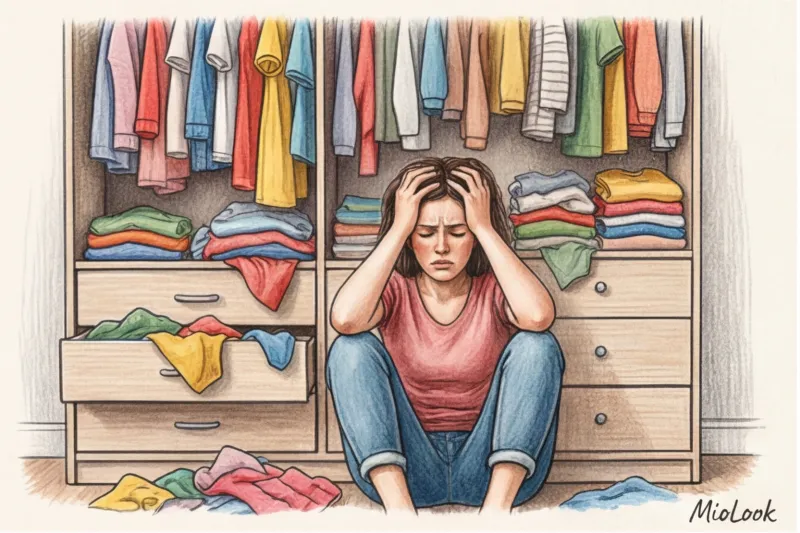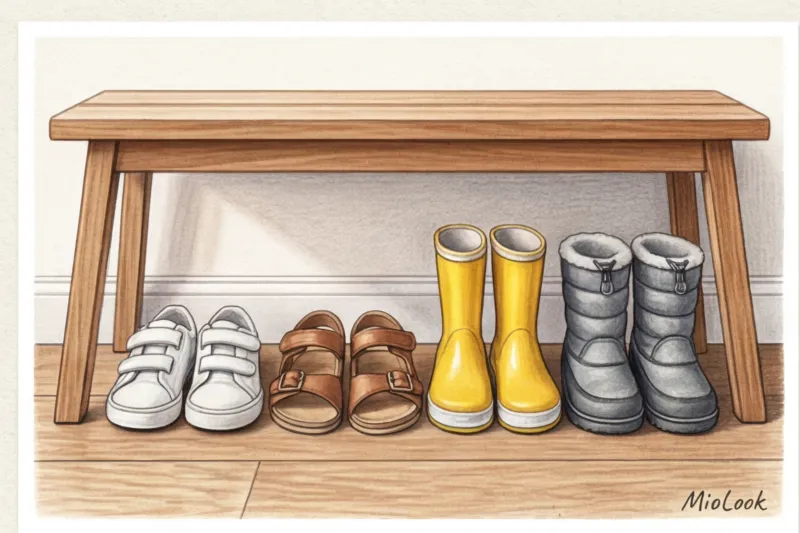
It's a familiar scene: you open the hallway closet and are literally overwhelmed by a literal avalanche of children's sneakers, sandals with light-up soles, and rubber boots. Then, when you need to quickly get ready for a visit or a long walk, you find that your child has nothing to wear. Some boots are rubbing, others don't match the color of the jacket, and still others are hopelessly too small.
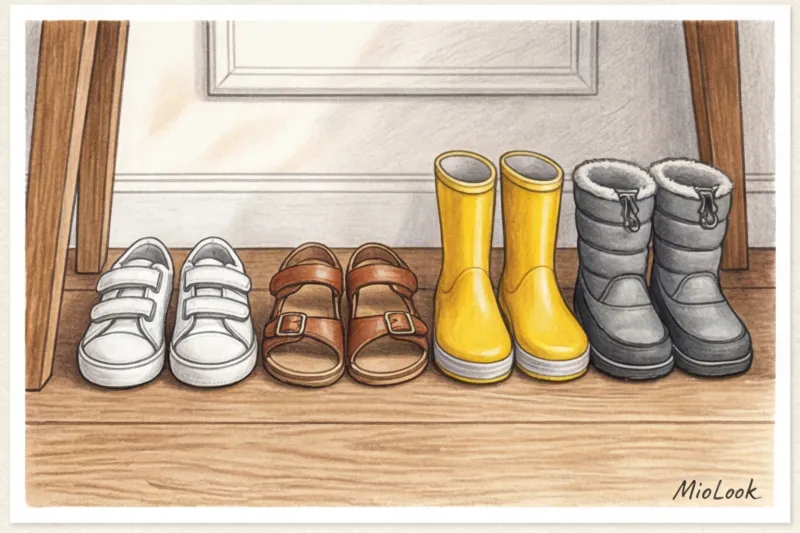
As a personal stylist and wardrobe consultant, I regularly see this problem with my clients. We spend huge amounts of money on children's clothes, succumbing to emotions, discounts, or marketing hype. We discussed children's closet architecture in more detail in our The complete guide to a child's capsule wardrobe , and today we'll explore its most complex and expensive foundation. Properly chosen basic shoes for a child not only ensure healthy feet but also eliminate your morning stress.
Basic footwear for children: the golden formula "3+1"
A client, Anna, recently contacted me. In a spring shopping frenzy, she bought her four-year-old daughter seven pairs of shoes to match different dresses and suits, spending about €200. The result? She wore the same pink canvas sneakers all summer, wearing them down to the point of holes because the other lasts were too hard, heavy, or uncomfortable for running.
To avoid such scenarios, I always use a strict formula in my work. 3+1 for every season. This is the minimum that covers 99% of a child's needs:
- Main Pair (The Daily): Extremely comfortable, anatomically correct, and in a neutral color. Suitable for 70% of situations (sneakers, leather sneakers, and basic boots).
- Replacement/Active Pair (The Backup): Shoes for dirty work—scooters, sandboxes, and the dacha. Something you don't mind killing, but that's safe to run in.
- Weather Couple (The Defender): Highly specialized footwear for the climate (rubber boots, winter membrane, aqua shoes).
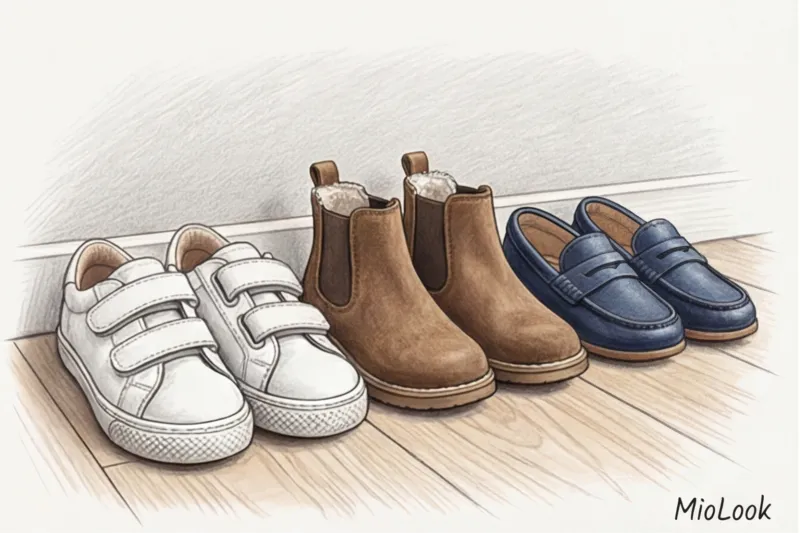
- The Plus One: A trendy or dressy pair (loafers, pretty sandals, Chelsea boots) that can be worn on weekends or holidays.
"Instead of calculating the total cost of your receipt at the checkout, consider the Cost Per Wear (CPOW). A pair of high-quality €80 sneakers that your child will wear 100 times over the course of a season will cost you €0.80 per outing. A pair of €25 patent leather shoes from a mass-market store, worn twice at a matinee, will cost you €12.50. Wardrobe math is merciless."
Why buying for growth is the worst way to save money
The most counterintuitive discovery parents make is that buying two shoe sizes bigger doesn't save you money. According to orthopedic research (specifically, the American Pediatric Medical Association's 2023 report), a child's foot grows 2-3 sizes per year up to age 3, and 1-2 sizes after age 3.
When you buy boots with 2-2.5 centimeters of extra room "to last two winters," the biomechanics of your step changes. Your child instinctively curls their toes to hold on to the dangling shoe, shuffling their feet and tripping. As a result, the expensive toes wear down on the pavement within two weeks, and the arch support ends up under the heel instead of under the arch, deforming the shoe. The shoe becomes unusable long before the foot grows to it.
Your perfect look starts here
Join thousands of users who look flawless every day and save time getting ready.
Get access — €0.99 onceSummer Shoe Capsule: How Many Pairs Do You Really Need?
Summer wardrobes can be deceiving. A pair of lightweight flip-flops seems like enough, but summer is when kids are most active.
For toddlers, the basic pair is always sandals with closed cape and a rigid heel counter. They protect toes from being knocked down during falls. Older children can move on to open trekking or classic leather models. A second must-have is lightweight textile sneakers or mesh trainers for cool evenings or long walks in the park.
A separate topic is aqua shoes and Crocs. Important limitation: This is a weather/situational pair! They're perfect for the beach, pool, or cottage, but pediatricians strongly advise against using EVA foam shoes as your primary footwear for long walks around town—they don't provide ankle support and can lead to flat feet.
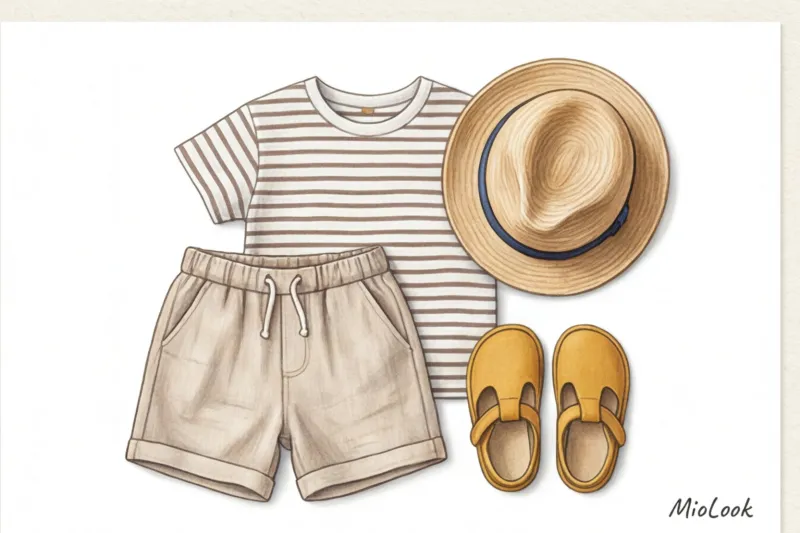
A stylist's color life hack: I often forbid my clients from buying acid green or neon pink sneakers. Opt for sophisticated, earthy shades: mustard, khaki, dusty pink, terracotta, or classic navy blue. They don't create visual noise, show dust less, and pair well with absolutely any outfit in your closet.
Demi-season and winter: basic footwear for children in cold weather
When the temperature drops, the stakes rise. A fall/winter capsule wardrobe requires the most investment. During the transitional period (from 10°C to 0°C), insulated smooth leather Chelsea boots or high-top sneakers work great. But for winter, I highly recommend high-tech membrane materials (such as Gore-Tex).
Why is a membrane superior to classic leather boots with fur lining? It's half the weight, 100% waterproof in slush, and wicks away sweat when a child runs. But there's one rule: drying rule.
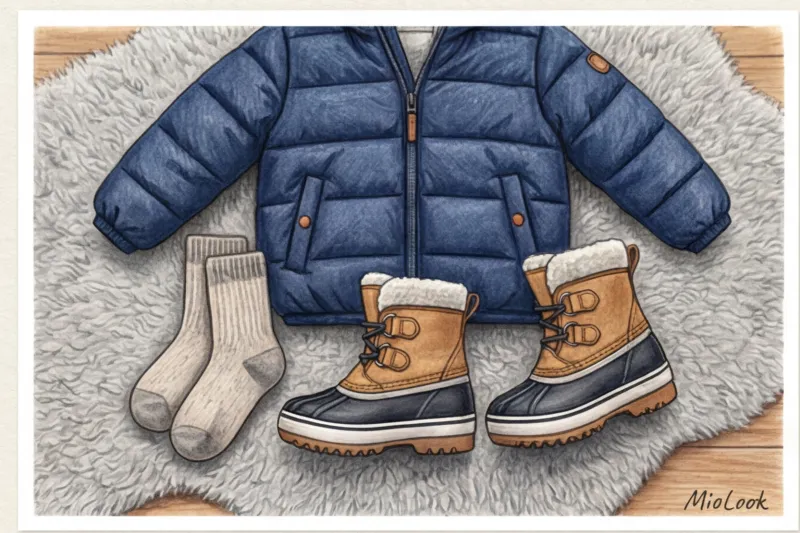
"In winter, you absolutely need two pairs of outdoor shoes. The membrane needs to rest and dry at room temperature for at least 12 hours. If you buy expensive boots for €130, but your child wears them every day without drying, the micropores will become clogged, moisture won't wick away, and your feet will be freezing within a month."
EVA boots with an insulated liner (cost €25-€40) are excellent as a second (spare) pair for slush. Based on my personal experience testing them, they're ideal for wet snow and puddles at temperatures down to -5°C, but they're completely insufferable in extreme cold without a thick wool sock, as the material itself doesn't retain body heat.
Organize your child's wardrobe wisely
MioLook's smart AI stylist will help you create a capsule wardrobe where every item and pair of shoes complements each other.
Get access — €0.99 onceBrands and Budget: Where Mass Market Saves, and Where Investments Are Needed
As a shopper, I often check out the children's lines of European high-street brands. Not everything there is worth the money.
What we can confidently buy in the mass market (Zara, H&M, Mango Kids):
Textile sneakers, slip-ons, trendy loafers, and ballet flats for a night out. For €20–€40, you'll find a stylish design for occasional wear. However, be warned: suede boots from Zara often have completely wooden, inflexible soles. Perfect for a photo shoot, yes, but not for everyday running around the playground.
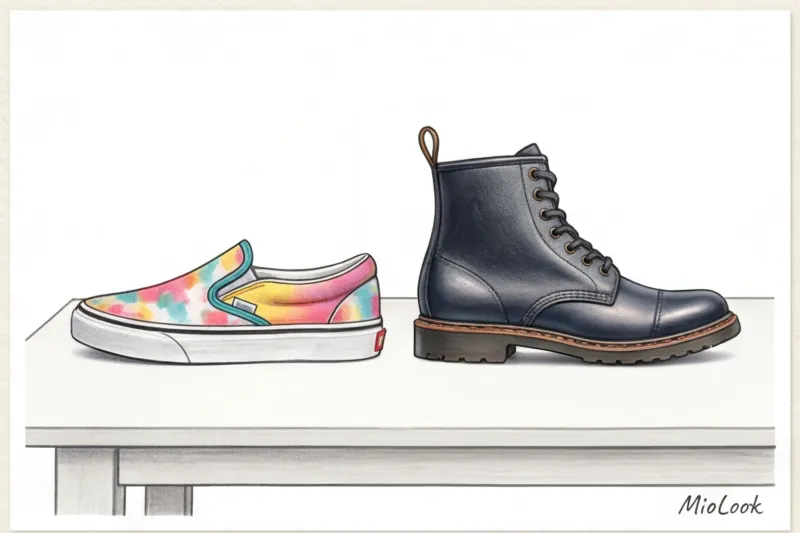
Where to invest (from 70 to 140 €):
Shoes for first steps, winter membrane boots, and autumn waterproof boots. This is where specialized brands come into their own: Geox, Ecco, Superfit, Primigi, and Bisgaard. They feature the right outsole roll, firm heel support, and durable materials. Get your sled ready in the summer: buy these brands during sales in January (for the following winter) or in July, using the charts to estimate your foot height.
A stylist's lifehack: how to try on shoes in a store
Never check the size by pressing your finger into the toe of the shoe—children reflexively curl their toes, and you'll end up buying a pair that's too tight. Here are three rules for a professional fitting:
- Try it on in the afternoon. By evening, a child’s foot (like an adult’s) swells slightly and increases in volume.
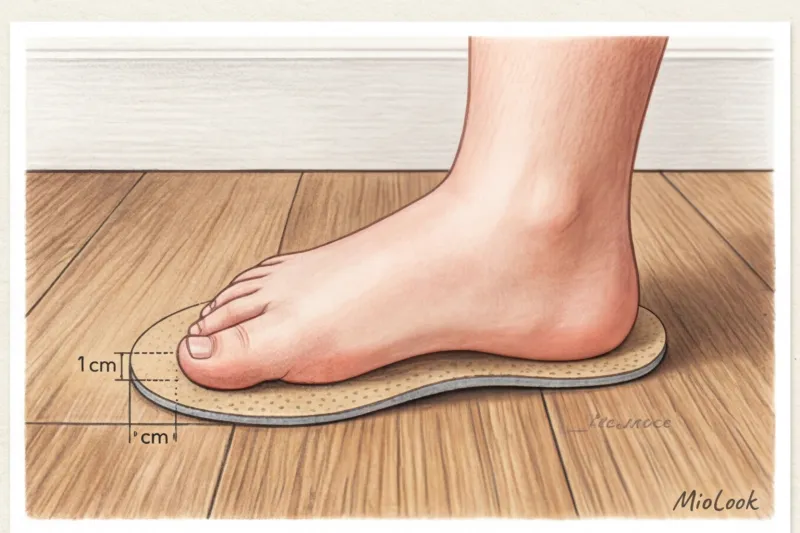
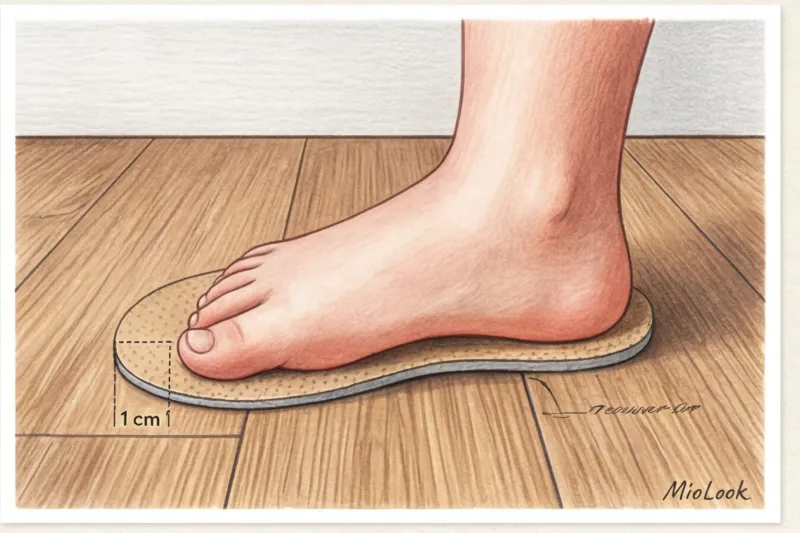
- Remove the insole. Place your child's foot on the shoe so that the heel fits snugly against the back edge. There should be exactly 0.5–0.7 cm of space in front for summer shoes and 1–1.2 cm for winter shoes.
- Flexibility test. Take the shoe in one hand and bend it. It should bend in the first third of the sole (where the toe joints are), not in the middle, and it definitely shouldn't feel like stone.
How to Integrate Shoes into a Kids' Capsule Wardrobe
Shoes should be the glue that holds your entire wardrobe together. If you're unsure how your new sneakers will fit into your wardrobe, take a photo of them and upload them to MioLook The app will quickly suggest non-obvious combinations with items already hanging in your child's closet.
When creating outfits, use the rule of contrast. If your outerwear is neutral (beige, gray, graphite), your shoes can be a pop of color (burgundy, mustard). Conversely, a bright jacket calls for subdued shoes.
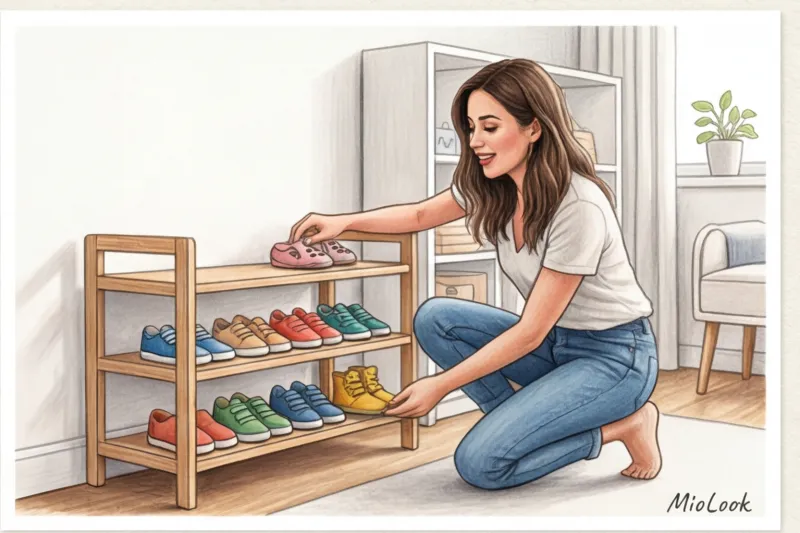
Let's recall the case of seven-year-old Mark from our main wardrobe article. He insisted on Spider-Man sneakers, which were completely out of keeping with his smart-casual style. How did we come to an agreement? We bought high-quality dark blue sneakers with red details, and satisfied his "superhero syndrome" by buying five pairs of bright socks featuring his favorite character. The child is happy, the mother's visual aesthetic is preserved, and the money was spent on orthopedically correct clothing.
Checklist: Reviewing Children's Shoes Before the New Season
Before opening the store app, conduct a thorough, no-nonsense review. It'll take 15 minutes, but you'll save tens of euros.
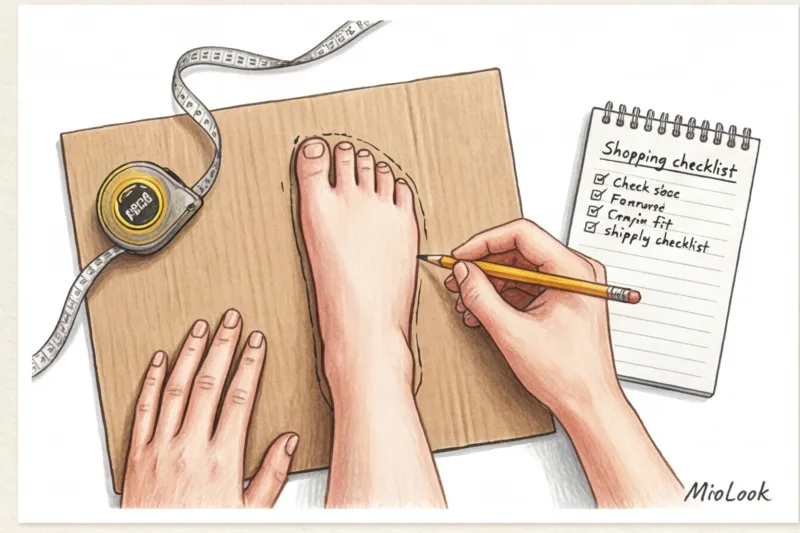
- Step 1: Take everything out and measure your foot. Stand your child on a piece of cardboard wearing socks and trace around their foot, holding a pencil strictly perpendicular to the floor. Cut out this footprint—this is your main shopping tool.
- Step 2: Place the cardboard footprint into the old shoe. If the cardboard bends at the toe, we mercilessly give it to younger children, sell it, or recycle it.
- Step 3: Assess wear. Look closely at the sole from the heel. If it's worn asymmetrically (one edge is more beveled), the shoe is in the trash. Don't wear such a pair any longer; it will ruin your gait.
- Step 4: Make a strict list. We look at the formula “3+1” and write down only those positions that are missing.
Basic footwear for a child isn't a place for endless experimentation with trends. It's a tool, a means of transportation for your child that should work flawlessly. Invest in the right basics, learn to avoid disposable items from the mass market, and you'll be surprised how much tidier your entryway will be and how much happier your child will be on walks.