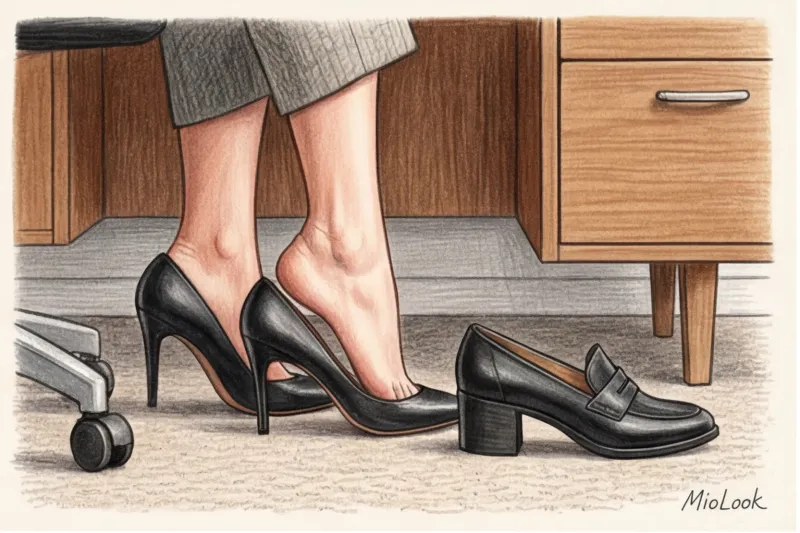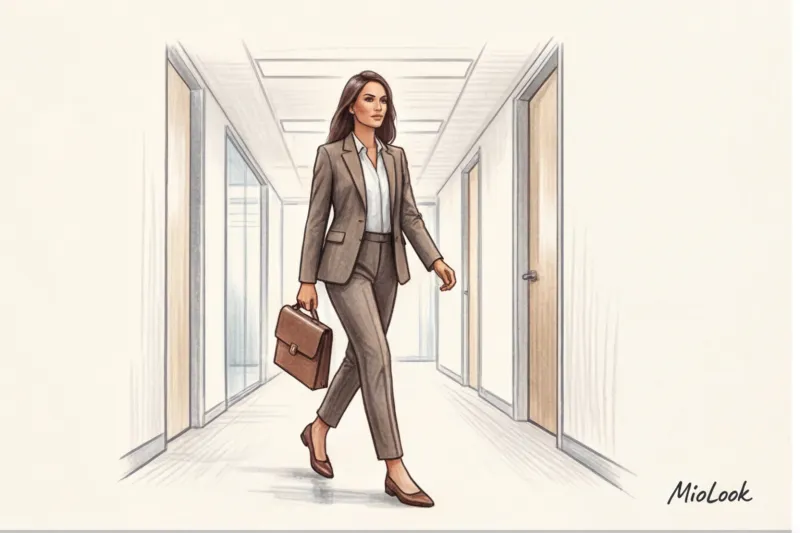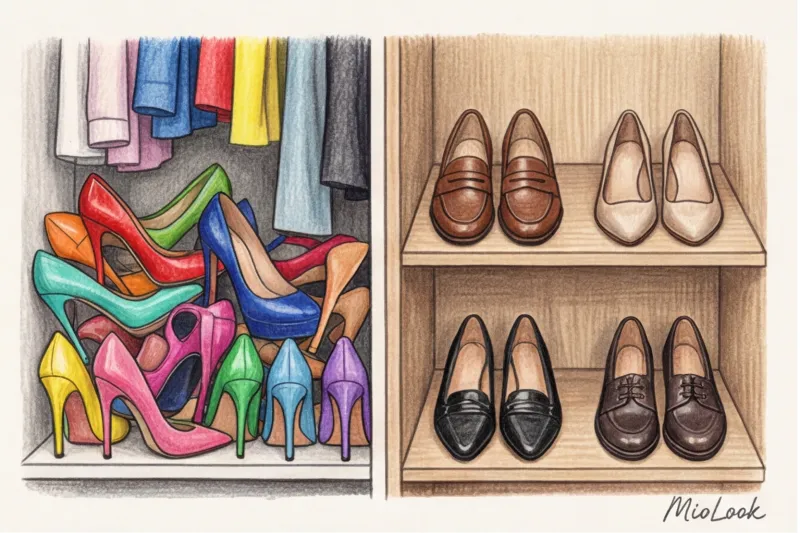
Open your closet and look at the shoe rack. I bet there's a pair of classic black pumps with a 4-inch heel sitting there somewhere. You bought them because glossy magazines of the 2000s convinced us they were an absolute must-have for a businesswoman. But when was the last time you wore them? To a job interview five years ago? To a corporate event where you cursed everything within an hour?
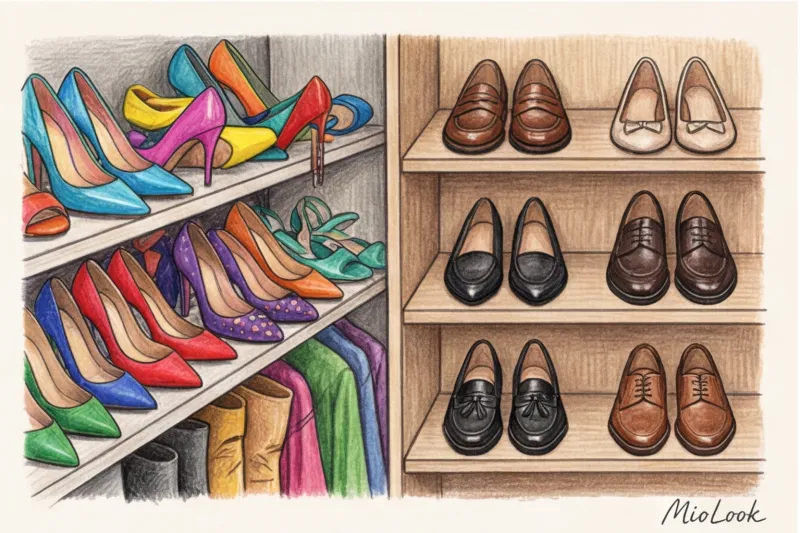
In 14 years of working as a personal stylist, I have realized one thing: the right basic shoes for the office It's not based on stereotypes, but on the rigorous mathematics of your comfort. Today, we'll forever forget the rule "beauty requires sacrifice." We've covered the fundamental principles in more detail in our complete guide. A Basic Shoe Wardrobe: How to Assemble the Perfect Capsule , and here we will analyze the office specifics.
What are basic office shoes in the new reality?
MioLook's internal statistics for 2023 reveal a brutal figure: women wear only 20% of the shoes they buy regularly. The remaining 80% are those "special occasion shoes" that become obsolete faster than you can wear out the heels.
The hybrid work schedule has forever changed office fashion. According to a 2024 report by the analytical agency WGSN, consumers' focus has finally shifted from "ostentatious status" to "intellectual comfort." Essentials today are the architectural foundation of a wardrobe. They must withstand a morning coffee run, three hours at a desk, and a spontaneous client meeting in the city.
This is where the concept of Cost Per Wear comes into play. Divide the cost of the shoes by the number of days you wear them. A pair of budget-friendly faux leather pumps for $50 that you wear twice (CPW = $25) will cost you more than a pair of premium leather loafers for $250 that you wear 50 times per season (CPW = $5). You can't skimp on office essentials—it's an investment in the health of your spine and the confidence of your gait.
Access to MioLook for €0.99 — one-time payment
A smart AI stylist will select the perfect look and help calculate the cost of each pair of shoes.
Get access — €0.99 onceLifestyle Index: How to Calculate Your Shoe Capsule
The biggest mistake my new clients make is blindly copying lists from the internet. Before going to the store, audit your route. What does your day look like? Do you walk from the underground parking garage straight to the office elevator? Or does your route include 10,000 steps on cobblestones, a trip down to the subway, and a quick run to pick up the child at preschool?
One of my clients, Anna, an IT executive, came to me with a request to "look classy." Her wardrobe included 15 pairs of high heels. The problem? Her office was in a loft with concrete floors, and she walked about 8,000 steps a day. We ruthlessly removed the stilettos and replaced them with four functional pairs that matched her Lifestyle Index. The result: less calf pain and a boost in style.
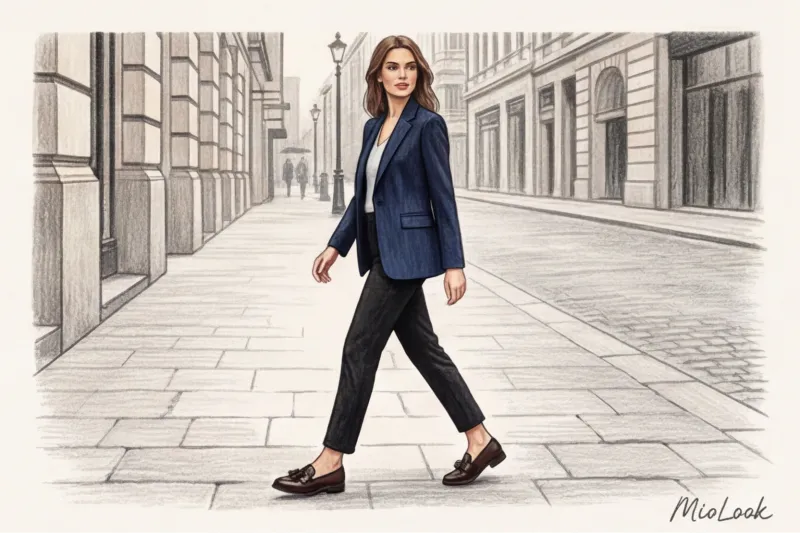
For a strict dress code (Business Formal)
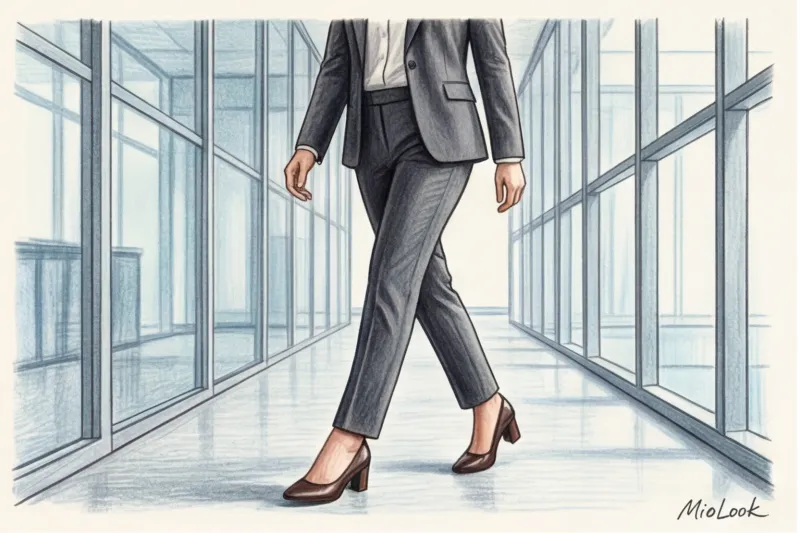
If you work in a bank, law firm, or the public sector, the rules are strict. A closed toe and heel are a must, even at 30°C. However, that doesn't mean you're doomed to suffer. Opt for a block heel instead of a stiletto. Smooth matte leather remains the standard here—patent leather and suede are often considered bad taste in conservative business formal settings.
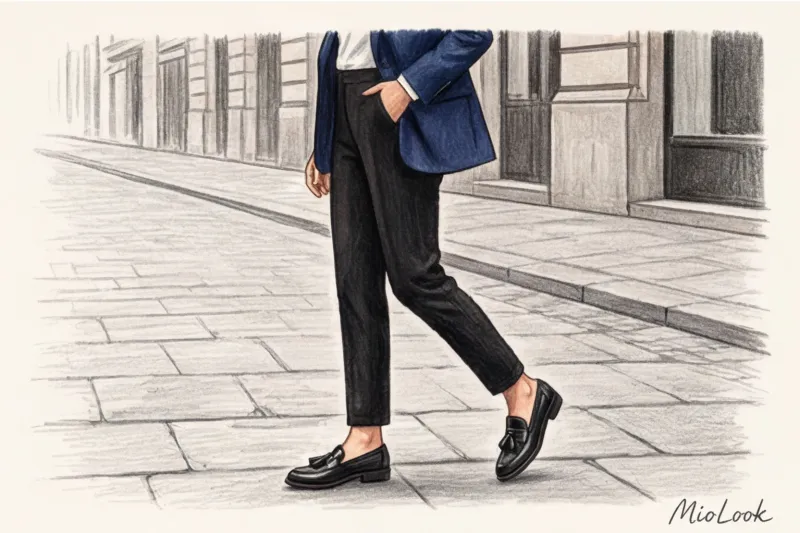
For the modern office (Smart and Business Casual)
In creative agencies, the IT sector, and modern corporations, the boundaries between men's and women's footwear have blurred. Brogues, oxfords, and derbies have become the new classics. Suede and textured leather are completely legal, and in summer, open heels (like elegant slingbacks) are acceptable, as long as the toes remain covered.
Anatomy of the Ideal Capsule: The 4-Pair Formula
Forget lists of 10 essential pairs. In my experience, 90% of office tasks are covered by the "4 Pairs Formula." This concept has been tested on hundreds of women of various sizes. Important note: this scheme only works in temperature-controlled offices. If you frequently travel to production or construction sites, you'll need separate safety footwear.
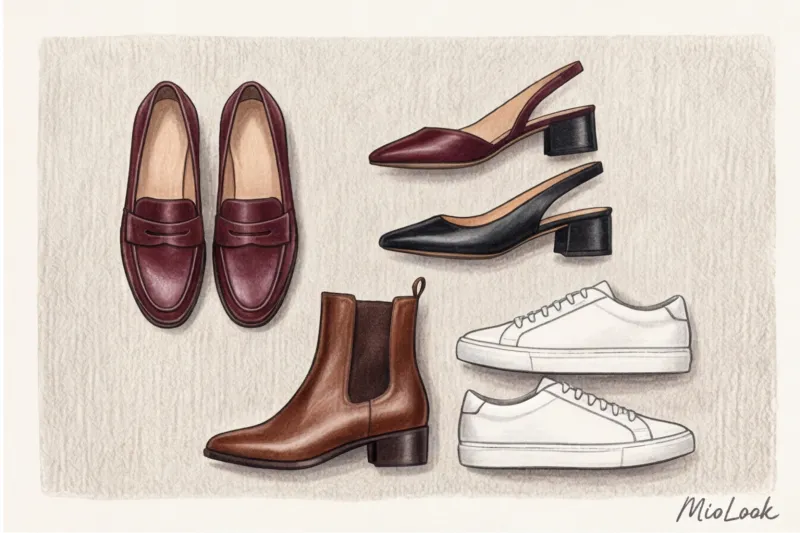
Pair #1: "Marathon Runner" (Loafers or Brogues)
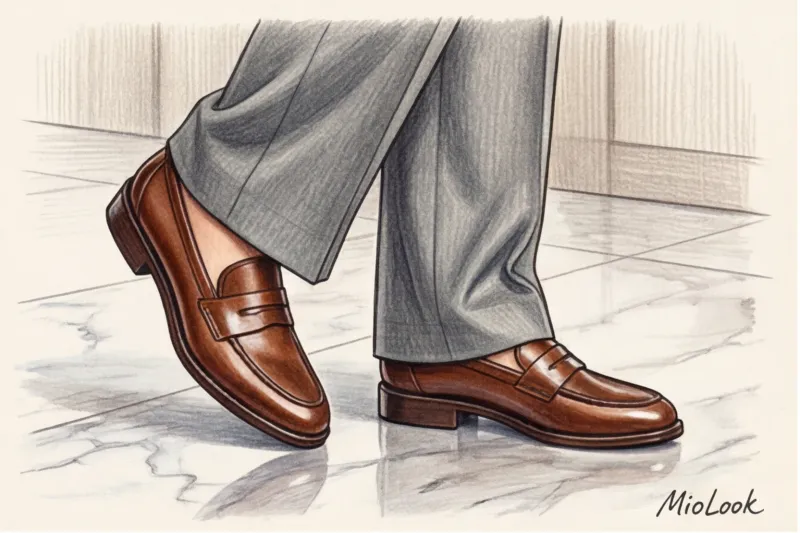
These are your go-to loafers for those days when you're at your busiest. Choose structured loafers (like penny loafers) without excessive metallic embellishments like chunky chains, which cheapen the look. They pair brilliantly with both a relaxed pantsuit and straight-leg jeans on a Friday. The key is thick leather that holds its shape and won't fall apart after a month.
Pair #2: “Status” (Slingbacks or kitten hill shoes)
The American Podiatrist Association (APMA) recommends a heel height of 3-5 cm for everyday wear. A kitten heel is a graceful alternative to pumps for important presentations. To visually lengthen your legs without the aid of a 4-inch stiletto heel, look for shoes with a deep V- or U-shaped neckline. The more exposed the instep, the longer the leg will appear.
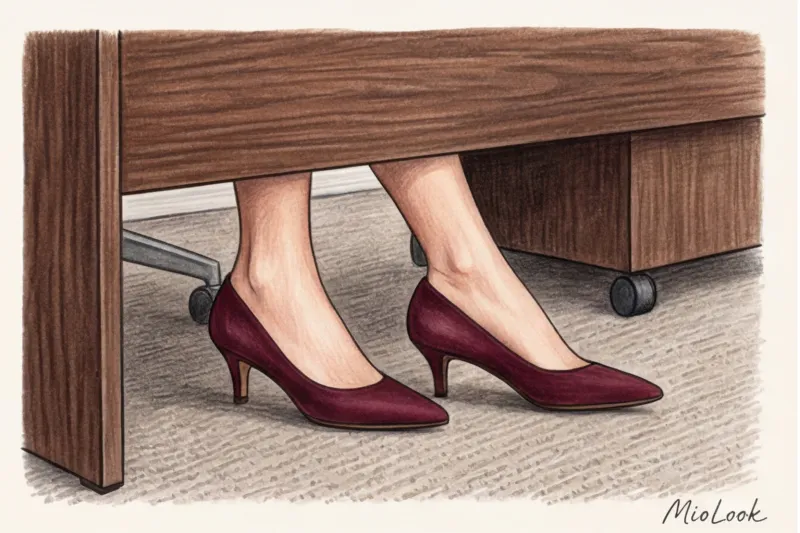
Pair #3: "Bad Weather" (Chelsea boots or ankle boots)
For the off-season and slushy weather. The "matching rule" is crucial here. If you wear cropped trousers or midi skirts, choose ankle boots that fit snugly around the ankle and extend under the hem of your clothing. If there's a strip of skin between the hem of the boot and the trousers, you'll visually shorten your height. Avoid contrasting lug soles—they look too rough in the office.
Pair #4: "Friday" (Minimalist Sneakers)
Sneakers are acceptable in the office, but not the mesh running shoes you wear to the gym. Basic office sneakers are minimalist, made of smooth leather with a flat sole. No logos emblazoned on the sidewall. And remember: the status of these sneakers is determined not by the brand, but by the cleanliness of the white sole. Keep a melamine sponge on your desk.
Your perfect look starts here
Join thousands of users who look flawless every day with MioLook. Digitize your shoes and create capsule collections in one click.
Get access — €0.99 onceThe Myth of Black Pumps: Why They're No Longer a Must
It's time to break the biggest stereotype. Black shoes are the most difficult to style. If your wardrobe consists of beige, gray, powder, or light blue suits, black shoes act like visual weights. They weigh down your bottom and create a sharp contrast that instantly shaves inches off your height.
"Black shoes are only forgiving when you're wearing black from head to toe. In all other situations, they require perfect support within the outfit, otherwise they look like a foreign object"—that's what I repeat during every wardrobe review.
Of course, there are exceptions. If you have a strict black-tie dress code for an evening event or your company uniform requires black, these are essential. But for 80% of modern professions, it's better to opt for the "new neutrals."
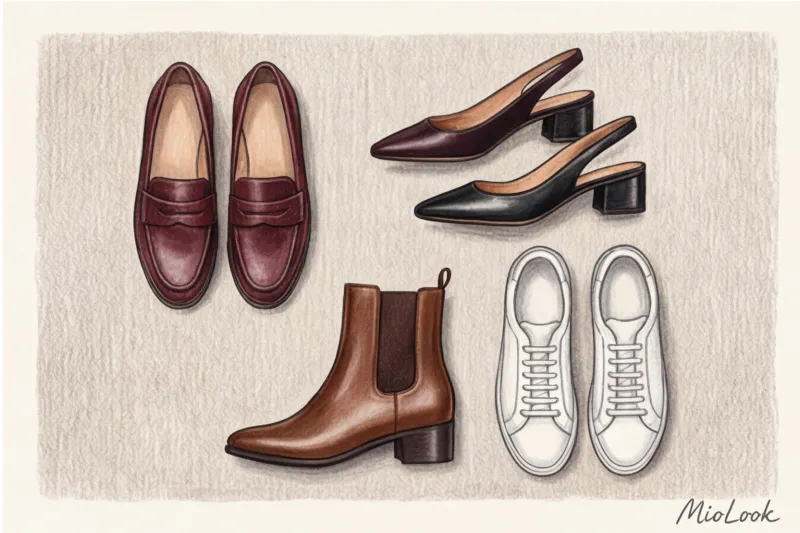
Color and texture: how basic shoes tie your wardrobe together
Want a professional secret? The most expensive and versatile shoes aren't black. My top three shades for an office base: dark chocolate, deep burgundy (Marsala), and taupe. Burgundy loafers work as a completely neutral base, but they make a look with a plain gray suit ten times more interesting and expensive.
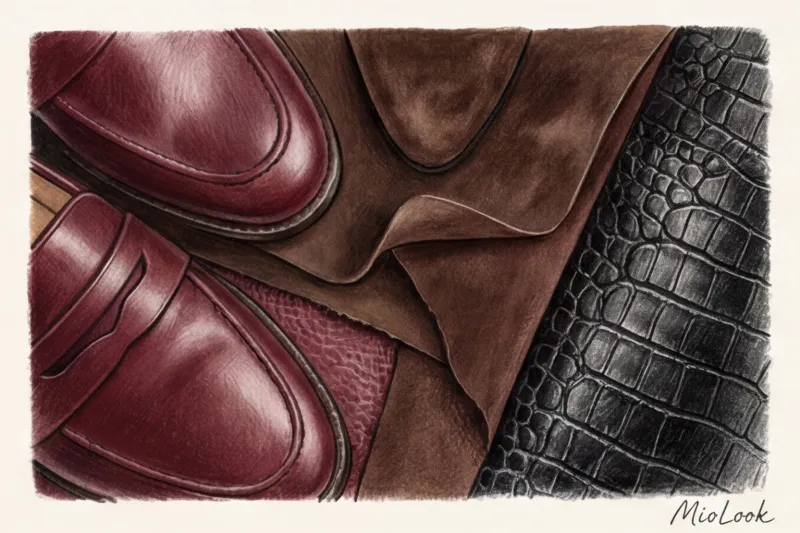
If the dress code doesn't allow color, play with texture. The combination of smooth leather trousers and suede ankle boots creates incredible depth. Are prints acceptable? Yes, but only textured ones. Faux crocodile or snakeskin in basic shades (without contrasting coloring) looks classy and formal.
Use the "color vertical" rule: if the color of your shoes matches the color of your pants or tights, you visually elongate your silhouette. Beige slingbacks worn barefoot in summer work on the same principle—blending with your skin tone, they make your legs appear endless.
Stylist Checklist: Checking Shoes Before Buying
You've found the perfect pair in a basic color. Before you take them to the checkout, give them my signature test drive. Never buy shoes thinking "I'll break them in." The leather will stretch a few millimeters, but the fit will never change.
- Fitting time: Only go shopping for basic shoes after 3:00 PM. By this time, your feet naturally swell. Shoes bought at 10:00 AM will look like Spanish boots by the evening.
- Roll test: Put on your shoes and take a few steps, paying attention to the roll from your heel to your toe. The sole at the toe should be flexible. If you walk like you're on skis, leave the pair at the store—it'll ruin your joints.
- Interior decoration: Shoes can be made of faux leather on the outside (although I recommend genuine leather for the base), but the lining and insole must be genuine leather. You spend 8-9 hours in your shoes at the office; synthetic leather on the inside will create a greenhouse effect.
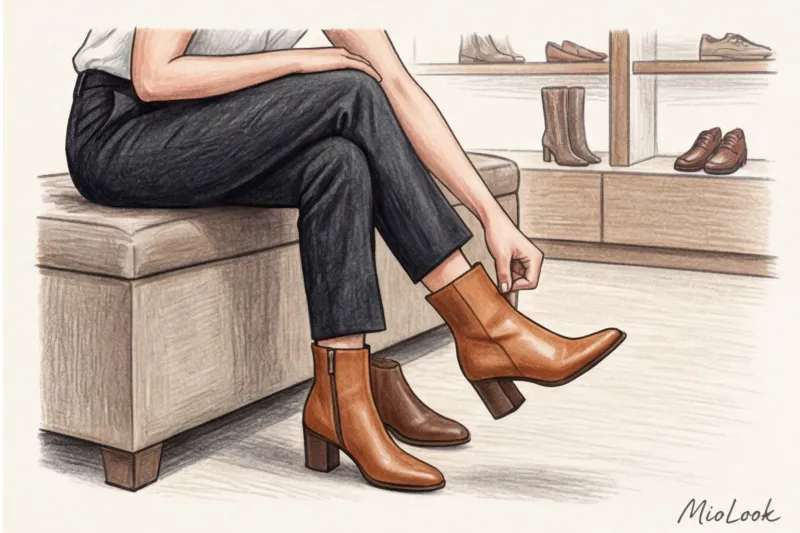
And the last, but most important step. Right in the fitting room, open the "smart wardrobe" feature in MioLook Take a photo of your shoes and check if they pair with at least three of your office bottoms (pants, skirts, dresses). If the algorithm can't find a single harmonious outfit with them, you should cancel the purchase.
Your office shoe cabinet isn't a collection of pretty items, but a well-oiled machine. Start with one perfect pair of loafers or slingbacks that will cover your daily tasks, and you'll be surprised how much time and stress you save each morning.