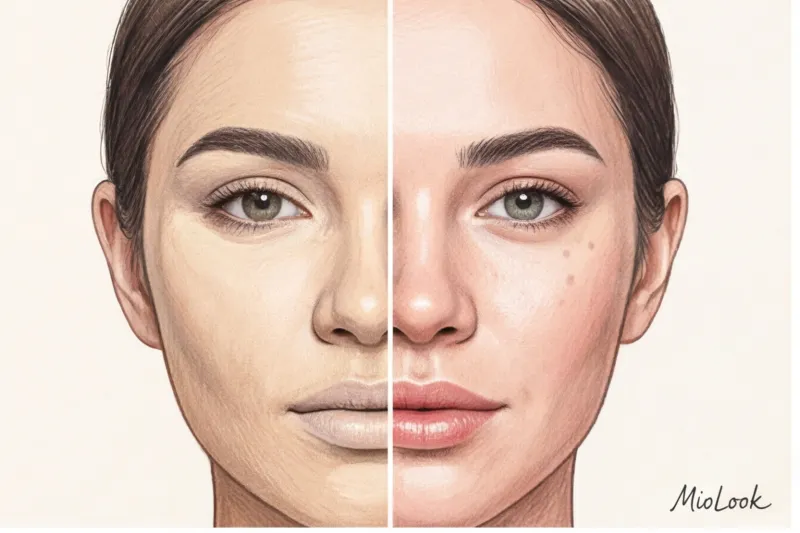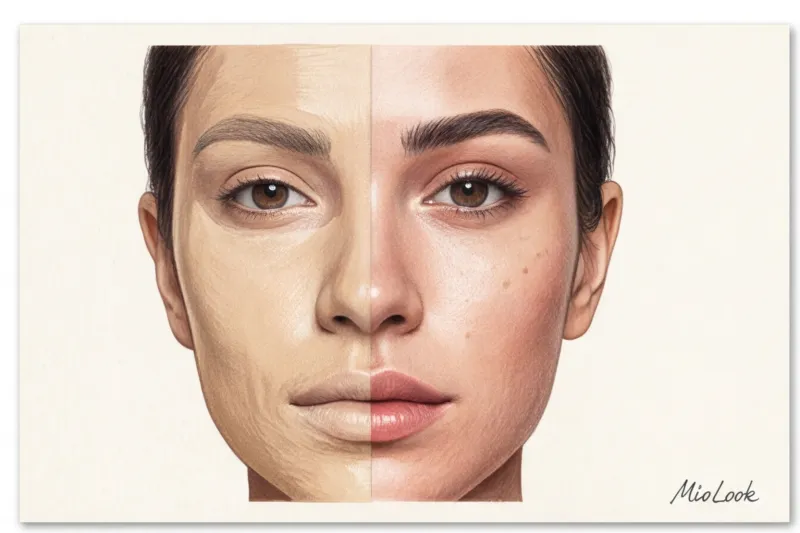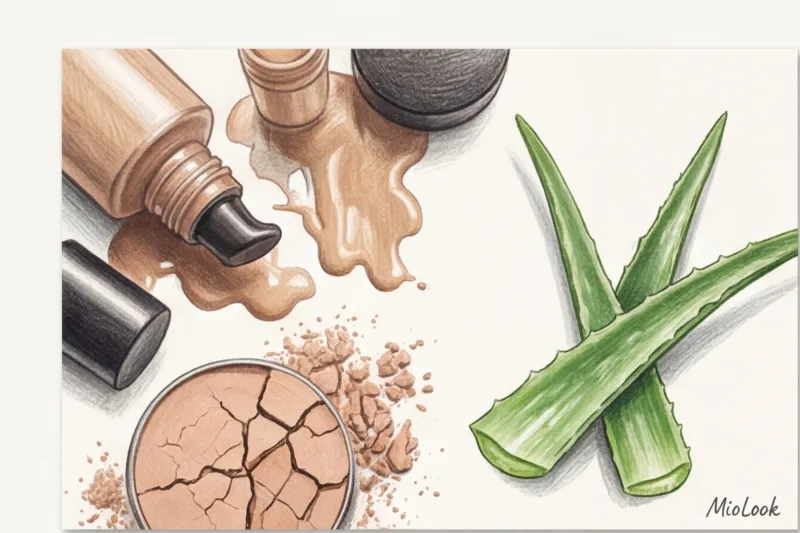
Do you know what a cheap 100% polyester turtleneck and your favorite thick, matte foundation have in common? They both create the perfect greenhouse on your body. Over 12 years of working with fabrics and style, I've realized one important thing: we often forget that makeup is just clothing, just for our faces. And if you wouldn't wear a synthetic sweater in 30°C (86°F), why do you continue to "dress" oily skin in heavy silicone textures?
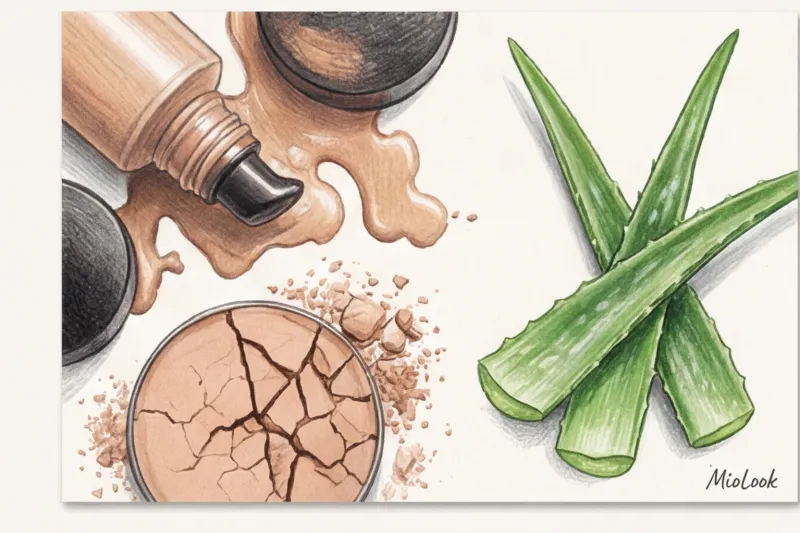
Well chosen decorative cosmetics for oily skin It shouldn't work like a rubber coat covering imperfections, but rather like a high-tech membrane fabric—wicking away excess moisture (in our case, sebum) and allowing pores to breathe. About 70% of women with problem skin unknowingly trigger new breakouts precisely because of the microgreenhouse effect under a thick layer of foundation. We've already discussed the basic principles of minimalism in more detail in our A complete guide to creating a basic cosmetic bag , and today we'll apply the laws of textile materials science to your cosmetics bag to break the vicious circle of "cover up a pimple and get three more."
Greenhouse Effect on the Face: Why Standard Tips for Oily Skin Don't Work
For years, the beauty industry has taught us that if skin is shiny, it needs to be ruthlessly mattified. They resort to pore-blurring primers, long-lasting foundations, and a thick layer of powder (the infamous "baking" method). As a textile expert, I see this as a direct analogy to cheap waterproof fabric without ventilation valves.
A study published in Journal of Cosmetic Dermatology (2023) demonstrated that dense occlusive textures critically alter the skin's microclimate. Under a layer of dense foundation, the epidermal temperature locally increases by 0.5–1°C. In this warm and moist environment, bacteria Cutibacterium acnes begin to multiply at an alarming rate.
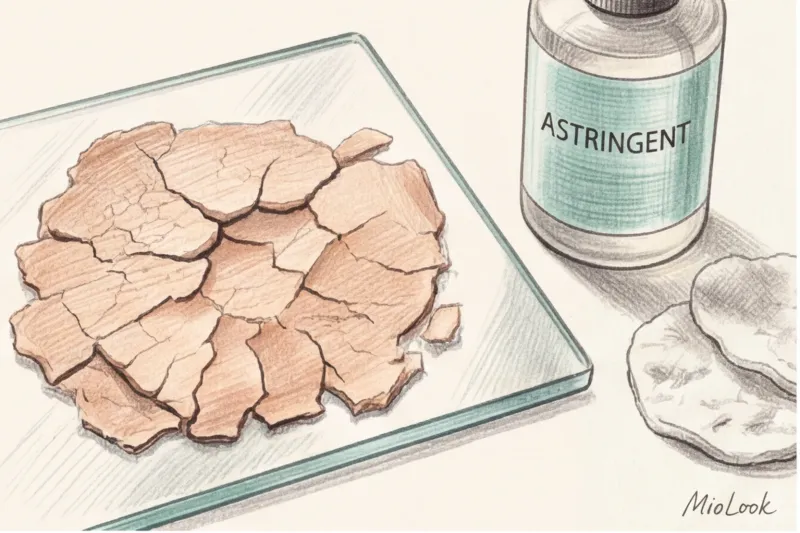
"Over-mattifying primers and powders are the worst enemies of oily skin. By over-drying the stratum corneum with absorbents (talc, kaolin in high concentrations), they send an SOS signal to the brain. In response, the sebaceous glands trigger compensatory hypersecretion of sebum. As a result, by lunchtime, the face is even shinier, but now under a layer of makeup that's cracked like old plaster."
This isn't a theory, but something I regularly see in practice. During long shoots under hot spotlights, the speakers' "reinforced concrete" matte makeup always cracked and started to fade after just a couple of hours. But the lightweight mineral capsule we applied in a very thin layer held up perfectly until the evening.
Decorative cosmetics for oily skin: principles of a "breathing" beauty capsule
When a new client comes to me for a wardrobe and style review, we often start with her makeup bag. My goal is to transform her from 15 useless jars to 5 that actually work. And the main criterion here is "sebum compatibility."
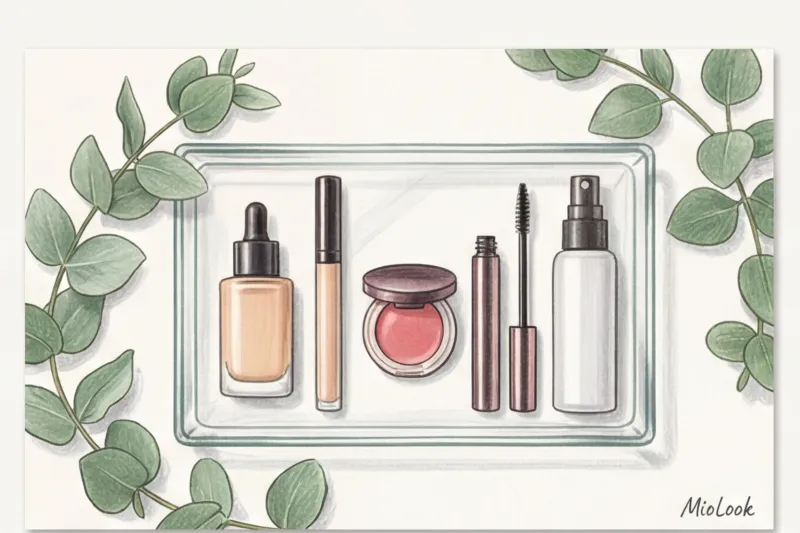
What does this mean? Cheap pigments oxidize when exposed to sebum—that's why your perfect beige foundation turns reddish-gray by lunchtime. Sebum-compatible cosmetics (usually mineral-based or containing high-quality, next-generation silicones in minimal concentrations) simply mix with your sebum, turning into a second skin rather than dirt.
Non-comedogenic: Read ingredients like an expert
American Academy of Dermatology (AAD, 2022) emphasizes the importance of using non-comedogenic cosmetics for problem skin. But here's the harsh truth: the term "non-comedogenic" is not legally regulated. Any brand can slap this label on their product.
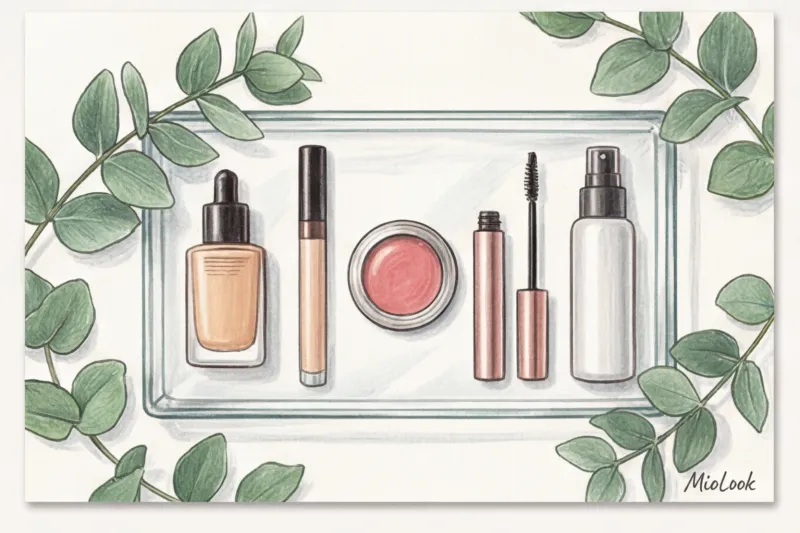
True non-comedogenicity depends on the size of the pigment particles and the absence of heavy emollients. Look for micronized minerals in formulas and avoid coconut oil derivatives (Coconut Oil, Isopropyl Myristate) and heavy waxes. It's like choosing between heavy drape and the finest merino wool—both are warm, but only the latter breathes.
Multitasking textures for problem skin
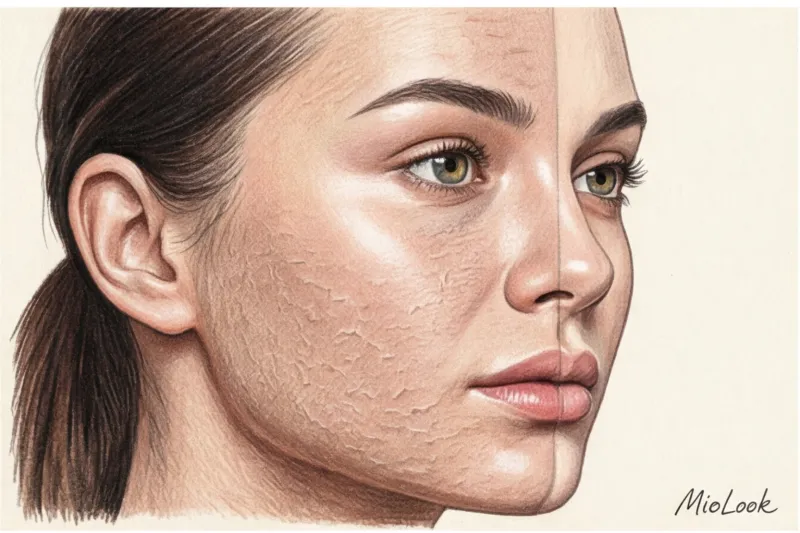
We're used to thinking that oily skin only needs dry textures. This is a dangerous myth. Oily, problematic skin is often dehydrated, and acne treatments (acids, retinol) cause localized flaking. Applying dry powder to these areas will highlight every dead flake.
Paradoxically, lightweight, creamy or gel-based 2-in-1 products (such as lip and cheek tints) adhere much better to problem skin. They don't cling to flaking areas and create the effect of a vibrant, healthy complexion.
Your perfect look starts here
Join thousands of users who look flawless every day with MioLook, the smart AI stylist. Organize not just your makeup bag, but your entire wardrobe.
Get access — €0.99 onceBuilding a Basic Cosmetics Bag: 5 Essential Products
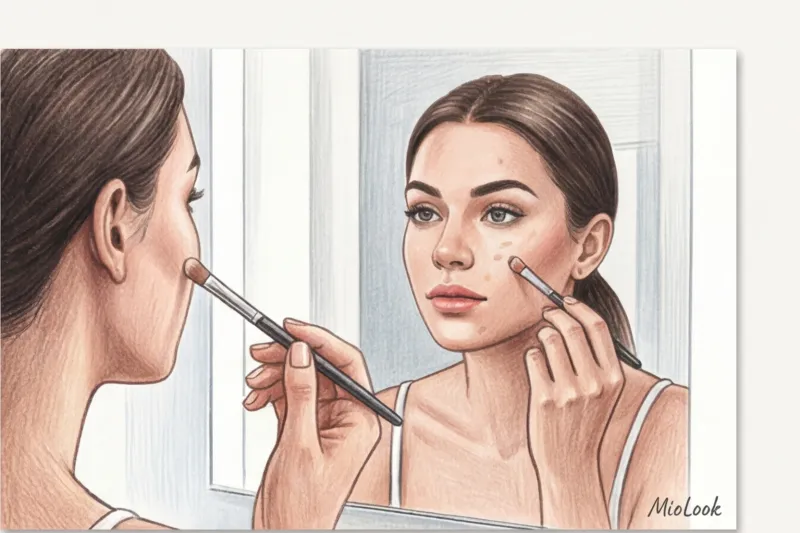
The secret to perfect coverage of problem skin is the spot-concealing technique. Instead of applying a thick foundation all over the face because of three blemishes on the chin, we even out the overall tone with a lightweight fluid and apply pigmented concealer only where needed.
1. Mineral powder or fluid: membrane protection
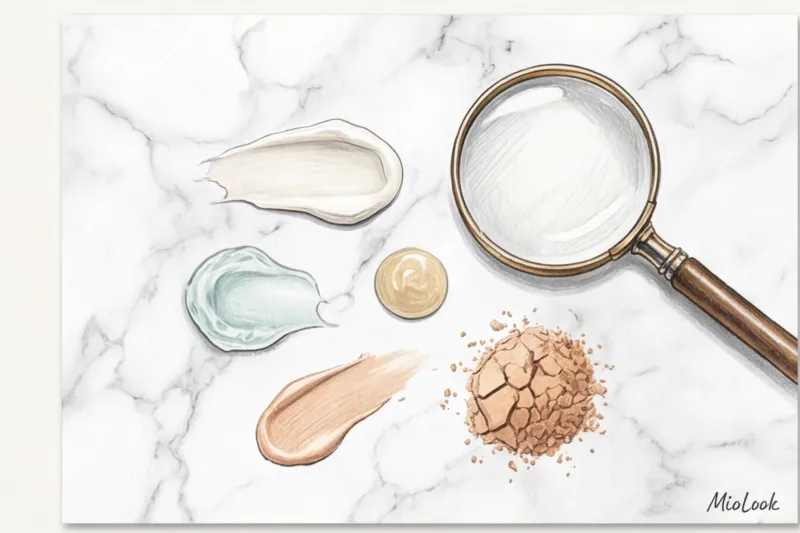
The base of your capsule. High-quality mineral makeup (in the €30–€50 range) acts as a physical shield. It contains zinc oxide and titanium dioxide. Zinc is a natural antiseptic that will dry out blemishes throughout the day. Apply these fluids with a tapping, pressing motion with a sponge or brush, rather than smudging—otherwise, you'll simply dislodge the sebum.
2 and 3. Highly pigmented concealer and sebum-controlling blush
For blemishes and post-acne, use a thick, viscous concealer in a jar. Apply it with a tiny brush precisely to the center of the blemish and lightly blend the edges with your finger. The warmth of your skin will melt the texture, blending it into your face.
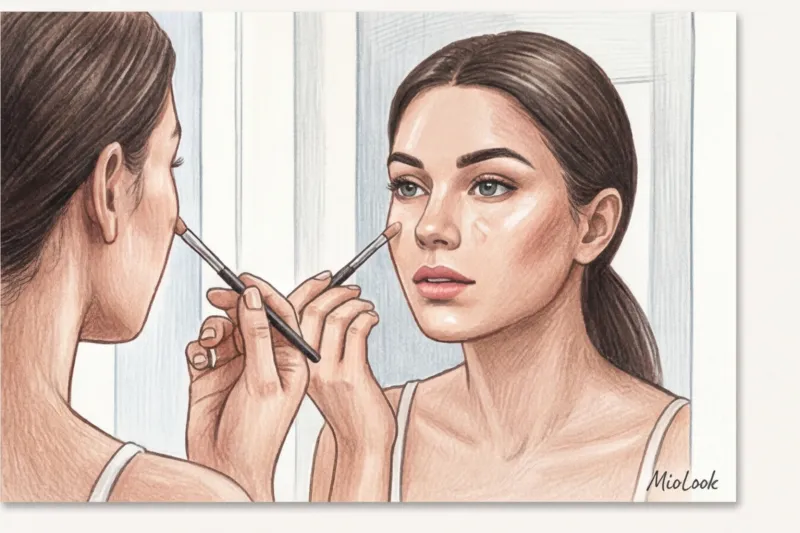
As for blush, avoid powdery options. They often contain fine shimmer, which instantly highlights the appearance of enlarged pores. Opt for matte gel tints or lightweight cream blushes.
4 and 5. Setting spray and heat-resistant mascara
Forget about mattifying powder as a setting spray. Oily skin's best friend is a setting spray without alcohol at the top of the formula. It creates an invisible polymer mesh on the face that locks in pigment but allows air to pass through. Your makeup won't bleed, and your skin won't feel suffocated.
The fifth element is waterproof tubing mascara. On oily eyelids, regular mascara always marks under the brow by 12 p.m. because sebum dissolves the oils in it. Tubing mascara is washed off with warm water (around 38°C) and is completely unaffected by sebum.
Taboo Ingredients: What to Ruthlessly Remove from Your Makeup Bag
Sometimes one wrong product can ruin the whole system. Take stock of your makeup bag and check the ingredients for these hidden pests:
- Bismuth Oxychloride. This is a cheap filler that's often added even to expensive mineral makeup to add volume and shine. For those with oily skin, the slightest sweat can cause excruciating itching and micro-scratches. If your face itches after applying powder, this is the culprit.
- Isopropyl Myristate and heavy silicones. If Dimethicone is listed as the second or third ingredient in a foundation, you're looking at a plastic bag. It will clog your pores in record time.
- Mother of pearl and large shimmer. In textiles, lurex highlights all the unevenness of the figure. In makeup, shimmer works like a magnifying glass for every bump, pimple, and enlarged pore. Save the shimmer for perfectly smooth areas (like the inner corners of the eyes).
Temperature test: how the capsule behaves during the day
A high-quality beauty capsule lives alongside your skin. Let's look at the dynamics:
- 09:00 — makeup looks fresh, natural matte finish.
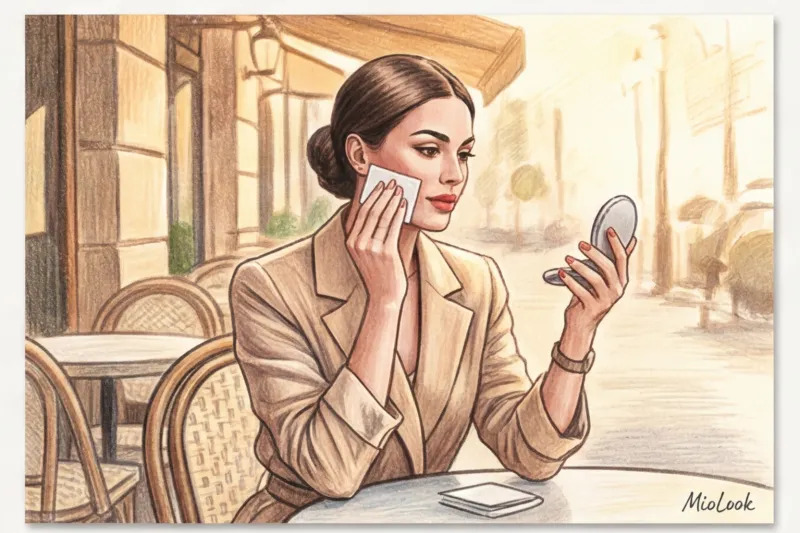
- 2:00 PM A healthy glow appears. The pigment doesn't budge, and the tone doesn't turn red. This is the perfect time to use a matting wipe. The main rule: simply press the wipe onto the T-zone, never rub! Friction destroys the polymer mesh of the fixative.
- 19:00 — makeup is in place, inflammation is reliably hidden by concealer.
A fatal mistake made by 9 out of 10 women is touching up their makeup with powder. Layering dry pigment on top of sebum creates a cement-like plug in the pores. According to internal statistics from MioLook app users, switching to a minimalist, well-chosen beauty routine saves up to 4 hours a week, which would previously have been spent constantly touching up makeup and covering up new breakouts.
Ready to get started?
Try the MioLook free plan—no commitments required. Create your own virtual makeup bag and wardrobe so you always know what you have and how to combine it.
Get access — €0.99 onceChecklist: Revamp your makeup bag in 15 minutes
Theory without practice is dead. I suggest you empty your makeup bag onto your desk right now and conduct a thorough audit. Remember: it's better to have five perfect products than 20 that ruin your skin.
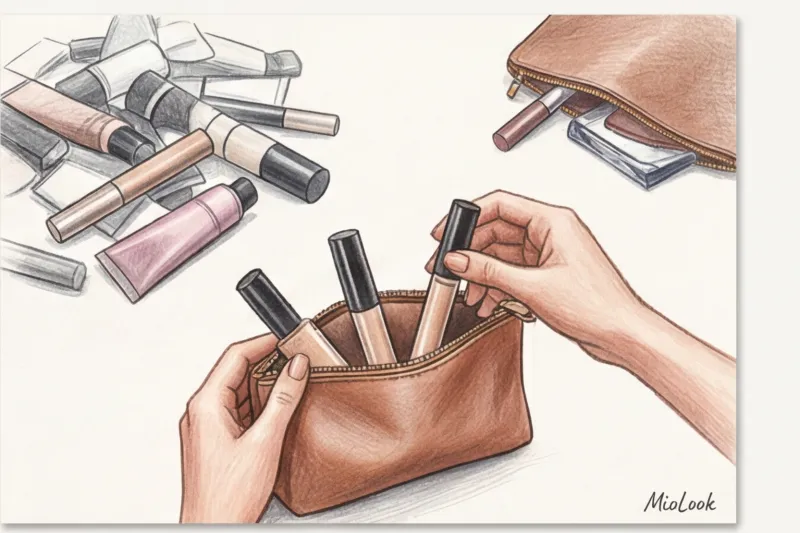
- Step 1. Ruthlessly throw in the trash (or give to friends with normal skin type) all “dull” matte foundations and dense powders.
- Step 2. Turn over the remaining jars and check the ingredient lists (INCI) for bismuth oxychloride and isopropyl myristate.
- Step 3. Assemble your five-piece: mineral foundation, dense spot concealer, gel blush, setting spray, and heated mascara.
Your skin is your most important and precious asset. Stop hiding it under layers of heavy synthetics. Invest the money (and time!) you save on unnecessary makeup in quality skincare with a dermatologist. And within a month, you'll notice you don't need heavy foundation at all.