

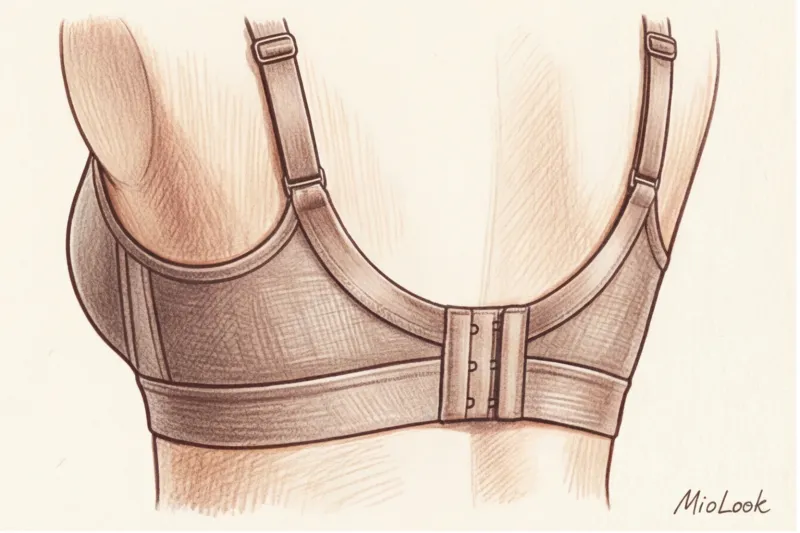
Did you know that the classic, smooth bra that mass-market brands have been selling us for years as the "perfect T-shirt base" is actually the worst enemy of D-cup and larger breasts? I constantly see women with curvy figures trying to squeeze them into flat, foam-filled hemispheres. The result is always the same: a band that slips down to the shoulder blades, aching shoulders, and that treacherous "pancake effect" in profile.
Correctly selected basic lingerie for large breasts — it's not just a scaled-up version of size 75B. It's a completely different weight distribution math and textile engineering approach. We've covered the fundamental principles in more detail in our The Complete Guide to Basic Underwear , but today I want to focus exclusively on the support architecture for D+ sizes.
Silhouette Architecture: Why Basic Lingerie Works Differently for Large Busts
Last year, a client, the CEO of a large IT company, contacted me. Her request was: "I need to completely change my business wardrobe. My jackets don't fit at the chest, and if I go a size up, my shoulders hang loose. And my waist has disappeared." We didn't go shopping for new clothes. Instead, we went to a professional bra fitting salon.
In an hour, we found the perfect bra that lifted her heavy breasts to the anatomically correct height. The result? She didn't have to buy new suits. Her usual jackets fit perfectly, her shirt buttons stopped coming undone, and her waist visually "shrinked" by several centimeters because we freed up the space between her bustline and ribs.
According to research by the Hohenstein Institute (2023), which studies textile biomechanics, incorrect breast weight distribution distorts posture and disrupts the center of gravity. The entire physics of support is based on 80/20 rule: A tight bra band should support exactly 80–85% of your weight, with only 10–20% of the load falling on the straps. If by evening you have deep red lines on your shoulders and the band rides up toward your neck, your bra base isn't working.
Stylists have a "golden ratio" rule: the fullest point of your chest should be exactly halfway between your shoulder and elbow. If your chest is lower, your silhouette automatically becomes heavy and squat, adding extra pounds you don't actually have.
How can I check the quality of a band right in the fitting room? I always use the tension test. Grasp the band with both hands and pull it firmly from side to side. The right fabric should offer strong, almost springy resistance and instantly return to its original shape without any ripples. However, keep in mind a limitation: this test doesn't apply to fine decorative lace—it's not designed to hold heavy breast tissue in place.
The role of the frame and the properties of corset mesh (Power Mesh)
The heart of any support bra is the body (the part under the bust) and the back, which are made of power mesh This is a high-tech corset mesh with a density of 150 g/m², where elastane fibers are interwoven in such a way as to block vertical stretching, but allow comfortable horizontal movement.
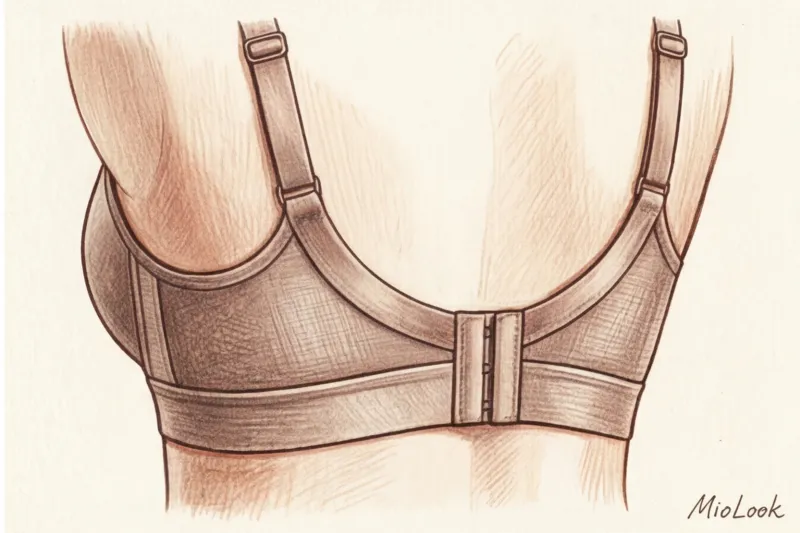
The anatomy of the ideal belt for size D+ looks like this:
- U-shaped back: The straps are positioned closer to the center of the back (leotard back) so that they do not fall off the shoulders and distribute the tension evenly.
- Clasp width: At least 3, and preferably 4 rows of hooks. Two hooks physically won't support the weight of an F or G cup.
- Stabilizing lining: The front part of the waist under the bones should be lined with non-elastic material.
There's also an important eco-friendly aspect to this. When you buy a cheap mass-market bra, you're getting low-quality elastane that will deteriorate after 15 washes. By investing in lingerie made from certified materials (such as Oeko-Tex Standard 100), you're getting polymer threads with long-lasting "shape memory." This is more environmentally friendly, as the item lasts for years rather than being thrown into a landfill at the end of the season.
Tired of buying things that don't fit?
MioLook's smart AI algorithm will analyze your measurements and help you create a functional wardrobe where every item highlights your best features.
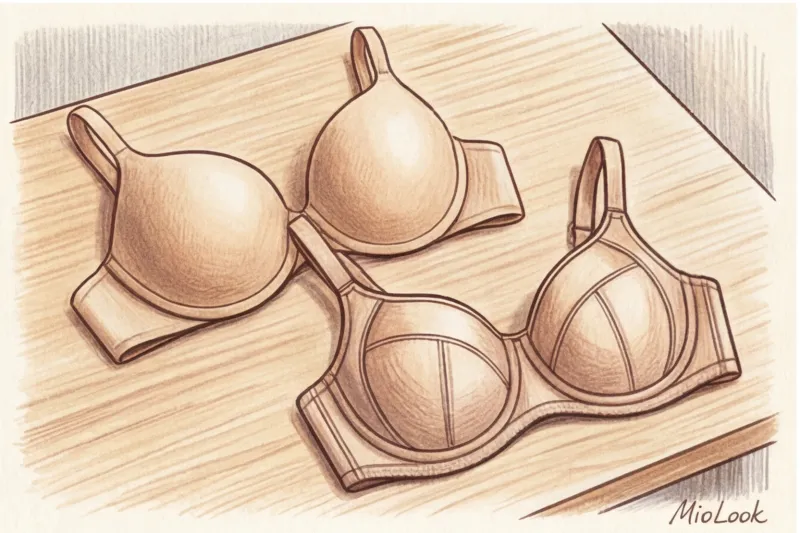
The Smooth Cup Myth: Why Molded Foam Isn't the Best BaseConventional wisdom holds that the ideal base for a thin turtleneck or T-shirt is a smooth, seamless, nude-colored T-shirt bra. For women with A, B, and sometimes C sizes, this is certainly true. But for those with larger breasts, this is a major style myth.
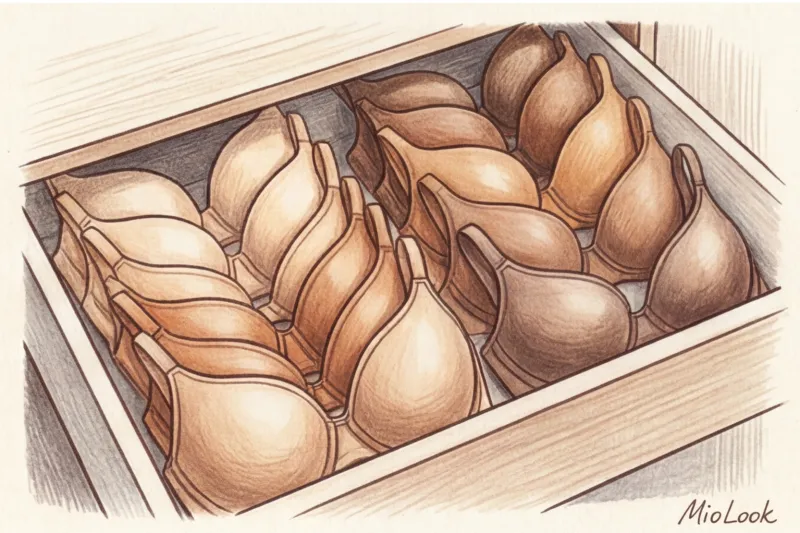
Why? A single piece of polyurethane foam is initially molded in the factory into a rigid hemisphere. It doesn't conform to your anatomy. Instead, it forces the heavy, soft breast tissue to conform to it. As a result, the breasts either sag outward or collapse inside, lacking the proper forward projection.
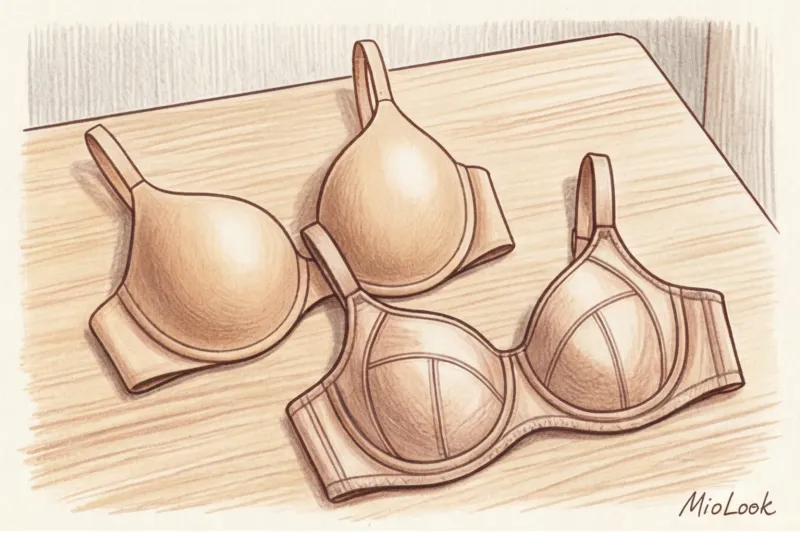
If you can't live without smooth underwear under thin knitwear, choose spacers (spacer bra) This innovative 3D fabric features microscopic monofilaments sandwiched between two layers of thin fabric, creating an air cushion. The spacer is breathable and adapts to the shape of your breasts while concealing the contours of your nipples.
Seam geometry: 3-piece and 4-piece cut
For true support, you need a seamed cup. Yes, those seams that many people dread under clothing are the supporting structures of your underwear. Modern brands (like Panache, Elomi, and Fantasie) make these seams completely flat, so they're invisible under a high-quality business blouse.
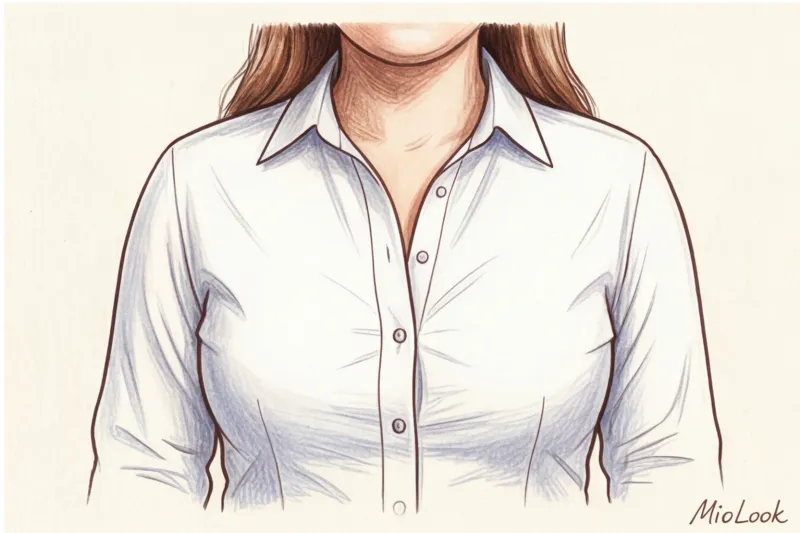
My favorite secret that I share during consultations: look for a design with side support This is an additional vertical detail on the side of the cup, closer to the armpit. It physically pushes the breast tissue toward the center of the ribcage. As a result, your torso is visually narrowed from the front—you literally look slimmer before your eyes because your breasts no longer protrude beyond the silhouette.
Checklist: Building a Functional Lingerie Wardrobe for Large Busts
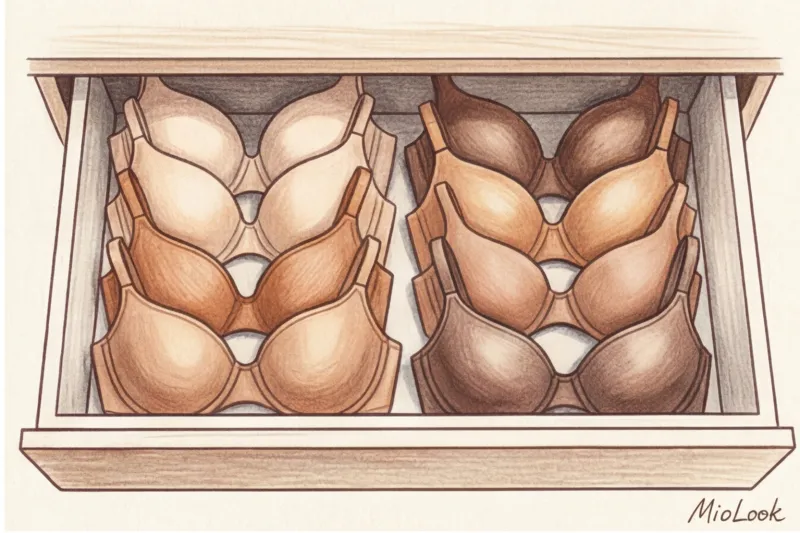
Basic lingerie isn't a stack of five identical faded beige bras. It's a micro-capsule, where each piece fulfills its own purpose. Here's what your arsenal should include:
- Basic everyday bra (2-3 pieces). Sewn cups, side support, and a snug waistband. The main rule: the shade should complement your skin tone, not your outfit. If you're dark-skinned, look for a mocha or caramel shade. Fair-skinned people should choose a soft peach or powder shade.
Stylist life hack: Smooth, deep red underwear (without a cool raspberry undertone) is ideal for pairing with a white shirt—it literally melts under the fabric and isn't see-through, unlike a crisp white bra. - High support sports bra. Forget about stretchy tops that simply flatten your breasts toward your ribs (compression). For a D+, only encapsulation is needed—when each breast has its own cup inside the top, which maintains volume from all sides.
- Wire-free bra for relaxation and flights. Here, support is achieved through a complex system of crisscross elastic bands inside the cup and a high neckline.
Don't know how to combine things from your closet?
Upload a photo of your clothes to MioLook, and the neural network will instantly create dozens of stylish outfits for every day.
Digitize your wardrobeHow the right fit of underwear can transform your business look
Women often invest significant sums in their wardrobes, buying premium silk blouses or perfectly tailored jackets from The Row or Jil Sander, but the garments still look sloppy. In 90% of cases, the problem isn't the garment's cut, but the geometry of the underlying layer.
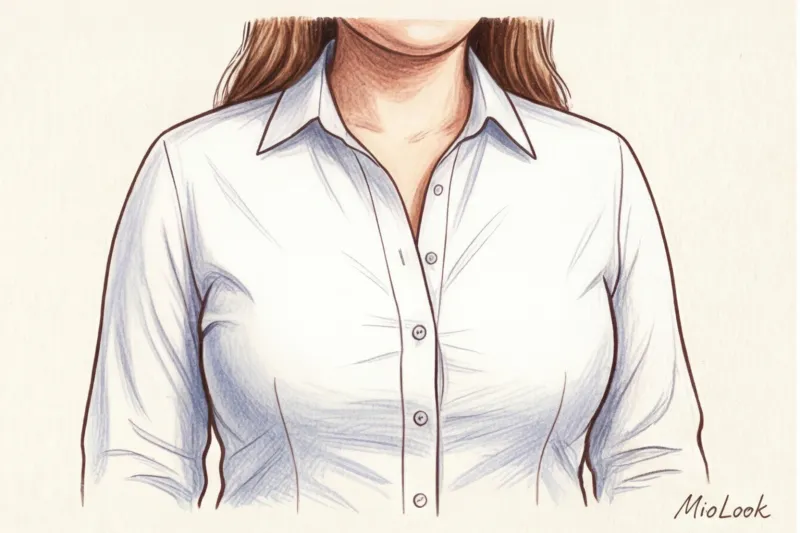
Let's take a classic problem: buttons coming apart on an office shirt. Women spend years trying brands in search of "the one," buying a size up, and having the waist taken in at the tailor. But as soon as we swap out a molded bra (which pushes the breasts forward and outward) for a sewn bra with side support (which gathers the volume toward the center and slightly shifts the projection upward), the problem disappears. The shirt lies perfectly flat. We wrote about this in detail in the article about forming a business capsule wardrobe.
Ecology and care: how to extend the life of supportive underwear
Finding your perfect support bra is only half the battle. The other half is not ruining it in the first wash. The polyurethane fibers (elastane, spandex, lycra) that make up corset mesh are a high-tech, yet fickle, material.
Elastane has three main enemies:
- Hot water (above 30°C). High temperatures literally melt the elastane threads, depriving them of elasticity.
- Washing powders with enzymes. Enzymes break down protein stains, but at the same time have an aggressive effect on delicate fibers.
- Fabric softeners. This is absolutely detrimental to corset mesh. The chemicals in the fabric softener coat the elastane threads, making them slippery. The mesh loses its density, becomes loose, and stretches 1-2 sizes in just a month.
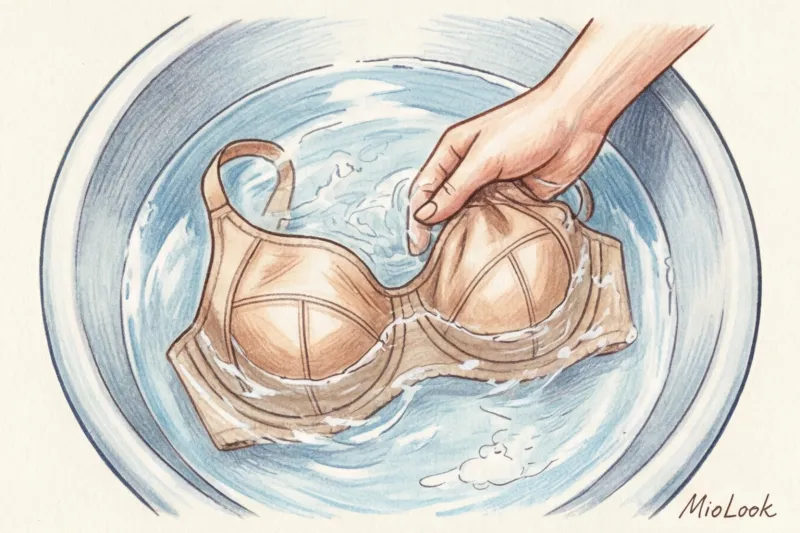
I always recommend hand washing with special liquid detergents for delicate fabrics. And most importantly, follow the "24-hour rest" rule. Never wear the same functional bra two days in a row. Elastane requires exactly 24 hours of unfolded (not on a radiator!) for the fibers to shrink back and restore their original structure.
Basic bras for large breasts aren't a cage you have to squeeze yourself into. They're a clever architectural framework. Once you stop chasing the illusion of a "smooth cup" and embrace stitched construction and supportive waistbands, you won't just forget about back pain. You'll rediscover your figure and be amazed at how flawlessly familiar clothes can fit you.
Frequently Asked Questions
What style mistakes do you make?
Honest Quiz: Find Out Your Wardrobe Weaknesses and How to Fix Them
About the author
Unlock MioLook
for €0.99
Start creating perfect outfits with artificial intelligence
Get access — €0.99 onceRelated Articles
Bras for Large Breasts: How to Choose the Perfect One
Forget about unflattering "granny parachutes" and digging straps. A personal sty...
How to choose a bra for large breasts online
How to choose the perfect lingerie without trying it on? We'll explain which hid...
How to Choose a Sports Bra for Large Breasts
Exercising with a full bust doesn't mean suffering. We'll tell you how to choose...
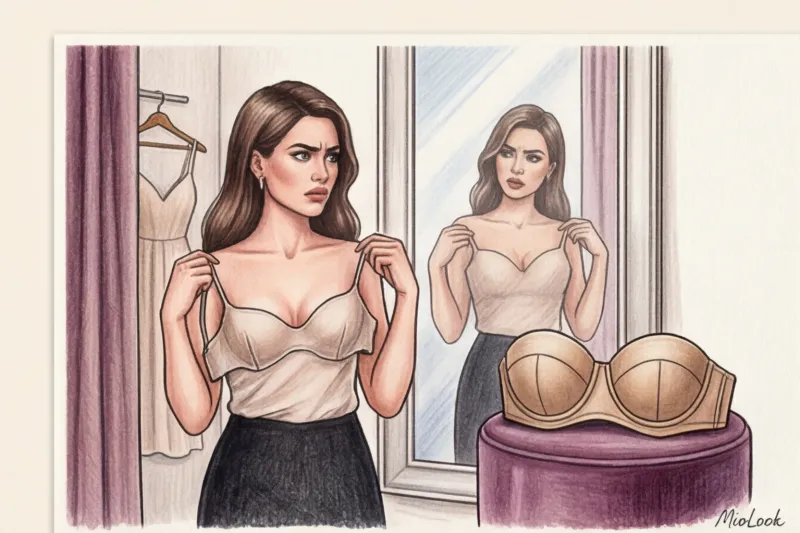
Strapless bras for large breasts: is it possible?
The fear of revealing dresses is familiar to almost every woman with a curvy fig...