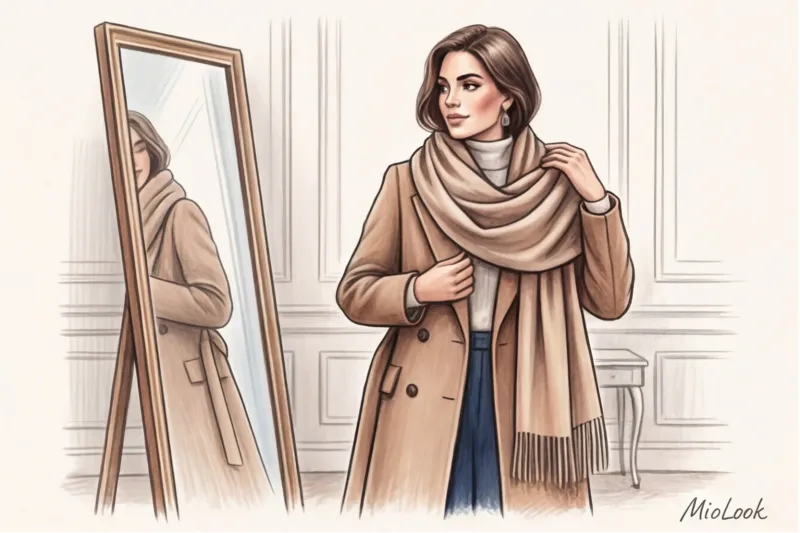
One day, a top manager from a large IT company came to see me for a consultation. She was wearing an impeccable Loro Piana pantsuit made of fine wool, her hair was perfectly styled, and she was wearing an expensive watch. But when she took off her trench coat, a thick, sticky aroma of strawberry cotton candy filled the office. A powerful cognitive dissonance occurred: visually, I was standing before an authoritative leader, but olfactorily, I was a carefree schoolgirl on summer vacation. It was then that I was once again convinced: properly chosen autumn perfumes for women It's more than just a beauty routine. It's the invisible, yet most prominent, element of your wardrobe.
We've covered the concept of seasonal fragrance rotation in more detail in our complete guide to creating a perfume wardrobe Today, I want to talk about why, with the onset of cold weather, our style demands a completely different approach to choosing perfume. Forget frivolous citruses and let's delve into the world of complex woods and noble spices.
Why autumn perfume for women is an investment in status and style
Most women evaluate perfumes on a "like it or don't like it" basis. As a stylist, I suggest a different approach: evaluate perfume the same way you would evaluate a Max Mara cashmere coat or a grained leather tote bag. It's an investment in your branding.
The human brain is designed so that olfactory receptors are directly connected to the limbic system—the area responsible for emotions and memory. According to the Scent Marketing Institute, scent shapes 40% of a person's first impression, even before they utter a single word. A cheap, bland fragrance can cheapen an outfit composed of premium pieces, while a deep, multifaceted woody scent can elevate even a basic pair of jeans and a white shirt.
Let's count Cost-per-wear (price per spray). A 50 ml bottle of quality niche perfume costs an average of €180–€250. That's about 500 sprays. If you use two sprays a day, one spray will cost you about €0.80. The complex woody base will linger on your scarf for days, creating an aura of expensive care, while a €30 mass-market fragrance will wear off after two hours, leaving only a flat, alcoholic aftertaste.
Access to MioLook for €0.99 — one-time payment
A smart AI stylist will select the perfect look.
Get access — €0.99 onceThe Chemistry of Cold: How Woody and Spicy Notes Work in Autumn
Have you ever noticed that your favorite summer perfume with notes of bergamot and sea breeze suddenly starts to smell scratchy and flat in November? It's pure physics.
According to research by The Fragrance Foundation (2023), a 10-15 degree drop in air temperature dramatically alters the volatility of essential oils. Light molecules (citrus, aquatic, and delicate florals) shrink in the cold and evaporate instantly. Sillage is reduced by 30-40%. Only the "heavyweights"—base notes that unfold slowly and create that enveloping cocoon—survive in cool air.
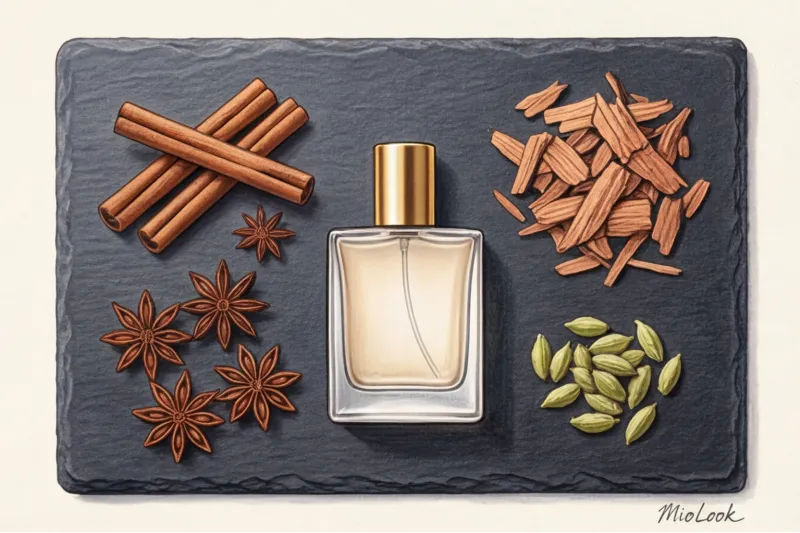
Precious woods: sandalwood, cedar, oud and vetiver
The great perfumer Jean-Claude Ellena once said that woody notes are the "skeleton" of a fragrance. This structure is precisely what we need in autumn.
- Sandalwood: Creamy, milky, intimate. Pairs perfectly with soft knitwear and beige tones.
- Cedar: Dry, strict, with a slight hint of pencil shavings. Conveys absolute composure and intelligence.
- Vetiver: Earthy, smoky, with a green undertone. It sounds like you just stepped out of an autumn forest.
- Oud (agarwood): Resinous, medicinal, luxurious. Requires microdoses and classy clothing (velvet, thick silk).
Warming spices: cardamom, black pepper, saffron and cinnamon
Spices in perfumery work like an accent red lipstick or a bright silk scarf in a monochrome look—they add a touch of flamboyance.
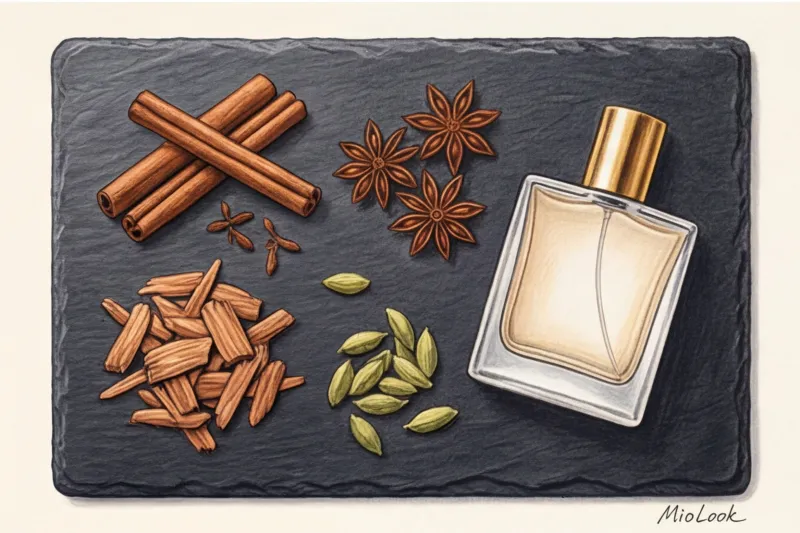
Distinguish between noble, dry spices and confectionery. Black pepper at the start provides a stunning sparkle, waking you up. Saffron adds a leathery, slightly iodine-like, and very expensive note. Cardamom is cool and elegant, unlike edible cinnamon, which often veers toward the kitchen.
Your perfect look starts here
Join thousands of users who look flawless every day with MioLook.
Get access — €0.99 onceThe Biggest Mistake: Why Gourmand Fragrances Can Ruin Your Business Image
There's a pernicious myth: as soon as the leaves fall, you should rush out and buy perfume that smells like praline, vanilla, and cinnamon rolls to "warm up." This is a huge mistake if you're building a career or developing a personal brand.

Overly sweet, sticky (gourmand) notes infantilize the image. They scream desire to please, homely comfort, but not professionalism. In my experience, eight out of ten entrepreneurial clients for whom I replaced overt vanilla with dry resins (amber, benzoin, labdanum) noted that colleagues and partners in negotiations began to maintain a more respectful distance and listen more attentively to their words.
Of course, there are exceptions to this rule. If your goal is to create the most relaxed, homely atmosphere on a weekend out of town, gourmand will work perfectly. But for an office with a dress code (even business casual), choose not the sweetness of a pastry shop, but the warmth of expensive wood.
Olfactory capsule: creating the perfect autumn perfume for women based on your needs
My approach as a stylist is to choose perfumes based on functionality, not brand. If you use the smart wardrobe feature in MioLook To create fall capsules, apply the same principle to fragrances.
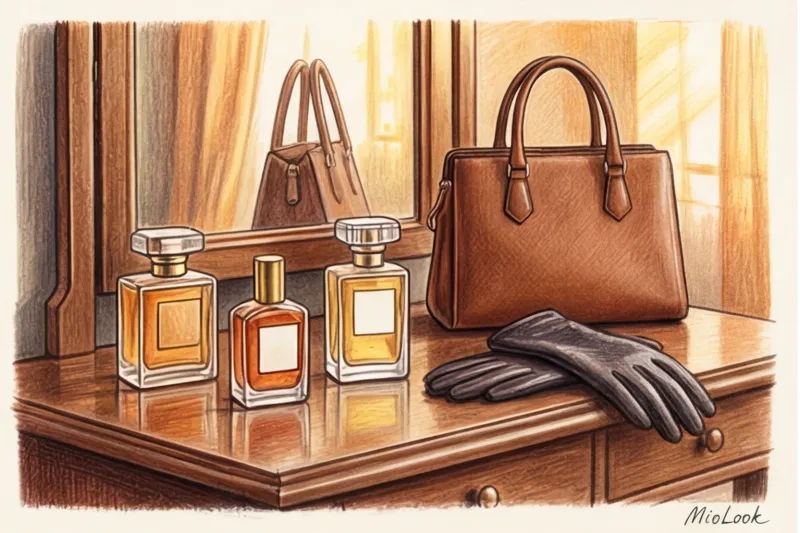
For the office and complex negotiations
This is where an introverted scent comes in. It shouldn't overwhelm you or intrude on your companion's personal space. Woody tea-based compositions are ideal.
Specifications: A moderate trail, notes of juniper, dry vetiver, black tea, and iris on a cedar base. This autumnal perfume conveys composure, focus, and a comfortable distance.
For evening outings, networking and theatre
Autumn evenings call for drama and depth. Here, we can indulge in dense, lingering compositions that will contrast with the chilly evening air.

Specifications: Deep accords of oud, patchouli combined with dark burgundy rose, fine leather, tobacco leaf, and saffron. This is a scent of status, mystery, and uncompromising luxury.
For a relaxed weekend (Smart Casual)
A Friday night at a wine bar or Sunday brunch in a chunky knit sweater calls for olfactory comfort without being cloying.
Specifications: Soft, fleshy scents. Cashmeran, which smells like clean, warmed skin, fig wood with its slightly milky greenness, light sandalwood, and suede. They convey hedonism and tactile intimacy.
The Art of Layering: How to Wear Heavy Fragrances with Cashmere and Wool
A fall wardrobe hides one perfume trap. Natural fabrics (cashmere, tweed, merino wool) absorb and retain oils for weeks. Research by perfume chemists shows that the "lifespan" of a patchouli or oakmoss molecule on natural wool reaches 72 hours or more.
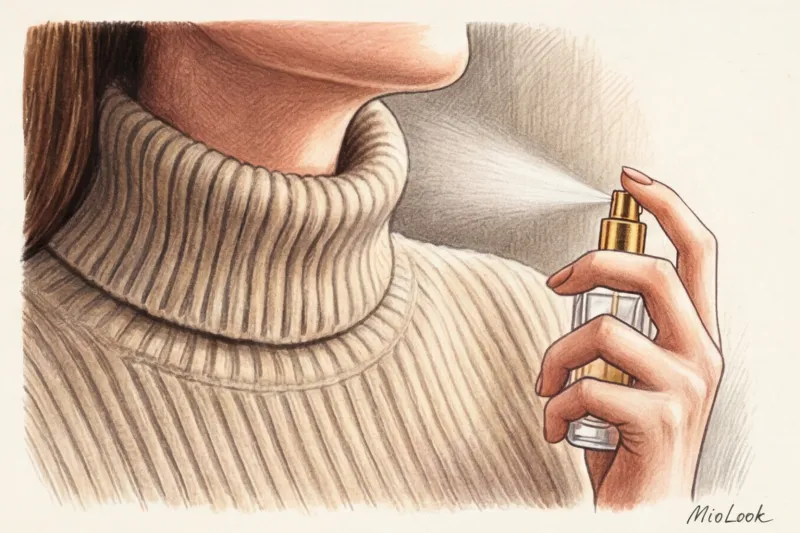
In 12 years of working with premium wardrobes, I've seen dozens of Hermès silk scarves and light-colored cashmere coats ruined by yellow stains from perfume oils (in niche perfumes, the concentration of oils can reach 30%).
How to apply fall perfume:
- Never spray woody or resinous fragrances on light-colored clothing and scarves.
- In autumn, the ideal pulse points change: apply the fragrance to the back of your neck (under your hair) and to the crooks of your elbows (if you're wearing a blouse). Hair diffuses the fragrance beautifully with every turn of your head.
- Use a layering technique: apply a base moisturizer, either fragrance-free or with a light woody undertone, to your body, and then spray your perfume on top while your skin is still damp. The oils will "bond" with the lotion, doubling the longevity without overdoing the sillage.
Checklist: 5 Steps Before Buying an Expensive Woody Perfume
Never buy complex autumn perfumes impulsively at Duty Free or after five minutes of testing them in a corner. It's like buying shoes a size too small just because they're a pretty color. My golden rule for investing in perfume consists of five steps:
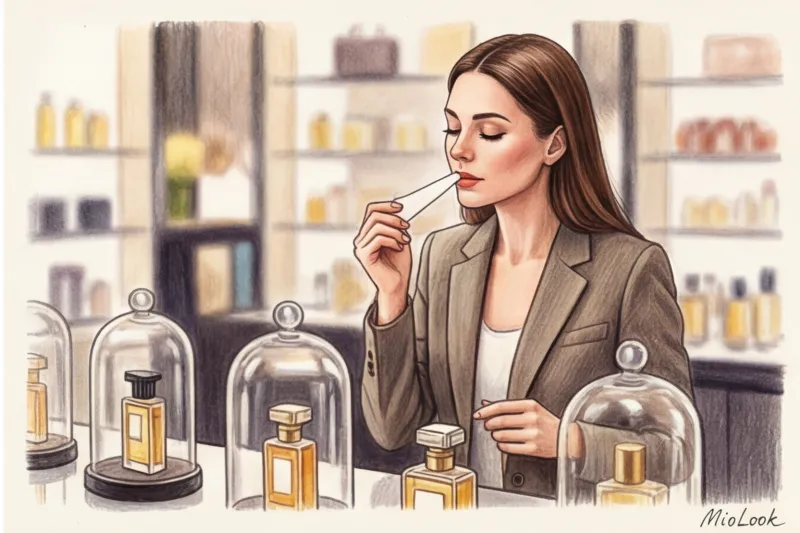
- Test on skin only. Paper blotters fatally distort woody bases. Paper has no temperature, while oud, cedar, or sandalwood unfold only with the warmth of your body.
- Go out into the cool air. Sprayed your fragrance in a warm boutique? Be sure to step outside. Assess how the sillage performs in real autumn temperatures—does it shrink or develop a sour note?
- Spend the night with the aroma. What you smell in the first 20 minutes (the top notes) will disappear. You'll have to live with the base. Test it for longevity and whether it gives you a headache by evening.
- Evaluate the compatibility with your wardrobe. Ask yourself, "Does this scent go with my favorite fall boots and coat?" Smoky vetiver might clash with a romantic floral dress, but it's the perfect complement to a structured jacket.
- Calculate the investment. Divide the cost (e.g., €200) by the estimated number of days you'll wear it per season. If the scent is too specific and you'll only wear it three times during the fall, it's a bad investment. Choose a versatile woody base that you'll want to wear every day.
A change of season always means a refresh. Putting summer clothes on the top shelves (by the way, MioLook (This is a great way to digitize and systematize this process), and don't forget to remove those frivolous, fruity bottles. Choose a single, yet impeccable, composition based on cedar, sandalwood, or spices. Let your fragrance become that confident finale to the sentence you convey to the world with your impeccable style.