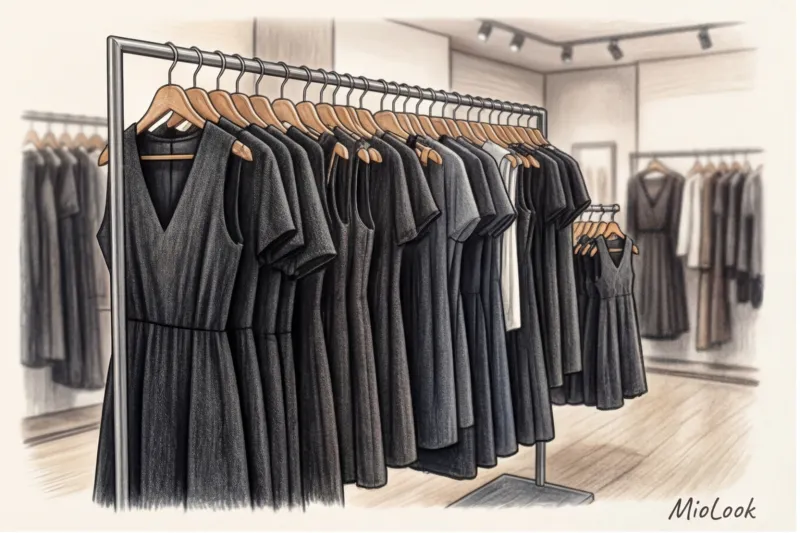
Imagine a familiar situation: you've been searching for the perfect basic black jacket for ages. You've compared lapels, studied the fabric, finally placed an order for €150, and are happily waiting for the courier. What happens the next day? The same online store starts pestering you with banners, offering to buy... ten more black jackets. As a stylist with 14 years of experience, I regularly hear the same phrase from my clients: "Why do algorithms think I'm some crazy collector of identical jackets?"
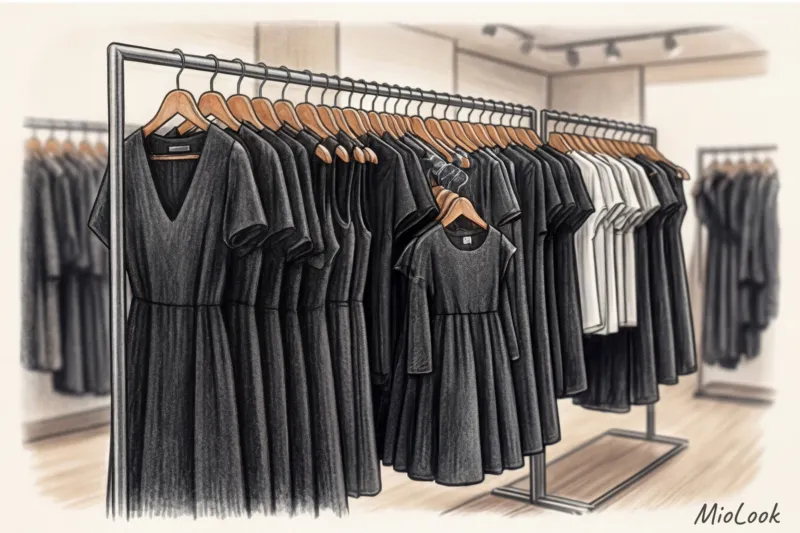
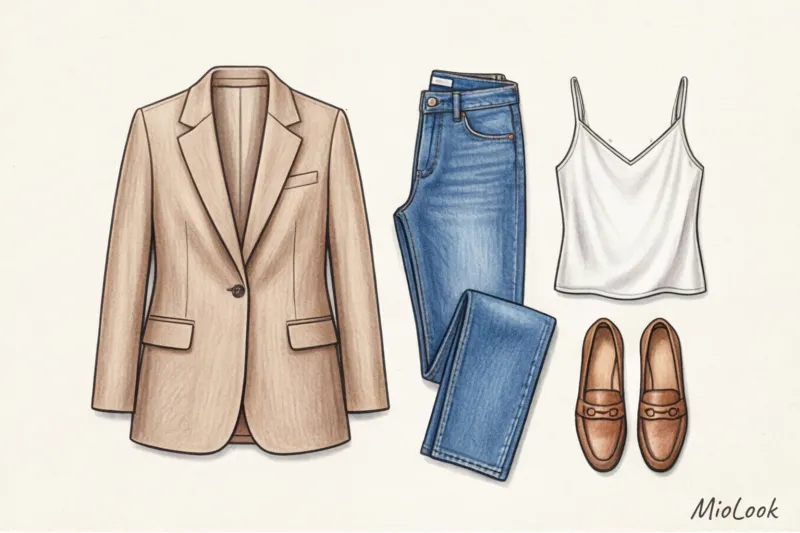
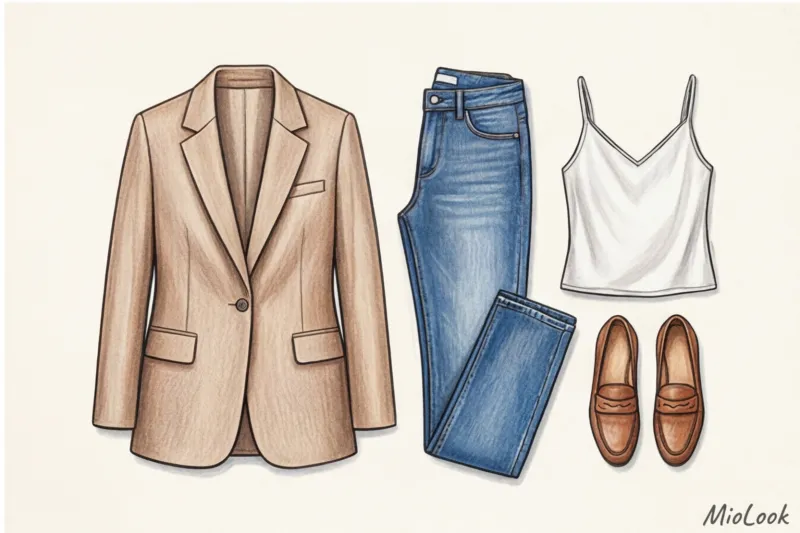
The answer is simple: old retail algorithms don't understand how people actually wear clothes. They see a click on the "jackets" category and bombard you with similar products. But true personalization in e-commerce works differently. It doesn't try to push a duplicate of the item you bought. It works like a professional shopper: it understands that to go with that jacket, you now need the perfect pair of straight-leg blue jeans, a white T-shirt made of heavy cotton (at least 180 g/m²), and leather loafers. We covered the evolution of such technologies in more detail in our The complete guide to analytics for the fashion business.
Today we'll discuss how artificial intelligence has digitized styling rules and why turning algorithms into "digital stylists" is the only way for fashion brands to survive and solve their biggest pain point: the colossal return rate.
The Illusion of Choice: Why Old-Fashioned Personalization in E-Commerce No Longer Works
For years, the "Frequently Bought Also" block was controlled by primitive collaborative filtering. If a thousand women accidentally threw red socks on sale into their shopping cart alongside their blue jeans, the system would aggressively suggest those socks to everyone else. This is marketing based on statistical anomalies, not style.
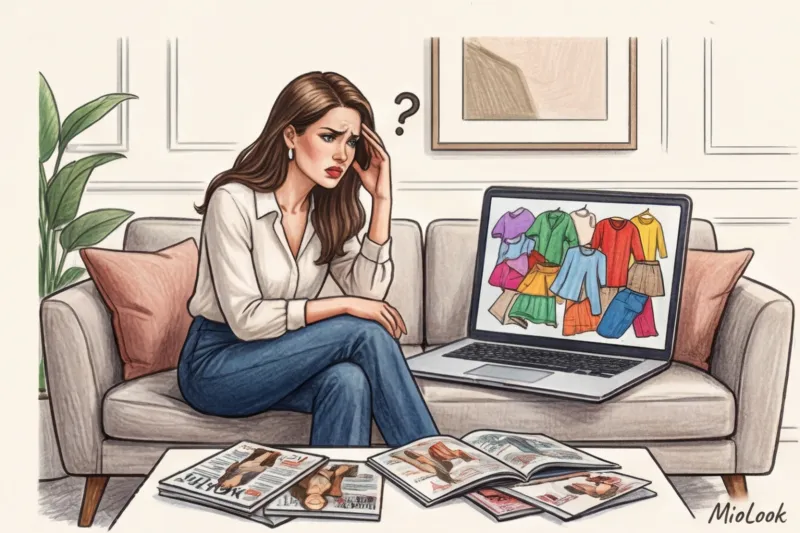
The biggest mistake most fashion retailers make is focusing on selling a single item. But a woman doesn't come to the store looking for "black pants." She comes looking for a solution to the problem of "I have nothing to wear to an important presentation" or to look like a successful expert. When you offer her an endless stream of similar products, you shift the heavy lifting of styling onto her.
"The 'similar products' algorithm is killing sales. Offering a customer who bought blue jeans five more pairs of blue jeans is a strategic mistake. The customer has already satisfied that need. Now they need a ready-made capsule collection."
True customer care begins when the store takes charge of visual assembly. And this is where neural networks trained on the laws of color, body geometry, and stylistic trends come into play.
Neural Networks as a Digital Stylist: From Algorithms to Contextual Understanding
Modern AI has learned to recognize not just a category ("skirt") but also complex attributes: contrast level, stylistic vector (dramatic, naive, classic, casual), and fabric texture. For example, if a client is looking for a tailored wool jacket from Massimo Dutti or COS in mid-August, predictive analytics understands: she's putting together a fall business wardrobe. She'll soon need high-quality basic viscose-silk turtlenecks and structured tote bags, not straw hats on sale.
I had a telling case in my practice. One of my clients complained that a major marketplace was constantly offering her extremely low-rise jeans, Y2K-style. Why? Because a month ago, she bought a crop top for her teenage daughter using her account. The old algorithm had broken down. A smart AI would have detected the discrepancy between her usual purchase history (elegant casual, average order value €200-300) and this anomaly.
Working on a methodology for Smart Recommendations Features in MioLook We specifically designed the neural network's architecture to reflect the laws of visual body contouring. The algorithm shouldn't suggest a blouse with massive ruffles on the chest to a client who regularly looks for items that visually elongate the upper body. AI must think in silhouettes.
Capsule Approach to Cross-Selling: The Art of Smart Upselling
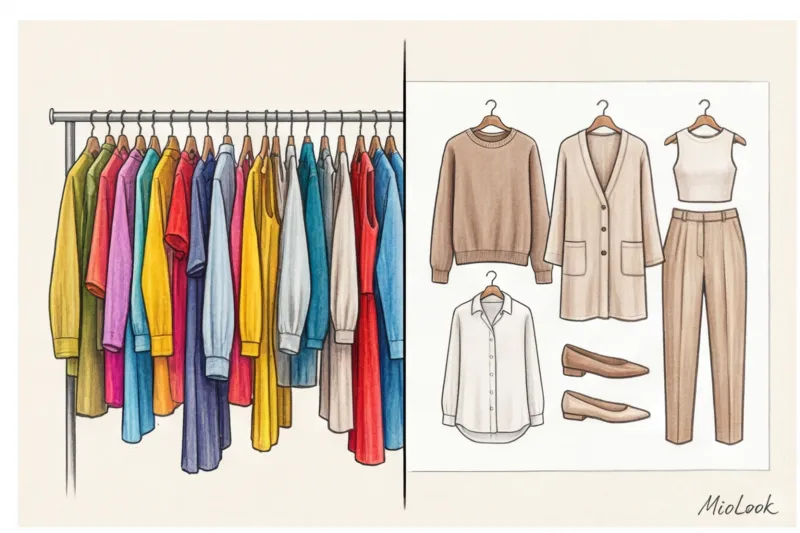
Cross-selling is transforming today from random accessories to assembling a complete Total Look right on the product page. The math of capsule collections works flawlessly: five items that perfectly coordinate in color and proportions sell much better than five disparate trends.
When a client sees how terracotta trousers work with an olive jumper and caramel ankle boots, the average order value (AOV) increases organically. You're not pushing a product, you're inspiring and saving the client time in front of the mirror in the morning.
Your perfect look starts here
Join thousands of users who look flawless every day with MioLook. Create your capsule look in just a few clicks.
Get access — €0.99 onceVirtual Fitting Room and Size&Fit: Key Conversion Drivers
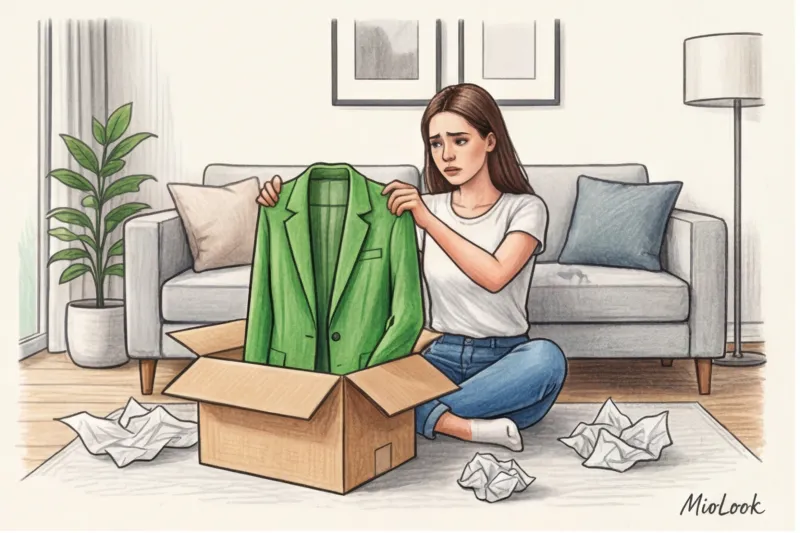
Let's face it. According to a global report by McKinsey & Company (2024), up to 40% of online fashion purchases are returned to retailers. And you know what's most frustrating? More than 70% of these returns are not due to defects, but to fit issues (size and fit) and the fact that the item doesn't fit as the customer imagined.
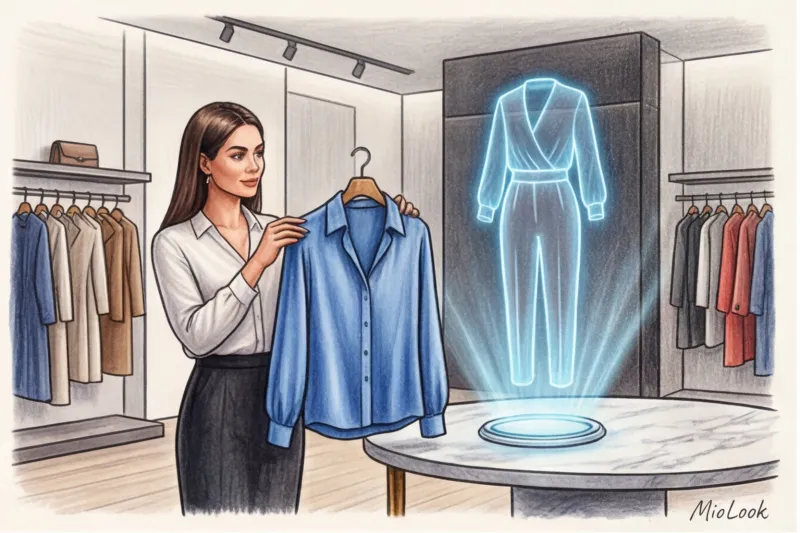
How to reduce Returning clothes to an online store Stop making customers guess. Virtual fitting technologies have evolved from clunky 2D clothing stickers over photos to complex 3D silhouette modeling.
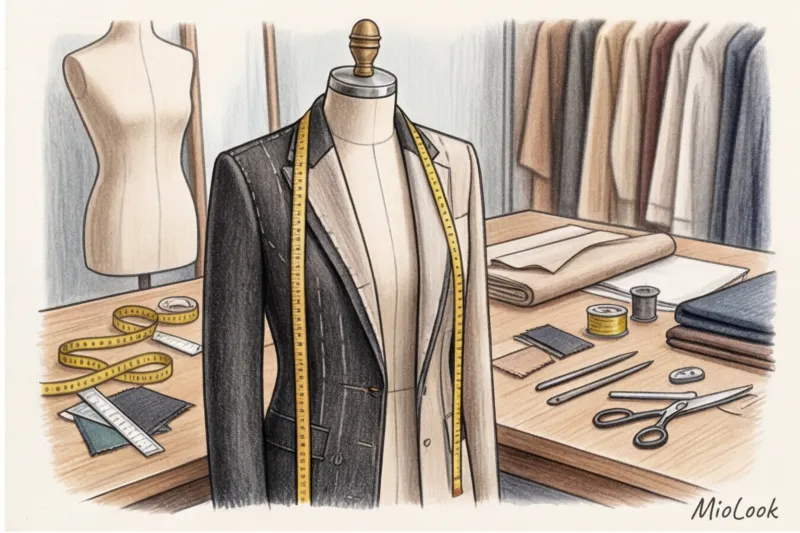
Size&Fit algorithms have revolutionized the way we shop: they no longer ask "what size are you?" They compare specific brand patterns (for example, knowing that Zara often runs small in the shoulders, while H&M runs large in the hips) with the customer's actual measurements. The reduction in friction during shopping is enormous: customers no longer order three sizes of the same dress, knowing in advance that two of them will definitely be returned to the warehouse.
But there is an important limitation here that businesses often remain silent about. Virtual fittings don't work perfectly with complex, rigid textures. If you're selling suits made of thick bouclé, heavy tweed, or dresses with complex architectural draping, a 3D engine isn't yet capable of 100% realistically conveying how this fabric will fold on a real body while in motion. For such items, a good old-fashioned video walkthrough of the model and a detailed description of the measurements remain indispensable.
Hyper-personalization based on a smart wardrobe
The most powerful paradigm shift in e-commerce is the integration of stores with smart wardrobe management apps. It's the concept of "buying the missing piece of the puzzle."
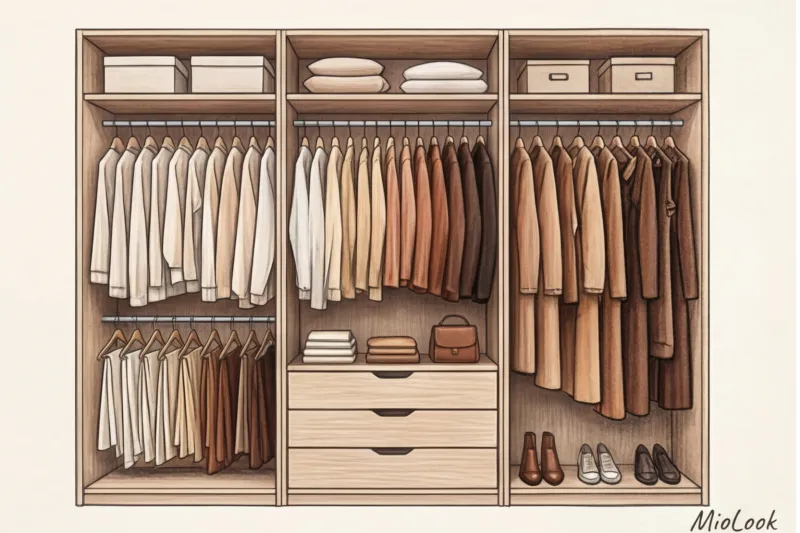
Imagine if the store knew what was ALREADY hanging in your closet. As a visual experience architect in MioLook , I can say with certainty: it changes everything. If a neural network analyzes your digital wardrobe and sees a flawless beige trench coat, blue jeans, and white sneakers, it won't suggest another jacket. It will suggest a statement silk scarf for €60 or a rich burgundy bag, knowing that this color will perfectly complete your existing look.
This kind of personalization evokes a deep sense of gratitude in the user. You're no longer trying to sell them unnecessary items—you're helping them maximize the return on their clothing investment.
Access to MioLook for €0.99 — one-time payment
A smart AI stylist will analyze your clothes and select the perfect look for any situation.
Get access — €0.99 onceThe Cost of Mistake: How Lack of Personalization Leads to Overstock
It's often said that personalization is a pretty front-end gimmick meant to please the customer. This is a dangerous myth. Personalization is a matter of your warehouse's survival.
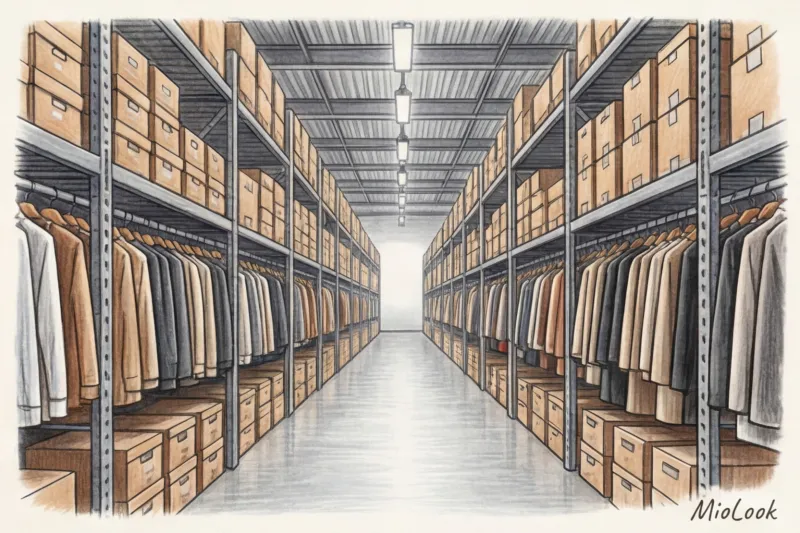
According to a 2024 WGSN study, implementing predictive AI and smart recommendations reduces overstock by 20-25%. If you can't effectively recommend products to the right audience, excellent basic items simply sit on the shelves. Managers panic, launching discounts of up to 70%, killing margins and devaluing the brand.
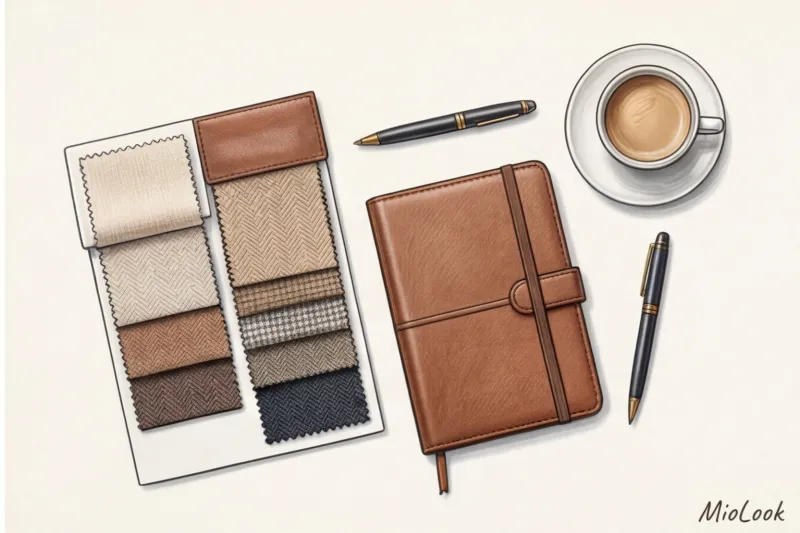
There's also an environmental aspect. A smart recommendation system finds the "right" buyer for each item. That unconventional jacket that no one noticed in the general catalog will be shown to a woman with a distinctly avant-garde style, and it will be purchased at full price (for example, €250), instead of being sent to the recycling center a year later.
Business Checklist: 5 Steps to Implementing AI Personalization
If you're a fashion brand owner or e-commerce director, here's a practical guide to action. Where to begin your transformation?
- Audit of the current recommendation system: Stop using "customers also bought" widgets based solely on other people's shopping cart history. Switch to visual recommendations.
- Implementing advanced tagging: This is the foundation. The neural network won't work if your database lists an item as "Red dress, item no. 123." The tags should be: "deep V-neck, warm undertone, A-line silhouette, midi length, composition: 80% viscose, style: romantic/dramatic."
- Integration of size-matching solutions: Implement plugins that allow customers to enter their height, weight, and body type so the system can automatically prevent them from purchasing the wrong size.
- Creating capsule lookbooks: How to increase the average order value in a clothing store Train your local neural network using ready-made image formulas. Load 100 ideal combinations, hand-picked by a stylist, so the AI can understand texture-matching patterns.
- In-depth analysis of returns: If trousers from a new collection are returned 50% of the time with the note "size does not fit," the system should automatically adjust the recommendation for new customers (for example, display a message saying "We recommend ordering a size larger").
The Future of Fashion E-Commerce: Empathy Through Technology
Over the years of working with personal wardrobes, I've realized one thing: buying clothes is a very sensitive process. Women often doubt their figures, get lost in trends, and get tired of aggressive marketing.
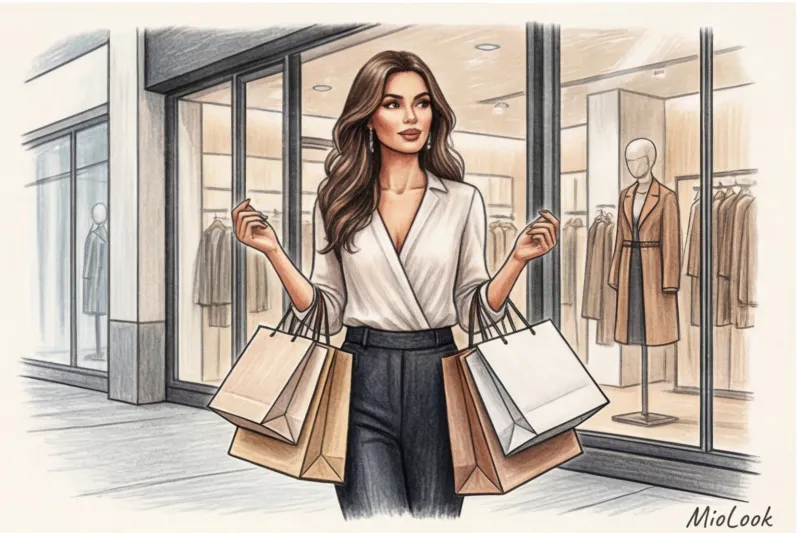
Personalization in the e-commerce of the future isn't about stalking customers with banners all over the internet. It's about creating a seamless, thoughtful experience. It's a shift from one-time transactions to long-term partnerships in building a personal style.
Machines will never replace human taste. But they can take over the tedious process of searching, filter out information noise, and leave us with only the pure joy of perfectly fitting clothes. Implement AI not to force people to buy more, but to help them buy. Right These are the brands that will capture customer loyalty in the next decade.