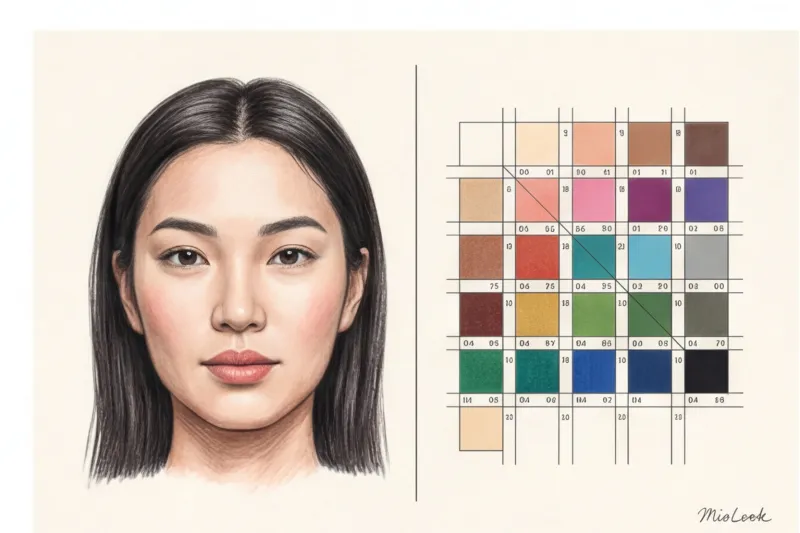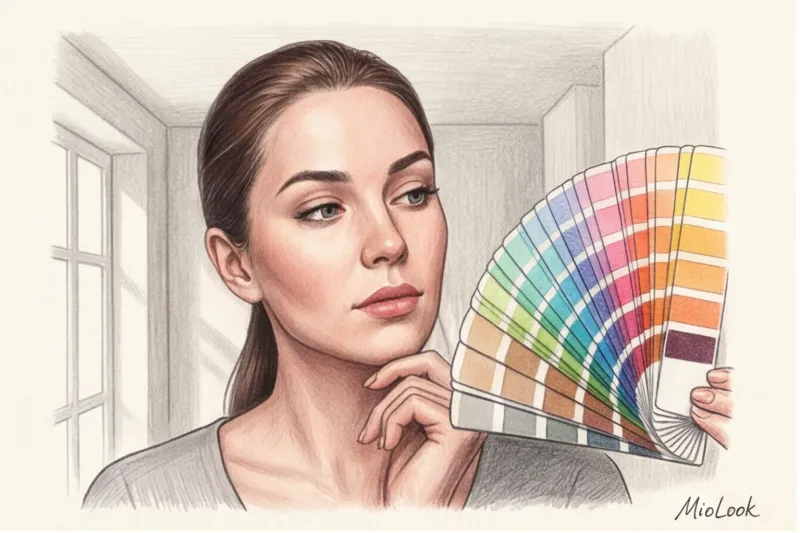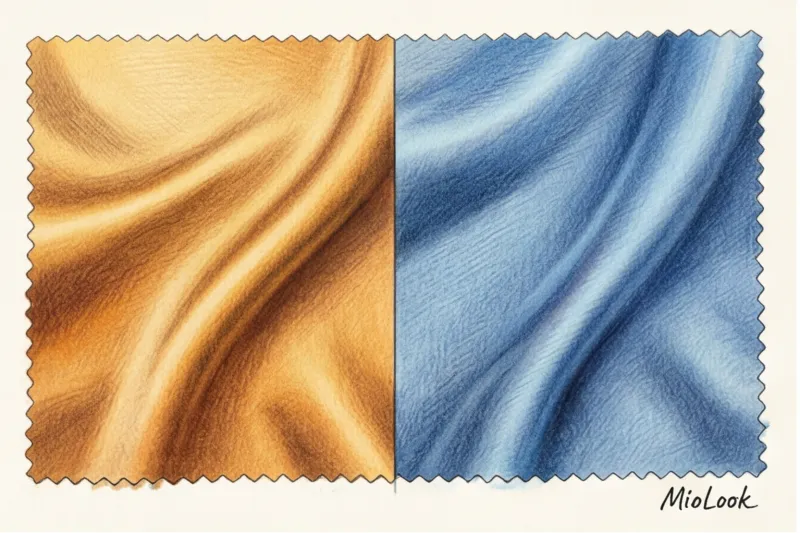
I remember visiting clients in 2012 with a 15-kilogram suitcase. Inside were hundreds of test fabric scarves—professional drapes. A color-determining session took about two hours of tediously applying the pieces to the face in daylight. Today, everything has changed. To make 12 color types of appearance: photo test, neural network It takes exactly three seconds of computer time. And you know what? The result is more objective than the verdict of a living person.

We have already discussed the evolution of this approach in more detail in our A complete guide to determining your color type using AI But today I want to talk about something else: why even the smartest algorithm will give you nonsense if you feed it the wrong selfie, and how to get the most out of a digital stylist.
From Drapery to Algorithms: Why Pixel Math Is More Accurate Than the Eye
Many of my fellow stylists still resist technology, claiming that AI doesn't "sense" human perception. But the paradox is that the human eye is an extremely unreliable instrument. We are susceptible to the optical illusion of simultaneous contrast.
What does this mean in practice? If you're standing in a fitting room with peach-colored walls, your skin tone will appear warmer than it actually is. Our visual cortex automatically adjusts colors based on the background. The algorithm doesn't. According to research into the MioLook AI styling architecture (2024), the neural network doesn't "look" at you in the traditional sense—it reads pure HEX pixel codes.
I once made this mistake myself. A client showed up wearing a bright mustard sweater, and her skin literally soaked up the warmth. It took me 15 minutes of draping to realize it was pure, high-contrast "Winter." A machine would have spotted it instantly, because it isolates colors from each other.
How an Algorithm "Sees" Your Face: The Anatomy of AI Coloristics
Once you upload a photo, the magic ends and the real biometrics begin. The system scans over 120 control points on your face.
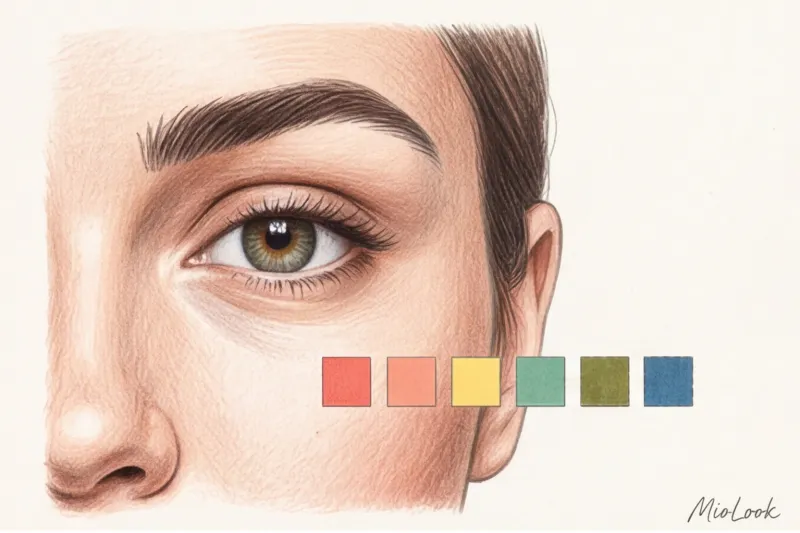
The neural network evaluates three key metrics that form the basis of any color scheme:
- Temperature: the ratio of yellow (warm) and blue (cool) pigments in the skin undertone.
- Lightness (Value): how dark or light your natural colors are (the depth of your hair color, eyebrows, irises).
- Contrast (Chroma): The algorithm measures the difference between the lightest area (the sclera) and the darkest (the pupil and iris contour). This is a mathematical indicator of your clarity or dullness.
The machine doesn't think, "Oh, she has blue eyes, so it's Leto." It calculates a numerical contrast gradient. And that's why the result is free of bias.
Access to MioLook for €0.99 — one-time payment
A smart AI stylist will select the perfect look based on your unique appearance.
Get access — €0.99 onceThe biggest mistake in testing: how to prepare for scanning
There's a golden rule in IT: "Garbage in, garbage out." If you upload a selfie from a party taken with the front camera under yellow incandescent light bulbs, the algorithm will honestly analyze what it sees and give you "Warm Autumn," even if you're an ash blonde.
One of my clients complained that three different apps gave her three different skin types. When I looked at her photos, everything became clear. One photo had the iPhone's aggressive auto white balance (which always "warms" the skin for a beautiful photo), another had harsh shadows from the sun, and the third had foundation with a pink undertone.
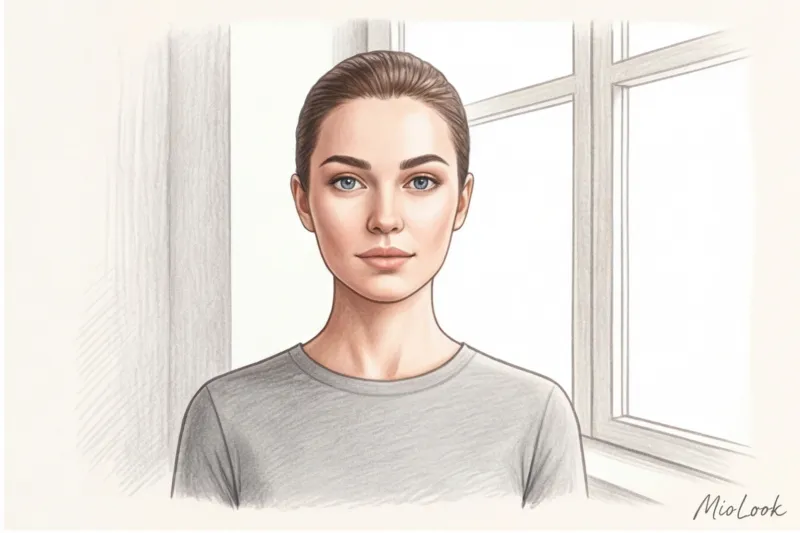
Modern smartphone automation can distort actual skin tones by up to 30%. For a neural network to function as a professional colorimetric scanner, you need to provide it with laboratory conditions.
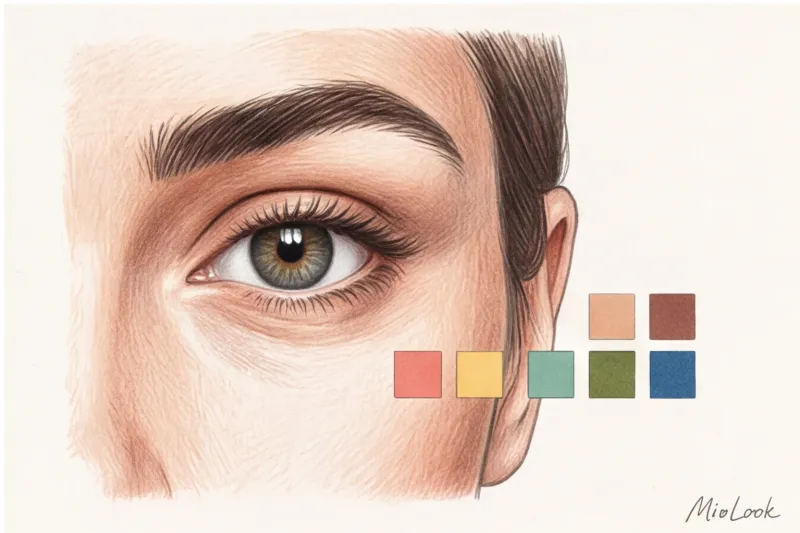
A stylist's checklist: the perfect photo for a neural network
- Light: Only natural, diffused light from the window. No direct sunlight (it creates a yellowish tint) or ring lights.
- Cloth: Wear a neutral gray or white top. Bright clothing will create a color reflection on your chin.
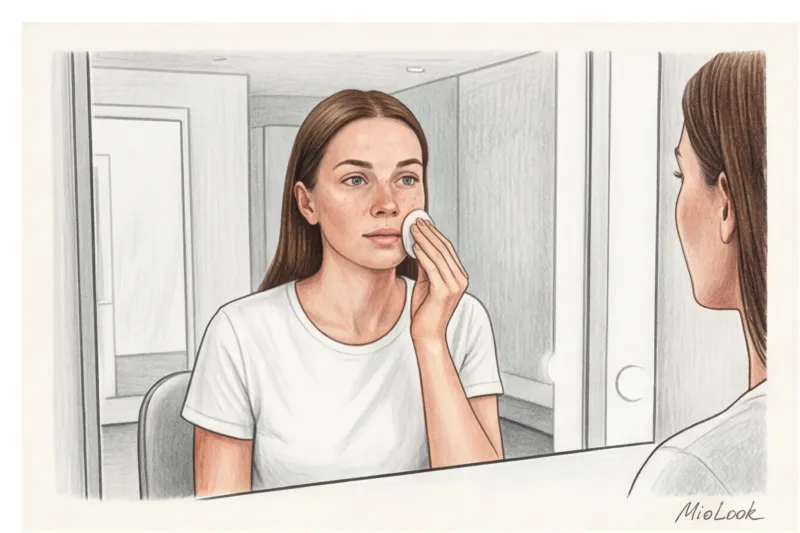
- Face: Completely naked. Even clear BB cream and lip balm need to be washed off.
- Hair: Pull your hair back into a sleek ponytail. If your hair is dyed, try to include your natural roots (at least 1–2 cm) or eyebrows in the shot.
The 12 Seasons System: What Exactly Is Artificial Intelligence Looking For?
The classic directional method divides appearance into four basic seasons, each of which has three subtypes. You can read more about this in the article about A guide to choosing a palette for 12 color types.
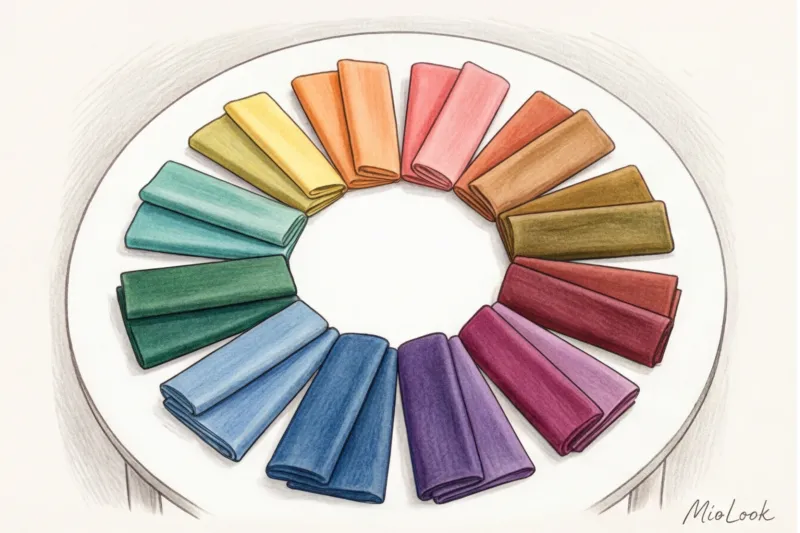
But how exactly does AI classify you? The neural network identifies your dominant characteristic For example, if your natural undertones are primarily complex, grayish, and mixed, the AI assigns you the dominant "Soft" type. Only then, based on the temperature (slightly warmer or slightly cooler), does it classify you as "Soft Autumn" or "Soft Summer." For the algorithm, the boundary between adjacent types is simply a shift in the HEX value by a couple of notches.
Your perfect look starts here
Join thousands of users who look flawless every day with MioLook.
Get access — €0.99 onceAI vs. Human Stylists: When Can an Algorithm Make a Mistake?
It would be unfair to say that artificial intelligence is flawless. There are situations where even an advanced neural network stumbles. The most insidious enemy of algorithms (as well as novice stylists) is olive skin tone.
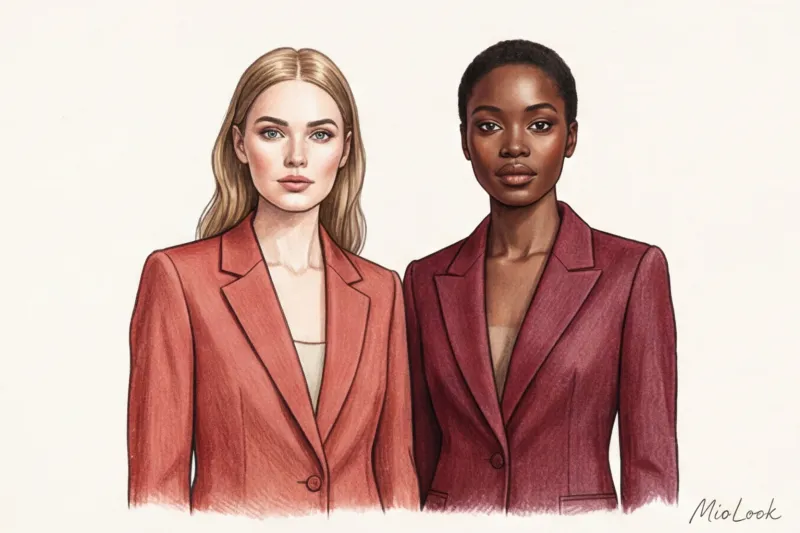
Olive appears visually warm due to its greenish tint (and green contains yellow). But according to the rules of coloristics, this cold Undertone. Smartphone cameras often fail to capture this complex undertone, and basic AI can mistakenly send you to a warm palette.
The second limitation is skin conditions. Rosacea, active acne, or a strong tan create "noise" on the face. The algorithm reads superficial redness and may conclude that you're a "Cold Summer" simply because your cheeks are red, even though your natural pigment is warm. In such cases, the test result isn't a rigid dogma, but a mathematical basis that you should critically evaluate.
You've Got Your Color Type: How to Apply a Digital Palette to Your Life
Knowing you're a "Dark Winter" is only half the battle. The real magic begins in the store. You can't touch a phone screen with HEX codes to the fabric—screens distort the colors.
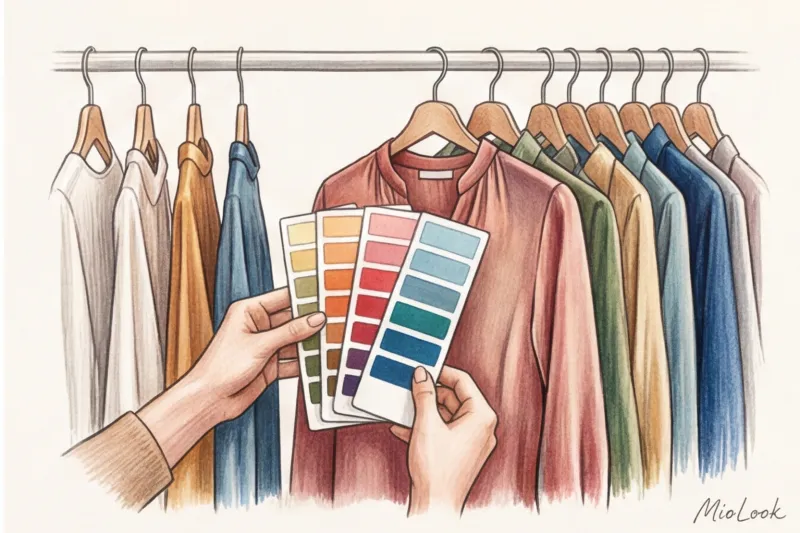
I teach my clients the "color anchors" method. Choose three key shades from my AI palette that are guaranteed to make your complexion look fresh. For example, emerald, cool burgundy, and pure white. Look for items for portrait zone (tops, blouses, scarves) in these colors. We wrote about how these colors work in the long term in the article about ideal capsule wardrobe colors.
What to do with colors that aren't yours? Wear them! But keep them away from your face. Pants, skirts, shoes, and bags can be any color. The nature of your coloring only matters where the fabric reflects on your skin. You can buy a basic T-shirt for €15 or a luxurious cashmere cardigan for €250—if the shade is mathematically correct for your face, you'll look expensive in either case.
From color type to smart wardrobe: integration with MioLook
Color type analysis isn't the end goal. It's the foundation. In the app ecosystem MioLook The results of your photo test are instantly integrated into the image assembly algorithms.
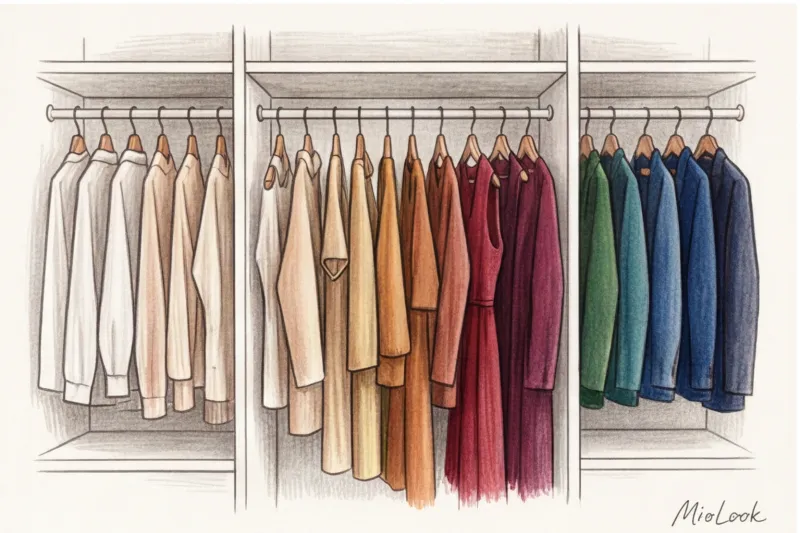
How does it work? Let's say you're loading a new jacket into your virtual wardrobe. The AI already knows that your color scheme is "Light Spring." It won't just suggest combinations from what's in your closet. It will filter out overly heavy, contrasting combinations (for example, a black top with white pants), which will "kill" your delicate, natural watercolor look, and instead suggest monochrome, light-toned looks.
Moreover, it saves you a huge amount of money on shopping. In the €50 to €150 segment, we often make impulse purchases simply because we liked the color on the mannequin. But the smart filter will show you only those items that 100% resonate with your biometrics.
Technology has stripped fashion of its excessive snobbery. You no longer need to pay hundreds of euros for a colorist's subjective opinion. Take five minutes to properly prepare the lighting, take an honest photo without makeup, and let the impartial math do its work.