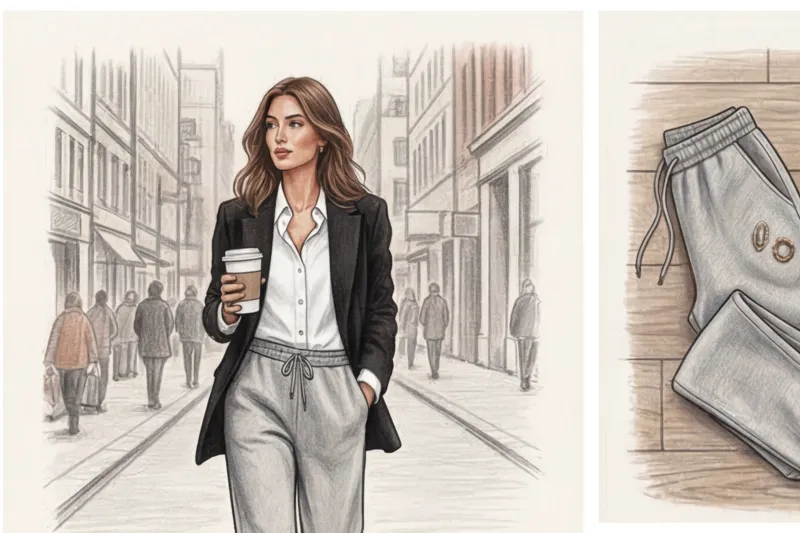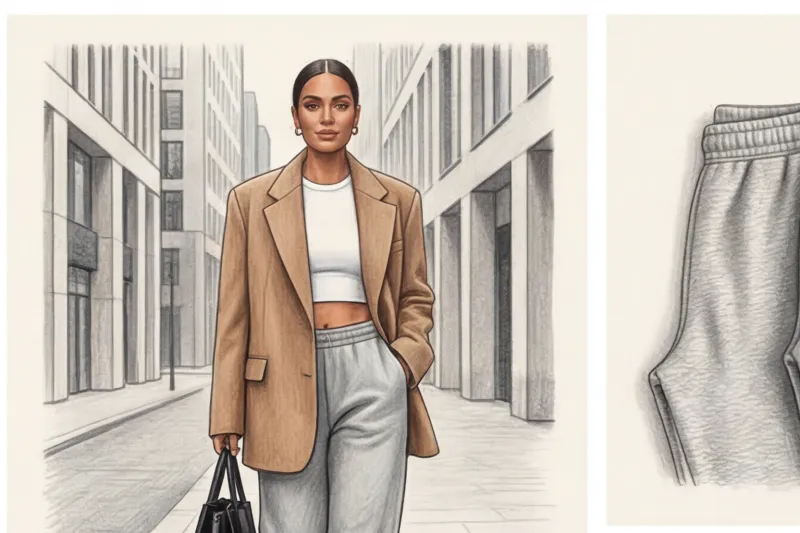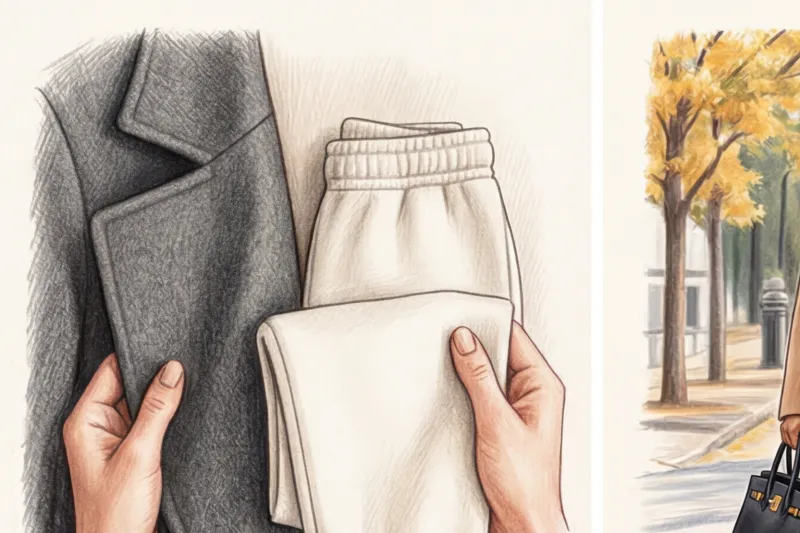
You've probably seen this picture on Pinterest: a girl casually strolling down an autumn street with a glass of matcha in hand. She's wearing a flawless camel coat, gray joggers, and crisp white sneakers. You're inspired, throw on your favorite sweatpants under a classic coat, look in the mirror, and... realize you look like you just went down to pick up a pizza delivery while on sick leave. Sound familiar?
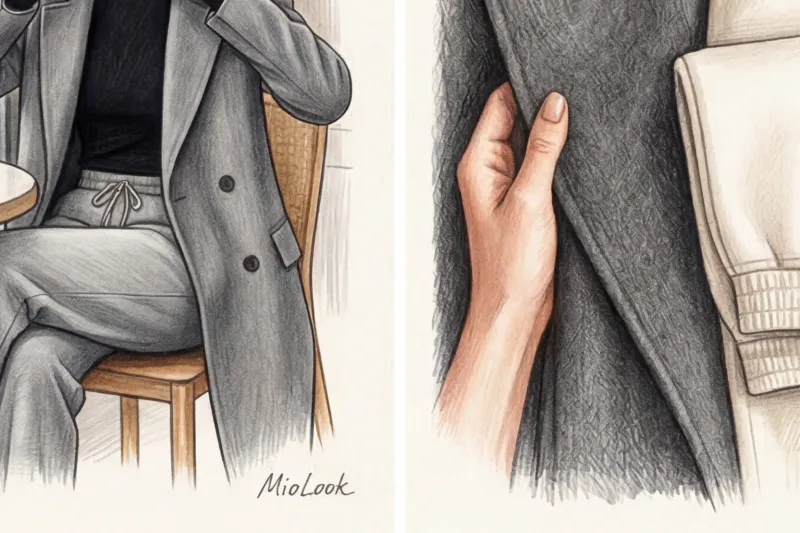
It's not about your figure or the color of your clothes. The main reason why sweatpants with a coat Often look sloppy in real life, which is due to the "textile geometry" and density of the materials. We've already discussed the basic rules for styling relaxed bottoms in our complete guide. What to wear with sweatpants: stylish combinations And today I suggest looking at this trend through the eyes of a stylist-technologist.
Textile Geometry: Why Sweatpants and Coats Often Look Sloppy
The biggest mistake I see on the street every day is a clash of visual weights between fabrics. Imagine an architectural, structured coat made of thick wool that holds its shape. Now look at thin melange sweatpants that flow softly down the legs and instantly stretch out at the knees. Next to the crisp wool, such knitwear looks like nothing more than pajamas.
According to the Business of Fashion (2023) report on the evolution of the hybrid wardrobe, the secret to elevated comfort lies in the structural parity of layers. The rigidity of the outerwear should be supported by the dimensional stability of the base layer.
"You can't hang a heavy, classic frame on a paper wall. Just like you can't wear a heavy, double-breasted coat over a thin, shapeless knit without losing the elegance of the silhouette."
The rule of density (GSM) and visual weight
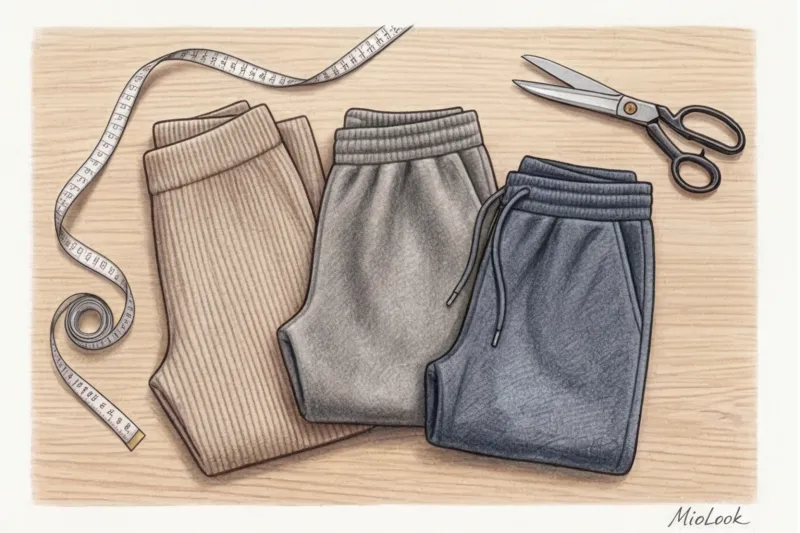
In the textile industry, fabric density is measured in grams per square meter (GSM). Regular sweatpants or summer joggers have a density of around 200–250 GSM. These are too thin for outdoor wear. If you want to wear sweatpants with outerwear, look for a density of 350–400 GSM. This is typically made of heavyweight fleece (French terry) or thickly brushed cotton.
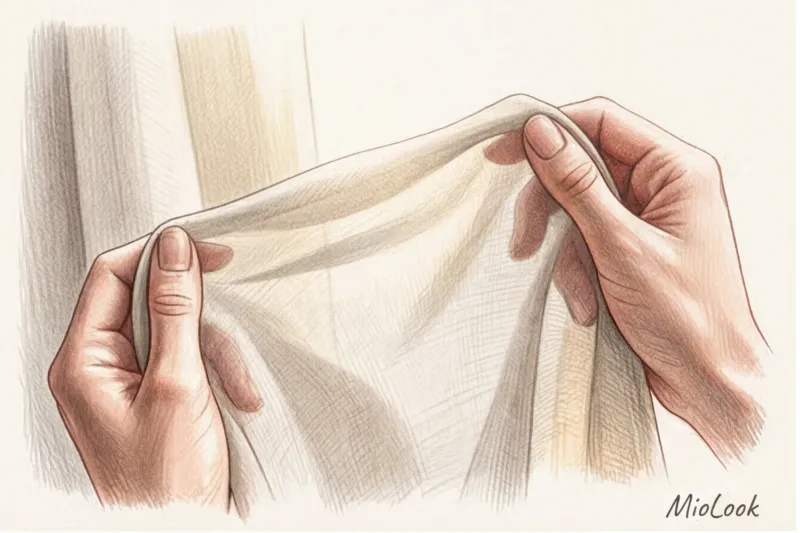
How can you check this in a store without a scale? Take the fabric between two fingers and try to squeeze it. A dense material resists compression, it springs back and feels like a good pair of jeans, not a T-shirt. If you're unsure whether the texture of your joggers matches your favorite coat, take a photo of them and upload them to MioLook — a smart algorithm will help you create harmonious combinations based on the density and color of your items.
Access to MioLook for €0.99 — one-time payment
A smart AI stylist will select the perfect look for every day, taking into account your wardrobe and style.
Get access — €0.99 onceChoosing the perfect sweatpants to pair with your outerwear
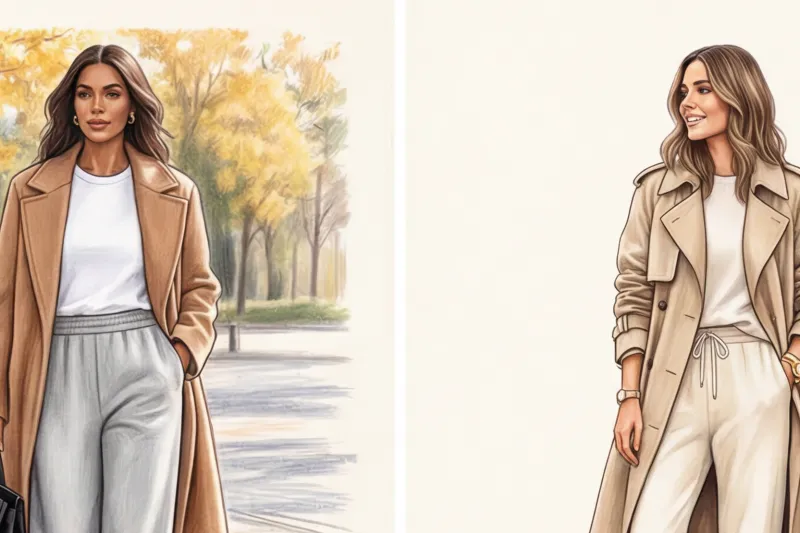
Not every style will survive alongside classics. We'll immediately rule out drop-crotch Aladdin pants, skinny joggers, and any styles with large neon logos on the thigh. These are strictly gym staples.
What works flawlessly:
- Wide-leg straight pants — visually work like a palazzo, but provide the comfort level of pajamas.
- Strict joggers - without excess volume at the hips, with a neat, not too tight elastic band at the bottom.
- Flared models with slits - fit perfectly on massive shoes.
I'd like to touch on the topic of composition separately. I had a telling experience: I was conducting a personal wear-resistance test on basic items. It turned out that the stiff lining of a classic trench coat (especially one made of viscose or polyester blend) acts like fine sandpaper on cheap knitwear. If your joggers contain more than 20% polyester, the friction of the coat lining while walking is guaranteed to cause pilling on your thighs in just 2-3 weeks of active wear.
Invest in 100% organic cotton pants. Yes, these pants may cost as much as a good pair of premium jeans, but they'll stay smooth and comfortable for years, making every penny worth the investment.
Sweatpants with a trench coat: the architecture of a spring look
The trench coat is a historically military uniform element, meaning it carries a maximum dose of formality. Epaulets, a yoke, a stiff collar, and straps at the cuffs—all this architectural detailing perfectly balances the casual ease of sweatpants.
The easiest way to look expensive with this combination is to go monochrome. A beige trench coat paired with cream or off-white pants made of heavy cotton creates a continuous vertical line of color. The main rule: wear the trench coat unbuttoned. A tied belt over joggers often creates a "man in a sack" effect.
There's a styling trick I call "showing off subtle areas." When you're wearing a voluminous coat and wide pants, your silhouette can become bulky. Be sure to roll up or lift the sleeves of your trench coat to show off your slender wrists (and a statement watch or bracelet). This subtle touch brings femininity back into your look.
Length and proportions: how to avoid cutting off your height
The length ratio is critical here. If you choose wide-leg sweatpants, your trench coat should be midi or maxi length—it should end below mid-calf. A short, knee-length coat paired with wide-leg pants visually cuts the figure in half and shortens the legs.
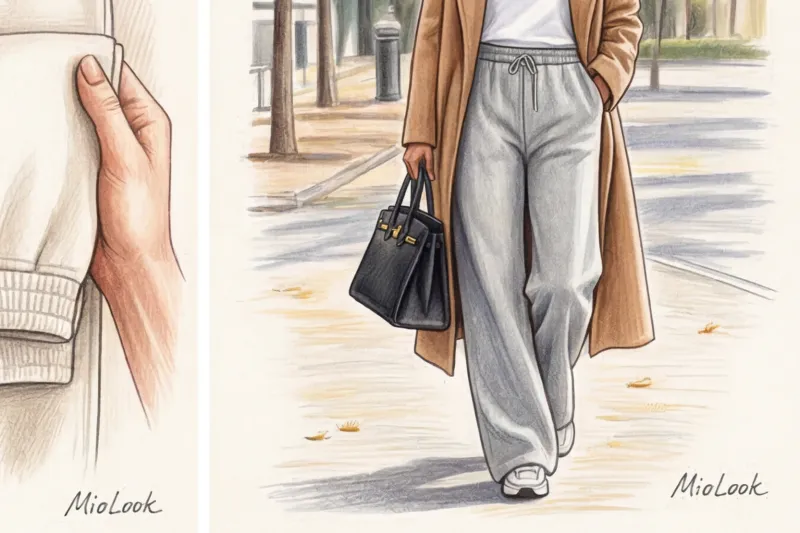
Cropped trench coats (hip-length) can only be paired with elasticated joggers, provided the pants are high-waisted. A high waist is your key tool for visually lengthening your legs in relaxed looks.
Your perfect look starts here
Join thousands of users who look flawless every day with MioLook. Manage your wardrobe with just one click.
Get access — €0.99 onceSweatpants with a classic wool coat: a play on contrasts
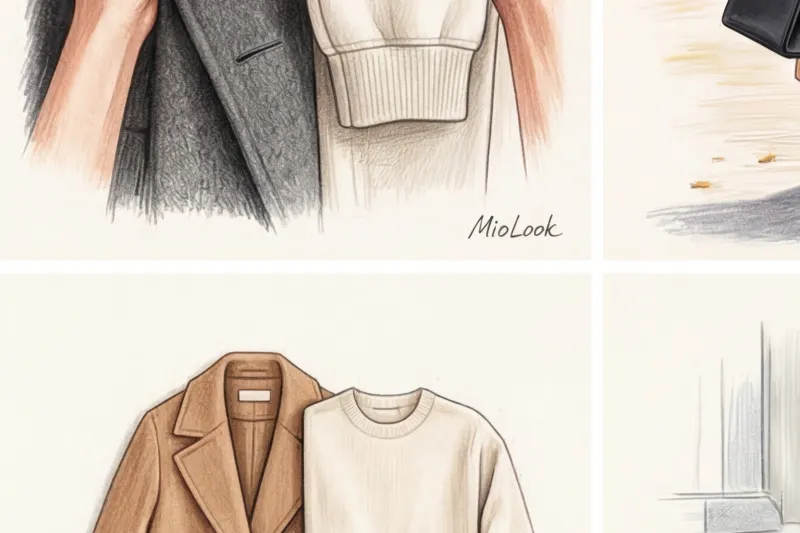
Fitted coats (2010s style) never work with sweatpants. This is one of those times when the rule has no exceptions. You need some air between your body and your outerwear. Opt for a cocoon coat, a robe-style cut with dropped shoulders, or a straight-cut men's coat.
Pay attention to the texture of the wool. Smooth worsted wool or dense broadcloth contrast beautifully with the matte cotton of joggers. However, shaggy fabrics like alpaca or mohair can be a real challenge: not only do they visually clash with the texture of the fleece, but they also generously share their nap, which clings to the cotton.
A few years ago, I was putting together a travel capsule for the CEO of a large IT company. She wanted absolute comfort on the plane (joggers), but a touch of class upon arrival at the airport, where she was met by her partners. We built the base around one stunning oversized double-breasted coat made of smooth wool and two pairs of premium joggers (400 GSM). The secret was that the coat completely covered her hips, leaving only the neat lines of her legs visible, and the thick cotton material concealed its "athletic" origins.
The Biggest Myth: Why Suit Sets (hoodie + pants) Ruin the Coat's Silhouette
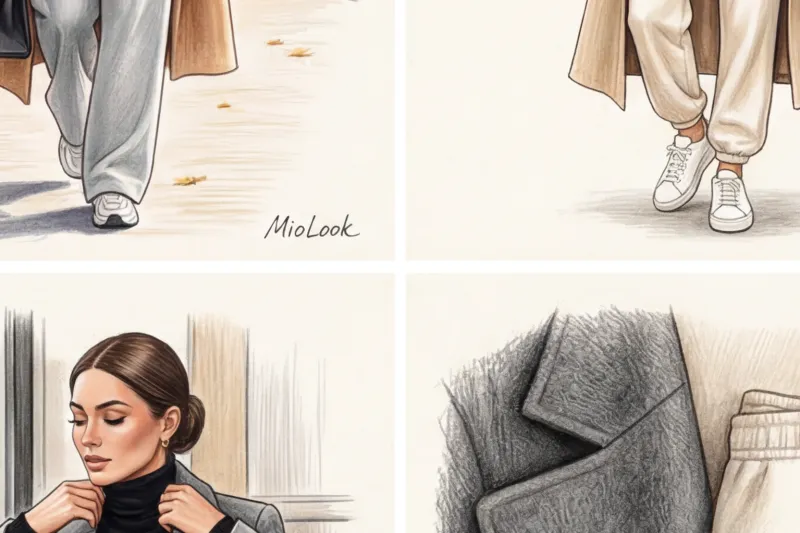
It's time to break one of Instagram's most persistent trends. Mass-market fashion has conditioned us to buy sportswear in sets: a hoodie and pants. And many, out of habit, wear this entire set under a tailored coat. This is a huge sartorial mistake.
A classic coat has a well-defined shoulder and collar (especially a notched collar). A hooded coat's voluminous hood disrupts this line, creating a bulge at the back or unnaturally bulging the collar. A kangaroo pocket on the stomach is even worse. If you button the coat, the pocket will create the illusion of a protruding belly, adding 3-4 kilograms to your appearance.
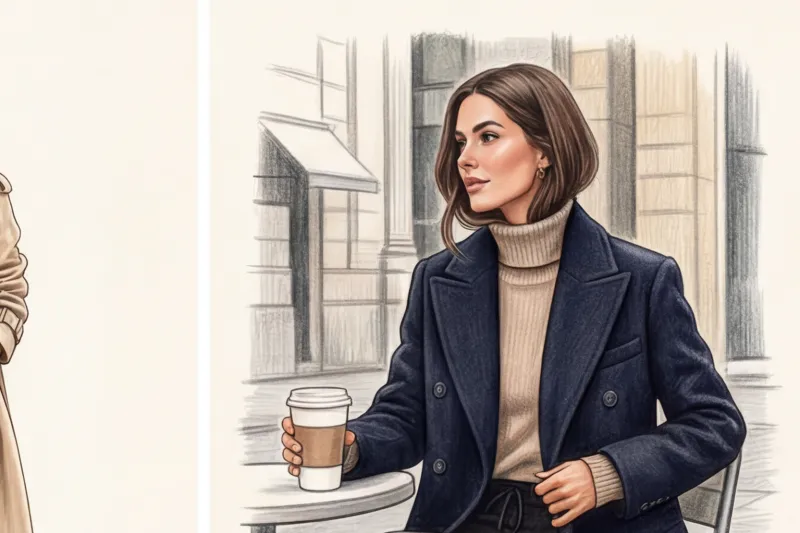
What to do instead? Swap your hoodie for a smooth knit. Pairing sweatpants with a thin cashmere sweater, turtleneck, or even a structured cotton shirt under a coat looks a hundred times more classy. You'll maintain comfort on the bottom while projecting a put-together look on top. The only exception when wearing a hoodie under a coat is a radically oversized style without a sharp shoulder line, but these styles aren't flattering on everyone.
Shoes and Accessories: Status Markers in a Relaxed Style
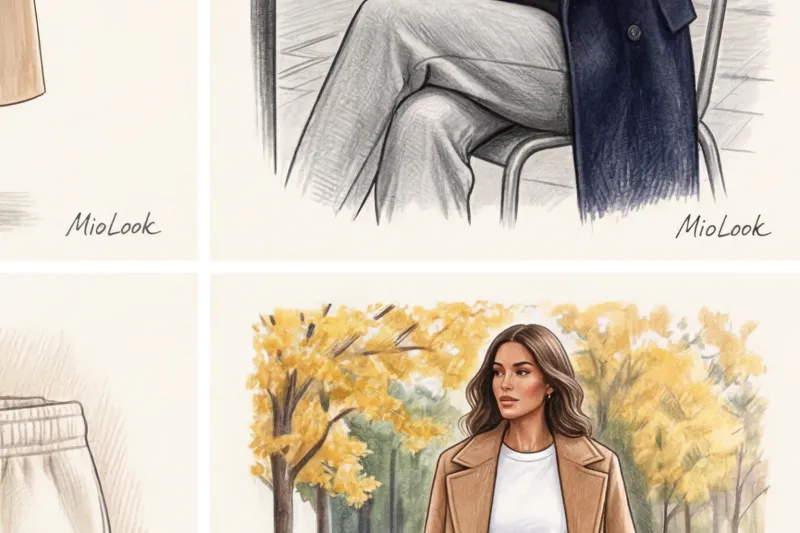
In styling, there's a golden rule: "The Collected Element." If your clothes (joggers) are as relaxed as possible, your accessories should be deliberately sharp and classy. They act as anchors, communicating to others: "I wore these pants on purpose, for style, not because I was too lazy to change.".
Avoid soft shoppers, shapeless backpacks, or fabric string bags. Instead, opt for structured leather totes and bags with rigid geometric shapes (like baguettes or satchels). Metal hardware on the bag should complement minimalist embellishments.
As for footwear, forget about mesh running shoes. The perfect pairing for sweatpants and a coat is basic leather sneakers (shine clean!), chunky loafers, or sock-style ankle boots. To avoid spending mornings choosing the right bag and shoes for a relaxed look, try the virtual wardrobe feature in MioLook — the app will suggest in advance which accessories will elevate your look to the desired level.
Checklist: 5 Steps to the Perfect Athflow Look
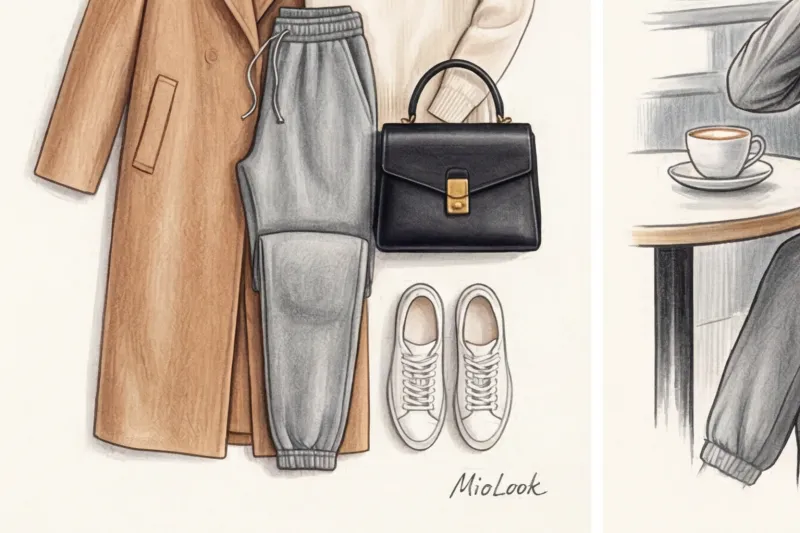
To ensure every pair of sweatpants with a coat or trench coat garners compliments rather than puzzled glances, run through this short checklist before leaving the house:
- Density test: Your pants are not see-through, hold their shape, and have a density of at least 350 GSM. There are no stretched "bubbles" at the knees.
- Length estimate: Your outerwear is long enough (ideally, it covers the widest part of your hips or reaches mid-calf).
- Upper architecture: Under the coat, wear a smooth top (turtleneck, long sleeve, smooth-knit sweater), not a bulky hoodie with a kangaroo pocket.
- Status anchor: Carried or shouldered, this is a rigid, structured bag that holds its shape even when placed on a table.
- Flawless base: The shoes are minimalist and completely clean.
Stop treating sweatpants as a compromise or a symbol of capitulation to fashion. Think of them as modern cotton trousers that require the same thoughtful styling as classic ones. Once you start applying the rule of fabric density and adding crisp accessories, your comfortable wardrobe will reach a whole new level of elegance.