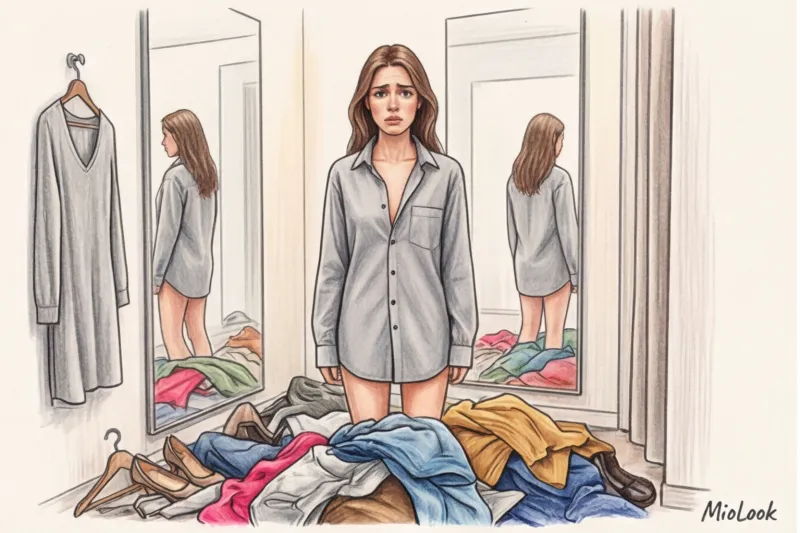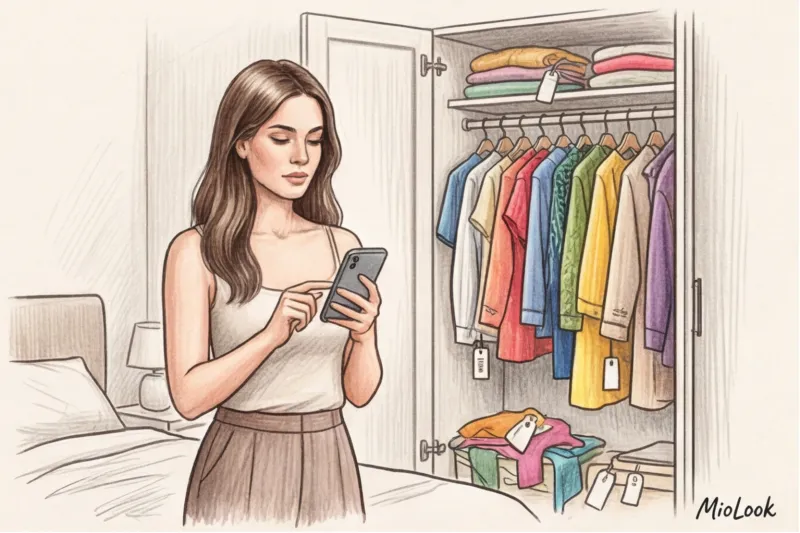
One of my clients, Marina, spent a substantial amount of money last month—about the equivalent of the average salary in her region—on Y2K-inspired pieces. Dropped waists, rhinestone-embellished crop tops, and wide-leg cargo pants. On Pinterest models, they looked daring and fresh. But when Marina wore them out on the town, she realized with horror, "I look like an overgrown teenager in a costume." The clothes sat in her closet like dead weight.
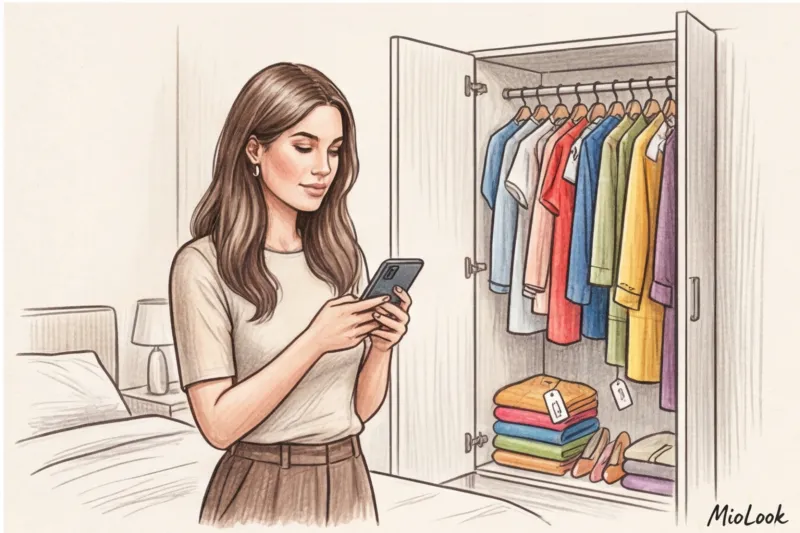
Over 14 years of working as a personal stylist, I've reviewed hundreds of wardrobes. And you know what? About 80% of items with missing tags are the result of such unsuccessful attempts to try on a new aesthetic "blindly." We see a pretty picture, buy the mood, and end up with visual dissonance. We've covered how these microtrends are formed in more detail in our article. the complete guide to fashion aesthetics.
It's commonly believed that artificial intelligence in fashion kills individuality by offering everyone the same standardized looks. I strongly disagree. In my experience, a good neural network for clothing selection is no substitute for your own taste. It's an ideal training tool for visual acuity and a pragmatic financial tool. Your personal "sandbox" that allows you to weed out unwanted trends long before you even reach for your credit card at the checkout.
Why do we need a neural network to select clothing styles: an end to impulse buying
According to the analytics agency ThredUp (2023 report), exactly half of the average woman's wardrobe consists of items she never wears. Half! We buy clothes that last a day because fashion cycles have accelerated incredibly quickly.
A study by global trend bureau WGSN shows that the life cycle of so-called Core aesthetics (Barbiecore, Gorpcore, Balletcore) has shrunk to 3-6 months. Our brains simply don't have time to adapt these microtrends to our actual body shape, appearance, and lifestyle. The problem arises: the look looks harmonious on your smartphone screen, but on you in the fitting room, it feels like someone else's uniform.
This is where AI comes into play. Trying on five different aesthetics in reality would require at least three hours of wandering around the mall, standing in lines, and a lot of wasted energy. Algorithms do it in three minutes, creating a safe space for experimentation.
Your perfect look starts here
Join thousands of users who look flawless every day with MioLook. Check out the latest trends before you buy.
Get access — €0.99 onceHow virtual fitting works in modern apps (using MioLook as an example)
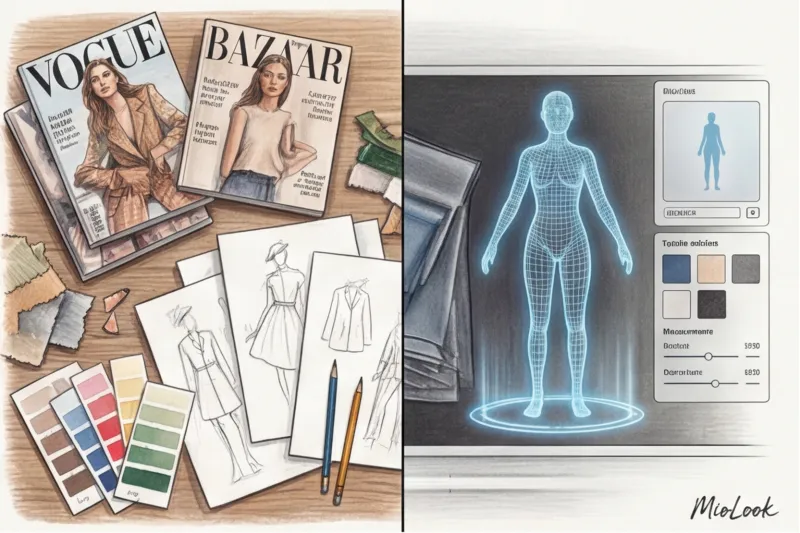
If your virtual fitting experience ended with apps from 2015, where a flat photo of a dress was crookedly pasted over your silhouette, forget it. Modern neural networks operate on a completely different principle.
As a stylist, I always pay attention to how fabric interacts with the body. Heavy denim lays in rigid folds, while viscose flows. Modern AI (for example, in the MioLook app) has learned to analyze volume: the algorithm takes into account the light sources in your original photo, calculates the physics of the fabric, and applies the correct shadows and drape. You see not an appliqué, but a realistic simulation of how the garment will fit based on your proportions.
"The text query tool (prompt) turns AI into your personal tailor. You can choose something from the catalog, but instead ask, 'Dress me in a quietly luxurious style, with a camel-colored cashmere coat and wide-leg trousers.' And the algorithm will generate a look from scratch."
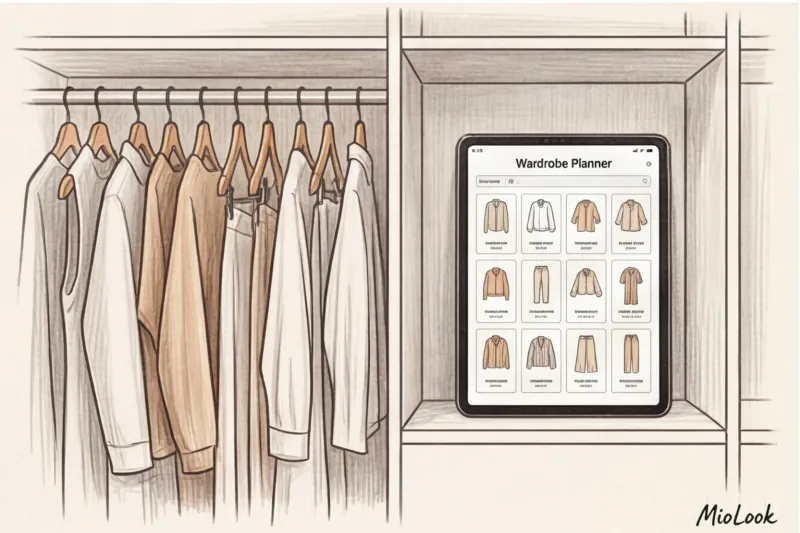
Moreover, advanced systems can analyze your current wardrobe. The neural network will suggest how to incorporate elements of trendy aesthetics into your existing wardrobe, so you don't have to buy everything from scratch.
A Stylist's Secret: How to Prepare the "Perfect Canvas" for AI
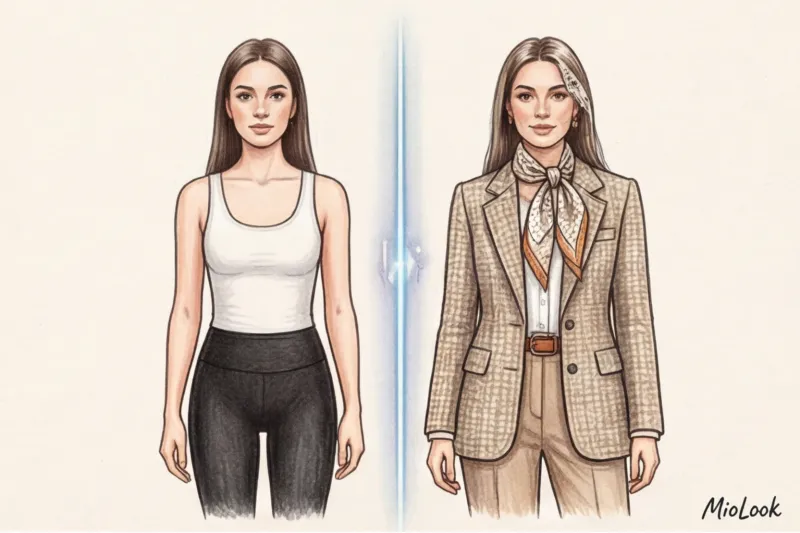
No clothing style matching neural network, even the most powerful, will produce a high-quality result if you feed it a poorly executed source image. It's like trying to paint a watercolor masterpiece on crumpled newspaper. To avoid visual clutter, I give my clients three ironclad rules for photo preparation:
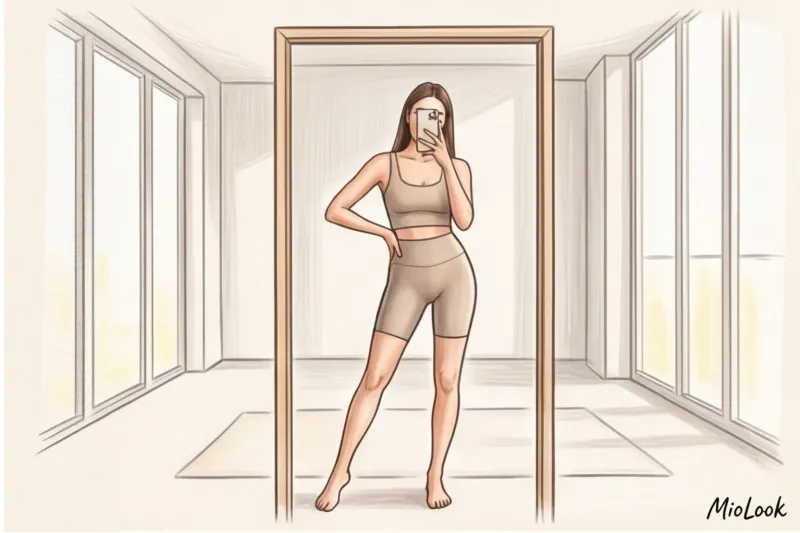
- Light decides everything: Stand facing a window during daylight hours. You want even, diffused light without harsh shadows under your eyes or nose. No flashes in a dark room.
- Base layer: Wear very form-fitting clothing in neutral shades (black, beige, gray). Cycling shorts and a basic top or bodysuit are ideal. A common mistake for beginners is uploading photos in a bulky down jacket or oversized dress. The neural network will try to "put" the new outfit on top of the old one, and you'll get the effect of an enormous cabbage patch.
- Natural statics: Avoid complex model poses. Stand up straight with your arms slightly away from your body. If your arms are crossed over your chest, the AI will distort the cut of the virtual jacket or blouse.
Access to MioLook for €0.99 — one-time payment
A smart AI stylist will create the perfect look based on your photo. No complicated settings required.
Get access — €0.99 onceWe're testing out the season's four key aesthetics: from Old Money to Gorpcore.
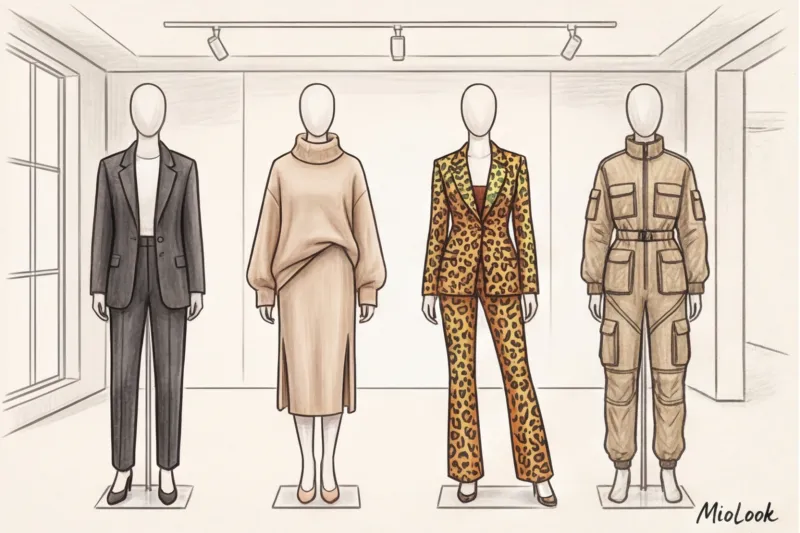
Let's get down to practical matters. Fashion is, first and foremost, a mood, and aesthetics is the visual code you convey to the world. Below, I'll explore four current trends and show you what to look for when trying them on virtually.
Old Money Aesthetics (Quiet Luxury)
This style is built on timeless elegance, a no-logo approach, and an emphasis on premium textures. It's ideal for those with classic facial features and those who value understatement.
What to write in AI (prompt): Cashmere V-neck sweater, tweed jacket, palazzo trousers with creases, pastel colors (milk, sand, dark blue), leather loafers.
Stylist control: When creating "quiet luxury" looks, pay close attention to your portrait area. Monochromatic all-over beige looks luxurious on dark skin, but if you have a low-contrast fair complexion, the trendy camel shade can make your face appear sickly pale.
Office Siren / 90s Business Chic
An aesthetic inspired by Prada's 90s archives, this is a formal yet distinctly sensual business dress code. A great choice for high-contrast looks and Friday dress codes at creative agencies.
What to write in AI (prompt): Glasses with a narrow rectangular frame, a midi-length pencil skirt in a burgundy shade, a tight-fitting thin cardigan worn over bare skin, and pumps.
Stylist control: When assessing your generation, ask yourself: how comfortable are you with this level of candor? A picture is one thing, but sitting in a tight skirt during a three-hour meeting is quite another.
Utilitarianism and Gorpcore
An aesthetic that celebrates technical clothing for urban hiking. Ideal for a dynamic lifestyle and relaxed personalities.
What to write in AI (prompt): Cargo pants with patch pockets, layering, nylon windbreaker, chunky trekking shoes, tie-downs and carabiners.
Stylist control: Let me share my personal experience. Last fall, I was desperate to incorporate Gorpcore into my wardrobe. I uploaded a photo to the neural network, generated an image with wide cargo pants... and was horrified. The voluminous patch pockets at the hips made me look two sizes bigger, throwing my proportions out of whack. This AI experiment saved me at least 200 euros and saved me from disappointment.
Maximalism (Mob Wife / Eclecticism)
The "mob wife" style demands boldness. It's an aesthetic for a vibrant personality and a willingness to be the center of attention.
What to write in AI (prompt): Leopard print, oversized faux fur coat, leather leggings, chunky gold jewelry, red lipstick.
Stylist control: This is the direction with the highest risk of looking ridiculous. It is precisely maximalism that I strongly recommend "running through" MioLook Before buying. The line between luxurious outrageousness and bad taste is thinner than a hair here.
From image to reality: how to adapt a generated image
The main myth I fight daily is that if a neural network draws a beautiful image for you, you're bound to find exactly the same thing in stores. That's a dead end. Don't look for a copy, look for the formula.
A professional stylistic technique is called "decomposition." Break the generated image down into its components based on the "silhouette-color-texture" principle. Let's say the AI has suggested a fantastic dress with a complex cut. Extract three key elements from it. For example: 1) an asymmetrical one-shoulder neckline, 2) a combination of deep emerald and graphite, 3) the texture of matte silk.
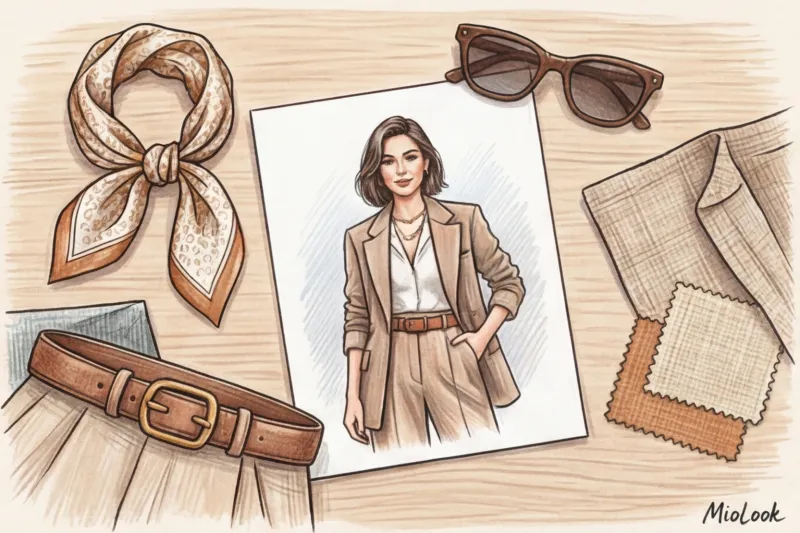
With this list, integrating your capsule wardrobe will be seamless. You won't have to change your entire wardrobe for the sake of a single aesthetic. Simply add an emerald green top with an asymmetrical neckline to your usual basic jeans, and you've already added the right touch to your style.
Common mistakes newbies make when working with "fashionable AI"
Let's be honest: the technology isn't perfect. There are situations where blindly trusting an algorithm can backfire. It's important to understand the tool's limitations.
Mistake 1: Ignoring proportion retouching. Sometimes, for the sake of a pretty picture, AI slightly elongates your legs or narrows your waist in your photo. If the algorithm "shaves" 5 centimeters off your hips to make palazzo pants fit, those pants may look different in real life. Always compare the image to your actual body type.
Mistake 2: Out of touch with reality. It's funny to watch mothers on maternity leave create looks for themselves with silk corsets and stiletto heels, only to be upset that they have nowhere to wear them. Aesthetics should serve your lifestyle, not the other way around.
Mistake 3: Color type against the trend. A neural network can dress you in the most fashionable color according to PANTONE (2025). But the algorithm isn't yet capable of accurately assessing your skin temperature. If a trendy cool gray makes your complexion look sallow, no amount of fashionable aesthetics will fix it—the portrait zone is always a priority.
Ready to get started?
Try the free plan—no commitment. Experiment with colors and styles right now.
Get access — €0.99 onceChecklist: Your First Experiment with an AI Stylist
To put theory into practice right away, I've put together a step-by-step action plan for you. Try it this weekend:
- Select a target: Write down 2-3 fashionable aesthetics that you have long liked on others, but were afraid to try them on yourself.
- Take the right photo: Take a full-length photo by the window, wearing tight clothing, without actively posing.
- Start generation: Upload your photo to an app (like MioLook) and run it through filters or prompts of your chosen aesthetics.
- Give yourself a break: Compile the results into a collage on your phone. Don't jump to conclusions right away. Put your phone away for 24 hours—a fresh look will reveal where you look natural and where you look "in a suit."
- Make a shopping list: Choose one best image and write down 3 specific details (texture, color, cut element) that you will look for in stores.
Instead of a conclusion: a digital testing ground for self-discovery
Technology has changed the rules of the fashion industry. Neural networks for clothing selection are no longer seen by professionals as just a fun toy for creating avatars. They're a powerful digital testing ground where you can test hypotheses, make mistakes, and mix and match—all without harming your wallet or the planet's environment.
Personal style is a fascinating game of self-discovery. And now you have a free simulator to practice with. The main rule: don't try to adapt to artificial intelligence. Use it to better understand your true self.