Wardrobe Evolution: Why You Need a Neural Network Fashion Stylist in 2024
According to statistics, the average European woman wears only 20% of her wardrobe. The remaining 80% is dead capital, occupying hangers for years and causing only a dull irritation in the mornings. In 12 years of working as a personal stylist, I've realized one fundamental thing: the problem isn't that you don't have enough clothes. The problem is that your brain simply doesn't see the potential of what you've already bought. That's why neural network clothing stylist Today it has become not just a technological toy, but an absolutely necessary tool for every busy woman.
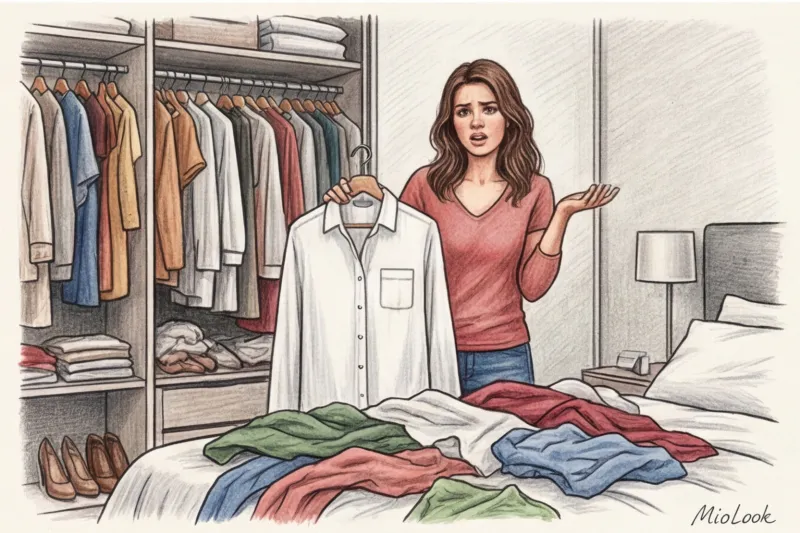
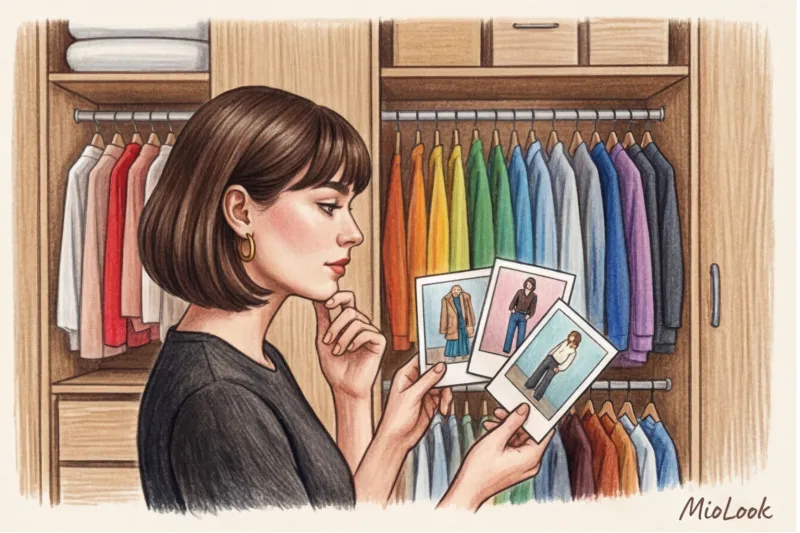
You've probably experienced the despair of a morning staring at your closet doors. The "closet full, nothing to wear" phenomenon has a clear neurobiological explanation. Our visual and working memory are limited: the human brain can only focus on and confidently combine the characteristics of 30-40 items at a time. If you have 150 items in your closet (a very typical number for my clients), you'll be physically unable to come up with a fresh, layered outfit without outside help. You'll end up wearing the same three or four tried-and-true looks over and over again.
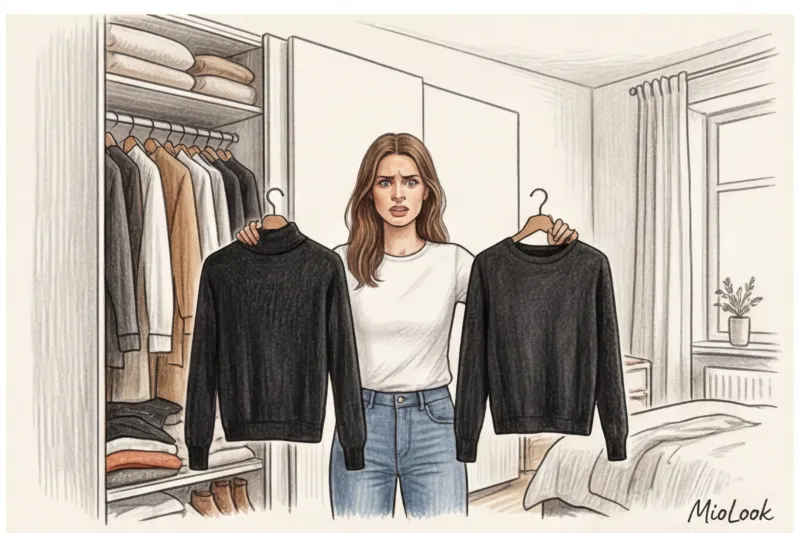
Moreover, getting ready in the morning is a brutal drain on our energy. In psychology, this is called decision fatigue. decision fatigue ). Imagine: you have a difficult day ahead, you need to decide, What to wear to an interview at a creative agency or how to deliver an important presentation. You waste precious cognitive resources trying to remember where the clean shirt is hanging and whether it matches your Massimo Dutti trousers. Or you rack your brains over How to transform a daytime look into an evening one without unnecessary items for a spontaneous dinner. Eventually, you give in, put on your usual jeans and sweater, and leave the house feeling slightly dissatisfied with yourself.
The key rule of a modern smart wardrobe is this: proper organization and digitalization add far more to your style than another impulse shopping spree at a sale.
Today we are witnessing a global shift from culture fast fashion (fast fashion) to smart fashion (smart fashion). My biggest pain as a practicing stylist is sorting through wardrobes, where we regularly find three identical COS cashmere sweaters or duplicates of basic white Zara T-shirts. Clients buy them again and again simply because old items have been "lost" or forgotten in the chaos of a disorganized closet. Organization has become more important than new purchases.
It was this chaos that forced me to radically reconsider my working tools. When I first tested MioLook — an AI-powered smart wardrobe management app — I realized the rules of the game had finally changed. It's not just a virtual shelf for photos of clothes. It's a powerful analytics center that takes care of all the combinatorics. As an expert who's been manually building capsule wardrobes for years, I installed this app myself and now highly recommend it to every client. The algorithm never tires, never forgets that skirt you bought two years ago, and makes every euro you spend in your closet work.
How MioLook's AI Stylist Works: Technological Magic at the Service of Your Style
During personal consultations, clients often ask me the same question: “Katarzyna, can a piece of software code really replace human taste and observation?” My answer is always the same: a neural network doesn’t replace taste; it scales knowledge and automates routine. Modern neural network clothing stylist — This isn't a random image generator. It's a rigorous mathematical model that incorporates the laws of composition, color, and proportion that we've been cramming for years in European fashion schools.
Let's take a step-by-step look at the journey of one item in the app ecosystem, from the upload stage to the finished outfit.
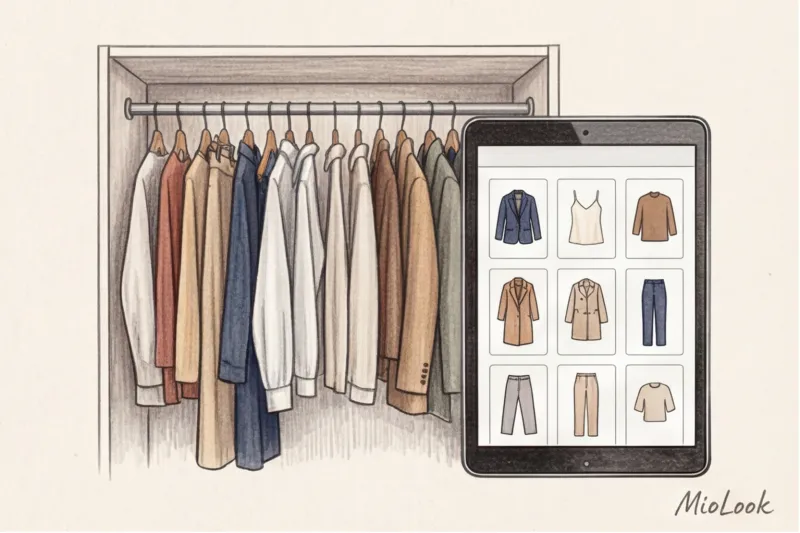
It all starts with machine vision. Let's say you take a photo of your new wool jacket from Zara or a basic jumper from H&M. As soon as the image is entered into the system, the algorithm scans the pixels and instantly breaks the garment down into dozens of parameters. The AI recognizes more than just an abstract "red jacket." It captures the precise cut (for example, oversized or fitted), the fabric density (tweed, linen, or smooth wool), the presence of a pattern (houndstooth, ribbed), and determines the hue using the Itten spectral color wheel.
There's no magic in styling—there's the geometry of silhouette, color theory, and the physics of fabric. What we usually call an "innate sense of style" is actually the brain's ability to quickly calculate visual proportions. Machine algorithms simply do it in milliseconds.
To be honest, any technology has blind spots. If you photograph clothing under dim yellow light, the camera might mistake dark blue silk for black polyester. Therefore, my advice: always perform a final material tag check after auto-recognition. It only takes three seconds, but it will dramatically improve the quality of the resulting images.
After digitization, the pairing algorithm takes over. How does the program know what to wear with what? In our styling courses, we teach the golden rule of contrasting textures and volumes. That's why a chunky knit sweater (say, from the COS winter collection) works phenomenally well with a flowing silk midi skirt from Massimo Dutti. The neural network seeks balance: if the top layer has a heavy, matte texture and excess volume, it will select a light, glossy fabric and a flowing silhouette for the bottom layer. Even a basic €15 T-shirt will look luxurious if the algorithm gets the proportions right (for example, 1/3 torso to 2/3 leg length).
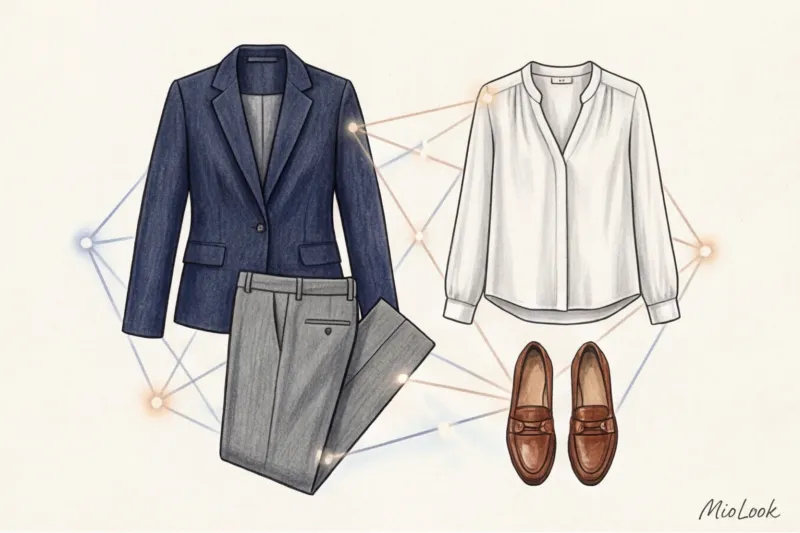
But even the most brilliant look is useless if it's inappropriate. This is where external factors come into play. MioLook syncs directly with the weather forecast API and your personal calendar. If it's 10°C and raining outside, and your schedule says "smart casual office," the system won't physically suggest suede loafers and thin light-colored trousers. The algorithm will filter the capsule, returning a solution featuring closed-toe leather shoes, heavy denim, and a layered top, perfectly suited to the dress code.
Access to MioLook for €0.99 — one-time payment
A smart AI stylist will select the perfect look.
Get access — €0.99 onceCapsule architecture through the eyes of an algorithm
As a professional shopper, I always repeat the rule of the ideal wardrobe: the formula is built on a 3:1 ratio (three different tops to one bottom). Otherwise, others (and you) will feel like you're constantly wearing the same clothes. AI analyzes your digital closet through this lens, constantly checking the mathematical ratio of items in your seasonal capsule.
To avoid stylistic overload in a single look, the algorithm strictly classifies each item into bases and accents. Regular straight jeans or a beige trench coat are coded as "neutral." But leopard-print shoes, a neon bag, or a sequin blouse are coded as "accents."
The neural network is programmed to limit the number of active elements to a single everyday look. The result is a polished, elegant outfit, where one complex piece is calmed by a soothing background. Try uploading your most "fussy" item—the one you bought on impulse and never wore—to the app today, and see what basic elements the algorithm will use to subtly tone down its vibrancy.
My professional test drive: I gave my wardrobe to a neural network.
Theory is great, but as a practicing expert, I only trust field tests. Last Friday, I decided to give the algorithm a tough crash test. My task was extremely simple: load up a personal capsule and see if it could handle it. neural network clothing stylist A more accurate understanding of a real European wardrobe than I do. To ensure the integrity of the experiment, I digitized exactly 40 fall items. The sample included my standard selection: structured coats from COS, basic knitwear from Zara, statement silk blouses from &OtherStories, and tailored suiting from Massimo Dutti.
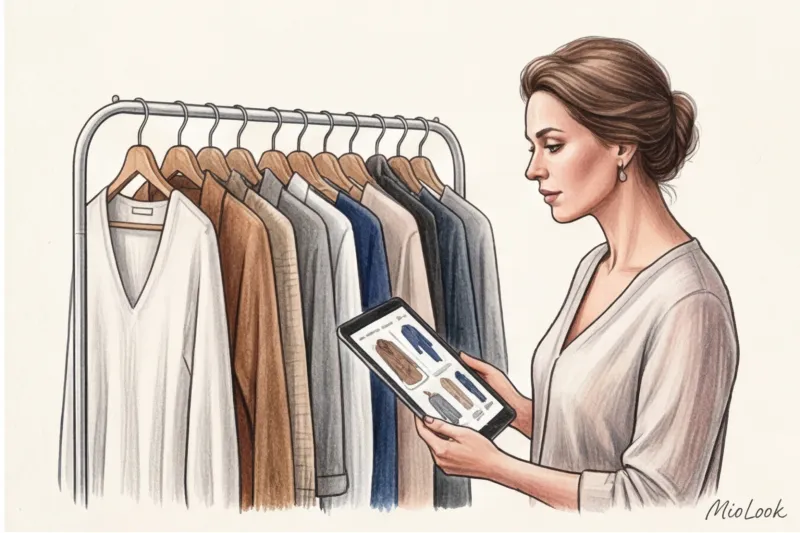
I called the first stage of testing the "baseline test." I queried the system for classic business looks for client meetings, setting the temperature to 12°C. Frankly, I was quite skeptical, but the AI performed flawlessly. It didn't just produce a banal "light top, dark bottom" scheme; it intelligently balanced the proportions. For example, it paired wide-leg wool pleated trousers with a fitted turtleneck, added a structured leather belt, and draped a contrasting jumper over the shoulders. The app instantly calculated the very rule of thirds that we use to visually elongate the silhouette.
But the real revelation was the second stage—testing for creativity and layering. This is where my professional confidence wavered a bit. I'd always worn my gray Massimo Dutti blazer exclusively with matching trousers, creating a simple office outfit. It was a safe, time-tested formula. However, the algorithm suggested a completely unexpected move: layer this masculine blazer over a pearl satin slip dress, and add chunky, cleat-soled boots underneath. I tried the outfit on, and it worked brilliantly! The perfect balance of textures (smooth silk, matte wool, and rough leather) plus a clever play on contrasting styles.
The machine is devoid of emotional attachments to objects. For it, there is no such thing as a "boring jacket" or an "overly dressy dress"—there is only the geometry of the cut, the color palette, and the physics of the fabric. And it is precisely this cold calculation that often produces the most fresh stylistic results.
Summing up this experiment, my verdict as a stylist is clear: the algorithm was more accurate than me in speed and impartiality. The human brain is prone to patterns. If we once successfully paired a €120 skirt with a certain cardigan, we'll repeat this formula for years, creating a "blind spot" in our closet. We forget about the hidden potential of things.
Where I immediately saw 15 familiar outfits, the neural network put together 42 wearable looks for different weather conditions in 10 seconds, using the same 40 items. This mathematical detachment of artificial intelligence breaks down our stylistic blocks and makes things work 100%, earning every cent invested in them.
The main misconception: why AI is needed not for shopping, but for old things
Do you know what women fear most when I suggest they digitize their wardrobes? They're sure the algorithm will start sending them links to affiliate brands and aggressively selling them new trends. Modern marketing has truly taught us that any neural network clothing stylist — it's a clever storefront. But my counter-insight, as a practicing expert, is different: the main value of a smart app isn't shopping at all. Its true purpose is to firmly stop you from impulsive spending and finally force you to wear what's already hanging on the hangers.
Each of us has a so-called "closet blind spot." These include the bottom shelves, the far corners of dressers, and those tightly packed hangers we only glance at once a season. A 2024 study of consumer habits by McKinsey reveals a surprising figure: our brains physically ignore clothes we don't see within the first three seconds of opening a door. But for machine vision, this blind spot simply doesn't exist. In your digital capsule, a long-forgotten pleated skirt carries the same weight and priority as your favorite pair of jeans, worn to the point of holes. This cold, impartial algorithmic memory makes this "blind spot" a veritable gold mine for creating fresh combinations.
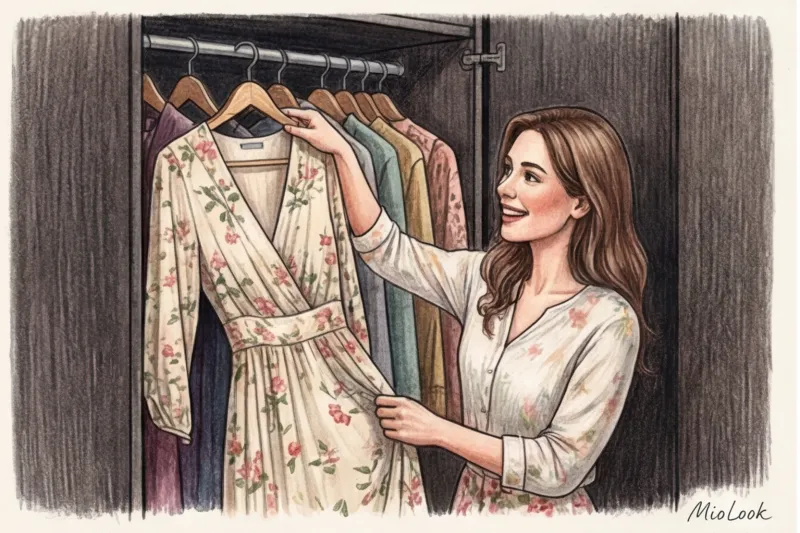
Just last month, I had a particularly revealing case. A client complained that she had "absolutely nothing to wear," even though we'd found a gorgeous structured Massimo Dutti blazer for €180 at a store. The tag had been hanging for over a year! She'd bought it on a whim, but upon arrival, she realized she didn't know how to tame the complex terracotta hue. As soon as we uploaded a photo of the blazer to the MioLook ecosystem, the neural network generated five ready-made looks from her old clothes in a split second. The AI masterfully exploited the contrasting textures, pairing a tailored blazer with relaxed joggers and an old denim shirt she'd been meaning to recycle. The app literally revives such "dead" investments, removing the mental block of "I have nothing to style this with."
This is exactly how the eco-friendly "Shop Your Own Closet" concept works in practice, using technology. When you get that phantom urge to buy "something new to lift your spirits," you don't open your shopping cart at Zara or H&M. You open your digital database. An algorithm generates dozens of unconventional combinations from what you already own. You get the same powerful dopamine hit from the new look, but your bank account balance remains intact, and your old clothes start earning back the euros and dollars you invested in them.
Access to MioLook for €0.99 — one-time payment
Start creating perfect looks with the help of artificial intelligence and rediscover your wardrobe.
Get access — €0.99 onceThe Mathematics of Style: How a Smart Wardrobe Reduces Cost Per Wear
There's a hard financial metric in the fashion industry that fast fashion brands prefer to keep quiet about. Cost Per Wear (CPW) — the real cost of a single outfit. If you still judge the cost of clothing solely by the price tag, you're likely regularly overpaying. As a financially conscious stylist, I always shift conversations with clients from the abstract realm of "expensive/cheap" to the realm of cost-effectiveness.
Let's use a concrete example to calculate this. Imagine a basic cashmere sweater in a neutral shade for €150 and a trendy asymmetrical polyester top for €20. At first glance, the top seems like a much better value. But you'll wear a quality sweater at least 50 times per season—to the office, to brunch, under a coat for a walk. Its CPW is only €3 per outing. The top, on the other hand, will be worn exactly once, at a Friday party, after which it will sit on the back shelf. Its real value will remain €20. The math is inexorable: an expensive but frequently worn item is always better value than a cheap one-off.
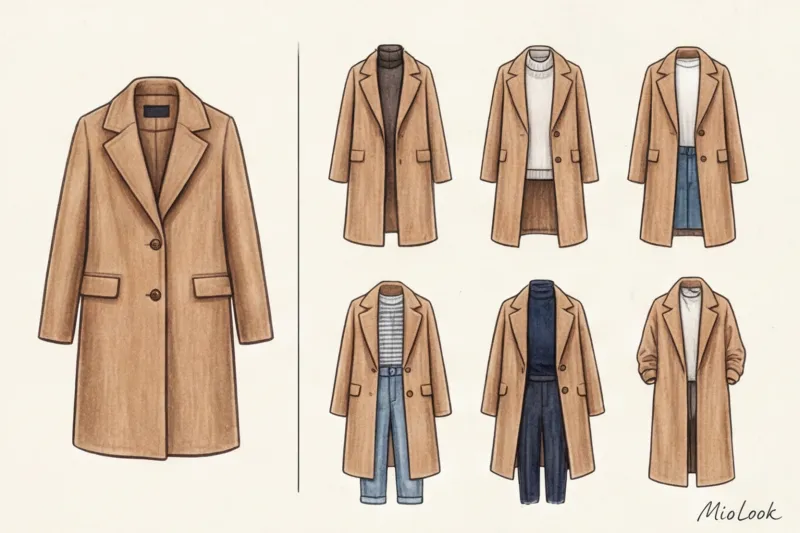
This is where artificial intelligence comes into play. The neural network's main task is to radically reduce your Cost Per Wear. The algorithm takes that same €150 item and generates not the two obvious combinations you're used to, but twenty completely different ones. The AI literally squeezes the most out of each item, turning your closet into a highly profitable asset.
Furthermore, the app's built-in analytics are unbiased. It clearly reveals your real workhorses — items with the lowest CPW value, which de facto carry the lion's share of all looks. During one recent analysis, a client was convinced that her base was blue jeans, but statistics showed that the algorithm most often successfully used olive chinos. Understanding such patterns fundamentally changes the capsule collection strategy.
But the most powerful protection against wasted spending kicks in right at the mall. You're standing at the checkout with yet another spontaneous find. Before you swipe your card, take a photo of the item (or save a screenshot from the website) and upload it to MioLook Ask the system a security question: "What will I wear this with?" If the smart algorithm can't instantly create at least three complete looks with the skirts or jackets already hanging in your closet, feel free to return the item to its hanger. This is the best way to prevent impulse buying, and it pays for the time spent digitizing it within the first month.
Checklist: How to digitize your wardrobe in a weekend so AI can work at 100%
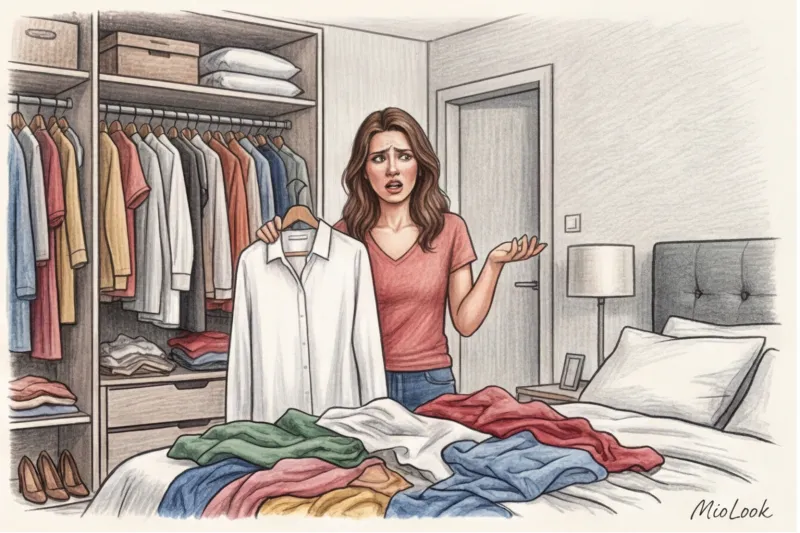
The most common failure scenario I see in the first week of working with new clients: the woman decides she urgently needs a neural network fashion stylist, dumps the entire contents of her closet on the bed, takes twenty blurry photos in the dim bedroom light, and... gives up from exhaustion. Digitization is a routine, but it's what separates morning chaos from a flawlessly functioning system.
To prevent the process from becoming a chore, I've developed a clear protocol for my clients. Follow these steps, and your smart wardrobe will run like a Swiss watch.
The One Hour Rule
The average city dweller has between 150 and 250 items of clothing in her closet. Trying to photograph them all in one day is a surefire way to burnout. I strictly forbid this approach.
Use the "One Hour Rule": set aside exactly 60 minutes on Saturday morning and start exclusively with the current seasonal capsule collection. Today, let it be only autumn structured jackets, trousers, and heavy knitwear. Summer linen dresses and winter down jackets will wait their turn in vacuum-sealed bags. Work in logical chunks: one weekend - "tops," the next - "bottoms" and shoes. This segmentation prevents the brain from being overwhelmed by the sheer volume of the task.
Photo requirements: light and geometry
Computer vision algorithms require extremely clear input data. There's a strict rule in programming: "garbage in, garbage out." My main practical advice: photograph items immediately after ironing or when picking them up from the dry cleaner. Wrinkled fabric creates unnecessary shadows, which the algorithm may mistakenly interpret as complex drapery or a non-existent print.
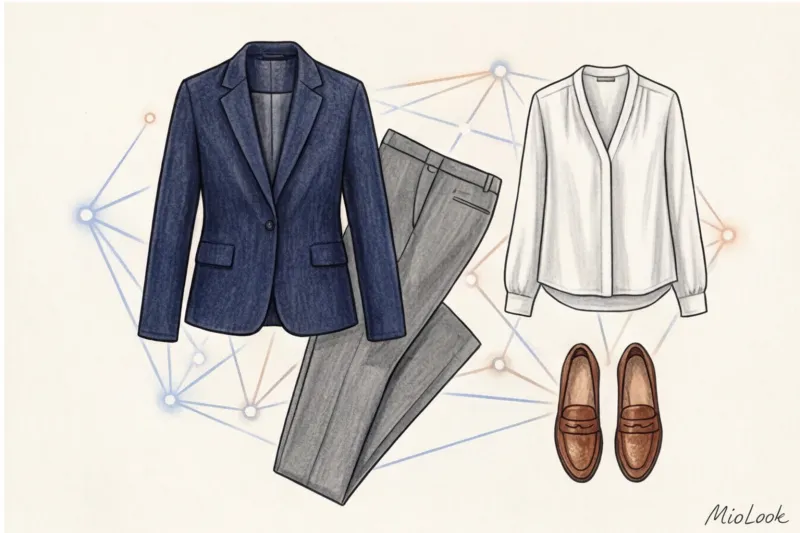
The best backdrop for shooting is light matte laminate, parquet, or simply a white sheet stretched across the floor. Be sure to shoot in direct natural daylight from a window, positioning the phone strictly parallel to the floor to avoid distorting the proportions of the piece.
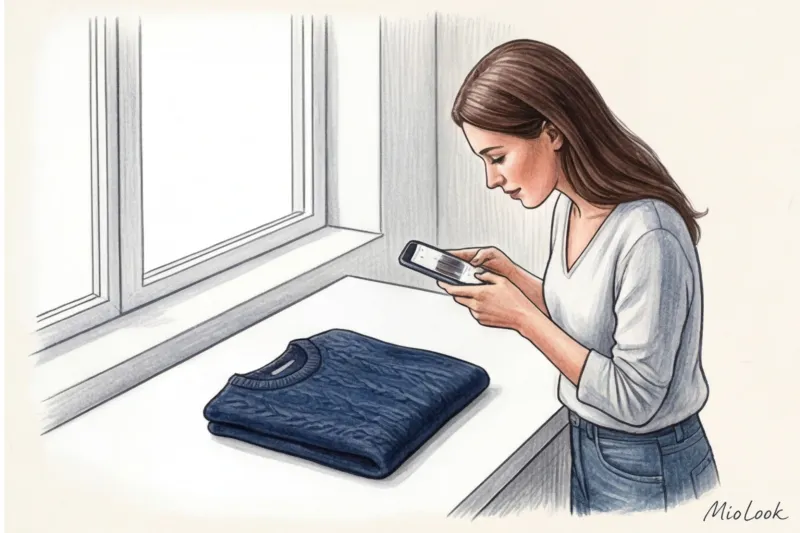
Cataloging Tricks
Even the most advanced visual model sometimes fails with complex mixed shades. If the automatic recognition is unsure whether a navy sweater is dark blue or black, be sure to manually correct the color.
I always recommend using detailed tags. Don't just label it "skirt." Write "midi skirt, heavy silk," and specify the shade "cool emerald." Be sure to note seasons and dress codes (for example, "business casual" or "evening"). This is crucial for filtering: precise tags will prevent the app from suggesting you wear a thick cashmere turtleneck on a cool summer evening.
What doesn't need to be digitized
Don't create informational noise in your own database. Please don't waste time adding fleece pajamas, washed-out hoodies for the cottage, and athletic leggings you only wear to work out.
Moreover, I don't recommend adding basic white ribbed tank tops, plain tops, or underlayers unless they're a stand-alone accent piece. The neural network will brilliantly assemble a complex, layered look with an oversized jacket and palazzo pants, and you'll be able to decide which invisible tank to wear underneath in a second.
Your perfect look starts here
Join the thousands of women who have forever forgotten the problem of "nothing to wear" thanks to the smart digitalization of their wardrobe with MioLook.
Get access — €0.99 onceIntegration of new purchases into the system
Digitizing existing items is just the beginning. The real magic MioLook reveals itself when you start using the app as a ruthless shopping filter.
Forget about photographing clothes in cramped fitting rooms with distorting mirrors and yellow lighting. My favorite online shopping life hack: simply save a studio photo of the item (packshot) directly from the store's website—whether it's Massimo Dutti or a local brand—and upload it to your virtual closet. Catalog photos have perfectly even lighting and a contrasting background, so the algorithm recognizes them instantly and with absolute accuracy.
This simple step initiates the virtual try-on process. You add the item to your capsule before you actually buy it. No more standing in the middle of the store, agonizing over whether that €160 terracotta jacket will go with your favorite gray trousers.
This is where my ironclad rule for all clients comes into play: the "3-look test." Before you click "Checkout" in your online shopping cart, ask the AI to generate outfits for your potential new purchase. If the algorithm can't create at least three complete, wearable looks with items ALREADY hanging in your closet, we don't buy it. No exceptions. This technical barrier instantly eliminates emotional purchases that would otherwise hang with their tags intact for years.
Myths vs. Reality: Will neural networks replace personal stylists?
When industry colleagues learn that I actively integrate algorithms into my practice, some of them shake their heads: "Why are you handing over your bread to a machine?" Let's be honest. Global digitalization has given rise to polarized opinions: some expect that by downloading an app they'll instantly acquire impeccable taste, while others categorically reject the "soulless" software approach.
Can mathematical code understand your personal brand? Spoiler: no. A neural network brilliantly analyzes the density of a pair of Massimo Dutti trousers and the texture of a silk blouse, but it doesn't know that these trousers make you feel insecure, or that you associate this particular blouse with a disastrous interview. The emotional connection to clothing is an area that will forever remain a blind spot for artificial intelligence.
In styling there is a concept enclothed cognition — the influence of clothing on the wearer's psychological processes (a term coined by researchers at Northwestern University in 2012). No program will take into account your psychological comfort if, for example, after giving birth, you're embarrassed to reveal your shoulders, even if, according to all the laws of geometry, an architectural bustier top elongates your silhouette to ideal proportions.

That's why we're not witnessing competition, but a brilliant symbiosis of machine and human. For me, as a practicing specialist, a high-quality neural network for fashion styling isn't a threat, but a powerful working tool, comparable to a CRM system for a manager. Stylists themselves use such applications to free themselves from routine combinations. My consultation costs €150 per hour, and it's not financially viable for the client for me to waste that time sorting through forty identical basic T-shirts and jeans. I delegate this math to the algorithm, and invest the freed time in the client's image strategy.
Separation of tasks: who gets what
To get the most out of modern technology and avoid disappointment, I suggest my clients clearly delineate areas of responsibility. Here's my workflow.
For what tasks should you hire a live expert?
- You've undergone a radical lifestyle change (moving from strict corporate banking to creative freelancing) and need to build your style DNA from scratch.
- You've experienced significant changes in your figure (weight loss or gain), and you need a tactful guide to help you relearn how to accept your reflection in the mirror.
- What is required is deep work with complexes, status, or the adaptation of complex catwalk trends to a conservative environment.
What we boldly delegate MioLook:
- A daily morning routine—choosing an outfit based on a specific weather forecast and calendar schedule without "hanging" in front of an open closet.
- Strict Cost Per Wear and inventory control: the machine remembers every turtleneck shoved into the back of the dresser.
- Whether packing for a business trip or vacation, the algorithm generates a capsule of 10 items, giving you 15 looks, saving space in your suitcase.
A machine provides structure, speed, and versatility. A person provides empathy, meaning, and psychological support. Combine these two elements and you'll get a wardrobe that works for you 100%.
Conclusion: Your Pocket Wardrobe Director
We've long since stopped keeping track of meeting schedules in our heads, delegating the task to electronic calendars. We don't remember flight numbers and trust budget management to banking apps. So why are we still trying to keep track of hundreds of items of clothing and thousands of potential combinations in our working memory?
Modern neural network clothing stylist This is definitely not a fun toy for a couple of evenings of "dress-up." It's a rigorous, pragmatic tool for time management and personal financial awareness. For today's busy woman, getting ready in the morning often becomes a source of micro-stress. You waste precious cognitive resources making decisions before you've even had your first cup of coffee and left the house. The app takes care of this routine, acting as your personal wardrobe manager in your pocket.
Let's do the math. If you spend just 15 minutes each morning choosing your outfit, rummaging through hangers looking for something that "will work today," that adds up to over 90 hours a year. That's almost four days of pure time spent agonizing over your closet. Just last week, my client, a department head at an IT company and mother of two, admitted that the app gave her back 20 minutes of sleep in the morning. She simply wakes up, opens her phone, and sees a pre-prepared, stylistically curated wardrobe for the day, which already takes into account the temperature outside and the strict dress code for her business meetings.
The financial side of the issue is no less impressive. That €200 blazer you wore once to a conference is frozen capital. But when AI integrates it into 15 different casual looks with jeans, T-shirts, and silk midi skirts, the cost per wear (CPOW) approaches zero.
According to research by the British organization WRAP (Waste and Resources Action Programme, 2023), extending the active life of any item by just nine months reduces its carbon and water footprint by 20-30%.
And here we come to the most important aspect of modern style - eco-friendliness. At fashion panels, speakers often debate which recycled fabrics to buy and which eco-brands to support. But the harsh truth of the industry is this: the best and only truly effective way to be sustainable is to wear what you have. already exists The only problem is that wearing the same thing quickly becomes boring for the human eye.
This is where the algorithm really shines. It makes repurposing old clothes a whole lot more fun, generating unexpected yet harmonious combinations of familiar knitwear and basic trousers that you might never have thought of on your own due to a simple lack of foresight.
There's no need to wait for a perfect free weekend to ceremoniously drag everything out onto the bed, drown in it, and give up halfway through. My main challenge to you today: take a micro-step. Choose exactly 10 of your favorite, go-to pieces right now. Let these be your perfect-fitting jeans, a pair of the perfect chunky tees, that cozy chunky knit cardigan, a skirt, and a pair of shoes. Add one bold accessory (like a silk scarf or a statement bag) to give the AI some creative outlet.
Digitize just these ten. Spend exactly 10 minutes, upload the photos to MioLook and let the system do its work. I guarantee: even from this seemingly tiny basic set, the neural network will assemble dozens of new sets, some of which will become a complete stylistic discovery for you.
Your ideal, 100% functional wardrobe already exists. It's just waiting for you to finally organize it with the right technology.
Guide Chapters
How to choose an image for an event: a neural network will help
Forget about the "nothing to wear" problem after work. We'll show you how to use AI to transform a formal office suit into a stylish evening gown.
Neural network: color combinations in clothing without errors
Classic coloristic rules are outdated. Learn how artificial intelligence helps you choose complex shades and eliminates the fear of fashion mistakes.