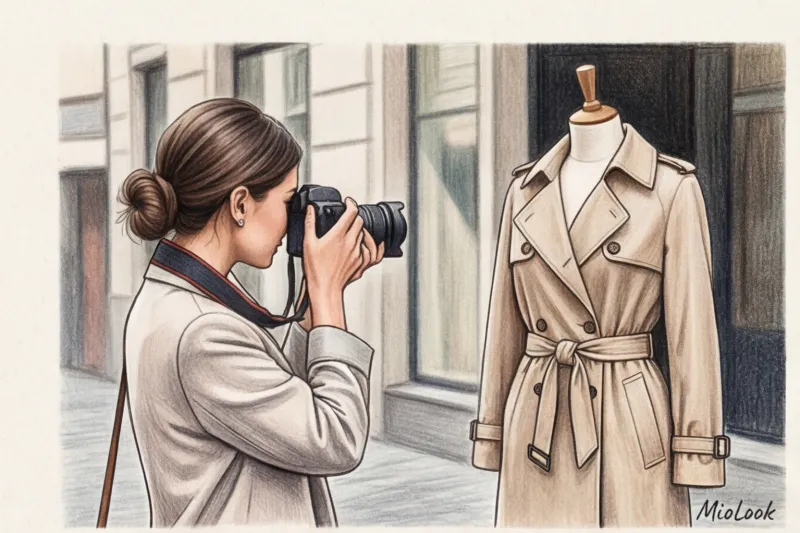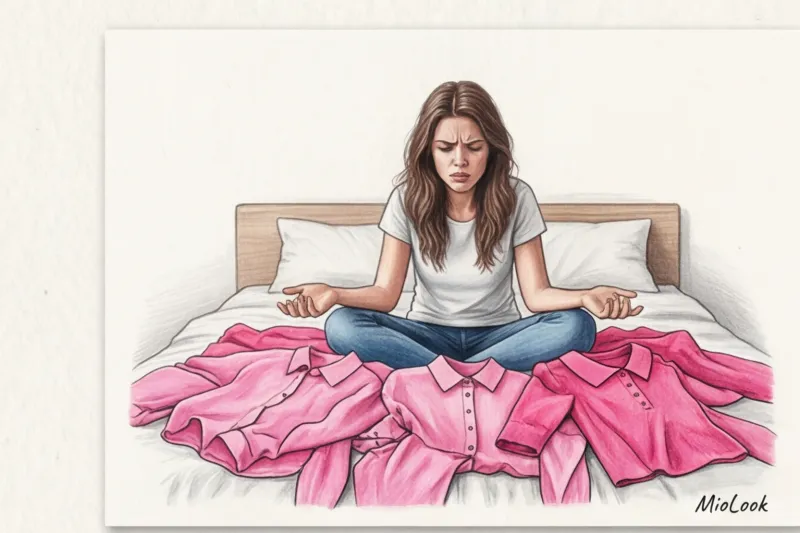
I timed it. It took me exactly three hours and 14 minutes to find a structural replacement for a client's vintage YSL jacket, using text queries in multi-brand online stores. I tried hundreds of combinations: "jacket with wide shoulders," "oversized double-breasted blazer," "men's tailored jacket." The result? A mountain of shapeless mass-market garb. Then I loaded the reference into an app with a visual search function. Within 14 seconds, I had five perfect architectural duplicates from different brands on my screen.
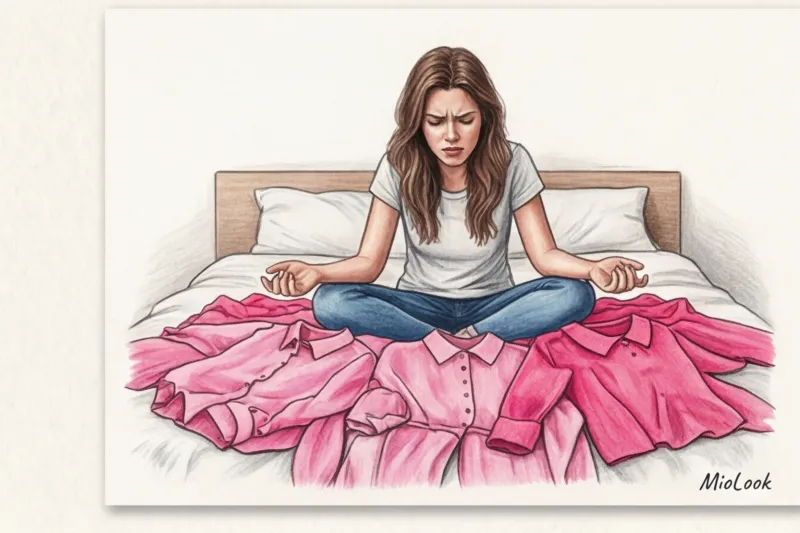
Most online articles describe visual search as a fun game to "find the same blouse as your friend's, but cheaper." As a practicing stylist, I strongly disagree with such a one-dimensional approach. In fact, high-quality Recognizing clothing from photos using a neural network — is a powerful tool for reverse engineering your style. It helps you find things with the right geometry and proportions, avoiding the pitfalls of awkward text tags.
We have already discussed the basic algorithms in more detail in our complete guide about Search for clothes by photo , but today I want to explore this tool specifically from the perspective of smart wardrobe planning. Let's look at how technology is changing the rules of shopping.
Why Text Search for Clothes is Completely Obsolete
Try describing them with the words "relaxed trousers for a Friday at the office, but not too loose so as not to look like pajamas, made of a thick, flowing fabric." For you, that's a clear image. For an online store search engine, it's a set of conflicting triggers. Stores tag items in the most basic way: color, length, presence of buttons. They don't tag aesthetics And drapery.
According to a 2023 Baymard Institute report examining user experience in e-commerce, a whopping 60% of text queries in the fashion segment don't result in a purchase. The reason is simple: the buyer's vocabulary and the merchandiser's vocabulary don't match.
One of my clients, who works in IT, spent a month searching for a "dusty pink chunky knit cardigan." The search engine persistently suggested a garish fuchsia or a delicate ribbed knit that accentuated every slightest imperfection. The algorithm didn't care about the subtle nuances. We gave up, went to Pinterest, found the right reference with the right, slightly rough texture, and ran it through the AI. The perfect option, priced at around €85, was found on COS in just two clicks.
Access to MioLook for €0.99 — one-time payment
A smart AI stylist will select the perfect look based on your preferences and color type.
Get access — €0.99 onceClothing Recognition from Photos with a Neural Network: The Magic Under the Hood
How exactly does this magic work? Computer vision technology doesn't "look" at a photograph the way we do. The algorithm works like a skilled tailor, breaking down the entire image into mathematical vectors.
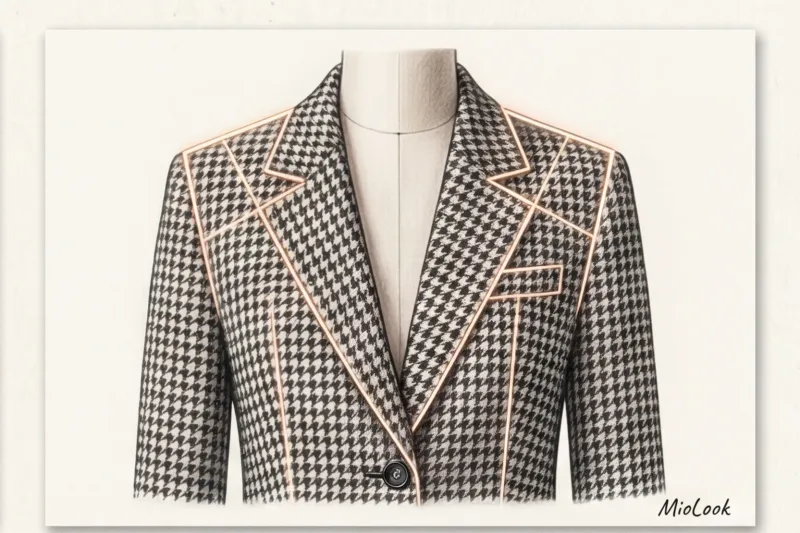
When a neural network analyzes a coat, it reads up to 50 visual parameters:
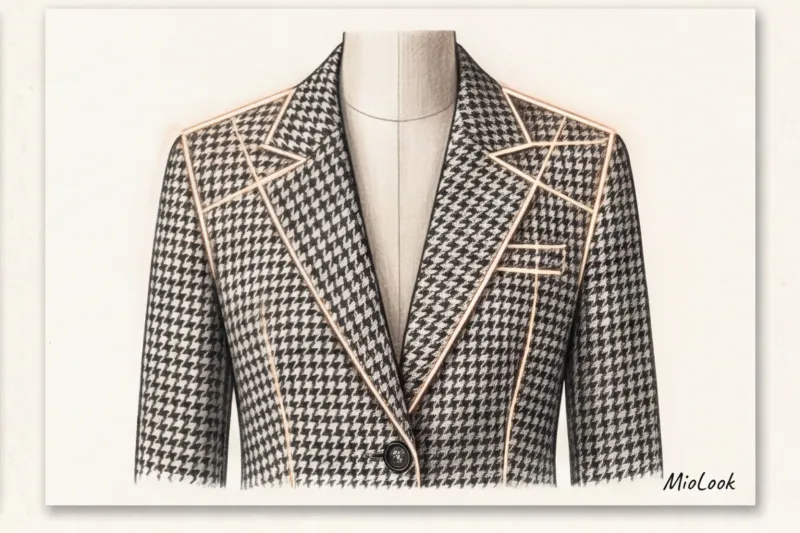
- Cutting geometry: shoulder seam angle, armhole depth.
- Shape of parts: lapel width (whether it is pointed or rounded), pocket size.
- Length and proportions: where the hem ends relative to the waistline.
According to WGSN research (2024), the implementation of advanced visual search on fashion platforms increases purchase accuracy (and reduces return rates) by 37%. Users finally get what they really expected.
Just three years ago, neural network-based clothing recognition from photos was clumsy: you'd upload a photo of a girl in a polka-dot dress, and the system would return curtains with a similar print. Today, AI is trained on millions of street style looks, catalogs, and fashion shows. It understands context. It knows that if you're looking for a blazer over a hoodie, you need an oversized silhouette, not a fitted office classic from the 2010s.
Algorithmic Blind Spots: Where AI Goes Wrong and How to Correct It
I'd be lying if I said artificial intelligence is flawless. It has serious blind spots that marketplace brochures won't tell you about. The main problem is fabric texture.
The algorithm analyzes pixels and light and shadow. In a photograph, a studio flash can create beautiful highlights on a cheap 100% polyester dress for €25. The neural network detects this shine and happily suggests natural silk dresses for €250–400 as alternatives, and vice versa. The computer cannot yet determine tactility or thread density.
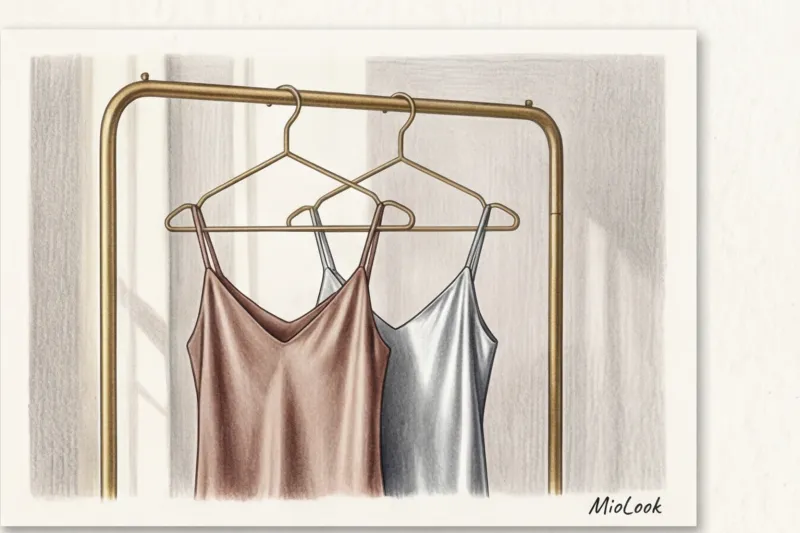
The second challenge is the scale of prints and hyper-oversized designs. Complex deconstructed pieces from brands like Maison Margiela often baffle AI, as their geometry defies standard mathematical models.
The main counterintuitive tip from a stylist: Stop looking for a 100% copy of the item in the photo. This is the most common mistake newbies make. If the photo shows Zara from the 2019 collection, you won't buy it. Your goal is to find a "geometric twin." Look for a silhouette that conveys the same mood and flatters your figure, even if it has different buttons.
Your perfect look starts here
Join thousands of users who look flawless every day with the wardrobe app.
Get access — €0.99 onceA stylist's guide: how to find clothes by photo
To cut my online shopping time from several hours to 20 minutes a week, I developed a rigorous visual search protocol. Here are my tried-and-true steps.
1. The Ruthless Crop Rule
Never upload a full photo if it shows a model walking down the street with coffee, a bag, and a dog. The AI will try to find everything at once or focus on the highest contrast (for example, a red cup). Crop the photo so that the desired item takes up 80% of the frame.
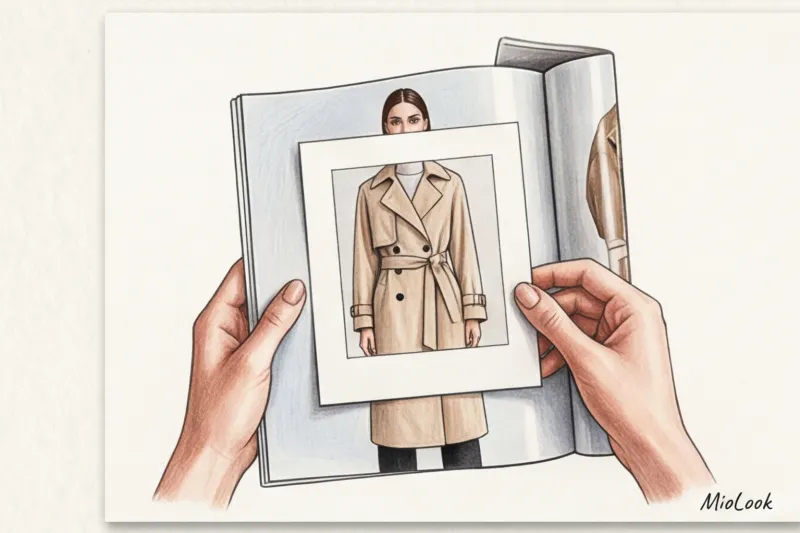
2. Secret Combo: Visual + Filters
First, we find the right shape using photos, then filter out the junk using text filters. Once the AI has returned a hundred similar trench coats, immediately enable the site's filtering: set a price range (e.g., €100–€300) and composition (cotton only, exclude polyester). This saves you from disappointment during delivery.
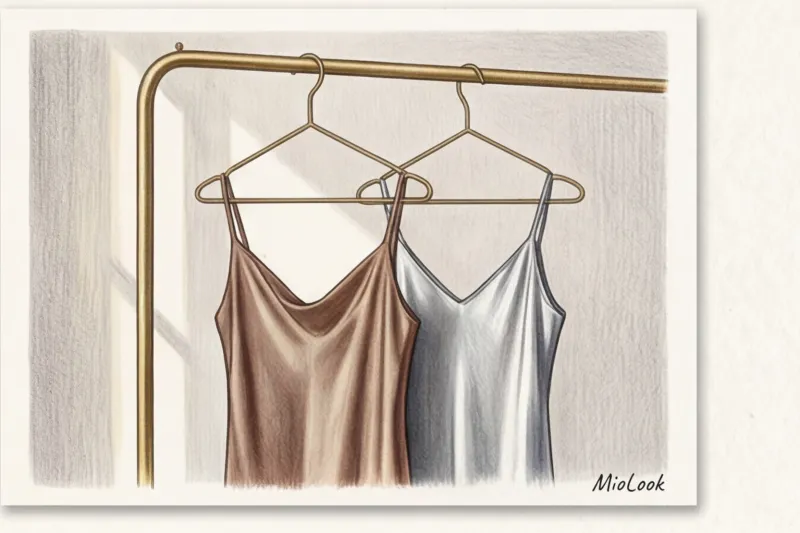
3. Clearing out visual noise
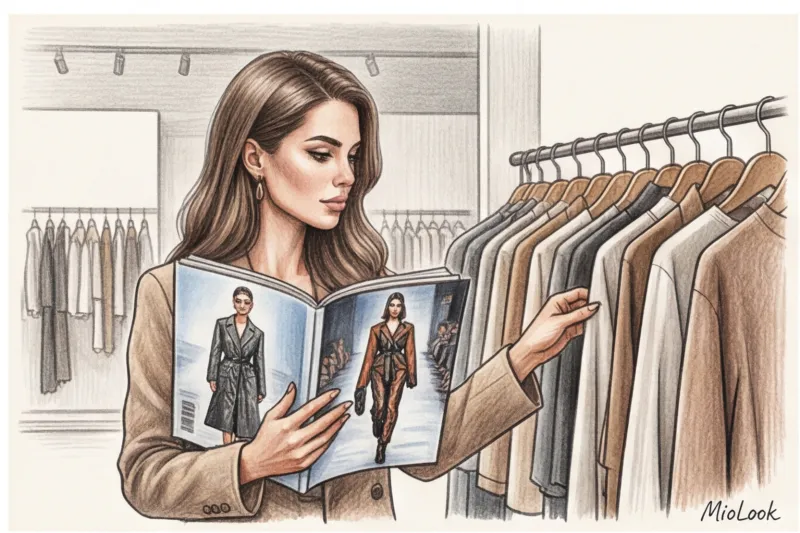
Where can I find perfect references? Street style shots from the crowd don't work well—they're full of shadows and distortions. I recommend taking screenshots from runway shows on Vogue Runway (they have perfect lighting and a gray background) or from catalogs of minimalist brands. Even if you're not planning on buying a €4,000 The Row coat, use their lookbook as a perfect, "clean" reference for finding affordable alternatives.
From a Single Purchase to a Smart Wardrobe with AI
Shopaholics use visual search for impulse purchases: they see a beautiful dress on Instagram, find it, and buy it. The problem is, that dress then hangs in the closet with the tag because there are no matching shoes.
A strategic approach is to use AI to complete the capsule collection. Do you have a complex asymmetrical skirt that you've worn exactly once? Take a photo of it in good daylight. Upload it to Pinterest or specialized fashion apps to see what tops stylists have paired it with in similar photos.
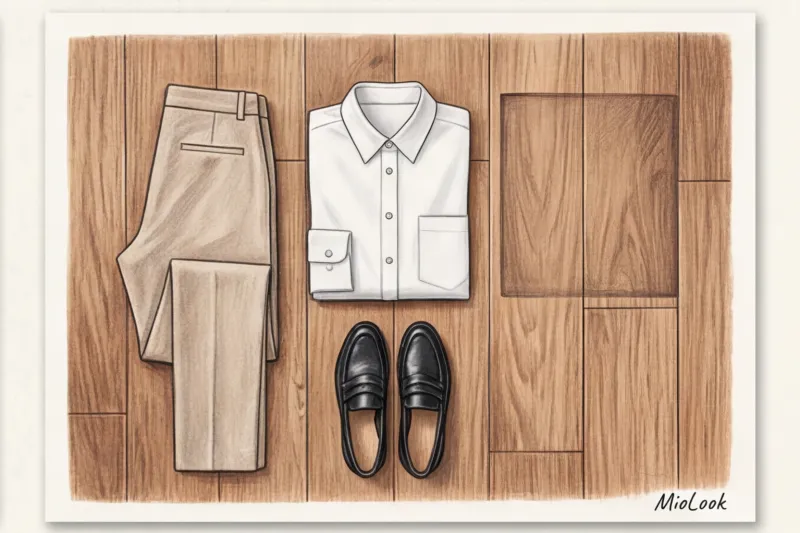
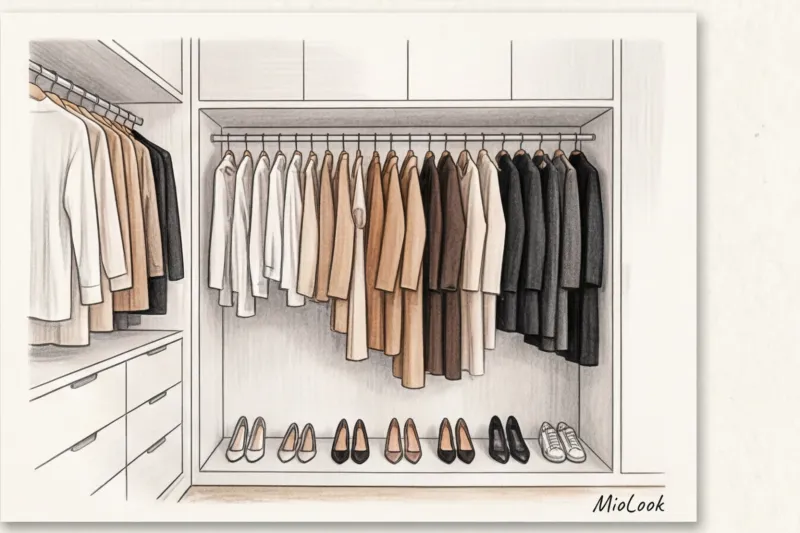
This is where complex tools like MioLook It's not just about finding something in a store. It's about mentally (or virtually) combining that found item with the existing ones in your digital closet. If the sweater found by the AI doesn't create at least four new looks with your current bottoms, you close the store tab. No compromises.
Checklist: 4 Steps to Flawless Visual Shopping
To summarize, to ensure neural networks work for you and not against your wallet, save this algorithm before your next online shopping trip:
- Find a quality reference: a clear silhouette of the item, good lighting, preferably a plain background.
- Make precise cropping: Cut out all unnecessary parts, leaving only the desired item of clothing in the frame.
- Analyze geometry, not brand: Look at how the proportions of the lapels, sleeve length and overall volume match, ignoring minor decorative details.
- Apply post-filtering: Strictly cut out unsuitable fabrics and go beyond the required budget (for example, leave only cotton from €50).
Ready to get started?
Try the MioLook free plan—no commitments required. Digitize your wardrobe and let AI create your perfect looks.
Get access — €0.99 onceTechnology will never replace your personal taste. But neural network-powered clothing recognition from photos takes the most tedious part of the job away from you—the endless scrolling of pages searching for the right proportions. Once you master this tool, you'll stop being held hostage by other people's text descriptions and become a true wardrobe architect.