Style Architecture: Why Accessories Matter for a Monochromatic Look
Have you ever wondered why a beige total look looks like a Brunello Cucinelli campaign shot on one woman, while on another it looks like a delivery worker's uniform? The difference isn't in the price tag on the jacket. Over 12 years of working as a personal stylist, I've discovered a rule of thumb: shoes and bags take up only 10-15% of our body surface area, yet they determine up to 80% of the perceived value of the entire outfit.
Correctly selected accessories for a monochrome look They act like architectural piles. They hold the structure together, giving it rhythm and depth. We've covered more details on how to create the perfect single-color base in our the complete guide to a monochrome wardrobe , but today we’ll talk about the final, most important touches.
In this article, I'll share three key strategies for working with details: the clever tone-on-tone approach, the status-defying gradient stretch, and Mediterranean contrast.
Your perfect look starts here
Join thousands of users who look flawless every day with MioLook. Our smart algorithm will help you create a capsule that suits your needs.
Get access — €0.99 onceThe "courier service" error: when everything goes wrong
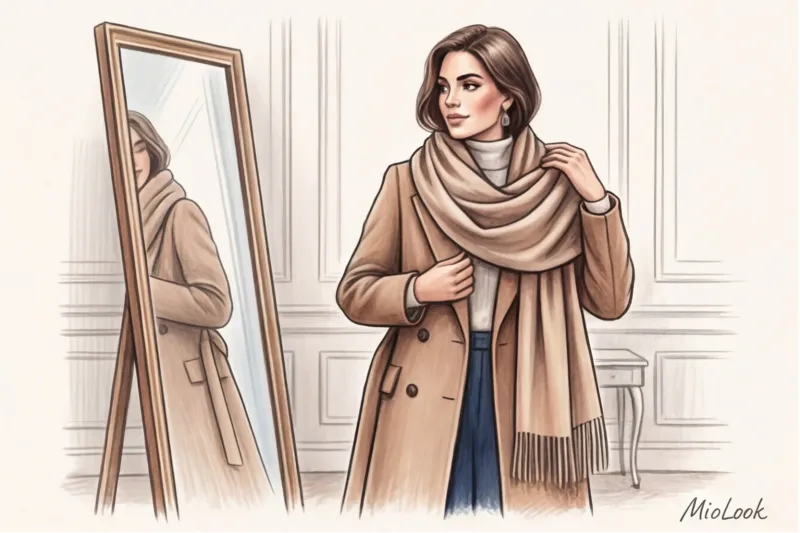
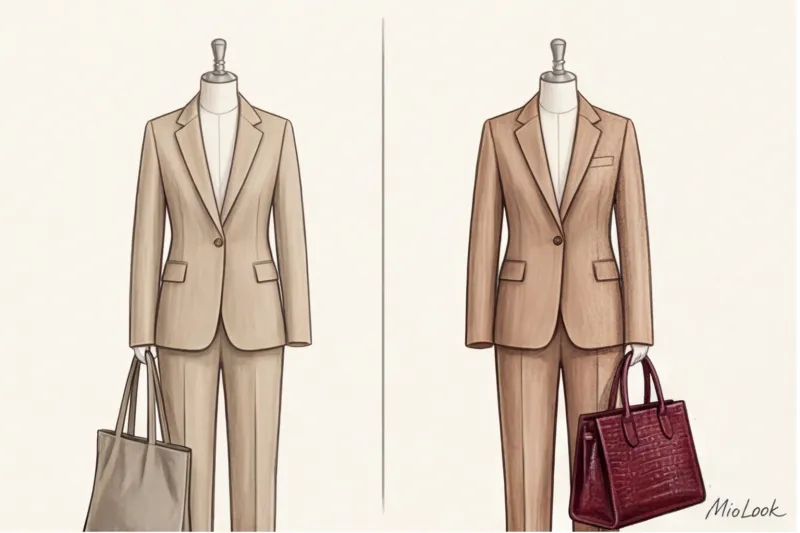
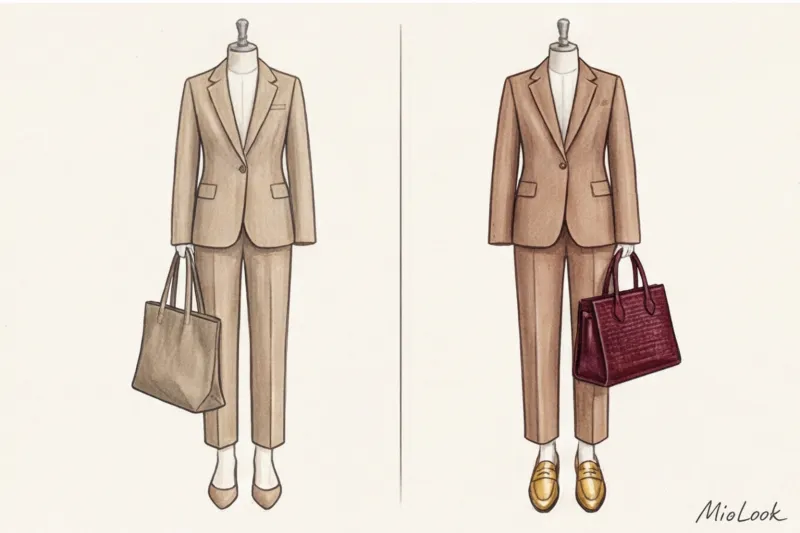
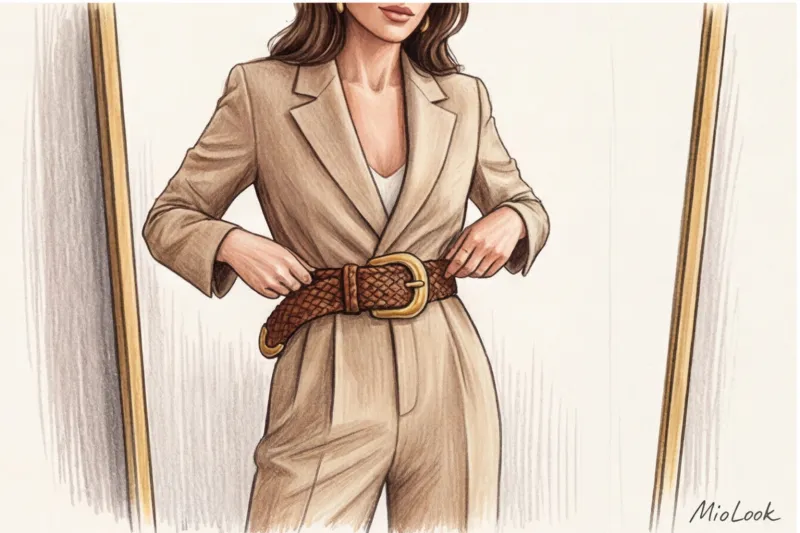
A client named Maria recently contacted me. She'd invested around €1,200 in a luxurious camel-colored pantsuit made of fine wool. But when she wore it, she felt... invisible. After analyzing her look, I immediately discovered the reason. Maria paired the suit with matte suede pumps and a flat, soft leather shopper in the exact same camel shade. She'd transformed herself into a blank canvas, a painting forgotten to be painted on.
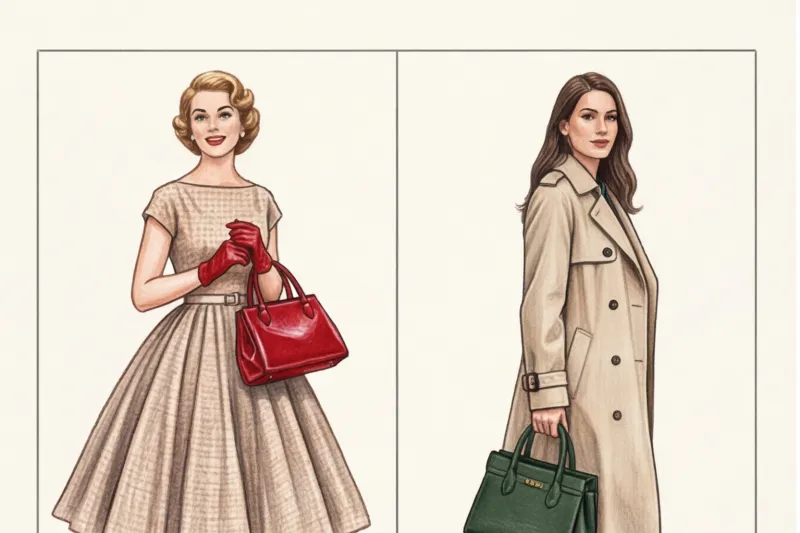
A perfectly coordinated bag and shoes made from the same material is a hopelessly outdated rule dating back to the 1980s. Today, this approach flattens a monochrome look, cheapens it, and robs it of its dynamic appeal. If clothes and accessories blur into a single blur, there's simply nothing to catch the eye.
Strategy 1: Tone-on-tone, or the Rule of Three Textures
If you're determined to match your accessories to the color of your outfit for a monochrome look, remember the key: the texture should be different. Radically different.
While working at Milan Fashion Week, I learned from local stylists the golden formula of Italian luxury: "In every outfit, there should always be one fluffy, one smooth, and one shiny piece." It works without fail. Opting for a matte cashmere sweater and wool suit pants? Add a crocodile-embossed bag and patent leather loafers.
It's all about simple physics and the reflectivity of materials. Glossy leather reflects light, making the same shade appear visually two shades lighter and brighter than suede or matte fabric. This creates what's known as "textural contrast," which replaces color contrast.
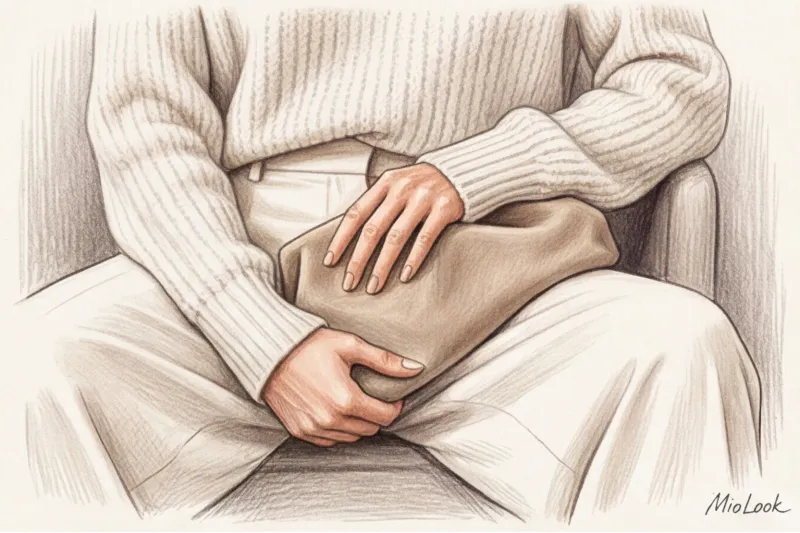
"Texture is a color you can touch. In a monochrome look, it's the difference in surfaces that keeps the eye from getting bored." — Isabella Garcia
Strategy 2: Temperature gradient and halftone play
According to Lyst's 2024 research, searches for "tonal outfits" (looks in related shades) increased by 45%. This is the safest strategy for those who want to look expensive but are wary of harsh contrasts.
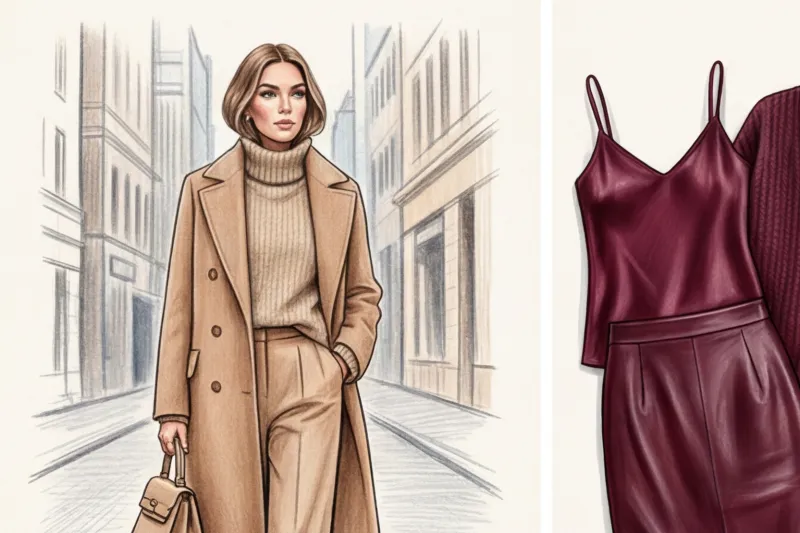
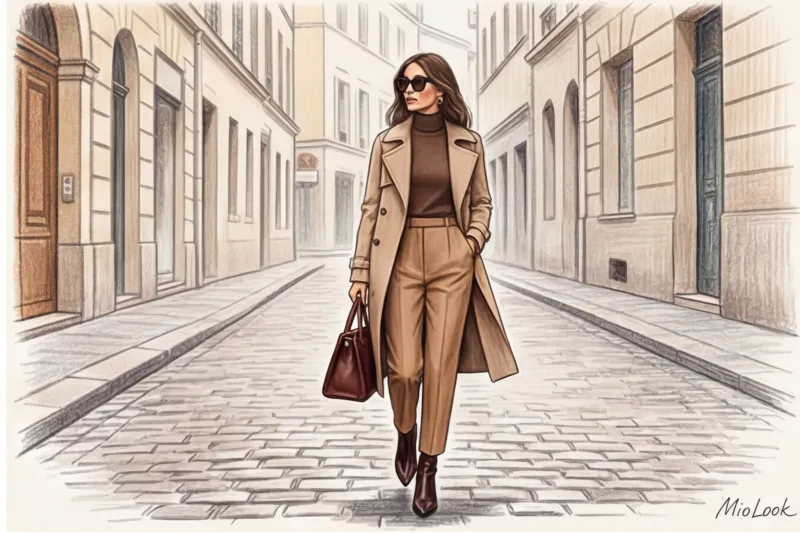
A related gradient is using accessories 2-3 shades darker or lighter than your base. Imagine a suit the color of baked milk. If you add a dark chocolate-colored bag and shoes, you'll instantly ground the look. Dark details against a light background act like a frame for a painting: they pull the silhouette together and give it a graphic quality.
A great color stretch pattern looks like this:
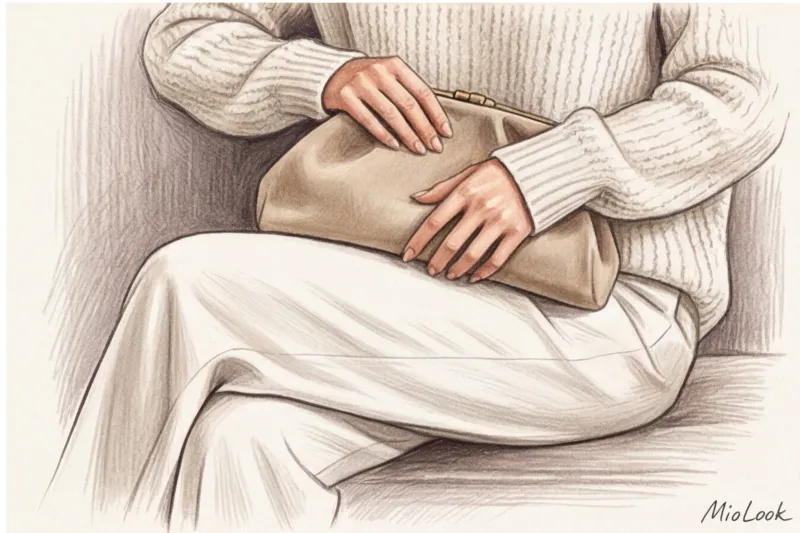
- Light center: milky or cream-colored knitwear.
- Middle tone: a caramel-colored coat or trench coat.
- Dark accents: Shoes, belt and structured bag in espresso or mahogany.
Such a complex stretch is always associated with a status wardrobe (the aesthetics of "quiet luxury"), because choosing harmonious, but not identical shades is more difficult than buying a ready-made set of the same color.
Ready to get started?
Try the free plan—no commitments required. Create your first color capsule in the MioLook app right now.
Get access — €0.99 onceStrategy 3: Dramatic Contrast with Mediterranean Chic
My favorite technique, adored by Spanish and Italian women, is to use a stark monochrome as a canvas for a single, powerful accent. Here, we turn to the fundamentals of Johannes Itten's color theory and his rule of contrasting areas.
Itten proved that for a bright color to sound elegant and not garish, it should be used sparingly relative to the background. A total look of navy blue, graphite, or sand is ideal for "pulling out" the boldest accessories.
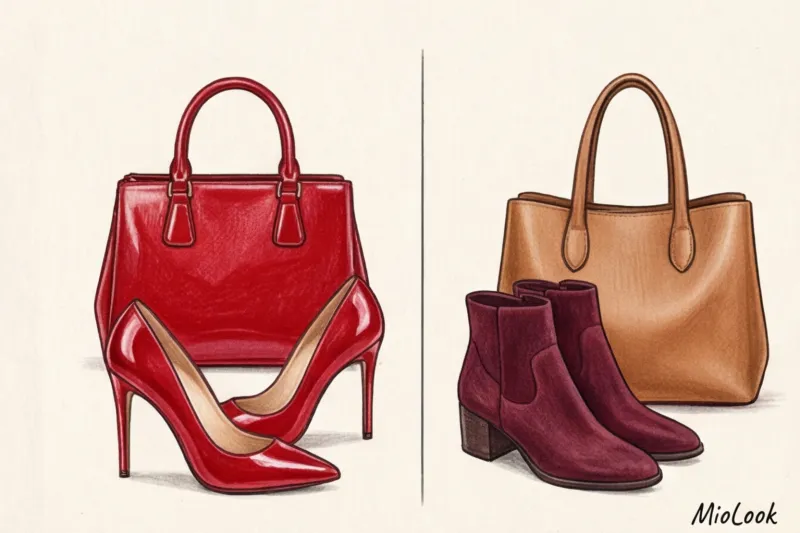
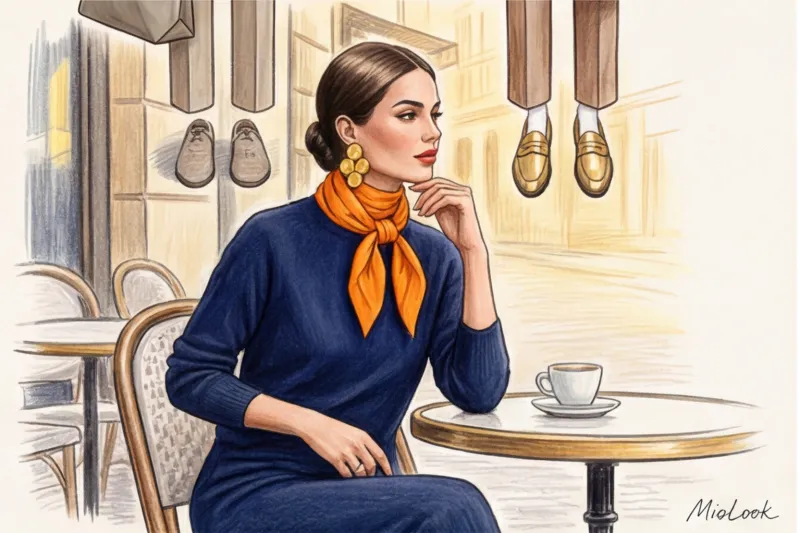
Today, deep burgundy, emerald, and even predatory leopard are playing the role of "new neutrals" in accessories. If your office dress code allows for a little sass, try an all-gray wool outfit and accessorize it with a wine-colored bag. It instantly changes the mood from "employee of the month" to "creative director."
Metallic as a universal contrast
What if you don't want to introduce a new color but feel like your look is lacking life? The answer is metallic. Shoes or bags in shades of silver, gold, or bronze are a brilliant invention. Metallics reflect the surrounding colors, so they automatically adapt to any monochrome.
Chunky gold hardware on a bag can completely replace jewelry. However, there's one limitation to this method: metallic shoes. doesn't work In a strict corporate or conservative dress code (for example, in law or financial firms), limit metal to the belt buckle or bag clasp.
Shoes as a Foundation: Choosing a Base for Monochrome
Shoes can visually correct proportions, and this effect is greatly enhanced in monochrome looks. If you choose shoes or ankle boots that strictly match your trousers or thick tights (for example, black trousers with black suede ankle boots), you create a continuous vertical line. The result? The illusion of infinitely long legs.
In 1957, Coco Chanel revolutionized footwear with her iconic two-tone slingbacks (beige base and black toe). Chanel brilliantly used optical illusion: the beige blended with the skin, elongating the leg, while the contrasting black toe made the foot appear slimmer and smaller.
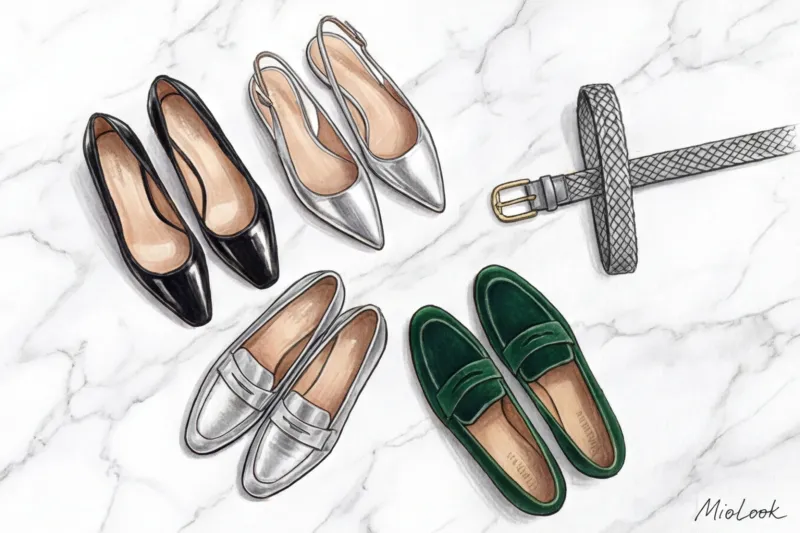
Another technique I often use in practice is playing with contrasting styles. If your monochrome look consists of decidedly feminine, flowing fabrics (a silk skirt, a thin jumper), add masculine footwear. Chunky loafers with chunky soles or Oxfords will add the necessary heft and balance to the outfit.
Access to MioLook for €0.99 — one-time payment
A smart AI stylist will select the perfect look based on your preferences, body type, and existing wardrobe.
Get access — €0.99 onceStylist Checklist: 4 Formulas for Your Wardrobe
I don't believe in abstract advice, so I've prepared four concrete formulas for you. You can test them out in the "smart wardrobe" feature in MioLook to visually evaluate how they work with your items.
- Formula 1 (Elegance): Matte wool suit + suede shoes in the exact same color + patent leather bag two shades darker. Perfect for important meetings.
- Formula 2 (Dynamics): Basic beige or off-white monochrome + metallic shoes + leopard print bag. Perfect for brunch with friends or a trip to an exhibition.
- Formula 3 (Status): Cashmere set (sweater + midi skirt) + leather loafers + structured bag with chunky gold hardware. The secret to luxury looks in the €500–€800 range without breaking the bank.
- Formula 4 (Freshness): A total look of dark blue denim + bright red shoes or a bag. Flawless French chic.
Your Fashion Signature: The Finishing Touches
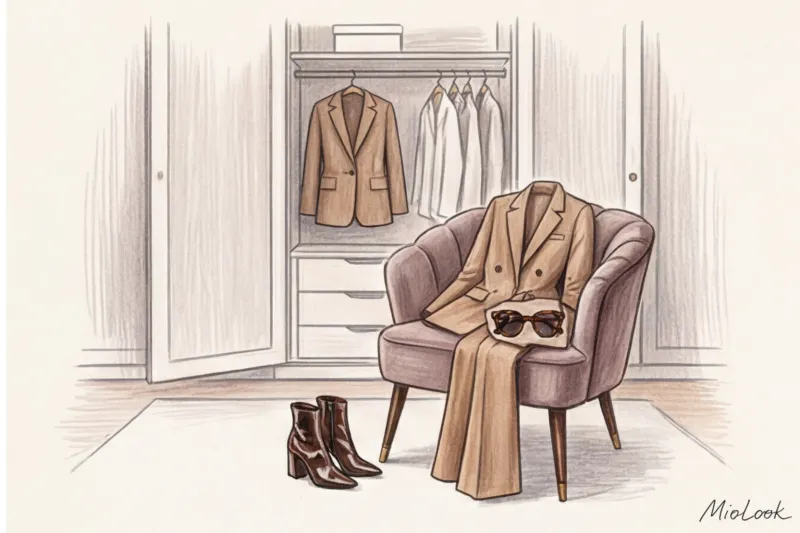
Forget the rule that accessories are just an addition to an outfit. In a monochrome look, they play a key role. Whether it's a textured contrast that makes the same color pop with different facets, an elegant temperature gradient, or a bold pop of color—these details are what transform an ordinary outfit into a personal style statement.
Take the first step tomorrow: take your most predictable and "safe" monochrome outfit and mercilessly break it up with an unexpected bag or statement shoes. You'll be surprised how little it takes to turn heads.