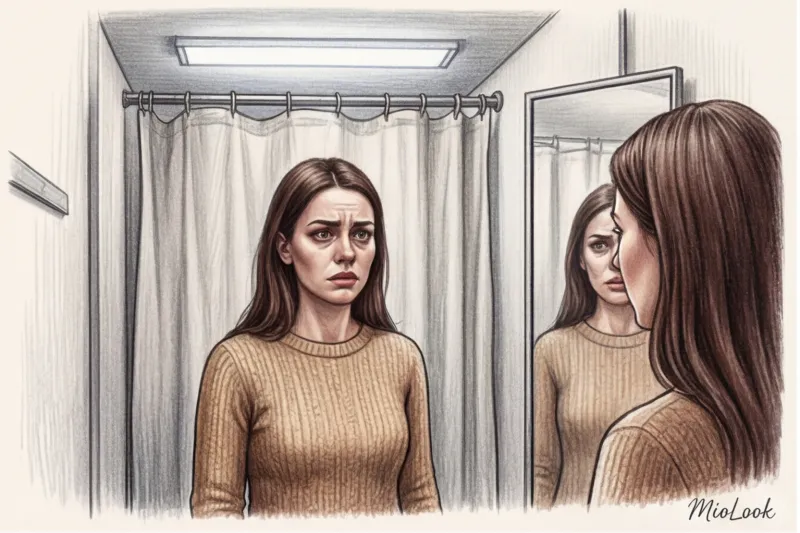
One of my clients, the CFO of a major corporation, a woman with an iron grip, once literally burst into tears in the fitting room of a London boutique. The reason? The tag on the impeccable cashmere coat she so desperately wanted was labeled a size "L," even though she'd confidently worn a size "M" for the past fifteen years. That day, I was once again convinced: standardized sizing charts don't just confuse us; they damage our self-esteem.
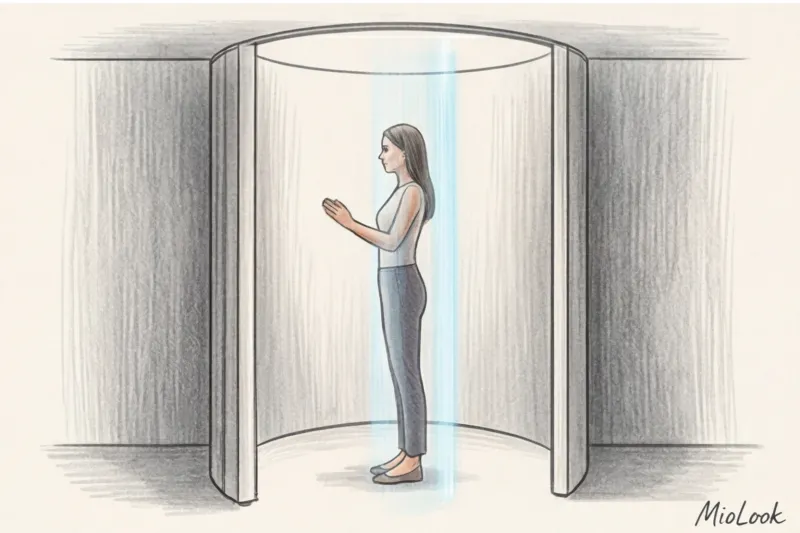
We're used to molding our bodies to fit brand molds, even though it should be the other way around. Fortunately, today's fashion industry offers an elegant solution to this problem, and that's 3D body scanner in a store This technology shifts the focus from abstract letters on tags to the actual geometry of your silhouette. We've covered more about how technology is transforming offline shopping in our complete guide to smart mirrors in stores In this article, I want to explore why ditching the measuring tape is the best thing you can do for your wardrobe.
More than just centimeters: How a 3D body scanner works in a store
I vividly remember testing this technology for the first time during Milan Fashion Week in 2018. Back then, it was a cumbersome, intimidating booth; the process took about a minute, and the result looked more like a pixelated character from an old video game. What we see in modern boutiques today is a technological marvel compared to those first prototypes.
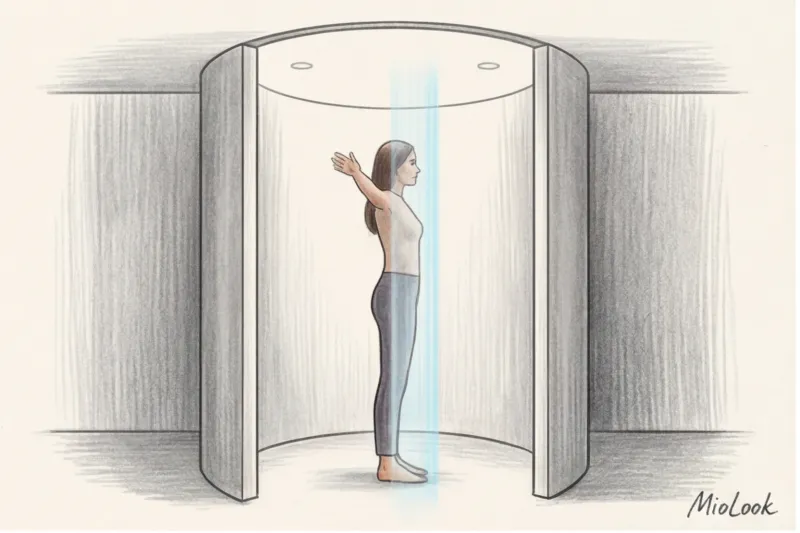
A modern scanner doesn't require you to hold your breath or stand still for minutes. You enter a stylish fitting room, and in 3-5 seconds, the system records 200 to 300 unique points on your body. The algorithm instantly captures not only basic measurements but also the complex architecture of your figure.
From optical sensors to your digital twin
Many of my clients are initially wary of radiation exposure, associating the process with medical X-rays. This is a big misconception. Modern booths use a combination of safe optical sensors, infrared sensors, and millimeter waves (the same ones that power FaceID on your smartphone).
The sensors simply "sense" the surface with light, forming a dense cloud of points. As a result, the system generates an accurate 360-degree model of you—a digital twin (avatar). No physical contact with a cold tailor's tape measure or other people's hands.
Access to MioLook for €0.99 — one-time payment
A smart AI stylist will select the perfect look based on your unique parameters.
Get access — €0.99 onceThe End of the Dictatorship of Sizes: The Psychological Aspect of Digital Measurements
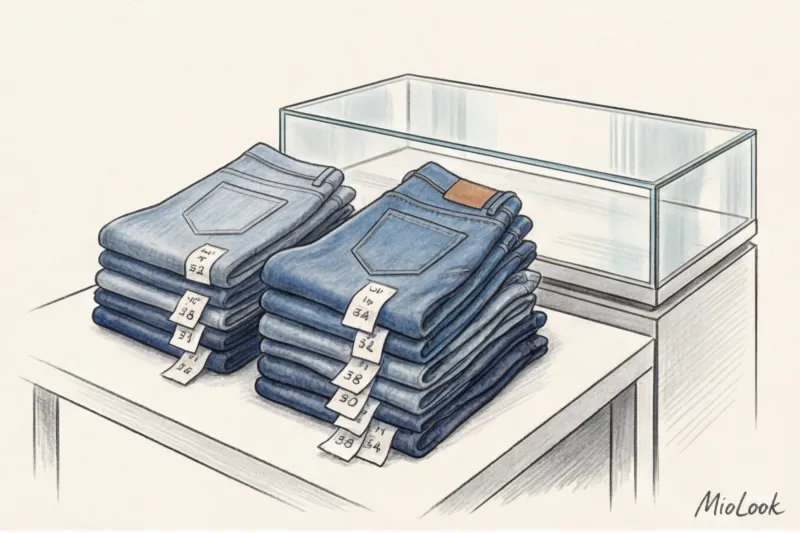
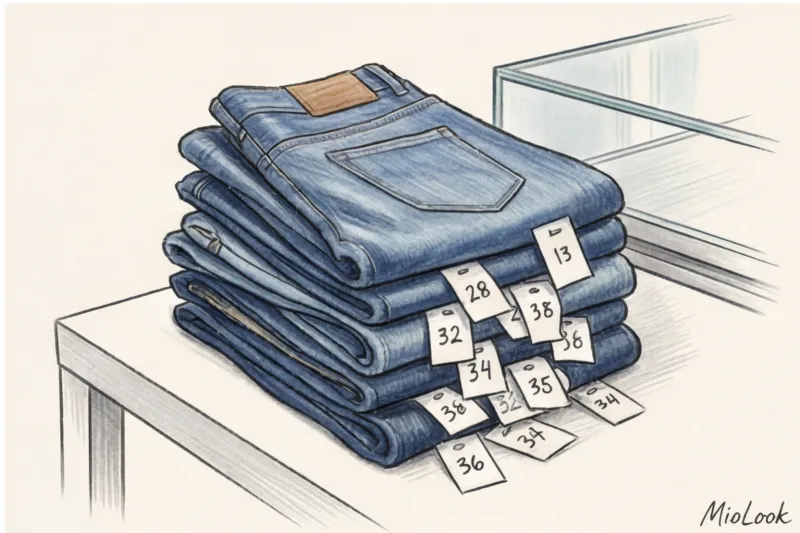
Have you ever wondered why a size S pantsuit fits you perfectly at Zara, while at nearby H&M or Massimo Dutti you can barely squeeze into a size M? This phenomenon is called Vanity Sizing (Size flattery). Brands intentionally change their size charts to make customers feel slimmer and more willing to spend money (after all, buying an XS item is psychologically more appealing).
A large-scale study by the consulting company Alvanon (2023) revealed a colossal discrepancy: standard patterns are hopelessly outdated and no longer correspond to the evolution of real women's figures around the world. This is why fitting rooms often cause stress.
"When that same financial client saw her 3D avatar on the scanner screen, her attitude changed instantly. She saw not a 'problem' stomach or 'wide' hips, but beautiful, objective geometry. Understanding that the problem was with the brand's patterns, not her body, became true therapy for her," – from personal experience.
Digital measurements give us back control over our bodies. The scanner is impartial: it doesn't label you as "Plus Size" or "Petite." It translates your body into pure data, helping you understand that a garment may simply not fit properly, even if it's a basic €50 T-shirt or an €800 designer jacket.
The Anatomy of a Perfect Fit: What a Tailor's Meter Doesn't See
Now I will say something that may seem paradoxical: Knowing your exact measurements in centimeters (those notorious 90-60-90) is absolutely useless for achieving the perfect fit.
Why? Because a tape measure only measures circumference. It's completely blind to volume distribution. Imagine two women. Both have a waist measurement of exactly 70 cm and a hip measurement of 98 cm. A traditional tape measure would tell them they need the same pants size. But a 3D scanner would show a completely different picture.
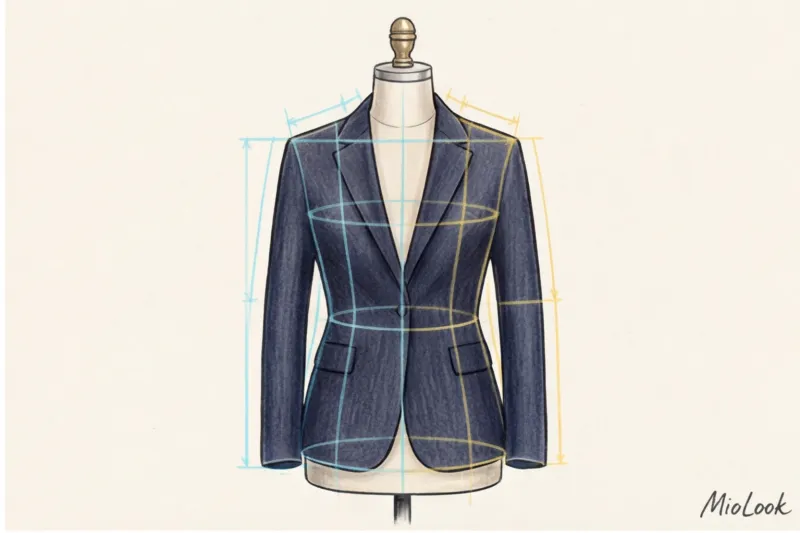
The first woman may have a pronounced anterior pelvic tilt (hyperlordosis) and flat buttocks, while the second has an upright posture and most of her weight is concentrated in the gluteal area. If we put the same pair of COS pants on them, on one, they will unattractively billow in the front, while on the other, they will bunch up under the waistband in the back. They require radically different darts and rise heights.
What does the scanner record, unlike the tape:
- Shoulder asymmetry: 95% of people have it (especially those who are used to carrying a heavy bag on one shoulder). This is critical for the fit of jackets.
- Pelvic tilt: determines how pencil skirts and tailored trousers will fit.
- Actual calf and thigh volume in profile: important when choosing skinny jeans or high boots.
Your ideal image begins Here
Join thousands of users who look flawless every day with an intelligent wardrobe.
Get access — €0.99 onceFrom a brick-and-mortar boutique to your smartphone: the MioLook ecosystem
According to McKinsey (2024), over 70% of online clothing returns are due to simple sizing issues. We order three adjacent sizes of the same sweater simply because we're unsure of the pattern, and then waste time with couriers and the post office. 3D scanning of the figure completely solves this problem..
The real fun begins after you leave the fitting room. The data you collect doesn't just appear as a cute image on the store's screen—it's integrated into your app profile.
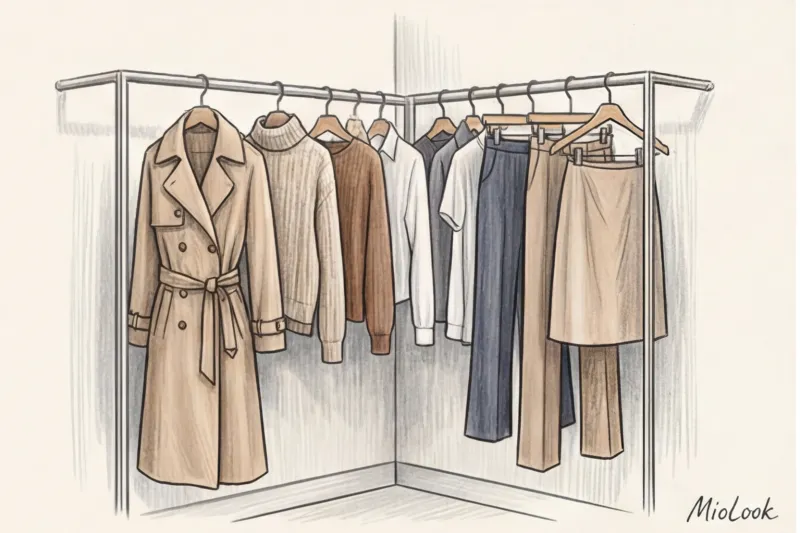
I regularly use this combination in my work. When a client uploads her scan to MioLook , smart wardrobe algorithms begin to work like a virtual designer. The system analyzes not just size, but also body type, proportions, and color, eliminating styles that are known to be unflattering.
You get the opportunity to carry out virtual clothing fitting online Precise down to the millimeter. An AI stylist will suggest that this particular trench coat is best sized up because of your shoulder width, while these jeans will fit perfectly because the brand tailors them to your waist-to-hip difference.
Privacy and Security: Who Owns Your 3D Data?
I understand the main fear: "What if my naked 3D photos leak online?" It's a logical concern, but it's important to explain the technical details.
Scanner doesn't take photos It doesn't capture your skin color, moles, or body texture. The technology creates a so-called "mesh"—a featureless cloud of points in 3D space, overlaid with a gray polygonal grid. If anyone were to access this file, they would see only an abstract mannequin without a face or distinguishing features.

European GDPR (General Data Protection Regulation) standards in the fashion tech industry are extremely strict today. Data is always transmitted encrypted. But there's a caveat (I always warn my clients about this): if you've lost or gained significant weight (more than 3-4 kg), your old avatar will become irrelevant. Your scan should be updated approximately once a year or whenever your figure changes significantly.
Ready to get started?
Try the free plan—no commitments. Upload your settings and get your first capsule.
Get access — €0.99 onceStylist's Checklist: How to Prepare for 3D Scanning
To ensure an accurate digital twin, you need to do some preparation before scanning. Over 12 years in styling, I've seen dozens of cases where choosing the wrong underwear before scanning resulted in clothes later purchased (especially in the €100-€300 range, where a mistake is already costly) fitting too tightly.
Here's my insider checklist for perfect results:
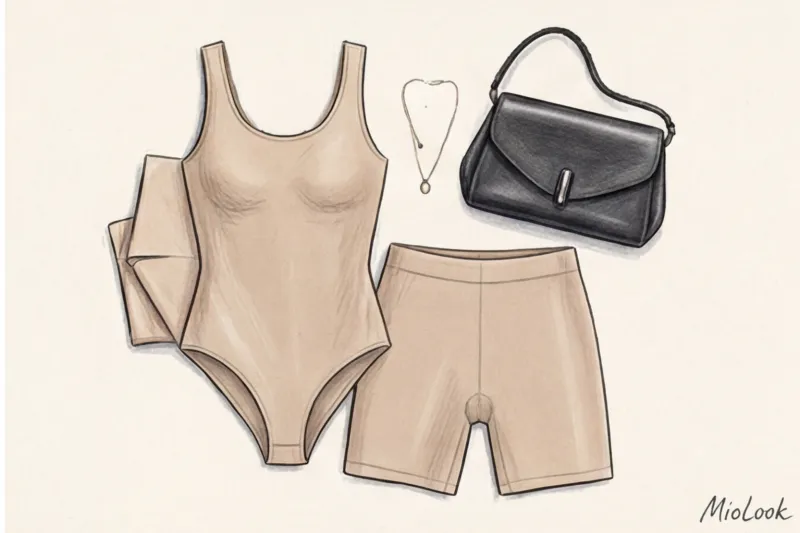
- Wear basic, smooth underwear. A seamless microfiber set, a thick bra, and cycling shorts are ideal. The fabric should fit snugly without bunching.
- Avoid compression and push-up. This is a critical mistake for beginners. If you scan wearing shapewear, the system will assume that's your actual waist measurement. When you order a dress and put it on without a corset, it simply won't fit at the waist.
- Gather your hair. Loose hair, especially thick or long, is perceived by the scanner as adding volume to the back or shoulders. A sleek low bun is the best choice.
Smart mirrors and digital measurements: the future is here
3D scanning technology doesn't exist in a vacuum. In modern flagship stores, it works seamlessly with smart mirrors. You create an avatar, approach the mirror, and see your chosen item appear. the suit or dress fits your digital copy without having to take off clothes.
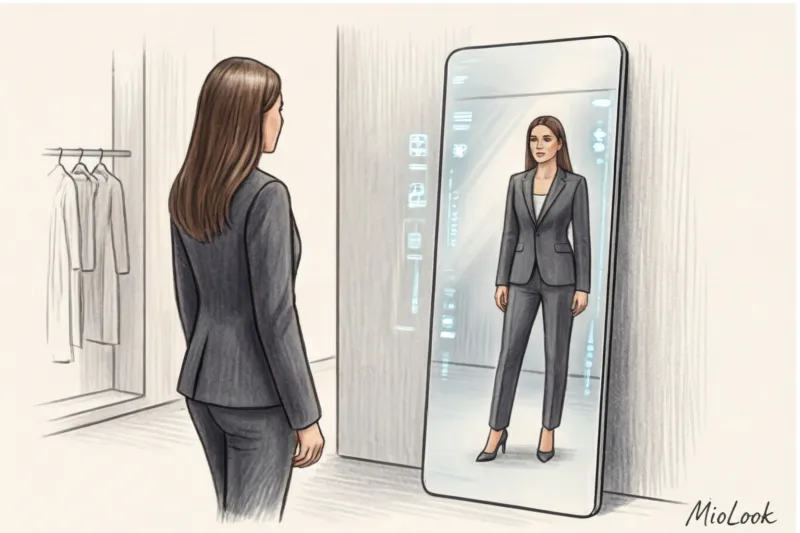
Ultimately, this is a confident step away from mass-market fashion toward an accessible, custom-made approach (Made-to-Measure). Brands are gradually transitioning to on-demand production, where items are tailored or customized to your unique scan, rather than to an abstract "M-size" model.
My advice? The next time you visit a modern boutique or a major brand's flagship store, don't pass by the 3D scanning booth. Take those five minutes. The data you receive will become a powerful foundation for your style. And most importantly, you'll never be upset by the numbers on the tags again, because you'll begin to understand that the perfect clothes should fit you, not the other way around.