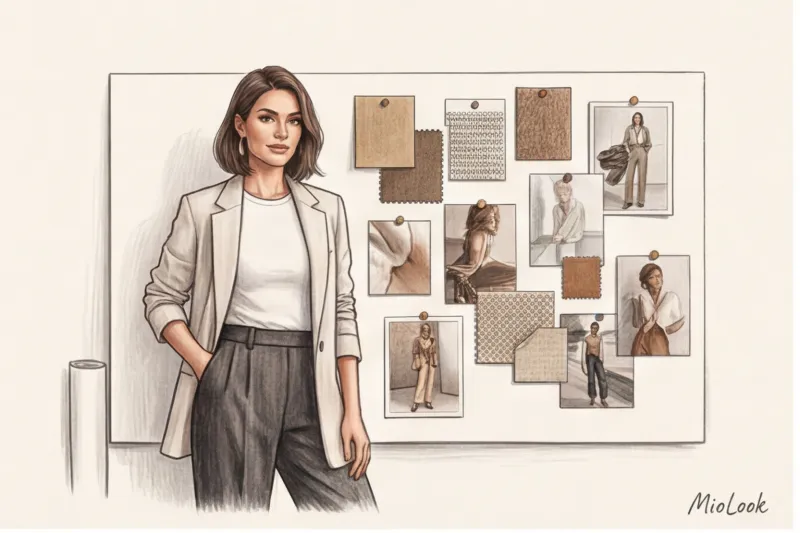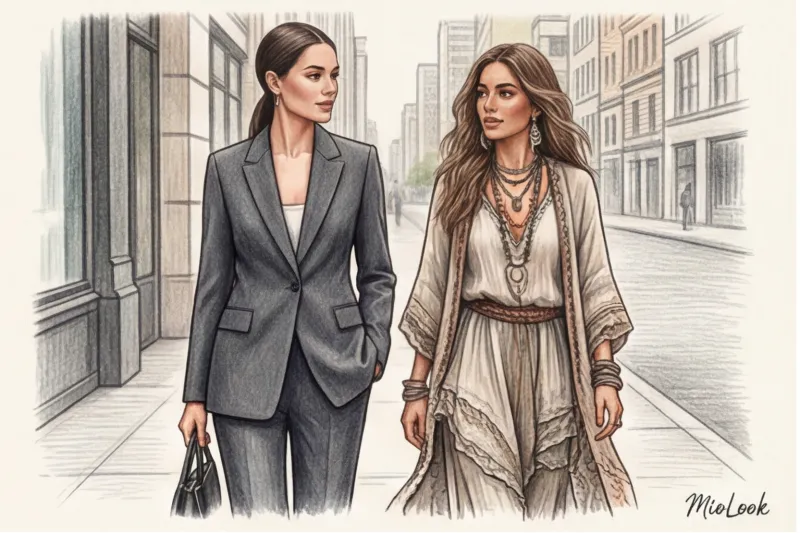
Over 12 years of working as a stylist and fashion journalist, I've seen hundreds of impeccably tailored wardrobes that... didn't work at all. One of my clients, a top manager at a large company, spent a long time trying to "dress like an executive." We bought her stiff suits with exaggerated shoulders, classic pumps, and tailored pencil skirts. Physically, the clothes fit perfectly. Psychologically, she felt like an impostor in someone else's armor.
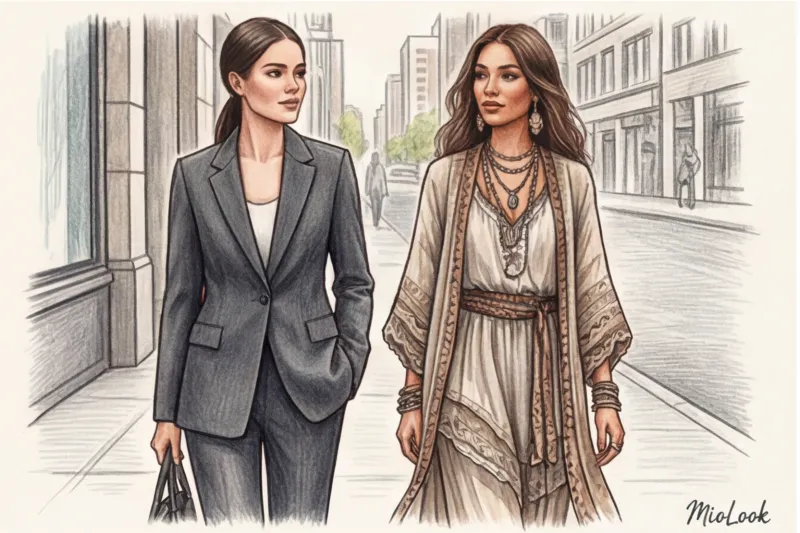
What was the mistake? We tried to force a pure social template onto her, ignoring her true nature. Once we replaced the stiff jackets with asymmetrical cuts and added the complex textures of raw silk, the puzzle came together. She stopped "playing boss" and started being one, channeling her power through creativity.
The topic we will talk about today is archetypes in clothing and style — this isn't esotericism or tests from women's magazines of the 2000s. It's a practical tool for translating your dominant psychological traits into the language of textures, colors, and lines. We've covered the physical side of the issue (your natural geometry) in more detail in our a complete guide to style types and clothing archetypes In this article, we'll focus on psychology—on the "colors" you'll use to paint your natural canvas.
What Are Archetypes in Clothing and Style (and Why It's Not Carnival)
Let's dispel the main myth right away. Working with archetypes is not cosplay. You don't need to buy a crown if you're a "Ruler" or wrap yourself in rags if you're a "Seeker." This system is based on the theory of 12 archetypes, popularized by Carol Pearson and Margaret Mark. These are 12 universal behavior patterns that are subconsciously picked up by others in a split second.
The secret to professional styling lies in combining psychology with physiology. Your natural frame (bones, height, soft tissue—what David Kibbee describes in his system) is your canvas. And your archetype is your painting style. For example, a girl with a "Dramatic" archetype (tall, sharp angles) can be anyone. If her archetype is a "Ruler," she'll choose a tight Saint Laurent suit. If she's a "Rebel," she'll wear a voluminous, ripped leather jacket over a slip dress. The geometry is the same, but the styling radically changes the message.
But there is an important caveat here. This does NOT work When you try to imitate an archetype that's completely alien to you, just to fit in with a new job or your partner's expectations, your body literally rejects the "foreign" clothing—you start slouching, tugging at your skirt, and looking insecure.
Wardrobe Psychology: Why Search for Your Archetype?
Clothing physically alters our biochemistry. This isn't just a beautiful metaphor, but a scientifically proven fact. In 2012, researchers Hadjo Adam and Adam Galinsky introduced the term into psychology. Enclothed Cognition (embodied cognition). In an experiment, they demonstrated that wearing an object with a specific symbolic meaning (in their case, a white doctor's coat) increased the subjects' attention span by 40%.
"Clothing works like an external brain. We adopt the qualities we subconsciously associate with the things we wear." — Hajo Adam & Adam Galinsky (2012)
I regularly observe this phenomenon backstage at Paris and Milan Fashion Weeks. Backstage at Schiaparelli or Alexander McQueen shows, you can see how the models' posture changes the moment they're put into architectural, rigid corsets. They walk differently, their gaze shifts. Designers brilliantly exploit this effect to immerse the models in the desired image.
According to statistics from my styling practice, about 80% of the average woman's wardrobe reflects her "forced" social archetype (strict dress code, comfort for walks with children), and only 20% of the items reflect her true inner voice. It is this dissonance that causes the eternal problem of "a full closet, but nothing to wear." The clothes may be your size, but they not your archetype.
Your ideal image begins Here
Join thousands of users who look flawless every day with MioLook. The smart algorithm takes your body type and style into account.
Get access — €0.99 onceA Guide to 12 Archetypes: How Clothing Helps Express Your Personality
For ease of understanding, I've grouped archetypes by their basic needs. Pay attention not to the character descriptions, but to specific markers in clothing.
1. Independence (Seeker, Sage, Simple-minded)
These archetypes abhor restriction of movement and excessive decorativeness. Their focus is freedom, comfort, and functionality.
- Invoices: Utility denim, 12 oz. and heavier, linen, matte cotton, suede.
- Silhouettes: Relaxed, oversized, safari style, absolute minimalism.
- Reference brands: The Row, COS, Massimo Dutti, Loro Piana.
2. Mastery (Hero, Rebel, Mage)
A group that uses clothing as armor or a tool of transformation. They love drama and complexity.
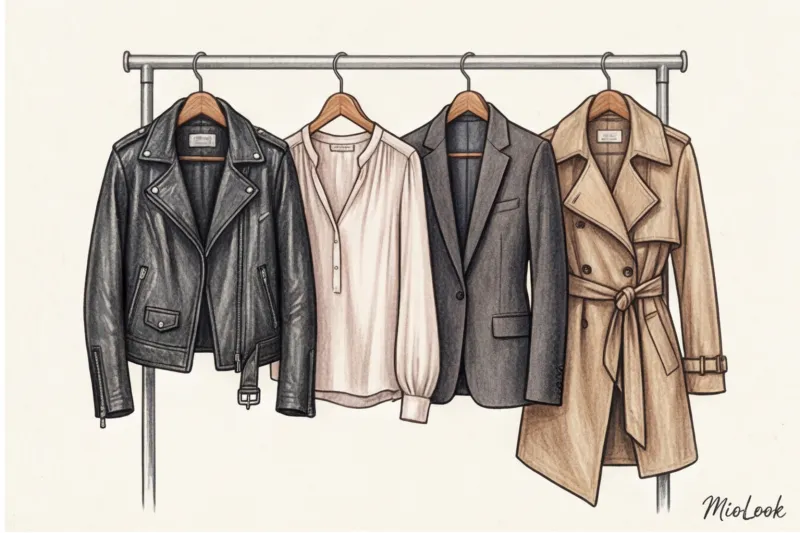
- Invoices: dense glossy or aged leather, heavy velvet, high-tech membrane fabrics, metal fittings.
- Silhouettes: architectural cut, rigid asymmetry, deconstructivism.
- Reference brands: Rick Owens, Alexander McQueen, Saint Laurent.
3. Belonging (Nice Guy, Lover, Jester)
People who are focused on connecting with others. Important nuance: a "Lover" isn't always red lace (avoid this vulgar stereotype!). The modern Lover is more likely to be a tactilely pleasing €300 cashmere sweater worn next to nothing, or flowing Mulberry silk.
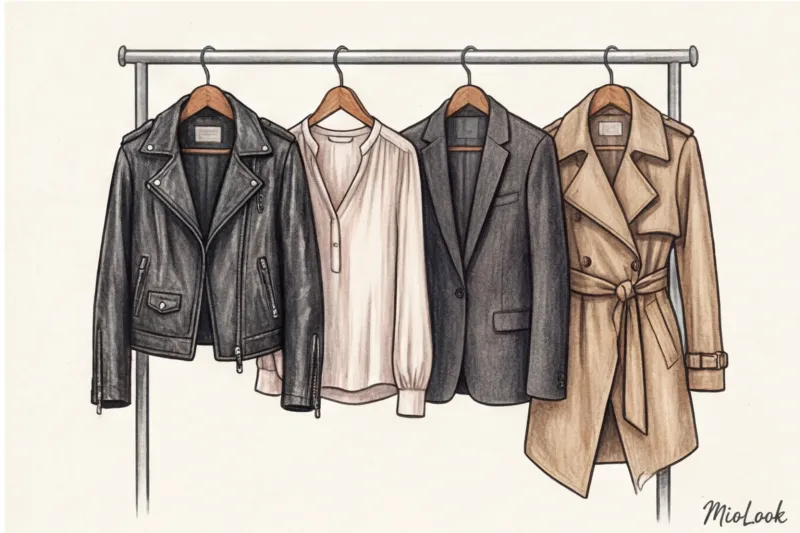
- Invoices: soft jersey, silk, viscose, fluffy angora.
- Silhouettes: Fitted, accent on the waist or collarbone, color blocking, ironic details.
- Reference brands: Jacquemus, Zara (in basic collections), Miu Miu.
4. Stability (Guardian, Creator, Ruler)
A group that conveys structure, care, and creativity. The Creator stands out here for his love of eclecticism, while the Ruler and Guardian gravitate toward timeless classics.
- Invoices: stiff suiting wool fabrics (Super 120s and above), tweed, vintage silk.
- Silhouettes: clear shoulder line, double-breasted jackets, complex multi-layered images (from the Creator).
- Reference brands: Chanel, Prada, Dries Van Noten.
The Pure Archetype Trap: Why You Look Like You're Wearing a Suit
And now, a counterintuitive insight that glossy magazines rarely write about. Dressing 100% like one archetype is bad taste. This makes your look flat, theatrical and downright outdated.
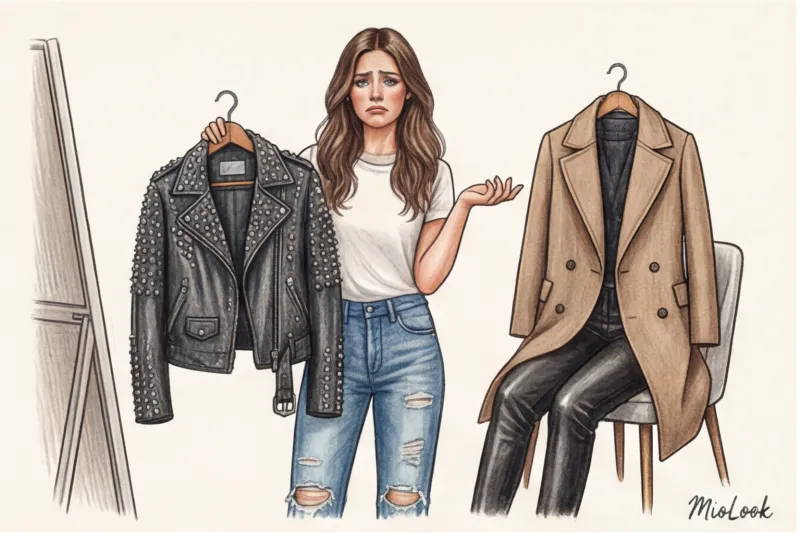
Take the "Rebel" archetype, for example. If a 35-year-old woman wears a studded leather jacket, a rock band T-shirt, ripped jeans, and chunky Martin boots, she won't look like a stylish rebel, but rather like an overgrown teenager stuck in 2007. It's an entertainer's costume, not a personal style.
The most profound and compelling images are built on paradox. The formula for contemporary style I use with my clients is: Base Archetype (70%) + Modifier Archetype (30%) It's at the intersection of two conflicting energies that your unique signature emerges. For example, the "quiet luxury" aesthetic that has taken over the fashion world is nothing more than a brilliant blend of the Ruler (status, expensive materials, impeccable tailoring) and the Sage (minimalism, absence of logos, neutral palette).
Ready to get started?
Try the free plan—no commitments. Create your first capsule wardrobe based on your style preferences.
Get access — €0.99 onceHow to Identify and Incorporate Your Archetypes into Your Wardrobe: An Action Plan
You don't need to take a hundred-page psychological test to find your core style. Simply analyze what you're already drawn to.
- Audit of favorites. Open your closet and take out five items that make you feel most confident and attractive (even if it's an old cardigan). Look at their texture. Are they stiff or soft? Smooth or rough? Loose or fitted?
- The Three Adjectives Rule. Choose three words that would describe your ideal image to a stranger on the street. For example: "Influential, mysterious, creative." This is your cocktail of Ruler, Magician, and Creator.
- Adaptation to the context. One of my clients worked at a corporate bank with a strict dress code, but her inner archetype was "The Magician" (mysticism, depth, transformation). We couldn't break the rules and dress her in a robe. Instead, we integrated the Magician at a 30% level: deep wine-colored blouses instead of white, complex asymmetrical pendants under a formal jacket, and a perfume with notes of incense.
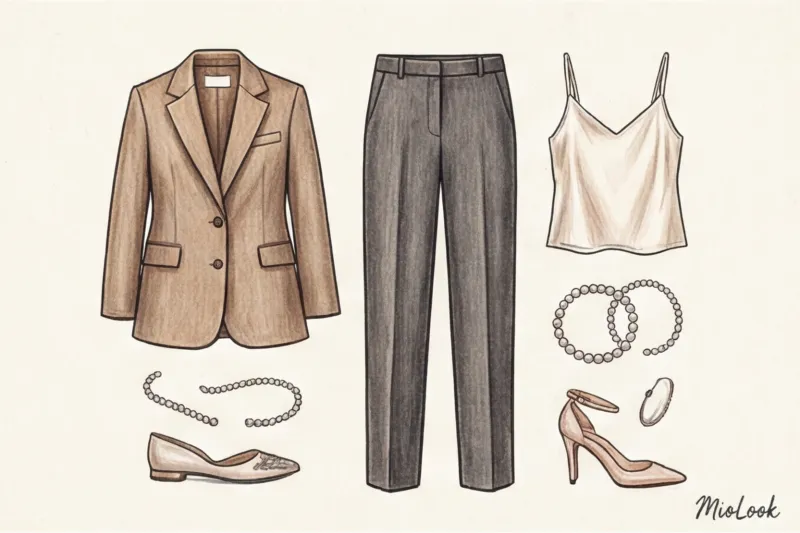
If you want to automate this process, I highly recommend trying smart wardrobe feature in the MioLook app Algorithms help digitize your belongings and suggest combinations that align with your physical architecture and desired mood. You simply upload photos of your items, and the AI assembles them into capsules to suit any need.
The Styling Matrix: A Checklist for Image Validation
Before leaving the house, run through your outfit with three quick questions. This habit saves a ton of stress and money on impulse purchases:
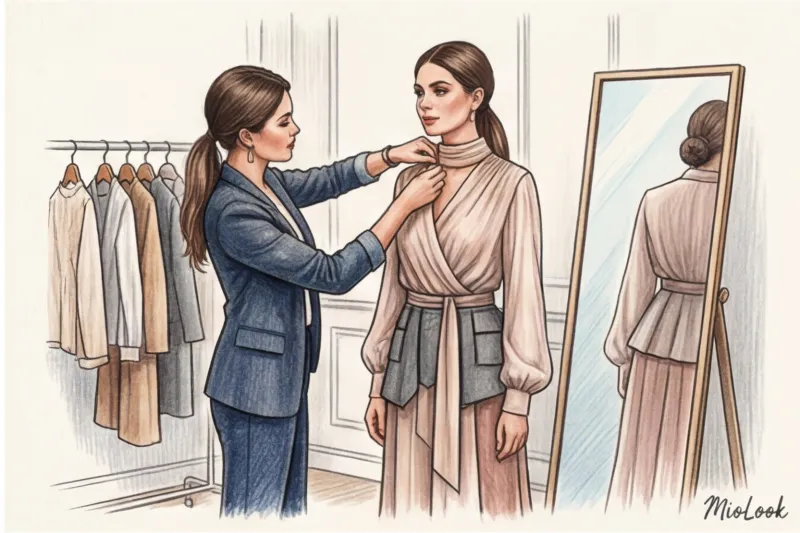
- Does the geometry of the thing correspond to your nature? (A coat that is too stiff on a delicate figure will look like it came from someone else's shoulder, regardless of the archetype).
- Does the base texture convey your leading (70%) archetype? (If you are a Sage, does your look include natural, breathable fabrics?)
- Is there a second (30%) archetype element added for depth? (Where is the paradox? Where is the spark that catches the eye?)
Your style isn't a uniform or a monument frozen in time. It's a living language you use to communicate with the world every day. Stop trying to squeeze yourself into a single, cardboard cutout. Allow yourself to be complex, paradoxical, and diverse—that's the secret to a truly magnetic image.