What are clothing style archetypes and why are they more effective than color types?
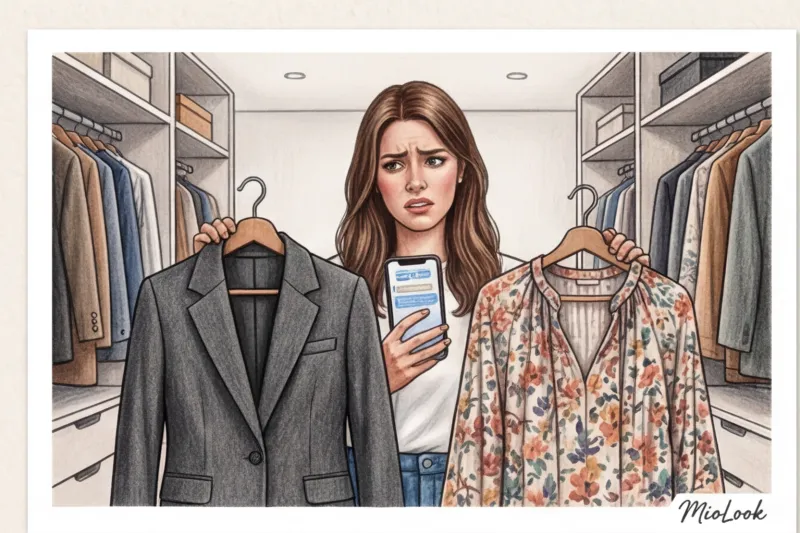
Six months ago, I conducted a ruthless wardrobe experiment: I forced myself to photograph every outfit every day and rate them on a comfort scale. Guess what I discovered? My Pinterest board was full of bold leather jackets and ripped denim, but 80% of the time, I was wearing oversized cashmere sweaters and simple wool pants. I was shopping for the Rebel, but living in the body of the Sage.
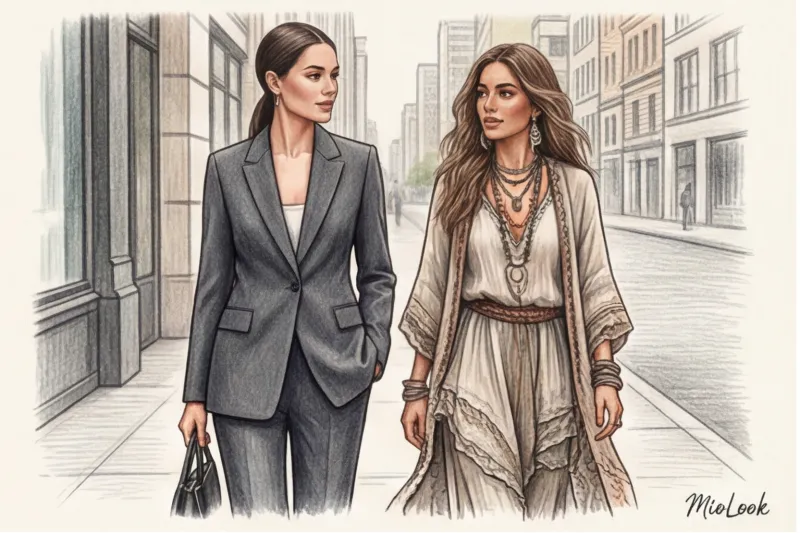
Forget the classic color type theory that forbids you from wearing black, or the geometric typing that categorically labels you as a "pear" or an "inverted triangle." These systems work with the outer shell, but they ignore the most important thing—your character. That's why archetypes in clothing style have become the primary tool for personal stylists today. They are a visual expression of your values, drivers, and lifestyle, not just a collection of suitable styles. We discussed this evolutionary approach in more detail in our the complete guide to finding your style , where they explained why old fashion rules no longer work.
According to McKinsey & Company's 2024 State of the Fashion Industry report, consumers are finally tired of mindless fast fashion. The focus has shifted to mindfulness: we no longer want to look "fashionable," we want to look "like ourselves." The psychology of clothing choice explains why one woman is intuitively drawn to firm, smooth leather, while another is drawn to loose, cozy knitwear. This isn't a coincidence; it's the voice of your archetype.
Your perfect look starts here
Join thousands of users who look flawless every day with MioLook. Digitize your wardrobe and find your true style.
Get access — €0.99 onceHow the 12 Archetypes Work: From Psychology to Your Closet
The basic theory of 12 archetypes was developed by Carol Pearson, but today fashion psychology has adapted it to suit contemporary minimalism and the concept of the capsule wardrobe. All 12 types can be divided into four functional groups based on basic human needs. Each group has its own distinct visual language: textures, volumes, palettes, and even seam finishes.
Structure and Order Group: Ruler, Guardian, Creator
This group strives to control the chaos of the surrounding world, but does so in different ways.
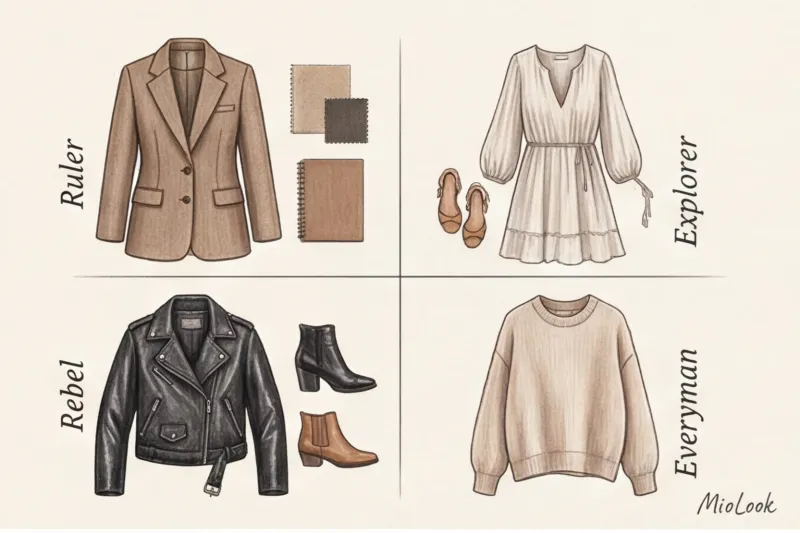
- Ruler: Conveys status and stability. This is expressed in the wardrobe through symmetry, impeccable fit, and premium materials. These don't necessarily mean three-piece suits; they could be a basic T-shirt, but made of heavy cotton (at least 200 g/m²) that holds its shape, and a jacket with a crisp shoulder line.
- Guardian: The main value is care and security. This is visually expressed through tactility. Cashmere, soft flannel, rounded lapels, warm, enveloping silhouettes. These are the kind of things you want to cuddle in.
- Creator: He creates new structures. For him, clothes are a canvas. Asymmetry, deconstruction, unusual cuts in the spirit of early Martin Margiela or contemporary COS collections. He's not afraid of complex color blocking.
Connection and Relationship Group: Nice Guy, Lover, Jester
Their clothes scream (or whisper) about their interaction with society.
- Nice guy (One of the guys): Affordability and a lack of snobbery. Perfect casual: good denim, quality knitwear, sneakers. Clothes that can be worn to a relaxed office or to a bar.
- Lover (Aesthete): The focus is on sensuality and enjoying the moment. Flowing fabrics (silk, satin, viscose), accentuated waists, exposed collarbones, deep wine or emerald shades.
- Jester: Life is like a game. Eclecticism, post-irony in details, and a violation of the rules of proportion. A bag shaped like a milk carton or neon socks paired with a formal loafer are typical markers.
Achievement Group: Hero, Rebel, Mage
Ambition, transformation and willpower are at the core of their style.
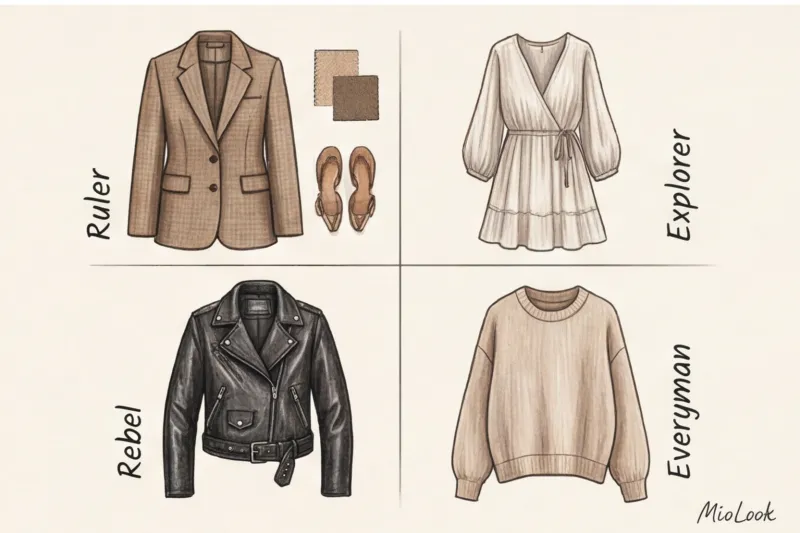
- Hero: Dynamic and purposeful. The wardrobe is dominated by minimalism, with a sporty-chic or military feel. Technological fabrics are comfortable to move in, contrasting combinations, and a lack of unnecessary details that could get caught on obstacles.
- Rebel: Shattering stereotypes. Grunge, abundant leather, metallic embellishments, raw edges. Black here serves not as a boring base, but as a manifesto and armor.
- Mage: Transformation and mystery. Elongated, stretchy silhouettes (like a maxi coat that falls to the ankles), complex, deep colors that shift in different lighting, and unusual, almost ritualistic accessories.
Search and Freedom Group: Seeker, Sage, Innocent
For these archetypes, clothing is a way of understanding the world or maintaining inner zen.
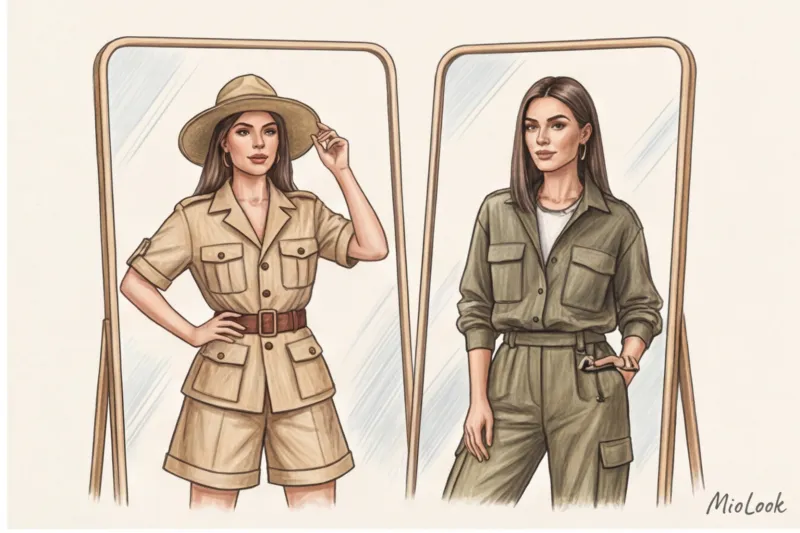
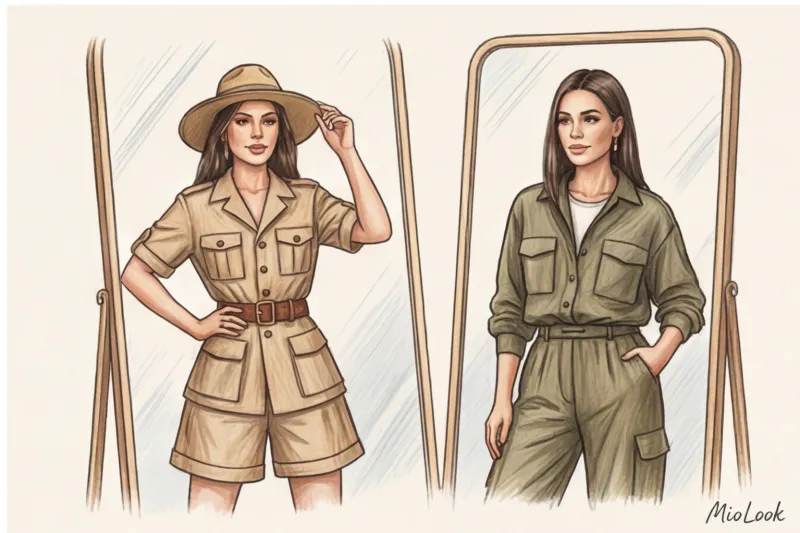
- Seeker: Constant movement. Layering, natural palettes (khaki, sand, terracotta), suede, linen, utilitarian details like patch pockets. Everything should be as functional as possible.
- Sage: Asceticism and the essence of things. Laconicism taken to the extreme. Monochrome, perfect proportions, a complete absence of logos and distracting details. The essence of the Sage is: "I already understand everything about this world; I don't need to prove anything."
- Innocent: Belief in miracles and lightness. A light palette (pastel, white), natural materials, airy textures, and simple cuts without hard edges.
The Biggest Mistake: Why a "Pure" Archetype Turns into a Comical Costume
Over 12 years of practice, I've noticed the same destructive trend. A woman reads a description of an archetype, recognizes herself, and goes to the store to buy theatrical props. A counterintuitive insight that the glossy magazines keep silent about: Dressing strictly according to one archetype is a direct path to caricature.
The "Seeker," in a safari hat and a million-pocket vest, looks like a lost fisherman in the urban jungle. The "Ruler," in velvet and gold, in the middle of an open space, resembles a monarch who's escaped from a children's party. True style is born only in a mix of styles and a touch of casualness.
One of my clients, a top manager at an IT company, tried for a long time to dress like a 100% Ruler. She bought tailored three-piece suits (some costing €500–700), stiff shirts, and satchels. Her problem? She'd burn out from these clothes by midday. Casual was the norm at her company, and her armor created an unnecessary distance from her team. We saved her wardrobe by blending Ruler with Creator: we kept the premium fabrics but removed the rigid cuts, replacing classic blazers with asymmetrical, relaxed jackets. The status remained, but the theatricality vanished.
Access to MioLook for €0.99 — one-time payment
A smart AI stylist will select the perfect look for you, taking into account your real preferences and lifestyle.
Get access — €0.99 oncePersonal Style Formula: Base + Accent
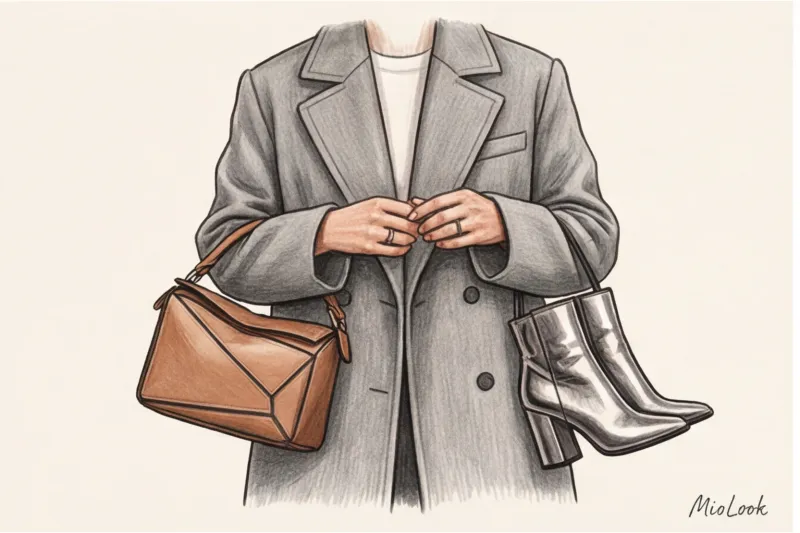
To make clothing style archetypes work for you, rather than you working for them, use an architectural approach: Basic Archetype (70%) + Accent Archetype (30%).
The basic archetype is responsible for the "foundation" of your wardrobe. It dictates the cut, volume, basic palette, and comfort level. It should 100% match your lifestyle and dress code. If you work from home or walk a lot, your basic archetype can't be the Ruler, no matter how much you might want it. Instead, it should be the Nice Guy or the Guardian.
The accent archetype is your signature look. It manifests itself in accessories, shoes, textures, prints, and jewelry. It conveys your hidden ambitions or mood.
"Style becomes truly magnetic only when contrasts intersect. A basic cashmere sweater speaks of your comfort, while rugged boots with metal hardware speak of your boundaries."
Examples of successful formulas that are easy to assemble even in the mass market (in the range of €50–150 per item):
- Sage (base) + Mage (emphasis): A simple, monochrome, loose-fitting suit, complemented by a chunky pendant on a long cord or deep wine-colored shoes.
- Nice guy (base) + Creator (accent): Simple straight jeans and a white T-shirt paired with a sophisticated deconstructed trench coat and an unusual geometric bag.
Checklist: How to Identify Your Style Archetypes Through a Closet Audit
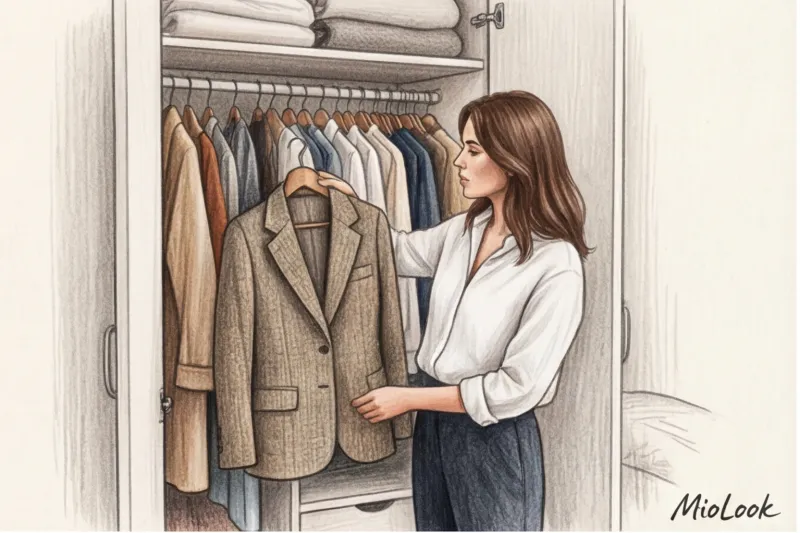
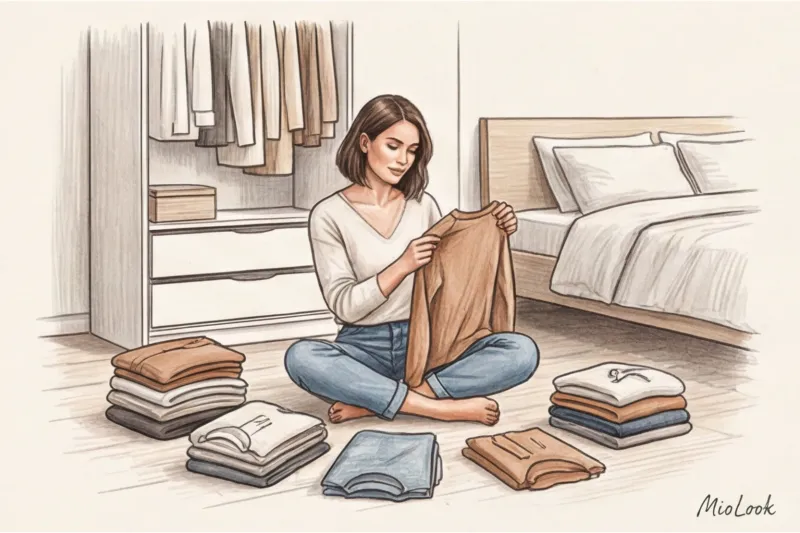
You can take dozens of psychological tests, but your clothes will tell the truth much faster. Apply this step-by-step framework to your closet today:
- Step 1: Analyze your favorites. Take out five items you wear constantly, wearing them to the point of holes. Ignore their color; look at their texture and fit. Are they soft and enveloping (Caregiver)? Or are they rigid and structured (Ruler/Hero)? These items are your true Core archetype.
- Step 2: Audit of "hanging" issues. Look in your closet for items with tags or that have only been worn once. Ask yourself honestly: which character were you trying to emulate when you bought them? Did you buy a €300 leather jacket to appear daring (Rebel), but it feels stiff and cold? This is your false archetype.
- Step 3: Discomfort test. Think back to a time when you felt like you were "in disguise." If wearing a floral dress makes you feel like you're playing someone else's role, eliminate the Innocent and the Lover from your style DNA.
- Step 4: Formulating the support. Choose two adjectives that describe your style (e.g., "relaxed" and "mysterious"). The first word is your base (Explorer), the second is your accent (Mage).
Data-Driven Approach: How Wardrobe Tracking Reveals Your True Character
The problem with any psychological questionnaire is that we tend to lie to ourselves. When answering questions, we describe our ideal self: ambitious, daring, always up for adventure. But the statistics of what we wear never lie.
Digitizing your wardrobe is a game-changer for modern style. According to my wardrobe analysis statistics, 70% of "hanging pieces" are bought under the influence of an archetype that the person sincerely admires, but which doesn't align with their real-life routine. When you begin to document your looks, the magic of illusions dissipates.
This is where technology comes in. If you upload your images to MioLook And if you analyze your monthly statistics, you'll see the harsh data truth. You may consider yourself a Creator, but if the app shows that 18 days out of 30 you choose simple jeans and a Nice Guy hoodie, it's time to embrace your basic comfort and stop spending your budget on elaborate origami dresses.
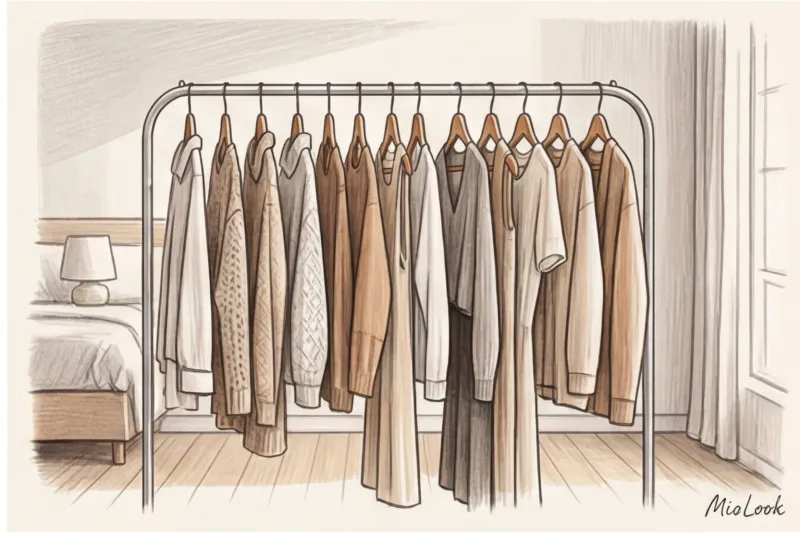
Style isn't a static image copied from a mannequin. It's a living ecosystem that evolves along with your career, self-esteem, and lifestyle. Don't try to squeeze yourself into the mold of a single, "pure" character. Your ideal wardrobe begins the moment you allow yourself to be complex: to lead like a Ruler, to relax like a Nice Guy, and to indulge in the irony of a Jester in the details.