I remember one of my clients tearfully showing me a completely ruined Massimo Dutti jacket. The fabric was bubbling, the shoulders were sagging, and the lining had shrunk so much it was pulling at the back. The reason? She'd washed it in the machine on the delicate cycle. When I asked why she hadn't dry-cleaned it, her answer was predictable: "Katarzyna, I hate this pungent chemical smell that gives me a headache for weeks.".
This story repeats itself time and time again. We invest in high-quality basic items, and then either ruin them with laundry at home or send them to harsh dry cleaners, which slowly destroy the fibers. But there is a solution, and it's not a compromise. We've covered the basic principles of preserving clothes in more detail in our the complete guide to eco-friendly wardrobe care And today I want to talk about why eco-friendly dry cleaning Professional wet cleaning isn't just a passing fad for eco-friendliness. It's the only effective way to protect your wardrobe investment and radically reduce your cost-per-wear (the cost of each item you wear).
What's Behind the "Dry Clean Only" Label: The Myth of Regular Dry Cleaners
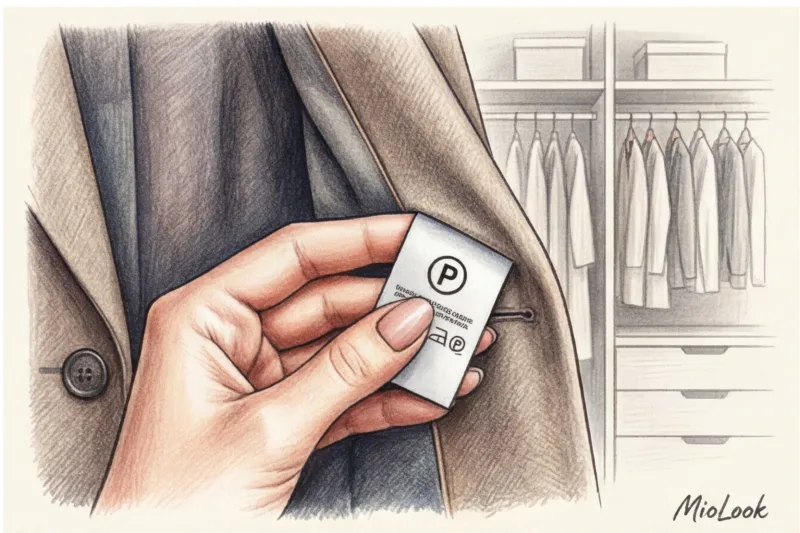
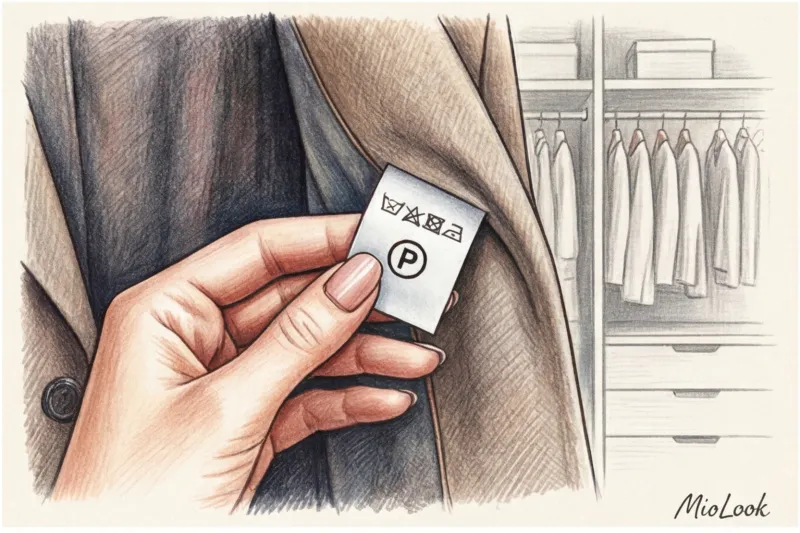
After 12 years of sorting through wardrobes all over Europe, I've learned one thing: the "dry clean only" label (the circle with the letter "P") is often the biggest lie in the fashion industry. Brands from mass-market brands like Zara to premium brands slap this label on items that could easily be cleaned any other way. Why? It's simply a precaution. It's easier for manufacturers to ban dry cleaning altogether than to deal with complaints from customers who washed a viscose dress at 60 degrees.
But when you dutifully take such an item to a traditional dry cleaner, this is what happens. The garment is loaded into a drum with perchloroethylene (abbreviated "perc"). This is a powerful, toxic chemical solvent. It truly is brilliant at dissolving fats and oils. If you dropped a slice of pizza on your silk blouse, perc will do the job perfectly.
"The main problem with traditional dry cleaning is that it's dry. Perchloroethylene can't dissolve salts. This means it doesn't remove the main causes of wear and tear on clothing—sweat and deodorant."
That's why you might pick up your favorite COS blouse from an expensive dry cleaner, only to notice a month later that the armpits have still turned yellow and the fabric has become stiff. Sweat salts remain in the fibers, and over time, they literally burn through silk or fine wool. Add to this the chemical odor and the risk of allergies, and it becomes clear why EU directives (such as REACH) consistently restrict, and in some countries, outright ban, the use of perchloroethylene in the textile industry.
Eco-friendly dry cleaning: what it really is and how it works
When I first recommended eco-dry cleaning to a client with sensitive skin, she was skeptical. "Does eco just mean they'll steam-iron the item?" she asked. Nope. Eco-dry cleaning is a fully-fledged alternative to perchloroethylene, which uses hydrocarbons or innovative silicone solvents (the most well-known standard is GreenEarth).
Liquid silicone works completely differently. It's non-aggressive. It gently penetrates the fibers of the fabric, washing away dirt without chemically reacting with dyes. The results I see in my clients' wardrobes are astounding: after cleaning with silicone, items feel noticeably softer to the touch, and the color remains as deep as the day they were purchased.
This is especially critical for structured jackets. A good jacket's lapels and lapels contain interlining (a lining material) bonded with glue. Aggressive peroxide dries out this adhesive over time, causing the jacket's façade to develop fine ripples. Silicone, on the other hand, leaves the adhesive undisturbed. Furthermore, eco-cleaned items are completely odorless, making this technique a boon for allergy sufferers.
Organize your wardrobe care smartly
Upload your items to your digital closet and schedule cleanings in advance to keep your clothes looking like new.
Start using MioLook for freeWet Cleaning: Why It's Your Basic Wardrobe's Best Friend
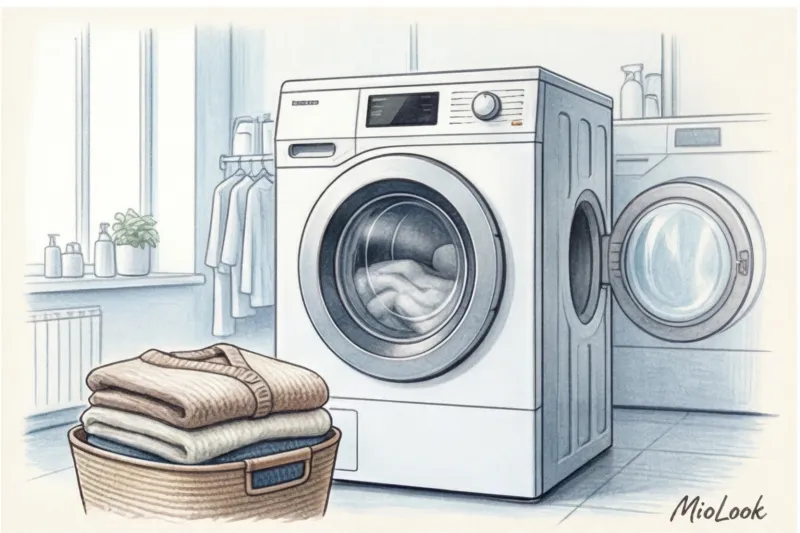
Here we come to the most interesting and counterintuitive discovery. About 70% of items labeled "Dry Clean Only" are actually the ones most in need of cleaning. Wet Cleaning But let's be clear: wet cleaning is not like having a washing machine in your home. Trying to replicate this process in your bathroom will end in disaster.
Professional wet cleaning is a high-tech process. According to technical specifications from equipment manufacturers (such as Miele Professional), these machines use computer-controlled drum rotation, calculated down to the millimeter, to avoid mechanical friction between items. Water is supplied along with special biodegradable detergents and collagen additives.
How does it work? These additives literally coat every fiber of wool or viscose with a protective film BEFORE water has a chance to shrink them. As a result, the fabric doesn't feel lumpy. And because water is used in the process, wet cleaning removes 99% of water-soluble stains: proteins, sweat, wine, deodorant. This restores that pristine freshness to your clothes that no dry cleaning method can remove.
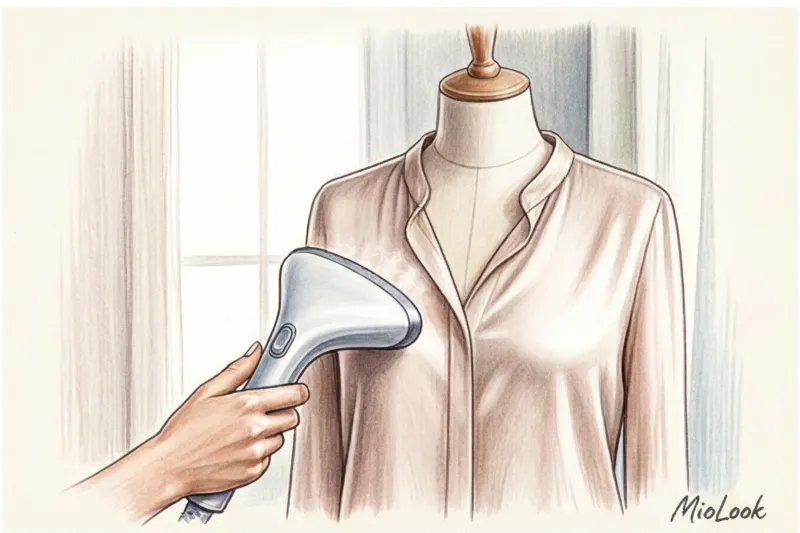
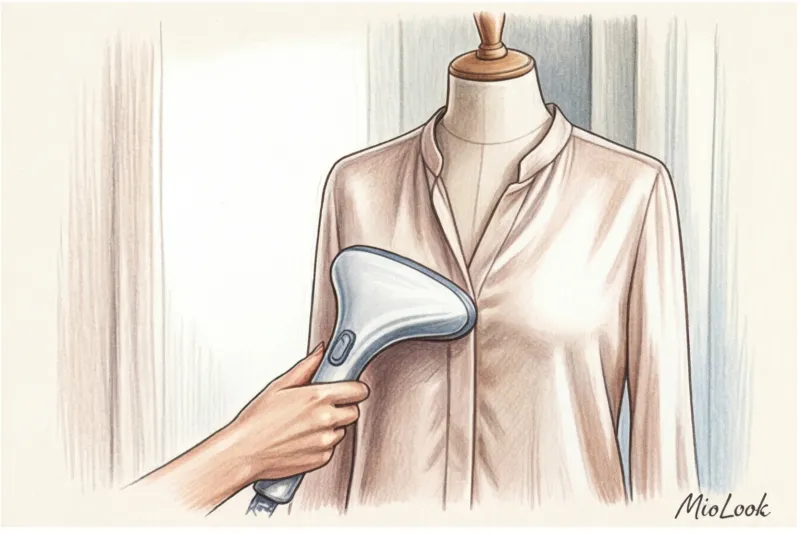
And don't forget the final step. After wet cleaning, the garment undergoes wet heat treatment (WHT) on special steam mannequins. The mannequin is inflated with air and steam to the exact size of your coat, restoring its 3D shape. You'll never achieve this effect with an iron at home.
Comparing Methods: Traditional Dry Cleaning vs. Eco Dry Cleaning vs. Wet Cleaning
To help you avoid confusion with the techniques, I've put together a quick cheat sheet. A good stylist always reads not only the tag but also the fabric composition to choose the right method. See the appendix. MioLook We recommend adding photos of the labels with the ingredients to each item—this makes life much easier when planning care.
- Traditional dry cleaning (perk): Cheap and aggressive. When to use: If you've got a tough oil stain, fuel oil, or motor oil in the parking lot. In other cases, it's best to avoid it, as it dissolves plastic fittings and dries out the fibers.
- Eco-friendly dry cleaning of clothes (silicone/hydrocarbons): Soft and safe. When to use: for delicate silk, thin chiffon dresses, items with complex polyurethane coating or an abundance of fittings.
- Wet Cleaning: Eco-friendly and deeply cleansing. When to use: Ideal for sweaters, knitwear, down jackets, wool suits and coats that have absorbed body or street odors.
A fair limitation: wet cleaning doesn't always remove stubborn grease stains (for example, year-old olive oil). In such cases, a competent technician will suggest a combined approach: spot removal of the grease followed by general wet cleaning.
For which items is eco-dry cleaning and wet cleaning an absolute must-have?
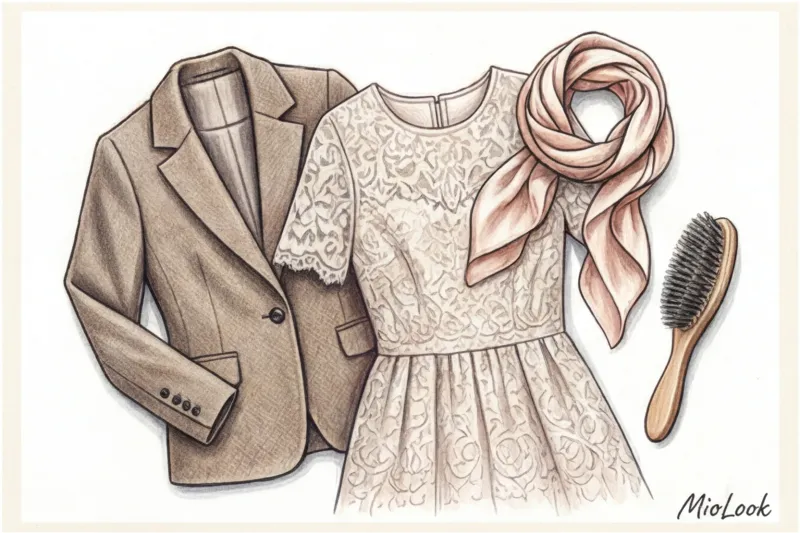
Let's get down to specifics. Your wardrobe likely includes items that require special attention. While a basic cotton T-shirt can be safely thrown into the washing machine, the following categories of items will not.
Structured pieces: jackets, coats, and business suits
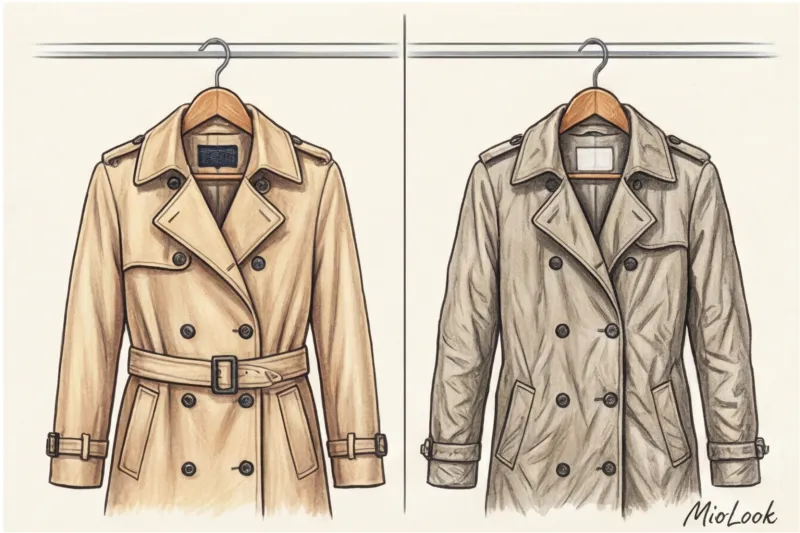
I've already mentioned the bonded interlining in jackets' shoulders. But the problem is broader. A structured shoulder girdle is the garment's architecture. In mid- and premium-priced coats (priced from €150 to €400), the shoulder is formed from several layers of fabric, interlining, and shoulder pads. Home washing or spinning at 800 rpm turns this complex structure into a shapeless sack. Wet cleaning gently cleans the fabric, and subsequent steaming restores the geometry intended by the pattern designer.
Delicate fabrics: cashmere, silk and viscose
Did you know that viscose (especially mass-market viscose) loses up to 30% of its strength when wet? That's why viscose dresses often rip at the seams after washing at home, even if you washed them in a bag. Wet cleaning uses modes that minimize mechanical stress, protecting vulnerable fibers. As for cashmere, research into the properties of wool shows that shrinkage is caused not so much by water as by sudden temperature changes. Computerized cleaning in a professional environment eliminates this risk.
Clothes with complex decoration and combined materials
Imagine a wool cardigan with accents of faux leather or a sequin dress. Traditional perchloroethylene is the enemy of such items. In just 15 minutes in the tumble dryer, it can melt plastic buttons, dissolve faux leather into a sticky mess, and rob sequins of their holographic shine. Silicone eco-dry cleaner is completely inert to plastic and polyurethane. The item will remain unharmed.
Your perfect wardrobe without the hassle
Forget about the "nothing to wear" problem and ruined clothes. Create your capsules with AI.
Create your first image for freeCare Economics: How Professional Cleaning Reduces Cost-per-Wear

Many people avoid professional cleaning, considering it "too expensive." Let's do some wardrobe math. According to the International Committee on Textile Care (CINET) 2023 data, professionally cleaned items last 3-4 times longer.
Let's say you bought a great wool-blend pantsuit from Massimo Dutti for €180. You wear it to work every week. If you try to wash it at home, it will lose its shape (pilling will appear, the lapels will become misshapen) in six months at most. So, you've worn it about 24 times. The cost per wear (CPR) is €7.50.
Now let's consider another scenario. You wear your suit carefully and then take it to the dry cleaner once a season. Let's say the service costs €20. Over three years, you'll spend €120 on cleaning. The total cost of ownership of the suit is €300. But over three years, you'll wear it 140 times! Your cost-per-wear drops to €2.10. Investing in proper care is the foundation of a smart wardrobe strategy. You spend money not on endlessly buying new replacements, but on maintaining the perfect condition of what already suits you.
A stylist's checklist: how to properly dry clean your clothes
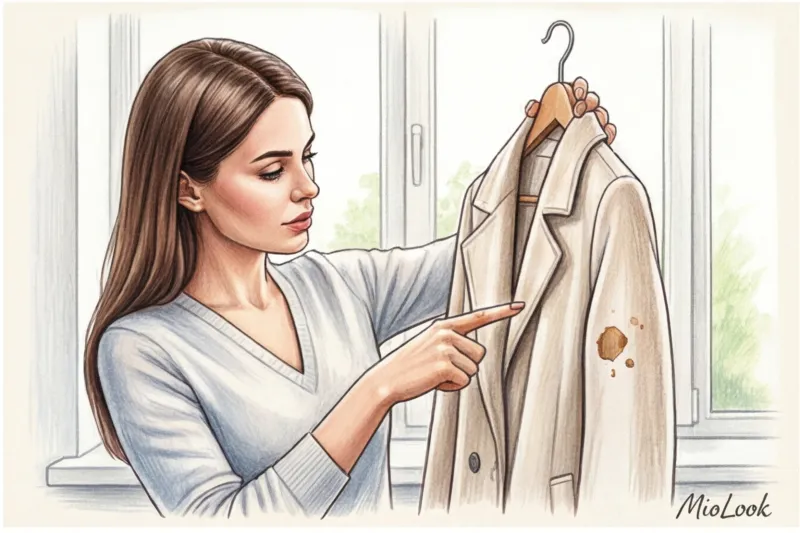
To ensure your dry cleaners return your items pristine, it's not enough to simply toss them over the counter. As a stylist, I always teach my clients how to properly interact with dry cleaners. Here's my personal checklist of four ironclad rules:
- Never wash out stains at home. This is a major mistake. Trying to remove a drop of wine or sauce with soap and water, especially on silk, will result in the dye being removed. You'll set the stain so firmly that no laboratory will be able to remove it. Simply blot it with a dry cloth and take it to the professionals.
- Please indicate the nature of the stain. Don't say, "There's some kind of stain here." Say, "It's coffee syrup" or "It's foundation." This will determine which reagent the technician will use during the preliminary cleaning stage.
- Demand protection of fittings. If your jacket has mother-of-pearl or metal buttons, make sure the clerk makes a note of their covering (usually they are covered with special foil or protective capsules).
- Remove the plastic at home. When you pick up your items, they arrive in thin plastic bags. This is for shipping, not storage. When you get home, be sure to remove the plastic. The fabric needs to be able to breathe, otherwise condensation and a musty smell may form in your closet.
The bottom line is simple: wardrobe care shouldn't be a gamble. Eco-friendly dry cleaning and wet cleaning aren't just marketing hype, but modern technologies that save your favorite items from premature aging. Stop fearing tags, find a reputable service with modern equipment, and treat clothing care as an investment in your personal style.