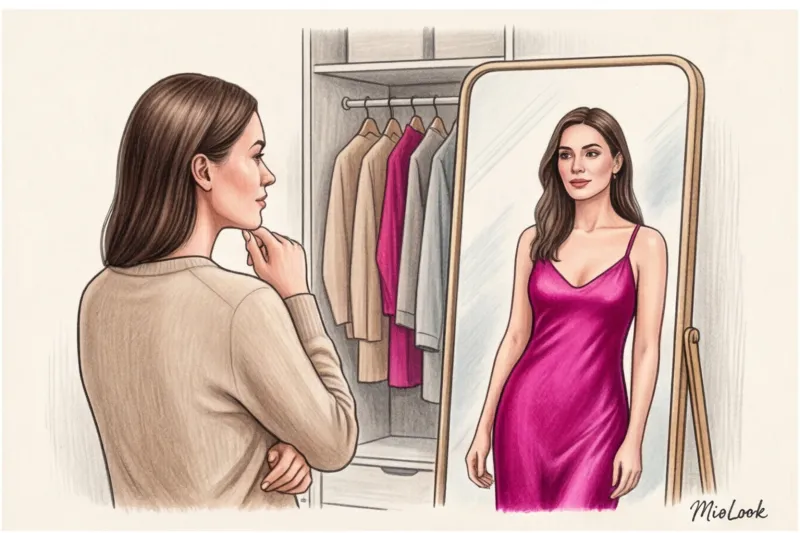
Have you ever noticed how one day you're garnering compliments like "You look so wonderful!" even though you've barely slept for four hours, while the next you're hearing sympathetic "Are you feeling okay?" even after returning from a two-week vacation? We tend to blame the environment, stress, or a bad skincare product, but as a stylist, I know: 90% of the time, the problem lies right under your chin. More specifically, in the color and texture of your clothing.
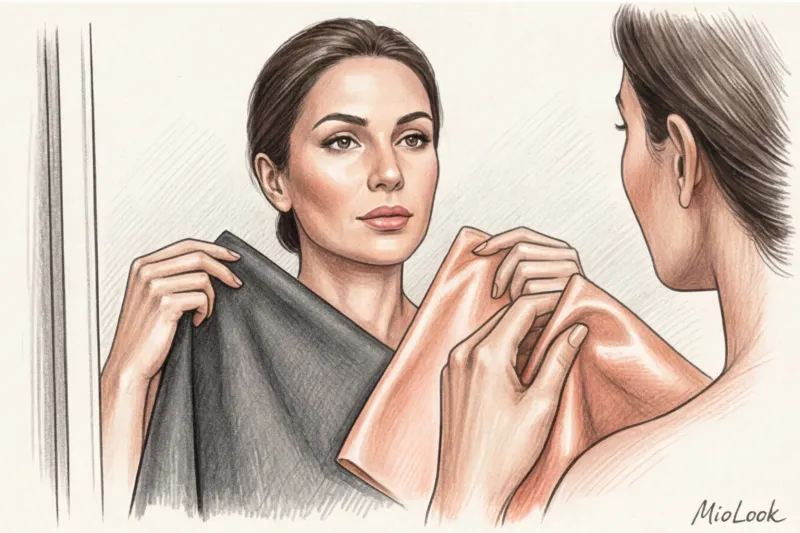
Forget the outdated division of appearance into "winter" and "spring." Today we'll talk about optics. Clothing in portraiture acts as a physical reflector: it can either illuminate the skin, erasing shadows, or mercilessly highlight every wrinkle. We've covered the basic rules of working with shades in more detail in our the complete guide to anti-aging coloristics And in this article, I'll show you how the right shades for a fresh complexion can replace half your makeup bag.
Optics, not magic: how colors work for a fresh complexion
In 2018, during a shoot in Paris, I witnessed a typical scene: a makeup artist desperately tried to cover up the dark circles under a model's eyes with thick concealer. The model was jet-lagged and wearing a sallow, heavy cotton top. I simply walked up to the rail, pulled off a peach silk blouse, and draped it over her shoulders. The dark circles disappeared in a second. The makeup artist exhaled and put the concealer down.
What's the secret? It's photographic physics. Any photographer will tell you that for a soft, beautiful portrait, you need a softbox or a reflector underneath. Your clothes are your 24/7 reflector.
Matte, loose textures (thick wool, linen, heavy cotton) absorb up to 80% of light. If they're also dark, they act as "anti-light," creating deep shadows in the nasolabial folds and under the eyes. Meanwhile, smooth materials like silk, satin, or high-quality viscose (especially in light shades) reflect up to 40% of light. They bounce light rays back onto your neck, chin, and cheeks, creating a ring-lamp effect.
“Even an inexpensive flowing viscose blouse in the €40–€60 range will work better for your face than a premium matte cashmere for €300 if your goal is an instant refreshing effect” – this is a rule I repeat to my clients year after year.
The Anatomy of Age: Why the 20-Year Palette No Longer Works
I often hear, "Isabella, I wore that mustard sweater in college, and it looked so good on me! Why does it make me sick now?" The answer lies in physiology. After 35-40, our appearance undergoes changes that directly affect how our skin reacts to color.
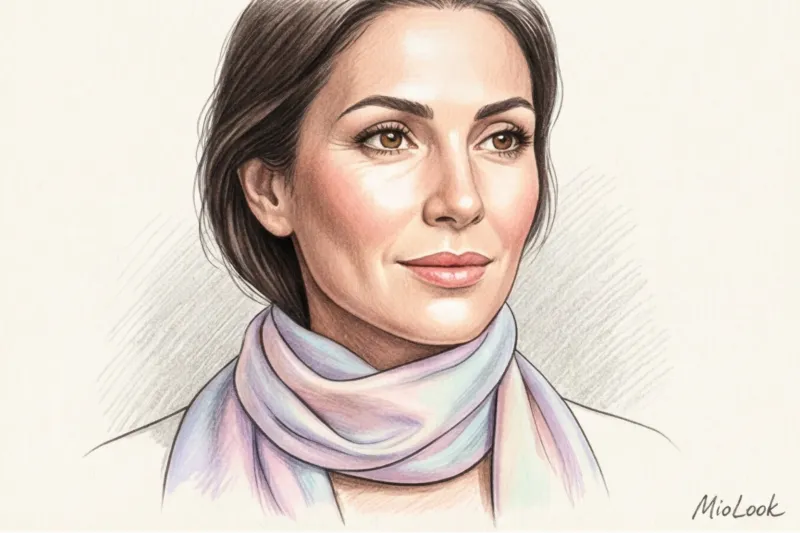
A study published in Journal of Investigative Dermatology (2023) , confirms: with age, microcirculation in the upper layers of the epidermis slows. We lose that "inner glow" (dewy skin), hemoglobin levels at the skin's surface change, and melanin production becomes less uniform. The natural contrast between the whites of the eyes, skin, and hair fades.
At 20, your face "pushes" a complex mustard sweater thanks to the powerful inner glow of your skin. At 45, that same sweater acts like a magnifying glass, projecting its yellow-green base onto your face and highlighting your pigmentation. Your palette should evolve with you.
Top 5 highlighter shades that erase signs of fatigue
If you want to look well-rested without heavy foundation, add these lifesaving shades to your wardrobe. I recommend looking for them in smooth textures: mulberry silk (19-22 mm) or high-quality satin.
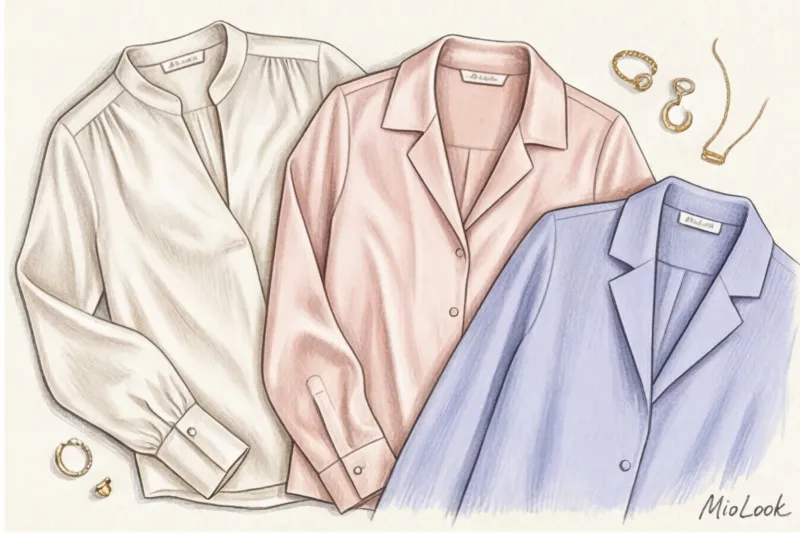
- Powdery rose and delicate peach: These colors physically mimic a healthy glow. Reflected off the fabric, the warm pink pigment neutralizes the gray undertones of tired skin.
- Icy Blue (periwinkle): A shade balancing on the edge of blue and lilac. According to the laws of coloristics, it neutralizes yellowness, visually "whitening" the whites of the eyes and teeth.
- Emerald and deep sapphire: Unlike dull colors, these pure jewel tones create a striking contrast. They're especially effective on women with fading or graying hair, restoring defined contours to the face.
My favorite formula, which has saved dozens of my clients before important meetings: structured dark jacket + light powder silk top + statement earrings = minus 5 years and visually plus 8 hours of healthy sleep.
The Perfect White Formula: Why Snow White Is Bad for You
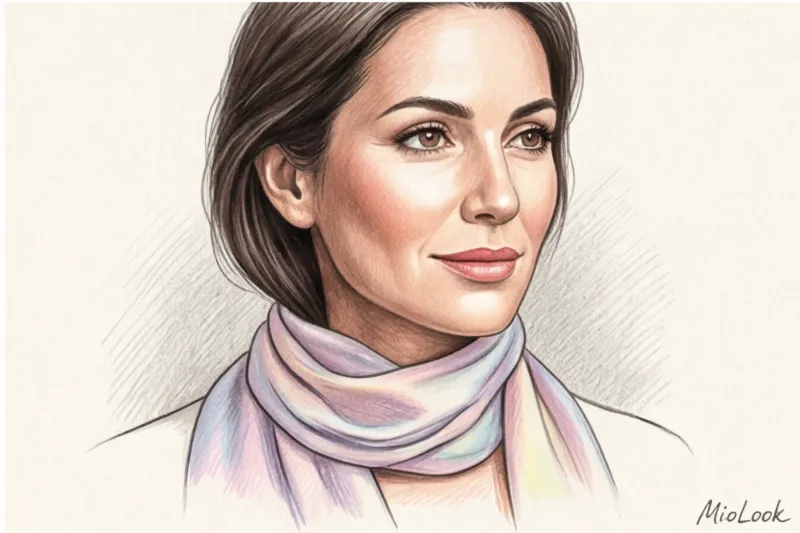
Many people think a white shirt guarantees freshness. This is a dangerous misconception. A pure white shirt has a blue undertone. Against this background, the skin of anyone over 35 will appear yellowish, gray, or pigmented.
One of my clients, an executive at an IT company, complained about looking tired during morning Zoom calls. We removed all the stiff white cotton shirts from her wardrobe and replaced them with flowing blouses in ivory, ecru, and champagne. The difference was phenomenal. It's a paradox of optics: a slightly "dirty" warm white makes the face itself appear cleaner and more even.
Debunking myths: is it true that black makes you look older?
Open any article online and you'll read: "After 40, give up black hair on your face forever." As a practicing stylist, I categorically disagree. It's not the color that ages you. It's the dull, matte texture that does.
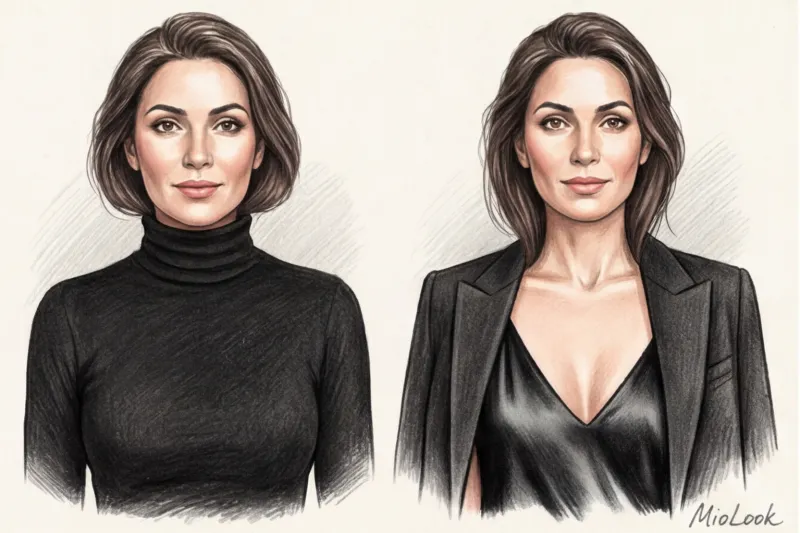
Compare two items: a black turtleneck made of thick cotton and a black silk top with thin straps. The turtleneck will absorb all the light around your neck, cast a black shadow on your chin, and highlight your nasolabial folds. The silk top, firstly, will reflect the light due to its glossy texture. Secondly, this is where The Neckline Rule: The darker the color, the more exposed skin there should be between it and the face.
If you love black, wear it! Just choose a V-neck, a deep scoop, or flowing textures. Let the light reach your face.
Danger Zone: Colors That Work as a Magnifying Glass for Sleep Deprivation
According to WGSN's trend analysis (2024), sophisticated earthy tones are back in fashion. But fashion isn't always about how you look on Monday morning.
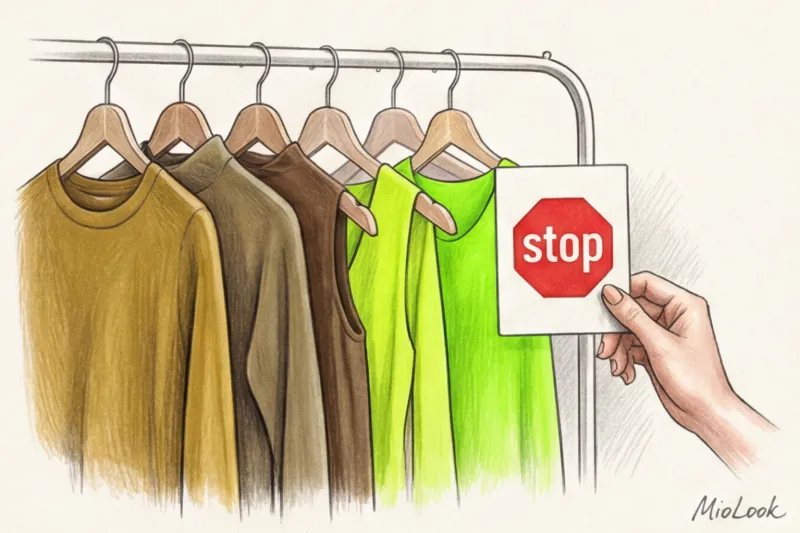
- Earthy and marshy: Khaki, dull mustard, dirty brown. They draw green and gray pigments from the skin, making the face look sallow.
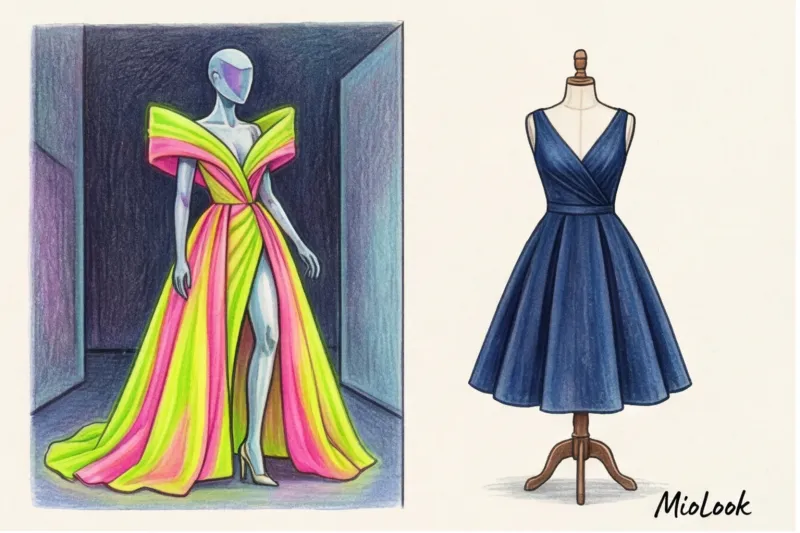
- Neon shades: Nuclear green or fuchsia don't make you look younger. They cast harsh, fluorescent highlights on your chin.
- Grey melange: That cozy gray sweater is a real freshness killer. It turns your face into a flat, featureless blob with no volume.
I'll be honest with you: This rule doesn't work for everyone. If you have a high-contrast complexion, dark skin, or are currently at the peak of a luxurious Mediterranean tan, olive khaki might look gorgeous. But for most Slavic and European types, it's a death sentence in the urban winter.
Your perfect wardrobe starts here.
Tired of wondering which colors suit you? MioLook's AI stylist will analyze your appearance and create a capsule wardrobe where each top acts as a refreshing filter.
Start for freeInsider Tricks: How to Wear "Forbidden" Colors Near Your Face
What do you do if half your closet already consists of your favorite gray and khaki sweaters, and you're not ready to part with them? Over 12 years of practice, I've developed some life-saving tricks.
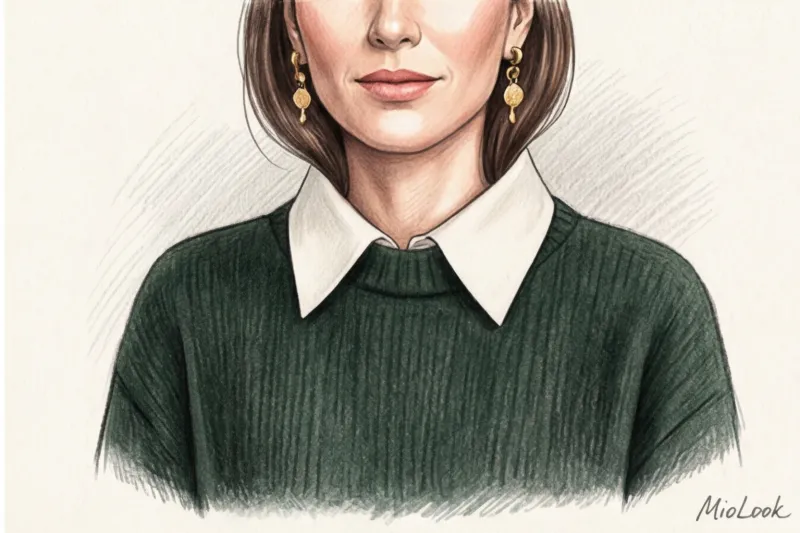
- Interlayer method. Wear a shirt in the right light shade under the "dangerous" jumper. A crisp ecru collar peeking out from under the neckline will create a barrier between your face and the offending color.
- Accessories to the rescue. A silk scarf (square) in a refreshing shade, tied around the neck, will completely counteract the effect of an unsuccessful jacket.
- Jewelry reflector. If you're wearing something matte and dark, add some large, sparkly jewelry. Chunky pearl earrings or a wide gold necklace act as tiny mirrors, reflecting light directly onto your cheekbones.
Isabella's Formula: A dark sweater + a short pearl choker right up to the neck = an instant lifting effect and sparkling eyes.
Checklist: Revision of the portrait zone in your wardrobe
Don't take my word for it—try it yourself. This weekend, review your tops (blouses, tank tops, sweaters) using this process:
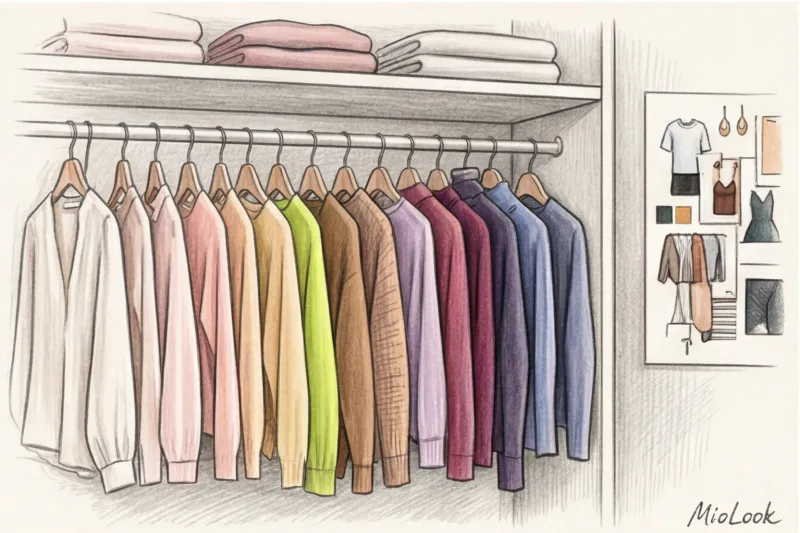
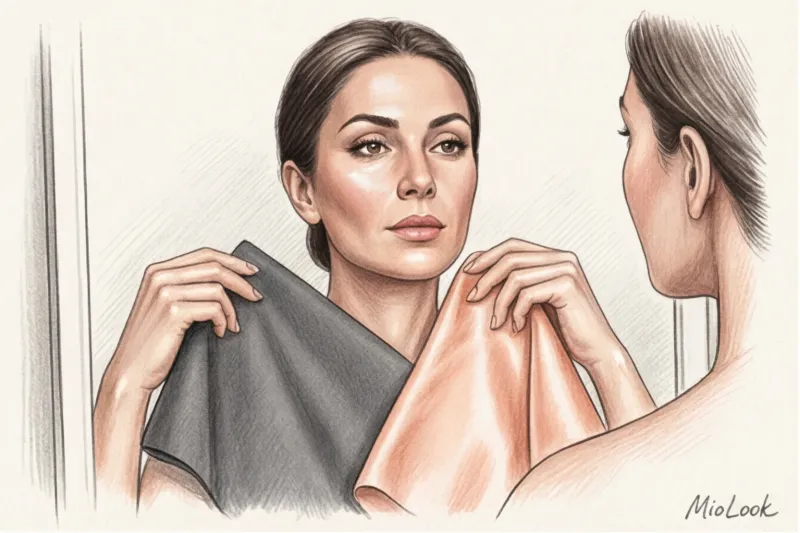
- Step 1: Mirror test. Stand in front of a window in natural daylight (no makeup required). Apply your shirts and sweaters to your face, one at a time. You'll see how some fabrics create dark circles under your eyes, while others erase them.
- Step 2: Sorting. Divide your items into two piles: “highlighting” (leave them close to the body) and “absorbing” (wear them only with layers or embellishments).
- Step 3: Digitization. Add lucky items to the app MioLook A smart algorithm will remember your individual freshness palette and suggest ready-made looks for every day.
Your clothes are a tool, not just a piece of fabric. When you learn to use color around your face like professional lighting on a film set, you'll no longer depend on how many hours of sleep you got last night. Choose your own personal highlighting shades, play with textures, and remember: true elegance always begins with a fresh, rested complexion.