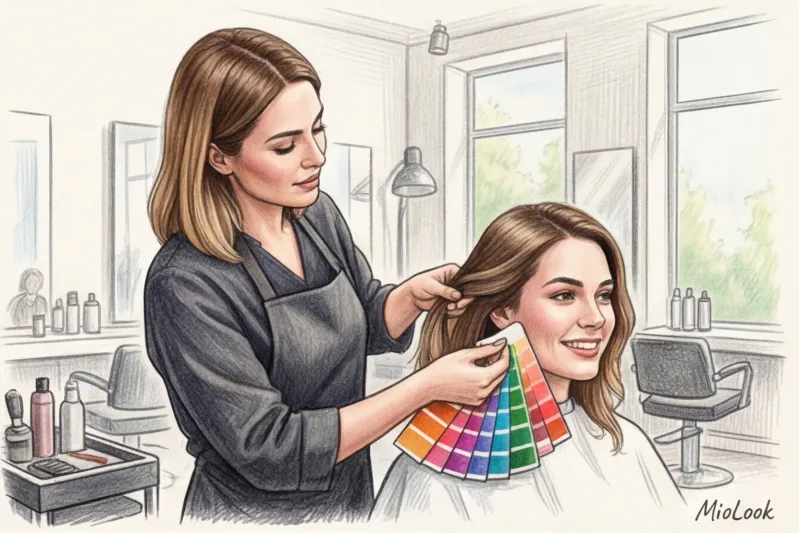
Over my 12 years as a stylist, I've seen this drama dozens of times. One day, the CEO of a large logistics company came to me, almost in tears. She'd paid €400 for a trendy salon coloring—a complex ash blonde. The stylist's work was technically flawless, but the result was a disaster: her face took on a sallow tone, the dark circles under her eyes became three times more noticeable, and her expensive fall wardrobe of camel and khaki suddenly began to look dirty. Her hair seemed to be living separately from her face and clothes. The irony is that a smart choice of hair color based on her complexion—a test with a photo uploaded to the right neural network—could have saved her both those €400 and the subsequent €500 in color correction.
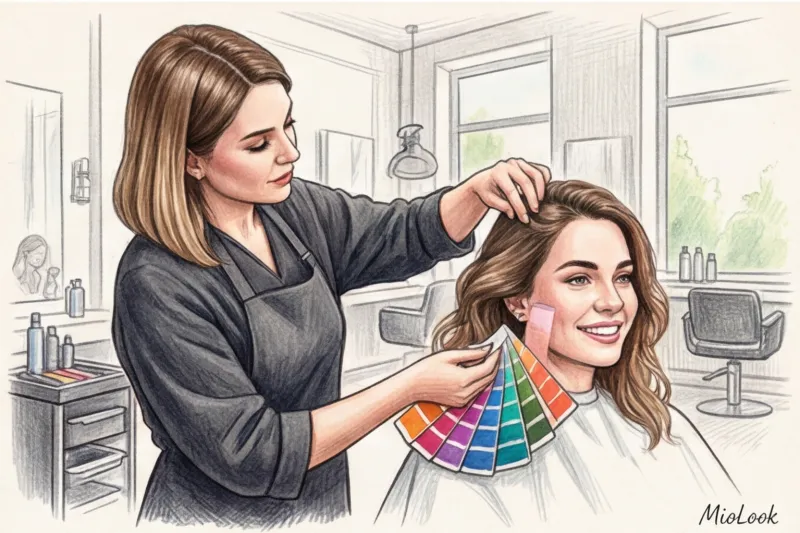
The fact is, our hair is the only accessory we don't take off at night. It shapes the architecture of our face and dictates the geometry of our entire wardrobe. We've written more about how technology is changing our approach to appearance in our A complete guide to choosing a hairstyle using neural networks Today, we'll dig deeper and explore why the old rules of color no longer work, and how artificial intelligence is saving us from costly mistakes.
Why Classical Color Type Theory Is Outdated (And Why AI Sees More)
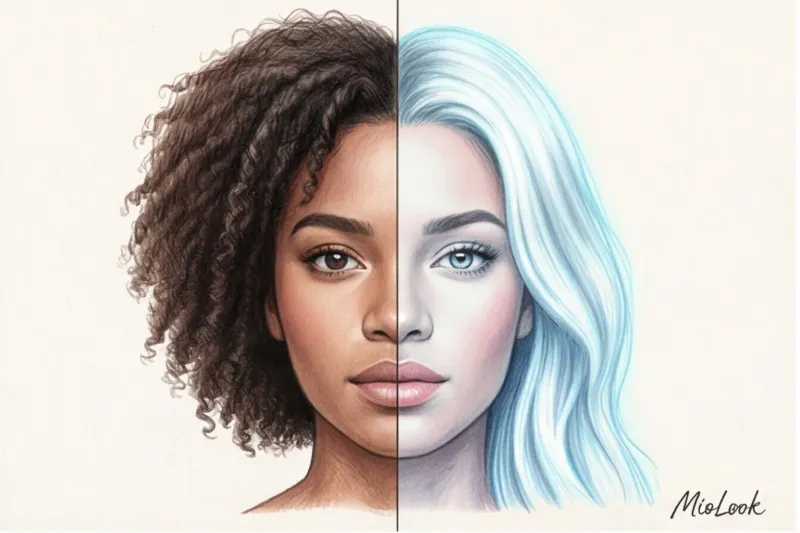
Let's be honest: the rigid division of women into "Winter," "Spring," "Summer," and "Fall" is an archaism that premium colorists abandoned five years ago. Backstage at Paris Fashion Week, I constantly observe top stylists breaking every conceivable seasonal rule. Once, before a Balmain show, I saw a model with a classic "Soft Summer" look given an icy platinum blonde, traditionally associated with the contrasting "Winter." And it looked phenomenal. Why?
The secret lies in micro-contrasts and modern techniques. Thanks to root-melt darkening and subtle contouring around the face, you can wear almost any shade. It's not the color length that matters, but the pigment that touches the scalp and frames the face.
From Itten to Neural Networks: The Evolution of Color Matching
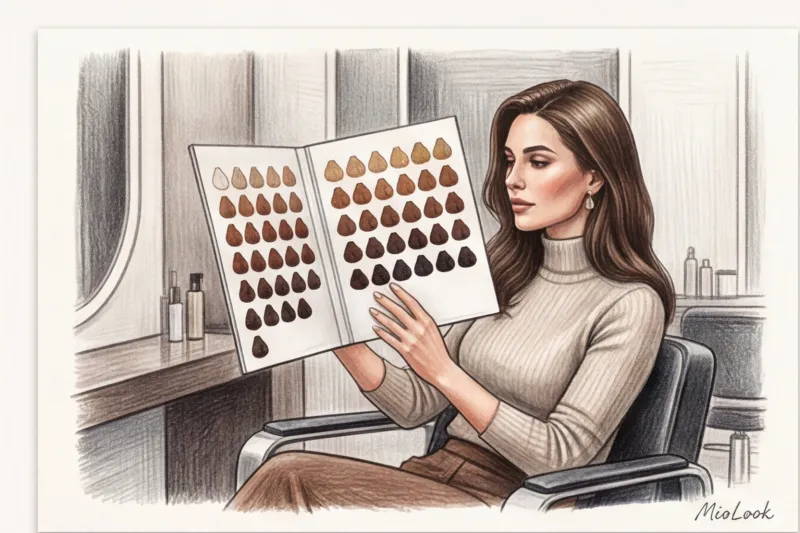
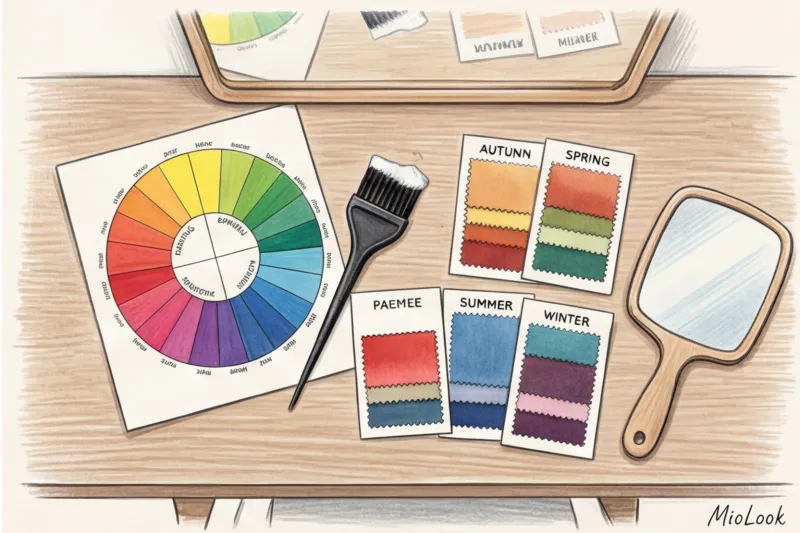
The fundamental theory of color, described by Johannes Itten in his famous work "The Art of Color" (1961), was based on the artist's subjective perception. For years, stylists applied colored handkerchiefs to their clients' faces. It was a beautiful theatrical production, but with one major flaw: the human eye is easily deceived.
Beauty salons are always underwhelmed by the lighting. Warm ring lights, reflections from mirrors, and glare from makeup—all of this can be confusing. What appears to be a perfect golden wheat shade in the colorist's chair often turns into a cheap yellow in daylight.
Your perfect look starts here
Join thousands of users who look flawless every day with MioLook.
Get access — €0.99 onceChoosing a Hair Color Based on Your Skin Tone: A Photo Test vs. Salon Tape Measure
The statistics are relentless: based on my observations of clients' wardrobes, over 60% of women wear a hair color that slightly (or strongly) clashes with their natural skin tone. How can you choose the right hair color based on your skin tone? The AI photo test isn't a toy, but a mathematically precise pixel-based evaluation tool.
The math behind salon mistakes is harsh: if an initial coloring costs €150–€200, then a complex correction (washing out, neutralizing unwanted lightening, re-toning) will cost you between €300–€500, not to mention the burnt hair.
How AI microcontrast analysis works in MioLook
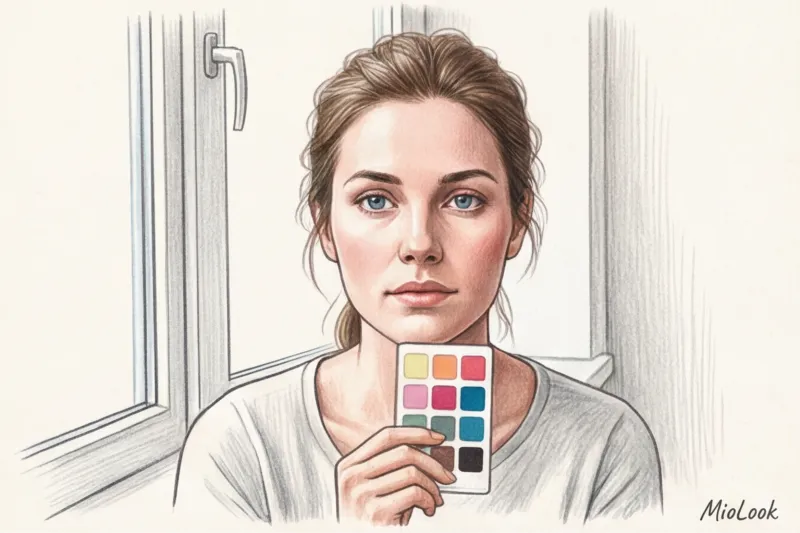
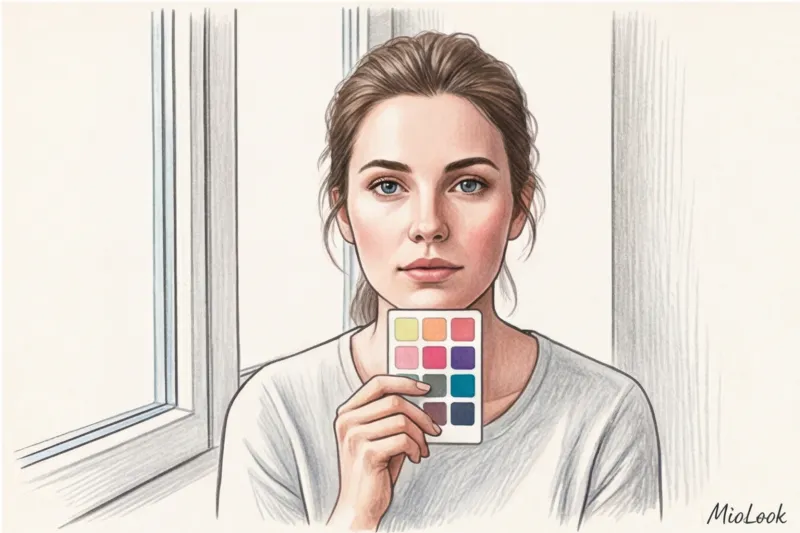
When you upload a photo to MioLook The neural network doesn't simply "apply" a filter. It performs a deep scan. The AI reads skin temperature (undertone), evaluates the brightness of the sclera, the saturation of lip pigment, and the depth of vein color.
The algorithm calculates the precise contrast ratio between your iris, skin, and natural root base. And most importantly, the AI recalculates the highlights and shadows on your hair based on your anatomy, producing a result you can confidently take to the salon as a reference. Learn more about how The neural network determines color type more accurately than a stylist , you can read about it in our separate article.
Total Look: How a New Hair Color Changes the Geometry of Your Wardrobe
In 2016, sociologists at the University of Chicago published a study on the so-called "beauty premium." It turned out that grooming (especially hair) directly correlates with the perception of a woman's competence in business. Hair is an indicator of your status.
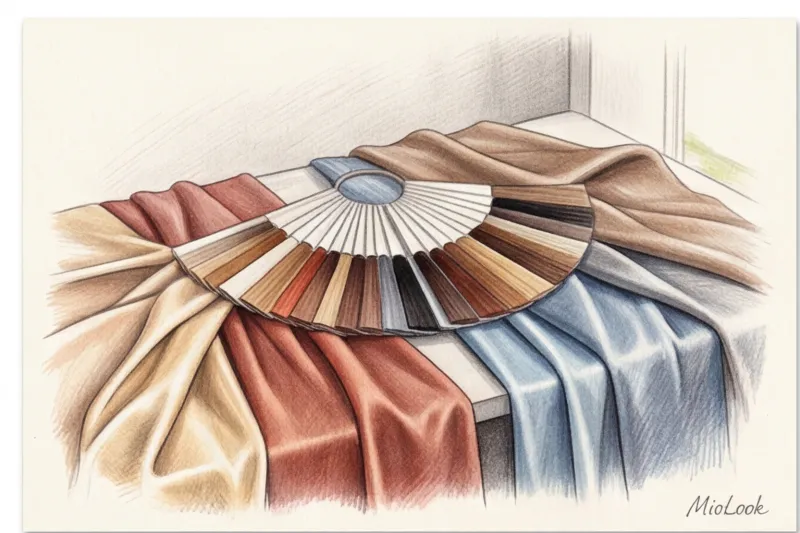
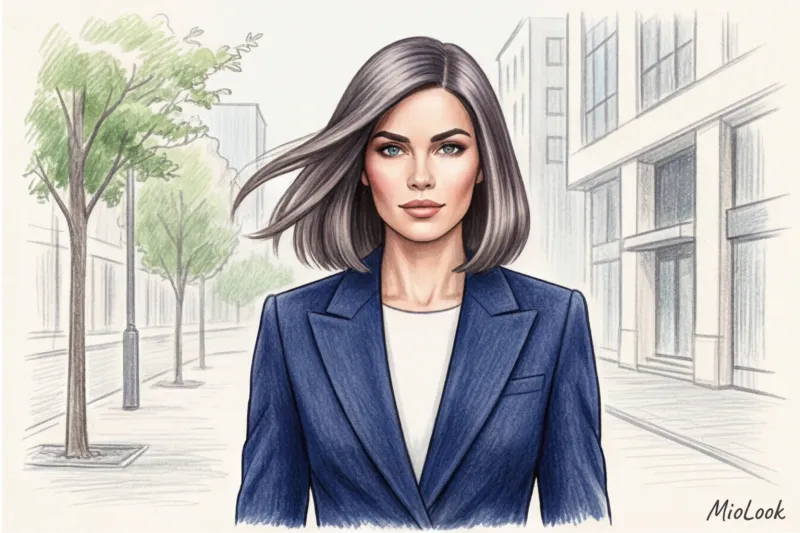
But there's a catch. Changing your blonde from a warm honey to a cool ash can instantly render half your closet unwearable. Returning to client cases: one of my lawyer clients decided to refresh her look and went from a cool chestnut to a rich copper. Her luxurious business capsule collection of graphite, cool blue, and icy blue suits began to look like someone else's clothes. The warm hair color required a completely different base—chocolate, olive, and terracotta shades. She had to change not only her wardrobe, but also basic cosmetics.
An analysis of the four main color types through the prism of modern trends
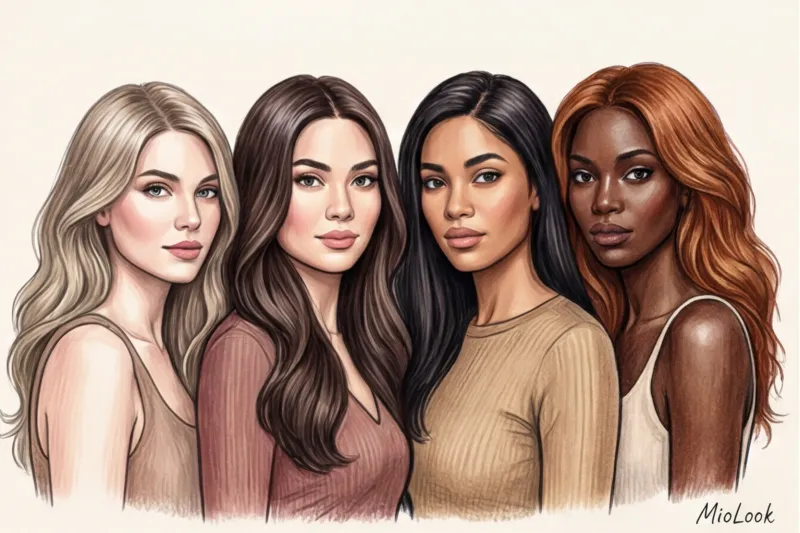
Today, leading colorists like Josh Wood don't think in terms of seasons. It's important to define the dominant characteristic: temperature (warm/cool), contrast (high/low), or saturation (pure/muted). In the era of complex color-stretching techniques (Airtouch, Shatush), classic boundaries are blurring.
Cool Spectrum: Summer and Winter (New Rules for Ash and Icy Shades)
The most dangerous territory is total ash blonde. If you're over 30 and work a lot, a pure gray pigment near your face will play a nasty trick: it will visually add 10 years to your age, highlight every wrinkle, and bring out the gray undertones of tired skin. This is a case where the trend is downright detrimental to your appearance.
What to do? For cool-toned skin tones, mushroom blonde is ideal right now—a complex mix of light brown and beige that looks luxurious and neutral. Brunettes should consider frosty chestnut or deep espresso shades without a red tint when held up to the light.
Ready to get started?
Try a free plan—no obligation—and discover your perfect shade.
Get access — €0.99 onceWarm Spectrum: Spring and Autumn (the danger of red and the luxury of copper)
The Cowboy Copper trend has taken over social media. But wearing copper shades requires skill. A dull, dense copper looks cheap. A rich red is always multidimensional: the roots are slightly deeper, the lengths are more translucent, and there are golden highlights.
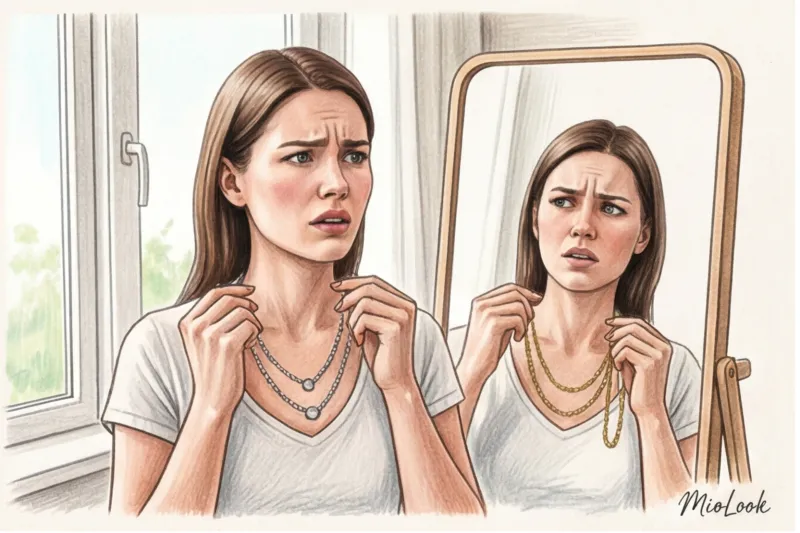
Warm complexions look great with caramel highlights around the face. But remember choosing jewelry metal - Copper-gold hair requires warm gold or complex brass in the neckline; silver will be lost against this background and will look foreign.
The biggest mistake when changing color: skin and hair temperature conflict
In color theory, there's a concept called "simultaneous contrast"—an optical illusion in which colors influence each other when placed next to each other. This is what causes the "separate mind" phenomenon. The cardinal rule of stylists is: "Like attracts like."
If you have rosacea, minor redness, or a tendency to flush (often associated with cool undertones), adding a red or warm orange pigment to your hair will act as a magnifying glass. It will highlight and accentuate every red vein on your face.
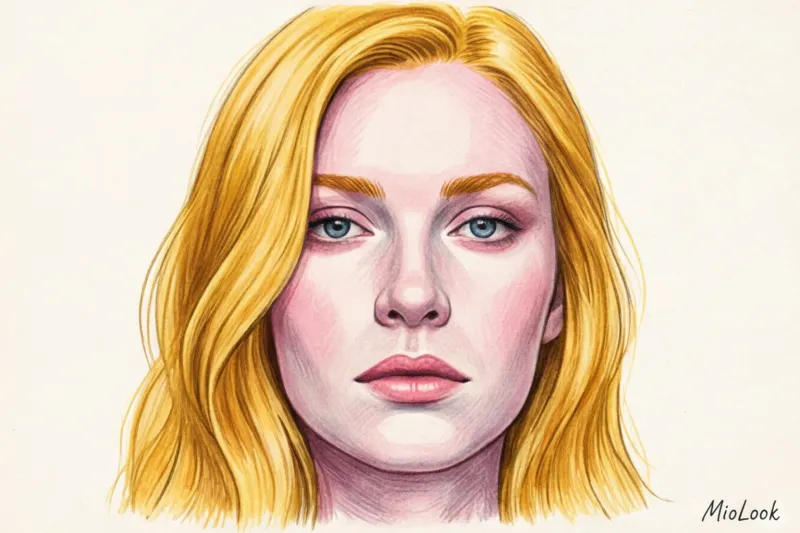
"Your ideal hair color should serve as a concealer to even out your skin tone, not a highlighter for your imperfections."
Of course, the old wrist vein test (blue veins indicate cool undertones, greenish veins indicate warm undertones) still works, but it has many limitations on tanned or very thin skin. Therefore, digital analysis is more reliable.
Pre-color checklist: how to test a shade in AI and avoid mistakes
Before investing hundreds of euros in a salon chair, complete this essential training. I always require this from my clients:
- Take the correct original photo. No makeup, hair pulled back into a sleek ponytail, shoulders off. The light was strictly diffused daylight from the window. No direct sunlight.
- Determine the contrast level. Ask yourself: how much darker are your eyebrows and eyelashes than your skin?
- Analyze the cabinet base. Open your closet. What colors do you mostly see? If you're looking at icy, gray, and emerald tones, warm caramel in your hair will ruin your entire style.
- Do an AI try-on. Upload your photo to MioLook smart wardrobe utility and try on three completely different options. Take screenshots and live with them for a couple of days.
- Bring yourself to the master, not Hailey Bieber. The biggest mistake is showing a colorist a photo of a celebrity from Pinterest. It has different lighting, retouching, and color correction. Show the artist an AI-generated reference. yours face.
Conclusion: The architecture of your image starts from the head
Hair isn't just a matter of aesthetics. It's the foundation of your personal brand and a crucial part of your Total Look. It sets the dress code for your face and dictates the rules of your wardrobe.
Instead of playing salon roulette and relying on luck or the judgment of a tired colorist, delegate the first step to impartial algorithms. AI-powered color selection allows you to see the future before the first drop of oxide touches your roots.
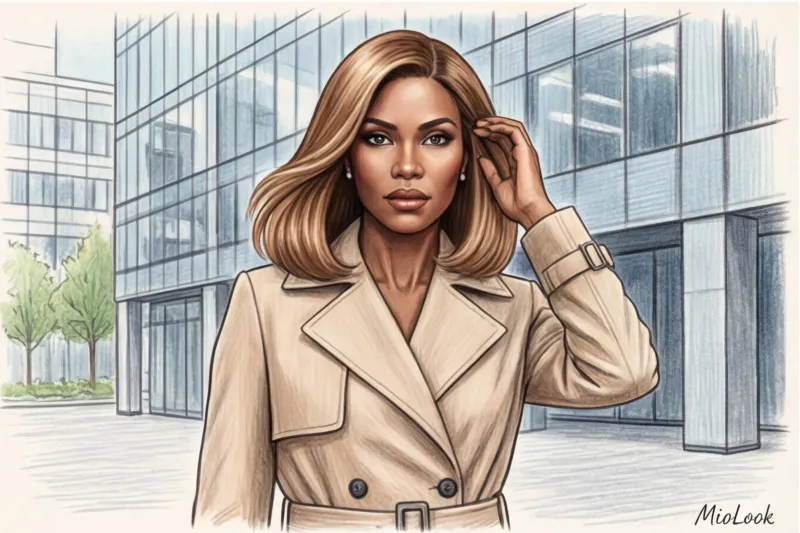
Access to MioLook for €0.99 — one-time payment
A smart AI stylist will select the perfect look and save you money on unsuccessful experiments.
Get access — €0.99 once