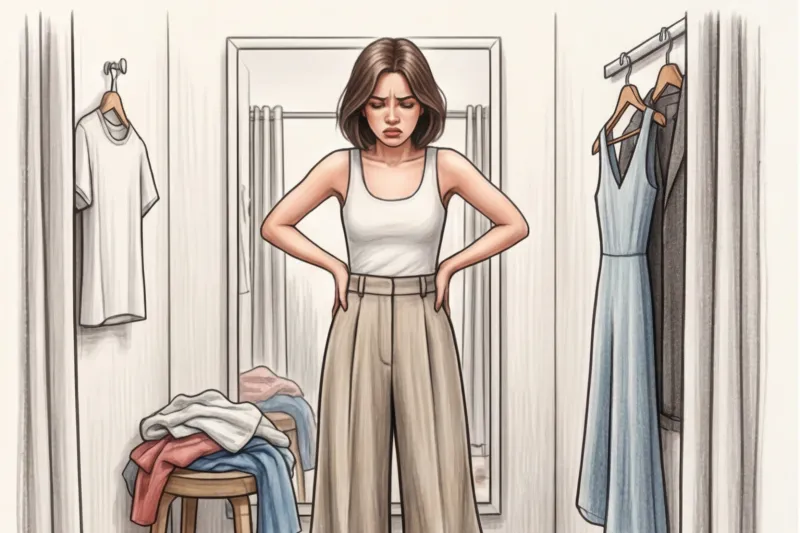
One of my clients, Anna, who is 154 cm tall, bought a luxurious double-breasted jacket for €250. It was too long for her, so she took it to a luxury tailor, paying an additional €60 for hemming the sleeves and hem. When she came to me for a fitting in her new outfit, we both sighed in disappointment. The jacket's pockets were somewhere at hip level, the bust dart had slipped toward her ribs, and the buttons visually weighed down her stomach. From an elegant garment, the jacket had transformed into a boxy shape that swallowed up Anna's figure.
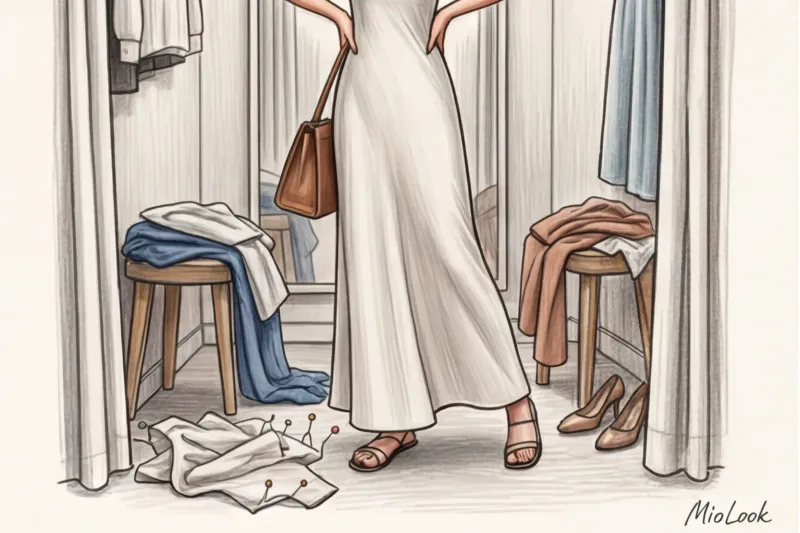
This case perfectly illustrates the main problem with shopping for petites. We are used to thinking that the question How to choose clothes for short girls A simple trip to the tailor can solve this. Trim off the extra 10 centimeters at the bottom and you're done. But the architecture of tailoring works completely differently.
We talked about the mathematics of cutting in more detail in our A complete guide to choosing clothes for your body shape using AI Today, I want to explore the anatomy of a petite fit: why standard patterns betray you, and how technology has finally learned to see your true proportions.
The biggest tailor myth: why simply cutting off the length isn't the answer
According to the analytical agency WGSN (2023), most mass-market brands—from Zara and H&M to COS and Massimo Dutti—design their standard (Regular) fits for fit models 170–175 cm tall. If you're 155 cm tall, the difference is a whopping 15–20 centimeters.
And the main mistake is to think that these 20 centimeters are concentrated exclusively in the length of your legs.
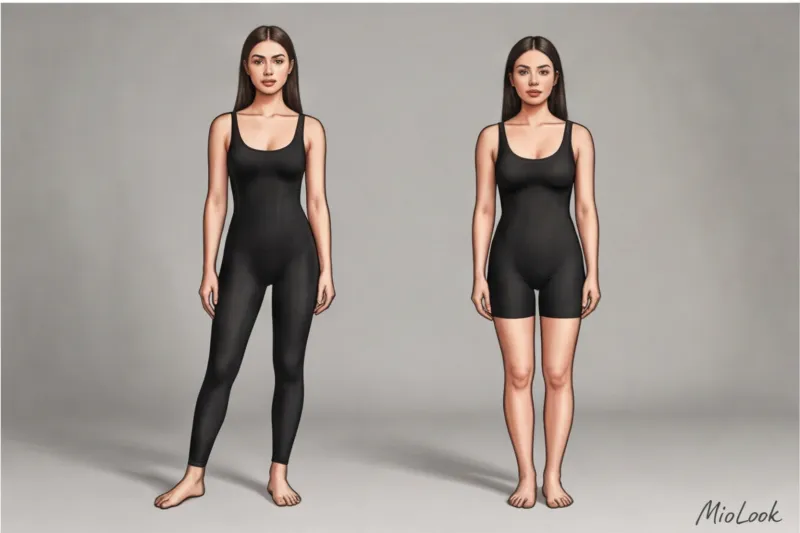
In reality, this difference is distributed across your entire body: 2-3 cm in armhole depth, 4-5 cm in torso length (from shoulder to waist), about 2 cm in hip height, and so on. When you simply shorten long flared trousers, you're cutting off the flare area. As a result, instead of a striking flare from the knee down, you get awkward, straight "tubes." The knee on standard trousers is designed for a taller woman, so on you, the natural curve of the leg will end up somewhere around the shin.
I constantly explain to my clients: moving a dart, changing the armhole depth, or raising the waist at the tailor's isn't "fitting." It's a complete re-cut of the garment, which often costs €30-50, exceeding the price of the budget item itself. You shouldn't have to pay double the price just to have it fit properly.
Proportions are more important than centimeters: why 155 cm is different for everyone
The most damaging thing the fashion industry has done is lumping all short women into a single, monolithic category called "Petite." But height is just a vertical vector; it says nothing about your body's geometry.
Last month, I worked with two clients. Marina and Lena are both exactly 155 cm tall. But Marina has a short torso and surprisingly long legs for her height, while Lena, on the contrary, has a long torso and short legs. When they experimentally swapped jeans, disaster ensued.
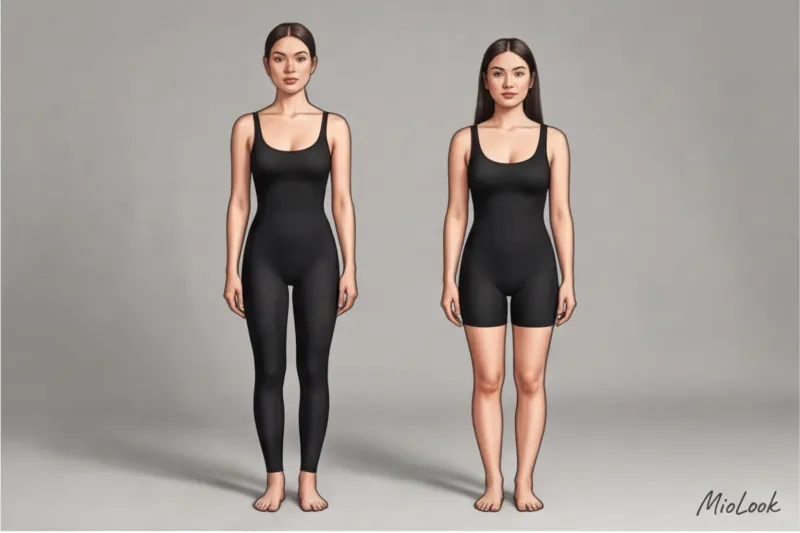
Lena wore Marina's mid-rise jeans, which visually shortened her legs even more. And Marina tried on Lena's favorite ultra-high-rise trousers. And here lies the crucial insight: a high waist is considered a universal "saving device" for petite women, but This absolutely doesn't work when you have a short torso and a large chest. Lena's trousers literally propped up Marina's chest, completely depriving her of a waist and turning her silhouette into a "lollipop".
"Height dictates only the length of a garment. The fit depends solely on your internal vertical proportions (drops): the distance from your shoulder to your waist and from your waist to your hip."
How MioLook AI is changing the game for pets
For years, women had to walk into a fitting room with an armful of clothes, hoping at least something would fit without having to go to a tailor. Today, mathematics takes care of that stress.
Algorithms no longer look at you as a set of standard measurements (chest-waist-hips). When you use the "smart wardrobe" feature in MioLook The neural network scans vertical proportions specifically. It calculates reference points: where your waistline is physically located, how long your neck is, and where the center of your chest is located.
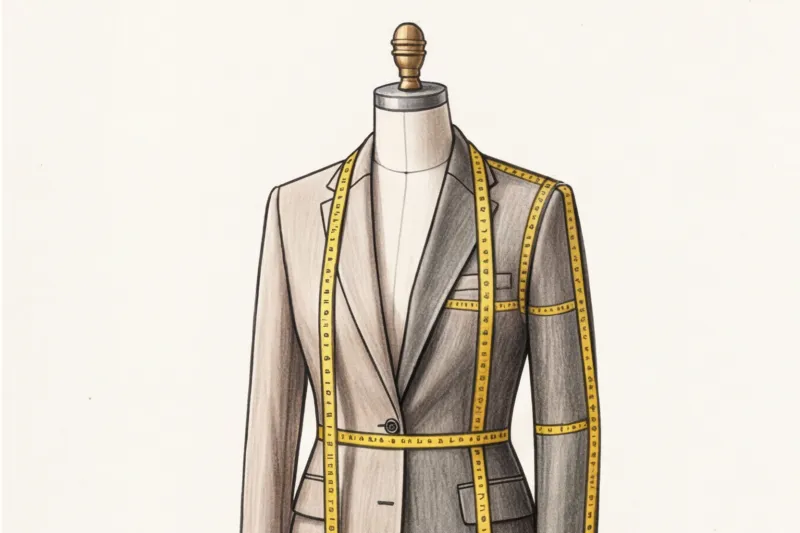
This allows us to predict fit conflicts even before purchasing. AI "sees" that the waist of a particular mass-market dress will fall on your hips, and simply won't offer you that option. Technology finally frees women from the toxic feeling of guilt over having the "wrong figure." Your figure is perfect—the patterns just weren't designed for you.
Try MioLook for free
A smart AI stylist will select the perfect look based on your unique proportions and height.
Start for freeBreaking Stereotypes: How to Choose Clothes for Short Women
If you've ever Googled "clothes for short girls," you've likely read these tips from glossy magazines of the 2000s: "wear only nude pumps," "avoid long skirts," "vertical stripes are your best friend." As a practicing stylist, I officially declare: it's time to throw out that set of rules.
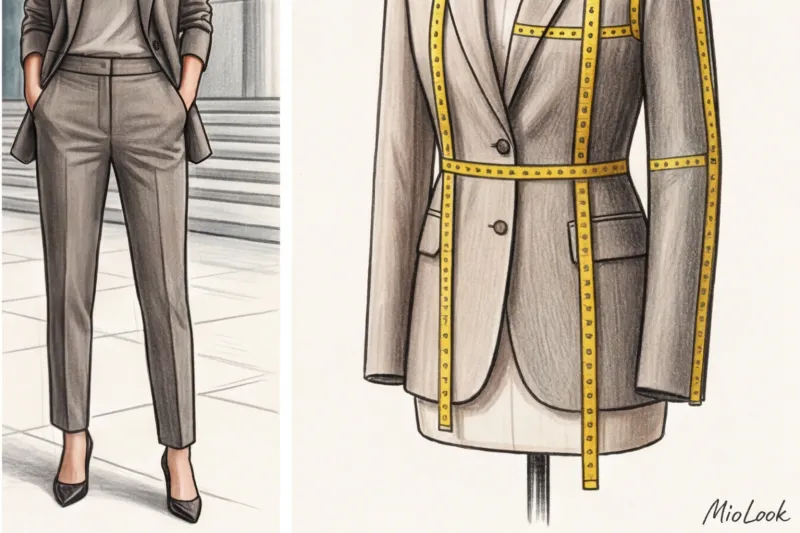
Being small isn't a flaw you need to frantically "stretch out" and hide. It's your physical makeup, your size. Let's address two of the most persistent myths.
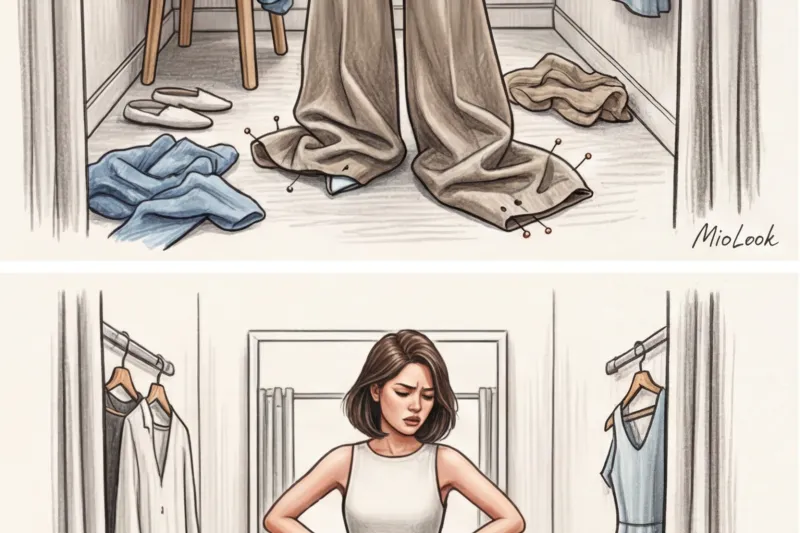
Myth 1: "Oversized clothes will swallow you."
A huge number of petite women are afraid of bulky clothing, preferring to wear strictly tailored clothes, which often look dated. Oversized clothing is possible and appropriate, as long as you adhere to the "structured volume" rule.
The point is that oversized clothing on a petite figure should have a firm hold. This could be:
- Narrow wrist: Roll up the sleeves of your jacket that are too long and wide.
- Open ankle: Pair an oversized sweater with trousers that show off the thinnest part of your leg.
- Hard shoulder line: The jacket may be wide at the waist, but the shoulder seam must fit perfectly.
Even a €500 jacket will look like you're wearing it from your older brother if the shoulder seam slips down your arm. For petite women, the shoulder girdle is the architectural foundation of the look.
Myth 2: "Maxi is contraindicated"
Long dresses and skirts were long considered to pin short women to the ground. The irony is that, according to Vogue's 2024 body proportion guide, monolithic maxi looks are one of the most powerful tools for women under 160 cm.
But there's a clear caveat here. Length doesn't make you look shorter. It's irregular horizontal lines that cut into your silhouette that make you look shorter. The ideal maxi dress for petite women is literally floor-length or mid-heel, not a clumsy ankle-length midi. The main rule: the dress should be a solid color, and the waistline should be clearly defined at your natural point, not dangling below your ribs.
A Perfect Fit Checklist: What to Look for When Trying On
Before you take an item to the checkout or hit the "pay" button, have it professionally inspected. As a stylist, here's what I look for first when dressing petite clients:
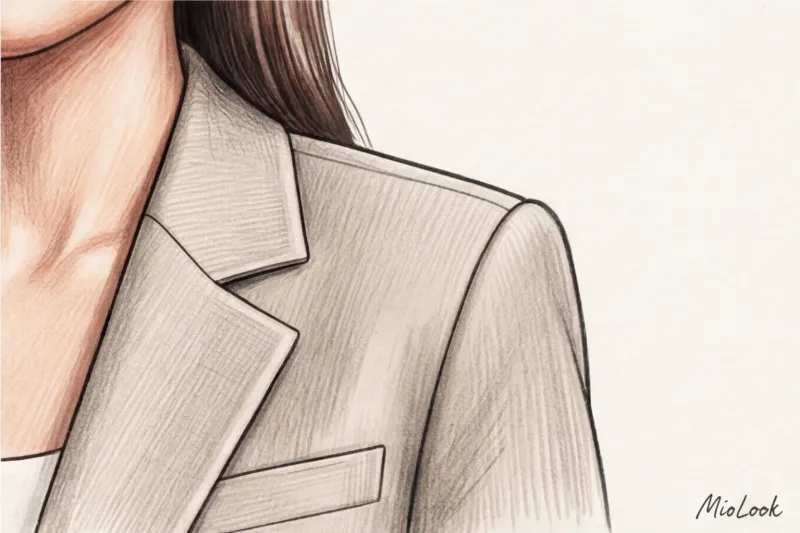
- Shoulder line. The sleeve seam (unless it's a dropped shoulder, as the designer intended) should be positioned directly on the acromion bone. If it hangs down even 1.5 cm, the garment isn't for you.
- Armhole depth. The popular dolman cut often distorts the proportions of petite figures, visually blending the bust with the waist and turning the upper body into a square. The armhole should allow you to raise your arm, but not drag down the entire side seam of the garment.
- Position of darts. The strictest checker. The top of the bust dart should point directly toward the center of the chest (nipple). In standard-cut clothes on petite women, it often ends up lower than the desired level, visually "lowering" the bust.
- Trouser seat height (Rise). This is the distance from the crotch to the waistband. If a pair of Regular jeans has a hollow space between the crotch and the inseam (called a "smile" or fold), it means the seat depth is designed for a taller figure. No tailor can fix this.
Your perfect look starts here
Join thousands of users who look flawless every day with MioLook. Our AI will select the perfect fit for your height.
Start for freeBottom Line: Growth is a constant, not a problem
It's time to stop apologizing for your height and stop funding tailoring while trying to remake the mass market to suit you. Your height is your individuality, your unique body shape, which only requires the right cutting math.
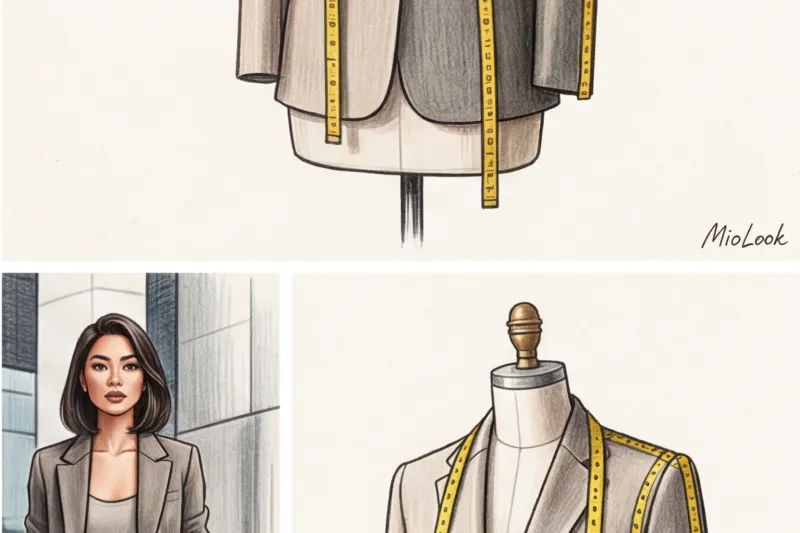
Smart shopping today doesn't start with searching for the "Petite" section in the back of a department store, but with a deep understanding of your proportions. Remember one rule: Don't try to visually appear taller, try to look proportional. And if you're tired of calculating armhole depth with a measuring tape, just delegate this task to a smart algorithm. MioLook who sees your figure as clearly as a professional clothing designer.