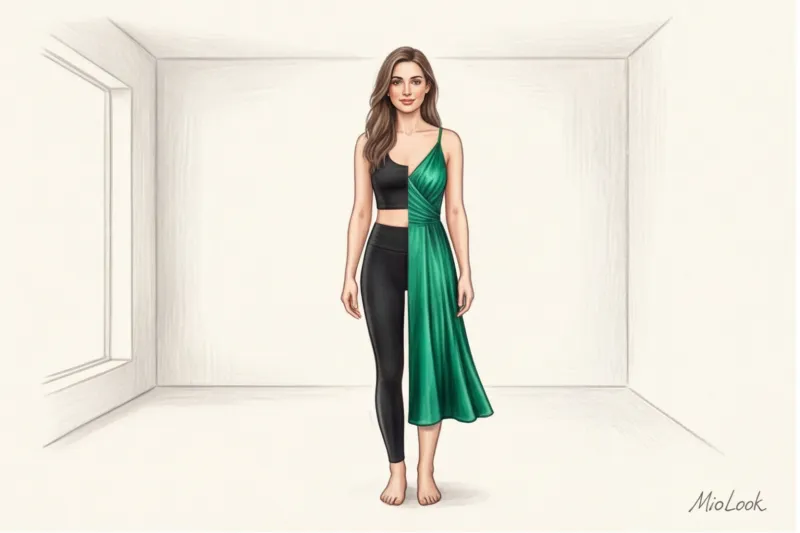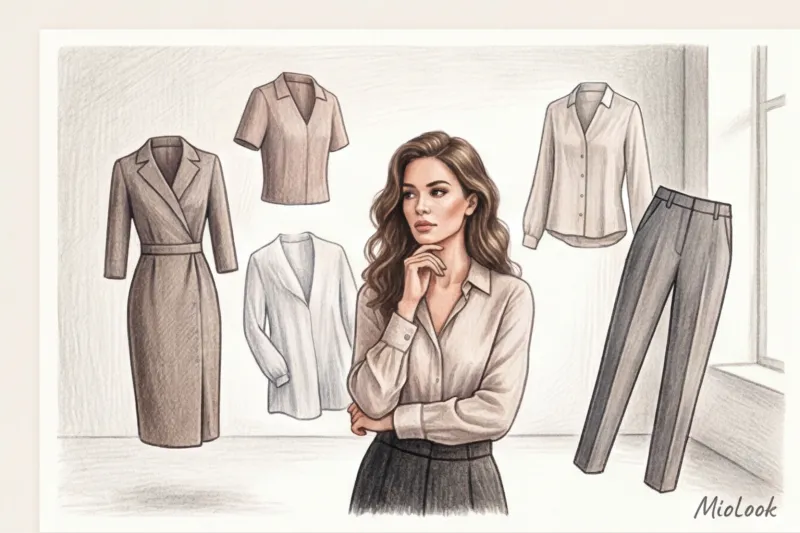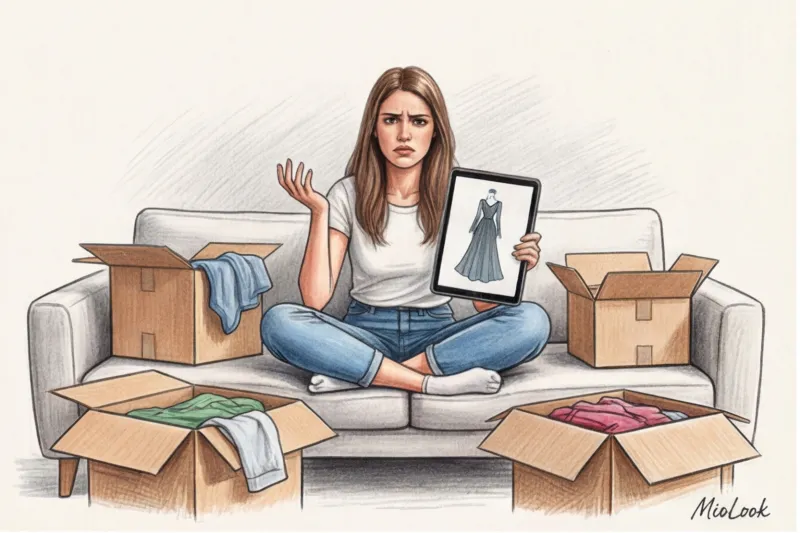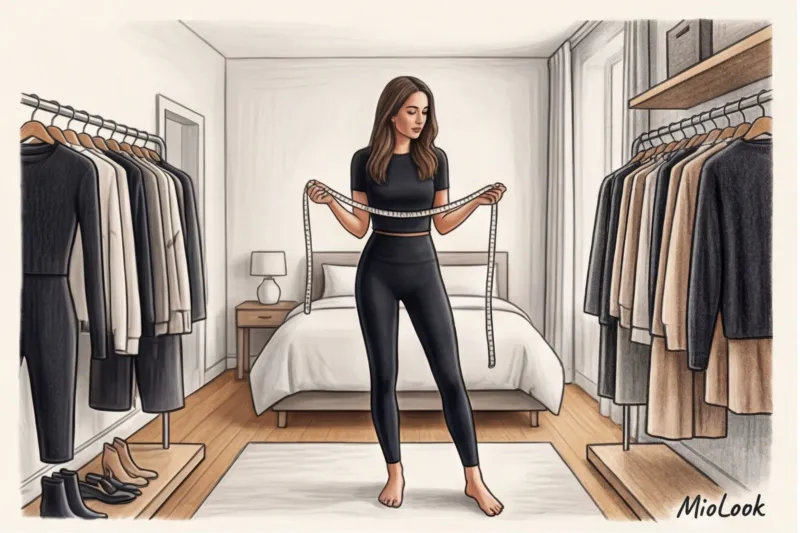
It's a familiar scene: you're waiting for the delivery person to try on three identical Zara jackets in sizes S, M, and L. You keep one, two go back to the warehouse, and your bank account is stuck with the cost of all three for a week. Just a couple of years ago, we accepted this as an inevitable evil of online shopping. But today, the rules are changing. And no, we're not talking about putting on a VR headset and wandering through pixelated boutiques.
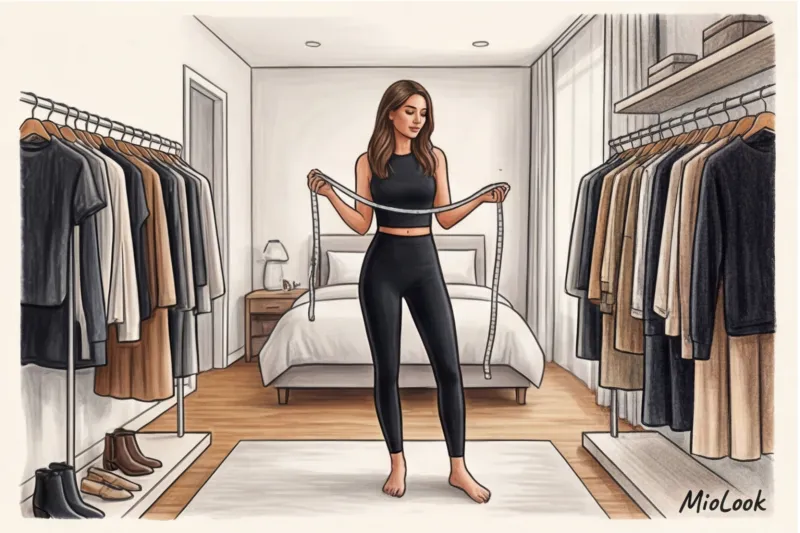
We discussed in more detail how the industry as a whole is changing course in our The complete guide to fashion tech in 2024 , but today I want to talk about the most pressing issue: how virtual fitting room helps you stop playing guessing games with the mass market and start buying consciously.
What is a virtual fitting room today: the end of the hype era
Let's be honest: the industry has taken off its rose-colored VR glasses. Even in 2021, every other brand was trying to sell us digital dresses for metaverses or Instagram filters. It was fun, but completely useless for a real woman who wants to buy basic wool trousers for €80 and be sure they'll fit at the waist.
According to the McKinsey State of Fashion 2024 report, brands' focus has shifted dramatically. Fashion tech's primary goal today is not to entertain customers, but to solve the catastrophic logistics problem. According to the National Retail Federation (NRF), approximately 30–40% of clothing purchased online is returned to the retailer. The main reason is the wrong size or a poor fit.
"Reducing the return rate by just 10% saves a major international brand millions of euros annually. This is why companies are investing in predictive analytics and precise sizing rather than digital worlds," notes McKinsey's analytics department.
For us, the virtual fitting room has transformed from a fun toy into a powerful tool for conscious consumption. We no longer rush couriers and order only items that have a 95% chance of finding their way into our wardrobes.
AR vs. AI Algorithms: What's the Real Difference?
Many people still confuse visual effects with mathematics. Let's separate these concepts.
- AR (augmented reality) — this is when you point your smartphone camera at your feet, and sneakers appear on the screen. It's a pure visualization. It works great for shoes, bags, and glasses to appreciate proportions and color.
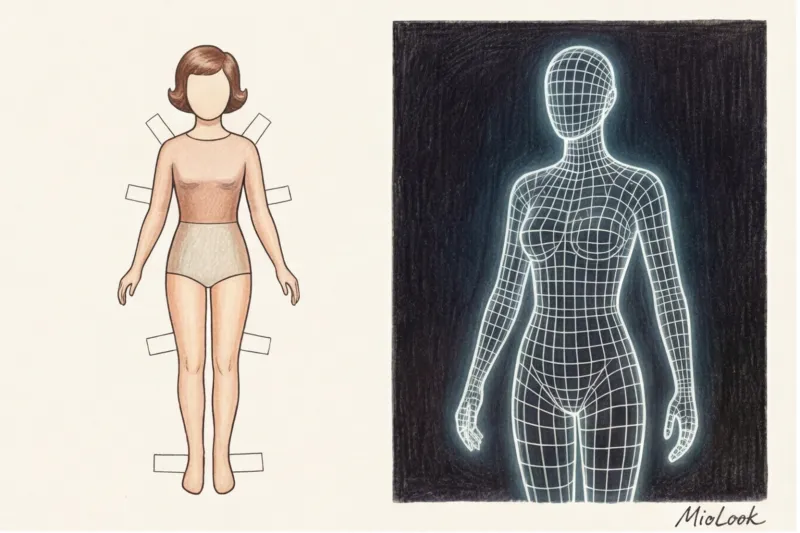
- AI sizing (predictive size selection) — is an invisible algorithm. You enter your height, weight, age, and body features (for example, "wide hips" or "flat stomach"), and a neural network compares these with the patterns of a specific brand and data from thousands of other customers.
The real magic happens when these two technologies work together. AI tells you, "You need a size 38," and AR shows you whether that sneaker style will visually shorten your leg.
Access to MioLook for €0.99 — one-time payment
A smart AI stylist will select the perfect look and help you determine the right sizes for your wardrobe.
Get access — €0.99 onceHow AR technologies save us money and stress
In my 12 years as a personal stylist, I've seen hundreds of women's wardrobes and heard just as many complaints about online shopping. One of my clients from Berlin, Anna, regularly froze €500–€600 on her credit card every month simply by ordering clothes by size chart. We called it the "doubt tax."
When we started using a digital profile and AI recommendations in apps, her return rate dropped from four out of five items to one in ten. And it's not just about the money.
Virtual fitting solves the problem of blind spots. We're often afraid to order an oversized bag or statement earrings because we don't understand their true scale. AR allows you to "place" a bag on your desk through your phone's camera and see if it can fit a laptop or is only good for keys and lipstick.
Where the virtual fitting room works 10/10, and where it fails
As a practitioner, I don't trust brand press releases. Technology is far from perfect. It's important to understand when an algorithm can be trusted 100%, and when it's better to rely on your knowledge of tissue physics and your own experience.
Perfect match: shoes, glasses, bags and makeup
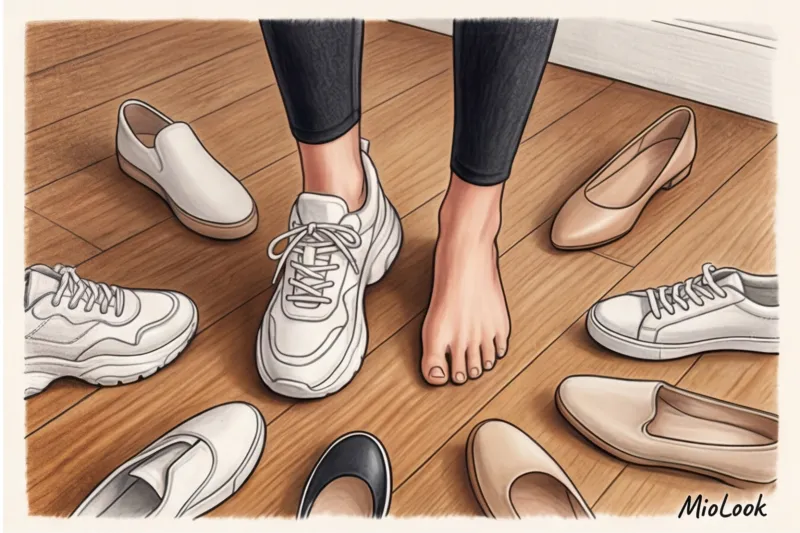
The rule is simple: rigid shapes are easiest to digitize. That's why AR sneaker try-ons work almost flawlessly today. The phone easily scans the floor and overlays a 3D model of the shoe, taking perspective into account.
The same goes for glasses. Modern algorithms (for example, those at Ray-Ban or specialized opticians) scan your face using dozens of points, calculating the precise interpupillary distance. You get not just a funny mask, but a mathematically precise frame fit. Makeup in AR has also reached its peak—algorithms are excellent at detecting skin tone and realistically rendering lipstick pigment in daylight.
Major failure: the fit of trousers, jackets and complex fabrics
But here we come face to face with a harsh reality. No virtual fitting room can yet adequately calculate fabric drape.
An AR dress will always look like it was cut out of a magazine and pasted onto your photo. The algorithm can't tell the difference between heavy, flowing silk and cheap, stiff polyester. It doesn't know how viscose with 5% elastane will behave on your hips as you move.
My advice: For complexly cut clothing (jackets, palazzo pants, fitted dresses), completely ignore the visual AR try-on feature. Trust only AI size calculators that work with numbers, not images.
Your perfect look starts here
Join thousands of users who look flawless every day with MioLook. Create your smart capsule online.
Get access — €0.99 onceA Stylist's Test Drive: Virtual Fitting Rooms at H&M, Zara, and Lamoda
To be sure, I regularly test flagship tools from major retailers. Here's my honest ranking.
Zara: Sizing Tool (Rating: 8/10)
Zara isn't messing around with AR clothing, and rightly so. Their mathematical algorithm asks your height, weight, and fit preference (tighter or looser), and then returns a verdict: "78% of customers with your measurements didn't return a size M." For a mass-market brand, where patterns often fluctuate, this is surprisingly accurate. I've put together basic capsule collections priced up to €300 using this tool alone, and the hit rate was around 90%.
Lamoda: AR Sneaker Try-On (Rating: 9/10)
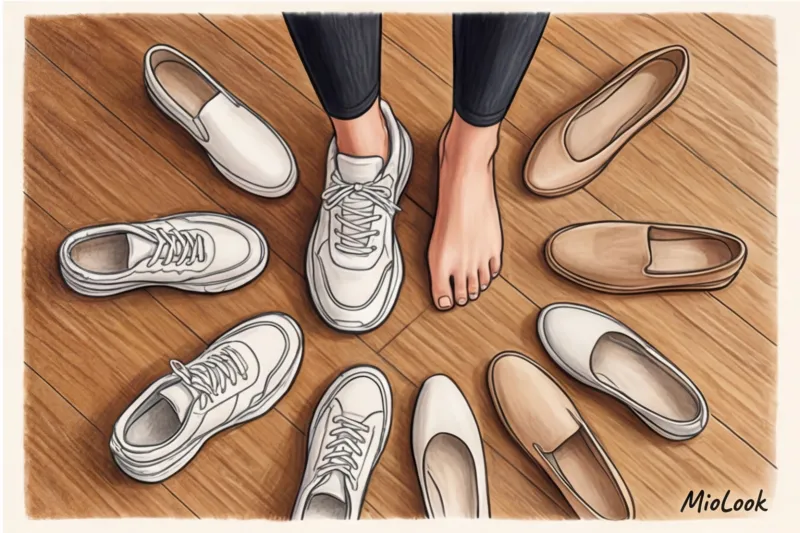
As one of the largest e-commerce players, the platform has implemented AR shoe fitting very cleverly. You point the camera at your feet and rotate them. This is incredibly helpful when choosing chunky Ugly Shoes or models with complex lasts. You can immediately see whether that size 39 pair makes your foot look like a boat.
H&M and COS: Virtual Avatar (Rating: 6/10)
Some premium lines and brands within the H&M group are testing the creation of a virtual mannequin tailored to your measurements. The idea is great, but the execution is so far lacking. The resulting avatar is generic: it doesn't account for sloping shoulders or an unusual arch in the lower back. This might be fine for a basic turtleneck for €40, but it won't allow you to appreciate the perfect fit of an expensive suit.
Checklist: How to Use AR Try-On Before Buying
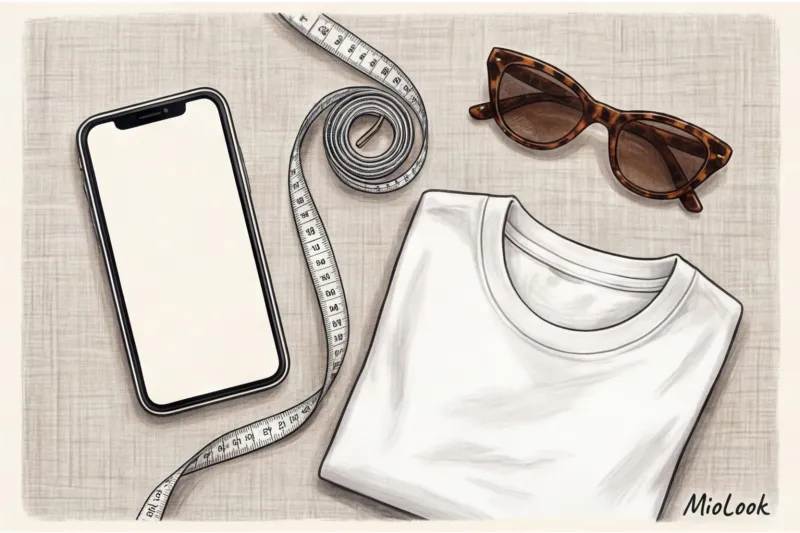
To ensure algorithms work for you, not against you, follow these four simple rules. Over the years, I've learned that this is where clients make the most mistakes.
- Lighting decides everything. If you're testing a digital eyeglass or makeup try-on, stand facing a window. The yellow artificial light in the bathroom will distort the AR algorithm's color rendering beyond recognition.
- Proper clothing for scanning. If the app asks you to take a photo to create a silhouette, wear form-fitting clothing: thick leggings and a sports bra. The algorithm will "eat" the volume of your loose sweatpants and give you a size two orders of magnitude larger than you need.
- Absolute honesty with the calculator. Artificial intelligence won't judge you. If you weigh 72 kg and are 165 cm tall, write 72, not "well, almost 68." Even a 2 cm lower waist measurement will result in pants that are impossible to sit in.
- Always check the ingredients. As I've already mentioned, an item may look beautiful in a virtual photo, but if the product description says 100% acrylic, in reality it will turn into a shapeless rag after the first wash. AR doesn't eliminate the need to read labels.
Instead of a conclusion: when will technology finally replace offline shopping?
The stylist's answer is never. The physical experience, the tactility, the sound of rustling fabric, and the scent of leather in a boutique will never go away. We wear clothes in the real physical world, where the wind blows and we sweat, rushing to a meeting.
But the main goal of fashion tech today isn't to lock us in our homes. The goal of technology is to make online shopping as predictable and stress-free as buying your favorite morning coffee. The use of built-in sizing algorithms and AR tools allows us to weed out sure-fire options even before we reach the cart.
Start using these digital tools with your next order. Simply enter your honest measurements into the size calculator, point the camera at your feet while selecting sneakers, and you'll be amazed at how much cleaner and more functional your wardrobe will be, and trips to the returns center will be a thing of the past.