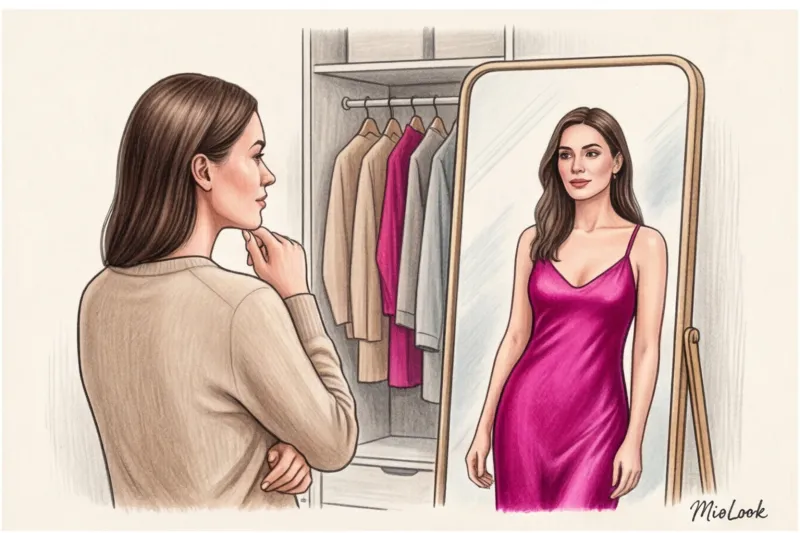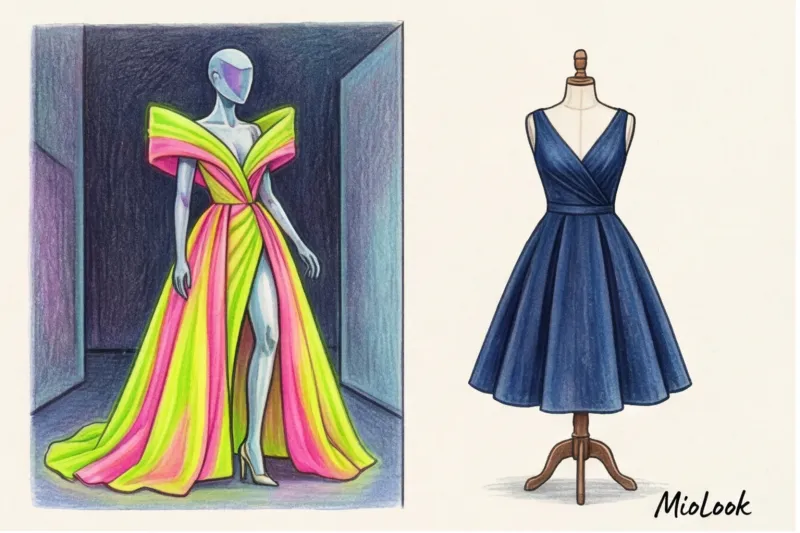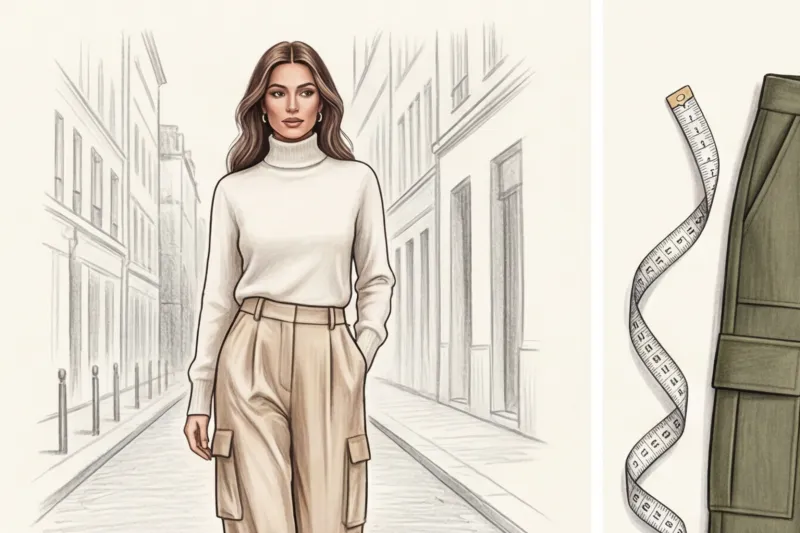
Last Tuesday, my client Sofia sent me a tearful voicemail. The family photo shoot she'd spent a month preparing for had turned into a disaster right there in the studio. The reason? The identical burgundy chunky knit sweaters she'd spent so much time searching for at every mall in the city.

The husband instantly broke out in a sweat under the studio lights, wearing 100% acrylic, the youngest son scratched himself and cried from the scratchy neckline, and the fifteen-year-old daughter flatly refused to leave the fitting room, declaring she looked like "a clone from an incubator." Sound familiar? That's precisely why the traditional approach to family style urgently needs an update. And that's where... virtual clothing try-ons for the family — a technology that changes the rules of the game.
By the way, if you want to delve deeper into the theory of creating harmonious joint images, be sure to check out our A complete guide to the festive family look.
Why "Matching Sweaters" Don't Work Anymore: Style vs. Reality
The concept of matchy-matchy (exactly the same clothes for everyone) is hopelessly outdated. According to analytics platform Lyst, searches for "identical family outfits" fell by 45% in 2023. The modern Family Look is built on the concept status harmony , and not the uniform effect.
Let's be honest: clothing is a tool for separation and personal expression. Psychologists from the Fashion Psychology Institute emphasize that for teenagers, the imposed "clone" image is a direct violation of personal boundaries. They don't want to be miniature copies of their mom or dad; they desperately need to express their own rebellion through baggy jeans or unconventional cuts.
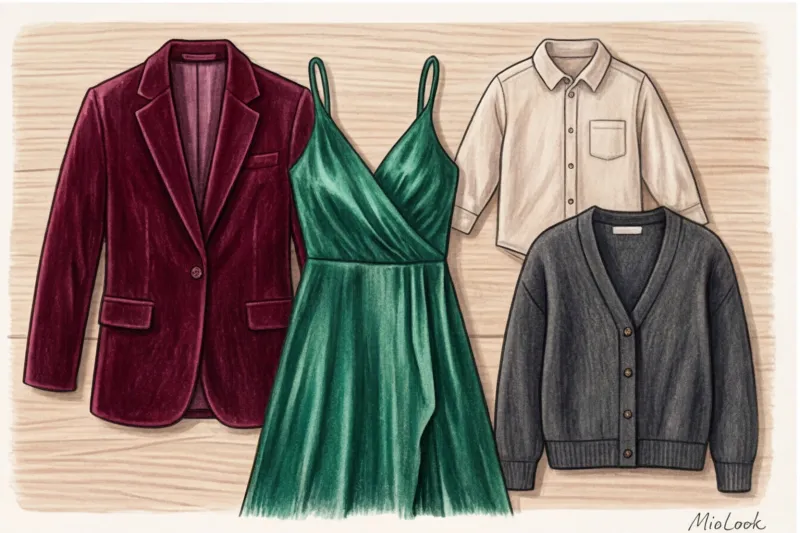
To be fair, matching flannel pajamas still look cute on a January 1st morning. But if we're talking about a night out, a theater outing, or a serious portrait shoot, forget about copying. We're moving toward coordination: a complex interplay of tones, textures, and silhouettes.
Try MioLook for free
A smart AI stylist will select the perfect look for every member of your family.
Start for freeVirtual Family Dress Try-Ons: How AI Saves Stress and Budgets
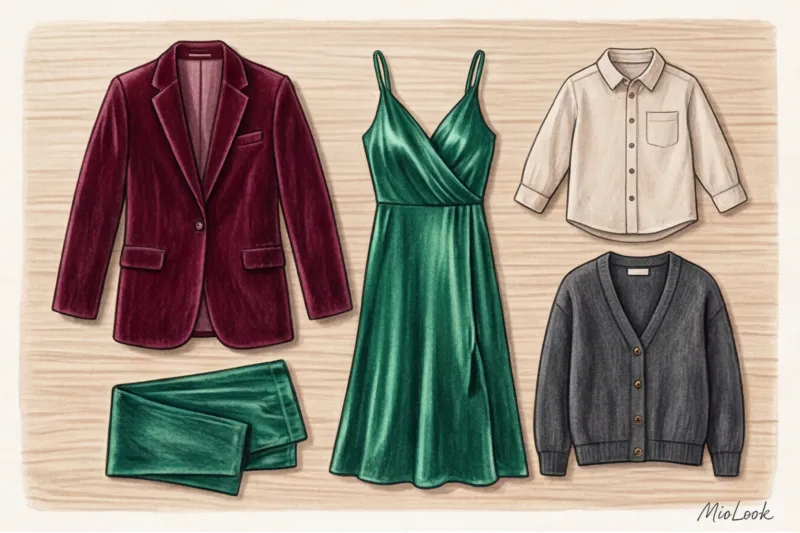
The main problem with family shopping is that you never see the whole picture until you buy. You buy a dress for yourself in one store, pants for your husband in another, and order the kids' clothes online. In your mind, these shades of green are a perfect match. In reality, one veers toward warm olive, and the other toward cool emerald, ruining the whole composition.
The National Retail Federation (NRF) cites shocking statistics: nearly 40% of holiday clothes are returned to stores after being tried on at home. People buy things on impulse, only to later realize they don't fit together.
In my experience, choosing outfits for a family of four in the traditional way at a shopping mall takes an average of 12-15 hours. That's three wasted weekends. Recently, I decided to digitalize this process: I uploaded photos and measurements of all the client's family members to MioLook app The AI analyzed their current wardrobes, found the perfect pair of dark blue trousers for the husband (which we almost repurchased!), suggested adding just a statement jacket for the mother, and styled the whole thing in 1 hour and 15 minutes. They saved about €300 just by avoiding duplicate purchases.
Digital profiles: taking into account the individuality of each person
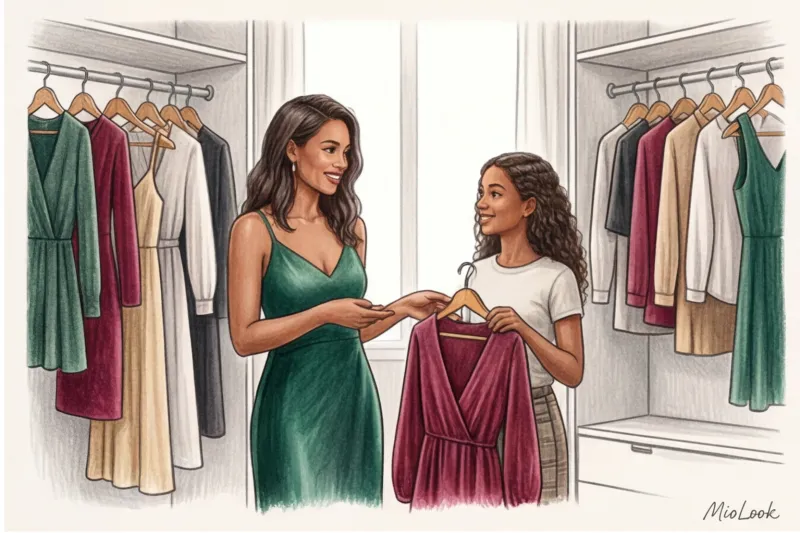
In a smart wardrobe, you create separate profiles for yourself, your husband, and your children. This is crucial, because "Deep Autumn" and "Light Summer" can easily coexist within the same genetic makeup. What makes you glow might give your husband a sallow, dull complexion.
"The most brilliant feature of digital wardrobes is sharing. You set a general color palette (for example, graphite and dusty rose), and your teenager, through their access to the app, chooses their own items within that palette. Control is maintained, but the illusion of complete freedom of choice prevents any conflicts," says Emily Thompson.
Step-by-step instructions: creating a prestigious Family Look in MioLook
Over 12 years of working as a stylist, I've developed a strict rule: never start a capsule wardrobe with basic pieces. Start with the most complex or finicky element.
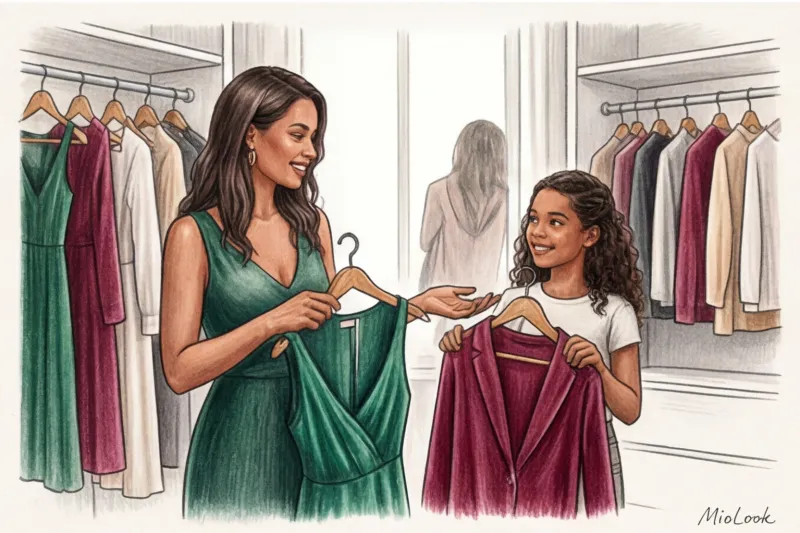
Typically, it's either a gorgeous mom's dress that will be the centerpiece of the entire composition, or a teenager who'll only wear a specific pair of wide-leg pants. Designate this item as an "anchor" in the app, and the algorithms will begin to adjust the rest of the elements to it.
Step 1: Selecting a temperature base and palette
Avoid using just one or two colors. This makes the image look flat. Create a palette of four or five complementary shades in an app. This year, according to PANTONE, complex mixes are working amazingly: dark chocolate, butter, deep burgundy, and accent steel.
The main secret is a consistent "temperature." You can mix as many colors as you like, but they should all have either a warm (yellowish) undertone or a cool (bluish) undertone. Artificial intelligence does a great job of this, highlighting temperature conflicts during the collage process.
Step 2. Synchronizing textures: velvet, silk and wool
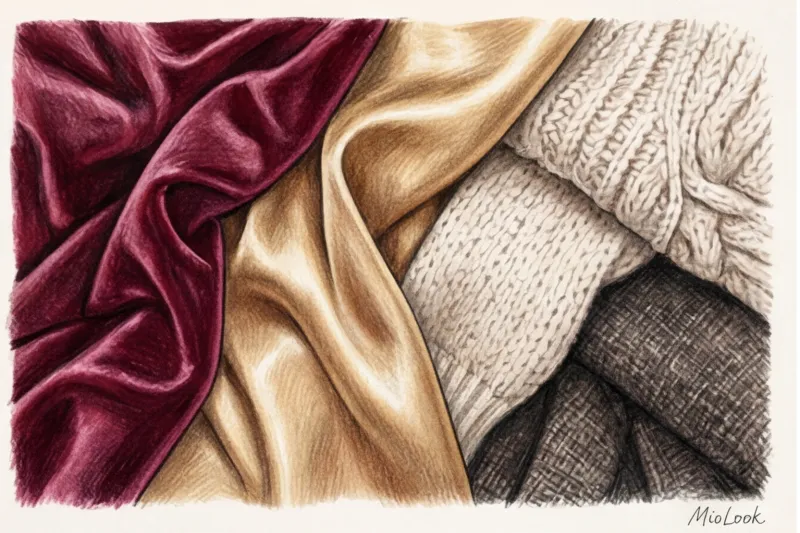
Color is only 50% of success. The texture of the fabric does the rest. If everyone is wearing smooth cotton, the look looks cheap. If everything is thick wool, it's too heavy.
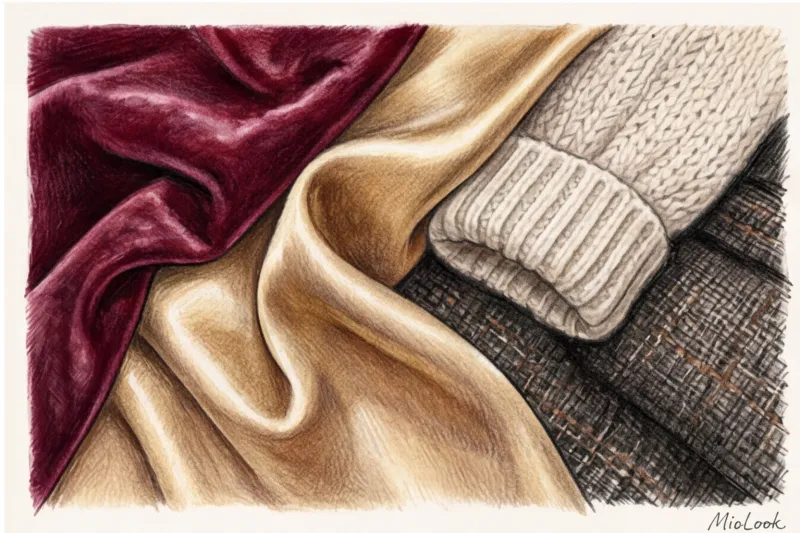
Use the "three textures" rule. Your family ensemble should definitely include:
- Gloss: flowing silk, satin or sequins (for example, a daughter's top or a mother's dress).
- Pile/Relief: velvet, corduroy, chunky knit (dad's jacket, son's cardigan).
- Matte base: high-quality suit fabric or thick cotton (trousers, shirts).
Visualization on AI avatars allows you to immediately see how heavy tweed competes with frivolous chiffon, and promptly replace an item before placing an order.
Your perfect look starts here
Join thousands of users who save hours on shopping with the virtual try-on feature.
Start for freeThe One-Stop Shop Myth: Why the AI Capsule Looks More Expensive
There's a harmful stereotype from old mommy blogs: "Buy clothes for the whole family from the same mass-market brand, so you'll be sure to get the same collection and the colors will match." This is the worst advice you can give.
A single-brand family look always comes at a price. True status is born at the intersection of different price segments. Imagine: you're wearing a premium silk slip dress for €250, your husband is wearing a great textured jacket from a mid-market store for €130, and the kids are wearing stylish but basic pieces from H&M or Zara for €30-40.
In real life, putting together such a puzzle is torture. You physically can't remember the shade of a dress from a boutique when you're standing in the children's department across town. And in smart wardrobe You simply open the summary screen. The AI pulls items from various online stores, and you see luxury silk next to budget cotton on a single canvas. This creates that "old money" effect—an effortless chic that you can't buy as a complete set in a single store.
Pre-Buy Cart Checklist: Final Image Check
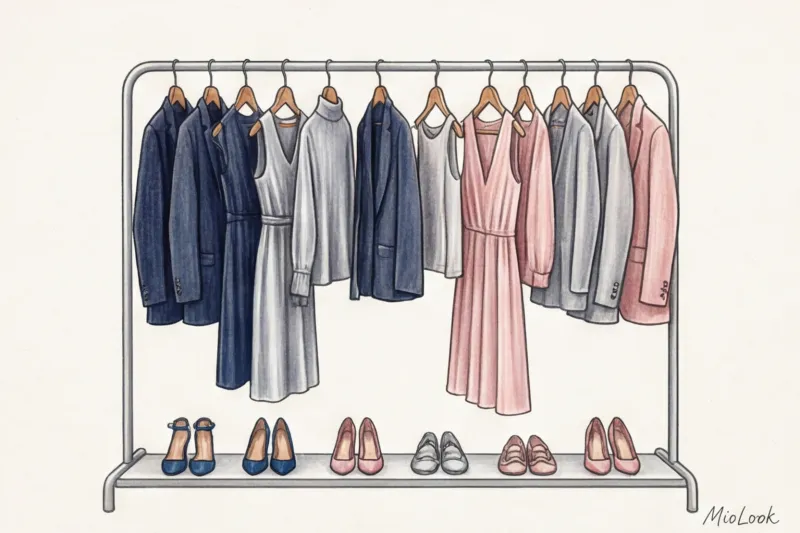
Before you click "Pay," run your assembled capsule through this professional stylist's checklist. These four steps will save you from returns and a bad mood.
- 20% similarity rule: Items shouldn't overlap by more than a fifth. If the mother is wearing a red dress, the daughter shouldn't have a red dress. Instead, opt for a red bow in her hair or a micro-print on her blouse.
- Comfort check: Have you considered tactile characteristics? No mohair for allergy sufferers or stiff collars for hyperactive toddlers. What looks beautiful on a 3D model should be functional in real life.
- Autonomy test: Mentally "cut out" each family member from the overall picture. Does your husband look stylish and appropriate if he goes to the bar alone in the same outfit? If his outfit looks silly without the family context, change it.
- Shoe Rating: Shoes ruin 90% of perfect looks. House slippers, dinosaur-print socks (unless they're intended as an ironic accent), or overly chunky street shoes are a disaster in an interior design studio. Shoes should be added to the digital fitting room just like clothes!
Your family isn't a choir in identical uniforms, but a well-coordinated jazz band, where each instrument has its own part, but together they sound flawless. Delegate routine tasks to technology, free up those 15 hours of your weekend for relaxing together, and AI will make sure your photos look like you're on the cover of Vogue.