The Biggest Mistake: Why "Special Size" Ruins Your Style
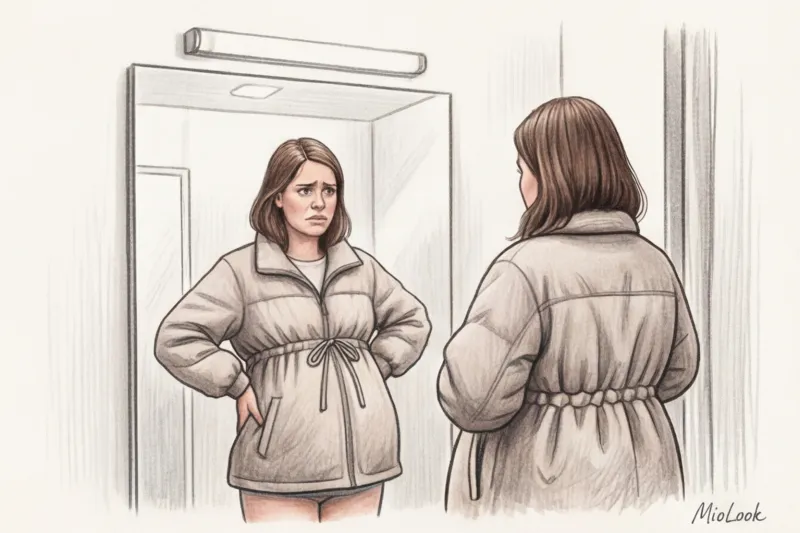
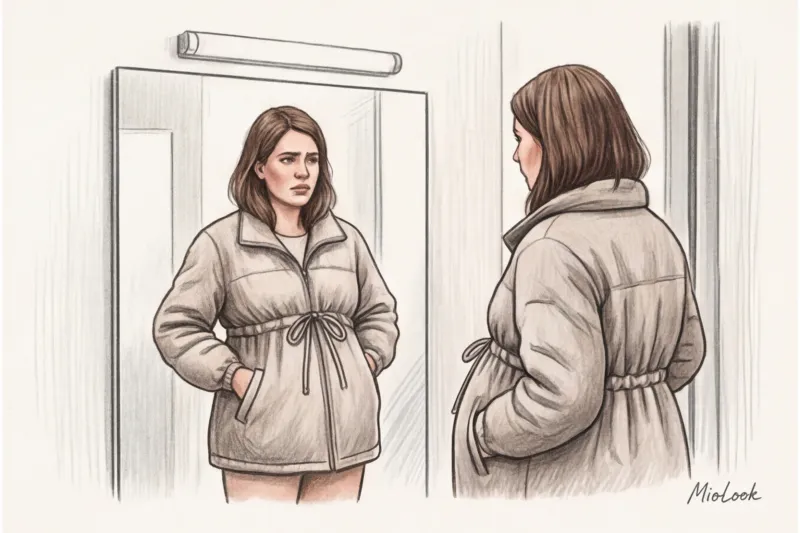
I often see this scene in fitting rooms: a successful, stylish woman, six months pregnant, stares longingly at herself in the mirror. She's wearing a baggy parka with a drawstring under her bust, bought at a specialty maternity store. In 12 years as a fashion consultant, I've learned one thing: the question, How to choose the right size maternity jacket , has a paradoxical answer. Don't buy a "maternity" jacket at all.
I discussed the philosophy of style without restrictions in more detail in our The complete guide to stylish maternity outerwear For decades, maternity wear marketers have been selling us the illusion of convenience. They convince us that body transformation requires a complete renunciation of our usual wardrobe.
Let's take my client Isabella for example. A week before an important conference, she almost bought an olive-green empire-line jacket with drawstrings. This cut is absolutely detrimental to proportions. By gathering the fabric under the bust, you visually transform your entire belly into a monolithic block, adding at least 10 kilograms. Instead, we invested in a luxurious camel-colored cocoon coat from the regular collection. Isabella looked classy, delivered a brilliant presentation, and still wears that coat, three years after giving birth.
"Pregnancy isn't a reason to put your personal brand on hold. Your style DNA, whether it's the clean minimalism of The Row or the Scandinavian aesthetic of COS, should stay with you."
How to choose the right maternity jacket size: the golden rule of shoulder measurements
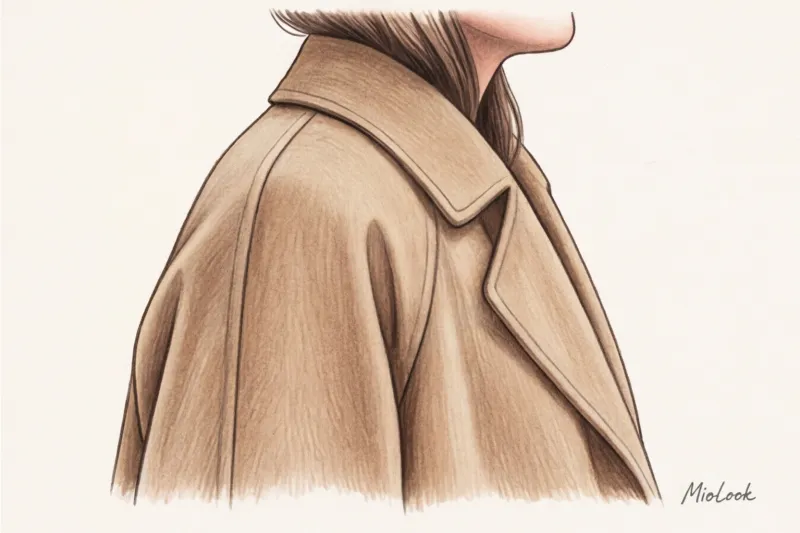
A secret of Milanese tailors, rarely mentioned in glossy magazines: the fit of any outerwear is determined solely by the shoulder line and armholes. Waist is secondary. It is the defined shoulder girdle that brings together the silhouette, defines the architecture of the look, and makes it look "expensive."
The main danger is going to your regular store and buying your favorite style three sizes too big (for example, an XL instead of a S). What will happen? The shoulder seam will slide down to the middle of your forearm, the armhole will sag, and a sloppy bubble will form at the back. You'll look like you're wearing someone else's clothes.
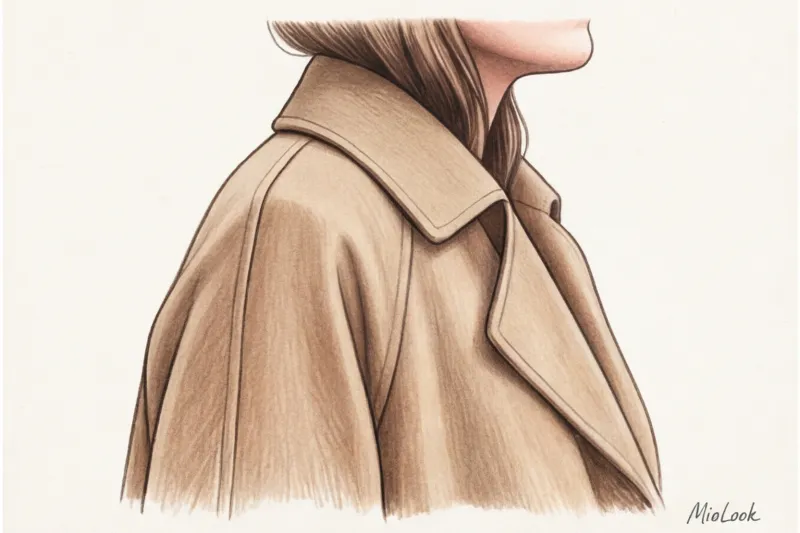
The correct algorithm is different: we go to regular collections and look for oversized styles, buying them maximum One size larger than your usual (pre-pregnancy) size. In this case, the shoulders remain in place, and the required belly measurement is built into the pattern itself.
The role of quality fabric in a good fit
Even the most impeccable cut can be ruined by cheap material. Stiff, mass-market polyester will sit stiffly on your stomach, creating the effect of a camping tent. Premium wool (500 g/m² and above), alpaca blend, or soft, high-tech nylon perform differently—they drape delicately. Heavy fabric falls under its own weight, hugging your curves rather than sticking out to the sides.
Your perfect look starts here
Join thousands of users who look flawless every day with MioLook.
Start for freeInvestment Styles: What to Buy Instead of Maternity Clothes
Instead of spending money on temporary solutions, invest in pieces that will stay in your wardrobe for decades. Here are three fail-safe silhouettes that are forgiving of any figure changes:
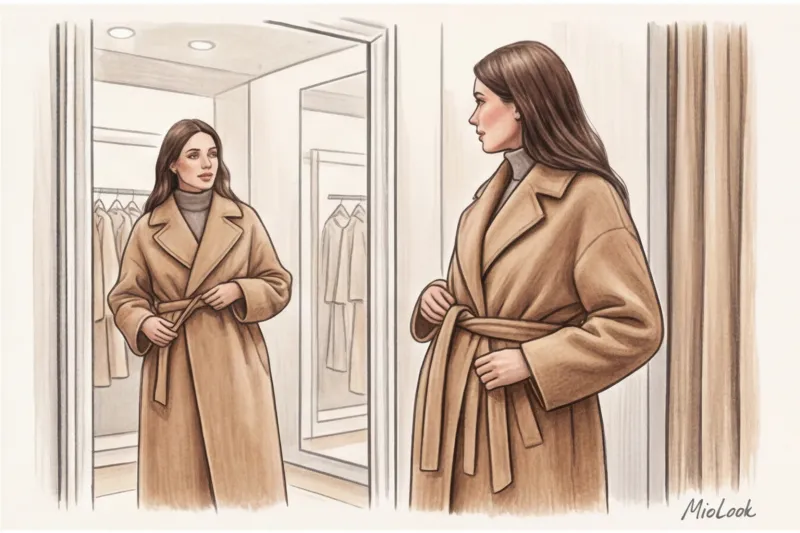
- Wrap coat. A timeless classic in the spirit of Max Mara 101801. The absence of buttons is your trump card. The wrap adapts to any month of pregnancy, and the V-neck creates a vertical line that visually elongates your height.
- Cocoon coat silhouette. An architectural cut popularized by Cristóbal Balenciaga, the tapered hem beautifully conceals the midriff while leaving graceful ankles and wrists exposed (if the sleeves are rolled up slightly).
- Long shirt jackets (shackets). Thick woolen styles are ideal for the fall/winter season. Wear them unbuttoned, layered over a knitted noodle dress, adding a long scarf for added verticality.

If you're unsure how a new oversized silhouette will fit into your current looks, I always recommend taking a photo of the item in the fitting room and uploading it to MioLook Artificial intelligence will instantly show you which items in your closet this coat will pair perfectly with.
Men's Section or Special Inserts: Secrets of the Stylists
I'll share an insider tip: when we're putting together a capsule collection for clients in late pregnancy, we often ignore the women's sections entirely. I direct them straight to the men's sections at Jil Sander, Acne Studios, or at least Massimo Dutti.
Why does it work? Men's outerwear in sizes S or M fits pregnant women phenomenally well. They have a straight cut without emphasizing the waist, slightly flared shoulders (which is currently on trend), and the right length to cover the lower back securely. A women's jacket in size XL will simply make you look wider in the hips, while a men's jacket in size M will add just the right amount of volume in the front while maintaining a neat look in the back.
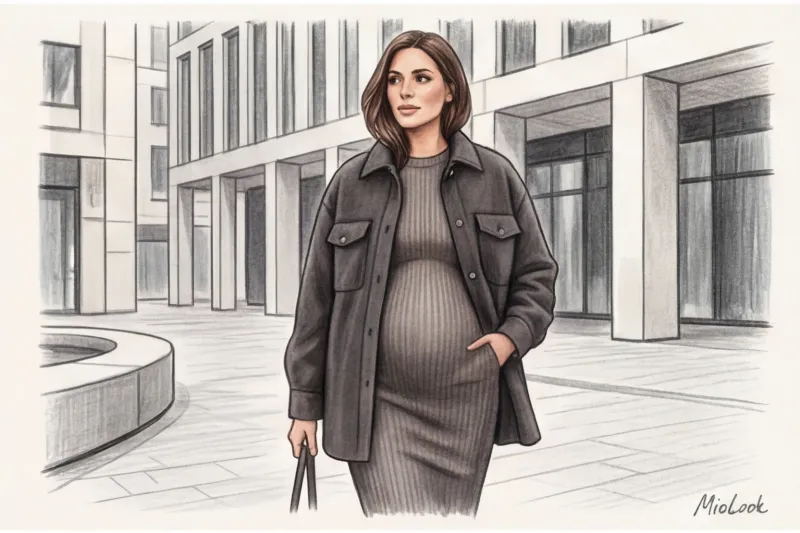
Regarding sling inserts and zippered extenders, I have to be honest. They don't work if your style is built on elegance and classicism. An additional nylon insert instantly cheapens a high-status wool coat. However, for casual parkas or down jackets for long winter walks, this is a perfectly workable and warm compromise.
Wardrobe Math: Calculating Cost-Per-Wear
According to McKinsey (2024), conscious consumption is becoming a key focus for the fashion industry. But let's translate ecology into hard numbers. My favorite tool for sobering up while shopping is the Cost-Per-Wear (CPW) formula. Statistics show that 85% of specialized maternity outerwear is worn less than 100 times during its lifetime.
Let's consider the first scenario: you buy a jacket from a mass-market maternity line for €150. You wear it for a maximum of 100 days. Your CPW = 1.50 € per exit After birth, the item is sent to a dusty shelf.
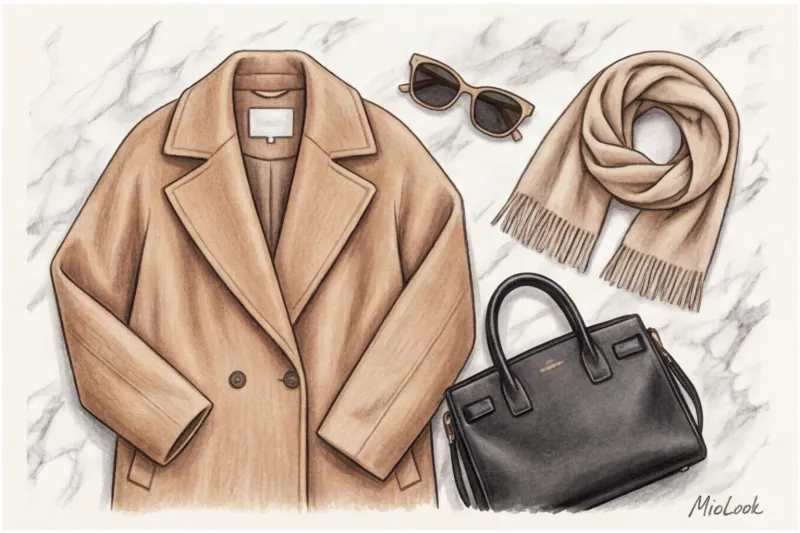
Option two: You invest in a luxurious, basic, oversized coat for €350. You wear it for 100 days during pregnancy, and then for at least another 4 years (100 days per season). Your CPW = €350 / 500 days = 0.70 € per exit.
Buying an expensive, high-quality item will cost you half as much in the long run. That's the smart wardrobe philosophy.
Ready to get started?
Try the free plan—no commitments. Build your smart capsule today.
Start for freeChecklist: How to choose the right maternity jacket size for years to come
Keep these rules in mind for your next shopping trip. They'll help you test out the item right in the fitting room:
- Freedom of movement test. Put on the jacket, zip it up, and hug your shoulders. The fabric at the back shouldn't be stretchy or tight. If the armhole cuts into your armpit, it's not your size, even if there's plenty of room in your stomach.
- "No belly" test. Stand sideways to the mirror and mentally (or with your hands) press the fabric down in front, removing the pregnancy weight. Look at yourself. Is the jacket hanging like a lifeless sack? If so, you won't be able to wear it after giving birth.
- Analysis of fittings. Avoid any items with built-in elastic waistbands. Choose minimalist buttons that match the fabric or a hidden zipper—nothing should visually cut your silhouette in half.
Conclusion: Your style is more important than the circumstances of the moment
The fashion industry often tries to convince us that each stage of life requires a separate, specialized uniform. But true elegance lies in the ability to tailor quality pieces to suit your individual needs.
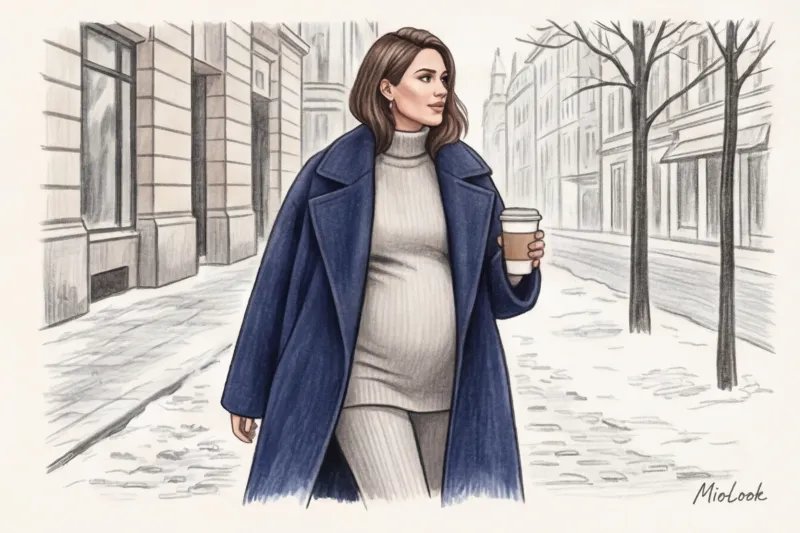
Before you hit the maternity store for a compromise, do some research. Perhaps the perfect oversized blazer or down jacket is already hanging in your husband's closet. Invest in quality, perfect shoulders, and premium fabrics. You deserve to feel like a luxurious woman every day—from an important business meeting to a leisurely stroll with the stroller.