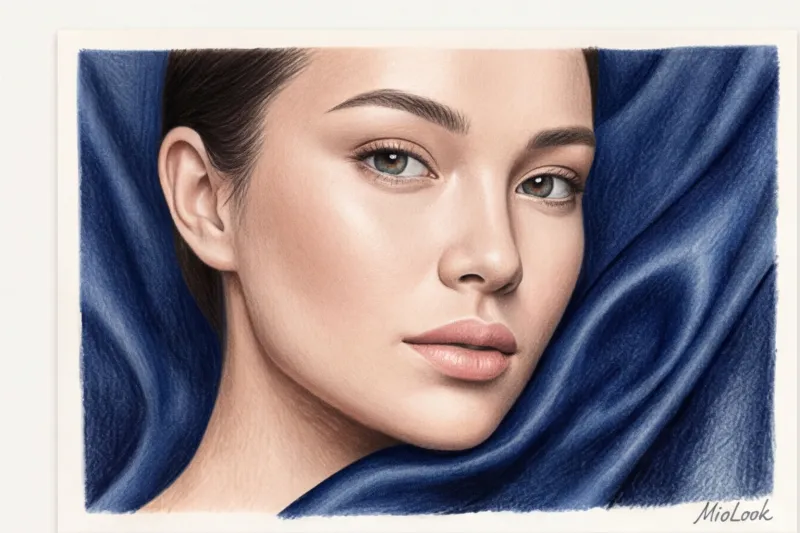
I vividly remember a commercial fashion shoot in Milan in 2019. The model was wearing a stunning cobalt silk dress that cost around €2,500. The makeup artist decided on the then-trendy "glass skin" look. But as soon as the studio lights came on, the glossy silk and the radiant complexion clashed so dramatically that the model looked downright sweaty. We had to stop the shoot, remove the highlighter, and change the foundation to a muted velvet matte. The look instantly became expensive and aristocratic.
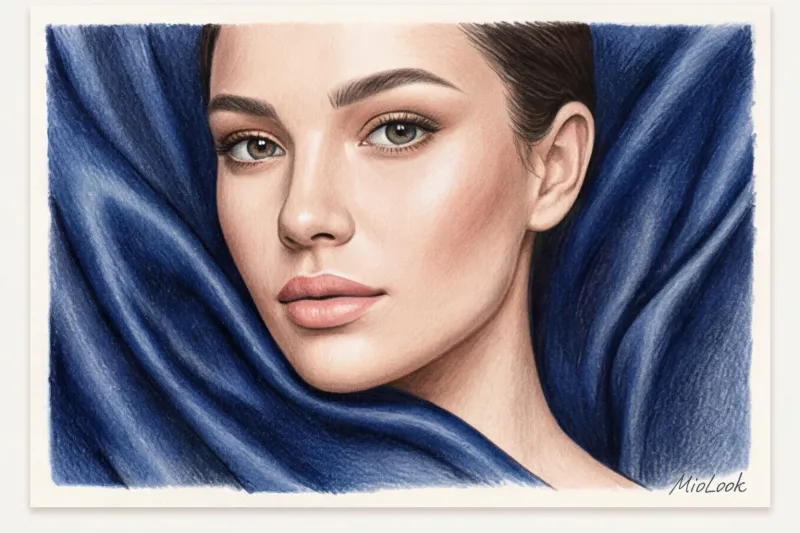
It was then that I finally became convinced: makeup for a blue dress It's not just a choice between gold eyeshadow and red lipstick. As a stylist and textile researcher, I always tell my clients that makeup is an architectural extension of the fabric. You can't use the same makeup on thick matte wool and flowing satin, even if they're the exact same blue.
We've already covered the physics of this phenomenon in more detail in our comprehensive guide: How to Combine Makeup and Clothes: Style Secrets Today, we'll explore specific algorithms for working with the blue palette, which will help you look classy, fresh, and harmonious.
Fabric Texture Dictates the Rules: How Dress Material Changes Your Makeup
In textile science, there's a concept called LRV (Light Reflectance Value). Smooth, glossy fabrics, such as silk, satin, or sequined materials, have a high LRV. They act like mirrors, reflecting up to 40% of the directional light back onto your face.
The golden rule of styling: the more light your dress reflects, the more matte your skin should be. And vice versa.
If you wear a silk slip dress and add a generous layer of liquid highlighter and glossy lip gloss, your face will lose its contours and appear puffy. A satin or completely matte finish foundation is ideal for shiny fabrics. Light-absorbing materials—velvet, thick wool suiting, matte cotton—on the other hand, require a luminous finish. A dewy effect and creamy blush work flawlessly with them, livening up the look without making it too heavy.
Temperature and Depth: Choosing Makeup for a Specific Shade of Blue
There's no one-size-fits-all solution. The color of your outfit acts as a huge reflector, casting color reflections on your chin and neck. Based on Johannes Itten's color theory, we should understand that a cool blue reflection can accentuate shadows under the eyes and make the face appear sickly pale if not compensated for with the right makeup.
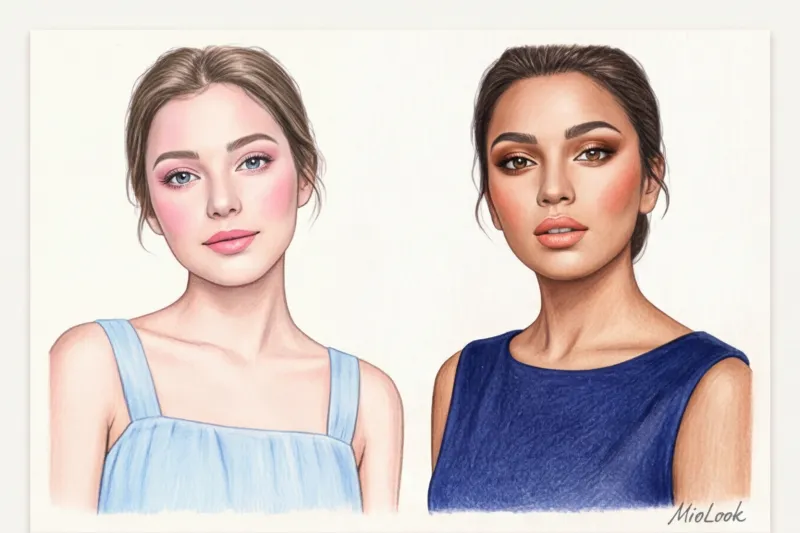
Navy and Indigo: Depth and Status
Navy is a brilliant alternative to black in your wardrobe. However, according to colorists, deep navy absorbs light more effectively than classic black. This means it can visually "blur" facial features.
With a navy blue dress, you'll need to increase the contrast of your makeup by 15-20%. What does this mean in practice? You need a more defined face: slightly more active contouring (strictly with a cool taupe contouring product, no red spots) and defined brows. This is the perfect canvas for an evening out with deep wine-colored or classic red matte lips.
Cobalt, Electric, and Vibrant Blue: A Focus on Minimalism
Bright, neon shades of blue are incredibly selfish. Overly complex makeup next to a cobalt dress creates cheap visual noise. You've probably seen examples like this: a bright blue dress, bold eyeliner, contouring, and pink lipstick. There's simply nothing to catch the eye.
The best solution here is a "pricey" nude base. A perfectly even tone, carefully defined lash lines, and a warm peach blush. It's the warm peach (not the cool rose!) that neutralizes the icy undertone of the dress, restoring a healthy, rested look.
Not sure which shade to choose?
MioLook's smart algorithm analyzes your appearance and dress color to suggest the perfect makeup and accessory palette.
Find your makeup look at MioLookEye Makeup: From Safe Classics to Smart Monochrome
The easiest and most effective way to make your eyes pop against a blue dress is to use complementary colors. On the color wheel, orange, copper, and yellow shades lie opposite blue. Therefore, bronze, copper, gold, and warm terracotta eyeshadow are your best bet.
If you choose creases, pay attention to the cut. For a strict geometric dress made of thick fabric, draw sharp, black, graphic creases. For flowing chiffon dresses, choose a soft, shaded creas in a deep chocolate shade—it will enhance the lightness of the silhouette.
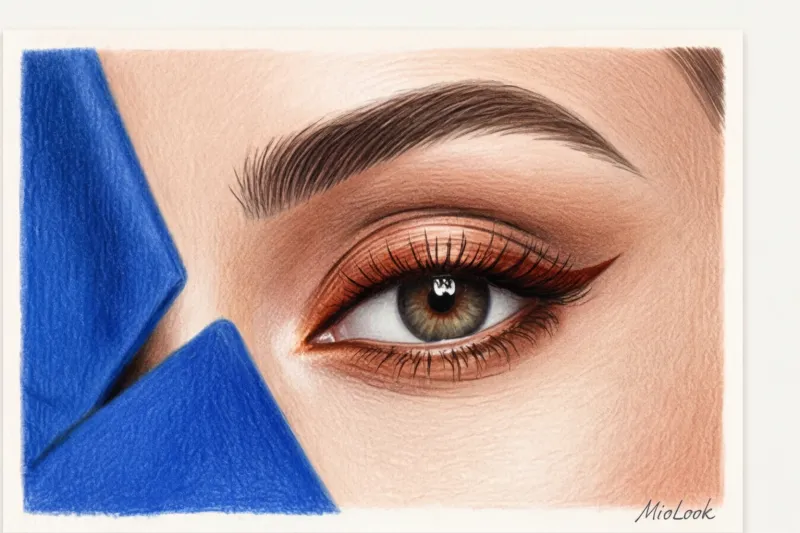
Busting the myth: can you wear blue eyeshadow with a blue dress?
Many glossy magazines still claim that blue eyeshadow with a blue dress is a tasteless trope straight out of the 2000s. As a stylist, I strongly disagree. In its 2024 reports, the analytics agency Lyst recognized total monochrome as one of the key trends in smart fashion.
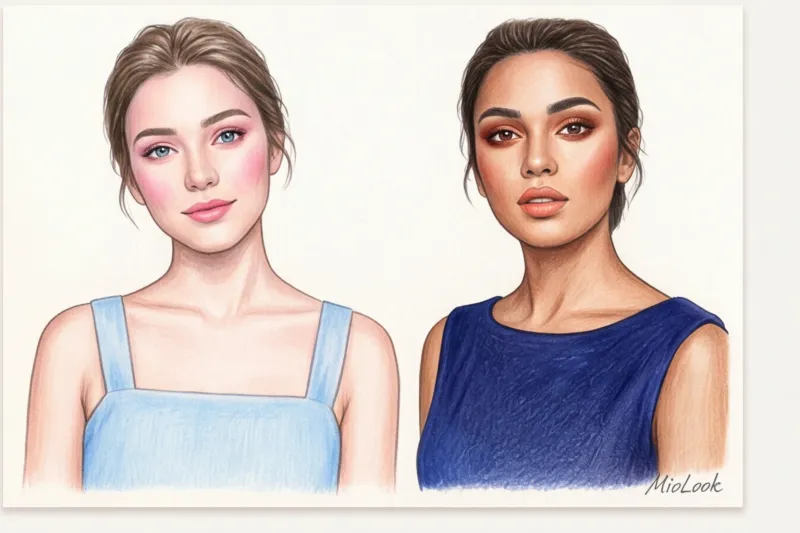
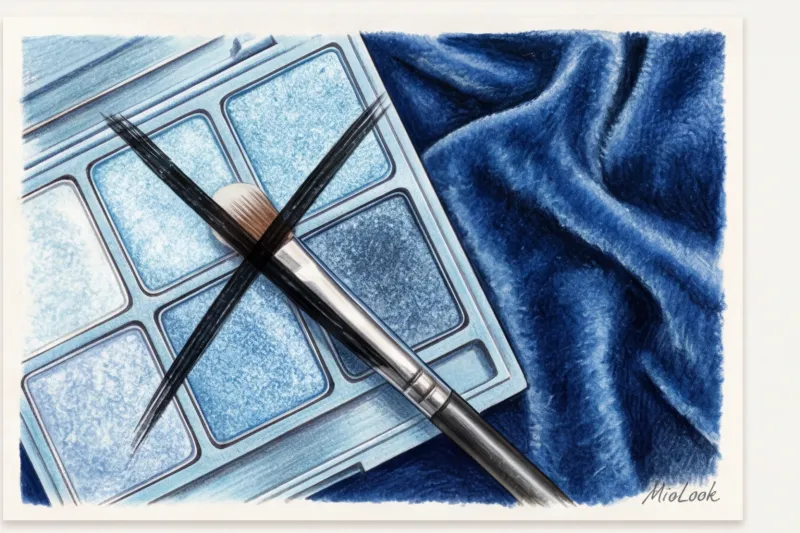
But there is a strict rule: Never try to match your eyeshadow to your dress. The secret to stylish monochrome lies in the difference in temperature and texture. Try a sheer navy blue wool dress and a thin, glossy neon blue winged eyeliner. Or pair a matte cobalt dress with a wet, translucent blue eyelid (glossy eyes). It looks incredibly fashionable and runway-ready.
Lip architecture: how to choose lipstick without overloading your look
Choosing a lipstick always depends on the undertone. If you prefer nude, consider the warmth of your dress. For warm blues (with a hint of green, like sea green), choose a warm caramel-beige nude. For cool, icy shades, choose a dusty rose.
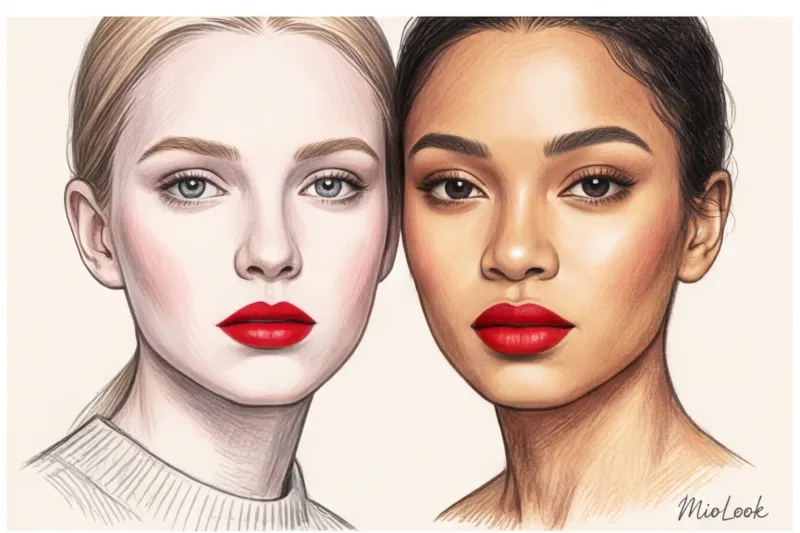
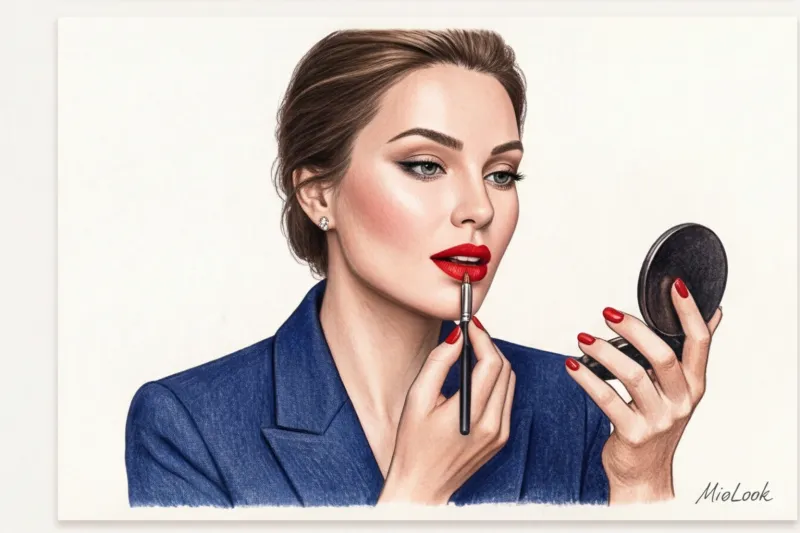
Red lipstick and blue are a luxurious classic, but there's a catch. Over 12 years of practice, I've developed a formula: for a deep navy, choose a warm tomato or brick red. But for a bright light blue or cornflower blue, choose a cool ruby red with a blue undertone. This will create the right resonance.
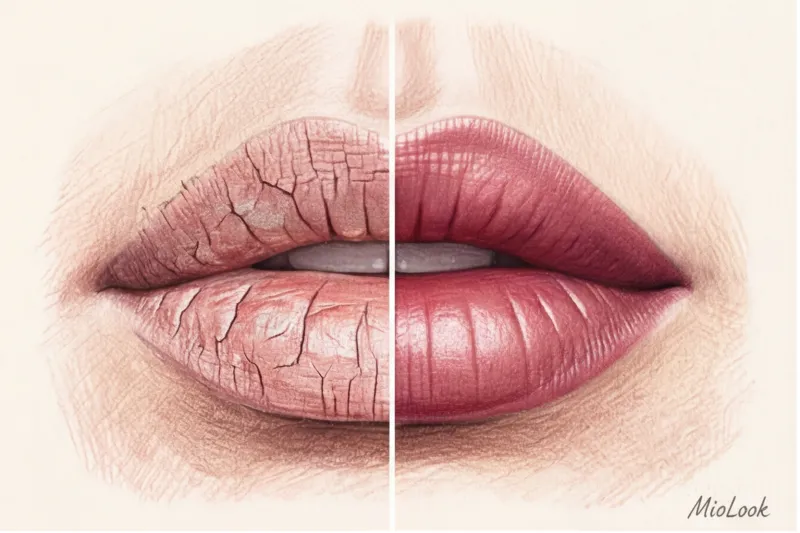
And don't forget about the weight of the texture! One of my clients, a top manager at an IT corporation, loved to wear a strict dark blue business suit with a deep matte burgundy lipstick. This combination of dense textures made her look five years older. As soon as we replaced the heavy matte with a translucent berry tint-balm, her face instantly came alive. We wrote about how these techniques work in detail in the article about Age-appropriate makeup and anti-aging secrets.
Create the perfect wardrobe
Upload your items to MioLook. The AI stylist will create dozens of new looks from what you already own and suggest any missing pieces.
Sort out your wardrobe onlineContext is everything: adapting makeup to the dress code
Makeup is an accessory, just like shoes or a bag. You wouldn't wear stilettos to the beach, right? The same goes for cosmetics.
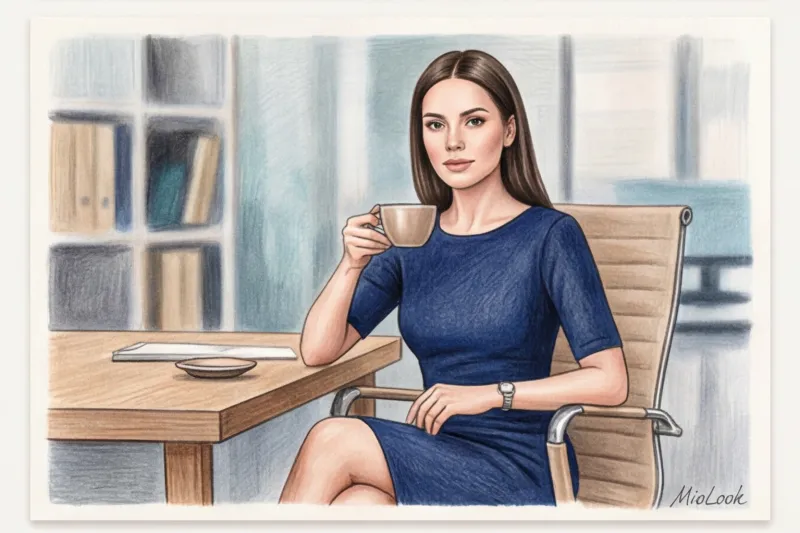
- Office and Business Formal: It will go perfectly with a matte blue sheath dress. business makeup A "no-makeup" makeup look. Subtly highlighted skin, peachy blush, brows set with clear gel, and a lightweight balm. No harsh contouring.
- Evening Event (Black Tie): If you're wearing a full-length silk or velvet dress, your look calls for drama. Choose a focal point. Either a bold smoky eye in deep bronze tones with a dewy finish, or a clean, winged eye with burgundy lips.
- Summer Business Casual: A light blue linen shirtdress looks great with radiant, slightly tanned skin. Use a creamy bronzer, a touch of highlighter on your cheekbones, and a coral tint on your lips and cheeks.
Common mistakes: visual dissonance between face and outfit
The human brain is designed to interpret even the slightest texture discrepancy as visual noise. Here are three major mistakes that can ruin even a €1,000 dress:
- Cold overdose. If you wear a cool blue dress, gray eyeshadow, and cool pink lipstick, you'll look cold and sick. Always add a warm touch (bronzer or peach blush) for balance. Exception: this tip. doesn't work If you have a contrasting winter color type (fair skin, black hair), total cold may suit you.
- Ignoring reflectivity. I often see girls liberally applying highlighter under a dress completely covered in sequins. Their faces disappear into the carnival of highlights.
- Inconsistency of visual weight. Heavy, thick black eyeliner in the style of Amy Winehouse and thick foundation will ruin the fragility of a flowing chiffon dress. Lighter fabrics require a subtle watercolor wash.
Checklist: Create a harmonious look in 5 steps
To avoid confusion in front of the mirror, I've put together a practical cheat sheet for you. Go through these steps the next time you pull your favorite blue dress out of the closet:
- Step 1: Assess the fabric. Feel the material. Does it shine? Make your complexion more matte. Is the fabric dull and absorbing light? Feel free to add a dewy sheen to your cheekbones.
- Step 2: Determine the blue temperature. Does it have more icy or warm green tones? Offset the dress's coolness with warm blush tones (peach, coral, terracotta).
- Step 3: Choose a complementary accent. Copper, bronze or gold on the eyes are guaranteed to make the look deeper against the blue background.
- Step 4: Prioritize. Choose just one visual focal point—either architectural bold lips (red/wine), complex eyes, or perfect, radiant skin with minimal color interference.
- Step 5: Check the lighting. If you're going to a restaurant with subdued yellow lighting, your makeup should be slightly more contrasting. For daylight by the window, blend all edges to create a hazy effect.
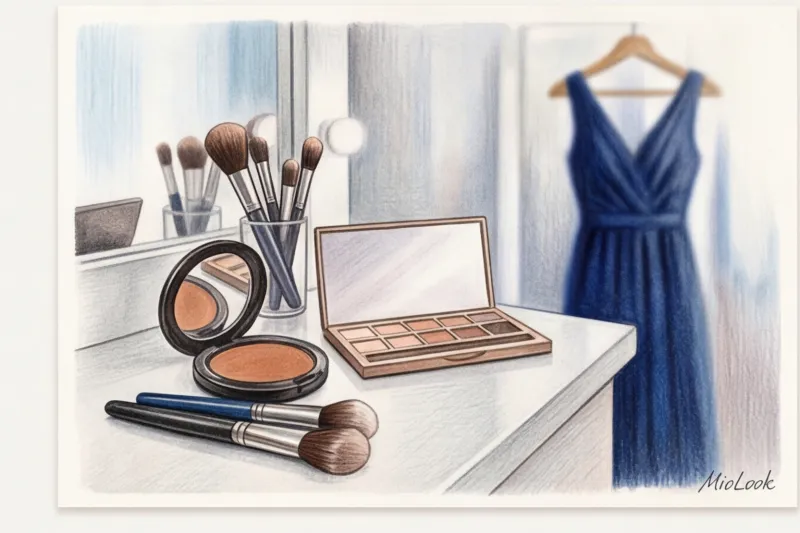
Next time you're creating a look, remember my main rule: your dress is a luxurious frame, and your face is the painting. Blue is a powerful color on its own, so your goal with makeup isn't to compete with the outfit, but to skillfully manipulate the light, texture, and temperature so that you remain the star of the look.