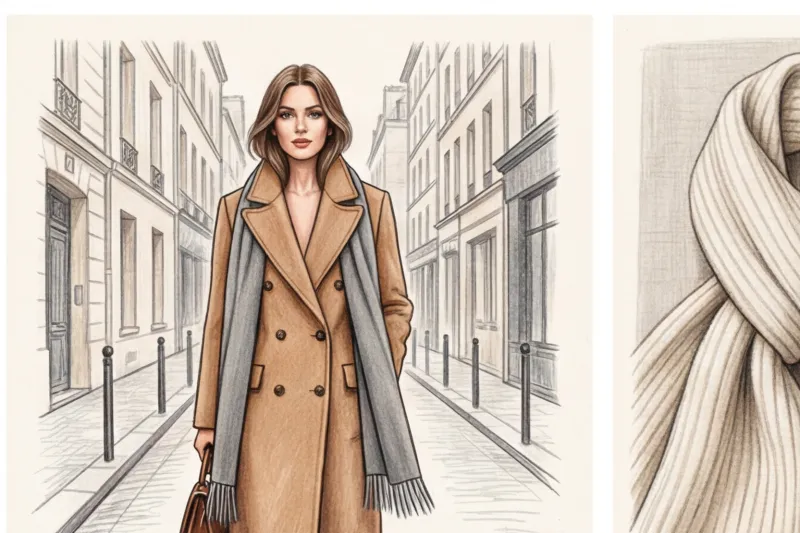
Every winter, I see the same scene on the streets of Milan during Pitti Uomo: perfectly tailored coats, impeccable shoes, and scarves that look as if they were thrown on just before going out. And every winter outside of Italy, I see the opposite: expensive cashmere stoles twisted into tight, intricate braids reminiscent of macrame circles. These complex constructions instantly kill the chic.
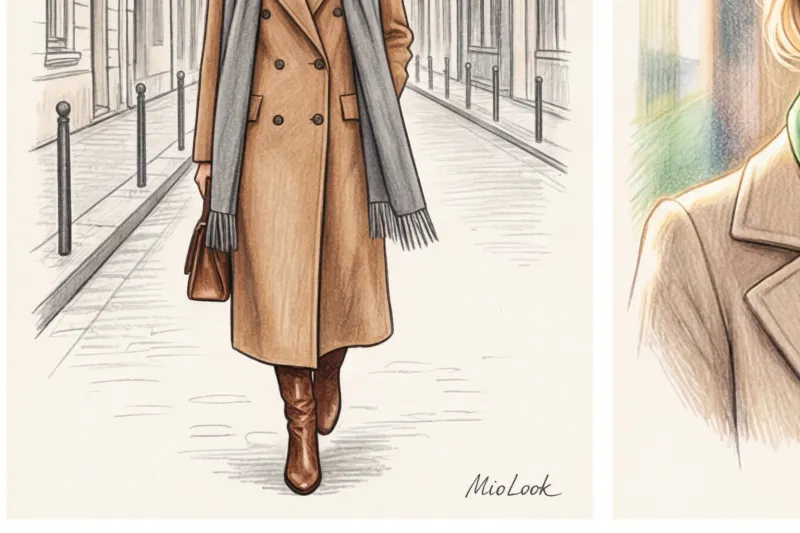
Over 12 years of working as a stylist, I've developed a strict rule: a scarf is not a standalone art object, but an architectural element. How to tie a scarf on a coat depends not on your mood, but strictly on the lapel geometry, the fabric density, and the color correction of the face. We've covered the basic principles of working with accessories in more detail in our the complete guide to the art of stylish image.
Today we'll explore the anatomy of high-status drapery. You'll learn how to use fabric to create an expensive look, even if your accessory budget is €50.
Cutting Geometry: Why One Knot Doesn't Fit All Coats
Outerwear dictates its own rules through cut. In classic Italian tailoring, there is a concept "gorge line" The seam connecting the collar and lapel is the line that defines the gaze. When you wind a scarf into a massive ball, you completely disrupt the tailor's intended geometry.
"The more complex and structured the cut of your coat, the simpler the draping of the accessory should be. Luxury doesn't tolerate fuss and excess in one area."
The balance of volumes works flawlessly: a voluminous cocoon coat can withstand a massive stole, while a strict fitted coat requires flat, laconic solutions.
English collar: keeping it vertical
If you're wearing a double-breasted or classic single-breasted coat with an English collar, the main purpose of the accessory is to highlight the V-neck. This neckline visually elongates the neck and slims the silhouette.
In my practice, clients often complained of a feeling of "suffocation" and excess chest bulk when wearing a double-breasted coat. The mistake they made was wrapping a thick wool scarf around their neck, jamming the neckline with the fabric. In this case, the accessory should rest along the lapels, creating an additional vertical barrier rather than a horizontal one.
Robe coat (Max Mara style) and stand-up collar
Belted styles (in the style of the iconic Max Mara 101801 or Manuela) have a relaxed, fluid shape. There's no rigid structure, so we can create our own. Wide stoles and asymmetry work perfectly with these coats, adding a touch of bohemian luxury.
A stand-up collar, on the other hand, is a minimalist canvas. Any voluminous knot here will clash with the coat collar. Choose from neat silk bobs tucked inside or very fine merino wool.
Try MioLook for free
A smart AI stylist will select the perfect look and suggest how to best pair accessories with your outerwear.
Start for freeFabric Anatomy: How a Scarf's Composition Dictates Its Draping Method
It's impossible to tie dense cotton and flowing silk equally beautifully. The knot's performance depends 90% on the physical properties of the fiber.
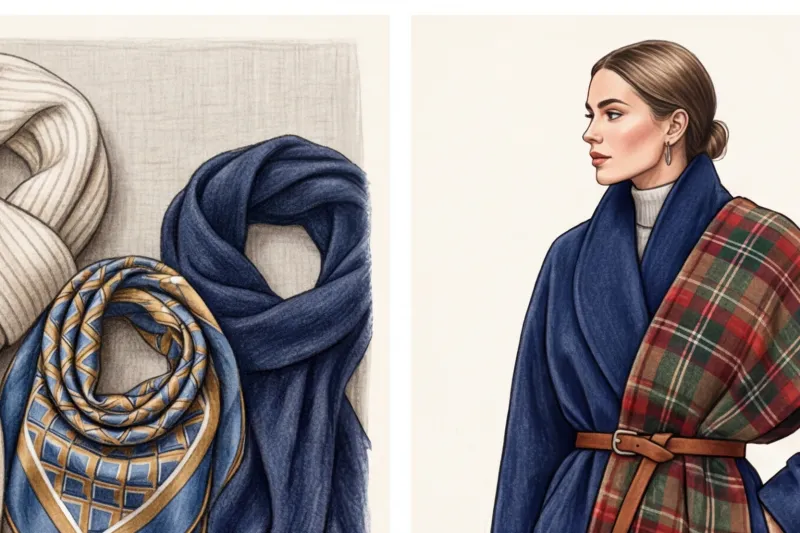
- Premium cashmere (14-15 microns): The level of brands like Loro Piana or Brunello Cucinelli. This fiber contains a lot of air. If you tie it tightly, it will lose its luxurious volume and lose its warmth. Cashmere demands freedom and a touch of casualness.
- Thick silk twill: Vintage Hermès scarves, or their modern counterparts, are renowned for their weight (measured in momme) and crisp texture. They hold their shape perfectly and are perfect for crisp, graphic knots.
- Blended fabrics (wool/silk): An ideal choice for everyday wear (in the €100–€300 range). Silk provides a beautiful, delicate sheen and flexibility, while wool provides warmth.
One of my clients ruined an expensive baby cashmere stole by constantly tying it with a tight French knot. The fibers frayed, and the garment lost its appearance within a single season. Respect the fabric.
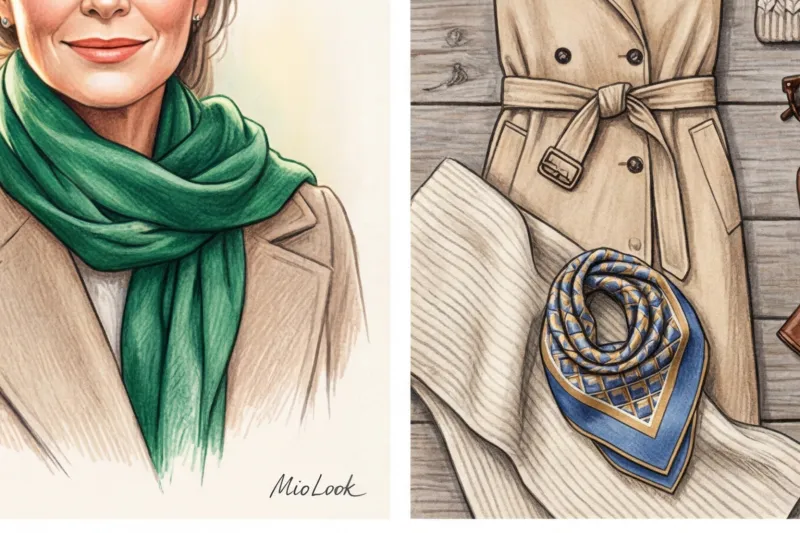
How to Tie a Scarf on a Coat: 10 Classy Ways
Let's leave the advice from the 2000s in the past. It's relevant today. sprezzatura — the Italian art of understated casualness. Your look should convey the message: "I just threw this on before going out and I look great."
Classic and minimalist: methods 1-3
These methods are ideal for business wardrobe and formal coats.
- Parisian loop (adjusted for volume). Fold the scarf in half, wrap it around your neck and thread the ends through the loop. Stylist's secret: Don't pull the loop too tightly under your chin! Lower the knot 5-7 cm below your collarbones to leave some air between your neck and the fabric.
- Simple draping (Power Dressing). Simply drape the accessory over your neck, leaving the ends hanging loosely along your coat's lapels. This won't keep your neck warm, but it will create a stunningly slimming effect thanks to the two extra vertical lines.
- Asymmetrical transfer. One end is longer, the other shorter. The long end is casually draped over one shoulder. It's a great option for a dynamic look, as long as the scarf is heavy enough to hold up against the slightest breeze.
Italian Sprezzatura: Methods 4-7
This is where the texture play begins for relaxed weekend looks.
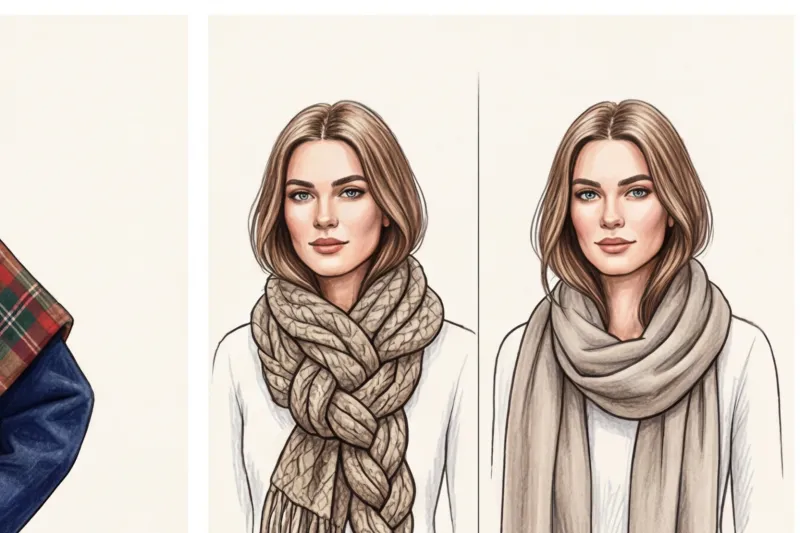
- Milanese knot. A variation of the Parisian loop for fine cashmere. Thread only one end of the scarf through the loop. Then twist the loop itself (making a figure eight) and thread the other end through the second hole. This creates a beautiful, flat weave reminiscent of a braid, but without the bulk.
- Hidden infinity knot. Tie the ends of a thin stole together with a small knot to form a ring. Wrap it around your neck twice, tucking the knot under the nape of your neck. It looks like a neat snood.
- Tie draping. Ideal for a 90x90 cm silk bob under a formal coat. Fold the scarf diagonally into a strip, wrap it around your neck, and tie it in a low, loose knot in front, reminiscent of a man's tie.
- Casual choker loop. Suitable for very long and narrow scarves. Wrap the fabric tightly around your neck once (like a choker), leaving the long ends hanging down in front at varying heights.
Volume and statement: methods 8-10
Cold Weather Techniques and Accent Looks.
- Scarf under the belt. A wide stole is draped over the shoulders (as in method 2), and then its edges are secured over the coat with a leather belt at the waist. This creates the effect of an elegant poncho vest over the coat.
- Wrap-blanket. If you have a hyper-oversized coat, consider a huge woolen throw. Drape it asymmetrically over your shoulders, wrapping yourself like a blanket, and pin a statement brooch on one shoulder.
- Balaclava-transformer. A trend that's a lifesaver in cold weather. Wrap the scarf around your neck, and pull the back of the resulting loop over your head like a hood. Wrap the loose ends around your neck to secure them.
Your perfect look starts here
Join thousands of users who look flawless every day. Digitize your wardrobe and create stylish combinations in a few clicks.
Start for freeThe Biggest Mistake: Why Complex Braids Cheapen a Look
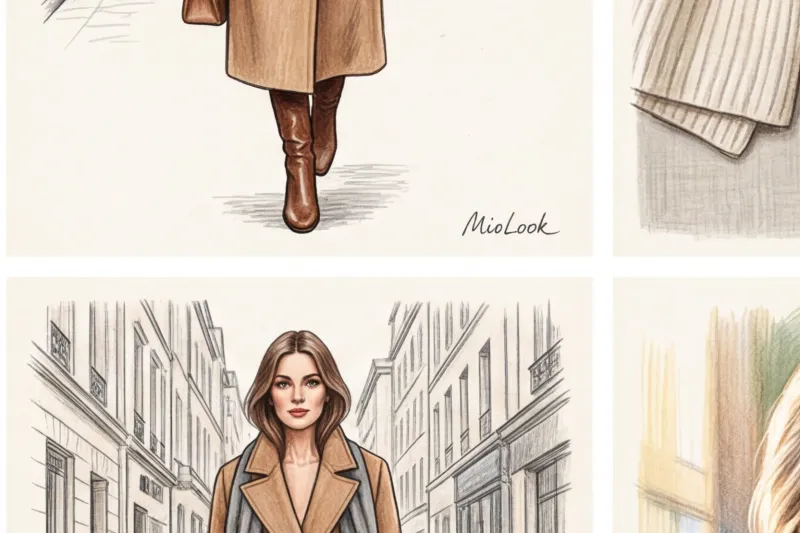
Let's compare two approaches. On the left is a tightly twisted "rose" from a scarf or a complex "waterfall" of seven loops. On the right is a single, loose turn of cashmere. Which looks more expensive?
A 2024 study by the WGSN trend bureau on the development of the "quiet luxury" aesthetic confirms that modern status symbols are based on comfort and the natural flow of fabric. Complex knots convey the psychological message, "I put so much effort into dressing up." This kills chic. An expensive look always looks like you spent no more than two minutes on it.
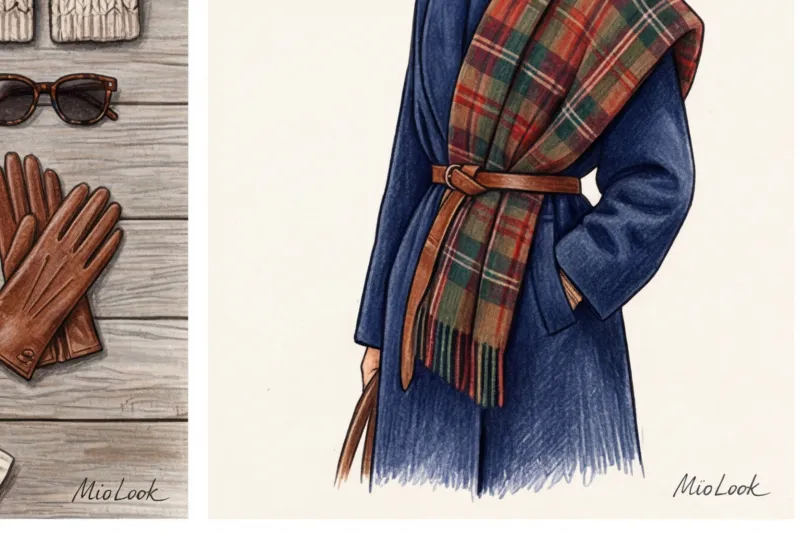
But there is a fair exception: This casual look is completely unsuitable if you have a short neck and a very full bust. In this case, any voluminous (even a casual) knot will transform your upper body into a massive monolith. Only smooth silk scarves or a knotless V-shaped drape will suit you.
Color Correction: A Scarf as a Portrait Tool
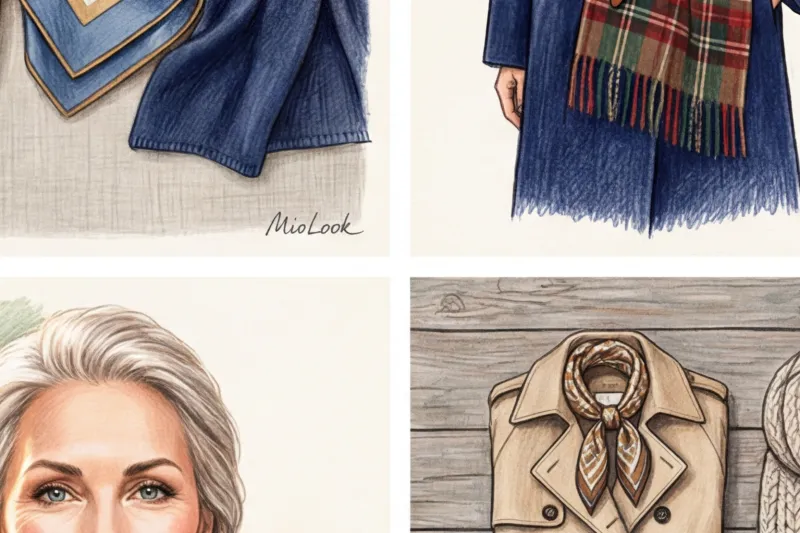
A coat is an investment. But what if you bought a gorgeous camel-colored coat for €1,200, but it makes your face look tired and highlights the dark circles under your eyes? Throw it away? No. Use a scarf as a buffer.
A scarf is located close to your face and can completely change the way you perceive the color of your outerwear. Choose an accessory that matches your skin tone and eye color, not your coat.
- Beige/Camel Coat + Emerald Silk: Emerald draws redness out of the face and makes brown or green eyes pop, neutralizing the yellow undertones of a beige coat.
- Grey Melange + Dusty Rose: The pink hue creates a blush effect and instantly refreshes the face, removing the excessive severity of the gray.
- Black coat + Milk/Cream cashmere: Deep black near the face mercilessly highlights every wrinkle and shadow. A cream scarf will act as a reflector.
Not sure about color combinations? Upload photos of your items to MioLook — Artificial intelligence will analyze contrast and suggest the ideal palette for your portrait area.
Checklist: Checking the perfect fit of your scarf
Before leaving the house, do a quick check in front of the mirror on three points:
- Choking test. Can you fit your hand between your neck and the fabric? If not, loosen the knot immediately. You should be able to move freely.
- Maintaining proportions. Look at yourself full-length. Does your head seem to rest directly on your shoulders? If the knot is "eating" your neck, lower it below your collarbone or change the way you drape it.
- Statics vs dynamics. Walk around the room. Does the shape hold up as you walk, or do you have to adjust the ends every second? Style shouldn't require constant maintenance.
To summarize: invest in quality fabric (wool, silk, cashmere) rather than in complex macramé accessory courses. A classy look is always about airiness, freedom, and respect for the lines of your coat.