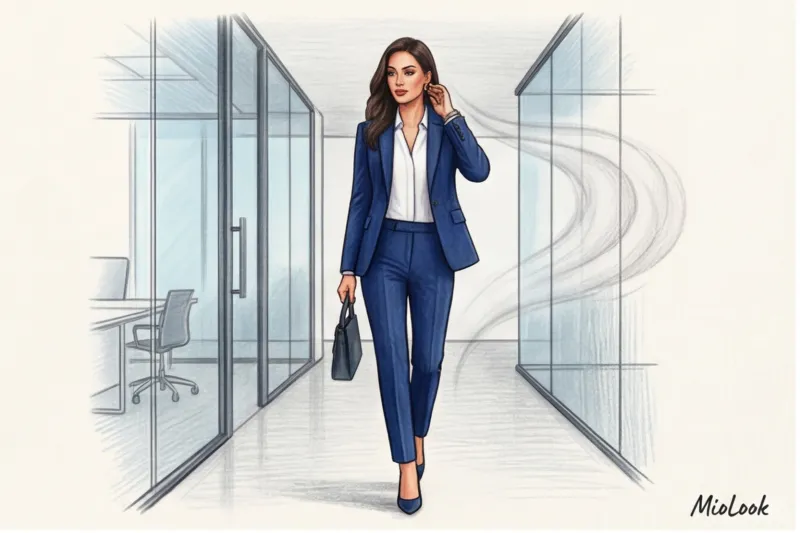
Picture this: a confident woman walks into a meeting room. She's wearing an impeccably tailored graphite-colored pantsuit made of fine wool (Massimo Dutti-quality, costing around €200), her hair is perfectly styled, and she has the posture of a winner. She sits down at the table, opens her laptop, and suddenly you're hit with a whiff of... cloying cotton candy and caramel. The magic of the look is shattered in an instant.
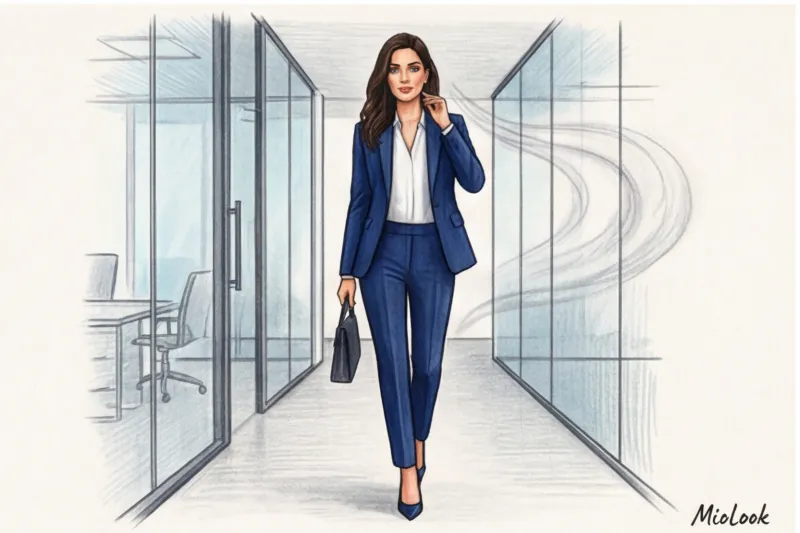
Over 12 years of working as a stylist and image consultant, I've observed this cognitive dissonance hundreds of times. We spend hours choosing the perfect cut, tailoring jackets to our figures, but we forget that fragrance is just like clothing, only invisible. The question is, How to choose a perfume to match your clothing style , is often ignored, although the smell is noticed by others faster than the brand of your bag.
This article isn't a typical perfume guide. We'll be examining fragrance not as a cosmetic product, but as an architectural element of a wardrobe. We've covered why the "one fragrance for life" concept is hopelessly outdated in our full guide. Perfume Wardrobe: How to Build a Basic Collection Now let's look at how to combine fabric texture, your color type, and olfactory profile into a seamless system.
The Invisible Accessory: How Perfume Can Make or Break Your Look
The story with the IT director I described above is a real case from my practice. My client, Elena, genuinely didn't understand why investors treated her words with slight condescension on important boards, despite her tough business dress code and gleaming numbers in the reports. The problem lay in her signature scent—her favorite gourmand perfume with notes of praline and vanilla.
From the perspective of olfactory psychology, the human brain instantly analyzes incoming information. Visually, it sees structure, distance, and formality (the suit), while olfactorily, it senses relaxation, childishness, and "edibility" (the praline). A false impression emerges. The brain interprets the discrepancy as a signal of mistrust.
"The scent should follow the cut of your clothing. If you're wearing stiff shoulders and thick fabric, the perfume should have a core. If you're wearing flowing silk, the scent should be diffuse and transparent."
That's why the idea of finding "your one scent" doesn't work these days. You don't wear the same pumps to the office, on a run, and on a date, do you? Your style needs a fragrance wardrobe that evolves with your clothes.
Try MioLook for free
A smart AI stylist will select the perfect look based on your schedule and wardrobe.
Start for freeFabric texture and olfactory profile: the main rule of a stylist
One of the most subtle secrets of styling lies in the physics of fabrics. The way perfume molecules evaporate from the surface is directly dependent on the density and weave of the threads.
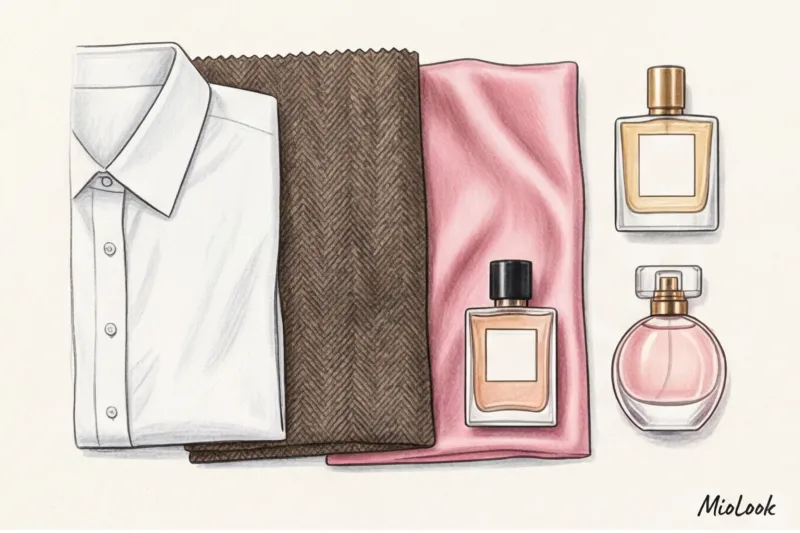
According to research by the Institute of Olfactory Psychology (2023), natural wool, thanks to its porous structure, can retain heavy base notes for up to 5 days. Meanwhile, smooth silk absorbs almost no base, but releases the top volatile molecules immediately and vividly, evaporating them within a couple of hours. How can this be applied in practice?
- Crisp cotton (white shirts, poplin from 180 g/m²): Requires fragrances that smell fresh, clean, and structured. Aldehydes, citruses (bergamot, neroli), and pure white musk are ideal. They highlight the freshly ironed texture of fabric.
- Heavy fabrics (tweed, cashmere, thick wool): This garment requires an olfactory base. Woody notes (sandalwood, cedar), resins, spices, and tobacco are all present here. A light citrus scent would simply be lost on a heavy tweed jacket, but a rich amber scent would fit like a glove.
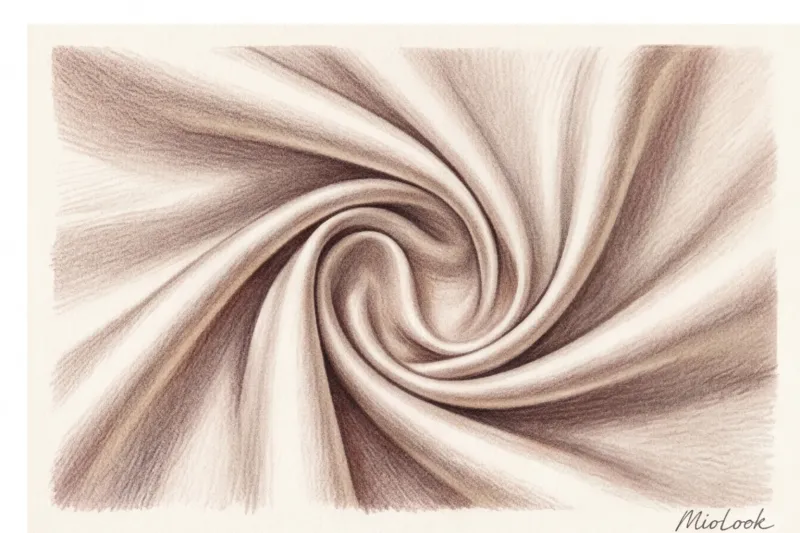
- Flowing fabrics (silk, chiffon, viscose): They crave air. Choose light floral accords (freesia, lily of the valley), aquatic, and fruity notes. They will literally flutter around you with every movement of the fabric.
If you want to collect capsule wardrobe , start by analyzing the predominant textures in it.
How to Match Perfume to Your Clothing Style: 4 Basic Guidelines
Based on Michael Edwards' famous Fragrance Wheel, I have adapted the classification of fragrance families to the main style archetypes.
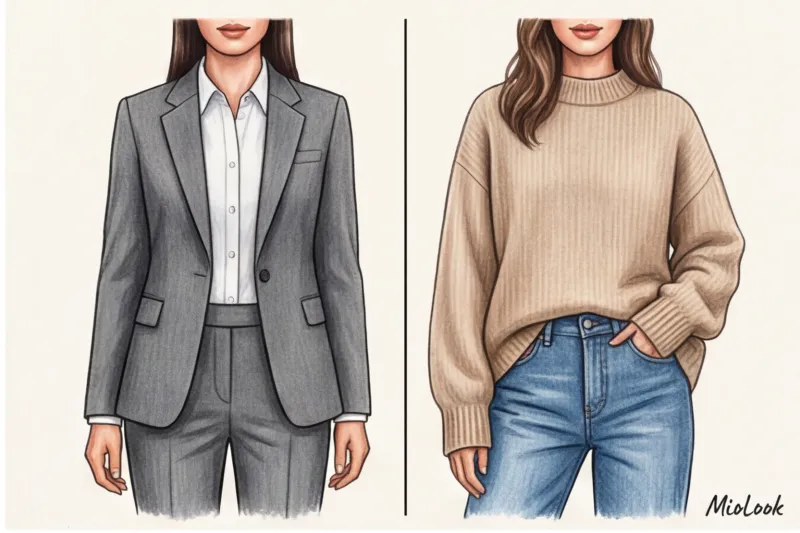
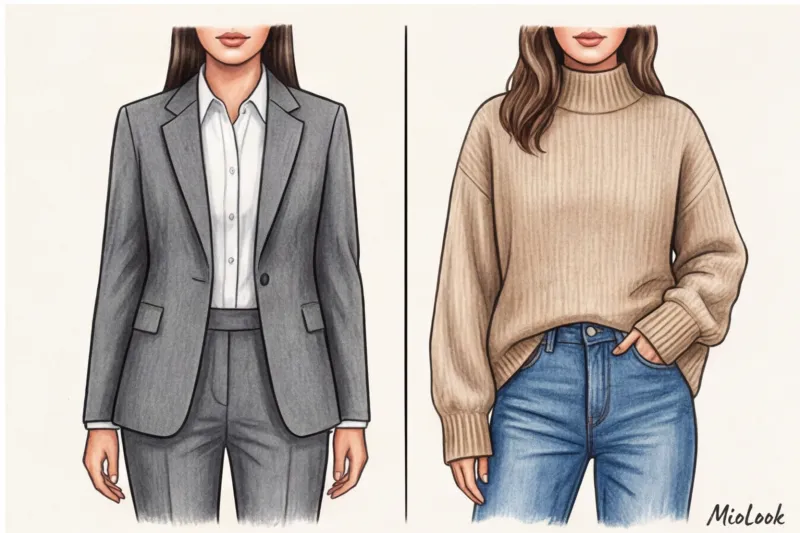
- Formal and business style: The focus is on distance, composure, and competence. Gourmands are strictly prohibited here (no chocolate, cookies, or coconut). Dry woody, chypre, and green compositions are the optimal choice.
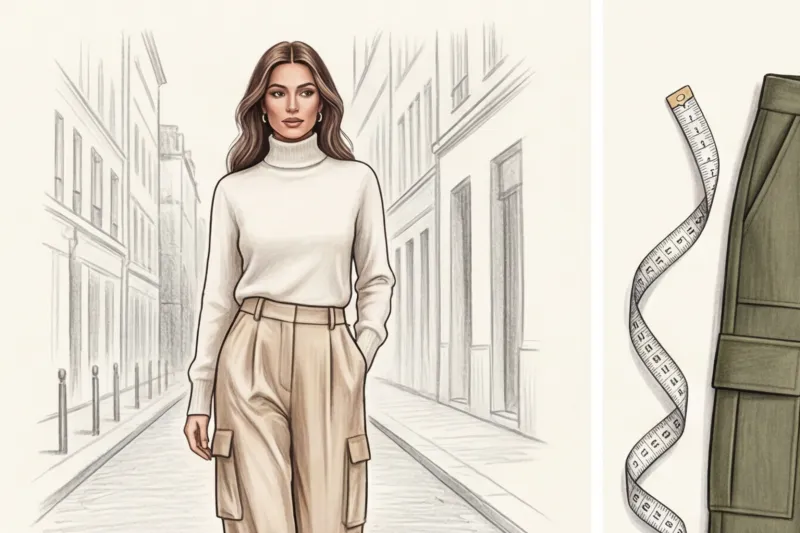
- Everyday Casual: The main message is comfort. Tea notes (matcha, green tea), fig, light molecular bases, and meadow herbs work beautifully with high-quality denim, white sneakers, and knitwear.
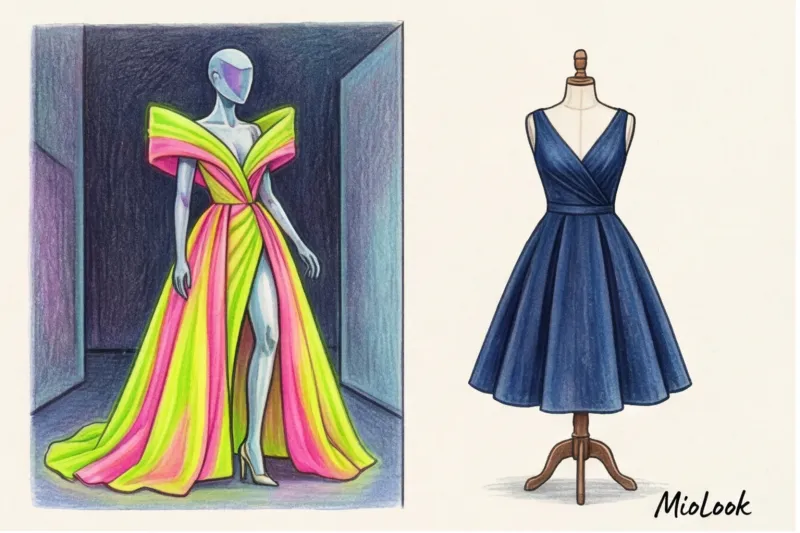
- Romantic style: Emphasizes femininity without being childish. If you're wearing a flowing floral dress, enhance it with white florals (jasmine, tuberose) or powdery notes (violet).
- A dramatic and prestigious evening: Depth, mystery, and a rich trail. When you wear a tuxedo, velvet, or silk in deep shades, leather, oud, saffron, and rich oriental spices come into play.
Office fragrances: formal business and business casual
There's an unspoken "arm's length" rule in the office: your perfume should not intrude into your colleagues' personal space beyond 50-70 centimeters. According to a survey of HR specialists (McKinsey, 2024), 68% of respondents subconsciously downgrade a candidate if they emit a heavy or suffocating odor during negotiations.
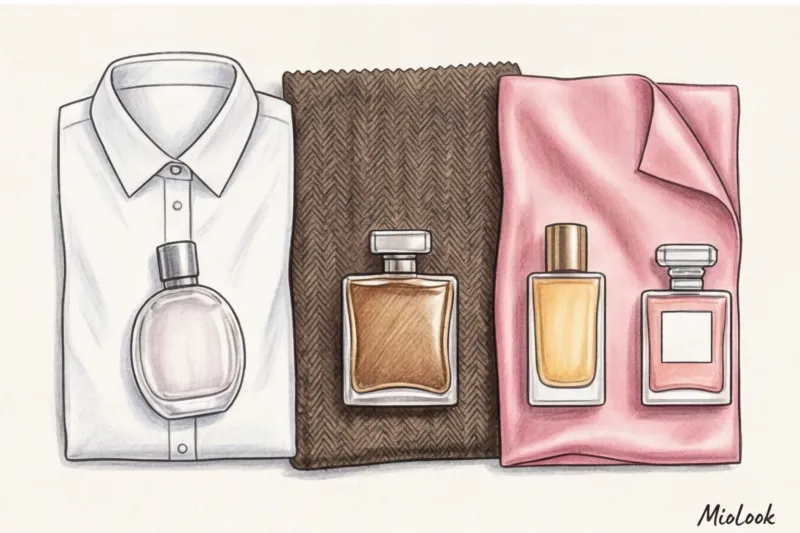
My favorites for the office are vetiver, cedar, and iris. Iris has a unique quality: in perfumery, it often creates the effect of "clean coated paper" or freshly starched collars. It sounds expensive (niche iris compositions often start at €150), intellectual, and completely undistracting.
But there is an important limitation here. To be honest, this rule doesn't apply everywhere. If you work in a creative agency, design studio, or fashion industry, an overly formal "office" vetiver might make you seem boring. In a creative environment, on the contrary, complex, avant-garde perfumes that highlight individuality are valued.
Your smart wardrobe in your pocket
Upload your items to MioLook, and the algorithm will help you create the perfect combinations for every day.
Try MioLookColor Type: How Color Temperature is Related to Scent
As a certified colorist, I often use my own method for selecting perfumes based on color types. If you already know yours, 12 color types of appearance and choose clothes in a complementary palette, you need to transfer the concept of color temperature to the temperature of the fragrance.
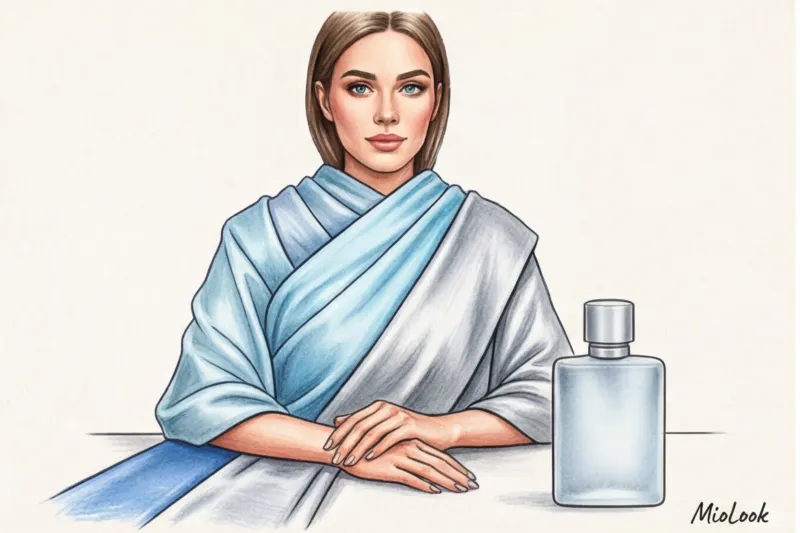
The thing is, colors have visual weight and temperature, and our brain expects the same from smell.
Cold colors (Winter, Summer). If your wardrobe is dominated by icy blue, emerald, fuchsia, pure white, or charcoal gray, your perfume should "ring" with cold. Look for notes of juniper, gin, peppermint, aldehydes, metallic rose, or icy aquatic. Imagine a Winter girl in a strict sapphire sheath dress. If she smells of warm tropical coconut and frangipani, the look falls apart. If it's crystalline juniper and lemon, the look becomes cohesive.
Warm colors (Spring, Autumn). If your clothes are in shades of terracotta, mustard, warm beige, olive, and chocolate, you need warming scents. Cinnamon, tonka bean, creamy sandalwood, peach, amber, and vanilla blend perfectly with warm fabrics, creating a cozy, luminous effect.
If you are not sure about your color type, you can use MioLook's appearance analysis tools to determine your ideal palette and then select an olfactory profile to match it.
The Method of Contrasts: When Rules Are Made to Be Broken
Now forget everything I said above. My favorite styling trick for the more advanced is to use fragrance as a contrasting detail. In clothing, we often wear rugged combat boots with a light silk dress to tone down the dressiness. It works exactly the same way in perfumery.
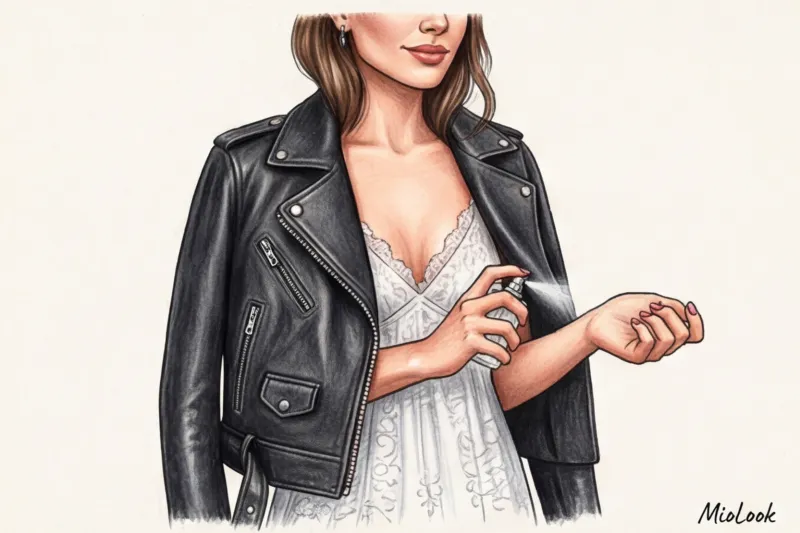
The myth goes, "heavy evening dresses require heavy oriental trains." In reality, this is an outdated rule dating back to the '80s. If you're wearing a luxurious, floor-length velvet gown, a heavy amber perfume can overwhelm the look, making it appear aged and stuffy. Try a clear, skin-friendly molecular fragrance (based on Iso E Super or ambroxan). It will add a modern touch to the dress without overwhelming the senses.
Here are three more ideas for contrast styling:
- Aggression + Tenderness: A black leather biker jacket with metal hardware paired with the scent of freshly cut pink peony or watercolor rose. The scent softens the rugged texture.
- Infantilism + Character: A lingerie-style slip dress or pink cashmere are perfectly grounded by a masculine, dry, woody-leathery perfume. It adds depth to the look.
- Sport + Luxury: A basic grey tracksuit (airport look) and a sophisticated, expensive white floral perfume.
Checklist: Assembling a Perfume Capsule to Match Your Style
To ensure your fragrance always works for you, not against you, you need to create a basic capsule that is proportional to your real life.
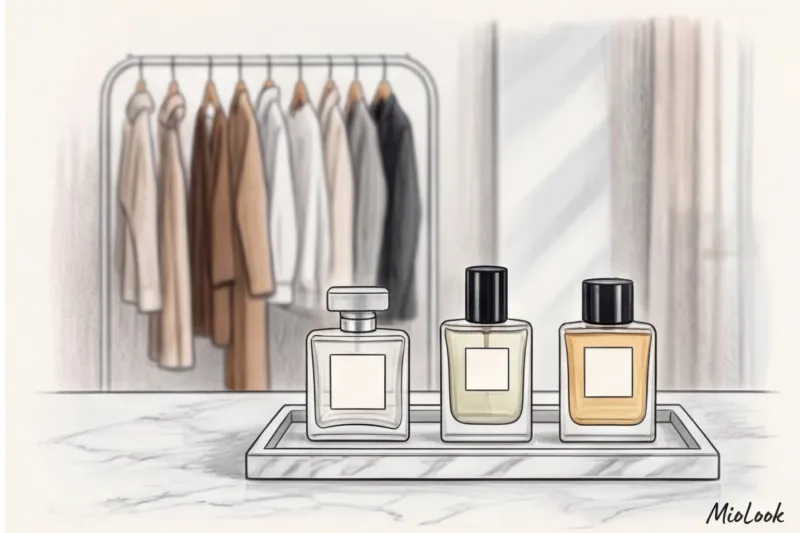
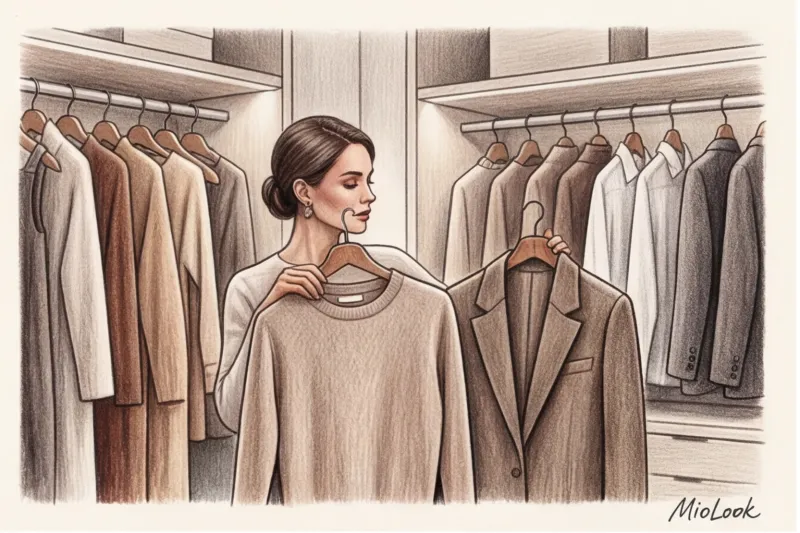
Step 1. Wardrobe audit. Analyze your clothes (by the way, the MioLook app is a great way to do this). Divide your items by style. For example: 60% formal office wear, 30% relaxed casual for the weekend, and 10% evening wear.
Step 2. Choosing a “white shirt”. Find your basic everyday scent. It should be in a price range you're comfortable with (e.g., €70–€120), be politically correct, not overpowering indoors, and match with 80% of your everyday outfits.
Step 3. Selecting a “shield scent”. This is a perfume for difficult negotiations, protection of personal boundaries and moments when you need look prestigious Choose chypres, leather, or dry woods. This is your olfactory armor.
Step 4. Selecting a “mood scent”. A bottle for dates, parties, and moments when you want to be carefree. Gourmand notes, bright flowers, and fruits are appropriate here.
And the most important rule before buying: never test a fragrance solely on a paper blotter. Spray it on your skin and the hem of your regular sleeve (making sure the perfume doesn't leave an oily stain). Wear it for a day. If the scent matches what you see in the mirror, you've found the perfect match.
Remember: style isn't just about what you wear, it's also about what lingers in the air when you leave the room. Manage this impression consciously.