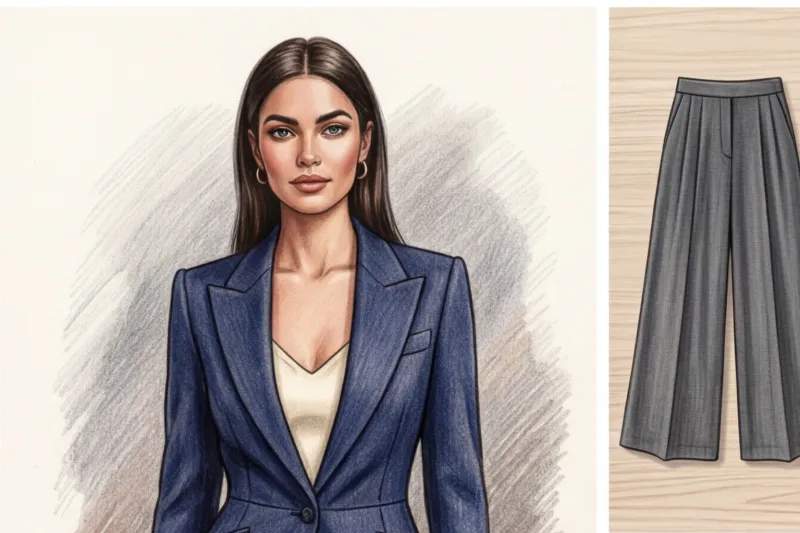
Over 12 years as a stylist, I've reviewed hundreds of women's wardrobes. And do you know what pattern I see almost every day? When a client asks to see... How to hide wide hips , she most often pulls out a stack of shapeless black tunics, long cardigans, and stretched-out sweaters from the closet. Sound familiar? For years, we've been told that problem areas should simply be "covered" with fabric. But in practice, this method has the exact opposite effect: trying to hide volume, we turn our figure into a monolithic rectangle.
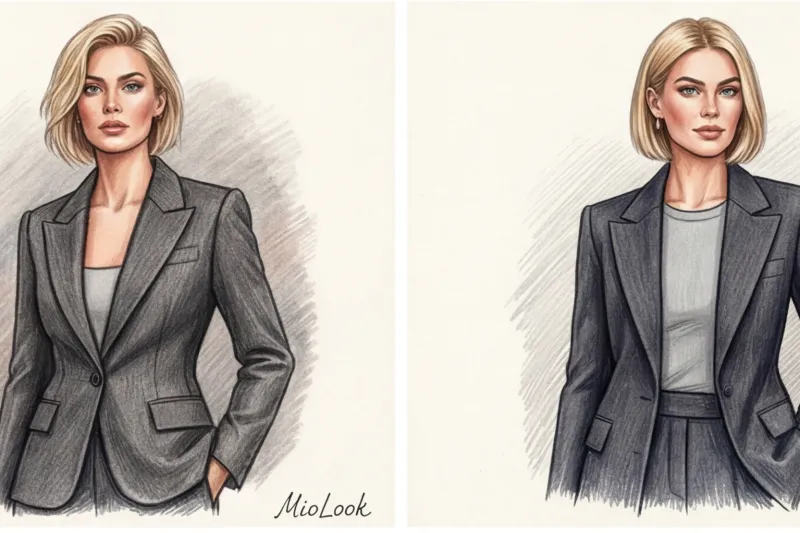
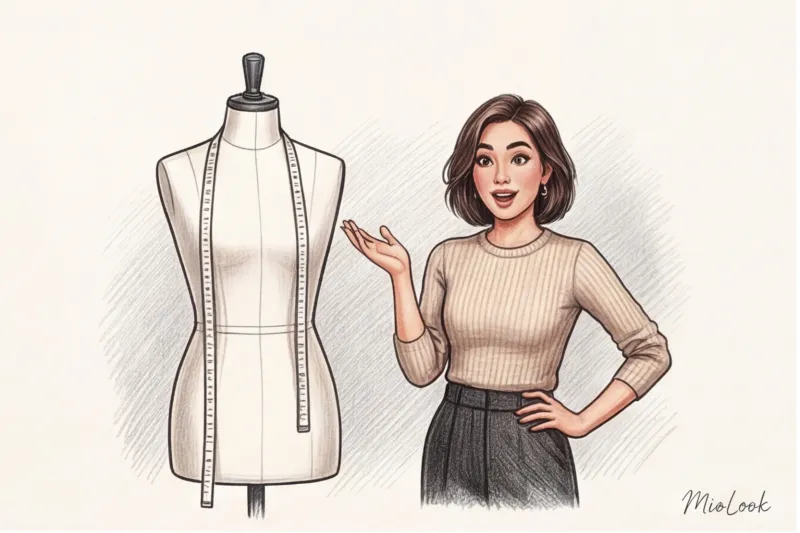
Before we begin creating optical illusions and altering the silhouette's architecture, it's crucial to understand our underlying geometry. We covered this in more detail in our A complete guide to women's body types and silhouette definitions If you know your proportions, clothing ceases to be a lottery and becomes a precise mathematical instrument.
Let's be honest: the secret to a perfect silhouette isn't black or oversized. It's about redistributing visual weight and mastering 3D volume. Today, we'll explore how to conceal wide hips with clothing, using the laws of physics, optical illusions, and a modern approach to styling.
Anatomy of Style: Why Trying to Hide Wide Hips Makes Them Even Bigger
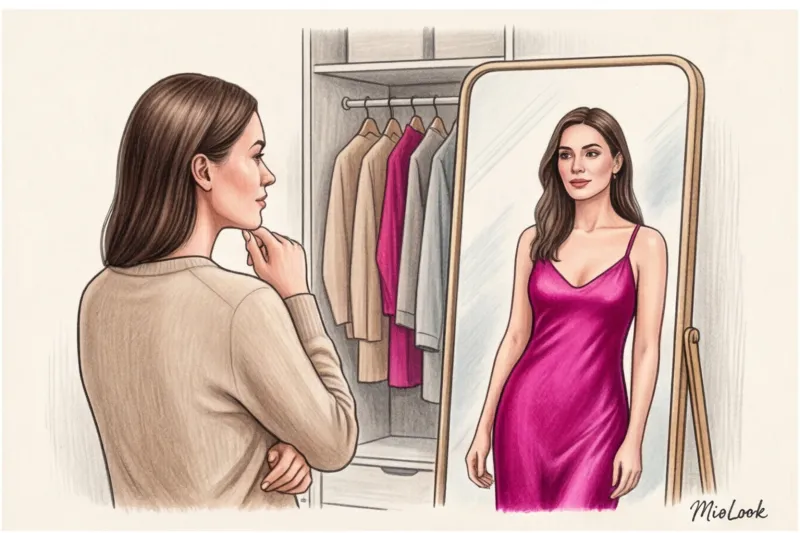
I had a client, Anna, who spent five years hiding her size 14 hips under mid-thigh knitted rompers. She was convinced it was the only way to look slimmer. When, during our first wardrobe review, I suggested she wear structured, high-waisted palazzo pants and tuck a cotton shirt into them, she resisted to the bitter end. But when she looked in the mirror, Anna burst into tears—the perfect lines had visually "cut off" two sizes.
Why does this work? There's a strict rule in styling: a horizontal line always expands the area where it ends The most popular (and most damaging) advice online is to "wear a long cardigan to cover your hips." When the hem of your tunic or sweater runs exactly along the widest part of your hips, it acts as a highlighter. You're literally drawing a bold line across the fullest part of your hips, doubling it.
The second fatal mistake is an overreliance on thin knitwear (viscose with elastane). This fabric, while softly hugging the silhouette, doesn't shape it. It treacherously highlights every unevenness, the contours of underwear, and natural curves, adding unnecessary visual noise.
Clothing operates in 3D space. The principle of focal point states that if you actively conceal your bottom, you draw attention to it. The secret to elegant contouring is to draw the viewer's gaze upward—to the face, shoulders, and waist.
Try MioLook for free
A smart AI stylist will select the perfect look based on your individual proportions and goals.
Start for freeTop Styles: How to Hide Wide Hips with the Right Trousers
The statistics are relentless: analyzing fits, I noticed that about 80% of women wear pants with a crotch drop or an awkward waistline. A low or even classic mid-rise waist visually shortens the legs and makes the hips drop, making them appear heavier. Your base is a high rise, which places the emphasis on the narrowest part of the torso.
But fit is only half the battle. Fabric density is crucial. Heavyweight denim without elastane (100% cotton, 12 oz or more) or good suiting wool work like a corset. They hold the garment's shape rather than clinging to your leg. Structured fabric can reduce up to 4 cm of volume simply due to its stiffness.
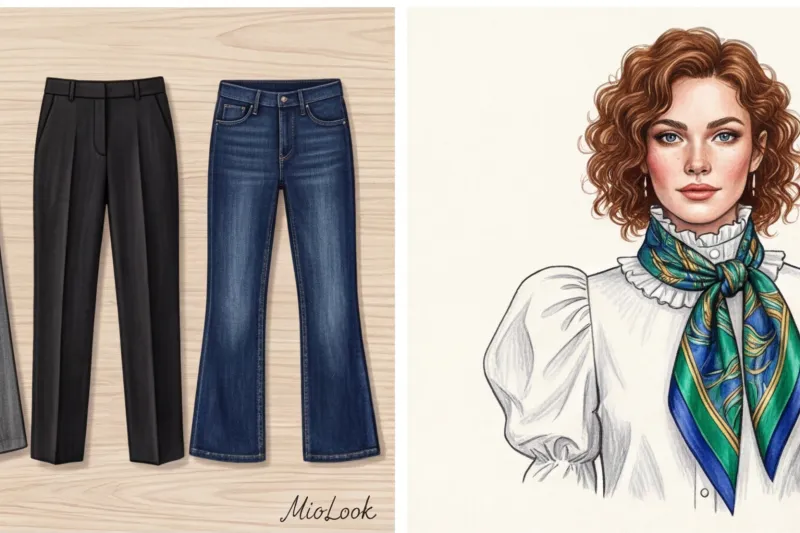
Palazzo pants and wide-leg pants
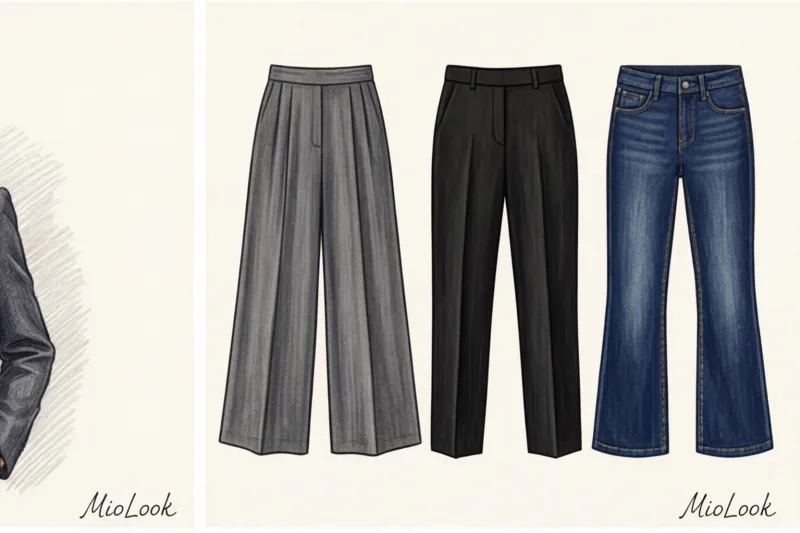
Wide-leg pants are a terrifying sight for many women with curvaceous hips, as they seem to make their figure look larger. This is an illusion. Palazzo pants work by creating a counterweight: the wide leg at the bottom balances the volume at the top. To create a slimming effect, the fabric should be heavy and flowing (for example, a viscose-polyester blend or a thick Tencel). They should fall vertically, without clinging to the calves or thighs.
Straight trousers with an ironed crease
A crease in trousers is a powerful optical illusion. This strong vertical line draws the viewer's eye up and down, visually elongating the height and narrowing the leg. An important rule: the hem shouldn't be too narrow (no "bananas" or skinny). Ideally, the hem should fall loosely over the shoe, creating a smooth column.
Flared jeans (Bootcut)
The bootcut (flared from the knee down) creates the perfect hourglass figure. The flare at the bottom mirrors the width of your hips, creating a harmonious balance. However, there's a strict requirement: the bootcut requires a heel, wedge, or at least a chunky sneaker sole. Wearing a bootcut with flats and a rounded toe eliminates the elongating effect.
Your perfect look starts here
Join thousands of users who look flawless every day with MioLook. Digitize your wardrobe today.
Start for freeUpper architecture: drawing attention away from the bottom
It sounds counterintuitive, but to make your bottom appear more graceful, you need to add volume... to your shoulders. Yes, that's right. We go back to the principle of visual balance. If you have narrow, sloping shoulders and wide hips (the classic "pear"), your silhouette looks like a triangle. By adding shoulder pads, accentuated puff sleeves, or a structured jacket with a sharp shoulder line, you can transform that triangle into an hourglass shape.
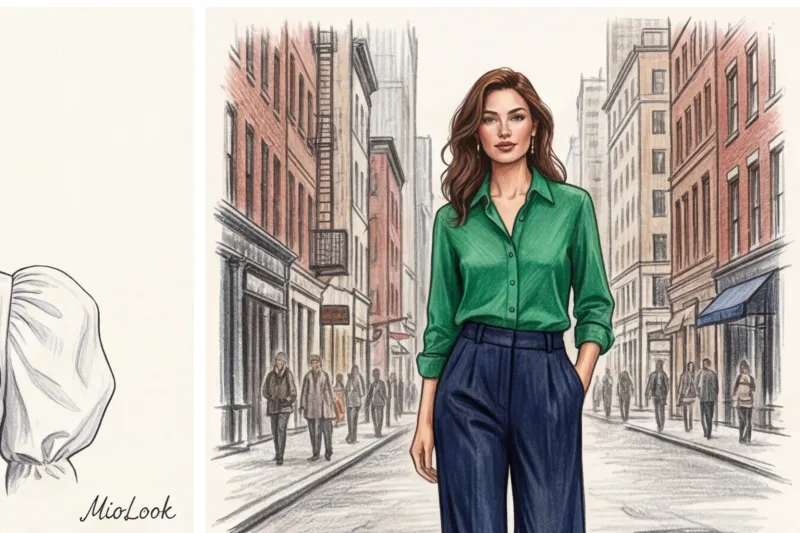
In styling, as in classical architecture, the Golden Ratio (the ratio of 1/3 to 2/3) applies. The ideal silhouette is achieved when the top of the garment takes up one-third of the height, and the bottom two-thirds. This means your top should either be cropped (ending at the waist, creating a 1/3 ratio) or you should tuck your blouse in. If you choose a longer jacket, it should definitely cover the widest part of the hip and end below it. And never at the "equator."
Don't forget about necklines. A V-neck or wide boat neck will broaden the shoulders horizontally, which will automatically make your hips appear narrower. A turtleneck, however, paired with narrow shoulders, will work against you.
Color Illusions: Working with Contrasts and Prints
In 1867, German physicist Hermann von Helmholtz described an optical illusion: a square filled with horizontal stripes appears taller and narrower than a square with vertical stripes (despite fashion myths claiming otherwise). But even more powerful is the distribution of color blocks. The "light top - dark bottom" color block is an unwavering foundation. Dark colors (deep blue, emerald, chocolate, graphite) absorb light and reduce volume, while light shades near the face reflect light and draw the eye.
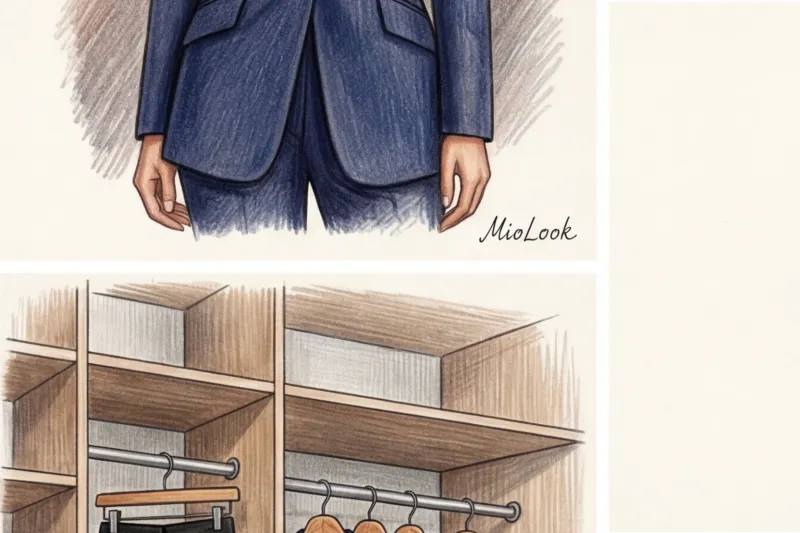
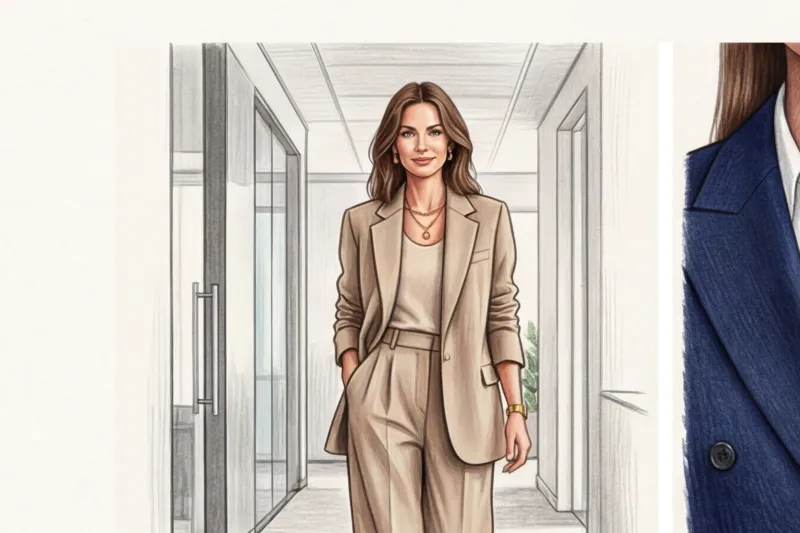
Another tried-and-true technique is monochrome. A single color on both top and bottom blurs horizontal boundaries, creating a continuous vertical line of color. And no, it doesn't have to be black. A deep burgundy or monochrome beige in a dense fabric will elongate the figure just as well.
Now, let's talk about what not to do. Large prints on skirts and trousers (giant flowers, wide geometric patterns, contrasting checks) act like a magnifying glass around the hips. According to research on visual perception in fashion design, a large, contrasting pattern on the lower body visually adds up to 5 cm in volume. Save prints for blouses and scarves near the face.
Ready to get started?
Try the MioLook plan for free—no commitments required. Create your perfect capsule in the app.
Start for freeSkirts and dresses: styles that slim the bottom half
If you think pants are the only option, you're missing out on a powerful femininity tool. The perfect dress for wide hips is the wrap dress, invented by Diane von Furstenberg. The diagonal line of the wrap literally "cuts" the volume in half, creating a waist where it should be and draping softly over the hips.
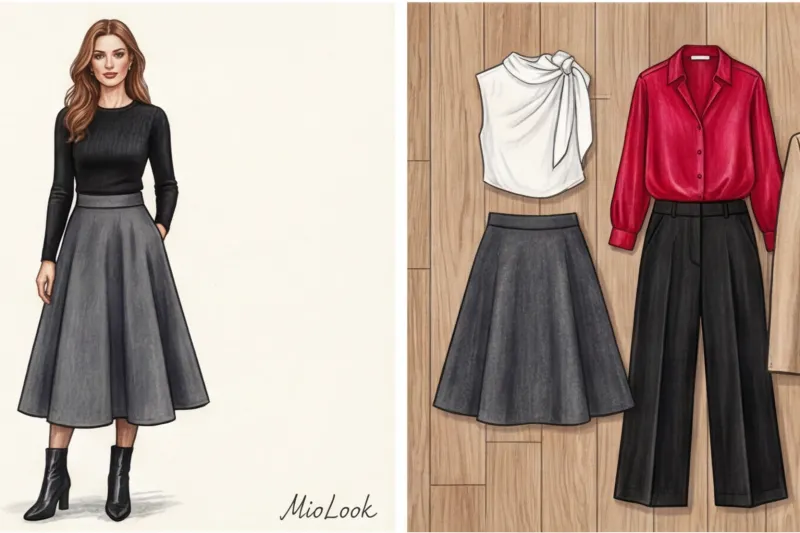
A-line (trapeze) midi skirts are an absolute must-have. The secret to their effectiveness is the "airiness." When there's space between the thick fabric of the skirt and your leg, the viewer's brain automatically imagines slender legs beneath the fabric.
When Advice Doesn't Work (Fair Limitation): Fashion magazines claim that bias-cut slip skirts are flattering on everyone. This isn't true. If you have wide hips and choose a skirt made of thin polyester or cheap satin, the fabric will act like foil—it will cling to your figure, highlighting even the slightest imperfections, and visually weigh down your hem. Slip skirts are only suitable for very dense silk (22mm and over), which falls under its own weight without static.
Absolutely avoid: tulip skirts (they create artificial rolls on the hips), pleats that start right at the waist (the folds will fan out on the stomach and hips), and pencil skirts made of thin knitwear.
Practical checklist: putting together a hip-shaping capsule
You can read hundreds of articles, but until you put your knowledge into practice, nothing will change. Here's a ready-made plan. capsule wardrobe for a proper bottom correction that you can put together today:
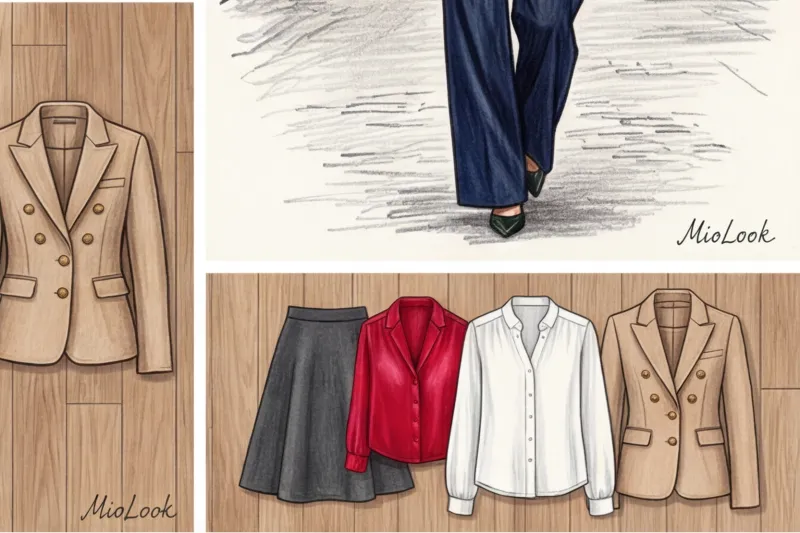
- Basic bottom: 2 pairs of perfect trousers (one palazzo in a flowing fabric, one straight with a crease in thick wool) and 1 A-line midi skirt in a deep dark shade.
- Accent top: 3 blouses or tops with interesting details near the face (V-neck, accent buttons, voluminous sleeves). Lighter than the bottom.
- Structuring layer: A straight-cut jacket with rigid shoulder pads. The length falls just below the widest point of the hips.
- Shoes: Shoes with a pointed (or elongated almond) toe elongate the leg. Choose shoes that match your trousers or tights for an "endless legs" effect.
How a smart wardrobe helps you maintain perfect proportions
Developing a personal style is all about data. I once conducted an experiment: I took photos of myself in the mirror every day for six months. The analysis revealed a startling result: I only wore 20% of the items in my closet regularly. Why? Because those 20% were perfectly designed and fit perfectly. The camera sees us without distortion, unlike our brain, which often focuses only on imperfections in the mirror.
That's why organizing your looks is key to success. Instead of racking your brains over combinations every morning, use modern technology. In the app MioLook You can digitize your clothes and create lookbooks featuring flattering silhouettes. Algorithms help analyze which styles really flatter your figure, eliminating visual noise.
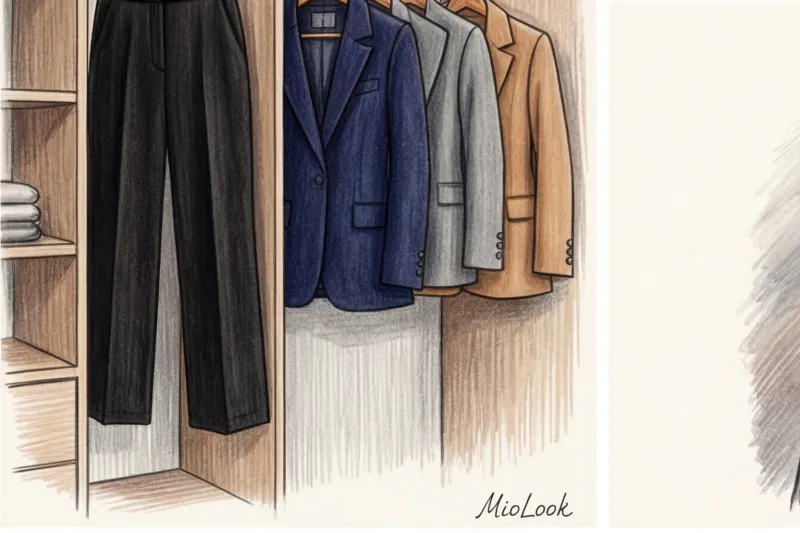
Style isn't about squeezing yourself into imposed standards or hiding under meters of fabric. It's about managing your attention. Stop hiding your hips under shapeless cardigans—give your figure structure, add airiness to your silhouette, and accentuate your shoulders. And you'll see your proportions shift instantly.