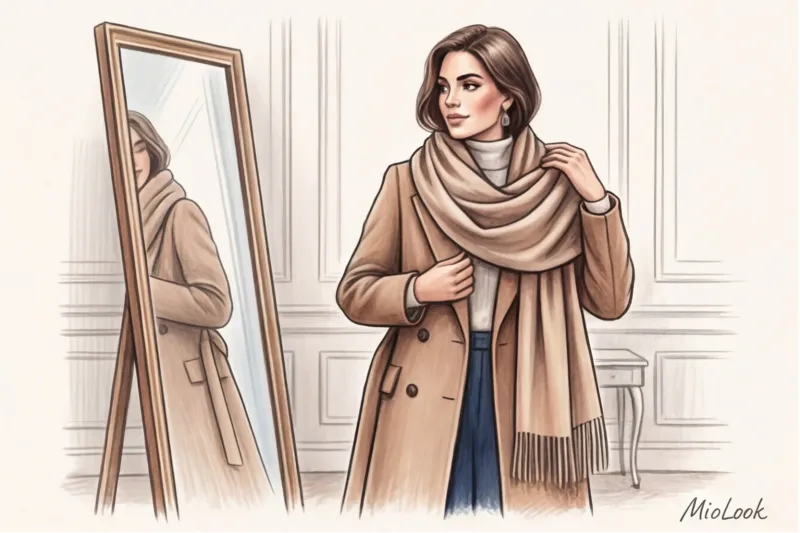
Have you ever noticed this paradox? We're easily willing to spend €300 on a smart jacket for the office or a striking dress for an event that we'll wear exactly twice. But at home, where we spend about 60% of our lives, we often end up wearing faded T-shirts and stretched-out sweatpants. As a stylist with 14 years of experience, I constantly observe this "life on hold" syndrome. And do you know where the cure begins? By adding a pair of genuine silk pajamas to your closet—an item that transforms not only your appearance but also your inner state.

We have already discussed the psychology of home wardrobe in more detail in our The complete guide to women's loungewear But today I want to focus specifically on silk. We'll break this investment down, literally thread by thread: from neurobiology to fabric density, so you can learn to distinguish a noble material from cheap polyester without even thinking about it.
Women's silk pajamas: an investment in self-esteem, not just sleepwear
In 2012, researchers Hajo Adam and Adam Galinsky of Northwestern University coined the term Enclothed Cognition (embodied cognition). Their research proved that the clothes we wear directly influence our cognitive processes, posture, and confidence levels. When you put on something you associate with luxury and status, your brain literally rewires your behavior.
I had a very revealing case. My client Anna, a successful IT consultant, switched to remote work and after six months complained of burnout and a feeling of being invisible. We didn't change her work wardrobe. We threw out all the pilling lounge leggings and bought a premium set of flowing silk. A month later, she wrote to me: "Olena, it's magic. I walk past the mirror at home, see my posture in this flowing set, and my back automatically straightens. I've become more confident on Zoom calls, even when the camera is off.".
Silk forces you to move differently. It doesn't tolerate fuss; it demands fluidity. It's the perfect tool for switching your brain from "I'm working" mode to "I'm valuing myself and relaxing."
Your perfect look starts here
Join thousands of users who look flawless every day with MioLook. A smart AI stylist will help you digitalize your wardrobe.
Get access — €0.99 onceNatural Silk vs. Polyester: As a Stylist, You'll No Longer Be Sold an Illusion
The biggest mistake I see when sorting through wardrobes is confusing terminology. Online stores love to sell illusions by calling polyester "satin." Let's get this straight: silk is a type of thread (a product of the silkworm), and satin is a type of weave (where a face thread overlaps several back threads, creating a smooth surface).
As a professional, you should be able to visually and tactilely distinguish high-quality mulberry silk from synthetics:
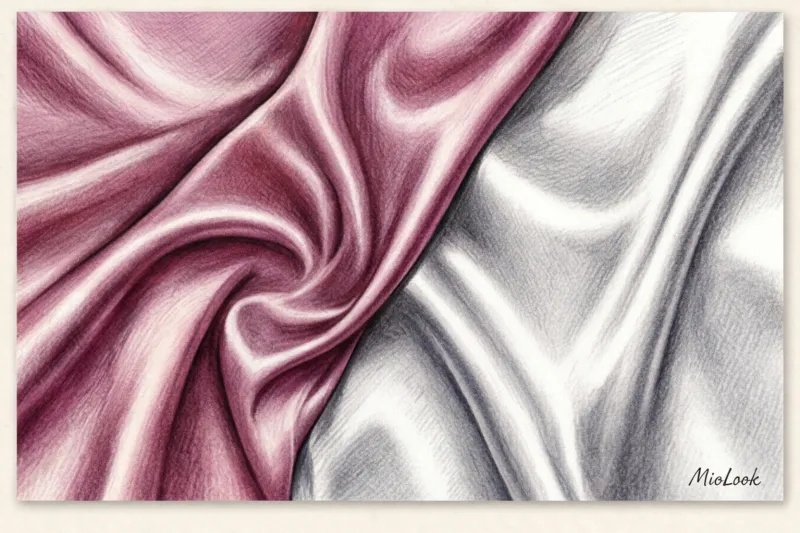
- Shine: Cheap polyester produces a harsh, glassy, almost mirror-like sheen, which cheapens the look. Natural silk has a matte, elegant, pearly sheen. It doesn't shine; it reflects light from within.
- Tactility: Synthetics are glidy, but feel cool and slightly plasticky. Natural silk quickly warms up to your body temperature.
- Thermoregulation: According to dermatologists, natural silk contains amino acids similar to our skin. It can absorb up to 30% of its own weight in moisture while remaining completely dry to the touch. In polyester pajamas, you'll wake up sweating; in silk, you'll stay cool in the summer and comfortable in the winter.
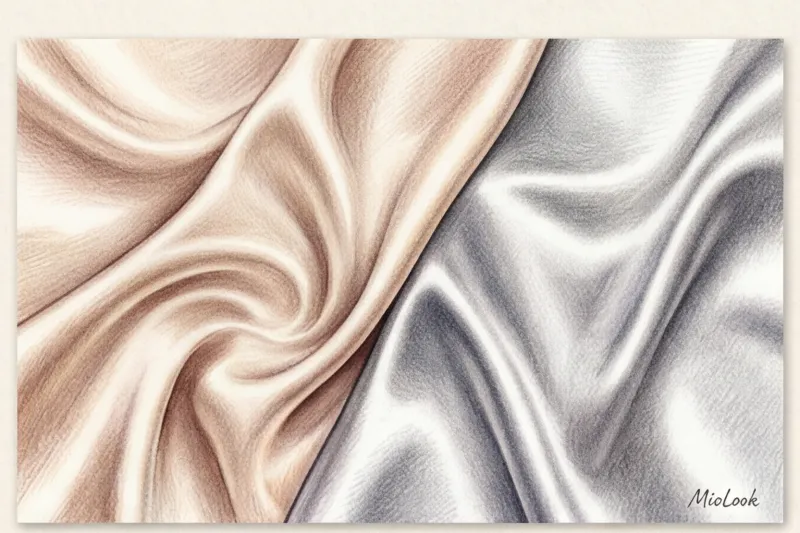
"When buying silk, always look for the momme (mm) measurement on the label. This is the international standard for silk weight. Ideal pajamas should be between 16 and 22 mm. Anything less than 16 mm will quickly wear through and become see-through. Anything more than 22 mm will make the pajamas too heavy and stiff, better suited for curtains or suits."
Kimono: From Home Boudoir to Capsule Wardrobe Essentials
If you're looking to make the most profitable wardrobe investment, start with a silk kimono. Unlike the traditional Japanese kimono, which requires a complex obi system and rigidly holds the figure in place, the modern house kimono features an adapted European cut. It's a relaxed, straight-cut robe with dropped shoulders and wide sleeves.
For me, as a stylist, the kimono is a brilliant figure-shaping tool. Left open, it creates two long vertical lines that visually elongate the height and slim the silhouette, concealing the nuances of the waist and hips.

3 Ways to Style a Silk Kimono Outside the Home
Loungewear has long since moved beyond the bedroom. If the fabric is thick (those same 19-22 momi) and not see-through, feel free to incorporate a kimono into your everyday life. basic capsule:
- Urban casual: Wear a kimono over a crisp white tee and classic straight-leg jeans (in the style of Levi's 501s). Add leather loafers. The kimono doubles as a luxurious summer duster cardigan.
- Replacement for an evening jacket: Throw a dark silk kimono over a slip dress. This layering looks much fresher and more bohemian than a classic fitted jacket.
- Status resort style: On vacation, wear a kimono as a cover-up over a minimalist one-piece swimsuit by the pool. Complete the look with a straw hat and oversized sunglasses.
Ready to get started?
Try a free plan—no commitments. Save your best silk kimono looks and plan your capsule wardrobe in our app.
Get access — €0.99 onceStyles and fits: how to choose the perfect silk set for yourself
The range of silk loungewear is vast, but the devil is in the patterns. Let's look at three basic styles.
Classic men's pajamas. A button-down shirt with a turn-down collar, contrasting piping, and straight-leg trousers is an absolute essential. It exudes elegance and aristocracy. Ideal for women who don't like being overly revealing at home but still want to look classy.

Top with thin straps and shorts. That very "French chic." Perfect for hot apartments and visually lengthening the legs thanks to the short bottom. However, there is a hidden important limitation If you have a full bust (D-cup or larger), a top with thin, spaghetti straps without support will be uncomfortable, and the silk itself may cut into your skin. In this case, it's better to choose a top with wide straps or a T-shirt.
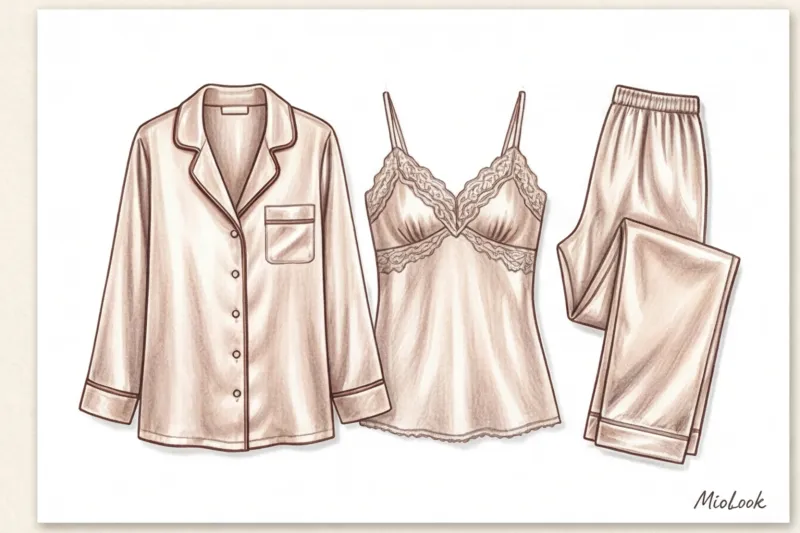
Silk shirts and slip dresses. This is where the main secret of premium brands comes into play: the bias cut. This is when the fabric is cut at a 45-degree angle to the grain. This gives silk phenomenal elasticity (even without elastane) and hugs the body like water, creating a beautiful drape at the waist. But be honest with yourself: the bias cut emphasizes All If you have a tummy you want to hide, ditch the thin slip dress for a classic, straight-cut shirt.
The "Hard Care" Myth: How to Wash Silk So It Lasts for Years
The most common argument I hear from clients against purchasing: "It's too expensive, and then I'll go broke on dry cleaning too." It's time to dispel this myth. Dry cleaning is often too harsh for delicate silk linens. Natural silk can and should be washed at home.
But there's a completely paradoxical insight here that few people know about. The biggest mistake is buying expensive pajamas and putting them in a closed drawer "for special occasions." Silk is a protein fiber. In a dry, dark closet without contact with skin, it dries out, becomes brittle, and literally falls apart at the seams. Silk needs moisture from your body. The more you wear it, the better it retains its elasticity.
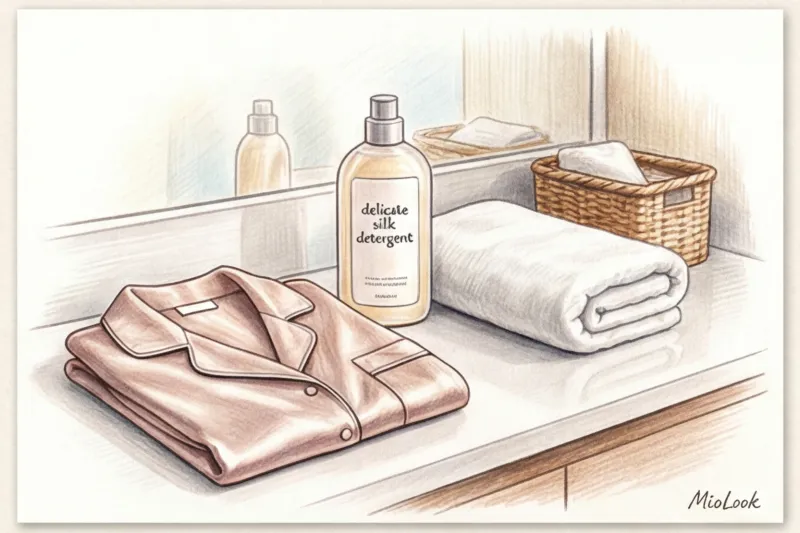
Three golden rules of care:
- No enzymes. Regular laundry detergents contain enzymes that dissolve protein stains (food, sweat). But silk is also a protein! Regular laundry detergent will simply "eat" your pajamas in 5 washes. Buy special liquid detergents for silk marked "silk-safe." enzyme-free.
- Cold water (up to 30°C). Hand wash without rubbing. Simply soak for 10 minutes, gently squeeze out the foam, and rinse.
- Proper drying. Never wring out silk by twisting it—it will break the fibers. Wrap the wet pajamas in a terry towel, press gently to absorb the water, and hang them to dry in the shade. Iron only from the inside out while the fabric is still slightly damp (or use a steamer).
Stylist's Checklist: 5 Signs You're Buying Expensive Silk Pajamas
If you're ready to make an investment, how can you be sure the brand isn't misleading you? Before purchasing, turn the item inside out. This is what I always do when assessing the quality of a product for my clients.
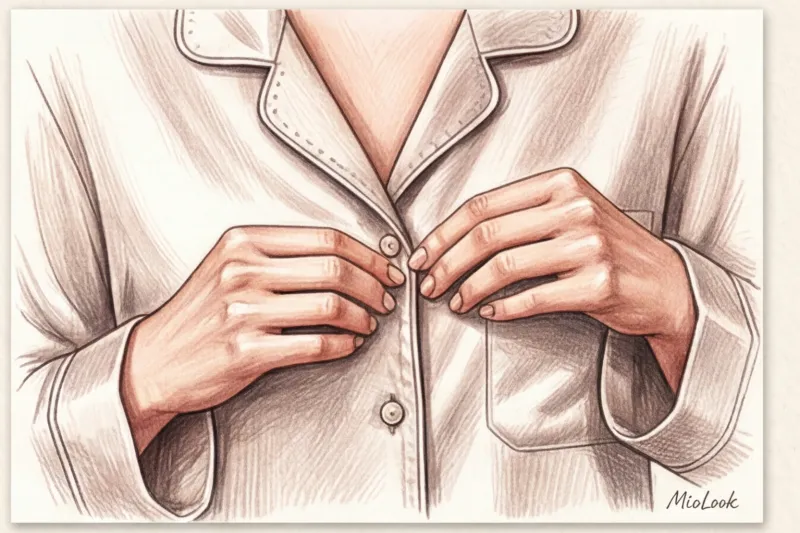
- French (closed underwear) seam. You'll never see any threads sticking out from the overlocker on the inside of expensive silk pajamas. Seams should be closed inside (hidden inside another seam). This prevents the delicate fabric from fraying during washing.
- Fittings. Plastic buttons on real silk are a style crime. Look for buttons made of genuine mother-of-pearl or covered in the same silk.
- Quality of edging. On classic pajamas, the piping should lie flat, without pulling at the main fabric or creating gathers at the collar.
- Freedom of fit. 100% silk has absolutely no stretch. If your pajamas are too tight, the seams will simply come apart at the elbows or knees while you sleep. Silk clothing should always be purchased with room to allow for movement—feel free to order a half size or even a size larger than your usual size (a slight oversize effect).
- Cost-per-wear mathematics. Let's do the math: you buy a €120 dress for a corporate event and wear it once (outlet price = €120). You buy silk pajamas for €250 and wear them 150 evenings a year. The cost of one luxurious, comfortable evening is only €1.60. This is the most reasonable wardrobe math I know.
Investing in silk loungewear is an act of deep self-respect. Stop dressing up just for your office colleagues or your social media followers. Start dressing beautifully for the most important person in your life—yourself, when you're alone with your morning cup of coffee.