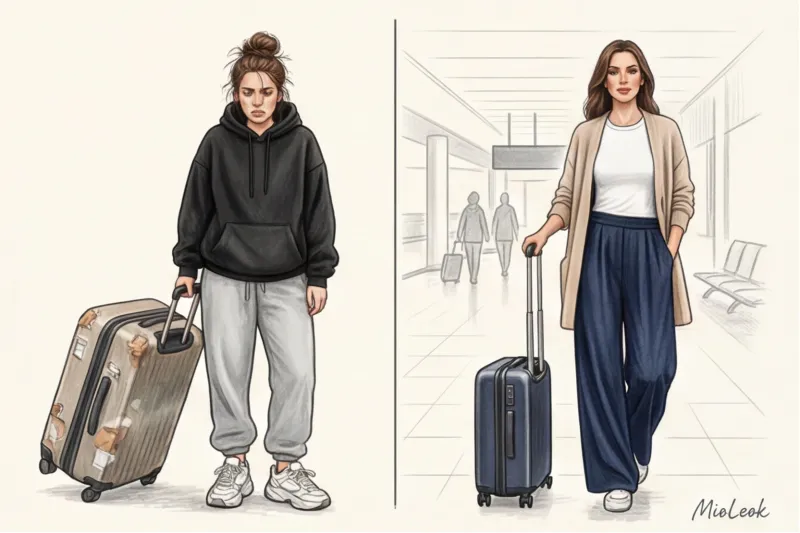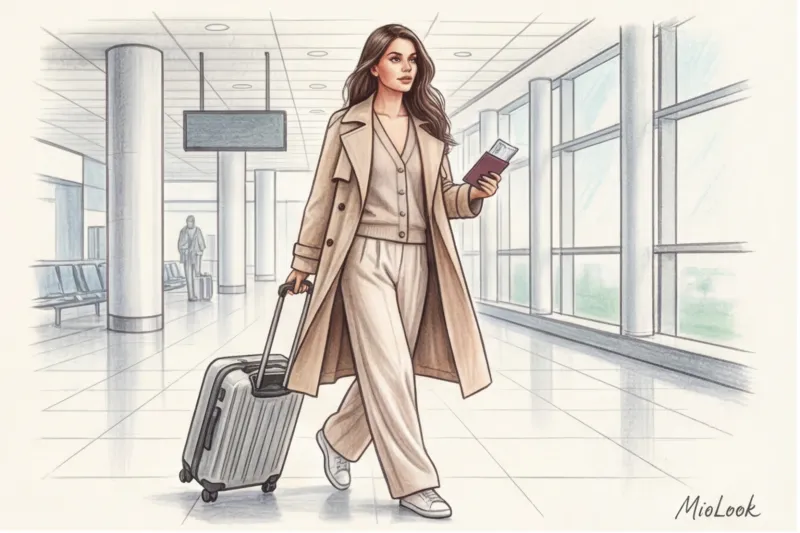
Do you remember that feeling? Flying out of a snowy metropolis at -15°C, only to be greeted ten hours later by the humid, enveloping heat of the tropics at 35°C. Over 12 years of working as a personal stylist, I've seen hundreds of women begin their long-awaited vacations in a state of absolute stress, lugging an unwieldy down jacket and sweating profusely in the transit area.
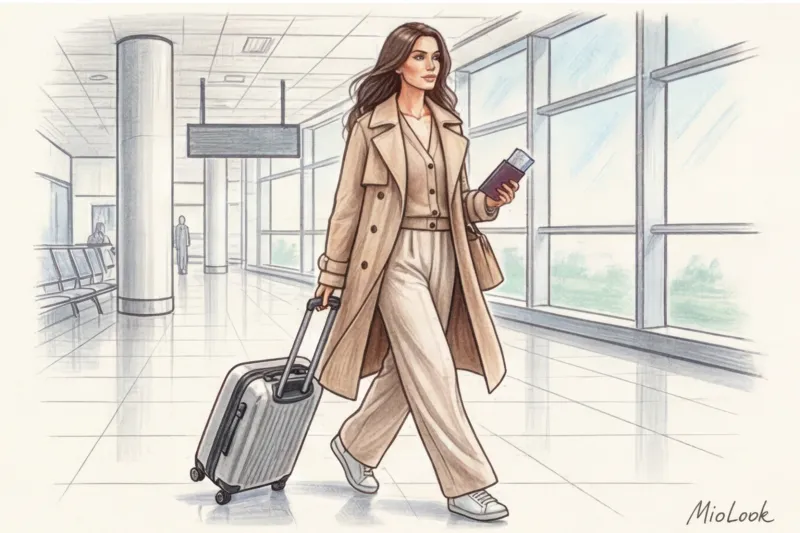
When solving the issue, What to wear when flying from winter to summer , we often go to extremes. We've already discussed the basic rules of travel wardrobe in more detail in our The Complete Guide: What to Wear on a Plane: Stylish and Comfortable Looks But high-contrast flights require a completely different, almost engineered approach to layering. I call it Jet-Set Chic—when you look like you own a private jet, even if you're flying economy.
Why the "wear your heaviest" rule no longer works
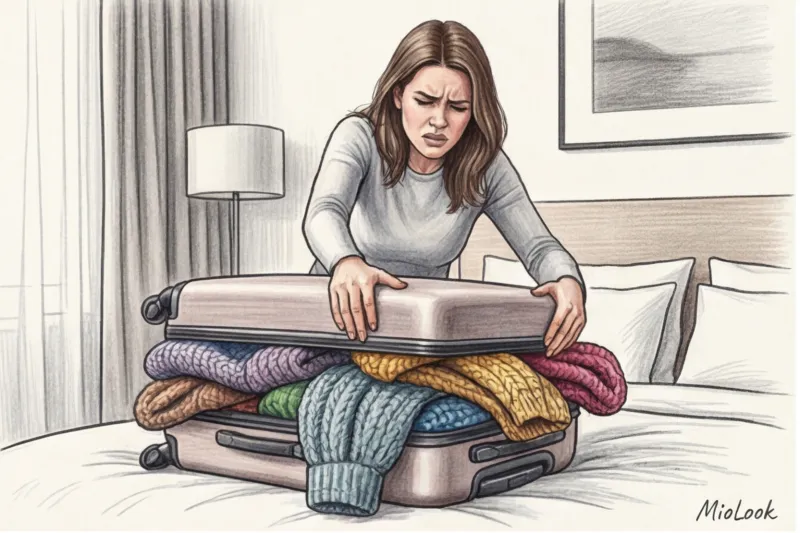
Let's bust the biggest travel myth right off the bat. The advice to "wear heavy winter boots and a bulky down jacket to save space in your suitcase" is the worst thing you can do to your body.
Saving two kilograms of baggage simply isn't worth your health. According to the Aerospace Medical Association (2023), humidity in the airplane cabin drops to 10-20% (that's drier than the Sahara Desert!), and the temperature is maintained at 20-22°C. Powerful air conditioners make the air feel even colder. The temperature difference between the departure and destination cities can reach 50-60°C.
"If you sit in a plane seat wearing thick winter clothing, your body begins to overheat locally, thermoregulation is disrupted, and the risk of deep vein thrombosis (DVT) increases significantly due to the compression of blood vessels by heavy tissue."
This is where psychology comes into play. enclothed cognition (The influence of clothing on cognitive processes). When you wear bulky, constricting clothing, cortisol levels rise. You feel tired even before takeoff. Our goal is to look classy without sacrificing a single millimeter of comfort.
Access to MioLook for €0.99 — one-time payment
A smart AI stylist will create the perfect look for any flight.
Get access — €0.99 onceWhat to Wear from Winter to Summer: The "Reverse Unpacking" Formula
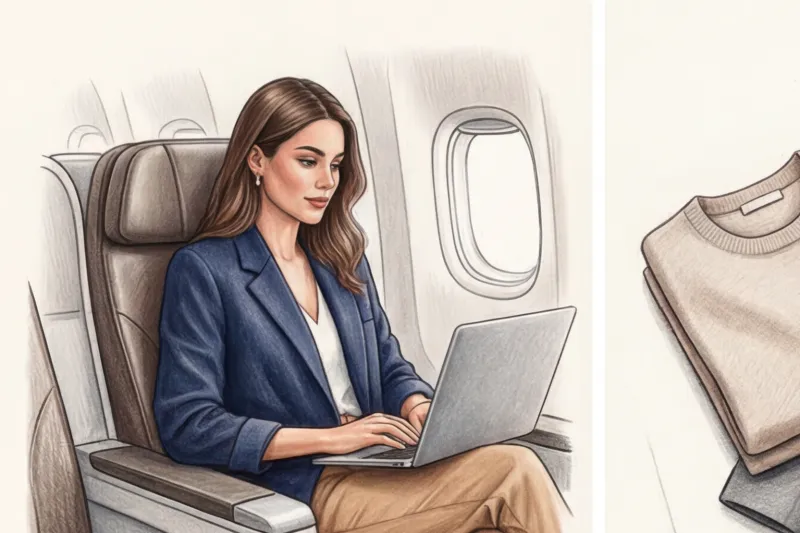
For my VIP clients, I always use the concept of "reverse unpacking." It's simple: your bottom layer is already a complete, ready-made look for the resort You don't change your clothes completely upon arrival, you just take off what's unnecessary.
The ideal stylistic formula looks like this:
Loose summer trousers + Breathable top + Unlined cardigan or blazer + Compact jacket.
What to do with real winter outerwear? You have two options. The first is to check in a heavy sheepskin coat or parka at the airport's departure storage facility (ideally if you're returning to the same terminal). The second is to use ultra-lightweight down jackets (packable down jackets from brands like Uniqlo or COS), which fold into a micro-bag the size of an orange and fit in your bag.
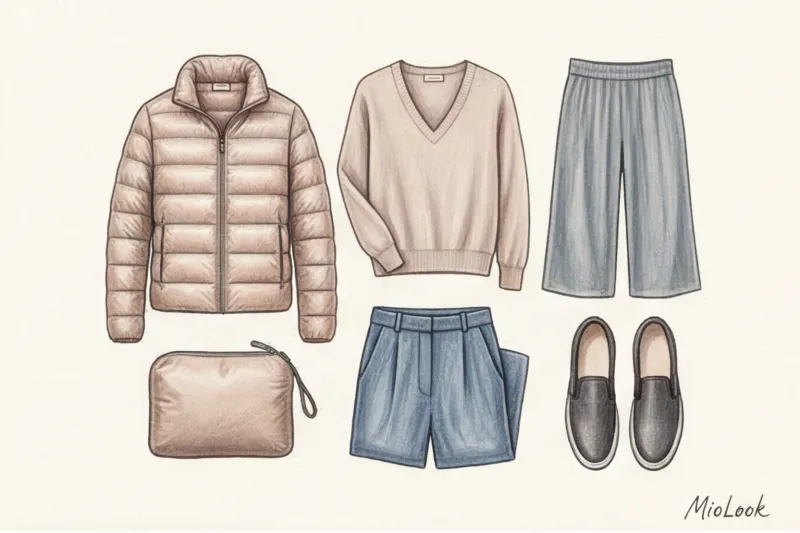
Fair Limit: An ultra-light down jacket will save you during the short sprint from the taxi to the terminal. But if you know you'll have to wait for a bus in -20°C for about half an hour, this won't work. In that case, a storage locker is your only option.
Base Layer: Tropical Ready
Let's start putting together the look from the bottom up. Skinny jeans are a total no-no. Stiff denim digs into the waist and back of the knees, blocking blood flow.
Choose the right bottoms: flowy Tencel palazzos, stylish culottes, or loose-fitting silk-blend joggers. For the top, a heavy cotton top (look for a weight of at least 180 g/m² for a non-see-through fabric that holds its shape) or a loose-fitting viscose top is ideal.
Middle Layer: Cozy Transit
Here, we need comfort. A cashmere cardigan, a premium fleece hoodie, or a soft knit jacket. The main rule for a midlayer is to avoid any stiff structures. No shoulder pads, tight armholes, or stiff collars that will dig into your neck when you try to sleep.
Fabrics That Will Save You on a Flight (and Those That Will Make It Hell)
Fabric is everything. At 10,000 meters, your skin becomes extremely sensitive. If you're unsure how to pack the perfect travel capsule, try the "smart wardrobe" feature in MioLook — the app will help you filter items by season and material.
Blacklist (leave at home):
- 100% polyester and acrylic: They create a greenhouse effect. You'll sweat during landing and freeze from the air conditioning during the flight.
- Hard flax: After an hour of flight, you'll look like you've been sleeping in these clothes for a week.
- Thick sheep wool: In the dry air of the cabin it begins to sting unbearably.
White list (wear with confidence):
- Merino wool: queen of thermoregulation.
- Tencel and cupro: Eco-friendly alternatives to silk that breathe and flow beautifully.
- Dense knitwear with the addition of 5-10% elastane: holds its shape at the knees, but stretches as you move.
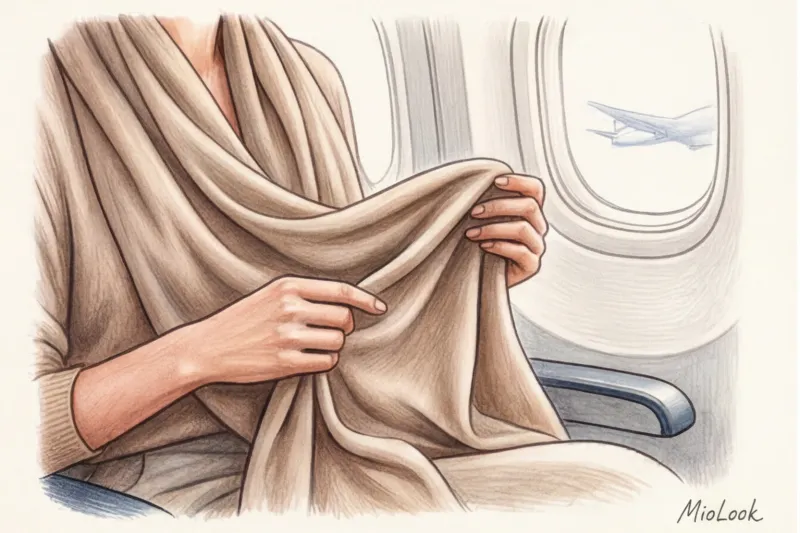
Here's a counterintuitive fact from technologists at the Textile Institute (2024): many people think that moisture-wicking sports fabrics (Dry-Fit) are ideal for road use. This is a mistake. They are designed for active movement and rapid sweat evaporation. When sitting statically in a cool car, such fabric will act like a cold compress. The natural thermoregulation of merino wool copes with temperature fluctuations much better when stationary.
Your perfect look starts here
Join thousands of users who look flawless every day with MioLook.
Get access — €0.99 onceFootwear for extreme terrain: from snow to palm trees
One day, my client Anna flew to Bali wearing her favorite, but very thick, fur-lined winter boots. She took them off on the plane for comfort. After 11 hours of flying, her feet were so swollen that she couldn't zip up the boots. She had to walk through Denpasar airport in her socks, carrying the boots in her hands. Her vacation began with tears.
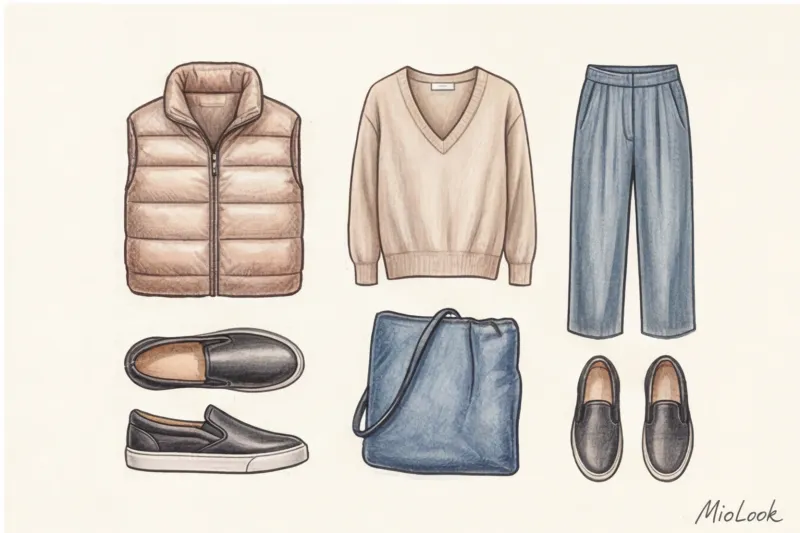
Winter boots are your biggest enemy in the sky. What should you choose instead?
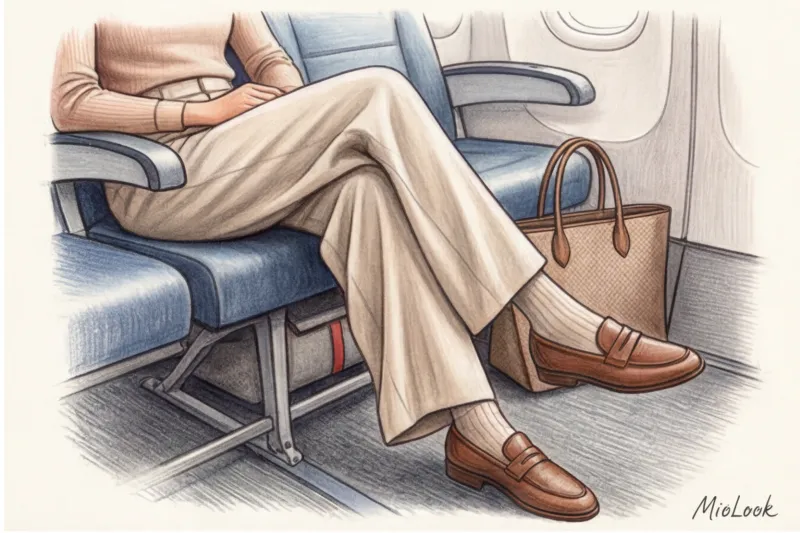
Stylish alternatives include leather loafers, thick-soled slip-ons, or minimalist sneakers made of soft leather (like basic models from Massimo Dutti or Veja).
But how do you get to the airport in loafers in winter? Use a sock hack. Wear thick cashmere or wool socks before boarding the plane (you can also wear them in the cabin). Then, half an hour before landing in tropical climates, simply take them off and put on loafers barefoot.
Accessories: status, health and comfort
In-flight accessories serve a protective rather than a decorative function.
Firstly, compression stockings Forget about this being a "medical death sentence." Today, brands are releasing stylish nude and black models that look like regular nylon knee-highs. They're an absolute must-have for keeping your legs light and preventing swelling. (Note: If you have serious vascular disease, consult your doctor before choosing a compression class.)
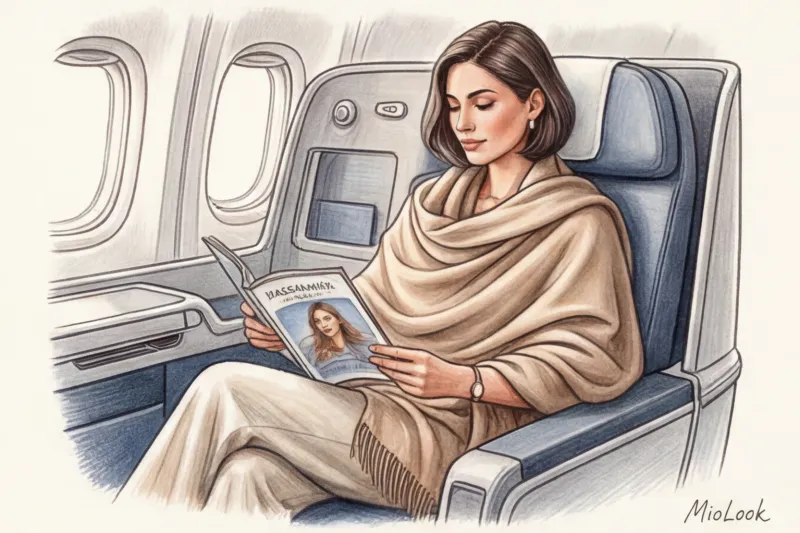
Secondly, silk or cashmere stole size XXL Did you know that airplane blankets in economy class are often simply refolded without dry cleaning between short flights? Your own blanket is your personal hygienic armor against air conditioning and other people's germs.
Thirdly, it is spacious, but structured tote bag Shapeless backpacks often make a look unattractive. A rigid bag (even made of nylon or heavy canvas) instantly ties together a relaxed knitted look, adding a touch of class.
Checklist: Change clothes 30 minutes before boarding
To avoid panic before exiting, follow this step-by-step algorithm when the board shows "Start of Descent":
- Go to the restroom (before there's a line of people wanting to freshen up).
- Take off your compression stockings – your legs will thank you.
- Remove your warm mid-layer (cardigan/sweater) and fold it neatly into your tote bag.
- Spray your face with thermal water (and blot with a tissue, do not leave it on your skin to dry, otherwise it will become even drier).
- Return to your place, put on light shoes (those same loafers without warm socks).
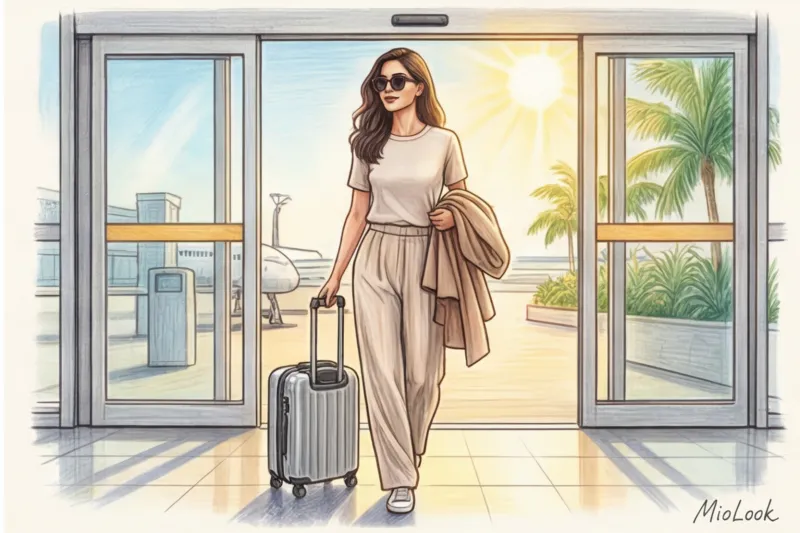
- Just before you step off the plane, put on your sunglasses—they're the finishing touch that will hide tired eyes and instantly put you in vacation mode.
The Biggest Mistakes in Travel Wardrobe (and How to Avoid Them)
My experience allows me to spot inexperienced travelers in a crowd without fail. Here are three things guaranteed to ruin your flight:
1. Overalls. Yes, a silk jumpsuit looks luxurious in photos on social media. Now imagine trying to remove it completely in a tiny, turbulent airplane restroom, trying not to let the fabric touch the floor. It's aesthetically pleasing, but completely impractical.
2. Light-colored trousers. White palazzos are beautiful. But a spot of turbulence, plus a glass of tomato juice or coffee from a neighbor, equals a ruined mood for the entire day. Save the white bottoms for dinners on the beach.
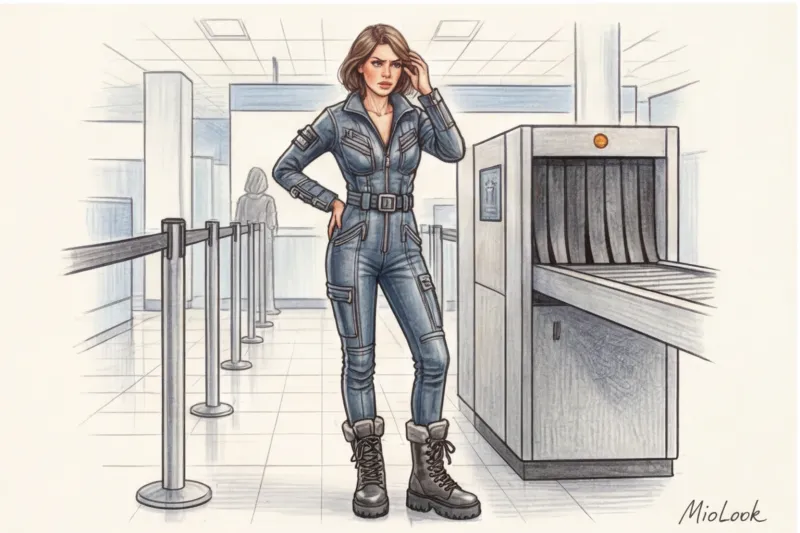
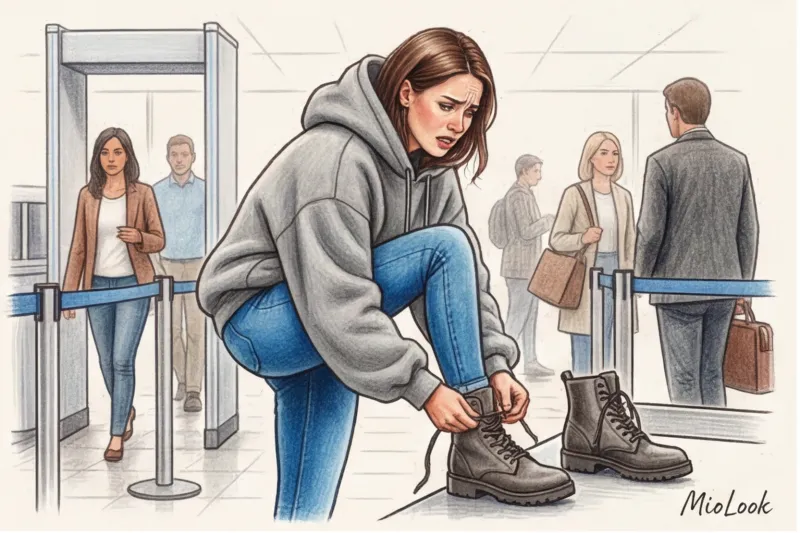
3. Abundance of metal fittings. Pants with chunky chains, belts with huge buckles, lace-up shoes with metal hooks. You'll attract all the attention... from security personnel. Delays at security and having to strip down to a T-shirt aren't the best way to start a trip. If you find it difficult to plan a capsule without unnecessary details, delegate this task. AI stylist MioLook.
Flying from a harsh winter to a hot summer is a prelude to your vacation, not a test of endurance. The main point to remember: Dress not for the climate you are leaving from, but for the microclimate that awaits you on board Use breathable fabrics, choose shoes that accommodate swelling, and always layer a summer base layer under cozy knitwear. Then you'll greet the plane steps in the tropics with a smile, not a desire to immediately take an ice-cold shower.