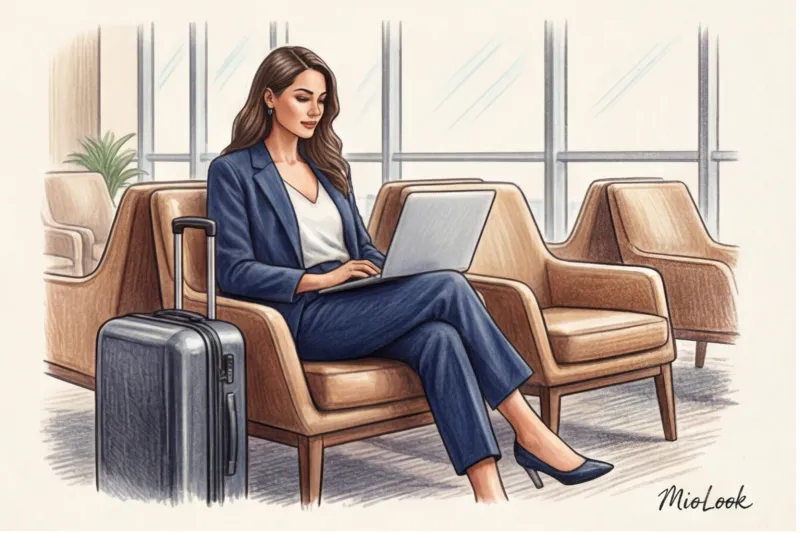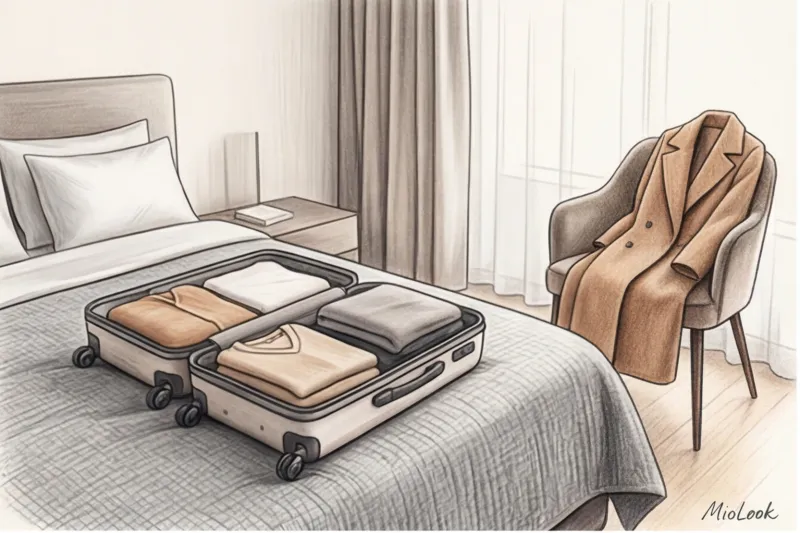
January. Flight from Paris to Stockholm. I'm wearing a cashmere coat, holding a dainty espresso cup, and a tiny cabin-size suitcase next to me. My colleagues look at me with bewilderment: "Are you planning on surviving -15°C in Sweden with this makeup bag?" Spoiler alert: I not only survived, I looked flawless at every meeting. In 12 years of working as a fashion journalist and stylist, I've learned the most important rule of winter travel: status and comfort aren't measured in liters of luggage.
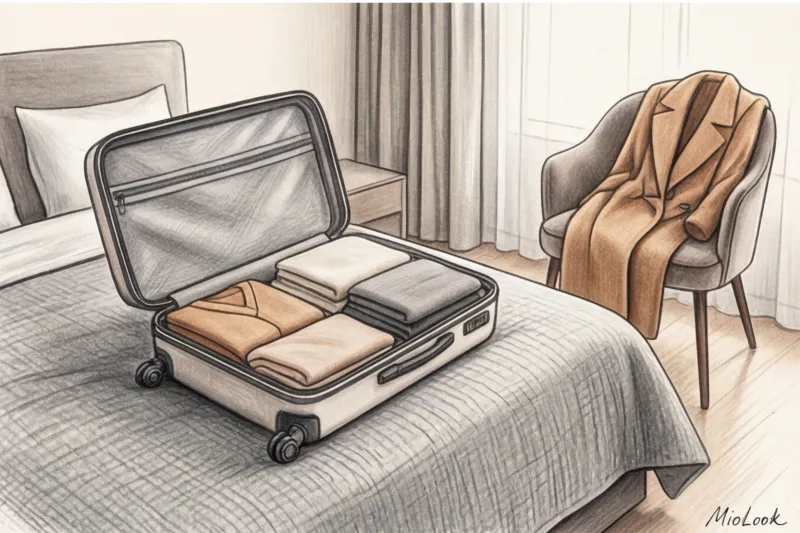
When faced with the question of what to pack for a business trip in winter, many women panic and start stuffing their suitcases with oversized knit sweaters and ski pants. We've covered the basic principles of building a business wardrobe for travel in more detail in our The complete guide to business travel clothing for women: how to pack a capsule wardrobe However, winter requires a special, almost mathematical calculation and a deep understanding of fabric properties. Checking your suitcase is a waste of time upon arrival and always carries the risk of being left without your belongings on the eve of an important presentation. We will be packing the perfect, warm, and elegant capsule exclusively as carry-on luggage.
What to pack for a girl on a business trip in winter: a strategy against bulk
The main paradox of a winter business trip is the temperature contrast. You step out onto an icy street, get into a taxi with a hot heater, then find yourself at the airport or a meeting room where the air conditioning is set to 23–25°C. If you're wearing a thick wool sweater, you're guaranteed to be sweating before the meeting even starts. And that's a disaster for your business image.
According to the SITA Baggage IT Insights report (2023), the number of lost baggage globally has increased by 74% compared to pre-pandemic times. Leaving your pristine suit to the mercy of baggage carousels is an unacceptable risk. A standard carry-on bag weighs 8-10 kg, and typical winter clothing consumes 70% of that weight. To win this game, you need to abandon the "pack warm clothes" mentality and embrace the "choose smart fabrics" paradigm.
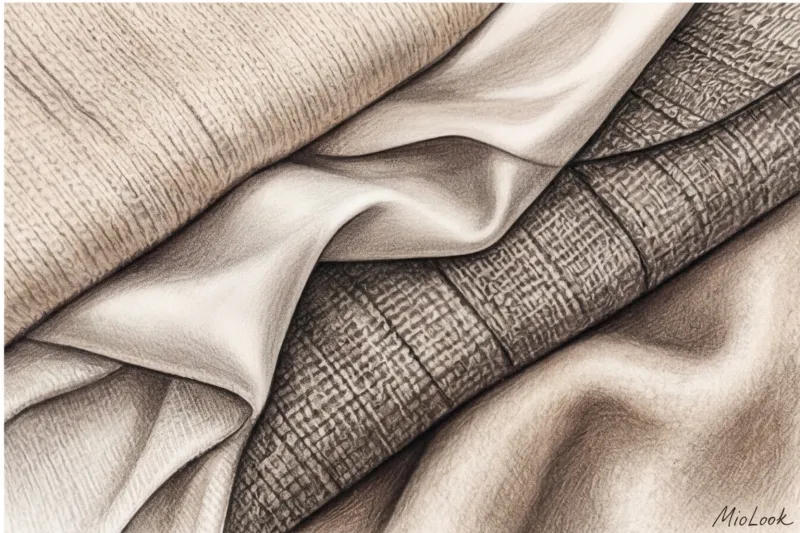
The secret lies in the wool's micron count. Super 100s or 120s merino wool fiber is finer than a human hair. A jumper made from this yarn fits easily in a handbag, yet retains body heat more effectively than a thick acrylic sweatshirt from a mass-market store. Investing in the right materials (in the range of €100–€300 for a quality basic piece) pays off with the freedom from excess weight charges and your peace of mind.
Thermal Architecture: Why Thick Sweaters Are a Mistake
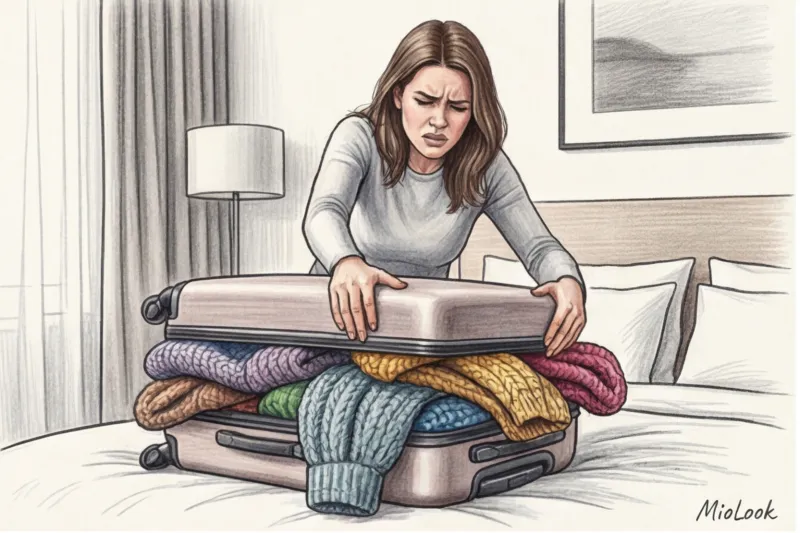
Let's dispel the main winter stereotype: "the thicker the garment, the warmer it is." Bulky chunky knit sweaters are your worst enemy on a business trip. They take up half your suitcase, visually add two sizes, and are completely inappropriate for a strict business dress code. True winter luxury is the concept of micro-layering, borrowed from extreme sports and translated into the language of elegance.
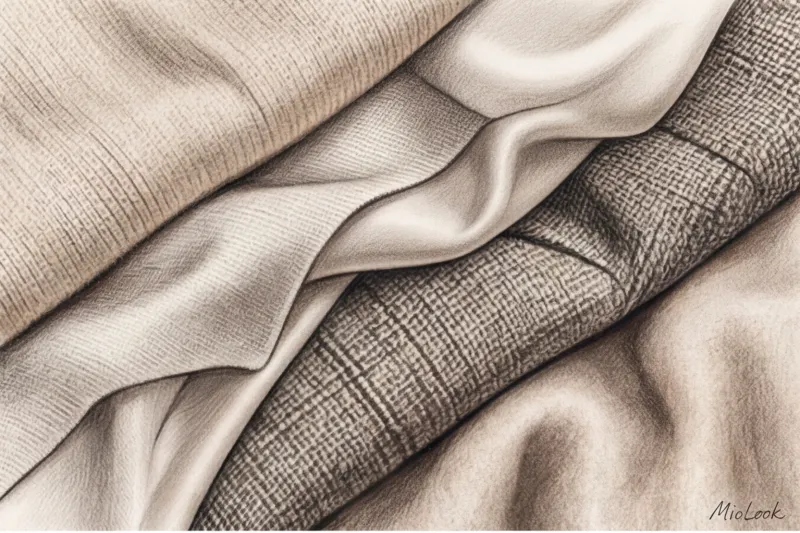
In my practice, when I persuade clients to swap one bulky sweater for three thin layers, their lives change. The correct formula is: a silk top (or bodysuit) + a thin merino turtleneck + a virgin wool jacket. The air pockets between these thin layers act like a thermos, trapping body heat.
According to research by The Woolmark Company, natural merino wool can absorb up to 30% of its own weight in moisture while remaining dry to the touch. This is critical during the sudden temperature shift from the street to the office.
Modern thermal underwear no longer resembles polar explorers' gear. Consider brands like Uniqlo (Heattech line) or more premium brands that create ultra-fine leggings and long sleeves made from silk and cashmere. They're completely invisible under a business suit, but allow you to stand in the wind while waiting for a taxi without your knees shaking.
Your perfect look starts here
Join thousands of users who look flawless every day with MioLook. Our intelligent AI stylist will help you find the perfect capsule wardrobe for any business trip.
Get access — €0.99 onceWinter Business Capsule Matrix: 7 Items for 10 Looks
The math behind the perfect 3-4-day business trip wardrobe revolves around seven key elements. The formula for success: 2 bottoms, 3 tops, 1 dress (or ready-to-wear suit), and 1 jacket. I strongly recommend building a winter color palette around deep, dark tones: graphite, navy (deep blue), chocolate, or burgundy. These shades hide the occasional splash of slush that's inevitable in a winter city. Save lighter shades for the first layer—a cream turtleneck will refresh your complexion after an overnight flight.
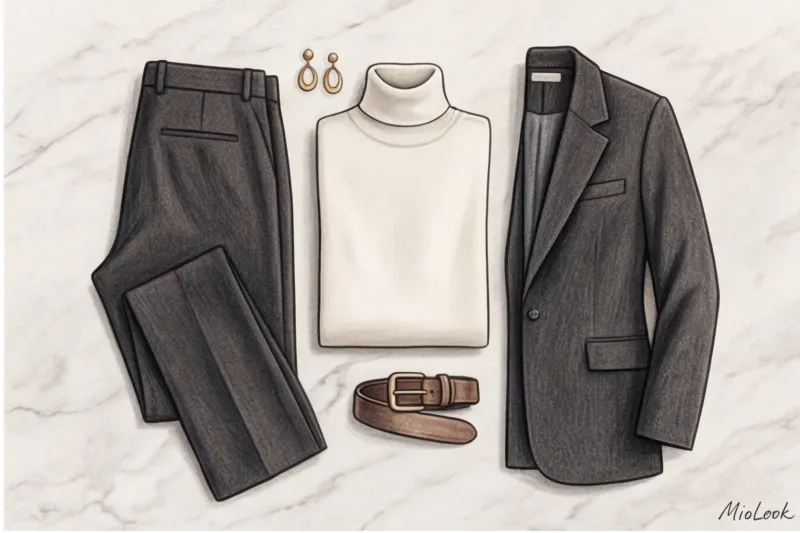
The base that keeps you warm: bottom and first layer
For bottoms, choose trousers made of thick suiting wool, and be sure to have a lining. This isn't a whim, but a functional necessity: a smooth viscose lining prevents trousers from sticking to thermal underwear or tights. If you prefer skirts, a thick A-line midi or a long pencil skirt are perfect for winter. Why not knee-length? A midi skirt paired with high tube boots leaves no exposed leg—it's warm and visually elongates the silhouette.
For your first layer, choose a silk-cashmere blend turtleneck and a heavy cotton shirt (preferably labeled non-iron). Layering the shirt over the turtleneck is a trendy style statement that demonstrates your awareness of trends and adds extra warmth.
Elegant "top" layer
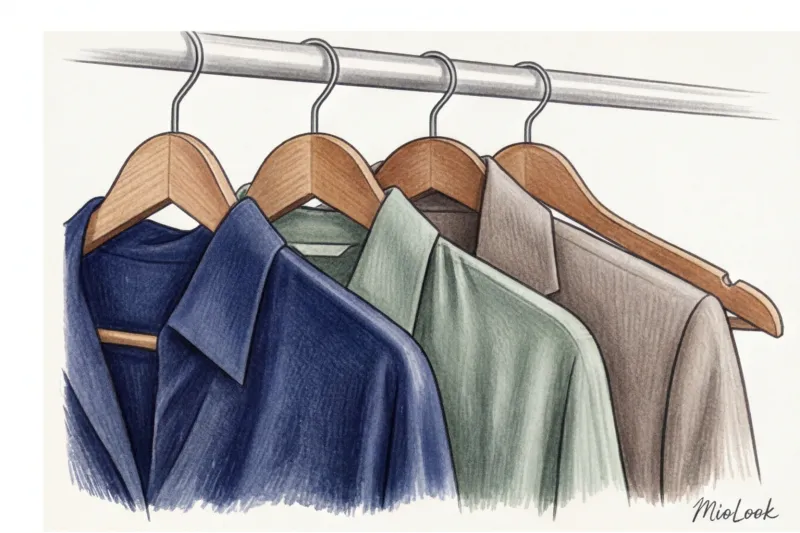
Forget shapeless cardigans. Your best ally is a tweed or heavy wool jacket. These styles (like classics from Zara or more structured options from COS) hold their shape and pull the look together.
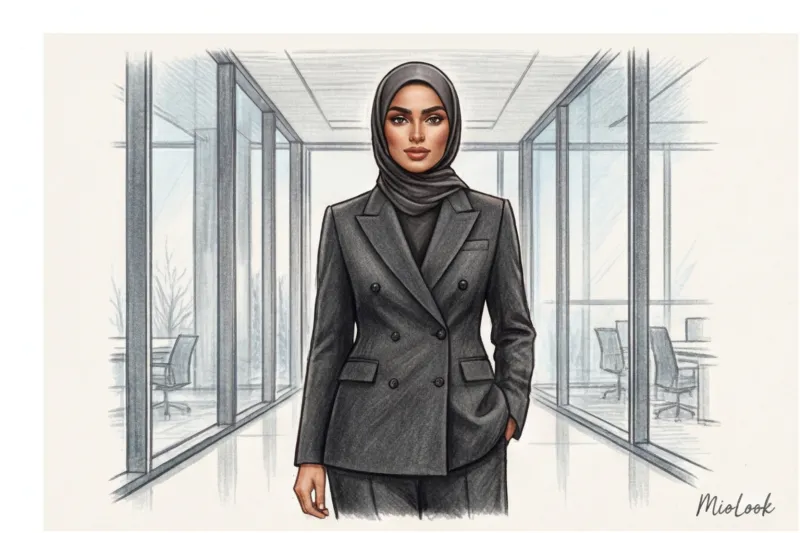
Another brilliant element of the winter capsule collection is the suit vest. It's not just a fashion trend of recent seasons; in winter, it works as an extra warm layer under a jacket across the chest and back, leaving your arms free for gesticulating at a presentation. Complete the capsule collection with a long-sleeved wool sheath dress—it's a ready-made, one-step solution for a day when you don't have time for complicated styling.
Outerwear and Flight: The Heaviest Rule
As we've already established, there's no room in a suitcase for bulky items. So, we pack our heaviest and bulkiest items on the plane. Choosing outerwear for a business trip is always a compromise between status and practicality. And here, I have a clear favorite.
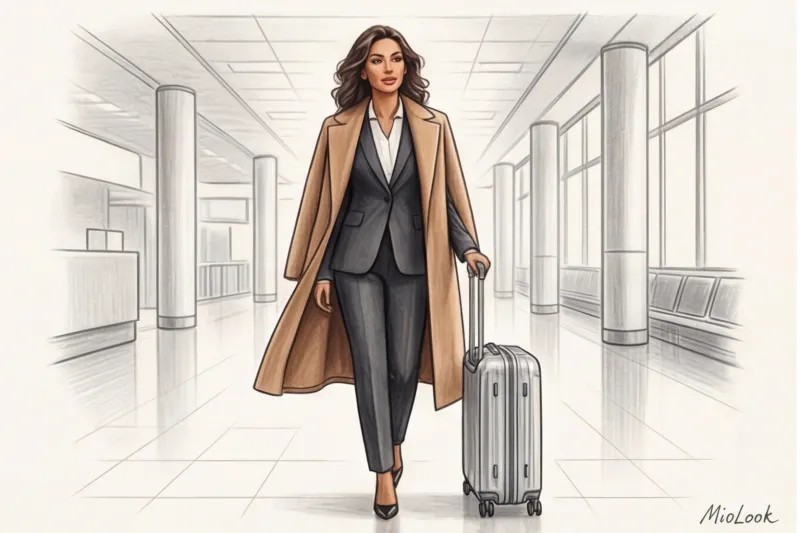
A wool robe coat (in the style of legendary Max Mara models) is a clear winner over a down jacket in a business setting. Its waist-accented silhouette, a nod to Dior's famous 1947 New Look, instantly conveys elegance. A long coat covers skirts and dresses of any length without breaking the silhouette. In the €250+ range, you can find excellent models made of pure wool with added cashmere.
If your destination involves severe frost and a down jacket is absolutely essential, choose minimalist styles. Straight cuts, matte water-repellent fabric, deep, elegant colors, and a complete absence of fur trim or shiny hardware. When folded in the overhead compartment on a plane, coats should be folded inside out (folded in half across the back, shoulder to shoulder) to prevent creases and dust from appearing on the outer fabric.
Access to MioLook for €0.99 — one-time payment
Start creating the perfect look with the help of artificial intelligence. Upload your items, and the app will create ready-to-wear outfits for any weather.
Get access — €0.99 onceWinter Travel Shoes: Between Snowdrifts and Parquet Floors
One of my clients, a brilliant financial analyst, once botched an important pitch in snowy Moscow. She arrived at the meeting in massive Ugg boots because "there was a blizzard outside" and forgot to bring a change of shoes. Standing before the board of directors in a formal suit and shapeless winter boots, she felt so insecure that she forgot half the presentation. She never forgot that lesson.
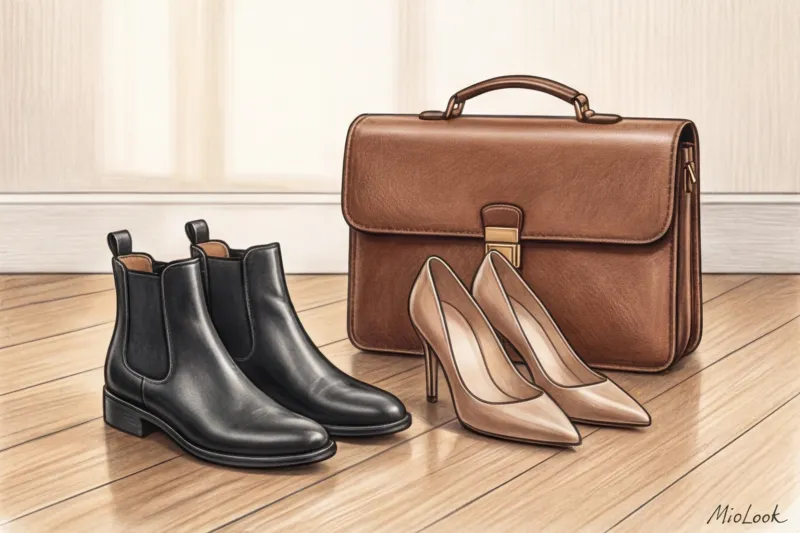
A strategy should always consist of two pairs. For travel, you wear simple leather Chelsea boots with a thick sole or elegant tube boots with a sturdy heel. Lightweight classic pumps or minimalist loafers go in your suitcase. Changing your shoes in a taxi before entering a business center or in the restroom on the ground floor takes exactly 40 seconds, but it saves your professional image.
And my personal life hack for those who prefer suede shoes: buy a pack of thick medical shoe covers. If you have to run from your hotel to a taxi through slush, just put them on over your suede ankle boots and take them off in the car. It sounds funny, but this will keep your shoes (and your nerves) in perfect condition.
Packing Checklist and Life Hacks: How to Fit Winter into Carry-On Luggage
Mastery of packaging is what separates a professional stylist from the average person. Over the years of creating looks for on-location shoots, I've developed a strict system. There's a lot of debate online about whether it's better to roll clothes or fold them the traditional way. For a winter business trip, the answer is ambiguous.
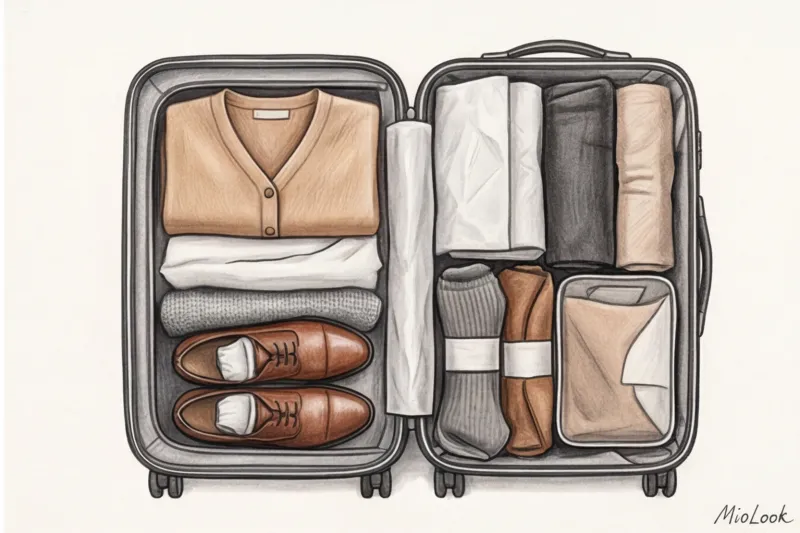
Roll up wool turtlenecks and jackets absolutely not allowed — you'll deform the fibers and shoulder pads. They should be folded, placing sheets of tissue paper (tissue) between the layers. The paper reduces friction between the fabrics, and the items will be virtually wrinkle-free. Thermal underwear, knit tops, and loungewear, on the other hand, can be safely rolled into tight rolls.
When are vacuum bags a mistake? This is a fair warning: never vacuum cashmere, natural wool, or structured jackets. The fibers break under pressure, causing the item to lose its fluffiness and look permanently "crumpled." However, vacuum bags are ideal for dirty laundry on the return journey, as well as down vests (which quickly regain their shape) and thick socks. Don't forget to utilize the empty spaces: tights, socks, and small electronics fit perfectly inside a change of shoes, saving precious inches.
Bottom line: Your style shouldn't depend on the weather forecast.
A successful winter business trip doesn't require compromising on aesthetics or warmth. It's simply a matter of smart planning, using high-tech fabrics, and understanding layering. By ditching bulky sweaters in favor of merino wool and silk, you'll not only avoid bulk but also feel comfortable in any meeting room.

Investing in the right first layer can save you hundreds of euros on luggage fees and dry cleaning costs for outerwear. If you're unsure, The "smart wardrobe" feature in the MioLook app will help you digitize your things and assemble them into perfect capsules in advance, calculating the compatibility of layers.
And Camille Durand's final rule: the day before your flight, put on a layered outfit and wear it at home (at room temperature) for at least 20 minutes. If you feel unbearably hot, the layer is too thick. Replace it, and you'll be ready to conquer new horizons!