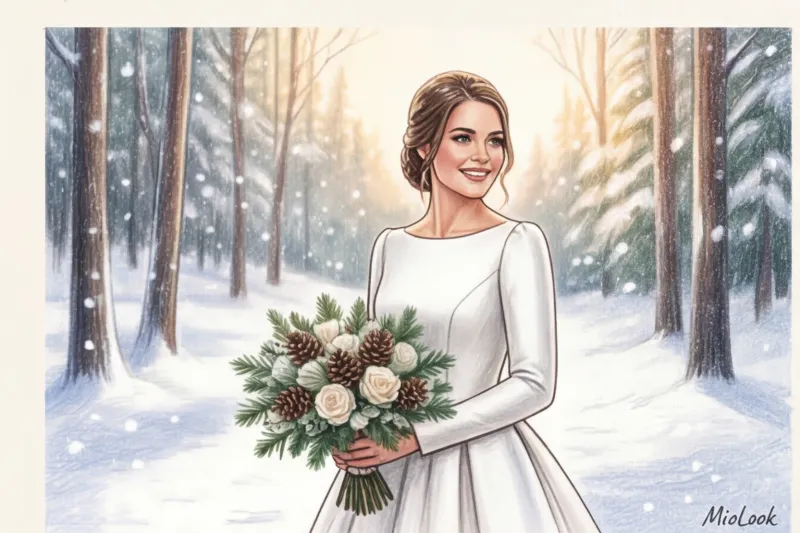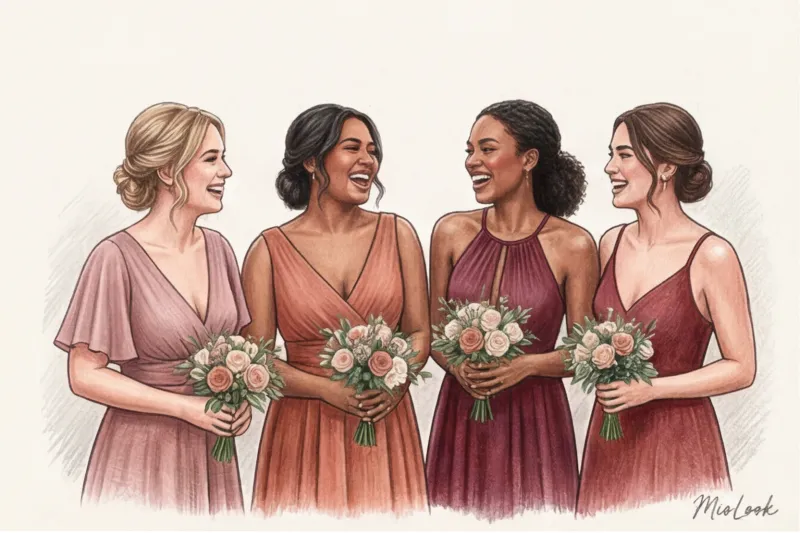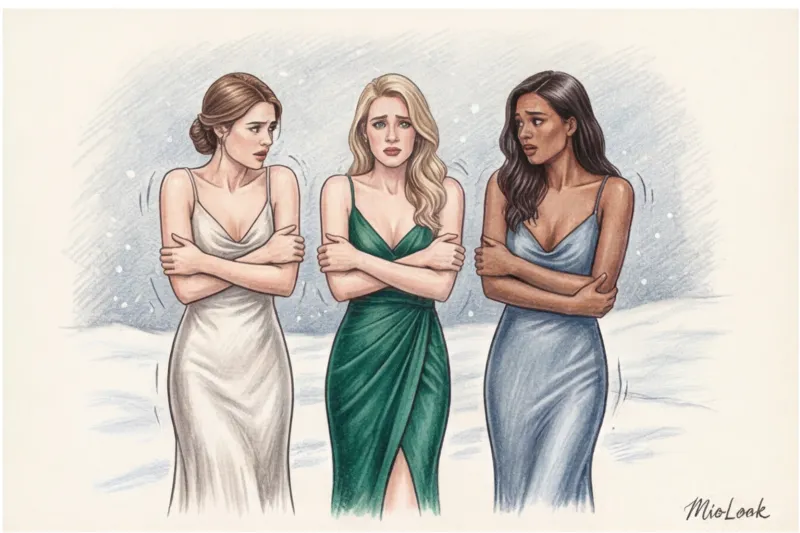
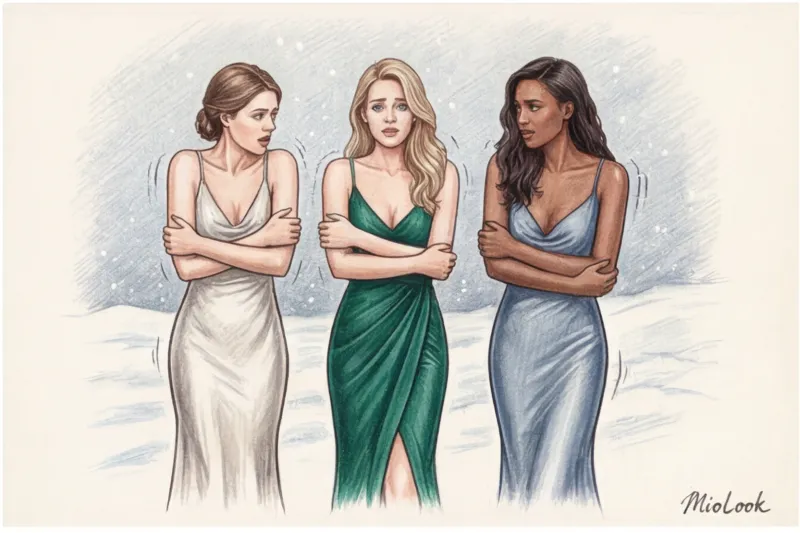
February, mountains, minus 10 degrees. The bride looked stunning in a thick satin dress with long sleeves, but her four bridesmaids, in identical gowns of thin polyester chiffon, literally turned blue. I still shudder when I recall that shoot from five years ago. The girls' teeth were chattering, their shoulders reflexively rose to their ears, and in the group shots, instead of joyful smiles, they were frozen in grimaces of pain from the cold. It was then that I finally realized: traditional summer stereotypes of formal fashion not only don't work in winter—they ruin the entire celebration.
Choosing Bridesmaid dresses for a winter wedding , most people make the same mistake: they buy standard open models and hope to save the situation with cheap faux fur capes. Spoiler: this doesn't protect you from the cold or from style failures. We've already covered global trends in more detail in our The Complete Guide: Bridesmaid Dresses: Trends and Selection Guidelines , and today we'll talk about the harsh (but stylish) reality of winter and textile engineering.
A Wedding at a Loss: Why Summer Stereotypes Are Ruining Winter Photoshoots
The body's physics can't be fooled by a pretty picture on Pinterest. When the temperature drops below freezing, thin satin or flowing chiffon instantly cools, turning into an icy compress on the skin. The body reacts instantly and uncontrollably: blood circulation is disrupted (leading to "blue lips" and red spots on the décolleté), posture deteriorates due to constriction, and movements become stiff.
In my experience, we had to shorten an outdoor photo shoot from the planned hour to a measly 15 minutes due to poorly selected materials for the bride's entourage. The girls were physically unable to pose. A structured, thoughtful approach to freezing temperatures isn't a stylist's whim, but a fundamental necessity for the comfort of guests and high-quality photos.
If you want to make it easier to coordinate looks for the whole group, try the "smart wardrobe" feature in MioLook There you can create a visual mood board, upload references, and ensure that the dense textures of all participants harmonize with each other.
Ideal Fabrics: Bridesmaid Dresses for a Winter Wedding
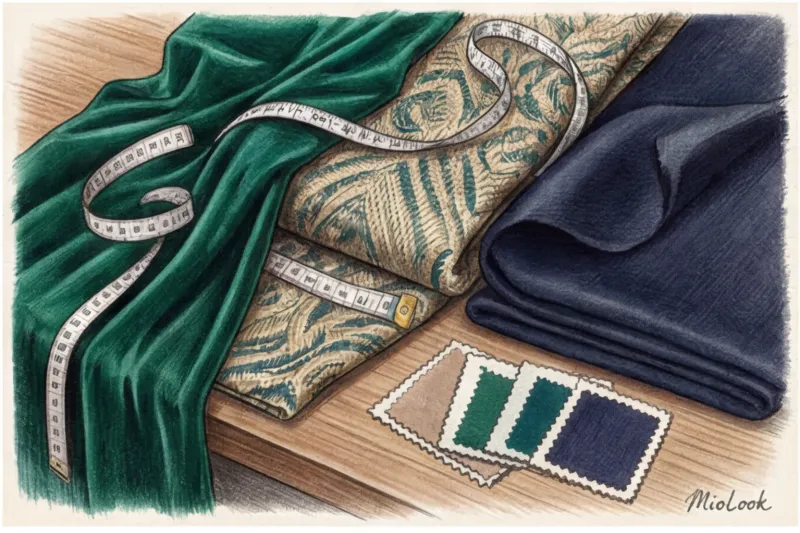
The main rule of a winter wardrobe: the visual weight of the fabric should match the season. Thin, flowing silk against a backdrop of heavy snowdrifts or graphic, bare trees looks lonely and out of place. Your main ally when shopping isn't the color, but the sewn-in label indicating the composition. According to textile engineering research, a combination of viscose with natural wool or heavy cotton retains up to 60% more warmth than standard 100% synthetic wedding tulle.
Velvet: luxury that truly warms
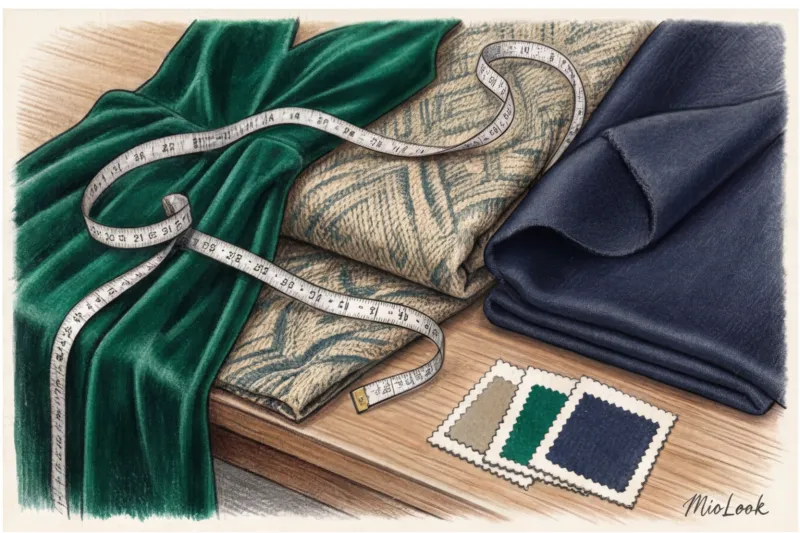
But be extremely careful: not all velvets are the same. Cheap, mass-market polyester velour doesn't breathe, doesn't provide warmth, and is incredibly staticky, attracting dust. Look for blended options—cotton or viscose with added silk. This fabric not only creates an air gap that maintains body temperature, but also captures the scant winter light beautifully. In flash photos taken in a dark banquet hall, high-quality nap looks deep and expensive.
Suit wool and dense crepe
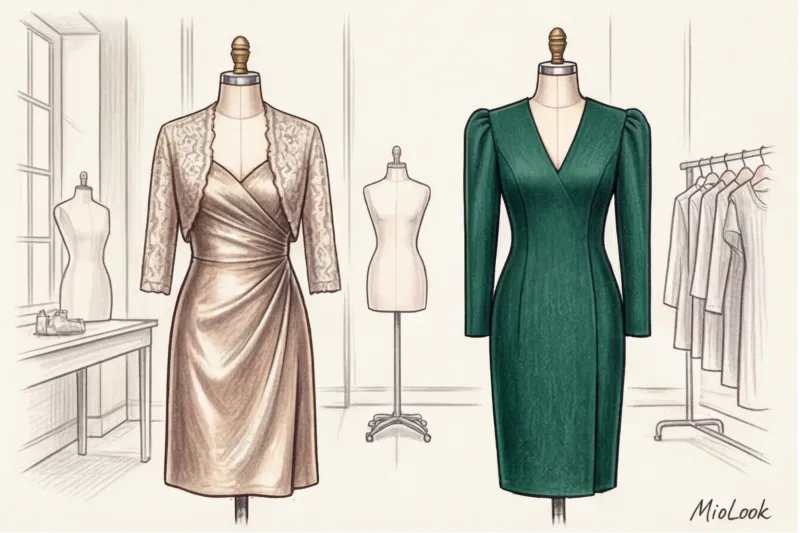
Borrowing textures from formal tailoring and business wardrobes has been my favorite stylistic approach of recent years. Thick crepe or fine suit wool (virgin wool) hold their shape perfectly and don't flutter in a piercing wind. Plus, it's an incredibly conscious choice. A woman can wear a sheath dress or A-line dress made of high-quality wool even after the event, layering it with a voluminous cashmere sweater for the office or an exhibition.
Jacquard and brocade: the architecture of the silhouette
These heavyweight materials with textured metallic or silk patterns create a natural frame and a reliable barrier against drafts. Jacquard midi dresses with a full skirt or a rigid, architectural bodice fit perfectly into the winter fairytale aesthetic. They are so self-sufficient that they require no complex styling—the texture speaks for itself.
Your perfect look starts here
Join thousands of users who look flawless every day with MioLook. Our intelligent AI stylist will create the perfect look for you.
Get access — €0.99 onceStyles that keep you warm: breaking away from the norm
Save the strapless corsets and slip dresses with thin spaghetti straps for July ceremonies. Modern fashion dictates a sensible mix-and-match concept: the bride sets the color palette and fabric density, but allows each bridesmaid to choose a cut that suits her body type and personal body temperature.
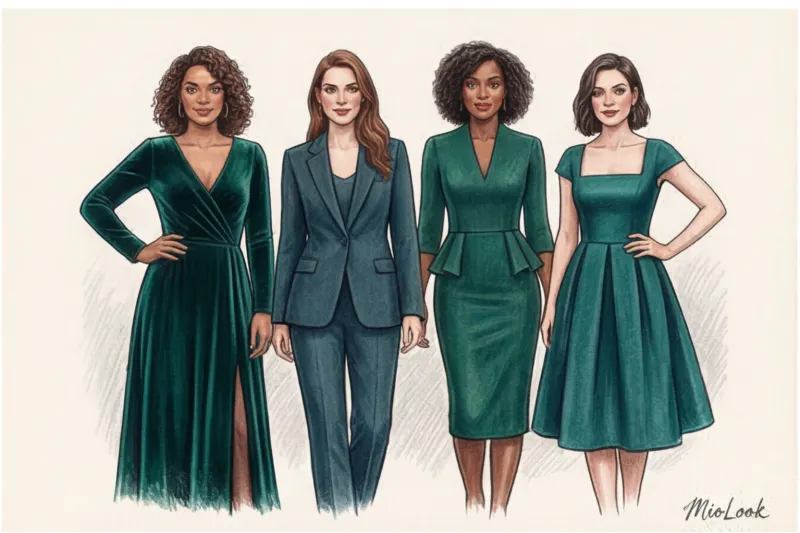
Long sleeves and a closed back: Victorian aesthetics
Closed-toe styles aren't about excessive modesty, but rather aristocratic elegance. Long, voluminous bishop sleeves and high stand-up collars are currently at the peak of popularity, as evidenced by the latest shows by Elie Saab and Zuhair Murad. The key lies in practicality: a closed front and closed back allow for the use of what we'll discuss in detail below—hidden layers.
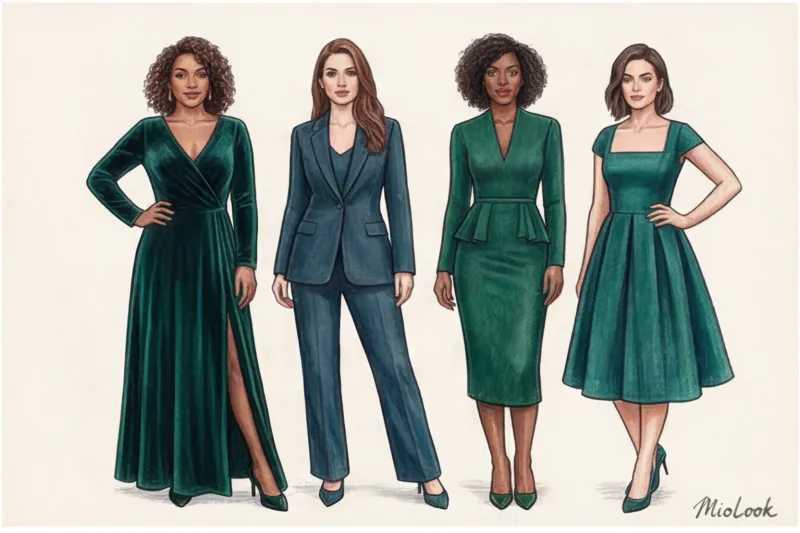
Pantsuits and overalls: a bold alternative
Who ever said a bridesmaid had to wear a dress? Two-piece suits have become an absolute hit. A velvet tuxedo in emerald, wine, or sapphire offers uncompromising warmth and maximum freedom of movement. And when paired with large statement chandelier earrings and a sleek updo, the solemnity soars beyond any standard tulle ensemble.
Hidden insulation: stylist secrets that aren't covered in glossy magazines
Now I'll share an insider tip that has saved my winter projects dozens of times. True comfort comes not from what you layer on top, but from what's hidden from cameras. No layer will protect you as well as a well-chosen thermal base layer.
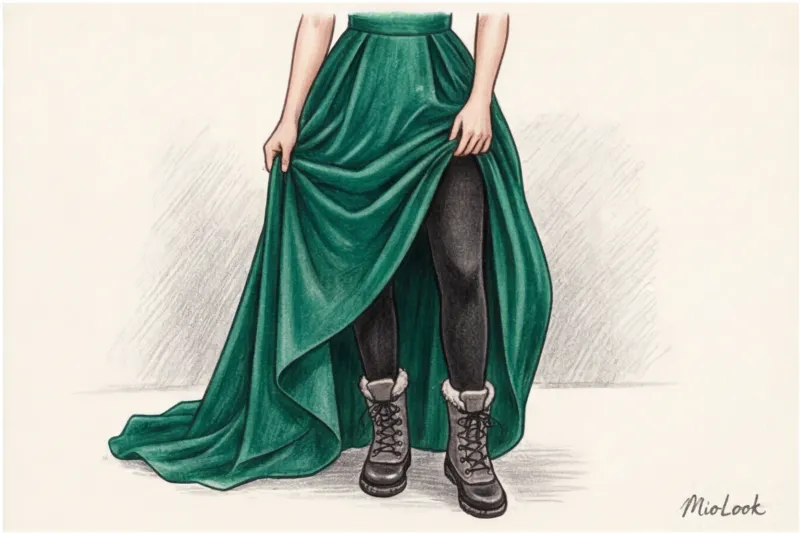
- Smart thermal underwear: Under a long maxi skirt or wide palazzo pants need to Wear technical thermal leggings (for example, made of 150-200 g/m² merino wool). If the top has long sleeves and no cutouts, a thin, anatomically designed thermal long sleeve top in a powder or nude shade will be the perfect layer underneath.
- Tights with a secret: If your dress code calls for a midi length, look for special winter tights with a fleece lining (200 denier and up), which visually mimic the look of thin, translucent 20 denier nylon against bare skin. It's a brilliant optical illusion that has conquered the Asian and now global markets.
- Chemical heating pads: A must-have for outdoor locations. Self-adhesive disposable heating pads (teperoids) can be applied to the lower back (strictly over thermal underwear, not on bare skin!), placed in deep coat pockets, or directly into boots. They provide reliable warmth for up to 6-8 hours.
This method has clear limitations. The thermal underwear life hack is categorically It doesn't work With dresses made of thin bias-cut silk or flowing satin, the dense seams and elastic of the bottom layer will show through the fabric, ruining the silhouette. That's why I insist on heavy textures.
Ready to start planning your looks?
Try the MioLook free plan—no commitments required. Organize fittings and create capsule collections with just one click.
Get access — €0.99 onceHow to Replace Wedding Capes: Mix & Match Outerwear
Let's be honest: traditional white boleros and short faux fur capes are an outdated relic that visually cheapens the entire effort of putting together an outfit. Worse, according to a 2023 report by Lyst, a platform that analyzes shopping habits, such items have a zero sustainability rating: they're bought for a single day and then decompose in landfills for decades.
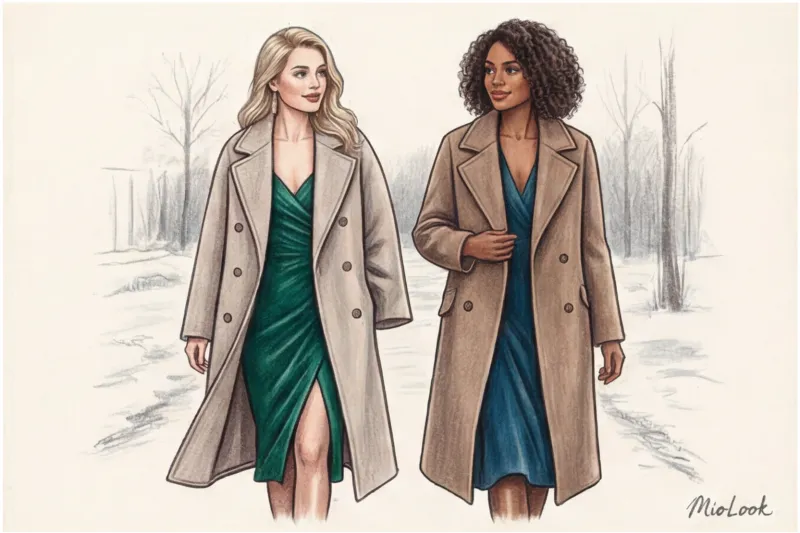
Instead of spending €100–€150 on questionable polyester fur, take a cost-per-wear approach. Invest in a quality double-breasted wool coat in a basic shade (check out premium lines from brands like Massimo Dutti, COS, or local labels), a heavy oversized tweed jacket, or a luxurious cashmere stole. This investment will pay off because you'll wear it for years in your everyday life.
How to unify different outerwear in a photo? Agree on a unified color block with your bridesmaids. For example, all the girls in dark green dresses wear formal camel coats. Or, if everyone is wearing completely different outerwear, the bride can give her bridesmaids matching chunky knit scarves—this will unify the group in the photo and make a great keepsake.
Checklist: How to prepare your girlfriends' looks for the cold and a photo shoot
To ensure a 45-minute shoot in a snowy park goes smoothly and without compromising your health or mood, I always send my clients this short checklist. You can save it to your planner in MioLook app to keep everything under control.
- Replacement shoes are the law: No stilettos in the snowdrifts. For outdoor shoots, the girls wear stylish leather boots with chunky soles, jockey boots, or insulated Chelsea boots. And elegant pumps are safe in the warmth of the banquet hall.
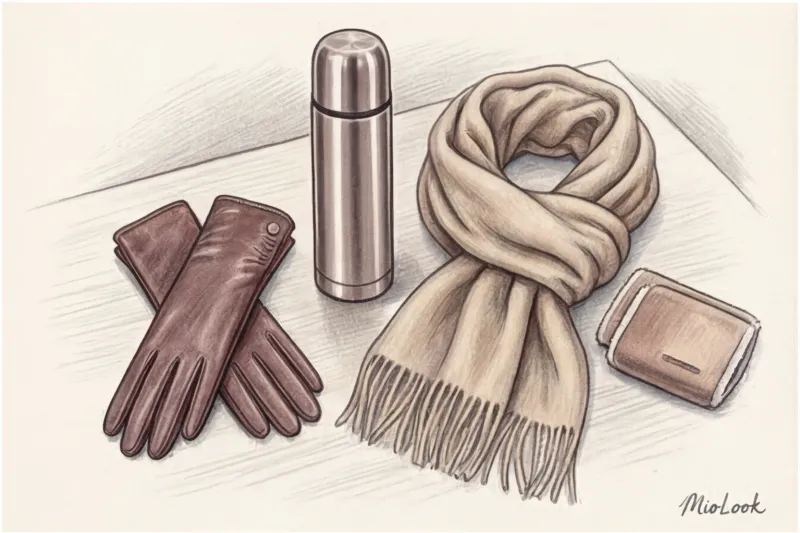
- Hand protection: Red, chapped knuckles will ruin any close-up shot of bouquets. Swap bare hands for long leather or suede gloves. They look cinematic and add texture.
- Thermos and Blanket Strategy: While the photographer takes the newlyweds' portraits, the entourage shouldn't be shifting from foot to foot in the biting wind. Assign someone responsible for a couple of stylish thermoses of hot ginger tea (no alcohol in the cold—it creates a false sense of warmth and dangerously dilates blood vessels!) and a few thick IKEA blankets to wrap themselves in between takes.
"A good winter style is the art of not enduring the cold for the sake of dubious beauty, but making warmth an aesthetic part of the image itself."
Planning a winter celebration requires a little more logistics and thoughtful consideration of materials. Leave the delicate tulle to summer brides. Opt for architectural crepe, luxurious velvet, and high-quality outerwear. Add a secret weapon: hidden thermal underwear, and the only thing that will take your breath away on this day will be the beauty of the moment, not the icy wind.