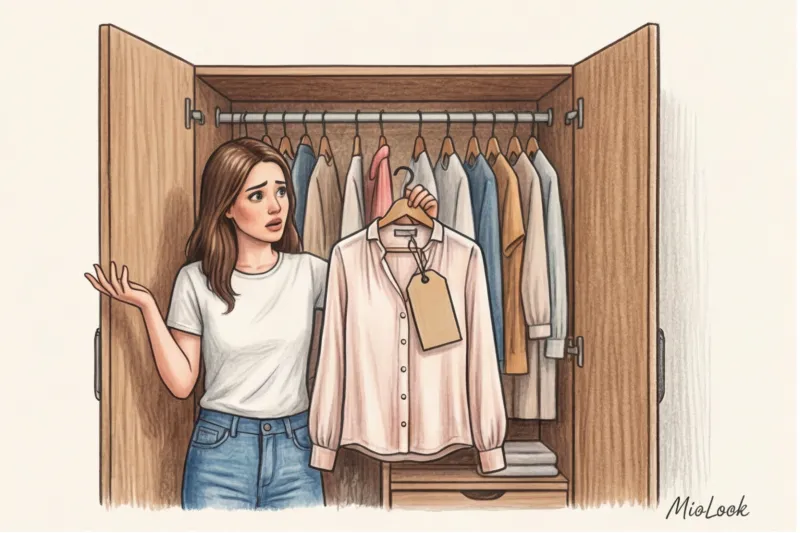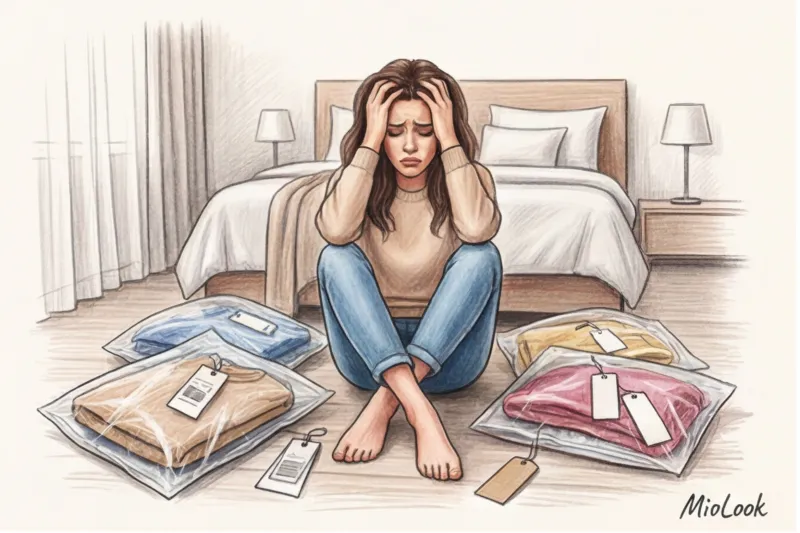
Open your closet right now. We bet you can easily find at least one item with its cardboard tag still intact. According to statistics, the average European woman stores around €400 worth of brand-new, never-worn items in her wardrobe. This isn't just money sitting idle—it's a daily source of stress and irritation.
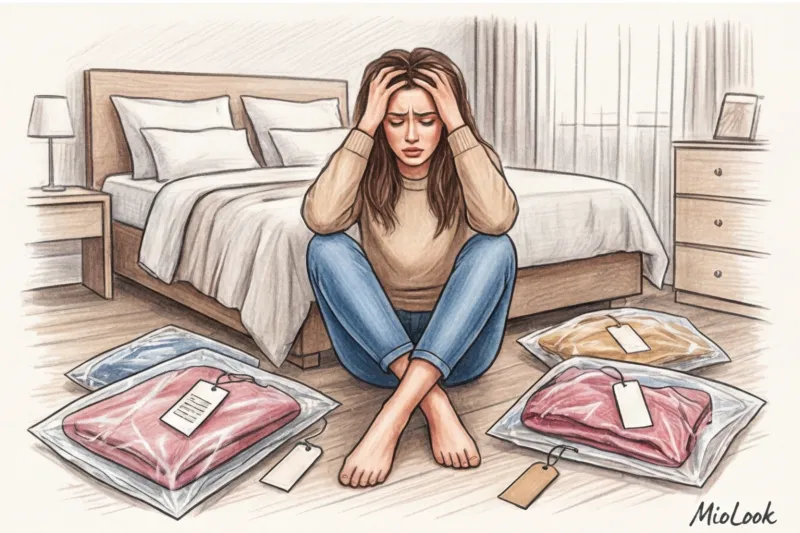
Over 12 years of working as a stylist, I've noticed a pattern. Every third question I hear during my consultations sounds exactly the same: "Katarzyna, why don't I wear what I buy, even though I spend hundreds of euros on clothes every season?" My closet is bursting, the doors won't close, and my morning routine becomes a torment.
If you're familiar with the feeling of cognitive overload in the morning, know this: the problem isn't your figure or lack of taste. It's the psychology of consumption. We've covered the mechanisms of overchoice in more detail in our The Complete Guide to the Psychology of Shopping: How to Stop Buying Unnecessary Items , and today I propose to dissect the phenomenon of the “cemetery of things with tags.”
The Full Closet Paradox: Why Don't I Wear What I Buy?
A 2023 study by the WGSN trend bureau revealed a brutal truth: the peak of dopamine (the pleasure hormone) during shopping doesn't occur when you put something on for a meeting or a date. It ends exactly the second you tap your card at the checkout terminal or press "Pay" in an app.
We're caught in a dopamine trap. We buy process , not an item. Once the package arrives at your home, the magic wears off, and the H&M cardigan becomes just a piece of fabric to be washed, ironed, and somehow integrated into your existing wardrobe.
"When you choose clothes, you're not choosing the fabric. You're choosing how you want to feel. And if a piece doesn't make you feel that way at home, it'll just hang there with the tag."
Imagination Syndrome: We buy dreams, not clothes.
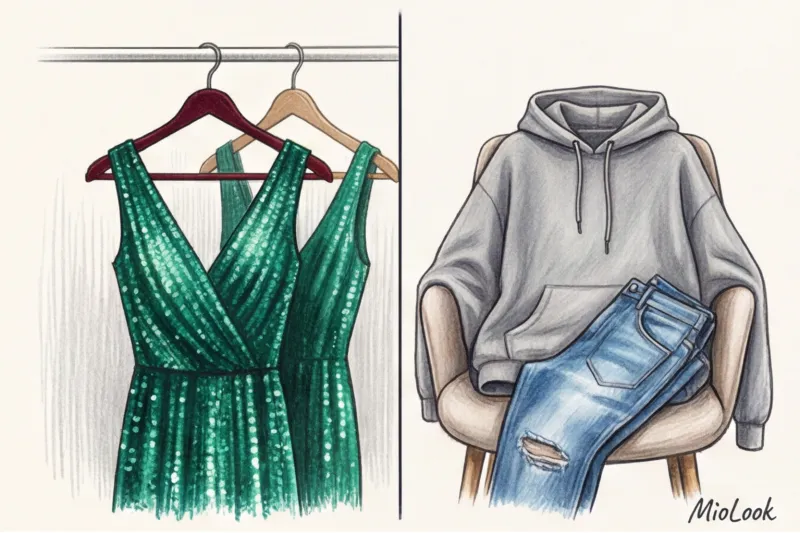
One of my clients in Milan, let's call her Marta, worked 60 hours a week as a financial analyst. When we opened her closet, I discovered three stunning silk slip dresses from Massimo Dutti (each costing about €120) with tags still on. Marta had bought them for an imaginary yacht vacation on Lake Como—a vacation she hadn't taken in three years.
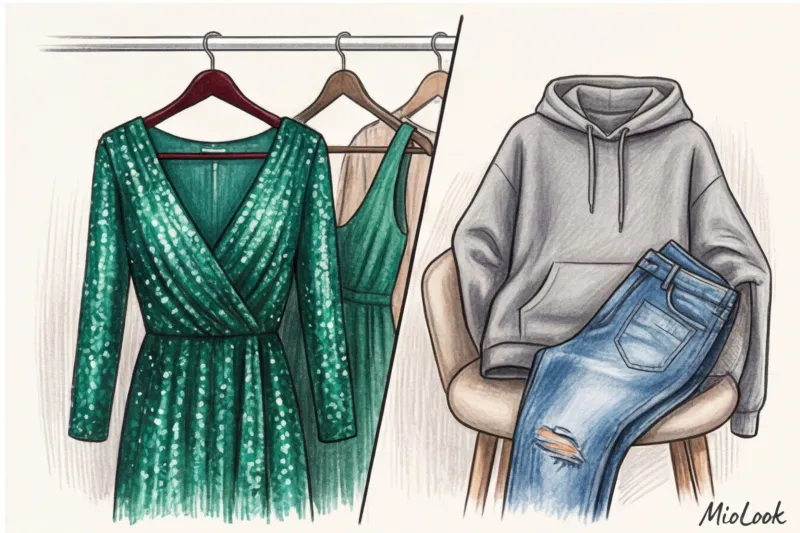
Psychologists call this the "Idealized vs. Actual Self" conflict. We often invest in a version of ourselves that doesn't exist at 8 a.m. on Tuesday: a vamp, a bohemian artist, a party girl who never leaves the bars. We buy those three-piece suits and see-through blouses like tickets to an alternate reality.
Fantasy Wardrobe vs. Realistic Schedule
To understand whether you suffer from imaginary life syndrome, I always give my clients a tough but sobering exercise - “The Pie of Time”.
- Draw a circle and divide it into sectors: what percentage of time per week do you spend in the office, at home with children, on walks, at parties.
- Now look at your wardrobe. Are the proportions consistent?
If 40% of your closet consists of silk blouses from &Other Stories and cocktail dresses, but in reality you spend 80% of your time working from home and walking the dog, wearing holes in your third pair of basic jeans, it's no wonder you have nothing to wear.
Your perfect look starts here
Join thousands of users who look flawless every day with MioLook.
Get access — €0.99 onceMass-market traps: the illusion of profit at Zara and H&M
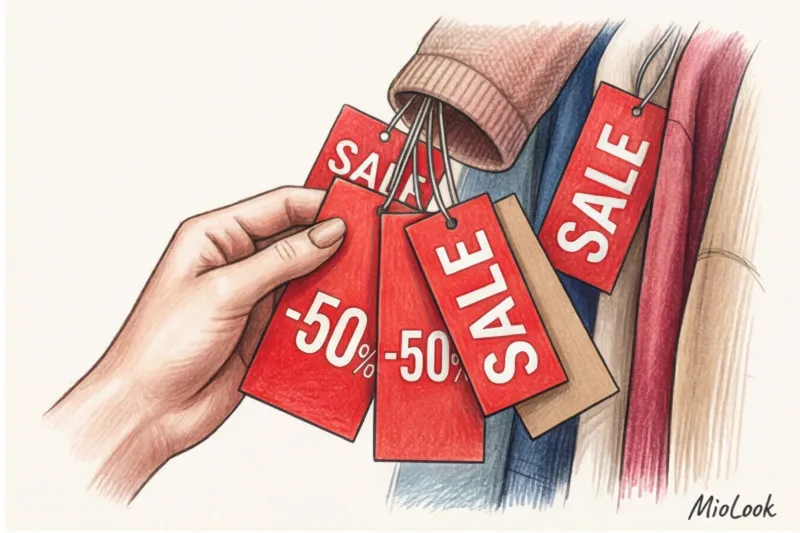
European mass markets have mastered the techniques of behavioral economics. Have you ever caught yourself buying a fifth black T-shirt at Zara simply because it has a red tag that says "Sale €15"? I call it the "€15 effect."
Fear of missing out (FOMO) makes us buy things we wouldn't even consider at full price. But let's calculate the math behind style using the Cost Per Wear formula.
- T-shirt for €15 on sale: You wore it 0 times. 15 € / 0 = infinitely high cost. It's dead weight.
- COS thick cashmere sweater for €200: You wear it twice a week for 6 months (about 50 times). 200 € / 50 = 4 € per outing.
An item bought at 70% off but never worn isn't savings. It's 100% wasted money.
Survivorship Bias in the Fitting Room: Why Does an Item Look Different at Home?
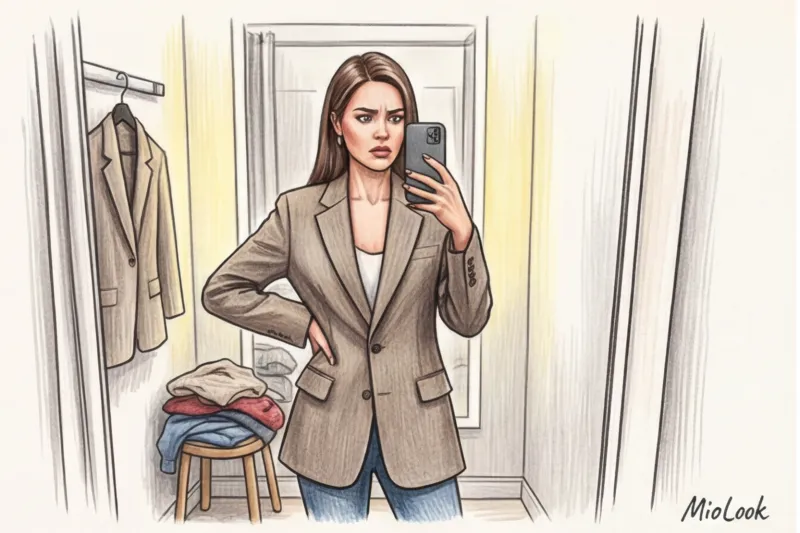
Stores invest millions of euros in lighting design in fitting rooms. Directed, warm light softens silhouettes, conceals cellulite, and enhances fabric hues. At home, in the cool morning light from the window, a carriage turns into a pumpkin.
Moreover, in the fitting room, we perform an ideal, but unrealistic, test: we stand up straight, with our stomachs pulled in and our backs straight. In real life, we slouch over a laptop, run for the bus, or squat to pick up our keys.
I'll be honest: this rule works almost always, but even it has its exception Sometimes an item looks plain on a hanger in the store, but at home, paired with your favorite vintage Cossack boots or the right belt, it suddenly "sings a tune." The problem of fitting is a double-edged sword. But in 90% of cases, if you haven't "field-tested" the item in the booth (squatting down, raising your hands), you'll be disappointed at home.
Access to MioLook for €0.99 — one-time payment
A smart AI stylist will select the perfect look.
Get access — €0.99 onceToxic Labels: Why Slimming Clothes Are Ruining Self-Esteem
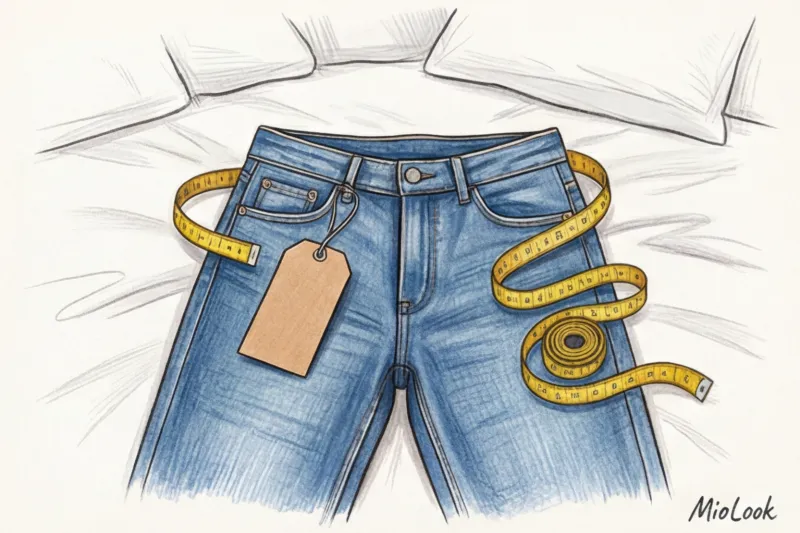
I want to debunk one of the most harmful myths in the style industry. The widespread advice to "buy expensive jeans a size smaller to motivate yourself to lose weight" isn't just stupid; it's psychological self-harm.
What's really happening? You open your closet. You see those jeans with the tag. Your brain instantly reads, "I'm not good enough right now." Your cortisol (the stress hormone) levels rise. Those jeans act as a daily visual reproach in your own home.
My strict rule as a stylist: clothes should serve your body here and now, not punish it for not meeting some standard. Storing motivational pieces hinders your ability to dress stylishly at your current weight.
Katarzyna Nowak's Wardrobe Audit: What to Do with "Dead Weight"
The main reason we keep things with tags for years is described in psychology as the Sunk Cost Fallacy. We think, "I've already spent €80 on this; if I give it away, I'm admitting defeat."
Acknowledge it. This will free up a ton of resources. Pull all your tagged items out onto your bed and categorize them into three categories:
- Return to store: If it's been less than 14-30 days, don't be lazy, just do it.
- Resell: European platforms like Vinted or Vestiaire Collective (for the premium segment) are designed for exactly this. Take a photo in good daylight, honestly state that the item is new with tags, and get at least 50-70% of the purchase price back.
- Give away/donate: It's easier to give things from budget brands to friends or recycle them (many stores give discount coupons for this).
Don't leave them "just in case." Physically clearing the space magically clears the mind and frees up resources for making the right style decisions.
The Hard Test: The Three-Pair Rule
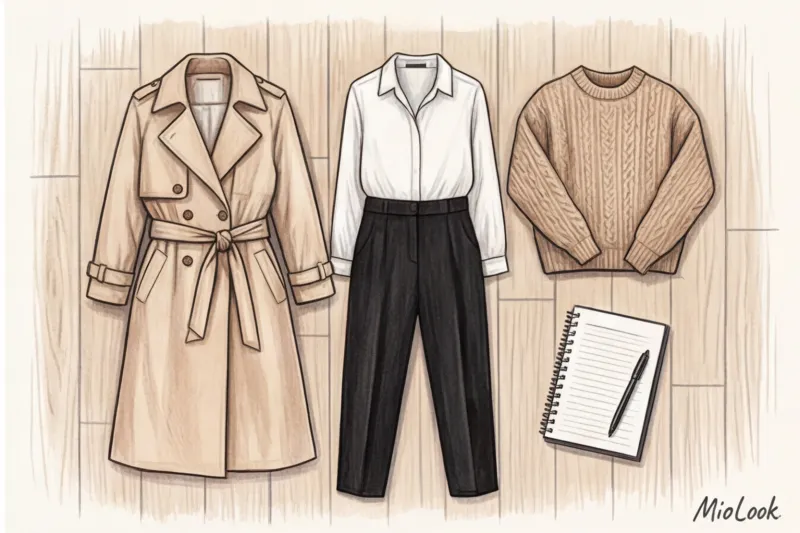
To avoid "orphans with tags" appearing in your closet in the future, use the three-combination test. If you're holding a new skirt in your hands and can't immediately, in your mind, create THREE completely different looks with it from the items that they're already hanging in your closet - put it back immediately.
I've found the perfect technical solution for my clients. I ask them to digitize their basic items through the "smart wardrobe" feature in MioLook When you're standing in the fitting room, you simply open the app and check if the potential purchase matches your favorite pants and jacket. Artificial intelligence eliminates emotionally charged, one-time purchases.
How to Break the Vicious Cycle: The Rules of Mindful Shopping
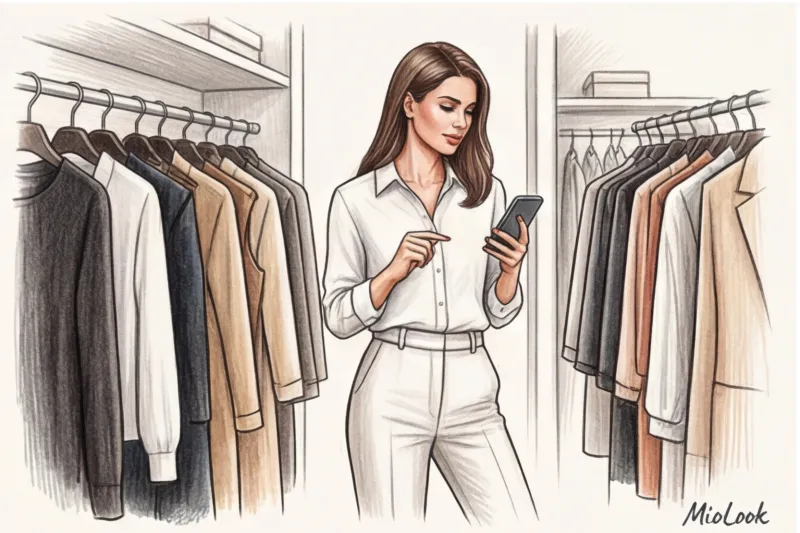
Shopping shouldn't be a way to relieve stress at work or a fight with your partner. If you want your wardrobe to work for you, rather than being a warehouse for fashion brands, implement three rules of smart consumption:
- 24-hour rule: If you see the perfect item, put it aside at the checkout until tomorrow or keep it in your online shopping cart. Let the dopamine kick in. Yes, sometimes there's a risk that your size will be bought (this is exception works for limited collections), but in 99% of cases, the mass market will not go anywhere.
- Treat shopping like a grocery store: You wouldn't go grocery shopping hungry and without a list, would you? Make a shopping list on your phone. If it says "white poplin shirt," you're not allowed to look at sequin dresses.
- Shift your investment focus: Spend your money on what you spend 80% of your time in. Perfectly fitting, slim jeans, quality leather shoes, a cashmere turtleneck.
The next time you're tempted to grab another "bargain" on sale, ask yourself this question: "Would I buy this right now at full price?" If the answer is "no," feel free to return it to the hanger. Your ideal wardrobe begins not with what you bring into the house, but with what you consciously leave in the store.