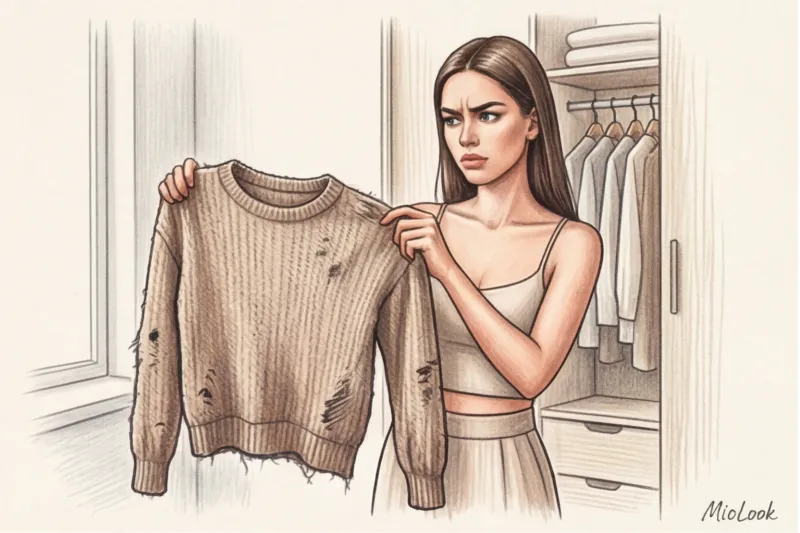
Let's be honest. That stretched-out, pilling acrylic sweater you put in a bag for an orphanage or charity yesterday with a sense of accomplishment isn't helping. It's shifting responsibility for your trash onto someone else's shoulders.
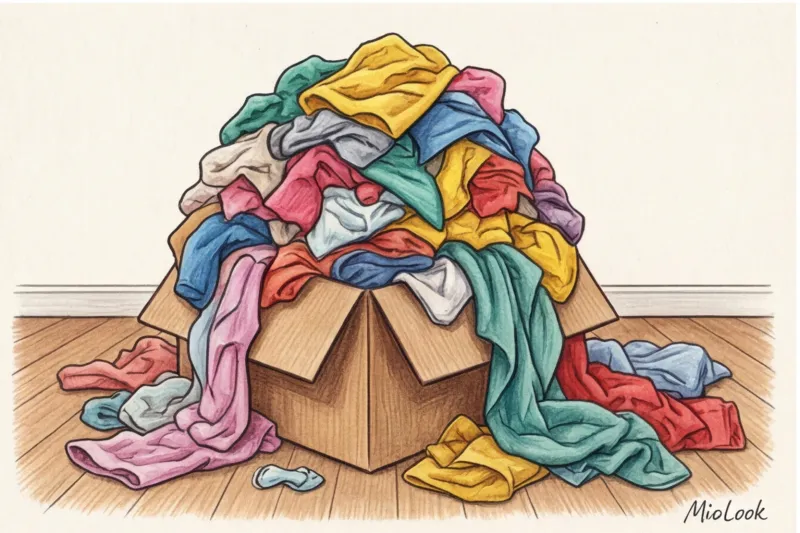
When I first voiced this idea to one of my clients, she was shocked. Anna sincerely believed that any item, even a washed-out T-shirt from a mass-market store, would definitely be useful to someone. The reality is that charities spend enormous amounts of money on disposing of the unusable things we "donate" to them. I discussed the origins of this consumption problem in more detail in our the complete guide to conscious fashion Today we will move on to hard practice.
In this article I will tell you, Where to donate old clothes without harming the planet or funds, and I'll share a stylist's algorithm that will forever rid you of the guilt over throwing out things.
The Illusion of Charity: Why You Can't Just Give Everything to Those in Need
The fast fashion era has shattered the traditional system of charity. Clothing used to be a resource—heavy cotton, natural wool, strong seams. A garment would last for decades and might have three owners. Today, 60% of what hangs in closets is synthetic, losing its shape after the fifth wash.
According to a major 2023 report by the Ellen MacArthur Foundation, approximately 80% of donated clothing worldwide ends up in landfills or incinerated. Why does this happen?
"People often confuse decluttering with charity. By placing outright trash in collection containers, you force the charity to pay for sorting and landfill removal. Up to 30% of some organizations' budgets goes toward disposing of dirty laundry and torn synthetics that were 'donated' to them," according to the regulations of major textile recycling operators.
This is the most important counterintuitive insight to grasp: giving away stretched, stained, or torn clothes made of cheap polyester to those in need is eco-dumping. Such items should be strictly recycled (as rags), not given to low-income families.
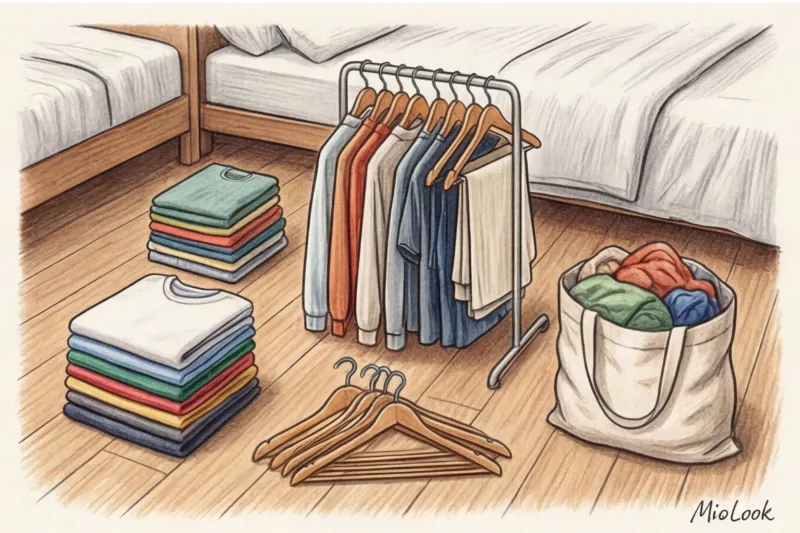
A stylist's algorithm: how to sort things before deciding where to donate old clothes
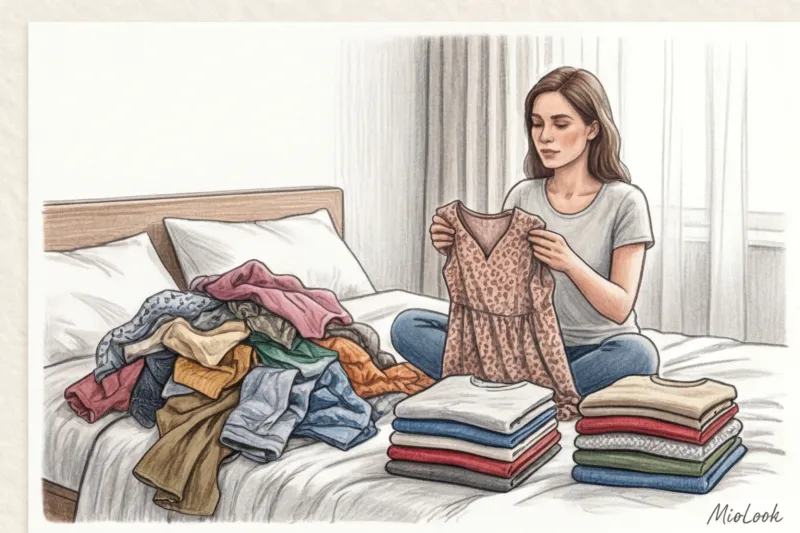
In my practice, wardrobe decluttering often turns into a psychotherapy session. "What if I lose weight?" "I'll save this for trips to the dacha" (spoiler: you want to look normal at the dacha too, not like a scarecrow). To de-escalate emotions, I use a strict "three-pile algorithm" with my clients.
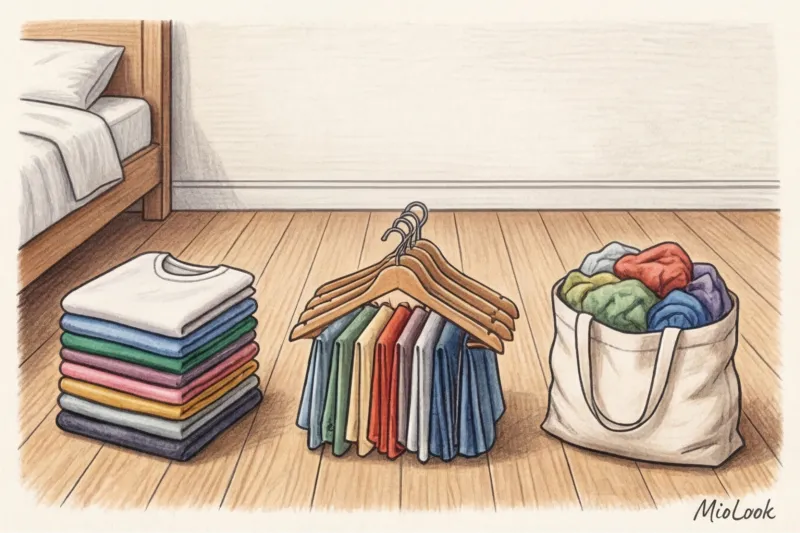
Conduct your audit only in natural daylight—artificial lighting hides yellow stains on collars and frayed fabric. Remove from the closet. absolutely everything and start sorting.
Category 1: Resale and sale (items in perfect condition)
This category includes brand-name items, clothing with tags, shoes in perfect condition, and bags. An important, often overlooked, restriction: resale. doesn't work For basic mass-market clothing. No one will buy your worn white T-shirt from H&M for 300 € because shipping will cost the buyer more than the item itself.
- Where to sell: Local platforms (Avito in the CIS, Vinted in Europe), specialized resale platforms (Oskelly, Vestiaire Collective for heavy luxury), consignment shops.
- How to evaluate: A fair price is 30-50% off the purchase price, even if the item still has the tag. You're selling secondhand, not providing boutique service.
Category 2: For charity (items in good condition)
These are clothes you wouldn't hesitate to lend to a friend or colleague. Clean, undamaged, free of pilling, stains, or broken hardware. And most importantly, they're not outdated. A fitted jacket from 2007 with shoulder pads is best recycled, even if it's in perfect condition. Who needs second-class clothing? Low-income families, orphanage graduates, refugees, and people in crisis situations.
Tired of the chaos in your closet?
Digitize your wardrobe with MioLook's artificial intelligence. Create looks in just a few clicks and buy only what you'll actually wear.
Get access — €0.99 onceCategory 3: Recycling (rags)
Items with stubborn stains, holes, clothes washed to a grayish tint, old bed linens, and towels. What happens to these rags next? They're cut into wiping materials for factories, auto repair shops, and printing houses, or shredded into regenerated fiber (batting, car soundproofing, mattress stuffing).
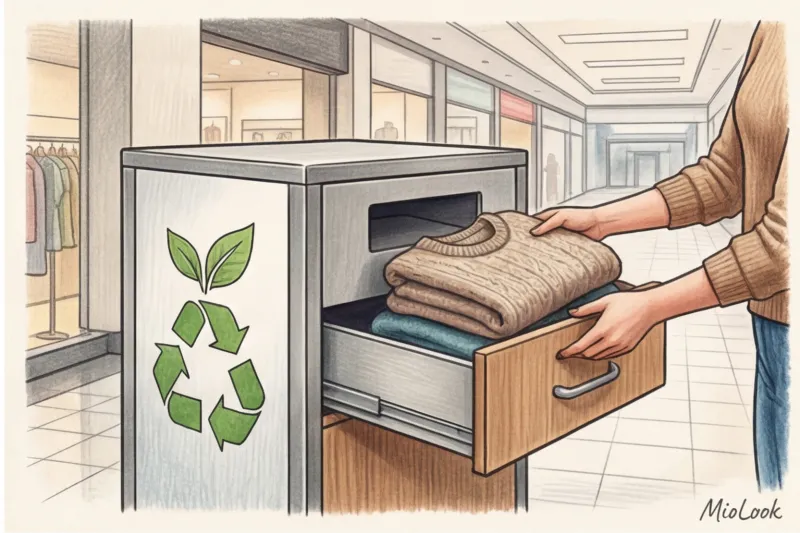
Where to Donate Old Clothes: 4 Modern Eco-Routes
Now that your belongings are sorted, it's time to haul them away. The recycling industry has come a long way—you no longer need to look for dubious collection points in garage co-ops.
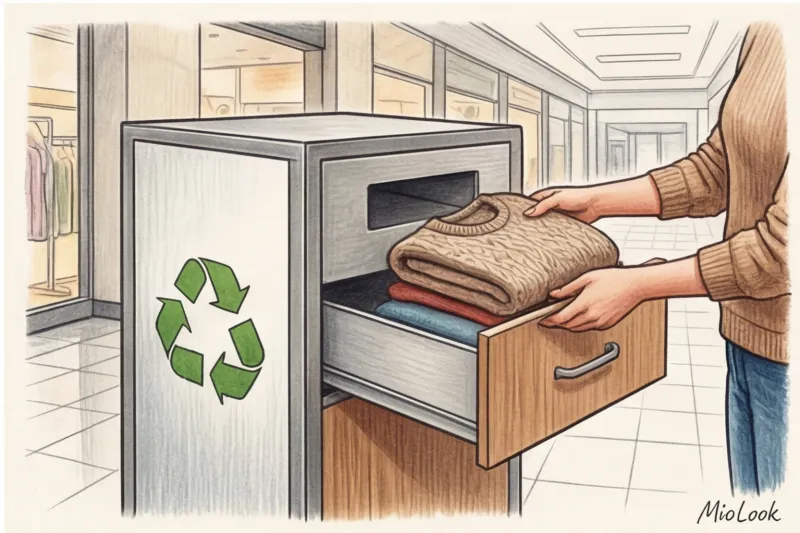
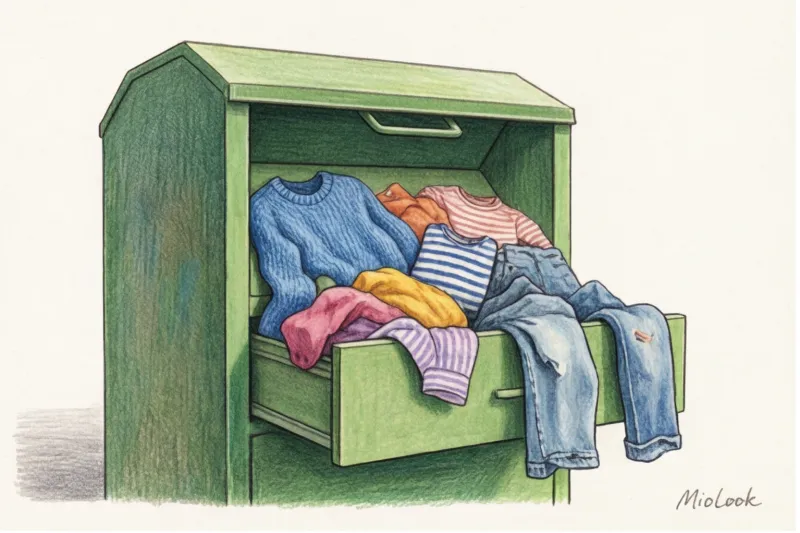
- Containers for funds and eco-boxes. The most convenient urban format. In the CIS, these are containers from the "Second Wind," "Spasibo!", and "Kind Things" foundations. In Europe and the US, these are Oxfam, Goodwill, or Planet Aid boxes. They are usually located in shopping malls or art clusters. Items are sorted: good items go to a charity shop (for sale to fund the foundation) or directly to those in need, while unhealthy items go to recycling plants.
- Swap parties. An ideal option for items in the first and second categories. Bring your boring but cool clothes and exchange them for free with items from other participants. This is not only eco-friendly but also satisfies your shopping needs without breaking the bank.
- Brand programs. H&M once popularized the idea of handing in old clothes for a discount. Now, other giants have taken up the initiative. For example, local brands (Melon Fashion Group—Zarina, Befree, Love Republic) set up drop-off boxes right in their stores. Be sure to check the specific drop-off box's policies: some accept only pure cotton, while others even accept old nylon tights.
- Eco-friendly removal services. For those who value their time and have several huge bags of trash, projects like "Svalka," "Chumodan," or eco-taxi will come directly to your home, pick up the bags, and send them off for sorting. Yes, this service may require a fee, but it saves you hours of time on logistics.
Checklist: How to Properly Prepare Clothes for Drop-Off
Even if an item is going to be thrown away, it needs to be properly prepared. One rotten apple ruins a basket, and one unwashed T-shirt can ruin an entire container.
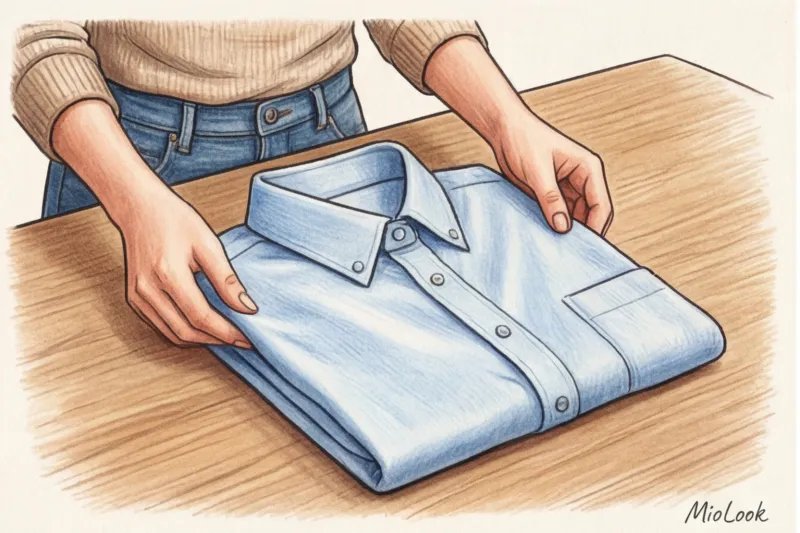
- Washing is mandatory. This is an absolute rule. The foundations do not accept unwashed items. If a damp, dirty item ends up in a closed container, mold will spread throughout the entire container (which could be 200-300 kg of clothing) within a couple of days. The entire shipment will be sent to the landfill.
- Checking pockets. Passports, car keys, bank cards, and even wedding rings are regularly found on the sorting belts. Turn out every pocket.
- Repair of fittings. Should you fix a zipper before donating it? The rule is: if the item is going to charity, fix it. Someone in a difficult life situation shouldn't spend their last money replacing the zipper on your jacket. If the item is great but you're too lazy to fix it, recycle it or be honest about it when selling it on a resale site.
- Package. Place your clothes in tightly sealed bags and tie them tightly When unloading containers, items often spill out and get dirty on the ground or on the vehicle's mechanisms.
Smart Wardrobe: How to Avoid Eco-Disasters
Congratulations, you've decluttered! But how do you avoid creating this same textile mess again in six months? The solution lies in purchasing, not in throwing it away.
I love data. Last year, I conducted an experiment: I digitized my closet and spent six months tracking every item I wore. The results surprised even me, a professional stylist: I only wore 20% of my wardrobe. The other 80% just hung there, collecting dust and creating the illusion of "I have nothing to wear." We wrote more about how to combat this illusion in our article about creating a capsule wardrobe.
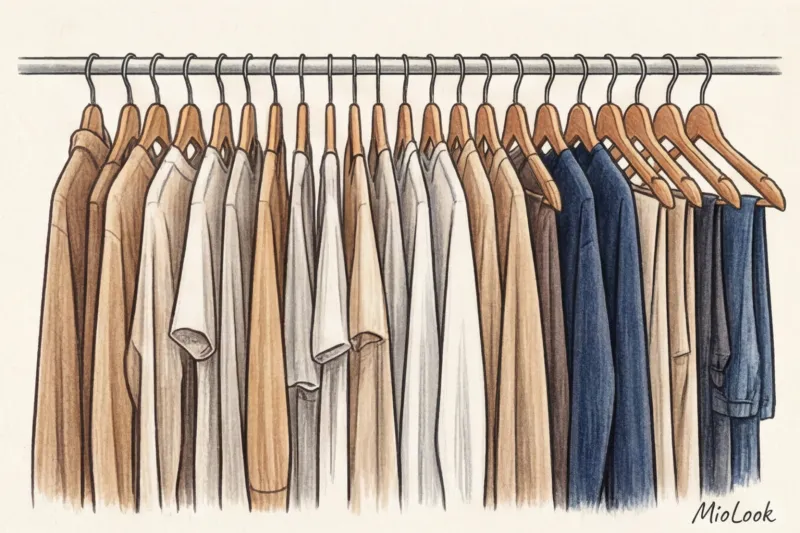
To stop the fast fashion cycle in your closet, implement three habits:
- Digitize your wardrobe. Use apps like MioLook When all your things are on your phone, and the smart algorithm shows you already have four gray sweaters, your hand instinctively reaches out to close the online store tab.
- Consider Cost Per Wear. Divide the cost of the item by the expected number of wears. A cheap polyester top for 1,500 € that you wear twice (costing 750 €) will cost you more expensive than a perfect wool jacket for 15,000 € that you'll wear 50 times (the retail price is 300 €). One expensive basic item is more eco-friendly than ten cheap, trendy ones.
- Collect capsules. If you need a business wardrobe, don't buy random shirts. Collect status office capsule , where 15 things give 30 perfect looks.
Your perfect look starts here
Join thousands of users who look flawless every day with MioLook. Digitize your closet, analyze your style, and save time in the morning.
Get access — €0.99 onceYour action plan for the coming weekend
Reading articles won't declutter your closet. Do it this coming Saturday:
- Set aside exactly 2 hours (set a timer, otherwise the process will drag on for the whole day).
- Take all your clothes out of the closet and place them on your bed. If an item hasn't been worn in over a year, it's automatically sorted using the "three-pile algorithm."
- Wash what you will be donating.
- Open Maps on your smartphone, type in “clothing collection boxes” or “textile collection point,” and drop off the bags.

By completing your audit, you're not just freeing up space for new purchases. You're regaining control of your space. A closet where air circulates freely between hangers and every item fits perfectly saves you energy and stress every day. Reward yourself with this feeling of ease.