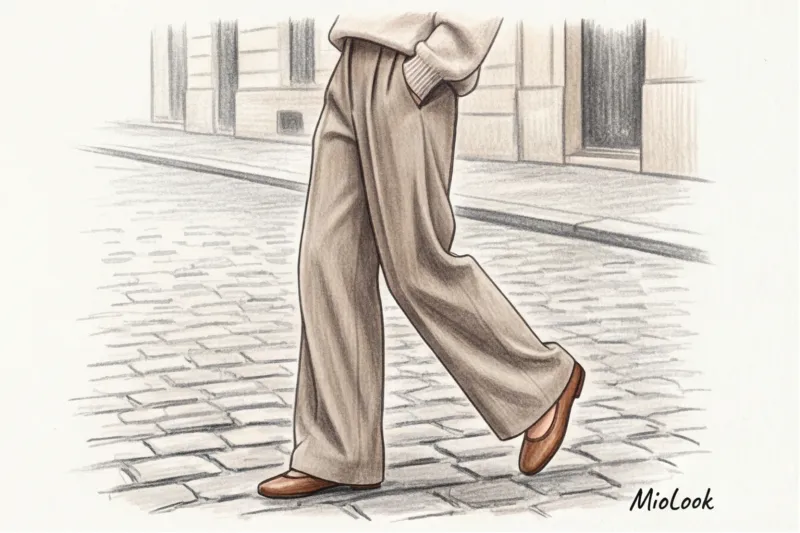
You know what I hear every other time I review my wardrobe? "Katarzyna, I bought ballet flats because they're everywhere, but when I wear them with jeans, I look like a teenager stuck in time in 2012." And these women are absolutely right. Fashion is cyclical, but the devil, as always, is in the proportions.
Over 12 years of working as a personal stylist in Europe, I've seen trends come back, mutate, and demand a completely new approach to styling. Today, we're not just stating the return of the flat. We'll break down a rigorous styling algorithm that will help you understand What to wear with ballet flats This season, to look relevant, expensive, and not sacrifice comfort on the cobblestones.
New Romance and Why We're Wearing Ballet Flats Again
For years, hyper-oversized clothing, chunky sneakers, and deliberate normcore ruled the roost. We're tired of hiding our bodies behind shapeless hoodies. According to WGSN, the 2024 macrotrend for hyper-femininity (Balletcore and Coquettecore) has grown by 400% compared to pre-pandemic levels. We're once again craving lightness, bows, translucent fabrics, and elegant shoes.
We discussed the origins of this global shift in more detail in our The complete guide to flirty style and romantic trends.
But herein lies the main pitfall. Many try to integrate new footwear into old formulas. In the 2010s, we wore ballet flats with skinny jeans and short, fitted leather jackets. Today, this silhouette looks hopelessly outdated and visually chops the figure into disproportionate blocks.
The modern rule is: contrast of textures and volumes Delicate, almost doll-like shoes require a more robust, masculine, or voluminous frame. Otherwise, you risk appearing downright childish. If you're wearing cute ballet flats with a bow, pair them with a smart men's jacket or wide-leg jeans made of thick denim.
The year's hottest models: what to invest in
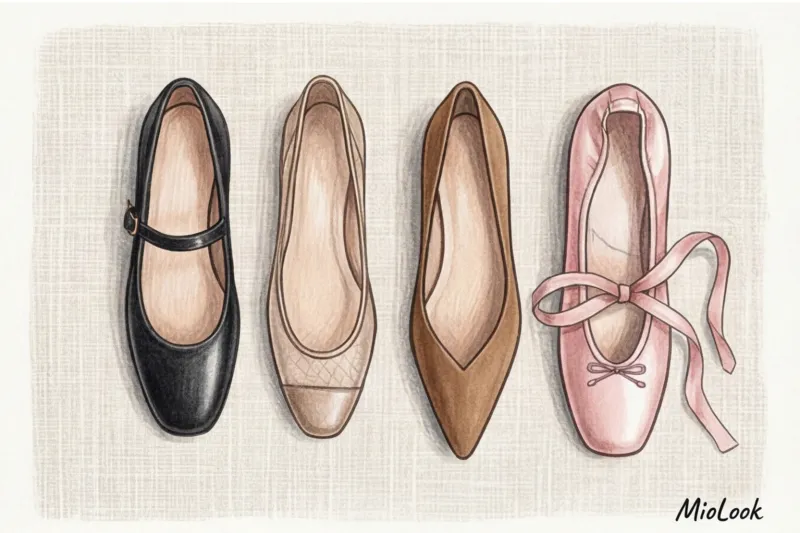
According to a report from Lyst (Q1 2024), searches for Mary Janes and mesh shoes have broken all records, knocking sneakers off their perch. From the couture shows of Alaïa and Miu Miu, the trend has quickly descended into the mass market. Let's figure out which styles are truly worth your money, and which won't last more than a season.
Mary Jane: Elegant Hold
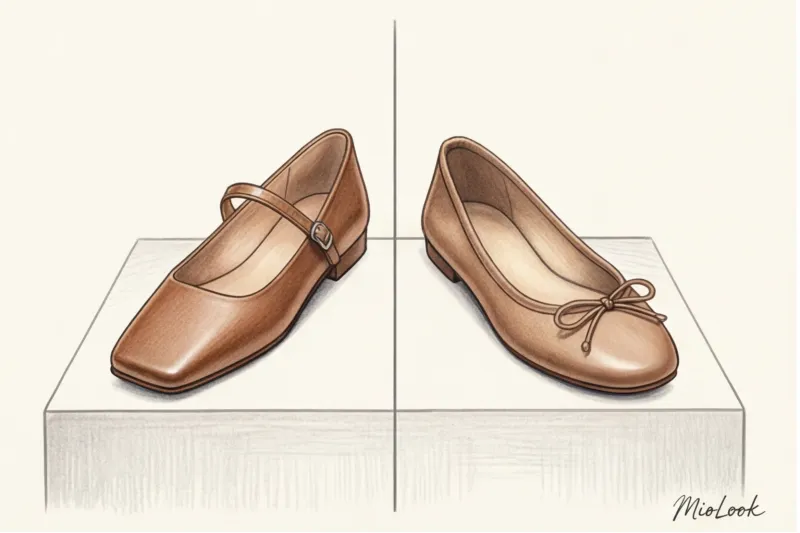
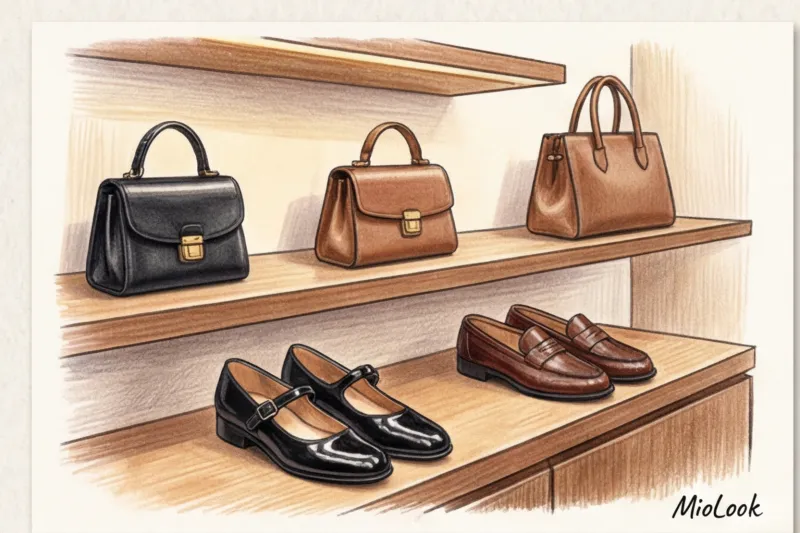
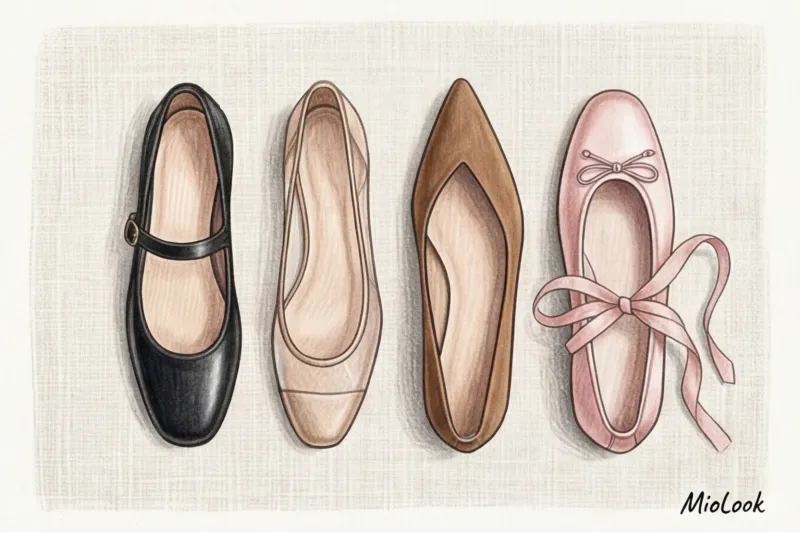
A model with a strap (or multiple straps) on the instep is a staple that will stay with us for a long time. The strap dramatically changes the geometry of the foot, breaking up the long line and adding a graphic touch to the look. In my experience, this is the ideal solution for women with narrow heels, for whom classic pumps always fall off.
"The Mary Jane strap works as a visual accent. If you have a wide ankle, choose styles with the strap positioned lower, closer to the toes, rather than high on the instep, to avoid cutting into your foot," is a basic rule for visual correction.
Mesh flats and transparency
The absolute hit of the season and, perhaps, the most controversial trend. They're a great solution to the problem of closed summer shoes in offices with a relaxed dress code (they allow your feet to breathe), but they require a flawless pedicure.
As a stylist, I must warn you: this is a trend with limitations. My personal test drive of mesh shoes in Paris showed that city dust instantly settles on my fingers through the mesh. Save them for short outings, taxi rides, or clean office spaces. If you walk a lot, these are not for you.
Pointed toe and satin pointe shoes
A pointed toe is a real lifesaver for petite women. It visually extends the line of the leg, elongating the silhouette. Satin models with ribbons (classic pointe shoes) look stunning, but are extremely impractical in rainy European autumn or spring. Include them in your wardrobe only as formal footwear, pairing them with rough, raw denim to tone down the dressiness.
Your perfect look starts here
Join thousands of users who look flawless every day with MioLook. The smart algorithm will help you incorporate new trends into your current wardrobe.
Get access — €0.99 onceWhat to wear with ballet flats: ready-made formulas and modern proportions
A modern silhouette requires airiness. Since flat, neat shoes make the foot appear smaller, we need to compensate with volume in clothing. Here are three foolproof formulas that work for figures from sizes 42 to 52.
Ballet flats + wide-leg trousers and palazzo jeans
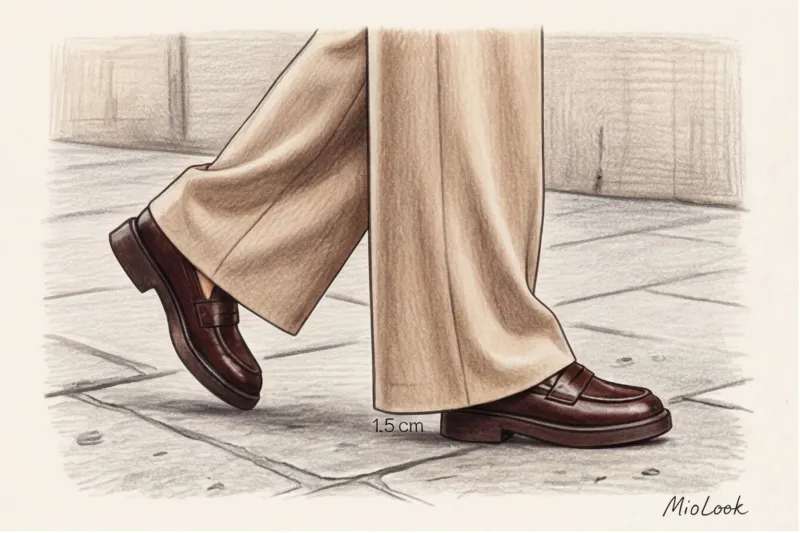
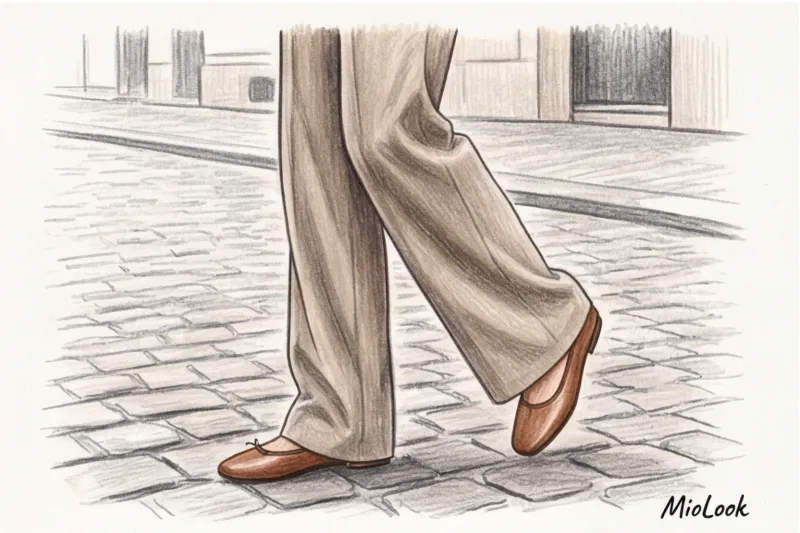
The perfect contrast: deliberately masculine, relaxed trousers and delicate, feminine shoes. The key is the length. The legs should practically touch the ground, leaving only the toe of the ballet flat visible. No cropped, ankle-length skinny pants—that combination throws you back into the past decade and mercilessly shortens your height.
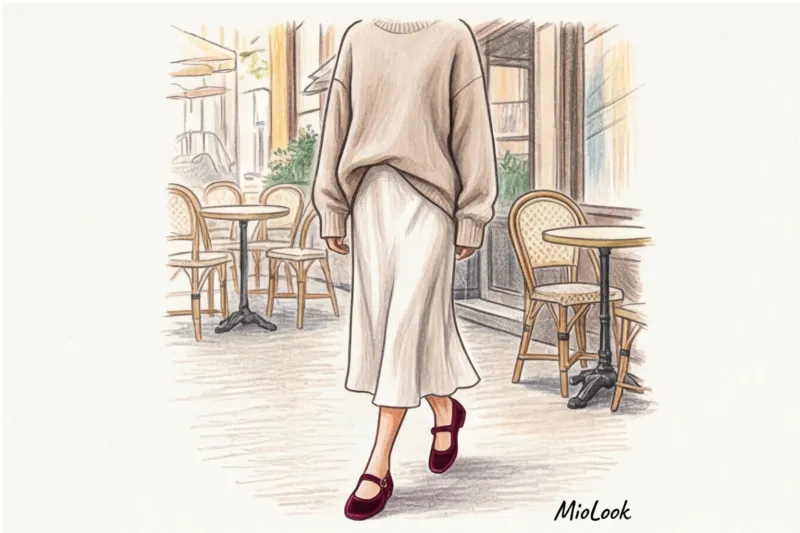
With maxi skirts and silk slip dresses
This combination creates that relaxed European chic. But how to avoid the "plain girl" effect? The right length is key. Forget the classic knee-length midi.
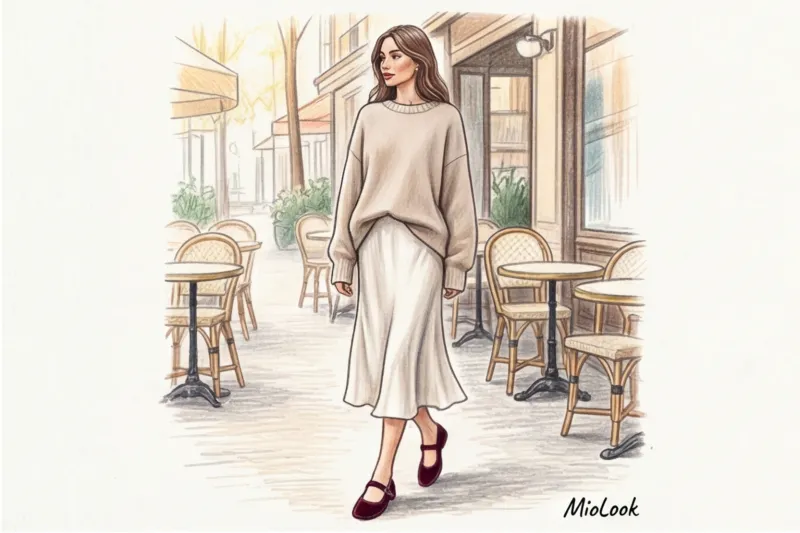
Choose a midi length (mid-calf and below) or a confident maxi. A silk slip dress paired with a loose cashmere sweater over it and velvet Mary Janes is the perfect outfit for brunch or a date.
Business style: are ballet flats appropriate in the office?
Yes, as long as you follow the rules. For a strict dress code, mesh and rhinestones are prohibited. Look for rigid models made of smooth matte leather with a pointed or slightly square toe. They work perfectly with a three-piece suit. Read more about the intricacies of a business dress code in our article. Women's Office Shoes: Etiquette and Stylish Alternatives.
The biggest styling mistake: why ballet flats make your legs look shorter and how to avoid it
Here's where things get interesting. There's a myth: flat shoes with a round toe make your legs look short and your ankles look thick. But it's not the shape of the toe that's the issue, it's the "neckline"—what professional stylists call it. vamp.
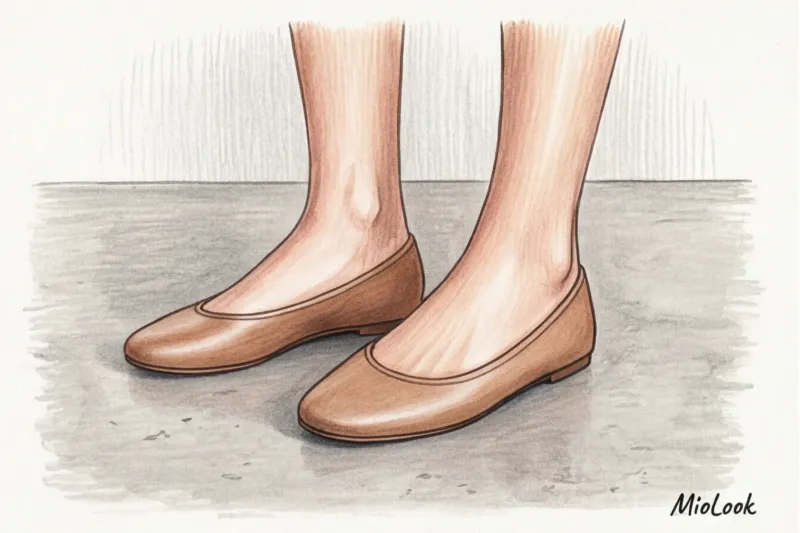
If you look at classic Chanel ballet flats or references from the 50s (think Audrey Hepburn), you'll notice one detail: they have an extremely low vamp, which often reveals toe cleavage.
How does it work optically?
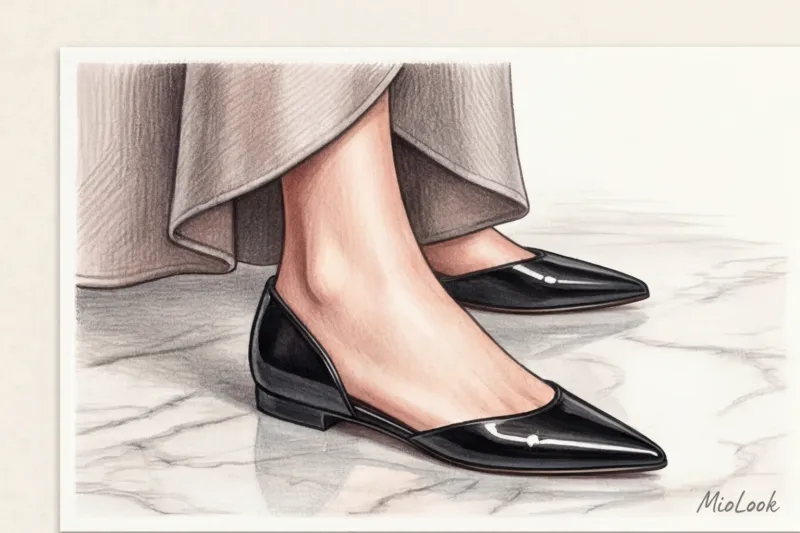
An open instep becomes a visual extension of your leg. Skin blends into skin, creating a continuous vertical line. If ballet flats cover half the foot (high vamp), they act like a dull knife: they visually chop off the leg precisely at the neckline. These "closed" ballet flats distort the proportions.
A proven trick: If you're wearing a skirt, choose low-cut ballet flats in a shade close to your skin tone (nude), or match your shoes to your tights (black ballet flats with black opaque tights). This will lengthen your legs just as well as heels.
Ready to get started?
Try the MioLook free plan—no commitments required. Take a photo of your shoes, and the AI will suggest dozens of stylish combinations from your closet.
Get access — €0.99 onceBrand Review: Where to Look for the Right Models
Let's take a look at the European mass market. As a practitioner, I regularly conduct shopping tours and see how items hold up after a season of wear. Here's my analysis of the current market.
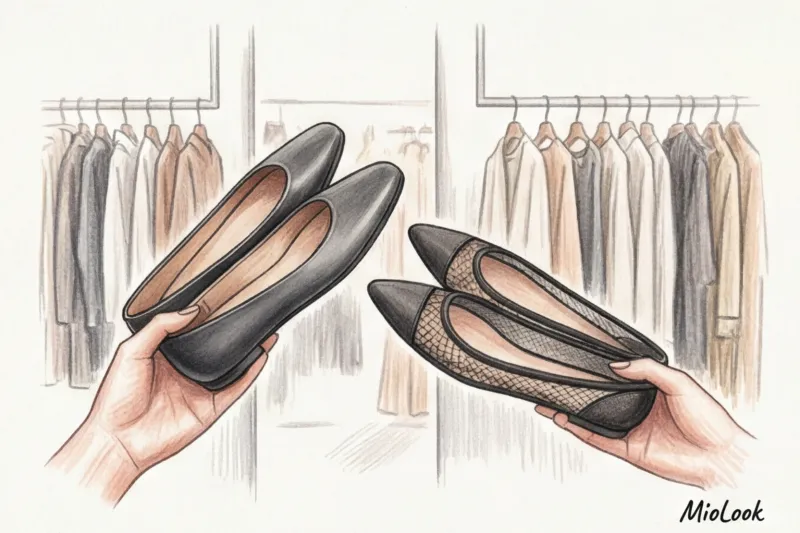
- Massimo Dutti (80–110 €): The best place to find basic leather office shoes. They have excellent soft nappa leather that fits quickly. The downside is that the soles are often too thin; it's best to have them serviced immediately.
- COS (115–150 €): If you're looking for architectural shapes, a square toe, and minimalism, this is the shoe for you. COS leather is thicker and requires some breaking in, but these ballet flats will hold their shape for years.
- Zara and Mango (30–60 €): The perfect testing ground for hot microtrends. Rhinestone-embellished ballet flats, satin pointe shoes, leopard print, or that same fishnet. Should I buy the fishnet from Alaïa for €700 or the similar one from Mango for €45? The answer is obvious.
The golden rule of Cost Per Wear:
Never judge a piece solely by its price tag. A pair of basic leather COS ballet flats for €130, which you'll wear 80 times a season, will cost you €1.60 per outing. Meanwhile, a pair of trendy satin Zara flats for €40, which you'll wear only twice (because they get dirty and chafe), will cost you €20 per outing. Invest in the basics, save on the latest trends.
Pre-shopping checklist: to keep shoes from sitting in the closet
Shoes should work for you, not just sit on the shelf as pretty clutter. Before you take the box to the checkout, run the pair through this checklist.
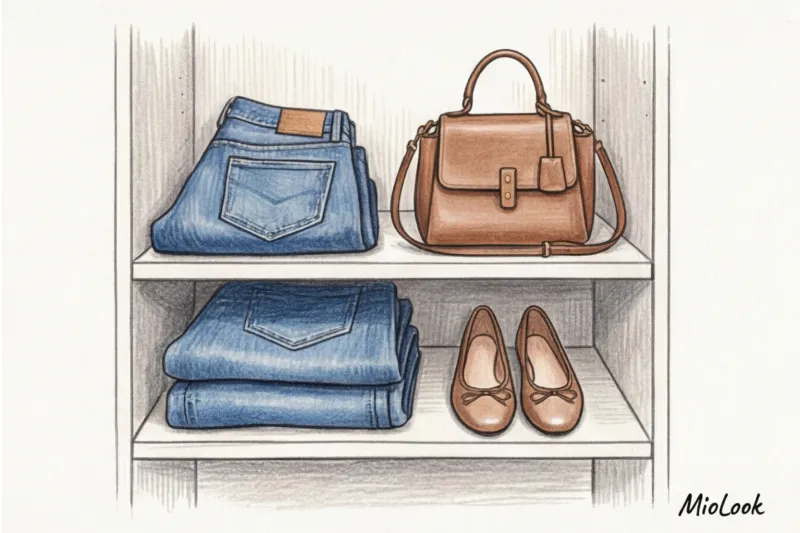
- Checking the sole: Orthopedists' recommendations are clear: completely flat, paper-like soles (a common problem with cheap brands) lead to fasciitis and lower back pain. Look for models with a micro-heel (0.5–1.5 cm) or use orthopedic half-insoles with arch supports. This will save your back.
- Heel softness test: Squeeze the heel of the ballet shoe with your fingers. If it's stiff as cardboard, you'll wear your heels down to the skin within the first day. The heel should hold its shape but still yield to pressure.
- The rule of three images: Ask yourself: "What three specific items (that are ALREADY hanging in my closet) will I wear these ballet flats with tomorrow morning?" If you can't quickly think of three looks, put the pair back on the shelf. To make this task easier, I recommend my clients digitize their wardrobes using MioLook — there you will clearly see whether the new pair will fit into your capsule.
Ballet flats are no longer a compromise for those tired of heels. With the right neckline, clever volume, and a conscious approach to materials, they become the season's most powerful style tool. Clear out some space on your shelf and embrace the new fashion trend in comfort.