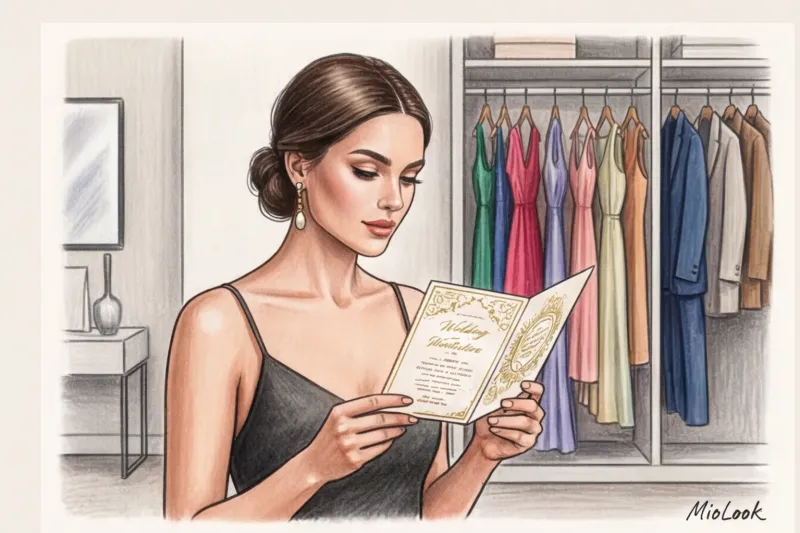
Introduction: How to be the most stylish guest without upstaging the bride
Every time a coveted PDF file appears in your messenger or you're handed a thick, embossed envelope, your genuine joy for your friends is instantly overshadowed by a hint of panic. It's understandable that the question of "what to wear to a wedding" invariably causes a great deal of stress. It's a veritable stylistic obstacle course, where the price of error is high. You must navigate a complex equation: look chic and modern, but absolutely not compete with the bride for the attention of photographers and guests.
Over my 10 years in fashion journalism, I've witnessed the dramatic evolution of evening dress. Moving from the private shows of Paris Fashion Week to real-life social events, I've documented the global transformation of wedding fashion. We've moved away from rigid, sometimes stifling, boundaries to an era of creative self-expression. Mothballed rules have crumbled: today, status is defined not by an abundance of rhinestones on a corset, but by impeccable tailoring, a complex fabric shade, and an architectural silhouette.
But remember: stylistic freedom doesn't mean anarchy. The main unspoken rule for a modern guest is to demonstrate respect for the couple by strictly adhering to the dress code. Your attire isn't just clothing; it's a visual compliment to the aesthetics of the celebration.
An inappropriate image at a wedding is as offensive to the eye as rude ones. mistakes in business attire at important negotiations. If a couple spent six months developing the concept of a bohemian winery, showing up in an aggressive sequin miniskirt is disrespectful. To save your nerves on the eve of an important date, I always recommend using the "smart wardrobe" feature in MioLook By digitizing your formal clothes and accessories, you can easily create the perfect outfit combination right on your smartphone. This saves you from impulsive purchases of €300–€500 daytime dresses that will end up in your closet after just one outing.
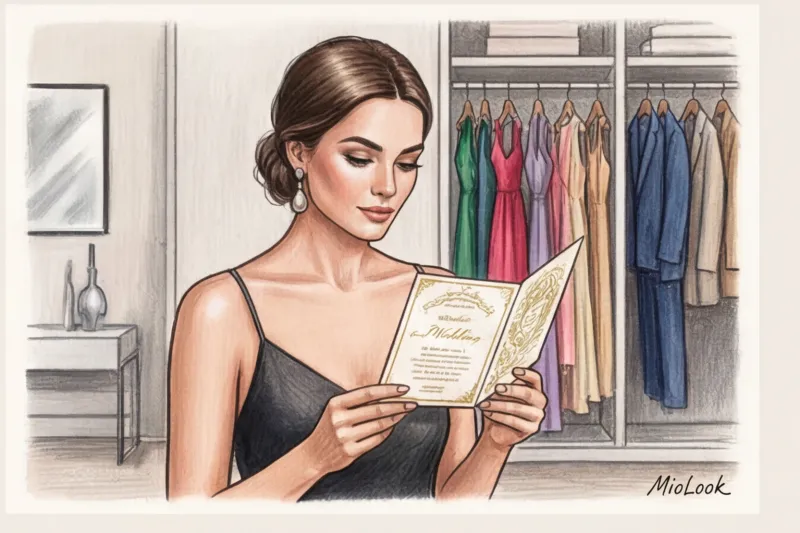
Wedding Dress Code Decoder: From White Tie to Smart Casual
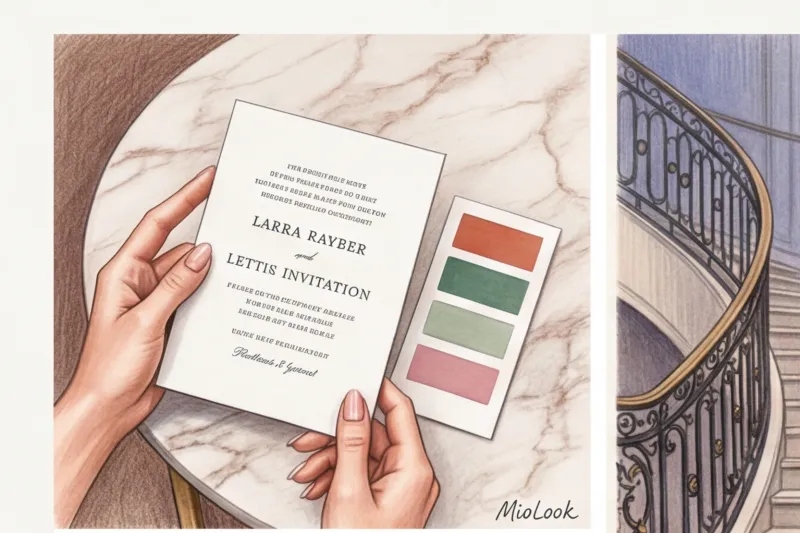
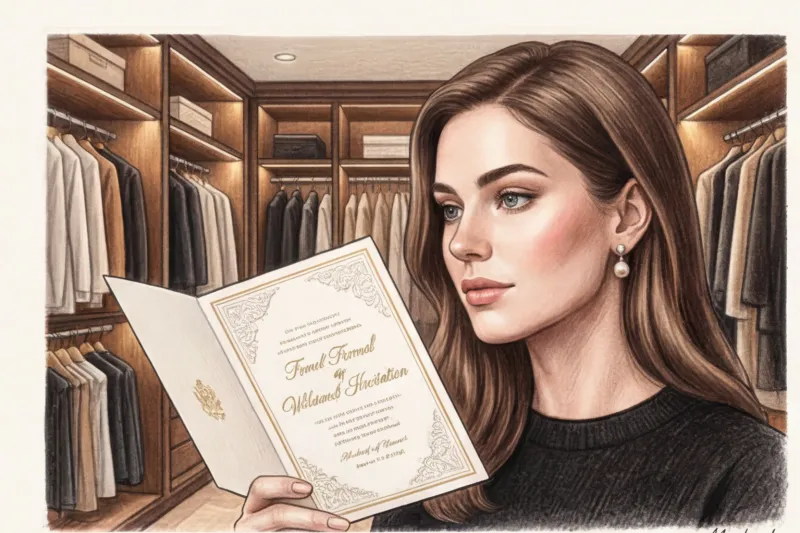
Have you ever received a wedding invitation with a mysterious abbreviation listed under "dress code" that caused a slight panic? You're not alone. According to the 2023 Debrett's Institute of Etiquette, approximately 68% of guests experience stress due to misunderstanding the wedding dress code. Why do planners continue to include these obscure English words instead of simply "Wear a nice dress"?
The answer lies not in snobbery, but in visual direction. A dress code is a tool that sets the mood for the occasion, transforming a disparate crowd of guests into a unified, aesthetically harmonious picture. The main difference between formal and relaxed formats lies in the degree of personal stylistic freedom you have. A strict protocol demands unquestioning adherence to historical canons (a certain length, texture, cut), while a relaxed one allows room for maneuver and adapting trends to your body type and personal taste.
Strict classics: White Tie and Black Tie
Let's start with the absolute maximum. White Tie — this is a historically significant event, on par with royal receptions, Viennese balls, and A-list red carpets. It's extremely rare at weddings today, but if you're honored, be prepared for a serious investment. The budget for the right look in this format rarely falls below 2,000–3,000 euros, as mass-market fashion is simply not an option. The protocol is uncompromising: a full-length ball gown or evening dress (no ankle or toe of the shoe should be visible while walking), above-the-elbow opera gloves (removed only for dinner), and real jewelry—costume jewelry is strictly prohibited.
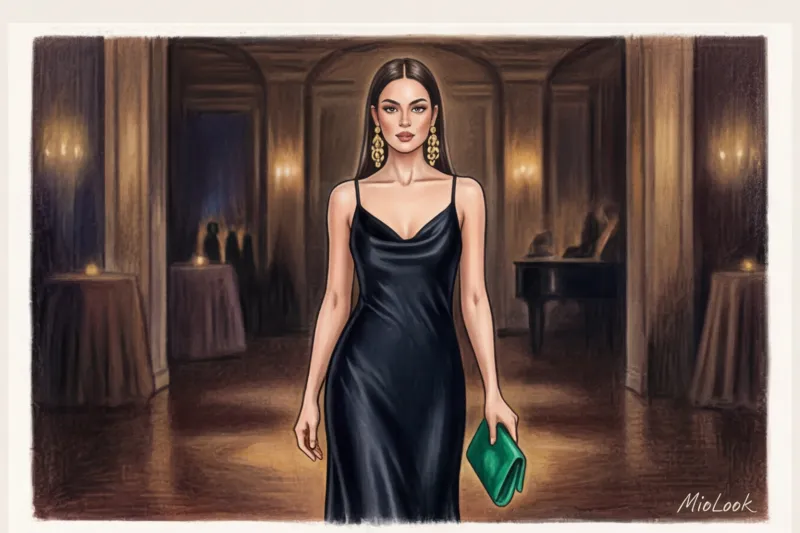
Black Tie — Hollywood chic, a much more common feature at evening celebrations. Here, we tone down the flamboyance a bit, but maintain impeccable elegance. A floor-length evening gown is expected, but architectural minimalism is acceptable. Ideal references are column dresses from Tom Ford or simple, flowing silk from Saint Laurent. Shoes are a must, either closed-toe or with an elegant open toe.
Over 12 years of analyzing social media and clients' preparations for events, I've identified three fatal mistakes in strict dress codes: trying to wear a midi length (that's a cocktail dress, not an evening gown), using frivolous floral prints, and choosing casual fabrics. Cotton, linen, or matte viscose will instantly cheapen the look. Opt for thick silk satin, heavy velvet, or taffeta.
Modern format: Cocktail, Black Tie Optional and Creative Black Tie
The most popular and, paradoxically, the most insidious group of dress codes. Cocktail It offers that elegant freedom. Forget heavy trains and corsets. The ideal formula: a midi-length dress (or just above the knee, but not an extreme mini!), a smart pantsuit, or a complex asymmetrical skirt with a silk top. The fabric should still be "evening," but the silhouettes become more fluid. A high-quality midi-length cocktail dress (300-500 euros) is an excellent investment that will pay for itself within a few seasons.
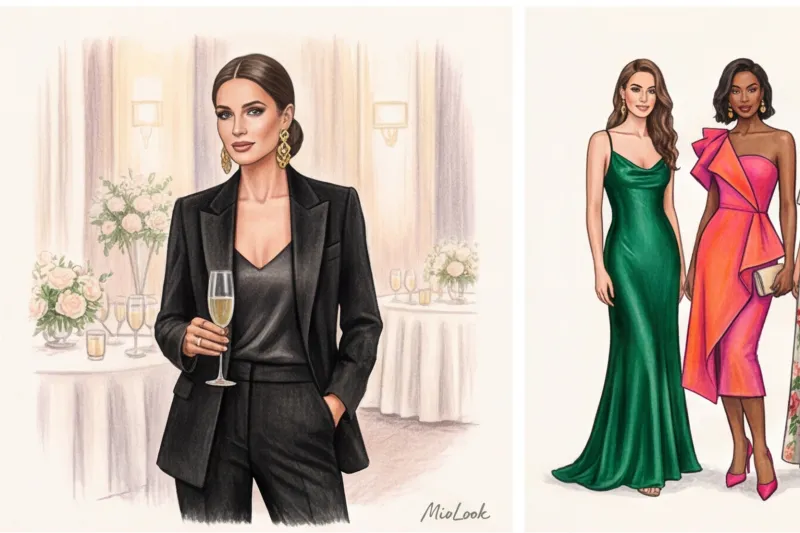
Format Black Tie Optional (sometimes written as "Black Tie Invited") is a masterful balancing act between a formal evening and a casual cocktail party. The organizers seem to be hinting, "We'll be wearing tuxedos and evening gowns, and we'd love your support, but there's no obligation." In my experience, the safest and most stylish choice here is a high-status midi dress in a deep wine, sapphire, or emerald shade made of a thick fabric.
And here it is Creative Black Tie — this is your legal ticket to the world of fashion experimentation. This is the time for avant-garde shapes, unusual textures, and designer statements. You can wear an oversized tuxedo, shoes with exaggerated bows, or an asymmetrical dress with intricate draping in the spirit of Maison Margiela or Schiaparelli. The main goal is to maintain the formality, but add a healthy dose of fashionable irony.
Create a look without stress
Try MioLook for free: Our smart AI stylist will find the perfect look for any dress code, taking into account your body type and color.
Get access — €0.99 onceRelaxed Chic: Festive, Beach Formal, and Smart Casual
If the wedding takes place during the day, outdoors, at a winery, or in an unusual art location, relaxed formats are used. Festive (Festive) requires brightness and mood, expressed through texture. Here, an emphasis on rich colors, large, artistic prints (think Marni's geometric patterns or Dries Van Noten's florals), shimmering sequins, and chunky statement jewelry are most appropriate.
Beach Formal — this is a formality adapted to sand, sun, and breeze. Choose flowing, breathable fabrics: natural chiffon, premium fine linen, crepe de Chine. Avoid stilettos (you'll just get stuck in the sand and ruin your heels) in favor of elegant flat sandals with metallic details or leather mules with a kitten heel.
Format Smart Casual At a wedding, formal attire is radically different from Friday's office attire. This is the rare occasion when you can wear a pleated skirt with a silk blouse or wide-leg palazzo pants with a smart asymmetrical top. But remember the golden rule: basic blue jeans, knit tees, and casual sneakers are strictly prohibited, even if the celebration is taking place in a loft.
What to do if there is no dress code specified
Often, the coveted invitation doesn't mention a dress code at all. As a stylist, I constantly save clients from panic in such situations. No need to buy out half the store; just use your deduction and focus on two basic markers:
- Time rule: For daytime events starting before 5:00 PM, choose pastel colors, floral prints, lightweight fabrics, and midi lengths. Anything starting after 6:00 PM automatically calls for a deeper evening palette, rich, dense textures, and maxi lengths.
- Location rule: A trendy restaurant with a sophisticated interior dictates architectural cuts and minimalism, while a country estate or a tent by the lake call for more romantic silhouettes and flowing fabrics.
And finally, the promised practical advice from behind the scenes. If you're still unsure about your choice, ask But never pester the bride the day before the wedding with questions about whether fuchsia is appropriate. Her cortisol levels are already through the roof. How can you tactfully clarify the dress code? Ask the wedding planner (their contact information is always included in the RSVP) or the bridesmaid. Ask specifically: "I'm deciding between an emerald midi dress and a graphite pantsuit. Which would best suit the dinner theme?" This will demonstrate your empathy and guarantee a stylish fail.
To quickly assess your options before each new event, I recommend reviewing your dress capsule. Upload your evening items to MioLook , and the algorithm will help you create dozens of new combinations from what you already have, adapting them to any of the described formats.
The main taboos and unspoken rules: what not to wear to a wedding
Let's be honest: the lines of what's acceptable in modern fashion are blurred to the extreme, but a wedding is one of those rare occasions when your outfit should convey respect for the couple, not scream out your rebellious spirit. Last season at Paris Fashion Week, we saw the triumph of lingerie style, deconstruction, and microskirts, but transferring pure runway trends to a family celebration is a frankly bad idea. Etiquette isn't about the mothballed prohibitions of the last century, but rather banal social intelligence and common sense. Save neon cycling shorts, rhinestone bra tops, and outright grunge for conceptual parties. Your look should serve as a beautiful backdrop for the bride, not a visual irritant for her conservative relatives. My many years of personal styling experience proves: the best guest is the one whose outfit evokes admiring questions. "Where did you buy this?" , and not whispers behind your back.
One of the most persistent fashion misconceptions I have to combat year after year is the myth that black is strictly forbidden at weddings. This rule is hopelessly outdated. According to a major report by the Pantone Color Institute and Vogue (2024), black is now synonymous with sophisticated evening chic. The key to wearing black to a ceremony without looking like you've wandered into the wrong location and are attending a funeral is masterful use of texture. Flat, matte crepe décolleté from the mass market does indeed look flat and gloomy. But flowing silk satin, deep textured velvet, or jacquard with delicate metallic threads look luxurious and classy.
My personal life hack: if you've chosen a black slip dress or a simple tuxedo, offset the color with architectural gold jewelry—for example, chunky, sculptural bracelets in the style of Schiaparelli or statement fuchsia pumps.
Speaking of details, accessories can instantly cheapen or ruin even a perfectly tailored €1,500 suit. Oversized leather shopper bags (even if it's a Bottega Veneta hit), smartwatches with silicone straps, or multi-tiered metal bracelets that jingle with every step are absolute no-nos. Excessive visual noise is distracting. I also strongly recommend avoiding overly aggressive hardware. Bags with massive studs or heavy industrial chains are best left for a rock concert. Opt for stiff minaudières, silk pouches, or classic envelope clutches.
White: a bride's monopoly or are there exceptions?
Here, wedding fashion remains unwavering. Pure white, ivory, ecru, champagne, eggshell, or alabaster—this light palette is the bride's sole domain. Even if you know for sure that the bride of the hour has chosen an unusual red or emerald dress, your white outfit will confuse other guests and disrupt the visual harmony of the photos. I experienced a particularly awkward incident at a villa on Lake Como: a guest arrived in a luxurious cream maxi dress. Throughout the ceremony, the photographer had to physically move her and the bride to different corners of the frame to prevent them from blending into a single bright spot in the group shots.
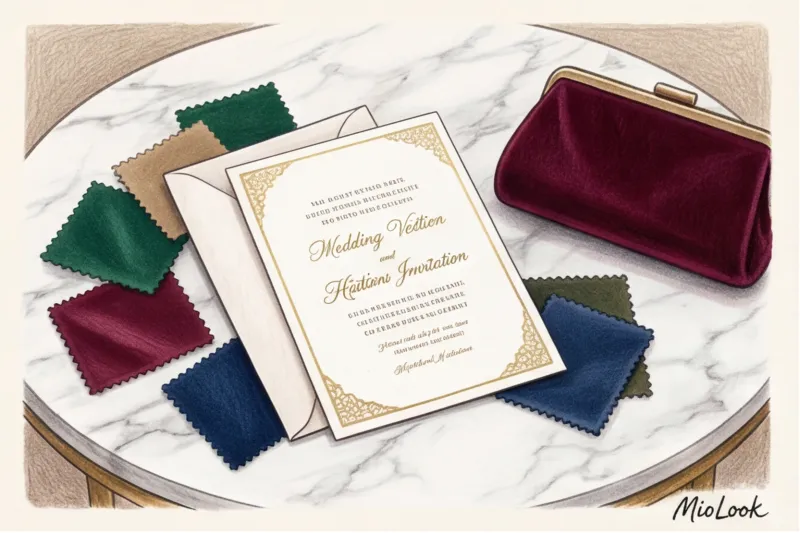
There are exactly two exceptions to this ironclad rule. The first is a wedding with a clearly stated dress code. All White Party (This format is currently enjoying renewed popularity for beach ceremonies.) Second, the presence of a small or very bold contrasting print on a light background. As a stylist, I give my clients a simple test: squint and look at the dress from two to three meters away. If it still reads as white, feel free to look for another option. To be sure, you can upload a photo of the item in question to MioLook app Smart wardrobe algorithms will instantly help you choose contrasting accessories to go with a printed dress (for example, a deep burgundy clutch and suede pumps) that are guaranteed to take your look away from the wedding one.
Length, neckline and transparency: the limits of what is permissible
A wedding is, first and foremost, a family celebration that brings together different generations. Your outfit can and should certainly be attractive, but this attractiveness should be elegant, not overtly provocative. The golden rule of "one accent," taught to students at the Istituto Marangoni, works flawlessly here and saves you from any stylistic mishaps. The gist is simple: reveal either your legs, your décolletage, or your back. Never mix two, let alone three, accents in one look. If you've chosen a dress with a deep V-neck, its length should be midi or maxi. If you've chosen a mini, the top should be as low-cut as possible, preferably with long sleeves.
A particular scourge of recent fashion seasons is the mass obsession with "naked" dresses. What looks fantastic and bold on celebrities on the Met Gala red carpet looks completely out of place at a banquet table next to the groom's parents. An extreme mini in the spirit of the 2000s or completely sheer mesh is a definite faux pas. But this doesn't mean you should wrap yourself in a shapeless, tight sheath. Adapt the global trend for transparency wisely and subtly. Wear thick silk slips in a skin tone under airy organza dresses. Choose outfits with sheer chiffon elements confined to long sleeves or at the collarbone. Dense cord lace on a high-quality opaque lining will create the alluring illusion of nudity while maintaining the necessary social distancing and a high-class look.
Location is everything: choosing an outfit to suit the occasion
The most common cause of fashion disasters at weddings is the gap between the guest's imagination and the harsh reality of the venue. When I review social media posts from European celebrations, I instantly see which guests analyzed the location, while others chose their outfits solely in front of a perfect mirror in their dressing room. The influence of the venue on the choice of fabric and shoes is colossal, as the laws of optics and physics still apply. What shimmers luxuriously in the dim light of a closed hall can look flat and artificial in the bright daylight on a lawn, while heavy, thick velvet can turn a summer ceremony by the water into a veritable temperature torture.
In 2019, I was dressing a client for a luxurious wedding in Tuscany. We chose a stunning flowing silk dress as the base, paired with elegant stiletto sandals costing 600 euros. It was my mistake as a stylist: I didn't take into account that the welcome cocktail area was located on the villa's historic lawn. Stilettos on the lawn are a real disaster. The client literally sank into the ground with every step, hopelessly ruining her expensive shoes and feeling awkward for the entire first hour. The situation was saved by a spare pair we miraculously brought for the evening. Since then, for any outdoor events, we've solved this problem exclusively with wide block heels and elegant platforms.
That's why you should start preparing your look not by studying catwalk trends, but by thoroughly researching the venue.
City wedding and registration at the registry office
For urban celebrations—whether a conceptual industrial loft, a panoramic restaurant in the city center, or a classic wedding hall—the rule of architectural minimalism works flawlessly. In such interiors, excessive decor, ruffles, rhinestones, and overtly full skirts often look childish and compete with the space. Opt for clean lines: complex cut sheath dresses , asymmetry, and perfectly tailored pantsuits. Be inspired by the aesthetic of "quiet luxury"—here, you should look expensive through the texture of the fabric, not through shine.
The color palette for urban locations gravitates toward deep, noble tones: rich graphite, cobalt, emerald, dark chocolate, or cool metallic.
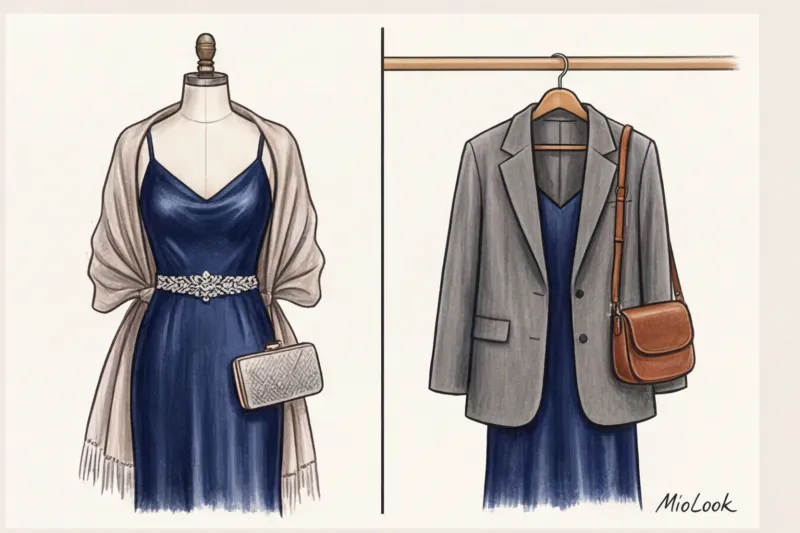
A separate stylistic challenge is adapting your wardrobe to changing locations. Very often, after the official wedding ceremony at the registry office, guests move to the more relaxed atmosphere of a restaurant. This transition requires an intelligent approach to outfit. My favorite technique is the use of contrasting layers. For example, a simple silk midi slip dress at the morning ceremony is complemented by a tailored, oversized, straight-cut jacket. In the evening, the jacket is removed, making way for bare shoulders. Geometric bags and sculptural jewelry are perfectly appropriate in the urban landscape: a rigid box clutch (minaudière) and chunky metal cuffs perfectly complete this transformable look.
Country estate, tent or winery
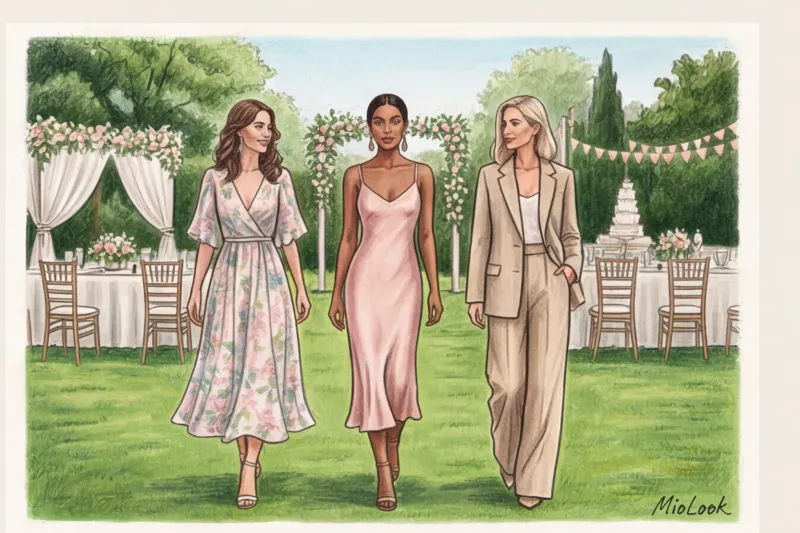
When an invitation calls for a historic chateau, winery, or country residence, strict urban geometry gives way to romance and an organic connection with nature. While fabric must hold its shape in the city, in nature it must "play" in the wind. In this environment, floral motifs (but choose large, abstract or watercolor prints, avoiding simple chintz florals), dusty pastels and flowing silhouettes in chiffon, crepe or tencel.
Here we return to the lesson learned in Italy. Choosing the right footwear for a rural location is a matter of dignity and comfort. If your route includes gravel paths, wooden tent decks, or soft ground, choose a graceful wedge, a stable, wide trapeze heel, or elegant ballet flats. Today, designers offer dozens of luxurious kitten heel slingbacks and velvet Mary Janes that look no less formal than classic stilettos but allow you to dance until dawn.
And one more crucial detail: nature dictates its own rules. A drop in temperature after sunset by the water or in the park is inevitable. A cape, a thick cashmere stole, or a textured jacket for a cool evening is not an option, but a must. Plan this outer layer in advance so that it's a logical continuation of your outfit, not a hastily thrown-on jacket that will ruin the entire aesthetic in evening photos.
To avoid getting confused about layering and accessory combinations, I often recommend digitizing your options. Upload a photo of your dress, jacket, and shoes to the "smart wardrobe" feature in MioLook Artificial intelligence will help you visually assess how harmoniously all elements look together and will prevent you from buying inappropriate items at the last minute.
Access to MioLook for €0.99 — one-time payment
Start creating perfect looks with the help of artificial intelligence and put together stylish capsule collections for any special occasion.
Get access — €0.99 oncePantsuits and overalls: a classy alternative to dresses
If you carefully analyze the red carpets of the Cannes Film Festival or the Oscars over the past three years, you'll notice a curious pattern. The most talked-about, critically acclaimed looks are increasingly less likely to feature classic crinoline evening gowns. The choice of true industry insiders, from Tilda Swinton to Zendaya, is an impeccably tailored trouser suit. At weddings, this principle works flawlessly: while most guests compete with the fullness of their chiffon and the depth of their dresses' necklines, a woman in a perfectly crafted trouser suit conveys a completely different level of style—intellectual, classy, and slightly casual.
Historically, this global fashion shift took place in 1966, when the genius Yves Saint Laurent introduced the world to his iconic Le Smoking At that time, a woman wearing a man's evening suit was a true social challenge: the renowned style icon Nan Kempner was even refused entry to a renowned New York restaurant for her "inappropriate" appearance. Today, the tuxedo is a symbol of the highest, uncompromising elegance. A good pantsuit, paradoxically, always looks more expensive and striking than a dress in the same price range, as its creation requires a far more complex, architectural cut and a masterful fit.
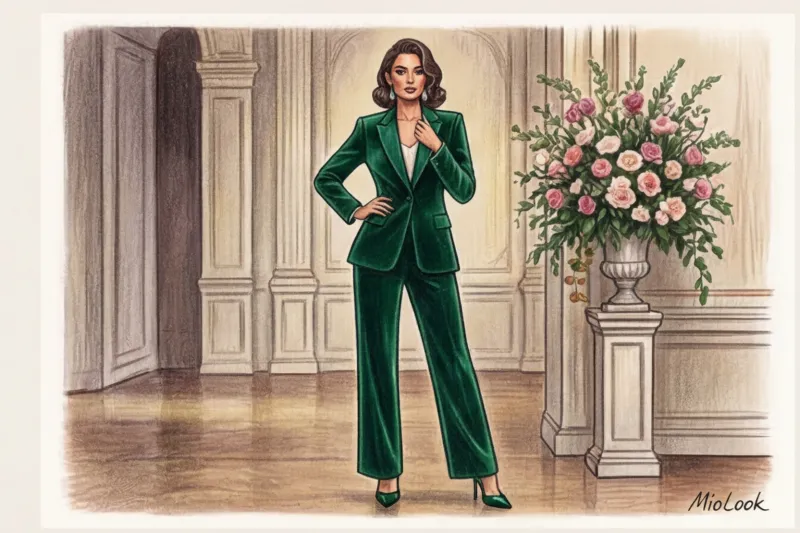
The key to a successful choice is choosing the right texture. To ensure a truly formal look and avoid the garb of a bank employee, the fabric should sparkle in the evening light and in the camera lens. Save the matte, basic wool for the boardroom. For a wedding, choose flowing, dense silk, royal velvet, or structured jacquard with a delicate metallic sheen. Velvet reveals its most luxurious qualities in deep shades like sapphire, emerald, or burgundy.
Evening jumpsuits aren't to be overlooked. A heavy crepe style with an open back or asymmetrical cut is a brilliant alternative for those who appreciate a cohesive, self-contained look. Unlike a dress, a jumpsuit allows for maximum freedom of movement, and the right wide-leg cut visually elongates the legs.
Suit Styling: From Office to Holidays
The biggest danger when choosing a trouser suit is looking like you just dropped into a wedding during your lunch break between work meetings. How can you avoid looking too formal? The answer lies in proper styling and, above all, choosing the right base layer.
Avoid standard cotton shirts. The top should be something with a decidedly evening feel: a silk lingerie-style camisole, an intricately crafted lace bra, or a minimalist sequin-embroidered top. If the event format, the couple's commitment, and your inner confidence allow, a jacket worn directly against the skin looks incredibly sensual. In this case, I highly recommend using special double-sided tape to securely fasten the lapels and avoid awkward situations while dancing.
We recently helped one of my clients put together an urban-chic wedding look. With a limited budget of around €350, we immediately abandoned the idea of looking for a compromise dress and chose a fantastic pearl-toned three-piece suit from a premium Scandinavian brand. To get a feel for how your current accessories will work with a potential purchase, I recommend uploading photos of the items to the "smart wardrobe" feature in MioLook This helps you visualize dozens of top and shoe combinations, putting together the perfect puzzle before even stepping into the fitting room.
Carefully placed accents complete the look. A pantsuit calls for statement shoes—the perfect canvas for pumps generously studded with crystals, sandals with sculpted heels, or satin mules in a rich shade. Statement clutches with a crisp, formal shape (minaudières) will add the final touch of evening glamour. And remember the stylist's golden rule: the ideal length for wide-leg palazzo pants is when they practically touch the floor, leaving just 1-2 centimeters of the toe visible. Therefore, always budget for a visit to a tailor (around 20-30 euros) to have the length precisely adjusted to the shoes you plan to dance in until dawn.
Seasonality: Fabrics, Palette, and Layering
The weather is the most merciless critic of your holiday wardrobe. I've seen impeccably tailored designer pieces turn into torture devices at 30°C, and elegant guests openly shiver at January outdoor wedding receptions. Understanding the season isn't just a matter of physical comfort; it's the foundation of your confidence in photos and on the dance floor.
Summer weddings require a strategic approach to choosing materials and genuine relief from the heat. Forget heavy polyester, even if it perfectly holds the architectural shape of your silhouette. Your only salvation is breathable fabrics: natural silk, high-quality viscose, and innovative Tencel, which has the ability to literally cool hot skin.
As a practicing stylist, I regularly tackle the delicate issue of anti-sweat looks for summer special occasions. My professional advice: if you're prone to sweating, absolutely avoid smooth, solid-color silk in light shades (blue, powder, pistachio)—the slightest trace of moisture will show through instantly and irreversibly.
Choose printed Tencel or matte viscose with a crepe weave. And be sure to use special invisible cotton underarm pads—in Europe, this inexpensive trick is used by celebrity stylists on the sultry summer red carpet.
Autumn celebrations dictate a shift to complex textures and deeper shades. Fine summer chiffon gives way to dense crepe, suiting wool (virgin wool), and heavy, flowing satin. The color palette should resonate with the natural season: choose a refined burgundy, rich emerald, tart ochre, or the color of aged cognac. These tones not only look luxurious in professional shots but also visually enhance even the most minimalist cut.
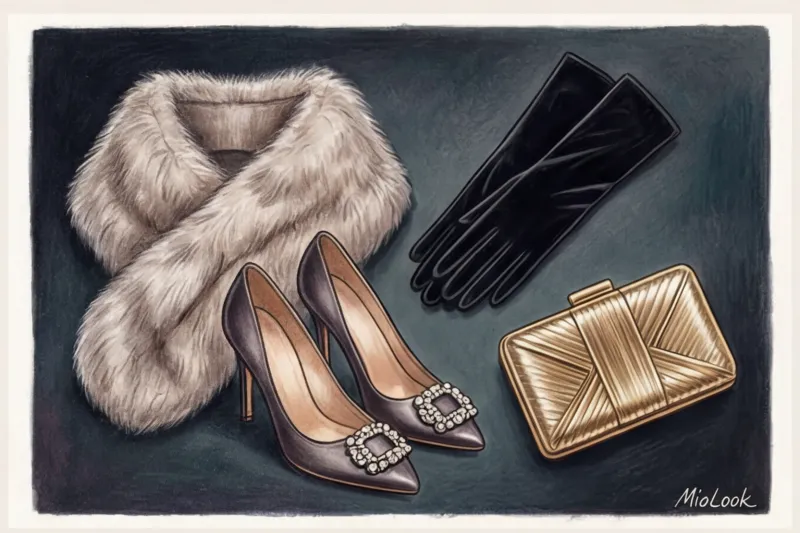
Winter weddings are a legitimate excuse for the most dramatic evening wardrobe. Textured velvet, thick jacquard, and over-the-top sequin embellishments are all the rage. The main challenge for a winter guest is how to stay warm in style. Please leave your favorite puffer jacket in the closet, even if you're just planning on "running quickly from the taxi to the lobby." Outerwear sets the tone for the entire evening. Invest in a classic, straight-cut maxi wool coat or a striking cape made of high-quality faux fur (a decent basic starts at around 250 euros).
Winter tights etiquette deserves special mention—it's where the lion's share of fashion crimes are committed. Opaque tights are absolutely unacceptable with cocktail and evening dresses made of thin, flowing fabrics. If you're wearing open sandals, tights are completely off-limits, no exceptions. A compromise for those wary of the cold: look for ultra-thin opaque tights in 8-15 denier, which create the perfect "bare skin" effect. An alternative, warmer option is to wear a thick velvet tuxedo with closed ankle boots and black 60 denier tights, turning the thickness into a deliberate stylistic statement.
To perfectly coordinate outerwear, dress length, and accessories without creating awkward proportions, I always recommend pre-assembling a layered look in an app. MioLook Visualizing layers saves you from unpleasant surprises in the mirror an hour before going out.
Your perfect look starts here
Join thousands of users who look flawless every day with MioLook. Create your perfect capsule look for the wedding season.
Get access — €0.99 onceSmart Wardrobe: How to Choose an Outfit You'll Wear Again
According to a 2024 analytical report by the respected publication Business of Fashion and the consulting firm McKinsey, the eveningwear segment remains one of the most challenging in terms of sustainability. Nearly 40% of dresses purchased specifically for weddings and proms are worn only once, after which they end up in the closet forever. The problem of "disposable" evening dresses creates a colossal environmental footprint that the modern fashion industry can no longer ignore.
My journalistic approach has long been based on rigorous pragmatism. Instead of buying a dubious, thin polyester dress for one evening, I encourage readers to master the formula Cost Per Wear (CPW) — calculating the price per purchase. This simple economic metric instantly sobers up those spontaneous shopping trips.
The CPW mechanics are simple: divide the cost of the item by the expected number of wears. A trendy rhinestone dress for €150 that you'll only wear to one wedding will cost you €150 per outing. Meanwhile, an impeccably tailored three-piece suit or a high-quality, thick silk dress for €400, which you'll later integrate into your everyday looks and wear at least 20 times a year, will cost you just €20 per outing. The mathematics of elegance abhors waste.
This is where a capsule approach to an elegant wardrobe comes into play. Instead of haphazardly shopping for each new invitation, you create a versatile evening wardrobe base. A great tool for this is inventory function in the MioLook app , which allows you to visually assess the potential of your purchases, filter items by season, and calculate their return on investment in advance.
To make this point, let's take a short masterclass in stylistic transformation. Let's take a classic, basic silk slip dress in a deep sapphire, wine, or chocolate shade. At the gala, it's the star of the show, paired with thin-strap sandals. But the magic unfolds the following day: this same evening outfit can easily be transformed into a casual, everyday look. Simply throw a chunky, oversized men's jacket over the dress, add basic white sneakers, and a structured leather shopper. The contrast between the delicate, flowing texture of the silk and the rough, masculine fabric creates that sophisticated casualness adored by industry insiders.
The Magic of Accessories: Transforming a Basic Dress
The secret to a long-lasting evening capsule collection lies not in the number of dresses, but in the careful selection of details. Accessories act as a stylistic equalizer, adjusting the solemnity of your look.
The role of the first violin is played here statement decorations A simple sheath dress or a strict black tuxedo will be completely transformed when paired with massive, sculptural chandelier earrings made of crushed metal or an architectural choker necklace. These elements draw the attention to the portrait area, making the look complex and visually expensive.
Shoes are the foundation that sets the tone for the entire ensemble. Classic pumps steer the outfit toward a strict, conservative protocol, while metallic sandals or pumps with a whimsical accent heel add a touch of ironic festivity. To test how your new shoes will work with your existing base, it's convenient to use MioLook image creation tool , mixing things right on the smartphone screen.
And finally, evening bags. Fashion has evolved far beyond the classic theatrical reticules. Today, we see an interesting polarity on the red carpet and at social events: on the one hand, rigid, geometric minaudières, reminiscent of jewelry boxes or micro-sculptures, are trending. On the other, soft, exaggeratedly voluminous drapery bags remain a hit. The former add a strict, graphic quality to the look, while the latter lend a relaxed chic.
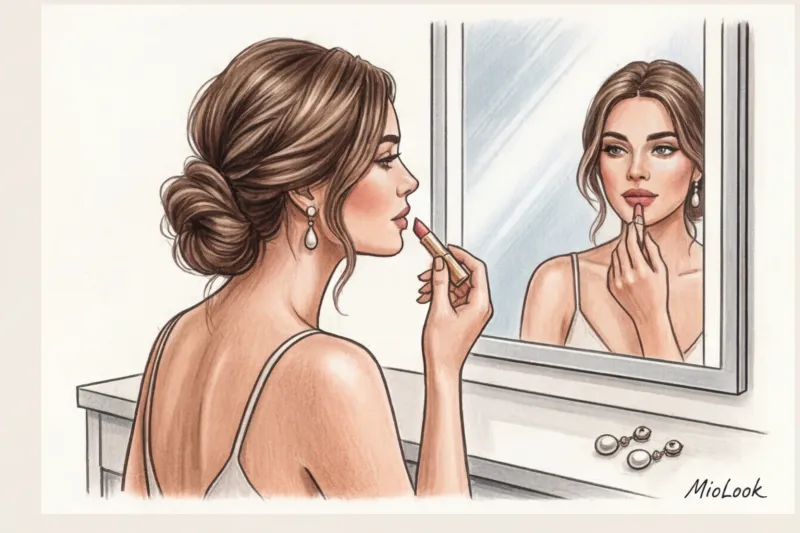
By the way, the principle of appropriateness and avoiding excessive effort (effortless chic) applies not only to wardrobe, but also to your makeup and hair—an area where guests often make the most annoying mistakes.
Beauty etiquette for guests: makeup, hair, and perfume
You can spend 800 euros on a flawless silk slip dress from Nensi Dojaka or a perfectly tailored tuxedo, but tight, bouncy curls and a thick layer of contouring will instantly transform an elegant look into a provincial prom. The beauty treatment for a special occasion requires just as much tact as the choice of clothing itself.
In modern wedding etiquette, the undisputed dominance is "natural glow" rule (Glowy skin). Forget heavy theatrical makeup, aggressive contouring, and thick matte baking—in daylight, especially at an outdoor wedding, it looks unnatural and harsh. How can you achieve flawless makeup wear without a cakey effect? Professional makeup artists working on the red carpet recommend avoiding heavy foundations. Instead, use the thinnest layers of a lightweight fluid, camouflaging any imperfections with concealer. To prevent your foundation from bleeding while dancing, don't powder your entire face—just dust a translucent powder on your T-zone and liberally apply a high-quality setting spray (like Urban Decay All Nighter). And to ensure your lipstick lasts through the wedding cake tasting, use a layering technique: apply a lip liner all over your lips, apply a thin layer of pigment, blot with a tissue, and then apply a final coat of lipstick.
As for the styling, it’s complex, covered with hairspray Babylons Hairstyles haven't just gone out of style—they're guaranteed to add age and look out of place against the backdrop of today's relaxed aesthetic. The ideal hairstyle for a guest should convey a sense of effortless, almost casual carelessness. Opt for flowing waves, a sleek low bun, or a sleek ponytail.
My styling tip: To see if your updo complements the neckline of your dress, upload a photo of your outfit. MioLook — Smart algorithms will help you visualize the geometry of your image before you sit down in the salon chair.
But the most insidious and frequently violated aspect of beauty protocol is perfume etiquette. I attended a luxurious, intimate wedding on Lake Como that was ruined by just one detail. The lingering oud scent (I think it was a generous five sprays of Baccarat Rouge 540) of one guest literally overpowered the exquisite truffle risotto of everyone else at the table. Remember this ironclad rule: lingering, heavy oriental, and gourmand perfumes are strictly prohibited at banquets. Your scent should be felt only in the intimate zone—during the welcoming embrace. Choose delicate aquatic, green, or light citrus compositions (like Jo Malone Wood Sage & Sea Salt), which won't clash with the aromas of haute cuisine and floral arrangements.
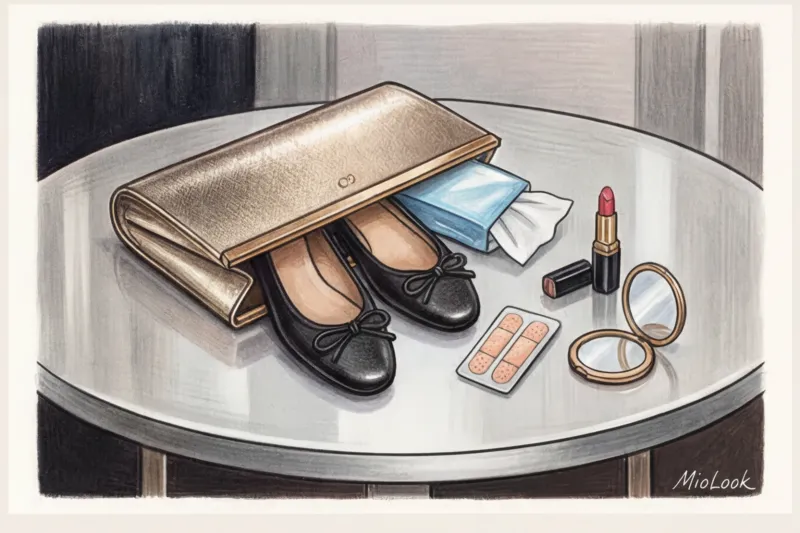
The Perfect Guest's Checklist: What to Pack in Your Evening Bag
The paradox of social etiquette: the more formal and large-scale the event, the smaller your bag, but the more unforeseen situations can arise during the evening. Statistics on this matter are merciless. According to a large-scale survey by wedding portal The Knot (2023), approximately 68% of guests admit to leaving the dance floor or the celebration itself early solely due to physical discomfort, not fatigue or boredom. To ensure the evening leaves only warm memories, not bloody blisters, the contents of your clutch should be carefully planned with mathematical precision.
The art of packing a rigid minaudière or micro-bag is a logical puzzle. Rule number one: get rid of anything bulky. Anything that needs to fit into a tiny clutch must be flat or miniature. No bulky wallets—just a bank card, ID, and a few bills for a tip at the Valet Parking, casually tossed into the pocket. Keys? Remove one essential key from your bulky keychain. In a pinch, even remove a bulky silicone phone case. Space inside an evening bag is worth more than a square meter in central Paris, so use it exclusively for strategically important items.
Rescue kit: first aid beauty
My personal, hard-won list, compiled over the years of attending dozens of weddings from Provence to Lake Como, has saved the evening more than once, not only for me but also for the bride herself. This is a must-have in your bag. rescue kit:
- Hydrocolloid patches for calluses: Forget about regular antibacterial strips—they'll peel off after twenty minutes of vigorous movement. Hydrocolloid patches (like Compeed) act like a second skin, adhere securely, and instantly block pain.
- Blotting papers: I highly recommend brands like Shiseido or Fenty Beauty. The biggest mistake is taking compact powder with you. Layering it on a hot, slightly sweaty face creates a heavy, plaster-like effect. Wipes, on the other hand, will gently absorb sebum, keeping your makeup looking fresh for the photographer with a flash.
- Mini lipstick: Leave the full-size tube at home. Buy a travel-size version of your favorite shade (Charlotte Tilbury and MAC have great miniatures) for a quick touch-up after a lavish banquet.
Compact folding ballet shoes for dancing
And now, the ultimate life hack for seasoned partygoers, which will divide your social life into "before" and "after." Around midnight, when the DJ starts playing the biggest hits, many girls make a fatal style mistake: they take off their Jimmy Choo heels and joyfully dance barefoot. From an etiquette, aesthetic, and basic safety standpoint (no one's abolished the shards of broken glasses on the floor), this is an absolute no-no. You've spent weeks searching for the perfect dress, and finishing the look with bare feet and dust-blackened heels is a fashion crime.
The solution: compact, foldable ballet flats. Specialized brands like Butterfly Twists and Tieks produce elegant shoes made of ultra-soft leather that fold tightly into a roll the size of an apple. They come with a tiny pouch and fit even in a small tote bag or a soft clutch. Your feet will thank you, and your look will stay complete until the very end.
To avoid any unpleasant surprises on the big day, I always test the capacity of my accessories in advance. Moreover, when you're planning your look the "smart wardrobe" feature in MioLook , you can not only create the perfect combination but also visually assess how a tightly packed handbag looks against a dress. A heavy clutch on a thin chain can unattractively weigh down delicate silk on your shoulder—the app will help you spot this nuance even during the fitting stage.
The final touch
To conclude our extensive wedding dress code guide, I want to remind you of the most important rule that won't be included in any invitation. The ideal guest isn't the one wearing the most expensive couture gown from the latest collection. It's a woman who feels appropriate, relaxed, and completely confident.
The best accessory you can bring to your friends' party is your genuine joy and energy, not anxious thoughts about a sore heel or a slipping cleavage.
Your practical assignment for today: If you've already chosen your outfit for your upcoming wedding, have a dress rehearsal. Put on the dress, do a test hairstyle, pack your evening bag and all your essentials, and walk around the house in this outfit for at least 15-20 minutes. You'll instantly understand whether the strap digs into your skin, whether you're comfortable sitting down, and whether the outfit works. By spending these 15 minutes today, you'll guarantee yourself a flawless celebration tomorrow.
Guide Chapters
Women's wedding pantsuit: a stylish look
A well-chosen suit is a powerful statement of impeccable taste. Learn how to create an elegant, festive wedding look.
What to Wear to a Fall Wedding: Colors and Textures
The fall wedding dress code calls for a shift toward bold textures and architectural shapes. Learn how to choose the right stylish outfit for the occasion.
What to wear to a spring wedding: status looks
Forget boring floral chiffon dresses! We're exploring stylish and classy spring wedding guest looks.
How to Dress for a Wedding: Style Secrets
78% of couples look dissonant in photos due to the different levels of formality of their outfits. Learn the secrets of perfect double dressing from a personal stylist.
Is it okay to wear a black dress to a wedding? Tips
A black wedding dress: taboo or a stylish choice? We explore the anatomy of a dark wedding guest outfit with a practicing stylist.
Maternity Wedding Dresses: Style and Comfort for the Guest
Forget boring maternity wear! We'll show you how to choose the perfect wedding look for a pregnant guest from regular, premium lines.
Black Tie Wedding Dress Code for Women: A Guide
Received a Black Tie wedding invitation? We'll show you how to ditch the usual puffy dresses for a flawless silhouette.
A red wedding dress for a guest: stylist advice
Afraid to wear a red dress to someone else's wedding? A stylist explains how to choose the perfect outfit that won't end up gathering dust in your closet for years.
What Shoes to Wear to a Wedding: A Guest's Guide
Forget about uncomfortable stilettos that sink into the grass. We'll show you how to choose beautiful and practical shoes for your wedding.
What to Wear to a Rustic Wedding: Styling Tips
Secrets to creating the perfect look for an outdoor wedding. Learn how to dress stylishly for an outdoor getaway and wear these pieces every day.
Choosing a women's evening jumpsuit for a wedding
Forget about one-night-stand dresses. Find out why an elegant evening jumpsuit will be your best investment for your wedding party.
Summer Wedding Guest Dresses: 15 Stylish Ideas
Tired of throwaway holiday outfits? Stylist Isabella Garcia shares 15 fresh ideas for practical and striking summer wedding looks.
Mother of the Groom Wedding Dress: A Style Guide
The wedding fashion industry often offers mothers outdated outfits. We'll explain how to avoid these mothballed standards and look truly elegant.
Wedding Dresses for Plus Size Women: The Best Styles
Stop hiding your curves under dull, oversized clothes! We'll show you how to choose the perfect guest outfit that will flatter your figure and inspire confidence.
What to Wear to a Winter Wedding: Stylish Looks
A winter wedding requires a special approach to dressing. We'll show you how to look chic and stay warm with the right fabrics and layering.
What to wear to a wedding for a 50-year-old woman: status looks
Breaking down age-appropriate dress code stereotypes. Learn how to create an elegant, modern, and classy look for your wedding.