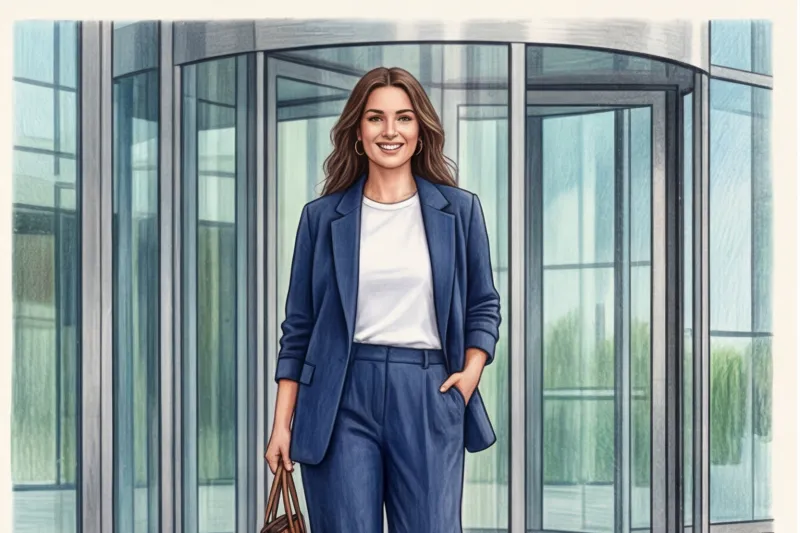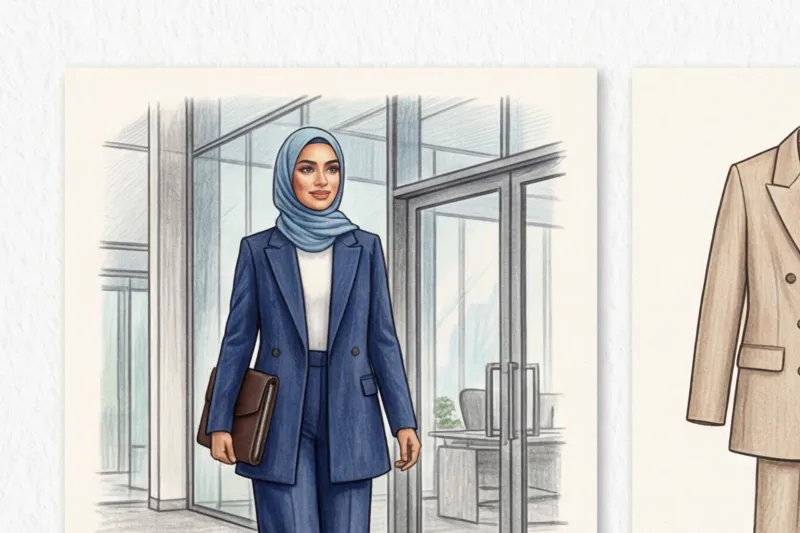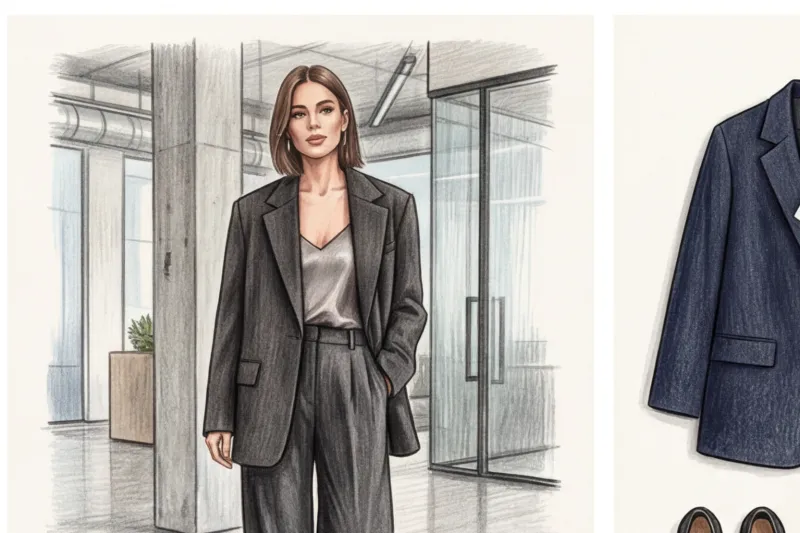
In my 12 years as a personal stylist, I've heard this phrase hundreds of times: "Isabella, I bought the perfect, sharp black two-piece suit for my interview tomorrow!" And almost every time, I've had to sigh deeply and reply, "Please leave it in the closet if you don't want to be rejected."
We're used to thinking that interviews require maximum formality. But when it comes to modern industries, old dress codes aren't just useless—they're toxic to your offer. According to HR research, you have exactly seven seconds to form a first impression. And in those seconds, your potential art director or team lead isn't looking at your diploma, but at your silhouette.
We talked in more detail about the philosophy of the modern work wardrobe in our The complete guide to creative business style for creative professionals But today we'll narrow our focus. In deciding, What to wear to an interview at a creative agency Whether you're working in a corporate office, an IT corporation, or a marketing department, you should treat your clothing as an extension of your professional portfolio. What's perfect for a creative director (avant-garde and complex geometric designs) will look out of place on an IT product manager (where a more relaxed approach reigns supreme). Let's explore the formulas for the ideal look for each niche.
Why a formal suit is your main enemy in a creative interview
Wearing a classic office suit or a sharp banker's suit at an interview in a creative environment conveys one fatal thought: "I don't understand your corporate culture." In modern companies, the concept Cultural fit (Cultural fit) is often valued more than hard skills. You have to visually say, "I'm of the same blood as you."
In 2014, researchers from Harvard Business School published a landmark study on the "Red Sneakers Effect." They demonstrated a counterintuitive finding: in creative and business environments, a subtle, deliberate deviation from the norm elevates your status in the eyes of others. A person in a perfectly formal suit is perceived as a run-of-the-mill performer, afraid to break the rules. Meanwhile, a candidate wearing a basic white T-shirt and conceptual sneakers with classic trousers is subconsciously perceived as a confident visionary.
"Your job isn't to show off your ability to wear a uniform. Your job is to demonstrate that you have taste, a keen eye, and are up to date with the moment," I always tell my clients.
Of course, there's a fine line here. Showing up in ripped shorts is disrespectful to your employer. The secret lies in balance: we take classic elements but strip them of their mothballed austerity with modern textures and volumes.
What to Wear to a Creative Agency Interview: General Rules
Before we dive into specific professions, let's lay out the basics. When you Google "what to wear to a creative agency interview," the internet often returns advice along the lines of "be flashy." This is a dangerous trap. Flashiness doesn't equal professionalism.
In my practice, I use the "80/20 Formula." Your look should consist of 80% a high-quality, architectural base of neutral shades and 20% a trendy or signature accent. It's this accent that commands the interviewer's attention.
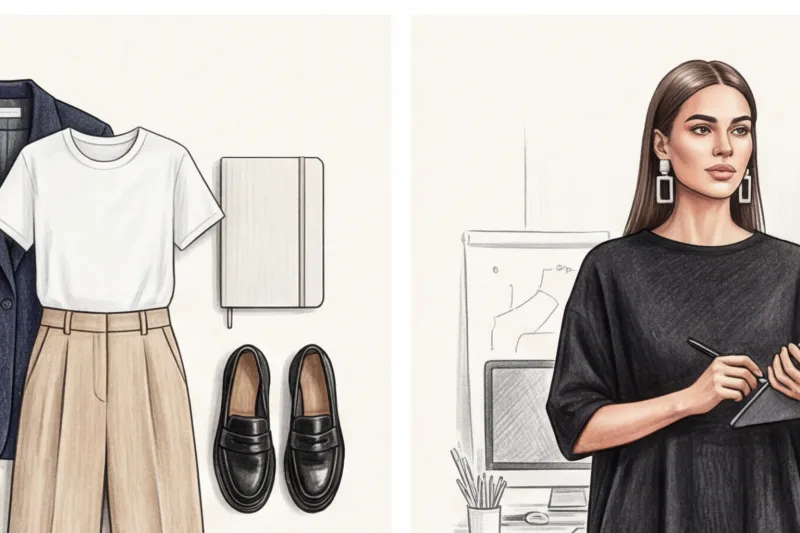
Forgo flimsy mass-market clothing in favor of interesting textures. Fabric is always more important than style. Thin viscose, with its treacherously shiny and clinging fit, will cheapen any look. Choose dense cotton (from 180 g/m²), structured wool, matte silk, or heavy denim. The garment should hold its shape, creating a distinct silhouette.
As for color, all-black isn't always elegant; sometimes it's just boring and flat (especially if the fabrics are of different textures and colors don't match). And beige can be dangerous if it clashes with your skin tone, making you look pale. Opt for complex, deep shades: graphite, dark chocolate, deep blue, or olive. By the way, if you're unsure which silhouettes are right for you as a base, check out our article on... How to choose clothes for your body type without stereotypes.
Access to MioLook for €0.99 — one-time payment
A smart AI stylist will select the perfect look for your next interview based on your preferences.
Get access — €0.99 onceWardrobe as a Portfolio: Images for Designers and Art Directors
For visual professions (graphic design, UX/UI, architecture), your clothing is a teaser of your taste. The statistics are brutal: about 65% of art directors admit to assessing a candidate's sense of composition and color by their appearance even before they open their portfolio.
One of my clients, a talented UX designer named Marina, struggled to get past the second round of interviews at top product companies. She wore the "right" fitted floral blouse and a tight skirt to her interview. We radically changed our approach. For the next interview, we put together a minimalist look: a black asymmetrical tunic with a complex cut (in the style of COS), straight, wide-leg trousers, and square-toe loafers. A week later, she received an offer. Why? Because her new look made her look like a strategist capable of designing complex systems, not just a button-drawing runner.
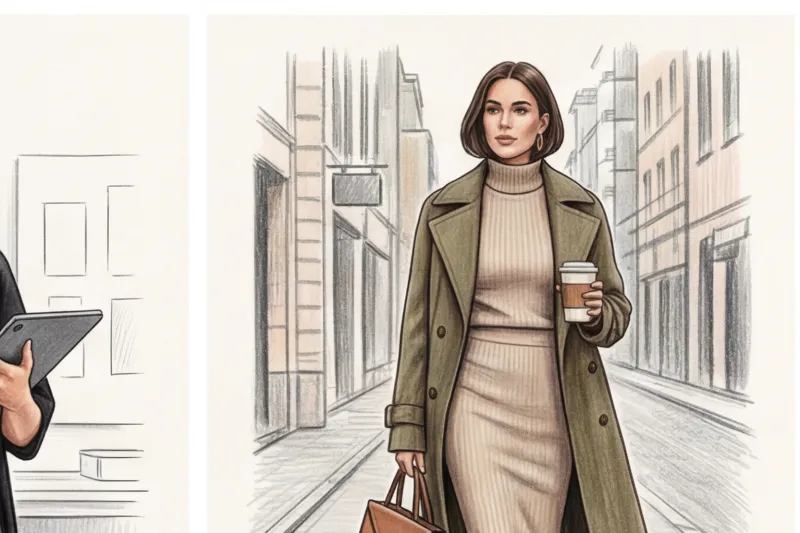
The formula for a designer's image: An architectural top (or a thick, oversized men's-cut shirt) + straight or wide-leg full-length trousers + statement shoes with interesting geometry (brogues with a chunky sole, loafers).
What should you absolutely avoid? Obvious brand logos on half the chest and loud, small prints. They create visual noise and clash with your own design vision.
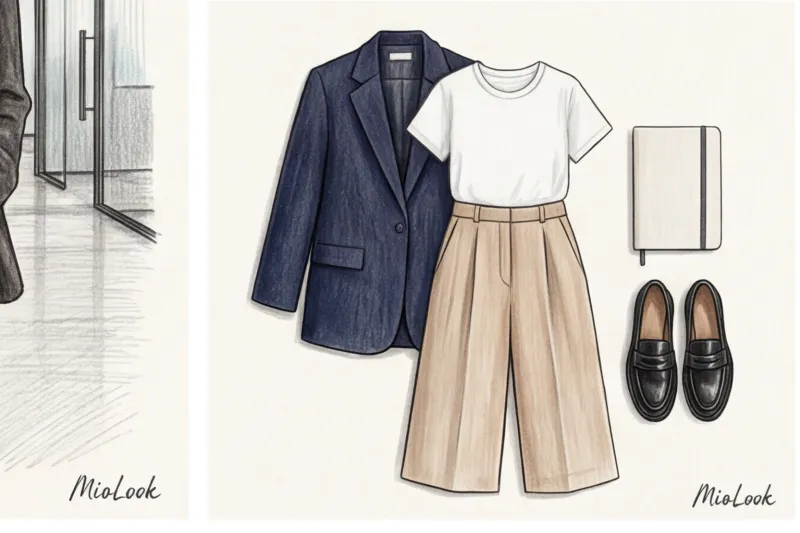
Strategy and Trends: How to Dress for Marketers and PR Specialists
A marketer's job in an interview is to demonstrate two things simultaneously: "I have my finger on the pulse of modern trends" and "I can be trusted with multi-million dollar budgets." Your image should be modern, yet structured and composed.
Layering and color psychology work brilliantly here. A well-balanced silhouette—for example, a jacket with a defined shoulder line (shoulder pads) and a bag with a rigid, geometric shape—suggests to your interlocutor your ability to think systematically and meet deadlines.
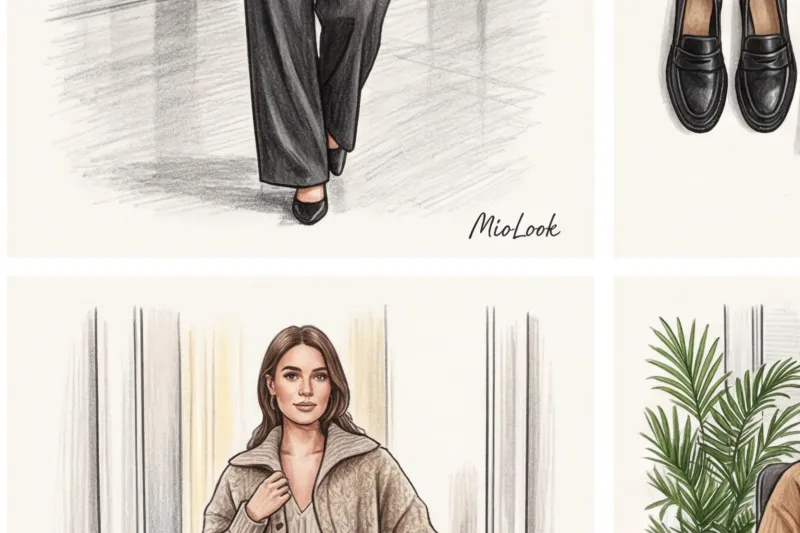
Image formula for a marketer: A monochrome base (for example, a turtleneck and a midi skirt in the same deep shade) + a trendy jacket (made of tweed, thick wool, or even matte leather) + a status bag with a rigid shape.
Use colors that subconsciously evoke trust. Deep navy blue is traditionally associated with analysis and calm. Emerald or terracotta will showcase your creativity, without the childishness associated with neon or pastel pink.
Your perfect look starts here
Join thousands of users who look flawless every day with the MioLook smart wardrobe.
Get access — €0.99 onceThe IT Industry: How to Look Like an Insider While Showing Expertise
The IT industry has its own hidden, very insidious dress code. It seems like you can show up in anything. But let's be honest: showing up to an interview in a long hoodie and flip-flops is only appropriate if your last name is Zuckerberg or you're already a brilliant Senior Developer with a dozen patents. Everyone else needs to demonstrate respect for the process.
IT style is smart casual with a leaning toward the aesthetic of "expensive casualness." The difference between someone wearing "just jeans" and someone wearing "status minimalist jeans" is colossal. Cheap denim with distressing, rhinestones, or an abundance of elastane betrays a lack of refinement. Meanwhile, thick, solid-color straight-leg jeans (indigo or graphite) look like a conscious choice.
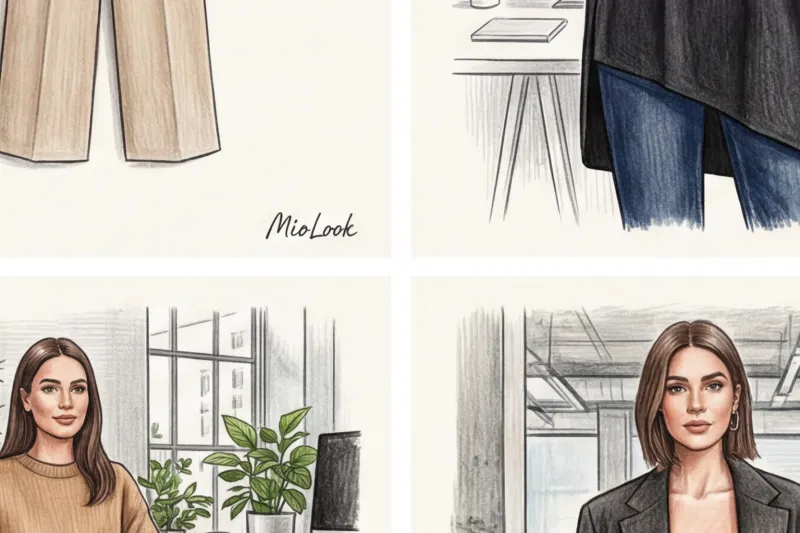
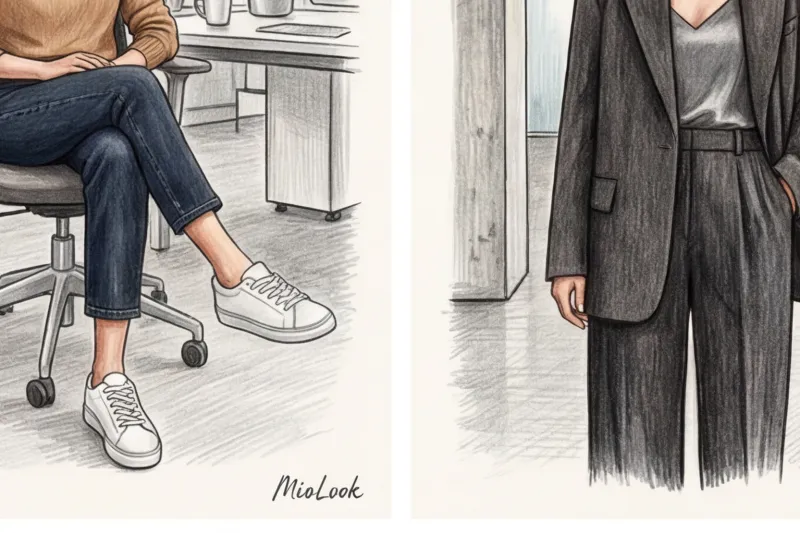
Formula for Product and Project Managers: Thick jeans without embellishments + high-quality knitwear (cashmere sweater, thick cotton long sleeve) or a relaxed blazer without a stiff lining + impeccably clean sneakers.
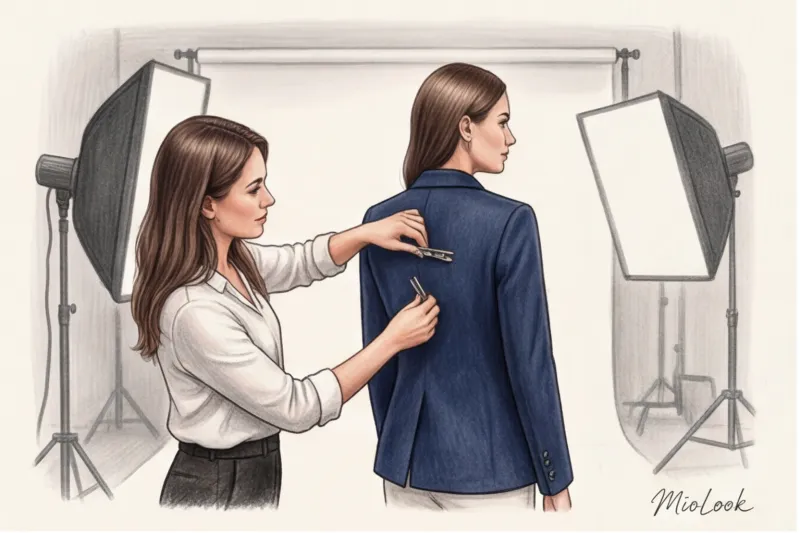
Shoes in IT are a litmus test. White leather minimalist sneakers have become the new equivalent of classic Oxfords. They must be perfectly clean—this demonstrates your neatness and attention to detail. Incidentally, this same style looks great in corporate photos—we mentioned this in the article about images for a business photo shoot in a studio.
The Devil is in the Details: Accessories That Sell Your Taste
As a stylist, I always insist: accessories are the one area where you can't skimp. You can wear a basic T-shirt from a mass-market store (Uniqlo or Zara), but your shoes, bag, and watch must be impeccable. They are what elevate the entire look to the premium segment.
If you wear glasses, treat the frames as your primary style statement. A trendy horn or thin metal frame instantly elevates your intellectual appeal. Forget rhinestones on the temples—they're a faux pas.
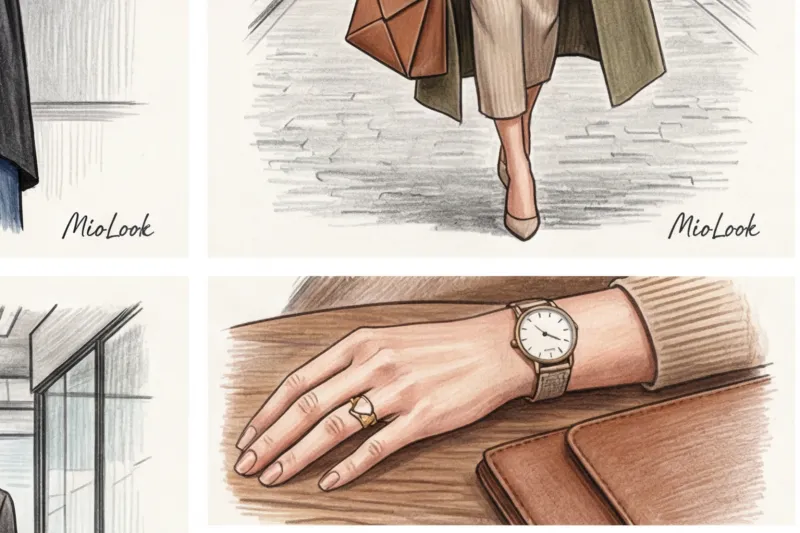
Jewelry in a creative environment should be simple. Choose geometric shapes and smooth metal over romantic heart pendants or an abundance of pearls. A single large, sculptural ring or asymmetrical earrings will convey more about your taste than a three-piece set.
Pay special attention to your gadgets. If you wear an Apple Watch or other smartwatch (which is perfectly fine for IT and marketing professionals), swap out the silicone sports band for a leather, metal, Milanese mesh, or high-quality nylon one. Silicone is only appropriate for the gym.
Important limitation: This advice doesn't work if you decide to wear all the "status" markers at once. Expensive watches, a branded belt with a logo buckle, gold earrings, and a monogrammed bag will make you look like a showcase rather than an expert. The creative cluster values quiet luxury and moderation.
Ready to get started?
Try the MioLook free plan – digitize your wardrobe and create looks without commitment.
Get access — €0.99 onceStylist Checklist: Final Check Before You Go
You've put together the perfect look for your industry. But before you head out the door, do a final crash test in the mirror. No outfit, no matter how stylish, will save an interview if you're uncomfortable in it.
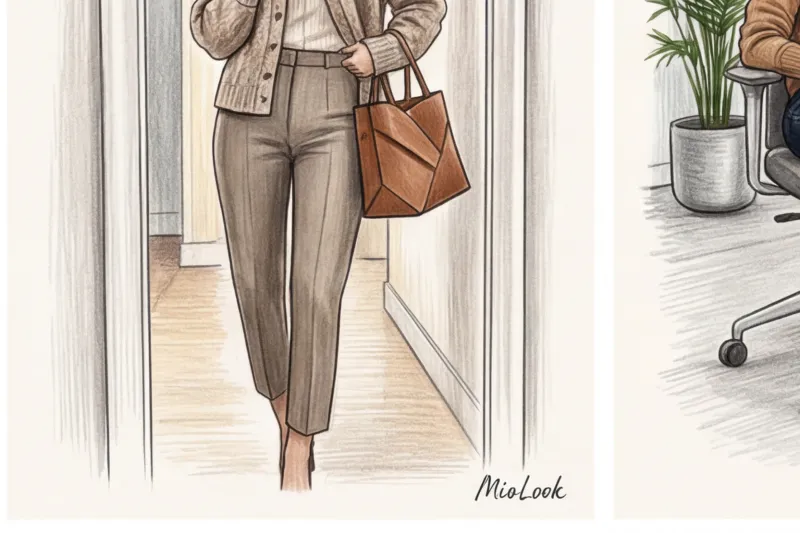
- Comfort and gesture test: Raise your hands, mimicking an active narrative (especially important for art directors and marketers, who often pitch ideas with their hands). Your jacket shouldn't be bursting at the seams, and your blouse shouldn't be treacherously parted at the chest.
- Sit-down test: Sit in a chair for 5 minutes. If your pants or skirt have formed an accordion of stiff folds after this, change them. You'll likely have to sit in the waiting area before your meeting with HR.
- Neatness test: Pilling on a cashmere sweater, cat hair on black trousers, or worn-out toes on shoes will ruin the most brilliant portfolio in the world. See the appendix. MioLook You can plan your looks in advance so that in the morning all you have to do is go through the clothes roller instead of frantically searching for a clean shirt.
Treat choosing your interview attire not as a tedious chore, but as your first professional task at a new company. Your look is the first completed project the employer sees in person. Make it impeccable, and let your clothes speak volumes about your talent even before you utter your first word.