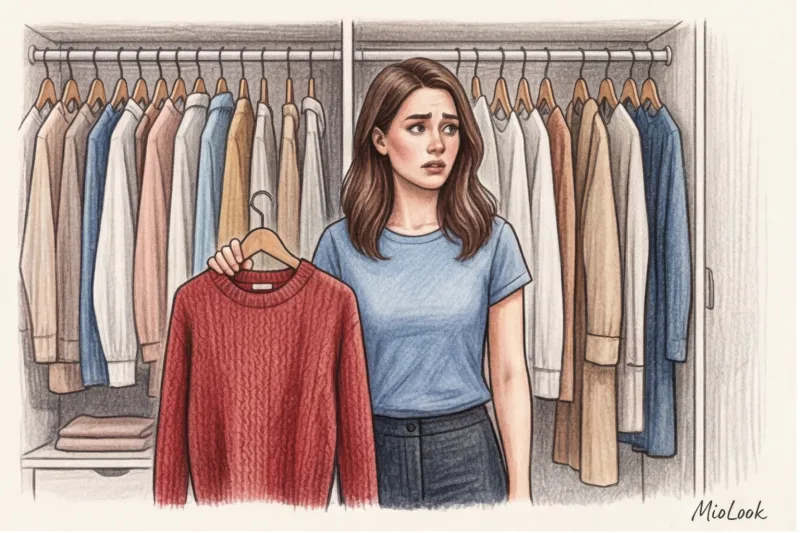
Have you ever noticed this paradox? Your closet is so full you can't close it, yet every morning you stand there with the same thought: I have absolutely nothing to wear. In my 12 years as a digital style coach, I've seen this scene hundreds of times. One of my clients literally cried over five luxurious silk skirts. It turned out that to finally start wearing them, she needed just one more item: a thin, seamless merino wool turtleneck.
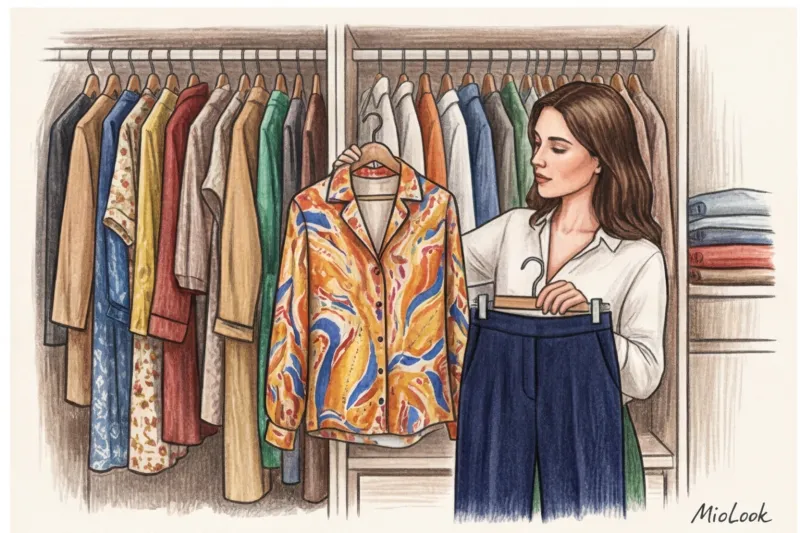
We're used to looking for answers in lists of "10 must-have items of the season." But the truth is, there are no universal lists. To understand, What's missing from your wardrobe? In fact, you need to stop buying up the latest trends and learn to look for holes in your own personal system. We discussed in more detail why this happens and where to start an audit in our The Complete Guide: Wardrobe Analysis and How to Create a Smart Shopping List.
The Empty Closet Illusion: Why Do You Always Feel Like Something's Missing in Your Wardrobe?
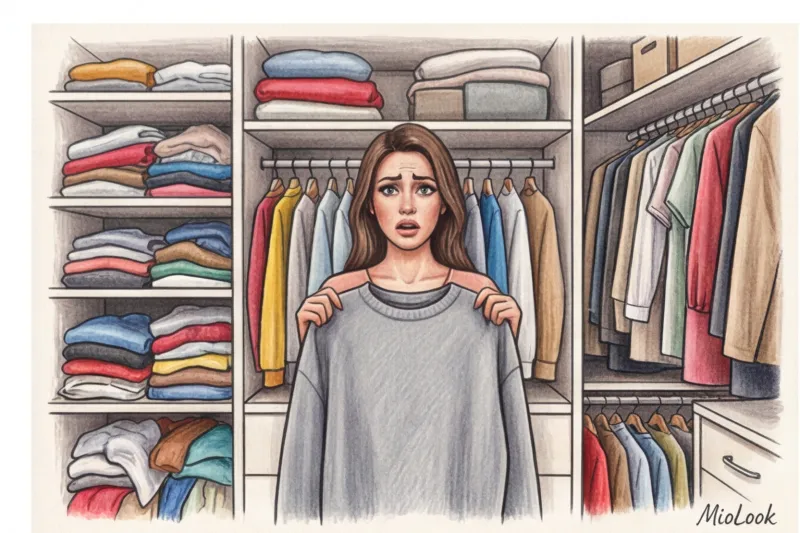
According to a large-scale 2023 study by the British organization WRAP (Waste and Resources Action Programme), the average woman regularly wears only 20% of her clothes. The remaining 80% simply takes up space, creating visual noise.
From a neurobiological perspective, an overcrowded closet creates a sensory overload effect. When the brain sees hundreds of mismatched items, it inhibits your ability to creatively combine them and makes you reach for your familiar, worn-out jeans. You think the problem is the lack of clothes, when in fact, the problem is the lack of connections between them.
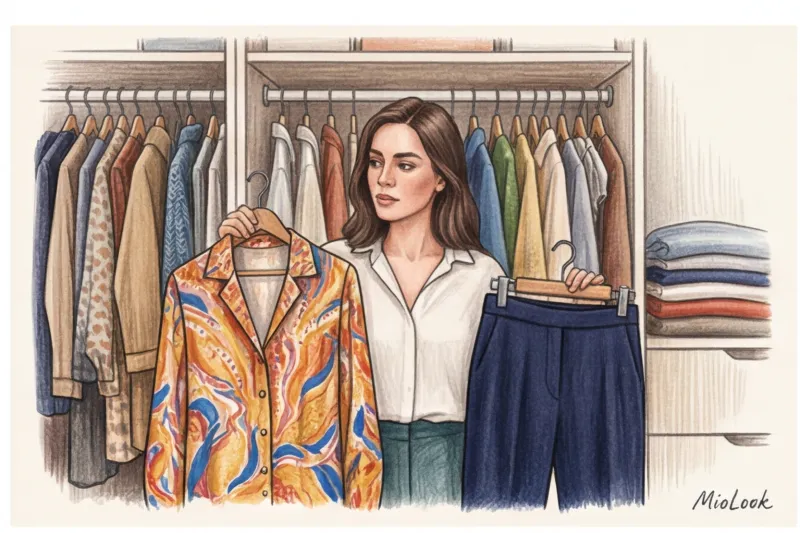
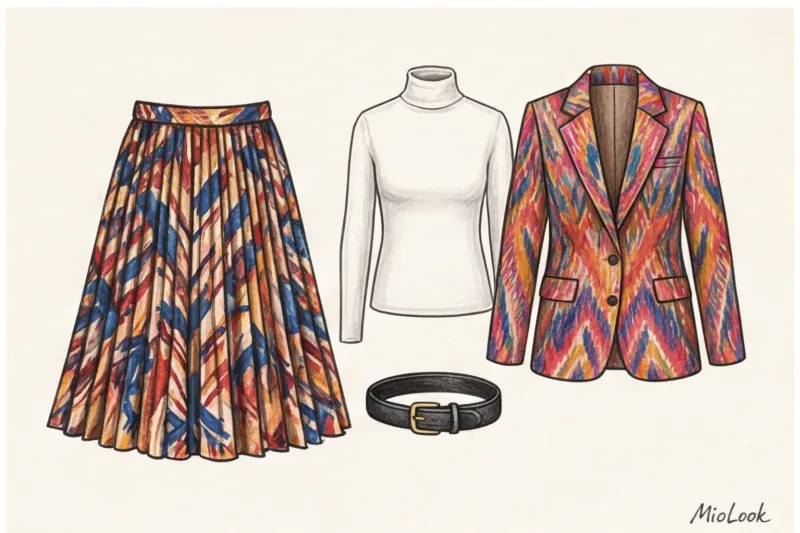
I divide all clothing into two categories: "star items" and "bridge items." "Star items" are statement dresses, printed blouses, and bright jackets. We love buying them because they give us a quick dopamine rush. "Bridge items" are boring, well-tailored basics: sleek tops with a specific neckline, perfect belts, and just-right tights. Without them, the "star items" will never come together.
"A lack of style is rarely due to a lack of beautiful pieces. More often than not, a wardrobe is paralyzed by a lack of 'boring' accessories—the basic elements that tie complex pieces together."
Another reason for the "nothing to wear" illusion is a severe imbalance in your lifestyle. If 80% of your time is spent working on your laptop and hanging out with your kids, and 50% of your closet is filled with cocktail dresses and stilettos (bought for fantasy, not real life), the system will inevitably break down.
The Bridge Concept: How to Professionally Identify Hidden Holes in Style
The stylist's golden rule is: if a quality, well-fitting item is hanging unused, it doesn't need replacing. It needs a companion. This is the very "hole" in your style.
Forget online lists urging you to buy a white shirt or a beige trench coat. If you work from home, a stiff cotton shirt is simply not necessary. The formula for a work look always looks like this: Bottom + Top + Bridge (belt/shoes/base layer) = Finished Look.
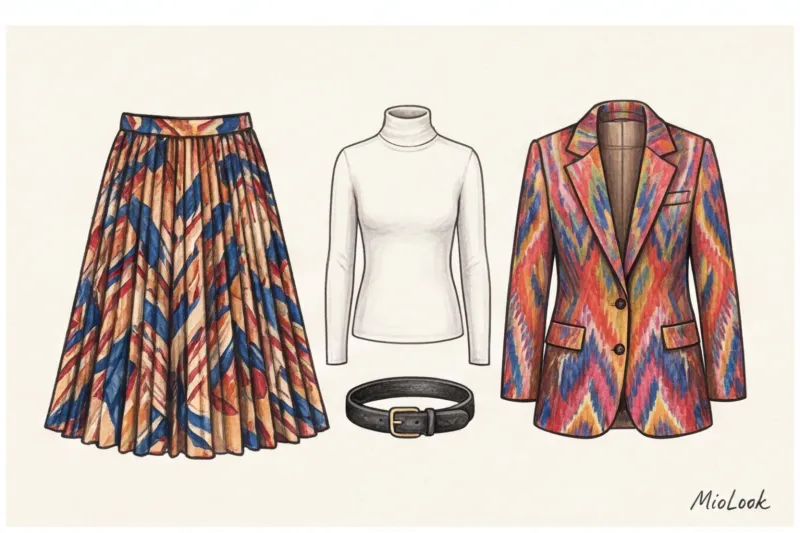
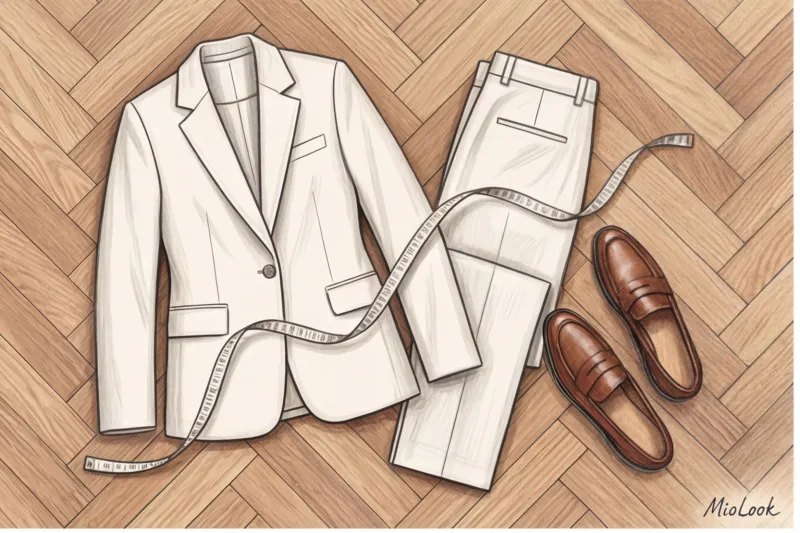
If the formula doesn't add up, the bridge is broken. For example, you have a great pair of wide-leg wool trousers (Bottom) and a chunky knit sweater (Top). You wear them together and they look shapeless. What's missing? A thin, 2.5 cm wide belt to define the waist (Bridge), or a smooth cotton T-shirt with a weight of at least 180 g/m² to layer underneath the sweater and let the hem out for a layered look.
Access to MioLook for €0.99 — one-time payment
A smart AI stylist will help you digitize your closet and choose the perfect look for every day.
Get access — €0.99 onceWe're looking for "singles": bottoms without tops and complex necklines
Let's get practical. My favorite method for identifying "loners" takes exactly 15 minutes. Take out all the pants and skirts you haven't worn in over a month. Place them on your bed. Now try to match each bottom with at least three tops.
Are you struggling with your satin midi skirt? Chances are, none of your blouses go with it because of the texture, and sweaters tend to bunch up at your waist. Your "hole" is a thin, semi-fitted cashmere jumper that can be tucked in neatly, or a cropped cardigan.
It's the same story with complex necklines. Dresses with deep V-necklines often hang in the closet for years simply because you don't have a seamless nude bandeau top or the right low-cut bra.
Shoes that break proportions
My personal professional statistics: 50% of problems with "things not going together" stem from the wrong footwear. This is especially critical in the off-season.
You bought the trendiest cropped jeans, but with your favorite fall ankle boots, there's an unsightly strip of bare ankle between the hem of the leg and the top of the shoe. You're mad at the jeans. But the problem isn't the jeans—you're missing tall, narrow-shaft Chelsea boots that fit under the leg. It's these little nuances that ruin even the most well-thought-out capsule wardrobes.
Digitizing Style: How to Find What's Missing in Your Wardrobe with Data
Our intuition often lies to us while shopping. We think, "I urgently need a new dressy blouse," even though statistics show we only wear dressy clothes twice a year.
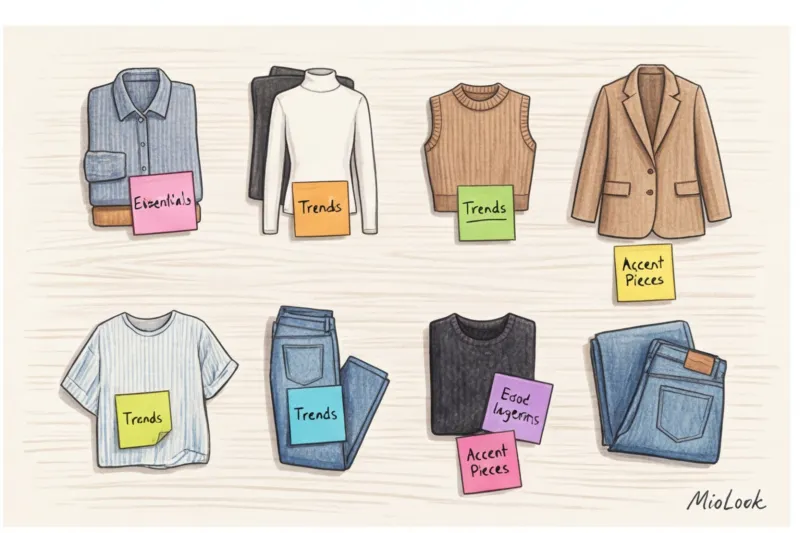
I'm convinced that the future of personal style lies in analytics. When I first started digitizing my wardrobe and tracking my looks daily, I made a shocking discovery. I was constantly buying structured jackets (budgeting €150-200), sincerely believing they were the foundation of my style. But six months of data showed that I was wearing jackets only four times a month. Meanwhile, I wore cozy, thick-knit cardigans 18 days out of 30. My real "hole" was in high-quality knit layers, not jackets.
Conduct an experiment: capture your images every day for two weeks. Take a photo of yourself in the mirror before going out. At the end of the 14th day, analyze your gallery. A photo gallery is ideal for automating this process. Smart wardrobe feature in the MioLook app When your items are cataloged, the algorithms immediately highlight imbalances: for example, you have 15 tops and only 2 bottoms.
A practical checklist: 4 questions to find wardrobe gaps
To find the missing pieces, ask yourself these four questions when analyzing your closet. This step-by-step process often replaces a full-fledged stylist consultation for my clients:
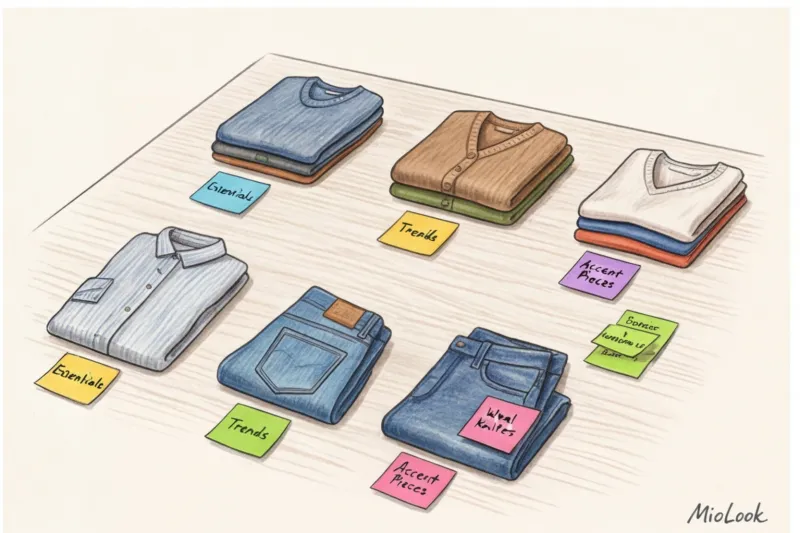
- Which layer is the hardest for me to find? We have three layers: base layers (tops, tank tops, long sleeves), middle layers (shirts, jumpers, dresses), and outer layers (jackets). If you're constantly cold or uncomfortable, you're probably lacking in your base layers (likely due to a lack of good cotton or viscose tank tops).
- What life situation do I not have a ready-made formula for? Figure out where you go most often. If Fridays are casual in your IT office, and everyone wears a hoodie, but you want to look a little more put-together but not too formal, you're missing a casual yet high-quality, loose-fitting sweatshirt.
- What thing could “make friends” with at least 3 single objects? If buying one pair of chocolate loafers allows you to finally wear gray trousers, a beige skirt, and blue jeans, then you're a sure bet.
- What am I missing to make it complete? Often, an outfit appears boring not because of the clothes, but because of a lack of the right accessories. A textured belt, a trendy, rigid bag, or a basic necklace can save even the most bland outfit.
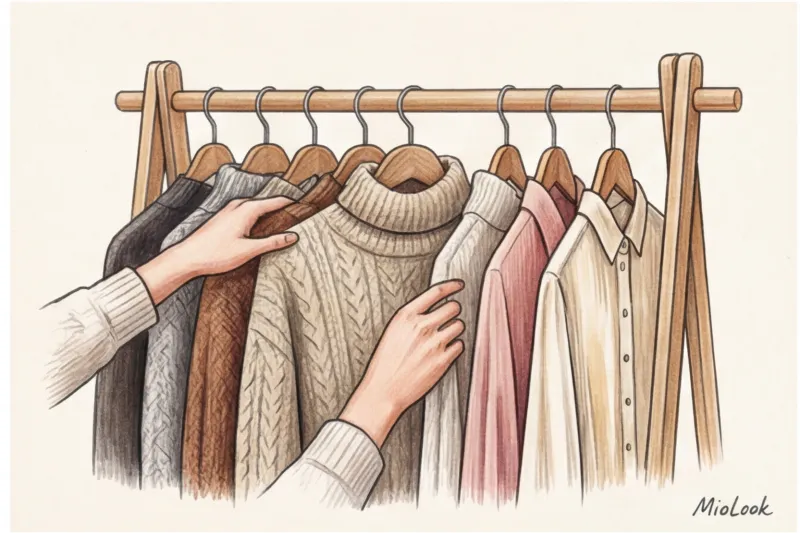
To be fair, I should point out that this checklist doesn't work If your weight is unstable and fluctuates every six months, your current "gap" will always be basic clothing in the right size, and investing in complex bridges is not yet worth it.
Your perfect look starts here
Join thousands of users who look flawless every day with MioLook.
Get access — €0.99 onceThe Cloning Trap: Why We Buy Duplicates Instead of Plugging Holes
Nine out of 10 of my clients have clones hanging in their closets. It could be their fifth Breton top, their fourth pair of straight-leg blue jeans, or their seventh floral print dress. And yet, they still have nothing to wear to a fashion show in cool weather.
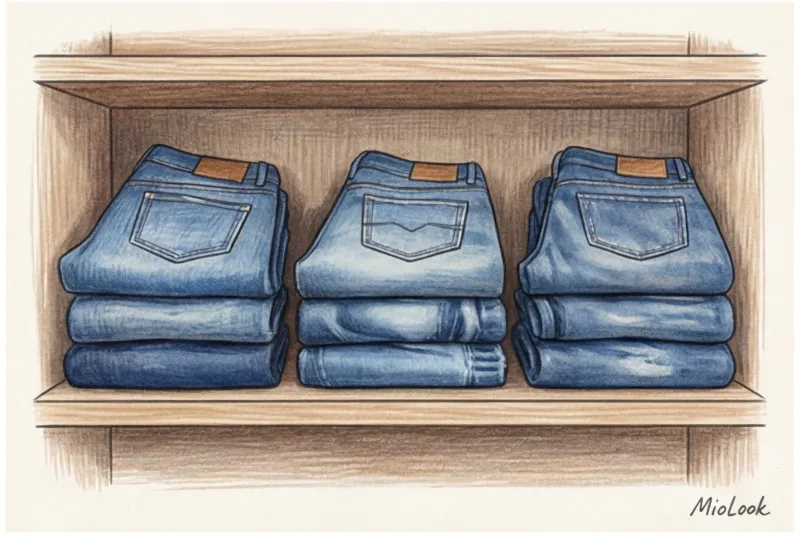
Why does this happen? It's the psychology of comfort. Finding the right "bridge"—for example, the perfect pair of palazzo pants that fit your waist—requires cognitive effort, trying on, and returning. The brain becomes lazy. It's easier to buy another blue shirt from Zara because the style is already familiar and safe. You get a hit of shopping dopamine, but the structural problem of your wardrobe remains unresolved.
How can you distinguish between intelligent duplication and blind hoarding? If you wear a white T-shirt (say, a €25 Uniqlo one) every day and it quickly becomes unsightly, having a spare is logical and appropriate. But if you buy a third pair of black trousers because the first two are "just not quite right," you're hoarding. Stop, sell or donate the two unsuitable pairs, and invest €100-€150 in a single pair that fits your figure perfectly.
From audit to shopping list: planning targeted investments
The final step is to transform the identified gaps into a clear, digitized action plan. Never simply write "buy boots" or "find a sweater" on your shopping list. This is a surefire way to make impulse purchases.
Your request should be as specific as possible, taking into account texture, color, and budget. For example: "A sleek V-neck jumper in a wool or cashmere blend, camel or graphite, under €120. I need it to wear with a leather skirt and over a white shirt.".
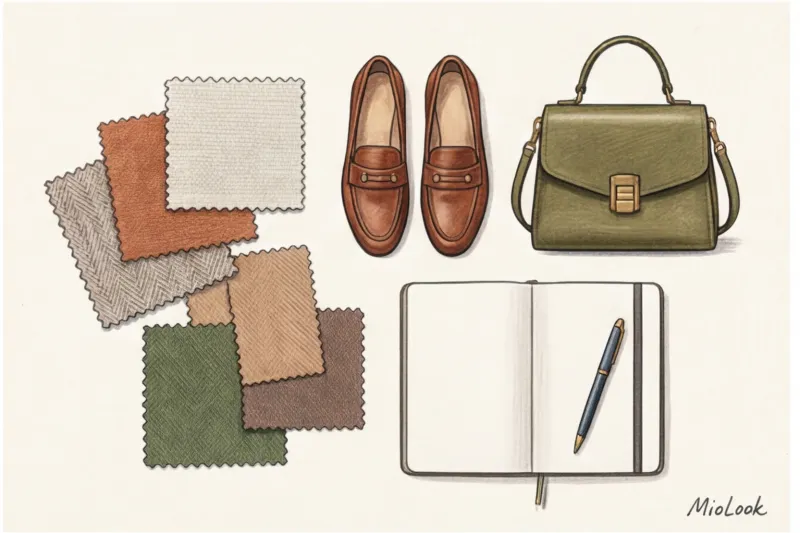
Prioritize. Buy items that will fill gaps in your daily routine now. But accent pieces for vacations or complex layered looks can be saved for seasonal sales.
Use the "one new item = three new looks" rule. If the item you're about to buy doesn't create at least three outfits with the clothes you already have in your closet, it's not a bridge; it's another stand-out item that, in a month, will force you to ask yourself again: what's missing from my wardrobe?
Smart style isn't about a huge wardrobe like in the movies. It's a mathematically proven system where every detail is 100% worth its cost. Start with an honest audit of your existing items, find your "single items," and you'll be surprised how few new things you actually need to buy.