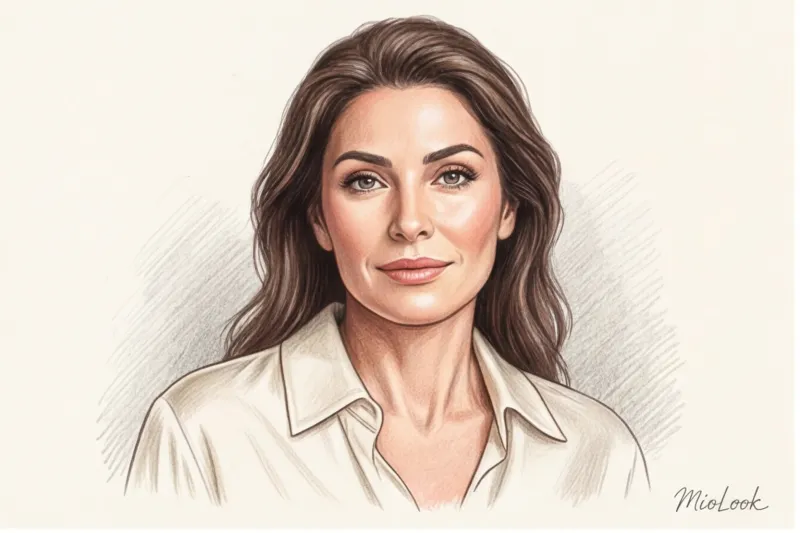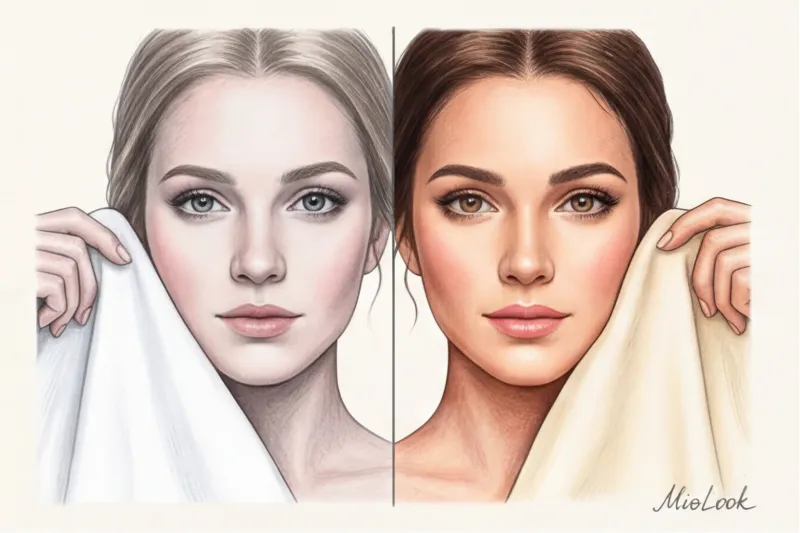
One of my clients almost canceled her wedding photographer a week before the ceremony. She'd bought a stunning designer dress for €5,000, but in the studio-lit test shots, she looked like she hadn't slept in a month. The dark circles under her eyes appeared deeper, and her naturally perfect skin had taken on a sallow tone. The problem wasn't the makeup, the photographer, or the style of the dress. It was the color.
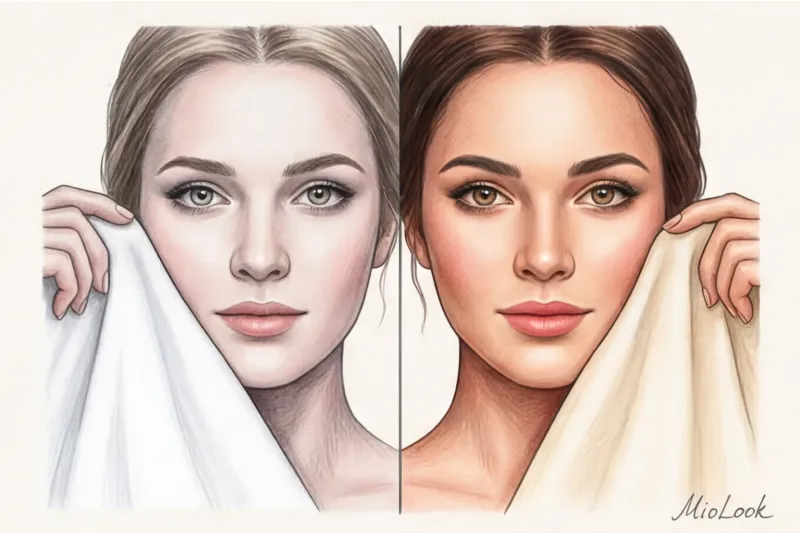
We quickly swapped her dazzling white dress for a sophisticated oyster shade, and her face literally glowed. We've already covered the nuances of cut and fit in our complete guide. How to choose a wedding dress: stylist's advice , but today I want to debunk the most insidious optical illusion in wedding fashion. If you think you just need to "find your white dress," get ready for a surprise: pure white is probably not for you at all. And to choose the perfect wedding dress color based on your color type, we'll have to put stereotypes aside.
Why does a snow-white wedding dress only suit 15% of brides?
Historically, white became the standard color thanks to Queen Victoria in 1840. But let's look at things through the eyes of a modern stylist and photographer. Dazzling white (also known as optical white or pure white) is a true reflector. It acts as a hard reflector of light, highlighting absolutely every micro-imperfection in the skin: the slightest redness, rosacea, signs of fatigue, and even the slight yellowing of tooth enamel, which otherwise appears flawless.
According to colorist statistics, pure white with a cool bluish undertone suits only 15% of people worldwide—those with the contrasting "Pure Winter" color type. For the remaining 85%, this shade works against them. Moreover, the design of modern digital camera sensors means that with automatic white balance, large areas of pure white often turn into a flat blue or gray spot, losing the texture of the fabric.
That's why, if you walk into a good bridal boutique today, you'll find that about 80% of the selection isn't white. It's dozens of variations of ivory, cream, pearl, and ecru. They contain a microscopic amount of yellow, gray, or pink pigment, which softens the contrast and acts as a delicate, smoothing filter for your skin.
How to determine your skin undertone before going to the salon
Knowing your skin temperature (warm, cool, or neutral) will save you hours of tedious fittings. Lighting in salons can often be deceiving—halogen lamps can distort perception—so it's best to conduct a basic assessment at home.
Let me clarify right away: the popular advice to "look at the veins on your wrist" often doesn't work. If your skin is thin and translucent, the veins will always appear bluish, even with a warm undertone. Instead, use more reliable methods.
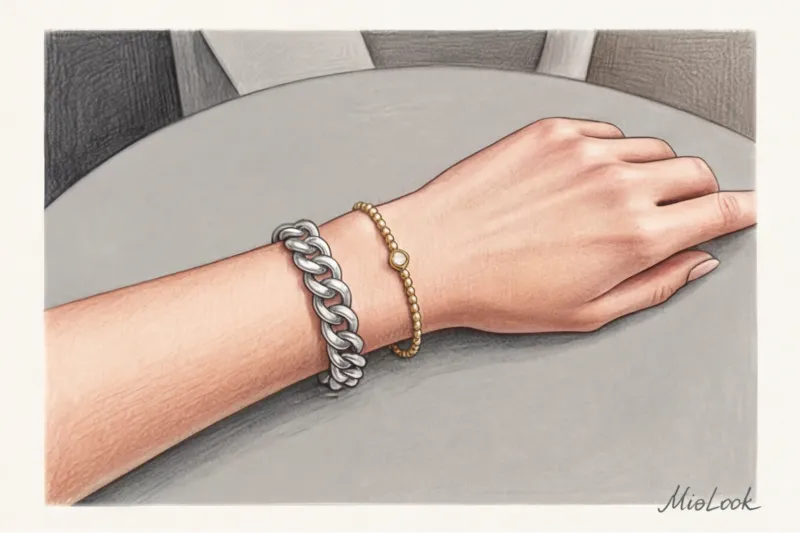
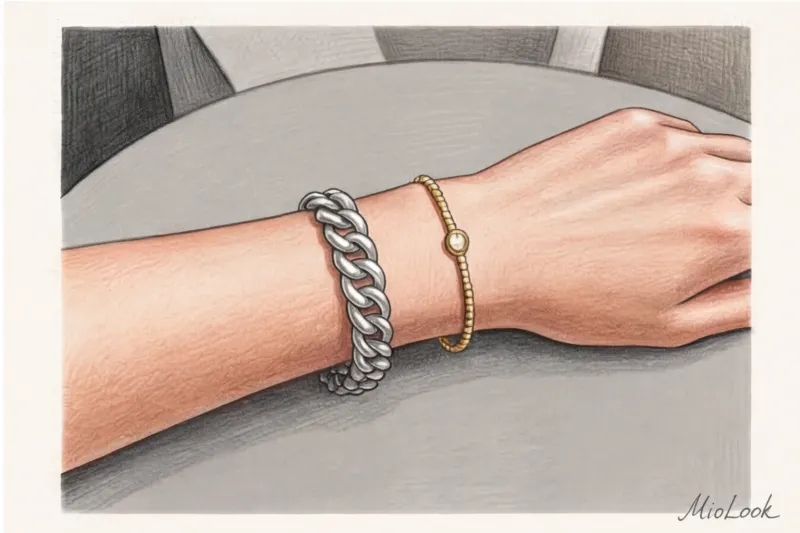
Test with decorations. Take a chunky gold and silver piece of jewelry (or simply two pieces of foil of different metals). Place them on your bare face in natural daylight. Your goal is to see which metal makes your skin look more even and rested, and which one brings out blemishes and shadows.
- Silver highlights your face - you have a cool undertone.
- Gold makes the skin glow - the undertone is warm.
- Both look good - you are the lucky owner of a neutral undertone.
In my practice, I've long since automated this process. To avoid guessing with foil in front of a mirror, you can use MioLook — a smart AI stylist will analyze your appearance and provide an accurate color type estimate, making communication with salon consultants incredibly easy.
Wedding Dress Color by Color Type: A Modern Cheat Sheet
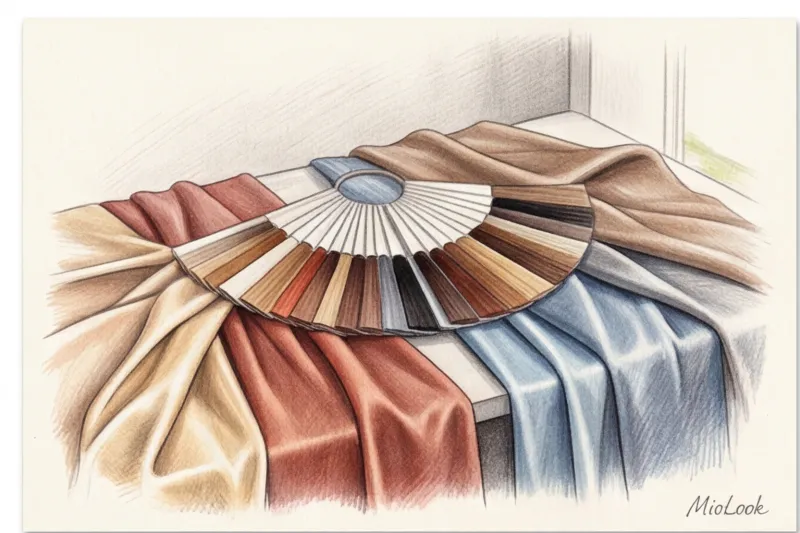
There's no such thing as "just white." Colorists offer their own ideal light shade equivalent for every season. If you're still unsure of your category, I recommend checking out our guide. 12 color types of appearance In the meantime, let's figure out how to adapt your wedding palette to your natural features.
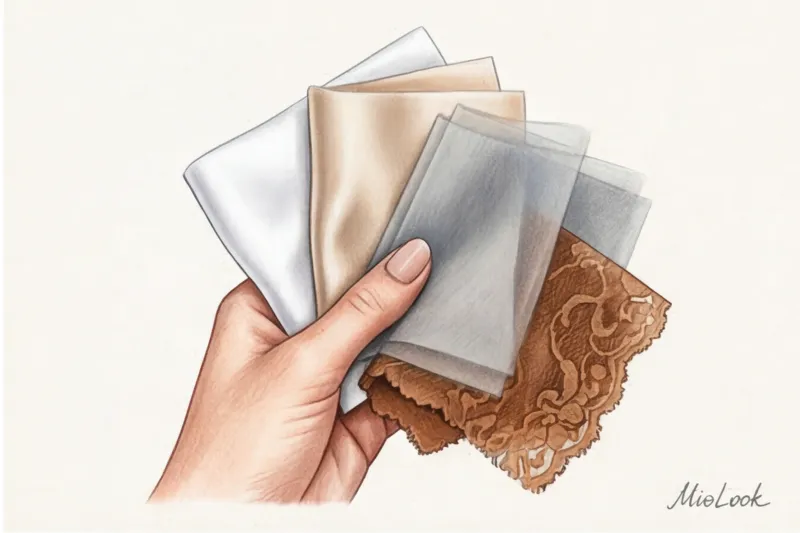
Winter Girl: From Brilliant White to Icy
"Winter" is the only color type that can afford to get married in a classic, crisp white dress and still look regal, not pale. Your appearance demands high contrast and clean, clear lines.
Ideal shades: Optical white, brilliant white, icy blue, cool silver grey.
The secret of the texture: Cool shades are best displayed on smooth, reflective fabrics. Heavy satin, royal mikado, or taffeta will enhance the purity of the color. However, cheap tulle in optical white often looks like mosquito netting—be careful.
Spring Girl: Warm Ivory, Champagne, and Peach
"Spring" skin tones are delicate, often luminous, with warm peachy or golden undertones. Cool whites will instantly make such a face look sallow and gray. Your goal is to maintain the natural warmth.
Ideal shades: warm ivory, champagne, baked milk color, light peach, cream.
The secret of the texture: Warm tones look luxurious in matte and translucent textures. Light silk chiffon, soft tulle, and French Chantilly lace create that luminous effect.
Your perfect look starts here
Join thousands of users who look flawless every day with MioLook. Digitize your wardrobe and find the perfect palette.
Get access — €0.99 onceSummer Girl: Pearl, Dusty Rose, and Ecru
The most complex and aristocratic color scheme. "Summer" calls for muted, cool, dusty tones. The biggest mistake summer brides make is buying a dress in a classic yellowish ivory, which makes their appearance "dirty."
Ideal shades: pearl, gray-white (off-white), ecru (the color of unbleached linen), rose ash, cold powdery.
The secret of the texture: Matte crepe, crepe georgette, and matte silk. The fabric should not be too shiny, so as not to overpower the soft watercolor look.
Autumn Girl: caramel, cappuccino and warm beige
The rich, lush autumn color type calls for equally deep, saturated shades. Light pastels can make you look dull.
Ideal shades: dark ivory, cappuccino, caramel, bronze.
The secret of the texture: The trend looks phenomenal at Autumn nude illusion — when dense cotton macramé or voluminous ivory lace is sewn onto a deep caramel or nude lining. This creates a stunning 3D effect.
How wedding lighting changes the color of a dress
Over 12 years of working as a stylist, I've come up with a golden rule: never make a final decision about a dress without looking at it in different lights. Fabric is a chameleon.
Imagine: you've chosen the perfect pearl dress in cool daylight (around 5500 Kelvin). It perfectly complements your summer complexion. But in the evening, when you enter the banquet hall, lit by warm incandescent bulbs and candles (around 2700 Kelvin), the luxurious pearl silk suddenly takes on a dirty yellow hue, like old paper.
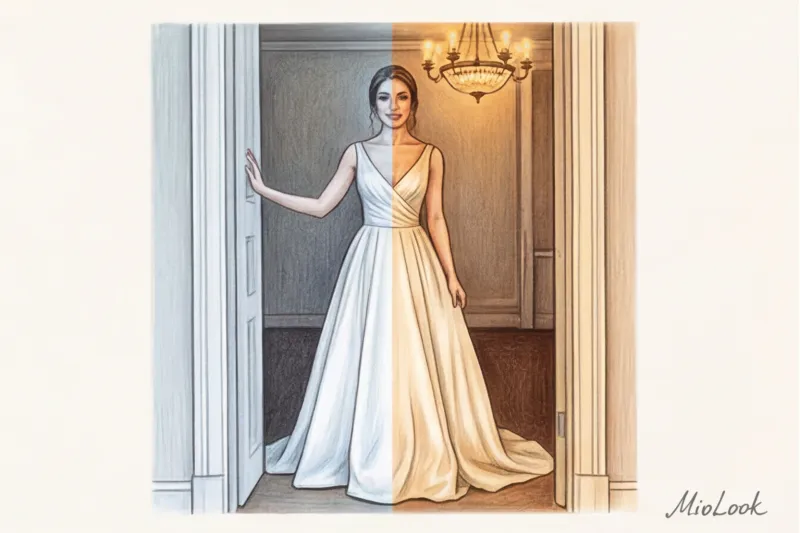
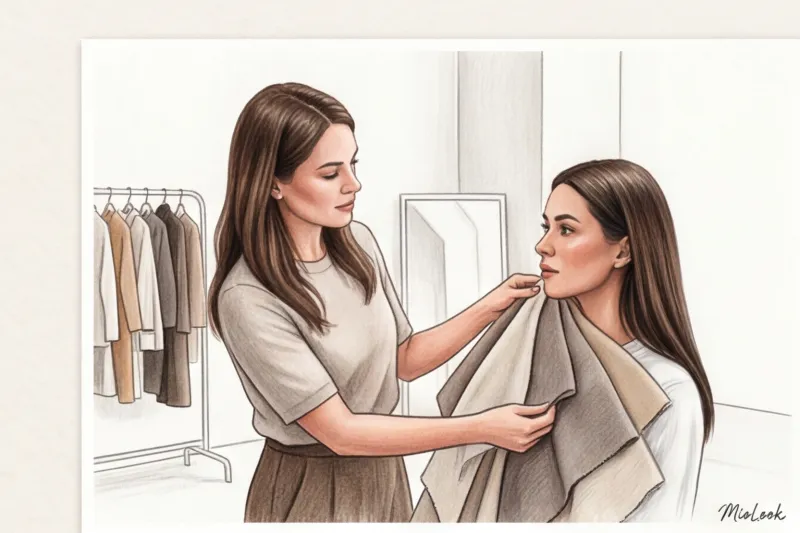
"My personal styling trick for fittings: I always ask the bride to come to the window for natural light, then take her to the darkest corner of the fitting room and shine a candle on the fabric with my smartphone's flashlight. This imitates the harsh flash of a reporter at a reception. You'll be surprised at how much the color changes."
Consider the timing of your wedding. If you'll be spending 80% of your time outdoors in the summer, consider how the dress looks in the sun. If you're having an evening ceremony in a loft, test the fabric under artificial light.
Colored wedding dresses: trend or risk?
Wedding fashion has long since ceased to be held hostage by white. According to reports from Bridal Fashion Week 2024/2025, colored linings and gradients account for up to 30% of runway collections. Leading houses like Vera Wang and Berta Bridal have embraced the shades. blush (blush), smoky gray, soft blue and even dramatic black.
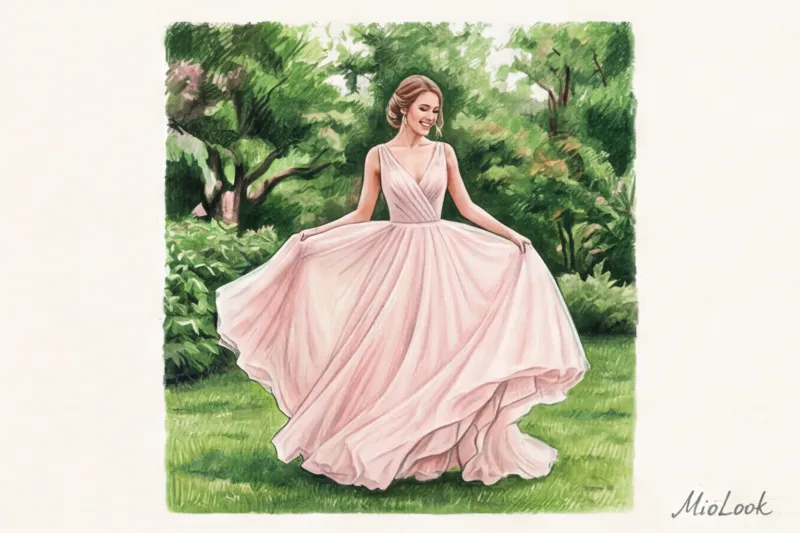
A colorful dress isn't a risk if it fits your personal brand and your overall temperature. However, there's one important nuance: the couple's temperature balance rule. If you choose a cool ash-pink dress, the groom's suit shouldn't be warm brown or mustard. In photos, you'll look like you've been to different events. The ideal pairing for cool pink is graphite, cool blue, or charcoal.
Access to MioLook for €0.99 — one-time payment
A smart AI stylist will select the perfect look and help sync the couple's styles for flawless photos together.
Get access — €0.99 onceChecklist: How to Test Wedding Dress Color During a Fitting
To avoid becoming the heroine of the story I started this article with, use my professional checklist at every fitting. Treat it like project management—emotions are important, but data is more reliable.
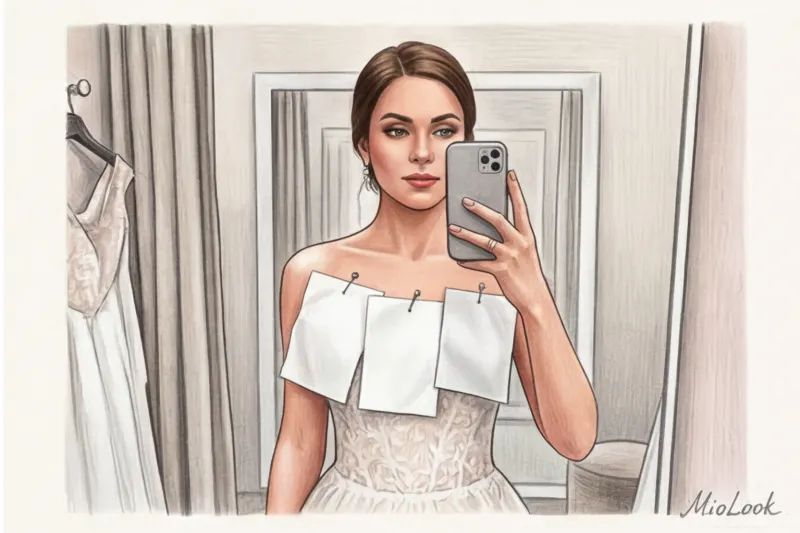
- Take a photo with and without flash. Ask a friend or consultant to take a photo of you from a distance of 2-3 meters. Check to see if the flash is "washing out" the texture of the fabric and whether the color of your dress is creating a blue or green reflection on your chin.
- Test without a dense tone. Come to your fitting with minimal nude makeup. If a dress requires three layers of bronzer and heavy foundation to avoid looking pale, it's not your color. Your shade should be refreshing even on a clean face.
- Compare with the groom's shirt. This is crucial! Bring a sample of the groom's shirt. If he's wearing a crisp white shirt and your dress is a warm ivory, it may make your dress look washed out or dirty. Ideally, the groom's shirt should match the tone of your dress or be slightly darker.
- Ignore someone else's color type. If your Winter friend says a cappuccino dress looks dull, remember: she's judging it through the lens of her own contrasting appearance. Listen only to your own feelings and consider how the color interacts with your eyes and skin.
Bottom Line: Your perfect shade is one that illuminates your face.
Choosing a wedding dress isn't about searching for an abstract ideal from a Pinterest board. It's about finding a tool that will make you the best version of yourself on one of the most photographed days of your life. The color of your dress should work for you, not you for it.
Choosing the right shade for your skin tone isn't just about aesthetics. It can take five years off your visual age, make you look rested even at the end of a 12-hour banquet, and save you tens of hours (and hundreds of dollars) in retouching time, as they won't have to even out your skin tone in every one of 800 photos.
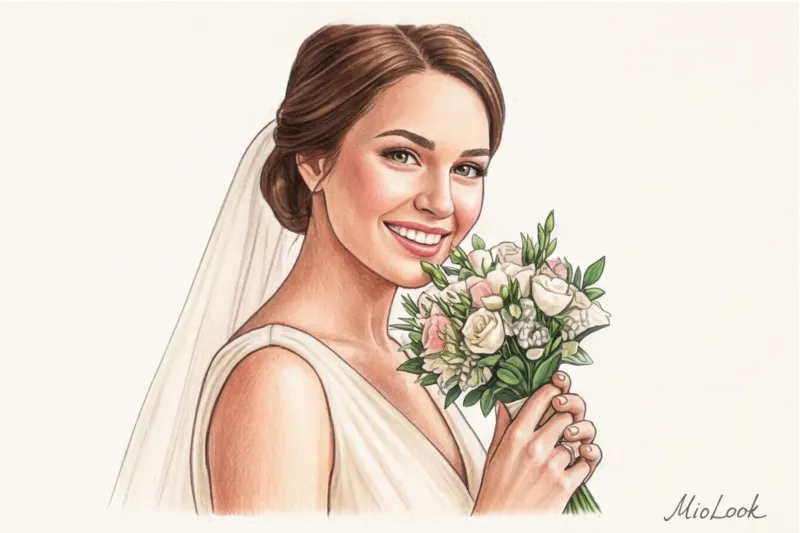
Don't be afraid to break away from the stark white standard. Test, take photos, use digital tools like MioLook to analyze your palette and remember: the most beautiful dress in the salon is the one in which people compliment you, not the dress.