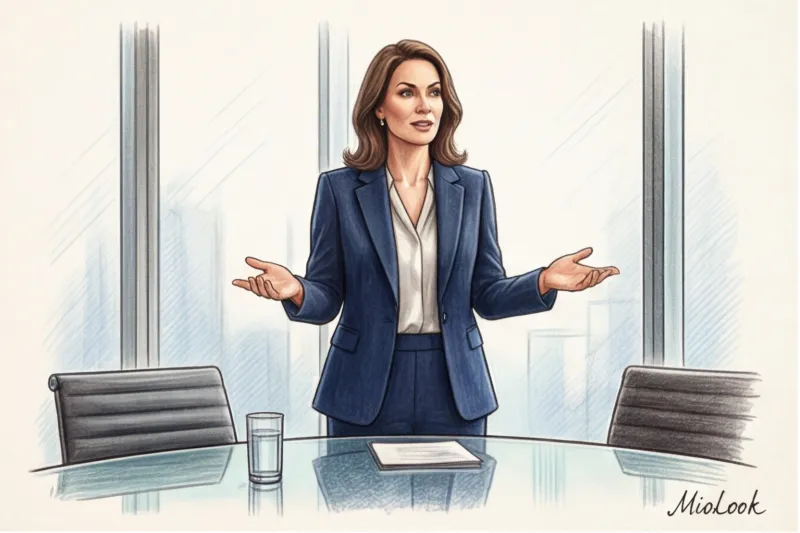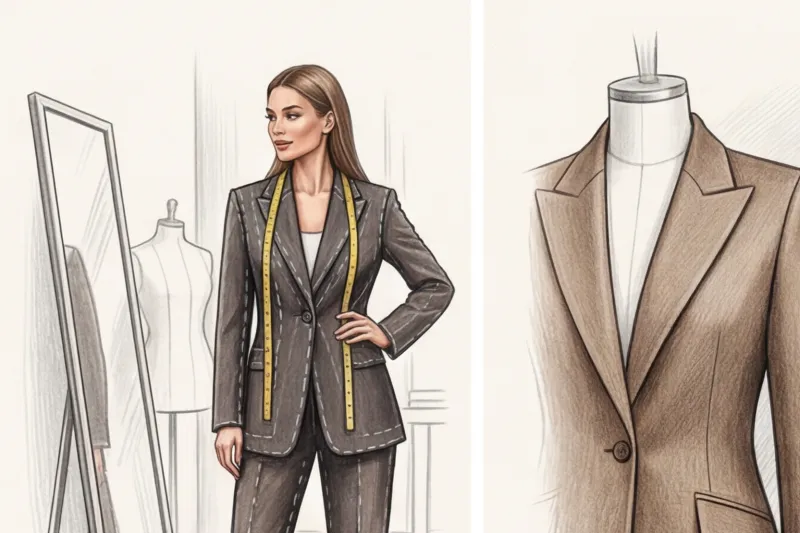
Have you ever noticed that most style advice for women over 175 cm boils down to one thing: "how to visually hide your height"? As if being tall is a flaw that needs to be concealed to appear petite. Over 12 years of working as a personal stylist, I've learned one thing: trying to "shorten" a tall woman is a stylistic crime. A height of 175 cm is your natural luxury, your canvas for complex tailoring. And nothing highlights this beauty better than a flawless pantsuit for tall women.
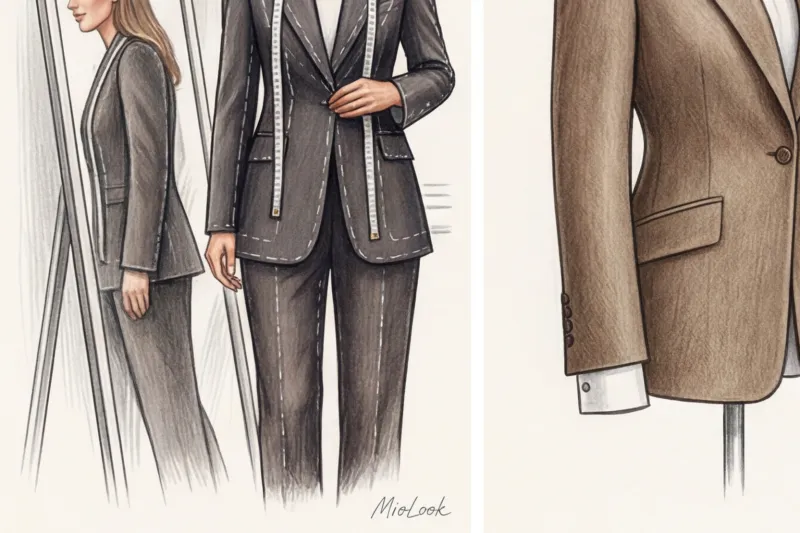
The problem is that finding such a suit in a regular store is a real challenge. Mass-market suits are made for an average 165 cm. And if you simply go for a size L instead of a size M in hopes of longer sleeves, you'll end up with a sack-like silhouette, not a classy one. We've covered more about how to create a basic suit without compromise in our A complete guide to a basic wardrobe for tall women over 175 cm.
Today, we won't discuss how to "not look too tall." We'll explore the anatomy of premium tailoring, the physics of fabric, and those imperceptible millimeters that distinguish an expensive suit from something you've seemingly outgrown.
Why Standard Patterns Don't Work: The Anatomy of a Tall Women's Pantsuit
Cutting errors are much more noticeable on a statuesque figure than on a petite one. When you put on a standard-length jacket, the problem isn't just the short sleeves. The problem lies in the pattern geometry itself.
I had a client in my practice, a top manager 181 cm tall, who hated wearing jackets, complaining that they made her look "boxy." When we began reviewing her wardrobe, the reason became obvious. In a pattern for a medium height, the waistline and bust darts were positioned higher. When wearing such a jacket, my client's waist ended right at her lower ribs. This visually shortened her torso and completely ruined her proportions.
The perfect women's pantsuit for tall women isn't just about longer legs. It's a completely redesigned grid of coordinates: a dropped waistline, a centered bust, and a longer back. Without these changes, any jacket will create an unsightly horizontal fold at the waist.
Hidden traps: armhole height and knee line
There are two technical details that immediately give away that the suit is not tailored to your height.
- Armhole height: In standard jackets, the armhole (sleeve opening) is designed for a different shoulder and arm length. On tall women, it often digs into the armpit, restricting movement. If you can't freely raise your arm to fix your hair, take off the jacket.
- Anatomical knee line in trousers: The trousers taper at the knee. If the pattern is for a 165 cm (5'6") leg, this taper will be at the lower third of your thigh. The result? The fabric will pull unattractively with every step, distorting the crease.
A Jacket for a Stately Figure: Building the Architecture of the Top
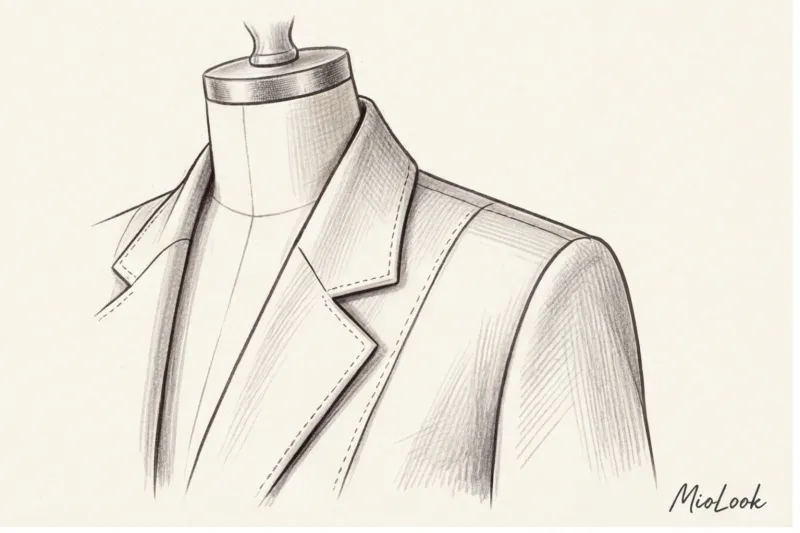
I truly believe in the Mediterranean approach to power dressing: confident, well-defined shoulders. For tall women, a structured shoulder girdle is a tool of balance. It harmonizes the endless length of the legs and adds weight to the look.
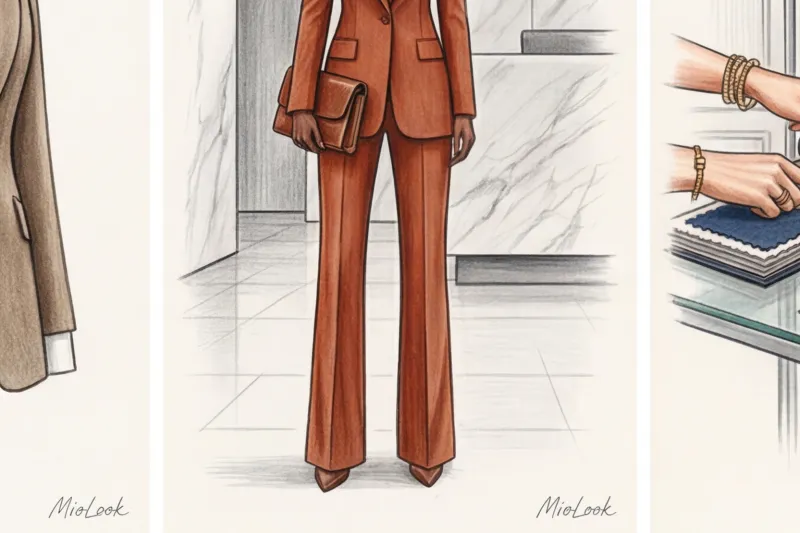
The ideal length for a stylish jacket for someone 175+ is mid-thigh or just below the buttocks. If the jacket ends at the hipbones, you risk looking like a "leggy woman," which detracts from your torso. We need a graceful proportion, not a caricature.
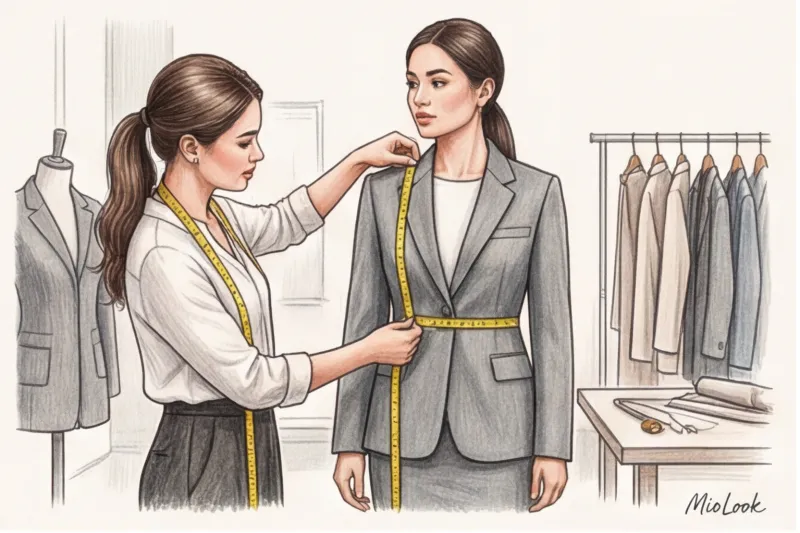
Now about sleeves. According to the Savile Row School of Jacket Design, the ideal jacket sleeve should show exactly 1.5 cm of your shirt cuff. If you're wearing the jacket bare, the hem should reach your wrist bone.
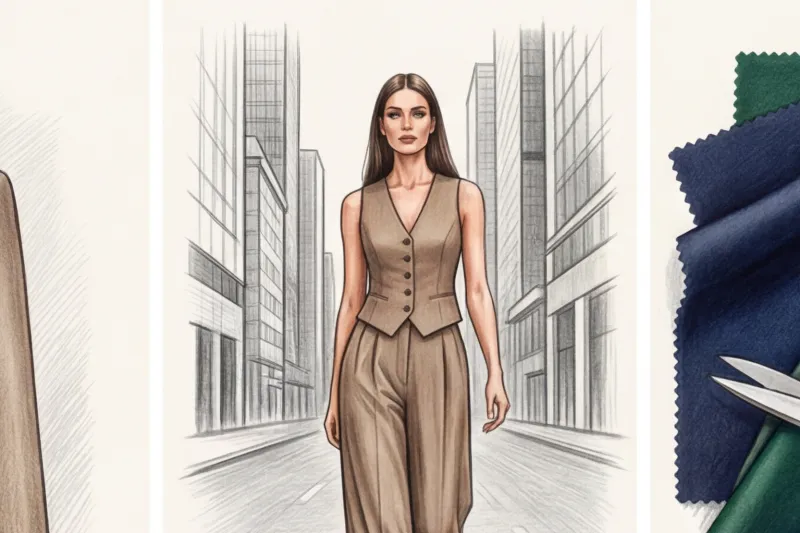
My personal stylistic technique: If you've found a fantastic jacket (for example, at COS or Massimo Dutti), but the sleeves are treacherously short by 2-3 cm, don't try to stretch them. Roll the jacket sleeves into a casual roll to mid-forearm and add a pair of chunky metal bracelets. This horizontal line will visually break up the overly long arm and turn the cut flaw into a deliberate fashion statement.
Your perfect look starts here
Join thousands of users who look flawless every day with MioLook. An AI stylist will help you create a capsule wardrobe tailored to your height and proportions.
Get access — €0.99 onceTrousers: From 7/8 to Maxi (Debunking the Main Stylists' Myth)
It's time to debunk one of the most harmful myths. Open any article from ten years ago, and you'll read: "Tall girls look good in cropped 7/8 trousers; they make their ankles look more graceful." I categorically disagree.
Cropped pants don't make you look any more graceful at 180 cm. They create the lingering effect of a "little sister" who's outgrown her school uniform over the summer. They visually cut off the leg at the most inconvenient, widening point of the calf. True elegance for tall women lies in maxi pants.
Full-length palazzo and wide-leg pants that fit smoothly over shoes are the ultimate chic. This is where height is used to our advantage. But to ensure these pants fit perfectly, pay attention to the measurements. The standard inseam (inseam length) in mass-market clothing is 76–80 cm. According to the WGSN size chart study (2024), for a height of 178+, an inseam of 86–90 cm is essential.
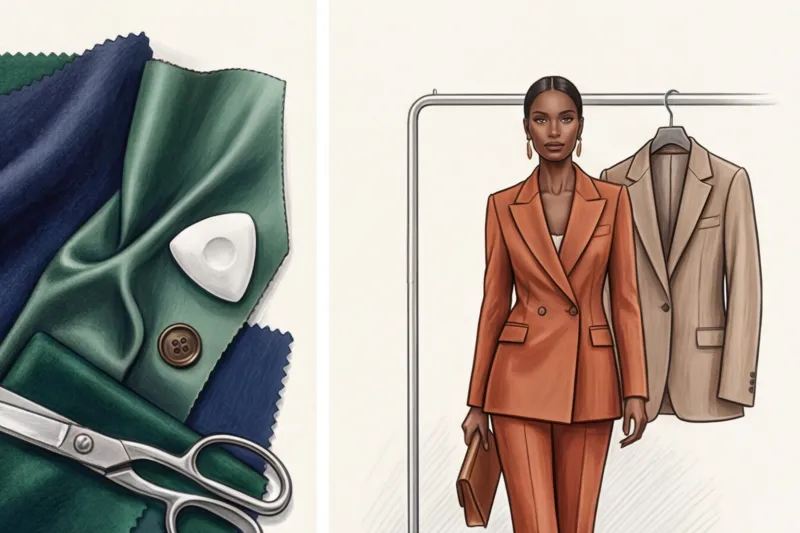
The second critical parameter is the front rise (seat height). A women's pantsuit for tall women must have a high rise. A low or mid rise on long legs visually lowers the center of gravity, making the hips appear heavy.
When it does NOT work: If you have a very short torso and extremely long legs, a high waist can make your bust appear to rest directly on the waistband of your trousers. In this rare case, choose a confident mid-rise.
Fabrics and Textures: How Material Weight Affects Drapery
Do you know what your main advantage is over women who are 160 cm tall? You can handle thick, heavy fabrics that would simply drown a petite figure. It's pure physics of tailoring.
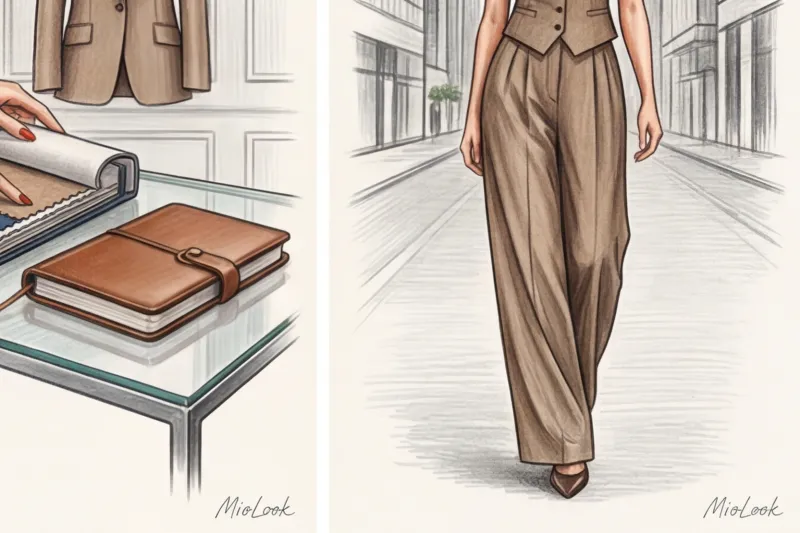
Cheap, thin blends (thin polyester, flimsy viscose) look sloppy on a tall figure when worn over a large area. They don't hold their shape, wrinkle at the crotch and knees, and lose their appeal after just an hour of wear. You need weight.
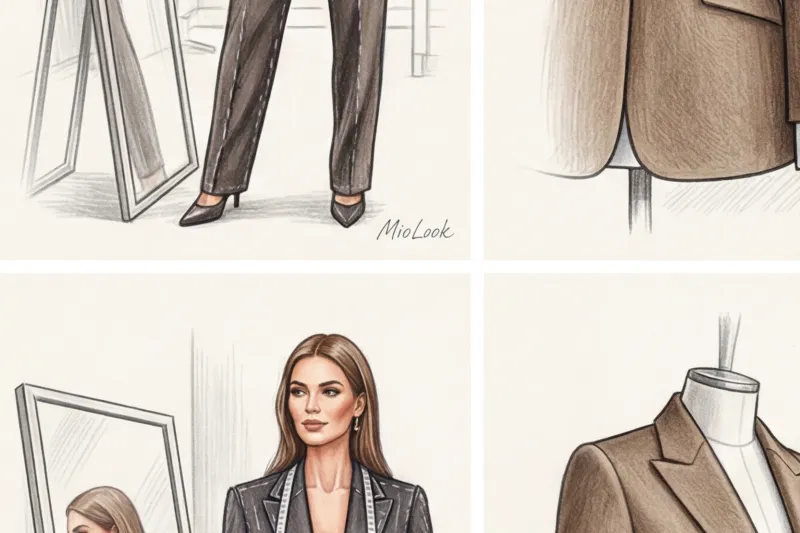
Choose heavy wool suiting (from 280 g/m²), heavy gabardine, tweed, or thick silk for evening wear. The long, wide leg of heavy wool falls perfectly under its own weight. It stretches, creating a flawless, razor-sharp crease. It's the heaviness of the fabric that creates that luxurious gait that street style photographers seek.
Color and print in large proportions: monochrome vs. color blocking
Color on women over 175cm works differently due to the coverage area. According to the Pantone Color Institute's 2024 recommendations for voluminous silhouettes, large areas of fabric require deep, complex shades.
A monochrome look (jacket and trousers in the same color) elongates the silhouette. Deep emerald, rich terracotta, classic navy, or dark chocolate will transform you into a majestic statue. But be careful with neon or overly bright, bold colors (like fuchsia)—on someone over 180 cm tall, such a suit will be too loud, overpowering your appearance.
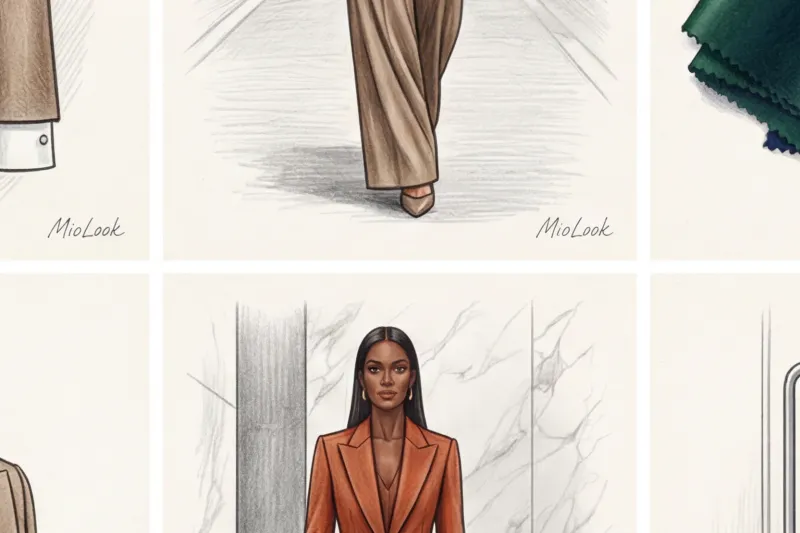
If you want to make yourself look slightly shorter (for example, at a conservative interview), use color blocking. A contrasting jacket (such as a sand color) and dark trousers (like graphite) will visually break the vertical line in half. But remember the cutoff line—it should run along your natural waist or just below your hips, but not cut off your figure at its widest point.
As for prints, a small floral or speckled pattern will look out of place on a tall figure. Confident geometric patterns are your best bet. Large Prince of Wales checks or classic wide pinstripe will seamlessly scale to your proportions.
Access to MioLook for €0.99 — one-time payment
A smart AI stylist will select the perfect suit based on your individual proportions, height, and color type.
Get access — €0.99 onceThe Perfect Fitting Algorithm: Isabella Garcia's Checklist
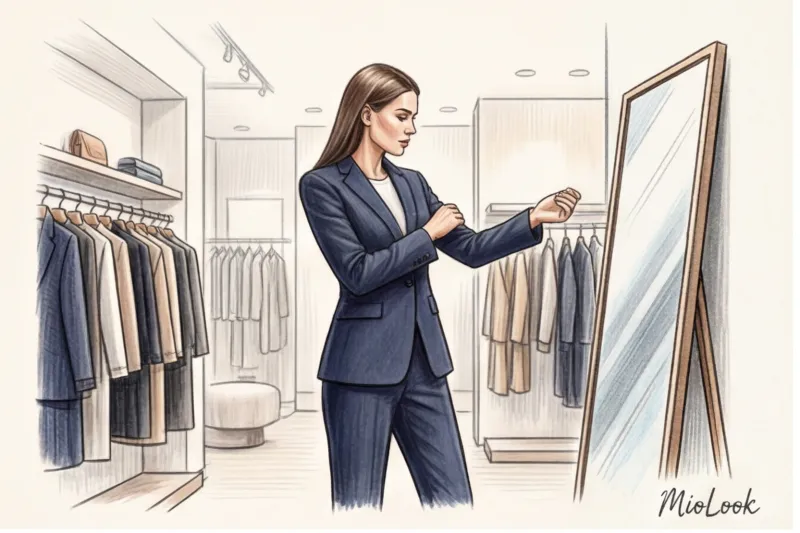
Buying a suit is an investment. A good mid-up suit will cost between €150 and €350, and it should be worth every penny. Here's how I check the fit on my tall clients in the fitting room:
- Hug Test: Put on a buttoned jacket and wrap your arms around your shoulders. If the back is bursting at the seams and the fabric is cutting into your forearms, the pattern isn't right for you.
- Squat test: Be sure to sit on a chair while wearing trousers. Look at your ankles: if the trousers "jump up" more than a hand's breadth, they're too short. Check the tightness in your groin area: there shouldn't be any deep V-shaped creases.
- The "air" rule: The main sign of an expensive fit is air between your body and the fabric. I always recommend ordering a suit a half size or two larger and taking it to a tailor.
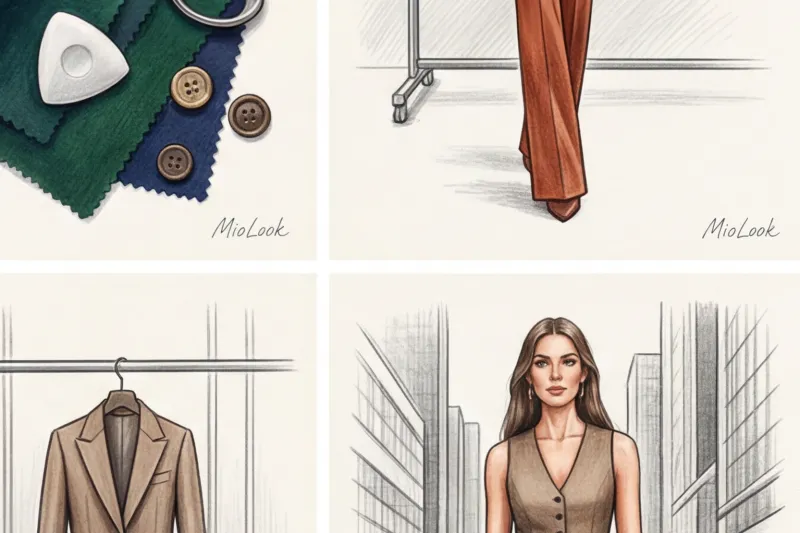
It's important to understand the "points of no return." A good tailor can easily take in the waist of a jacket, shorten the length, or take away excess volume in the waistband of trousers for €30-50. But what can a tailor do? won't be able to , so you can lower the armhole, lengthen the sleeve (if there is not at least 3 cm of extra fabric inside) or increase the height of the seat of the trousers.
If you're tired of compromising, consider made-to-measure. Many brands now offer custom tailoring using ready-made patterns. This will cost between €500 and €800, but you'll get a garment that will last for decades, perfectly hugging every curve of your tall figure.
Ultimately, being tall isn't a problem to be solved in the fitting room. It's a privilege. And once you stop trying to squeeze your beautiful long legs into the cropped shapes of mass-market clothing and start searching for the right inseam length and heavy fabrics, you'll see more than just a tall woman in the mirror. You'll see a queen who knows her worth.