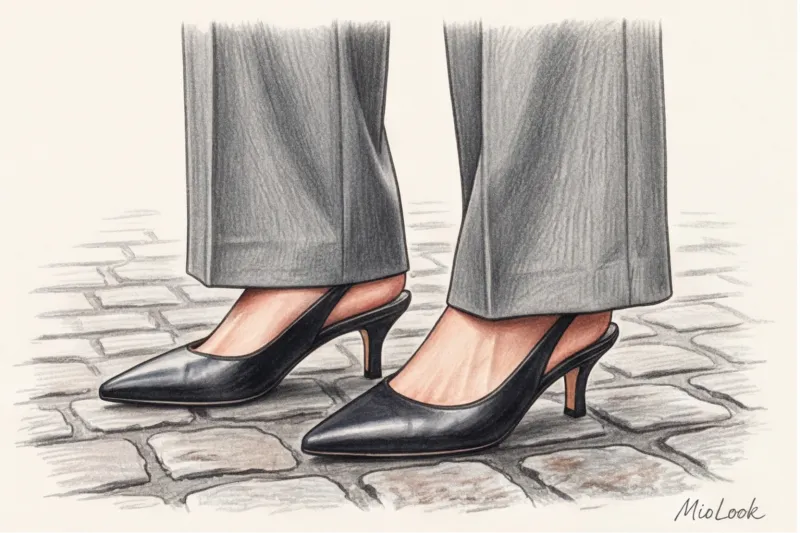
"Katarzyna, I can't wear stilettos anymore; my back gives out by lunchtime. But on flats, I feel like a squat woman," a client, a top manager at an IT company with a relaxed dress code, told me last week. And this has been the most frequent request in my practice for the past three years. The good news is, you no longer have to choose between spinal health and elegance.
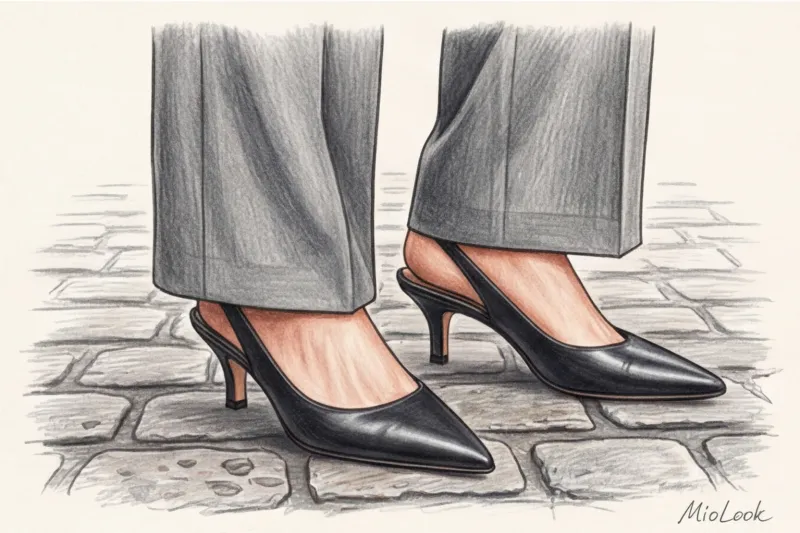
Today the most fashionable women's shoes — these are slingbacks with a micro-heel (kitten heel) and an elongated, pointed toe. We discussed this global paradigm shift in more detail in our The complete guide to shoe trends In this article, I won't simply reel off runway images. I'll provide a rigorous, practical analysis from a practicing stylist: how to choose a pointed toe that won't cripple your toes, and an honest comparison of shoe lasts from brands ranging from mass-market to mid-market.
Kitten heels and slingbacks: why these fashionable women's shoes have become a new classic
The era of "beauty through pain" is officially over. According to the Business of Fashion's 2024 analytical report, sales of classic 10-centimeter stilettos have fallen by 34% compared to pre-pandemic levels. Women have voted with their wallets for smart comfort.
But why kitten heels and pointed toes? It's all about the silhouette's architecture. A pointed toe visually elongates the height and makes the foot appear more graceful, even with a minimal heel height. Orthopedists agree: a safe heel height for everyday wear is 3.5–4.5 cm. This is the physiological norm, ensuring body weight is evenly distributed between the heel and the forefoot.
It's important to understand the difference between a microtrend (one season) and a macrotrend. Slingbacks with a "shot glass" are a solid macrotrend. An investment in a quality pair will pay off in at least 5-7 years, as this style has already become a modern staple.
The Anatomy of the Perfect Slingback: How to Choose a Pair That Stays on Your Heel
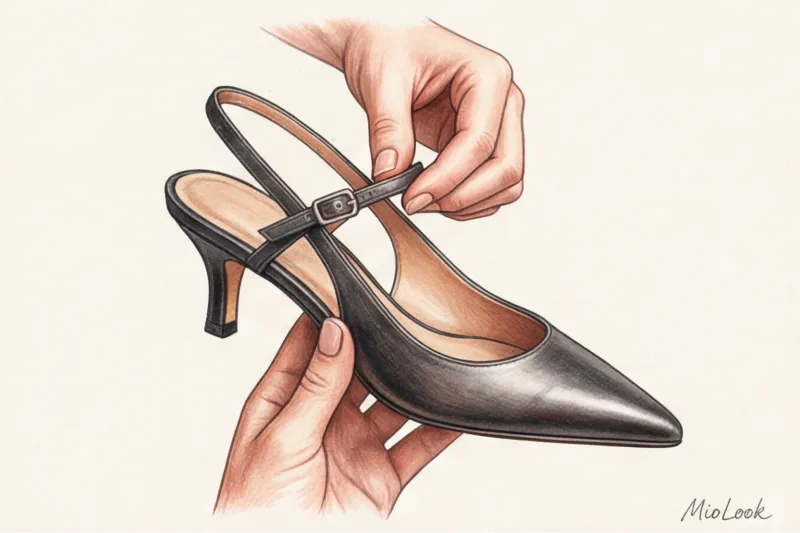
The main problem with slingbacks (open-toe shoes) is the treacherous strap that slips off. Over 12 years of working in fitting rooms, I've seen hundreds of bloody heels and irritated customers constantly adjusting their shoes as they walk.
"For slingbacks to stay on the foot, the strap must be dynamic. A rigid leather strap without elastic elements cannot adapt to the foot's movements."
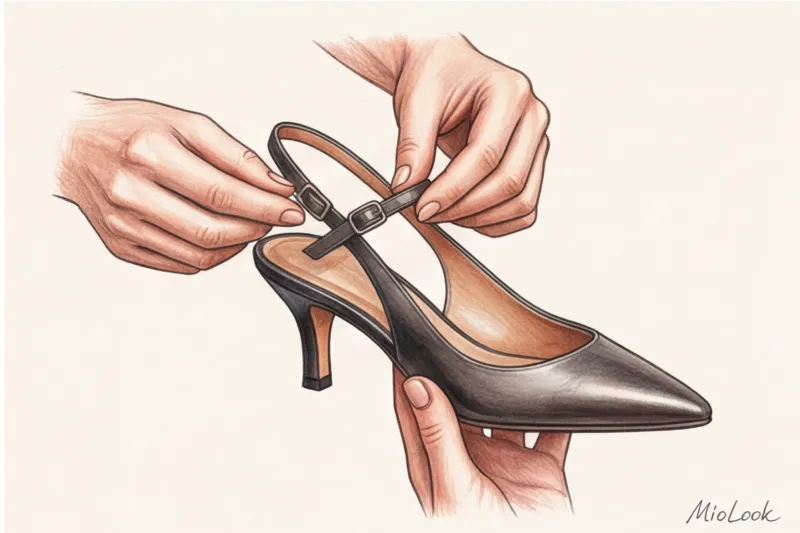
How can you spot a design flaw in the store? I make all my clients do the "10-step test." Put on the shoes, fasten them securely, but without squeezing, and walk briskly through the store. If the strap starts to slip on the fifth step, take them off—they're not your pair. Look for models with a hidden elastic band sewn into the buckle. This provides that micro-cushioning when walking.
The second critical factor is heel geometry. The center of gravity (the narrowest part of the heel) should be centered directly over your heel, not pushed to the very edge of the sole. Otherwise, you'll constantly fall backward.
Mass market versus mid-market: where to find high-quality fashionable women's shoes
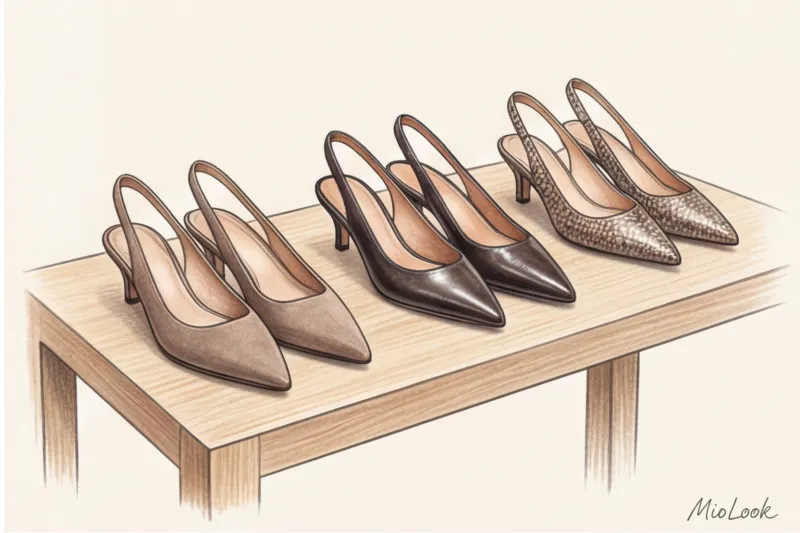
As a personal shopper, I regularly scan the shelves of brands and see a huge difference in the approach to shoe production. Let's compare the main segments within the €40 to €150 budget.
At Zara and H&M (€40–€60), you'll find the fastest, sharpest designs. The pros are a perfect fit for current shapes. The cons are that they're often made of stiff faux leather (polyurethane). Shoes made of this material with a pointed toe lose their shape within 1.5–2 months: the toe wears down to the fabric base, and it's impossible to restore. We only buy these shoes for one season or for going out a couple of times a month.
COS and &Other Stories (budget €100–€130) offer a completely different level of minimalism. Their strong point is the perfectly proportioned neckline of their shoes. They create a deep, V-shaped neckline, which dramatically elongates the legs. The leather is genuine, but requires frequent breaking-in.
Massimo Dutti (€120–€150) is my favorite for basic purchases. Is it worth paying extra for their premium line? Definitely yes, if you're looking for nappa leather slingbacks. Nappa is soft as a glove and molds to your foot in just a few days. My clients find these shoes last 3–4 years of active wear.
Your perfect look starts here
Not sure if slingbacks are right for you? Join thousands of users who look flawless every day with a smart AI stylist.
Get access — €0.99 onceHow to Incorporate Pointed Toes and Kitten Heels into Your Wardrobe
A pointed toe is a statement piece that requires careful proportions. The kitten heel's delicate shape contrasts beautifully with voluminous pieces, preventing the silhouette from becoming overweight.
With wide trousers and suits (Smart Casual and Business)
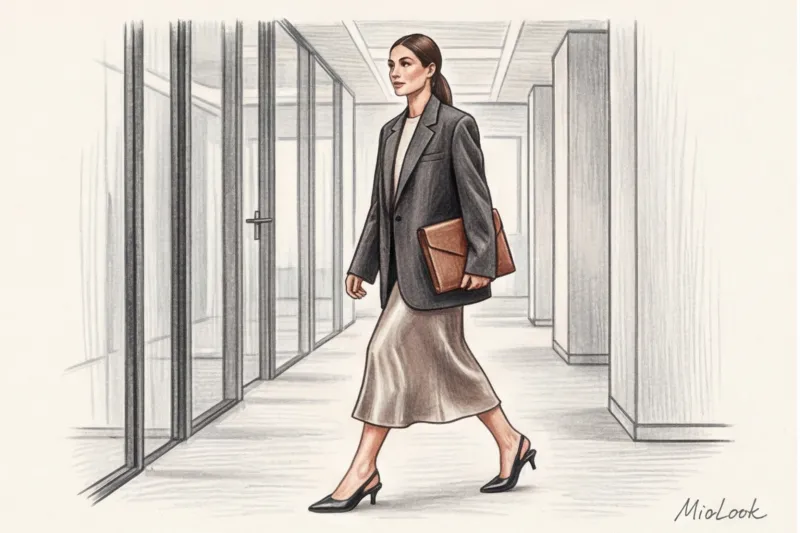
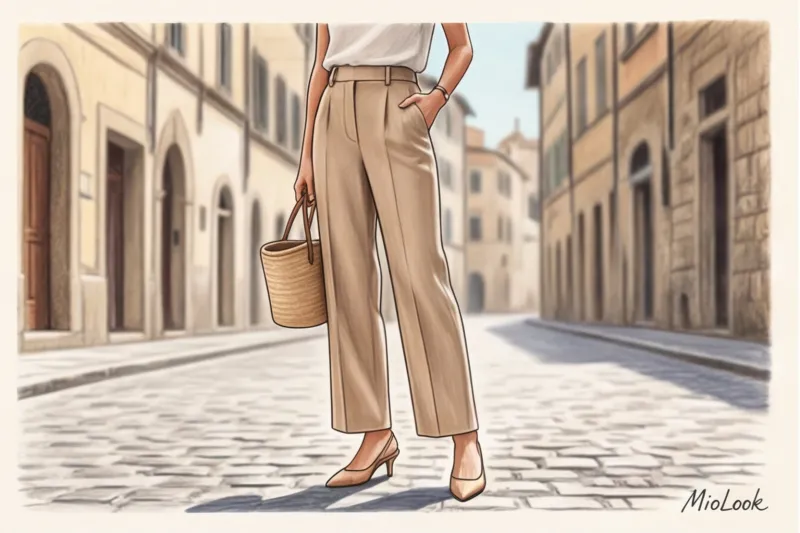
If you're wearing palazzo pants or wide, straight-leg trousers with a crease, pay attention to the leg length. Ideally, the trousers should cover the heel, leaving a gap of 1–1.5 cm from the floor, with only the pointed toe peeking out from under the hem.
Play with contrasts: a sharp, masculine, oversized pantsuit (as if worn by a boyfriend) and decidedly feminine, delicate shoes. This is the basic rule of modern styling—balancing masculine and feminine.
With denim and midi skirts
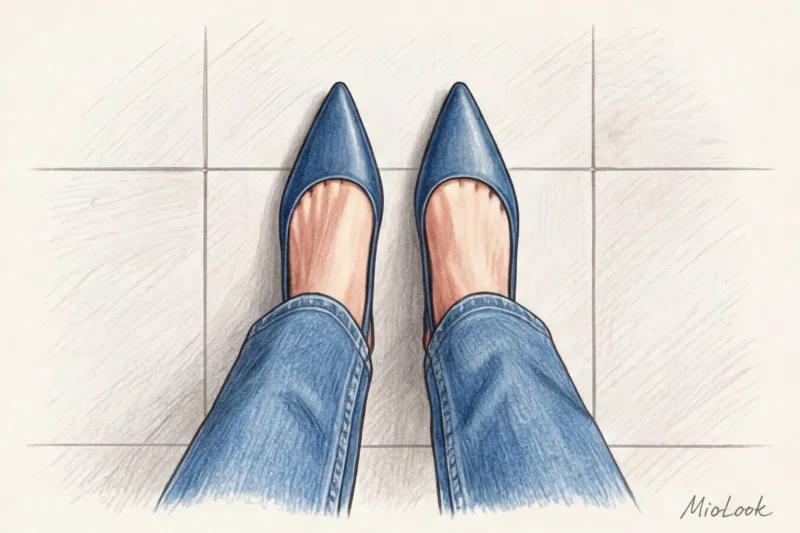
Straight jeans that hit just below the ankle bone are the perfect partner for everyday slingbacks. This gap of exposed skin adds a touch of casualness to the look.
There's an important nuance to consider with midi skirts. I always recommend avoiding shoes with an additional ankle strap if you wear skirts that are below the knee. The horizontal strap visually cuts off the leg right where the hem of the skirt ends, shortening the height. The open heel of a classic slingback, on the other hand, elongates the leg.
Debunking the myth: "A pointed toe makes a wide foot look bad."
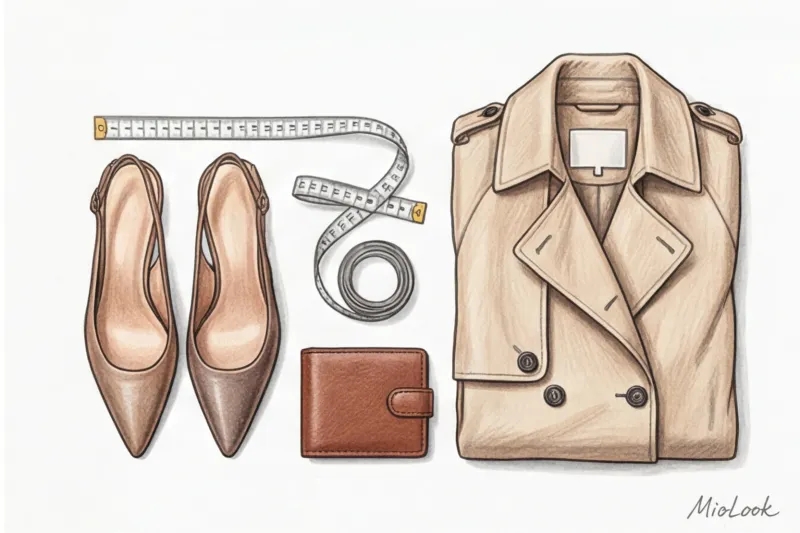
"I have wide feet (or hallux valgus—a bunion), so I can only wear round or square toes"—this is one of the most damaging misconceptions I struggle with. The counterintuitive fact is: a round toe on a wide foot makes your foot look like a brick.
In fact, a properly tailored, pointed toe visually narrows and elongates the foot, making it look more graceful. The secret lies in the "blind spot" rule.
In a good expensive last the narrowing begins after The width of your toes. This means the toe itself remains empty (this is the blind spot), and the widest part of your foot fits comfortably within the wide part of the shoe. A key stylist's lifehack: when buying shoes with a narrow toe, always order a pair that's 0.5, and sometimes even 1, size larger than your usual size.
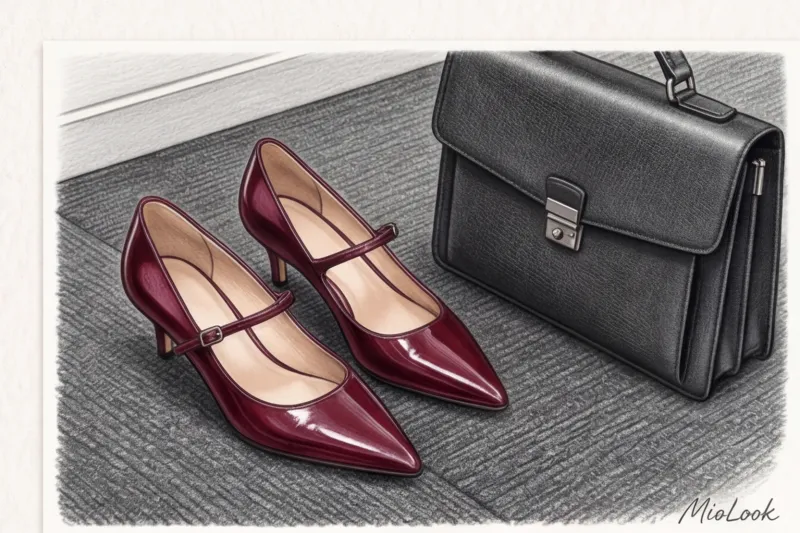
Fair Limit: This advice doesn't work for everyone. If you have an extremely narrow heel and a wide foot, slingbacks a size larger simply won't stay in place, even with a good elastic band. In this case, Mary Janes with a webbing instep are your best bet.
Access to MioLook for €0.99 — one-time payment
A smart AI stylist will analyze your wardrobe and suggest the best combinations for your new pair of shoes.
Get access — €0.99 onceA Stylist's Checklist: 5 Steps to the Perfect Pair of Shoes
To help you navigate the store, I've put together a simple checklist. Check a couple of these items before you go to the checkout:
- Material: For pointed toes, suede or soft nappa are always preferable to stiff patent leather. Patent leather doesn't stretch and is guaranteed to cause blisters during the first few weeks of wear.
- Neckline shape: Look for a V-neckline (with a corner). A U-neckline (round neckline) is forgiving and gives the look a more old-fashioned feel.
- Finger position: The groove between the toes shouldn't be too visible. A slight hint (toe cleavage) is attractive, but toes that stick out a third of the way indicate a shallow, uncomfortable last.
- Strap elasticity: Check for hidden elastic at the clasp.
- Sole: If you're buying mid-range or premium shoes with leather soles, budget an additional €15–20 for rubber sole installation. Leather soles will wear out on the pavement within two days.
Shoe Care: How to Save Your Vulnerable Pointed Toe
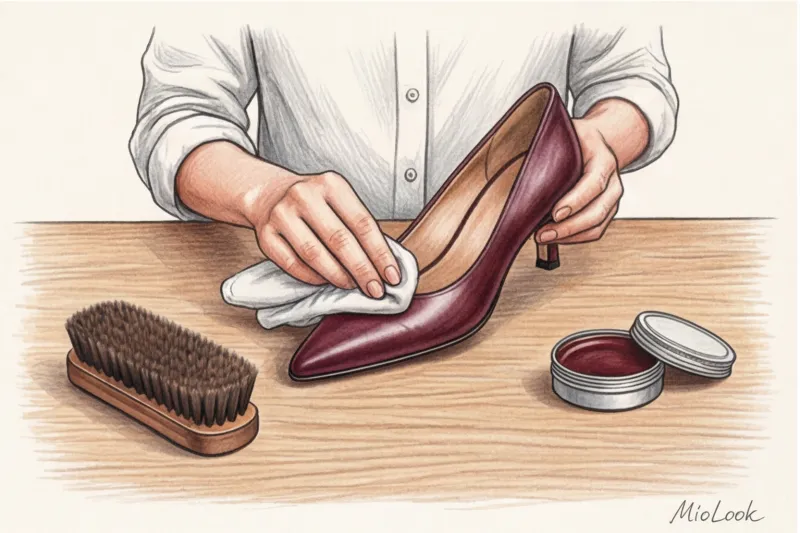
The main problem for owners of pointed shoes is toe-splitting, especially if you drive. While it's impossible to completely prevent this, you can minimize the damage. First, when installing the toe protectors, ask your shoe technician to apply a slight "roll" to the very tip of the toe. This will protect the leather from direct contact with the pavement.
Store slingbacks properly. Never insert rigid spacers that tighten the heel strap, as this will stretch the elastic insert and cause the shoes to fall off. Use only forefoot trees.
If the toe does get damaged, don't rush to throw the shoes away. For smooth leather, there's "liquid leather"—a polymer cream that matches the shoe's color and fills scratches and polishes to a pristine shine. For suede, there are special restorative sprays with pigment.
Bottom line: don't be afraid of pointed toes and kitten heels. They're not torture devices from the past, but a modern, smart styling tool. Find the right fit, go up a half size, check the elasticity of the strap—and these shoes will become the most sought-after pair in your closet, capable of transforming even simple jeans and a white shirt into a cover-worthy look.