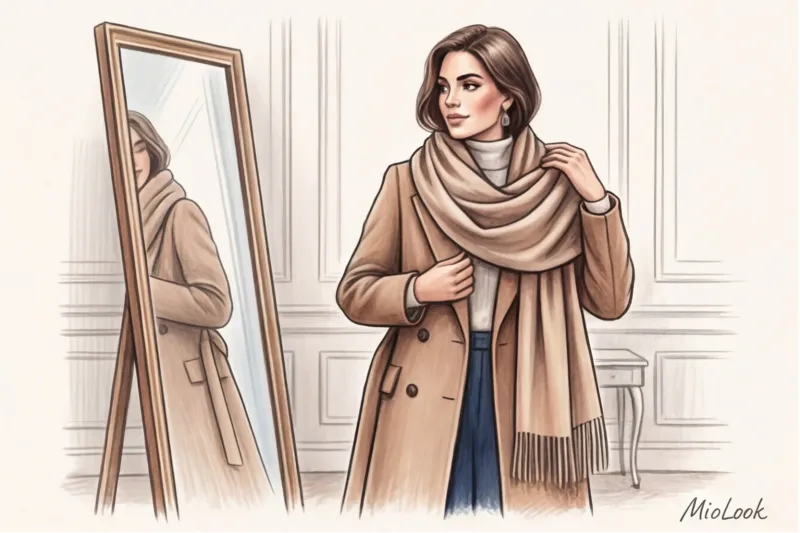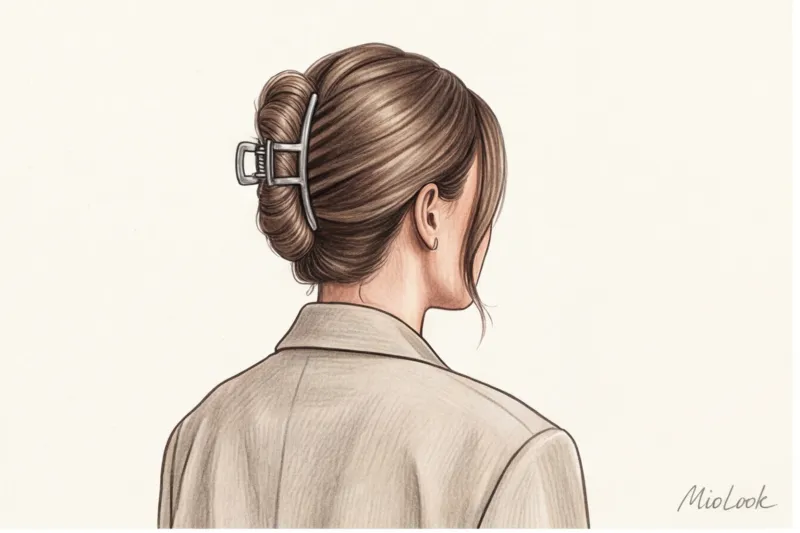
Last month, I conducted a small "blind test" among my fellow stylists. I showed them a photo of a woman wearing a flawless camel-colored cashmere coat (costing around €800), but with one detail: her hair was pinned back with a flimsy €2 plastic clip, the dye peeling off in places. The verdict was unanimous—the entire look instantly "cheapened" and began to look sloppy. This experiment perfectly demonstrates one strict rule of styling: everything in the portrait zone is the first thing others notice and shapes the final impression of your status.
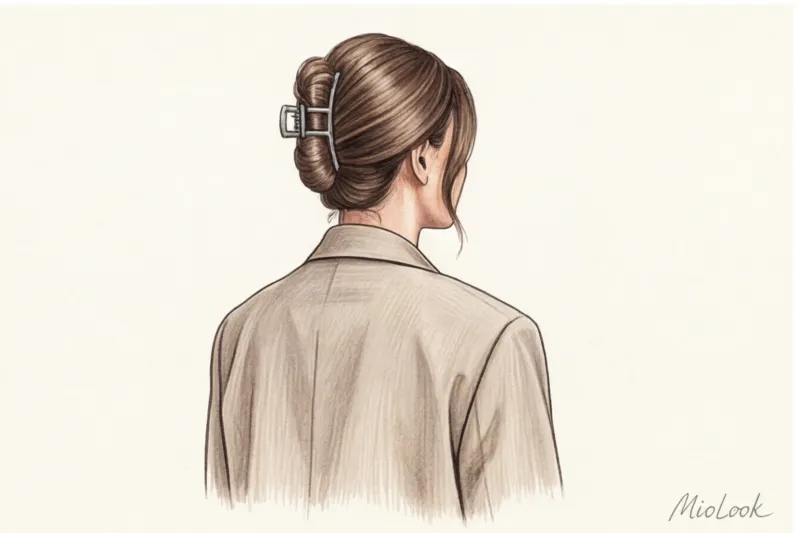
Let's be honest: for many of us, hair clips and bobby pins have historically been simply a way to "save our hair" or to keep our hair out of the way while washing our hair. But today fashionable hair accessories — are a strategic tool. They direct attention, correct the shape of the face, and work according to strict rules of color. We discussed how wardrobe focus shifts in more detail in our The complete guide to how fashion accessories change your look.
The Affordable Luxury Effect: Why Fashionable Hair Accessories Make All the Difference
Modern fashion has shifted the focus from complex tailoring to statement details. You may be wearing basic jeans and a white T-shirt made of thick cotton, but it's what you wear on your head that sets the tone for the entire outfit.
According to the report Business of Fashion (2024) According to a study analyzing consumer habits, millennials and zoomers have radically restructured their spending. Instead of buying another €50 mass-market dress, they prefer to invest the same amount in a premium hair accessory from a niche brand. This is a modern interpretation of the "lipstick effect"—buying a status symbol yet affordable item that brings more psychological joy and is worn every day.
"Hair accessories exist at the intersection of beauty and fashion. They frame the face, highlight skin tone, and can transform a relaxed, casual look into a put-together, sophisticated one in a flash."
Observing street style at the recent Paris and Milan Fashion Weeks, I noticed a clear trend: influencers are pairing oversized, tailored jackets not with diamonds, but with chunky metal clips.
Anatomy of Trends: From Plastic to Architectural Forms
The main problem I encounter during consultations is clients' fear of hairpins due to persistent associations with kindergarten or housework. "Dasha, I look like an overgrown straight-A student in this headband," I often hear.
The reason for this fear lies in the materials. Cheap, fast-fashion plastic, cast in crude shapes, will indeed make a person look dull. Furthermore, stylists despise cheap plastic because it mercilessly statics hair and damages its structure. Two main materials have replaced it: eco-friendly cellulose acetate (a hypoallergenic material made from cotton and wood pulp) and jewelry alloys.
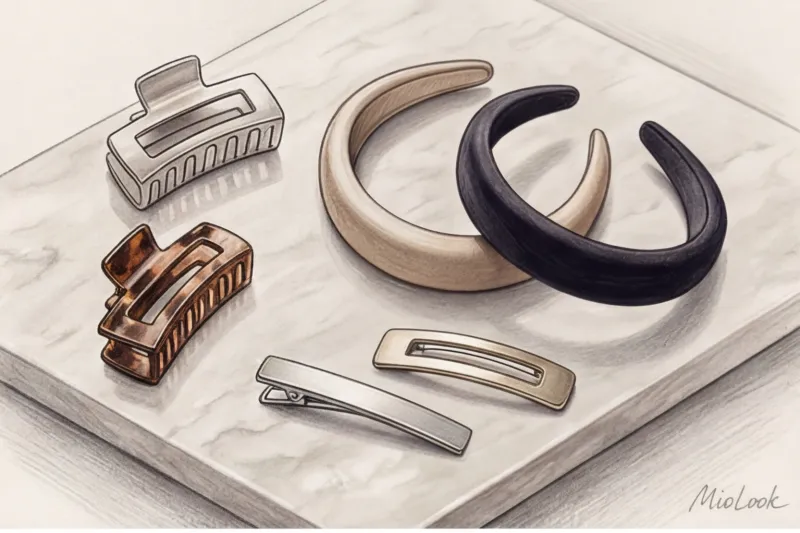
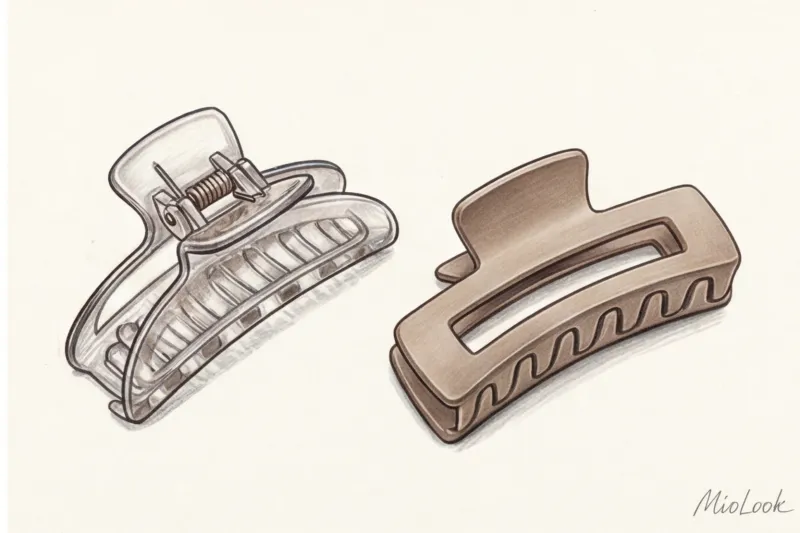
New generation crabs: metal, acetate and hidden springs
It's time to forget the common myth that hair clips are exclusively a beach accessory. This cast metal architectural clip is the new equivalent of a status watch, just for your hair.
According to statistics Pinterest Predictions (2024) Search queries for "sculptural barrettes" and "metal clips" increased by 140%. Modern clips have lost the classic "toothy jaw" shape. Minimalistic rectangles, elongated arcs, and abstract geometric shapes are trending now. The main rule for an expensive clip is: hidden mechanism The spring should be hidden inside the plates or coated in the same color as the base material, and not stick out as cheap, rusty metal.
Headbands: How to Avoid the "Schoolgirl" Effect
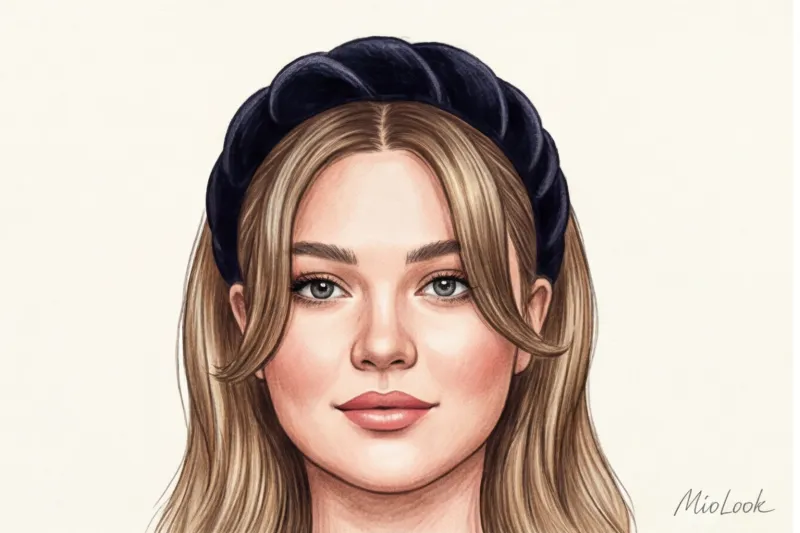
I had a client who absolutely refused headbands. Until we found her a voluminous (puffy) velvet accessory, 3 centimeters wide, that perfectly matched the darkened roots of her hair. The result? The volume at the roots doubled, and her look acquired a subtle aristocratic flair without the slightest hint of childishness.
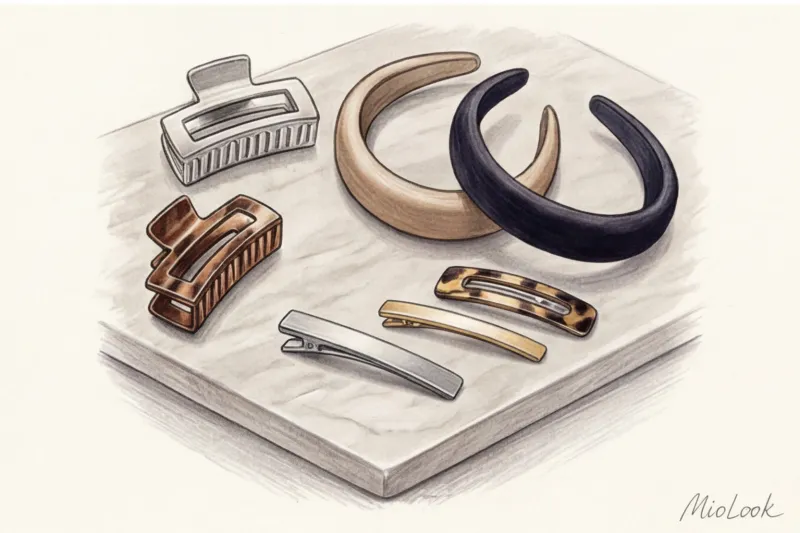
To make the headband work for you, follow three rules:
- Width and volume: Flat, thin rims made of glossy plastic lose out to puffy, slightly raised forms.
- Textures: Choose matte satin, thick velvet, textured leather or suede.
- Landing: The headband shouldn't press your hair tightly against your scalp. First, create some volume at the roots, put the accessory on, and then gently pull the hair upward at the roots to release the tension.
Your perfect look starts here
Join thousands of users who look flawless every day with MioLook. The smart algorithm will help you choose a hairstyle and accessories to suit your appearance.
Get access — €0.99 onceAutomatic and invisible hairpins: functional minimalism
For a "quiet luxury" aesthetic, automatic hairpins covered in genuine leather are ideal. They're perfect for a low, sleek ponytail. As for bobby pins, the rule has changed dramatically. While we used to hide dozens of them in a complex hairstyle, now we use one or two giant, statement bobby pins (7-10 cm long) and pin them asymmetrically to one side of a strand of hair near the face.
Color in the Portrait Zone: Choosing an Accessory to Match Your Hair Color
As a certified colorist, I can say that the color of a hair accessory is just as powerful as the shade of eyeshadow or lipstick. The basic rule is: the accessory should either subtly blend with the base (creating a complex texture) or create a subtle, elegant contrast.
The temperature of the metal is crucial. If you have a warm skin tone and golden highlights in your hair (Spring or Warm Autumn color types), cool silver near your face can make your skin look sallow and highlight under-eye circles. Conversely, ash blondes should avoid bright yellow gold, opting for matte silver or white gold. Read more about color types in our article. 12 Color Types of Appearance: A Guide to Choosing a Palette.
Instructions for blondes and light-haired women
The most common mistake blondes make is buying matte black clip-in clips. Against light hair, the contrasting black piece of plastic looks less like a stylish detail and more like a foreign object or, excuse me, a bug in the hair.
Your ideal shades:
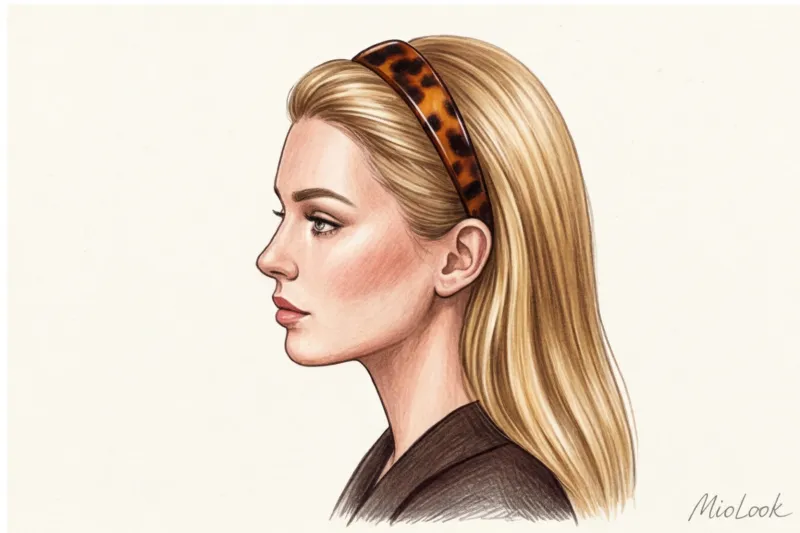
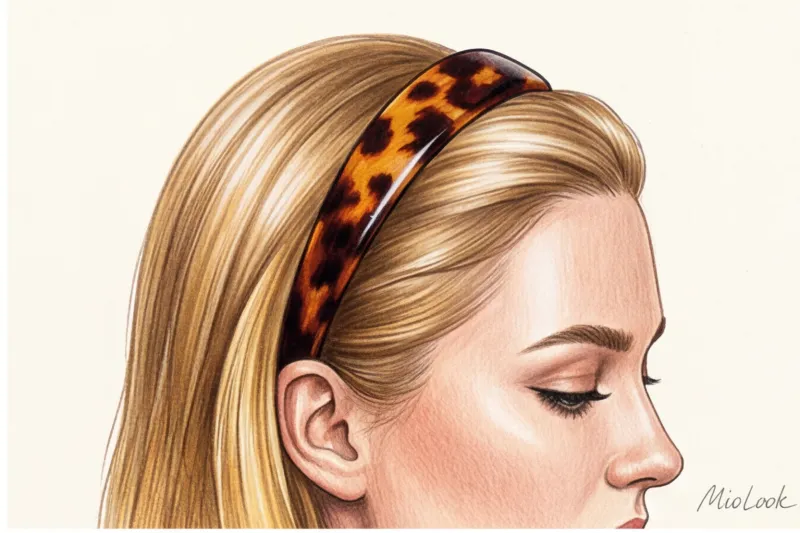
- Classic tortoiseshell (warm brown-amber base perfectly complements blonde);
- Pearl and champagne colors (for a merging effect);
- Dusty pink and blue-gray acetate (for cool blonde);
- Matte silver.
Solutions for brunettes and brown-haired women
Brunettes have the opposite problem: accessories in medium tones simply get lost in the thick, dark mass of hair, failing to fulfill their accent function.
To make the detail stand out, use contrasts. Glossy yellow gold, deep emerald, rich wine (burgundy is currently at the peak of popularity), and pure white pearl look luxurious on dark hair. If you choose acetate, make sure the highlights are fairly light.
Facial architecture: correcting proportions with headbands and hairpins
Accessories can act as contouring, changing the geometry of the face. I often use these optical illusions in my practice.
If you have round or square face , your goal is to create a vertical line. Voluminous puffy headbands (with maximum volume in the center) do this brilliantly. They visually lengthen the skull and elongate the face.
If the face elongated or rectangular Adding volume on top will only make things worse. Here's a key caveat: puffy headbands are NOT a good choice (especially if you don't have bangs). Instead, embrace asymmetry: secure a large, textured clip to the side, at cheekbone or temple level. This will create a horizontal line and visually widen your face.
Never slick your hair back with accessories if you want to preserve the softness of your features. Thin strands left loose near the face break up the rigid geometry of the accessory and add a more vibrant look.
Access to MioLook for €0.99 — one-time payment
A smart AI stylist will select the perfect look, analyze your portrait zone, and suggest the best combinations.
Get access — €0.99 onceOffice Dress Code: What Accessories Are Appropriate for Work?
Where is the fine line between "I'm dressed up for a special occasion" and "I'm a professional who follows trends"? It's in texture.
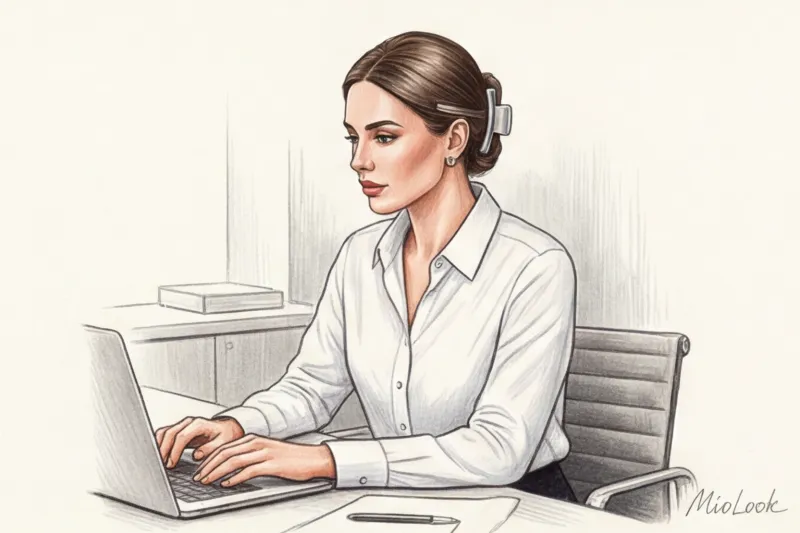
For the office, even with a casual Friday dress code, the rule applies: matte always looks more formal and expensive than glossy. Save the shiny plastic clip-on clip for the weekend, but a matte clip-on clip made of opaque acetate in deep blue or graphite makes an excellent base.
Forbidden elements in business casual: any rhinestones (even the smallest ones), giant bows (they look immature), and neon colors. A leather headband or a minimalist metal hairpin for a French bun are excellent choices. You can learn more about business hairstyles in our article about Get the perfect office siren hairstyle in 3 minutes.
Checklist: 5 Signs Your Accessory Looks Expensive
To help you navigate stores (whether it's mass-market stores like COS and Massimo Dutti or niche boutiques with prices starting at €50), I've put together a quick checklist. Check out the accessories before you buy:
- No visible seams. Run your finger along the edges of a hair clip or clasp. Cheap plastic, made using a molding process, always has a hard seam down the middle. Premium acetate has edges that are sanded to a perfectly smooth finish.
- Hidden fittings. The springs and fasteners are disguised to match the product's color or securely hidden inside the structure.
- Deep color. The material shouldn't be flat and transparent. Expensive acetate has depth, iridescence, and a complex, multi-layered pattern.
- Pleasant heaviness. A quality accessory shouldn't be as weightless as a feather. It should have a pleasant, noticeable weight in your hand (but not pull your hair painfully).
- Reliable fixation without special means. The clip should hold your hair volume on its own. If you have to pour a ton of hairspray on it to keep it from slipping, it doesn't have a good grip.
Remember: a hair accessory is the finishing touch to your look. Take the time to find the perfect shape and color, and you'll be surprised how often people will compliment your taste, even if you're wearing the simplest turtleneck.