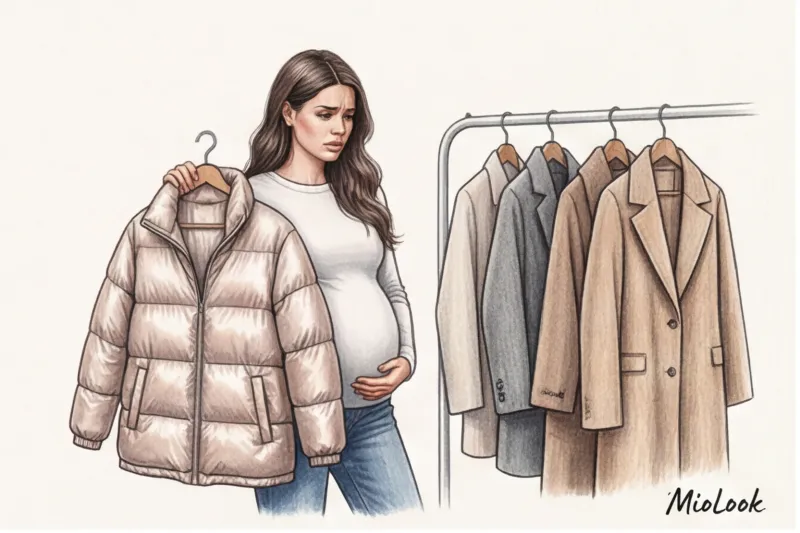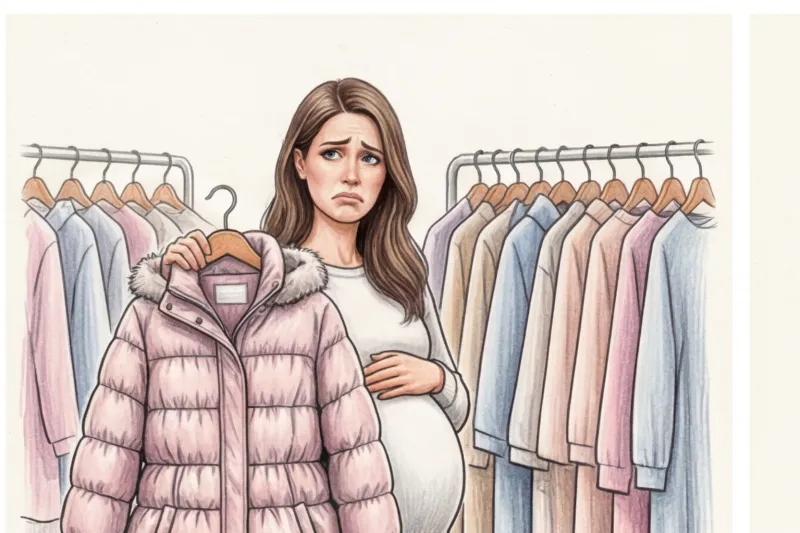
Last winter, my client Isabella sent me a selfie from the fitting room. She was wearing a €150 parka from the specialty department—with a drawstring taut under the bust, a small floral print, and a cut that made her feel, in her own words, like "an immense cloud." But the worst part was, a week later she wrote, "Sofia, I'm frankly freezing in this, even though it's only -5°C outside."
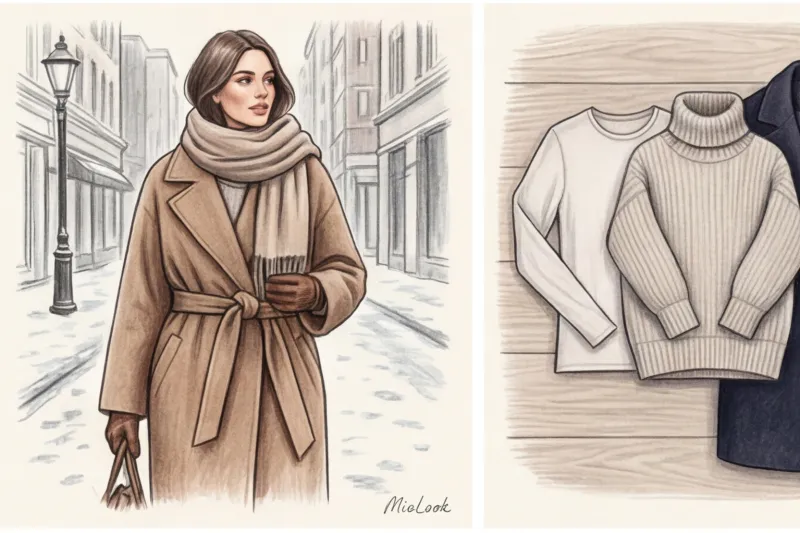
Composing winter looks for pregnant women , women make the same mistake year after year—they panic and buy shapeless, one-time-only items. We've covered more about how marketing makes us waste money in our The complete guide to stylish maternity outerwear.
Spoiler alert: you don't need a "mother" jacket. To adapt your wardrobe to your changing figure while preserving your personal style DNA and budget, simply use the laws of textile physics and rethink your wardrobe staples.
Winter Maternity Looks: Why You Shouldn't Buy Special Jackets
Did you know that specialized outerwear often makes you colder than usual? It sounds counterintuitive, but the reason lies in production economics.
Brands understand: you're buying something for 3-4 months. To maintain an attractively low price, manufacturers skimp on materials. 90% of budget maternity jackets (in the €50-€150 range) use cheap 100% polyester or batted synthetic padding for insulation. These materials disrupt natural heat exchange: first, you sweat in transport or at the store, and then the moisture instantly cools in the cold. The result: hypothermia.
Let's do the wardrobe math (Cost-Per-Wear index). If you buy Isabella's "maternity" jacket for €150 and wear it for 100 days over the winter, the cost per wear will be €1.50. After the baby is born, this item will be put on the back shelf. If you invest €400 in a high-quality, basic, oversized coat made of thick wool that you'll wear for at least five seasons (about 500 days), the cost per wear drops to €0.80.
"The biggest myth of the maternity industry is that you need a complete wardrobe overhaul. In reality, all you need is a thorough audit of your current bulky items and a few targeted purchases."
Warmth architecture: the three-layer rule of natural fabrics
One thick sweater will keep you warmer than three thin layers. The entire physics of winter warmth is based on the air layers between layers of fabric. It's the air that traps body heat, creating a thermos effect.
Have you ever noticed how after a short walk in an acrylic sweater, your back becomes damp and the wind chills your bones? Acrylic is a pregnant woman's worst enemy in winter. During hormonal changes, the body is already prone to increased sweating, and synthetics create a severe greenhouse effect. Research by The Woolmark Company (2023) proved that merino wool fibers can absorb up to 35% of their own weight in moisture, while remaining dry to the touch and continuing to generate warmth.
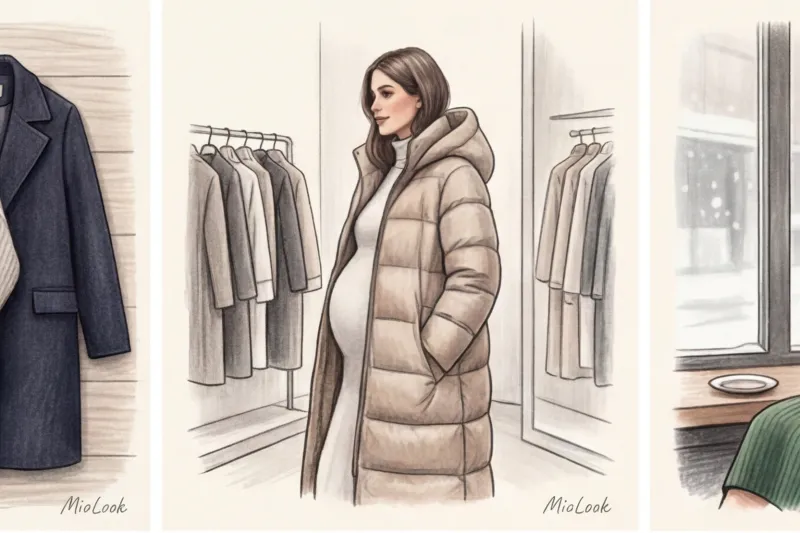
Your perfect look starts here
Join thousands of users who look flawless every day with a smart AI stylist.
Get access — €0.99 onceBase and mid layers: thermal underwear and the right knitwear
The right winter look starts at the skin. Your base layer should wick away moisture. I strongly recommend thermal underwear made from 100% merino wool, not technical synthetics (which are great for sports, but not for everyday wear). Choose leggings that sit low under the belly or have a special soft support band that doesn't put pressure on the pelvic organs.
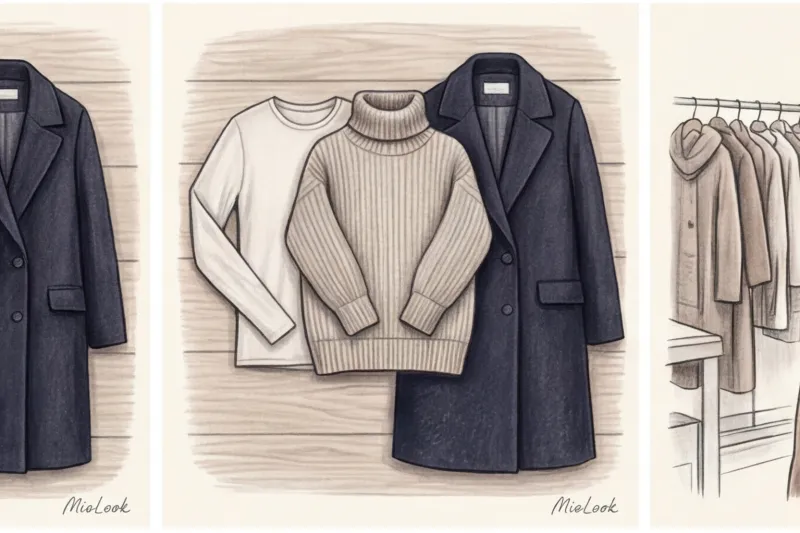
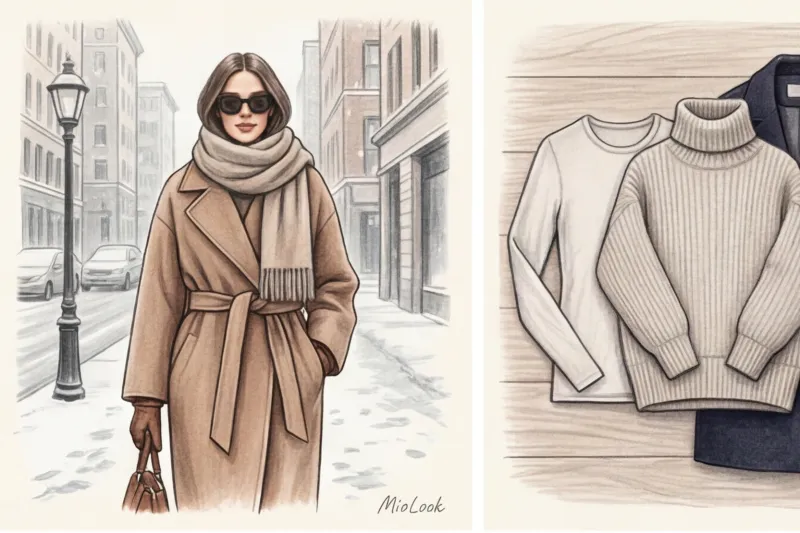
The middle layer is your insulation. Sweaters, cardigans, and dresses should be made of at least 70% natural wool, cashmere, or alpaca. As a stylist, I always pay attention to the knit density: if a sweater is see-through or feels loose, it won't hold its shape or keep you warm.
Outerwear that will stay with you after giving birth
For our executive client who was going on maternity leave this winter, we put together the perfect capsule wardrobe, sans a single jacket from the maternity section. What did we use?
- Wrap coat: A brilliant fashion invention. The scent easily adapts to any waist size. Choose models made of 100% wool or a cashmere blend.
- Down blankets: Look for the Fill Power rating. A rating of 650 or higher guarantees a down jacket that's as light as a cloud but can withstand temperatures as low as -20°C. Water-repellent treatment is essential.
- Cocoon coat: Perfectly envelops the figure.
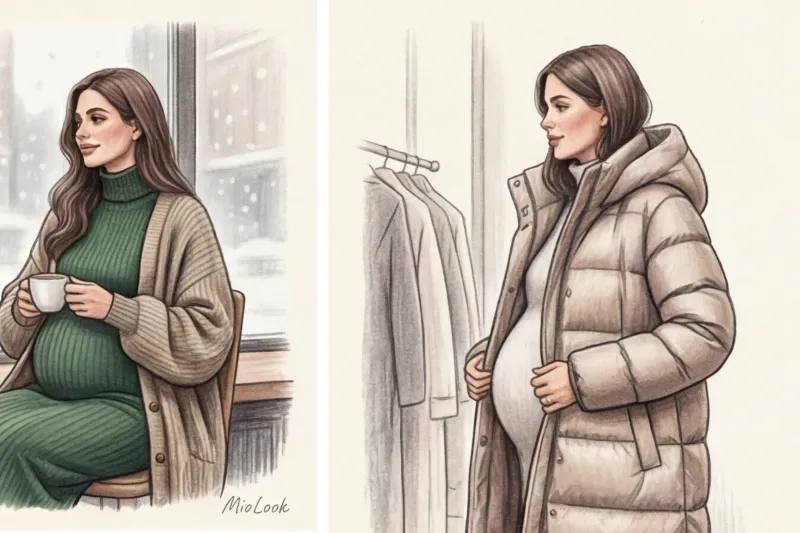
Fair warning: Oversized clothing isn't for everyone. If you're petite (under 160 cm), a hyper-voluminous cocoon coat paired with a midriff can create a boxy silhouette and visually ground you. In this case, choose a semi-fitted cut and a midi length, leaving ankles or tall boots visible to maintain proportions.
My favorite test for coat quality: squeeze the edge of the fabric in your fist for 10 seconds and then release. A high-quality wool thread will quickly straighten without creasing, while a cheap blend will remain wrinkled.
Stylish Winter Looks for Pregnant Women: 4 Everyday Formulas
To save you the headache of having to deal with an open closet, I've compiled four versatile formulas. They look classy, don't restrict movement, and can be assembled in five minutes.
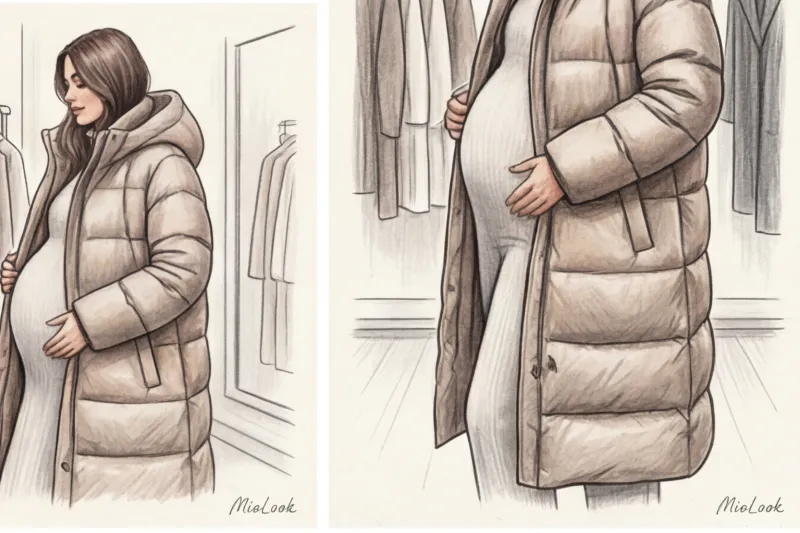
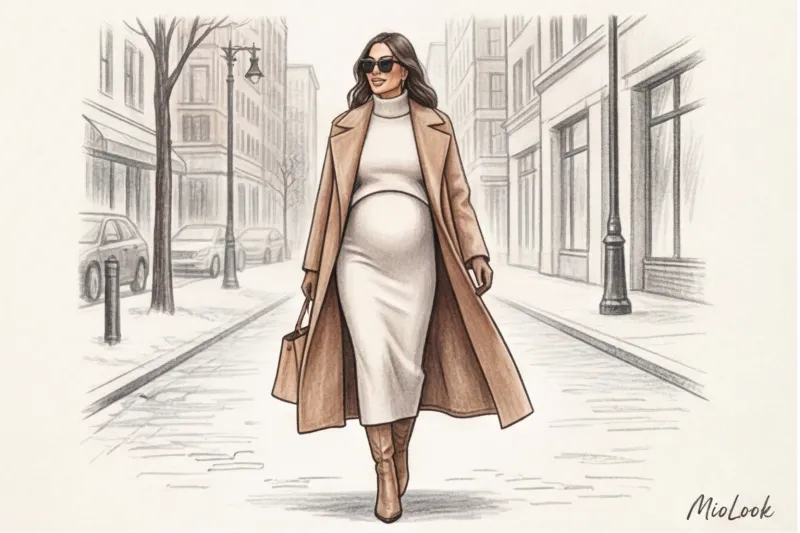
- Elegant monochrome: A thick ribbed knit midi dress + a cashmere robe coat + high, smooth tube boots (easy to tuck trousers into or wear with a dress).
- Casual for weekends: Leggings with stirrups (the stirrups will prevent the legs from riding up) + a voluminous sweater from the men's department + a down blanket.
- Sport chic: A knit suit (joggers and a hoodie made from a thick blended yarn) + a structured wool coat + chunky-soled boots. The coat instantly brings together a relaxed, sporty look with an urban edge.
- Sophisticated casual: An unbuttoned shirt made of thick flannel over a basic cotton long sleeve shirt + wide trousers with a soft elastic waistband (or jeans with a special insert).
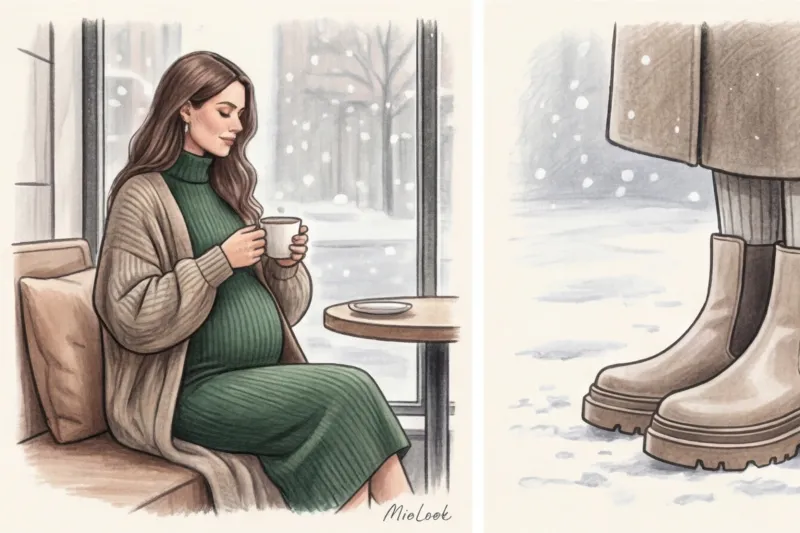
Access to MioLook for €0.99 — one-time payment
A smart AI stylist will select the perfect look for your changing figure using your own clothes.
Get access — €0.99 onceWinter Footwear for Expectant Mothers: Balancing Safety and Style
As your belly grows, your center of gravity inevitably shifts forward. Your gait biomechanics change, placing enormous strain on your lower back. Therefore, completely flat soles (like those of classic Ugg boots) are a surefire way to back pain and flat feet. According to podiatrists, the ideal heel-to-toe difference for pregnant women is 1.5–2 cm. This micro-heel relieves the spine.
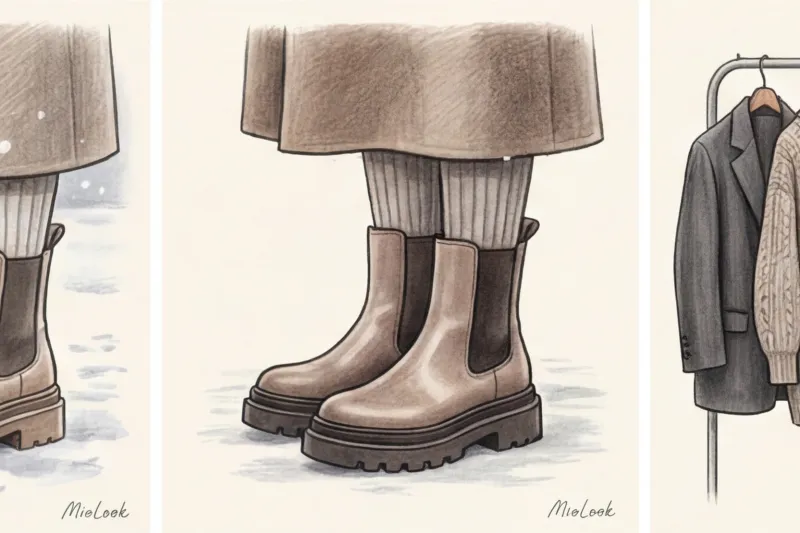
The second problem is swelling. Your feet may increase in size by the evening. Avoid shoes with a rigid, fixed width. Your best friends are Chelsea boots with deep, elastic side panels, lace-up boots (adjust the width once and then take them off through the side zipper), and wide-shafted tube boots.
Look at the sole: it should be made of thermoplastic elastomer (TPE) or soft rubber with deep tread. Cheap polyurethane hardens in the cold and turns the boots into skates.
A stylist's checklist: what to buy in the maternity section and what not to buy
Smart consumption isn't just a cool trend; it's a logical approach to budgeting. Let's break down your purchases.
What's really worth buying in the maternity department:
- Thick winter tights with a special anatomical insert on the stomach (regular oversized tights will slip down).
- Quality basic leggings or jeans with a bandage band.
- Special cotton underwear.
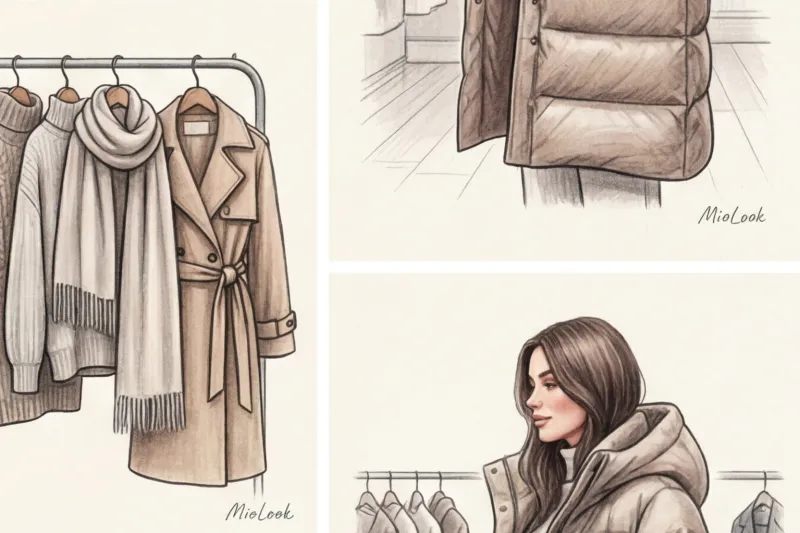
What we buy from regular brands (just a size larger or in an oversize cut):
- Sweaters, cardigans and hoodies.
- Knitted noodle dresses (they stretch beautifully).
- Outerwear and scarves.
Pregnancy isn't the time to put your style on hold and hide in shapeless synthetics. It's a time for self-care. By investing in high-quality fabrics, you'll not only ensure warmth and safety on slippery streets, but also build a wardrobe essential that will last for years after your baby arrives.