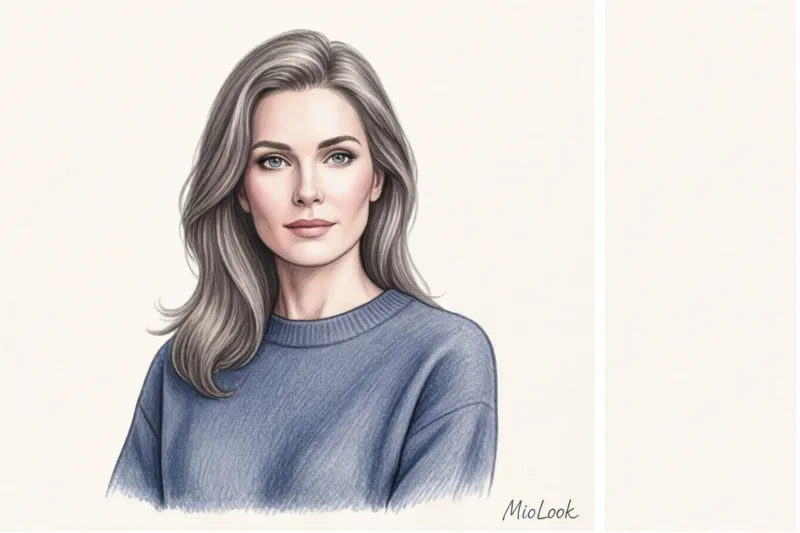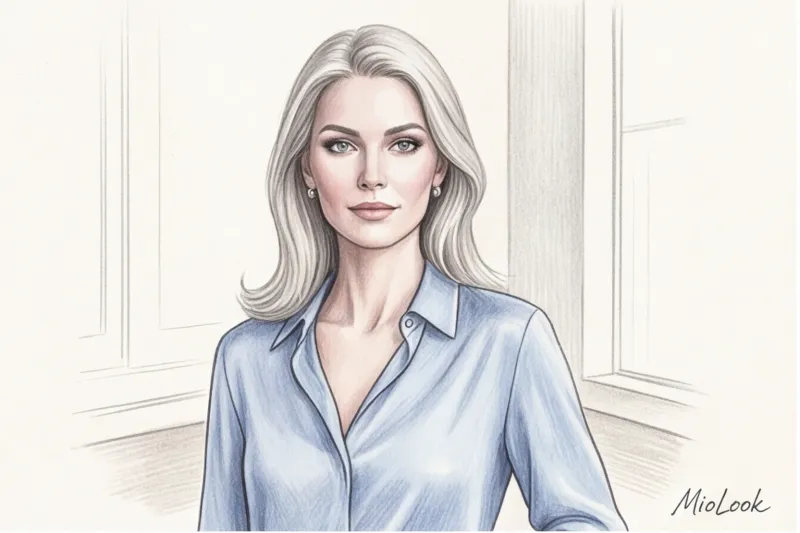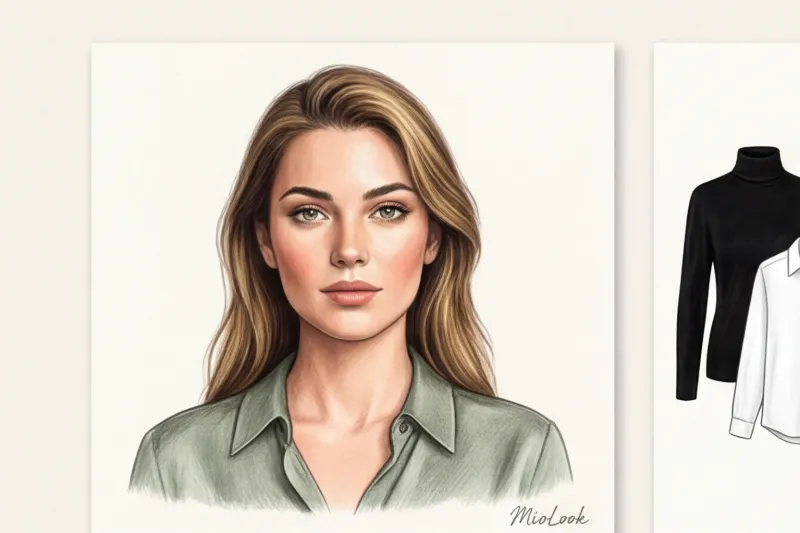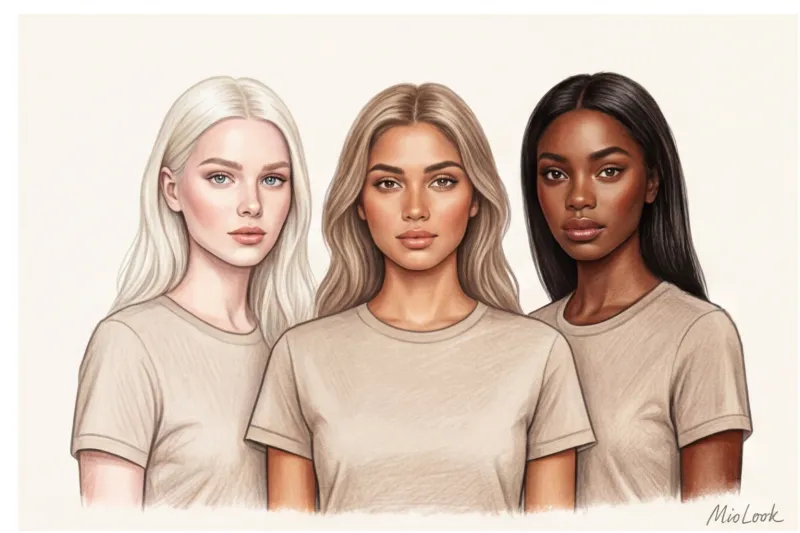

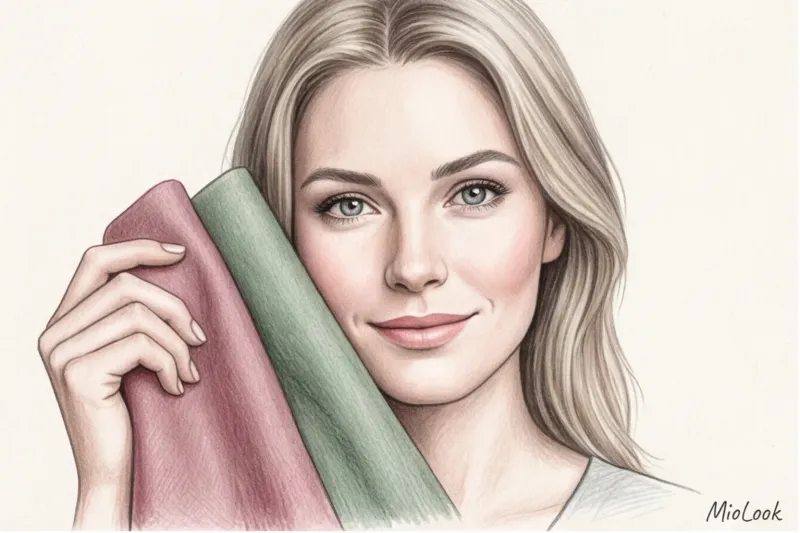
Do you know how my new clients most often describe themselves, who have soft summer color type "Gray mouse," "pale moth," "too ordinary." In my 12 years as a stylist and colorist, I've heard these epithets dozens of times. Girls dye their hair jet-black for years, trying to sculpt themselves into the fatal "Winter," or bleach their locks until they squeak, hoping to become the vibrant "Spring."
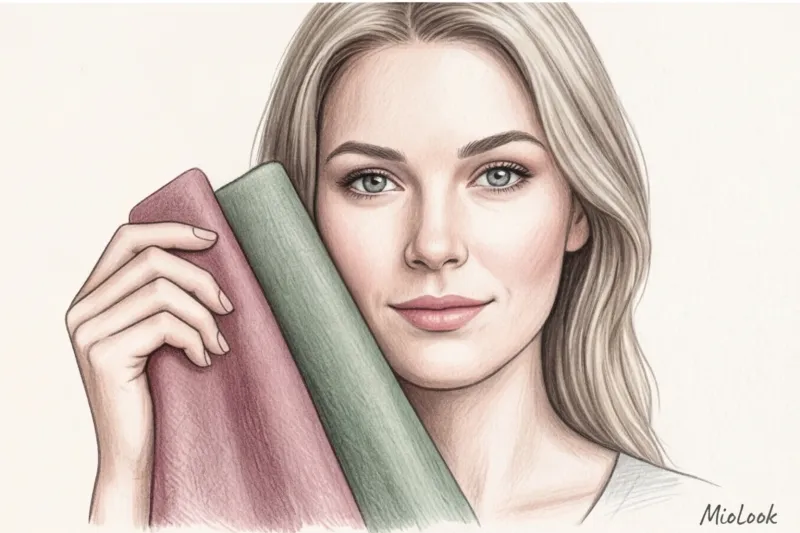
Then we wash away this artificial contrast, return to the natural ash-blond tone, put on a silk blouse the color of a stormy sky, and magic happens. The face is refreshed, ten years younger, and the eyes acquire a noble depth. If you're not yet confident in your coloring, I recommend checking out the basics in our a complete guide to the 12 color types of appearance But if you already know you're a Soft Summer palette person, this article will forever change the way you think about your wardrobe.
Let's be honest: Soft Summer isn't boring. It's the most aristocratic, sophisticated, and "expensive" palette of all. It's the foundation of the entire Old Money and "quiet luxury" aesthetic.
The Anatomy of Coloristics: Why the Soft Summer Color Type Isn't Boring, but Aristocratic
According to my personal statistics and demographic data, approximately 60–70% of Slavic and Central European women are summer color types. Of these, Soft Summer is the most common, but paradoxically, the least understood color type.
To understand your appearance, you need to turn to science. According to Albert Munsell's color system, created in the early 20th century and used by colorists to this day, color has three dimensions: hue (temperature), value, and saturation (chroma). A soft summer is characterized by low lame (that is, a high admixture of gray pigment), medium lightness And neutral-cold undertone.
From a color physics perspective, adding gray pigment makes a shade complex. A pure red can be read in a split second. But dusty cherry or rosewood require a bit more thought. These colors are visually calming, conveying confidence and status. According to the Pantone Fashion Color Trend Report 2024, complex, dusty shades like "Mushroom" and "Quiet Shade" are forming the basis of today's basic trends. You're not a gray mouse. You're a walking trendsetter.
Mild Summer or Mild Autumn? The Main Mistake in Self-Diagnosis
The most common confusion arises at the transition between seasons. Both colors—Mild Summer and Mild Autumn—are muted. But the difference lies in the temperature.
- Mild summer: neutral-cool undertone (based on blue and gray pigment).
- Soft autumn: neutral-warm undertone (based on yellow and ocher pigment).
Herein lies the pitfall of summer tanning. When a Soft Summer's skin gets a light tan, it often takes on an olive or golden hue. A girl looks in the mirror, sees her tan, and decides, "I'm definitely an Autumn!", buying a terracotta sweater. And then her face turns a sickly yellow, and the dark circles under her eyes appear with renewed vigor.
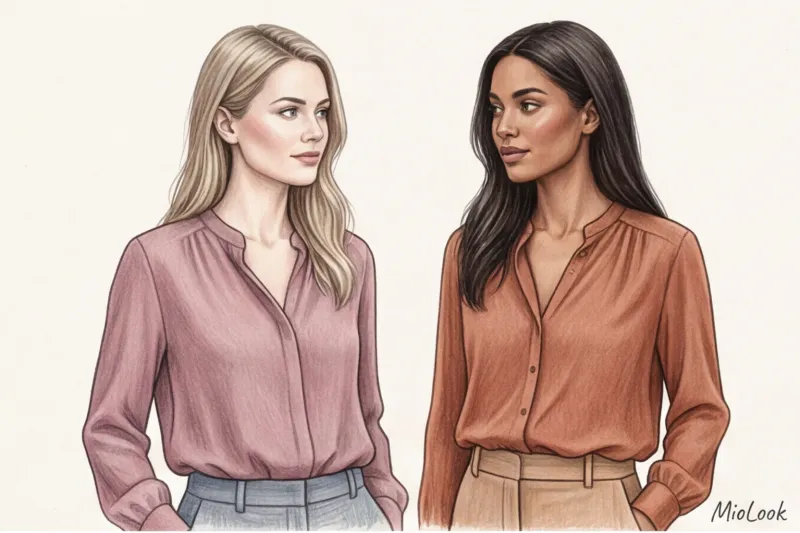
My favorite fabric marker test: Apply a dusty rose fabric to your face in daylight, then a peach or salmon one. If you're a Soft Summer, dusty rose will create an even, elegant complexion, while peach will highlight any imperfections.
Your perfect look starts here
Join thousands of users who look flawless every day with the MioLook smart wardrobe.
Get access — €0.99 onceThe perfect palette for the soft summer color type: from base to accents
The main rule of your palette is that color should appear as if viewed through morning mist. Avoid open, garish spectral colors in favor of complex blends.
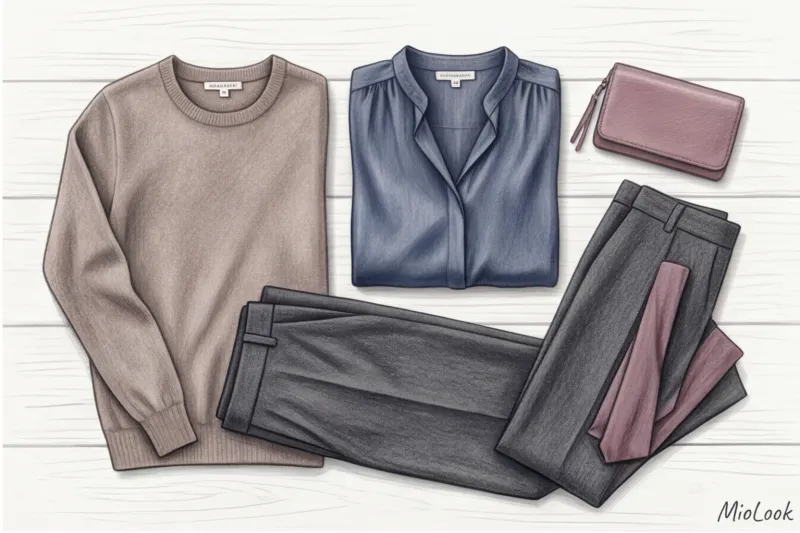
Basic neutral colors:
- Graphite and anthracite instead of deep black.
- Taupe - the perfect mix of grey and beige, your best friend.
- Gray-blue (navy) — a softer alternative to classic navy blue.
- Ecru and unbleached wool instead of pure white (pure white contains optical blue brighteners, which make soft looks look tired).
Light and accent shades: Ash rose, lavender grey, sage, wormwood, dusty berry and complex wine without the rusty undertone.
"Let me be clear: this soft approach doesn't work for everyone. If you're naturally high-contrast, like Deep Winter, these shades will make you look sickly. But for Soft Summer, they're a lifesaver."
What to do with black? You've probably read the categorical advice: "You can't wear black in summer." I think that's nonsense. As a stylist, I know you'll wear it anyway. The main thing is... portrait zone rules If you wear black, keep it away from your face. Use deep V-necklines, semi-sheer fabrics (chiffon, organza, where skin shows through), or break up the line with a light ecru scarf.
A Stylist's Secret: Why Fabric Texture Is More Important Than Color for Soft Summer
And now, an insight that's rarely written about in mainstream articles. For your own flavor. the texture of the material is critically important than the shade itself Why? Because a muted color on a flat, stiff fabric looks cheap.
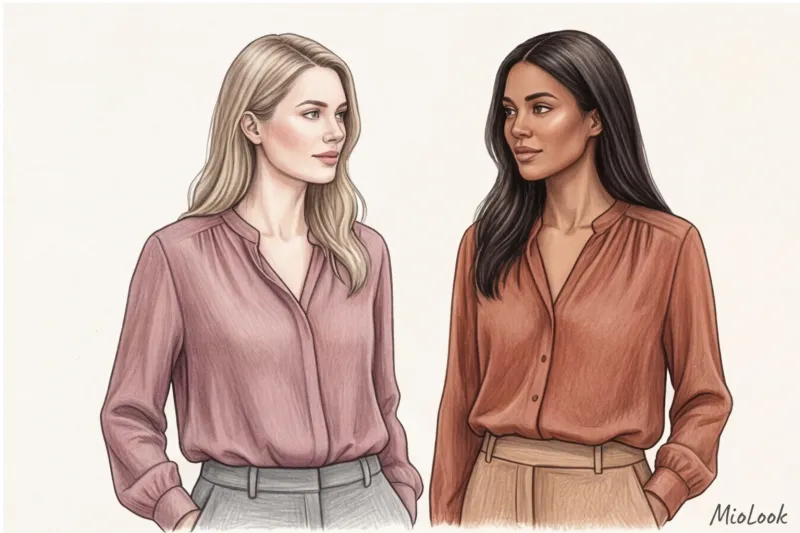
Last year, my client Anna came to me. We were trying to incorporate the right shade of dusty rose into her casual wardrobe. We dressed her in a cotton sweatshirt (a stiff 300 g/m² cotton)—and Anna looked like she hadn't slept in a week: the color absorbed the light. Then we swapped it for a silk blouse. absolutely the same shade A miracle happened. The silk's reflective surface began to play with color, and her face literally glowed from within.
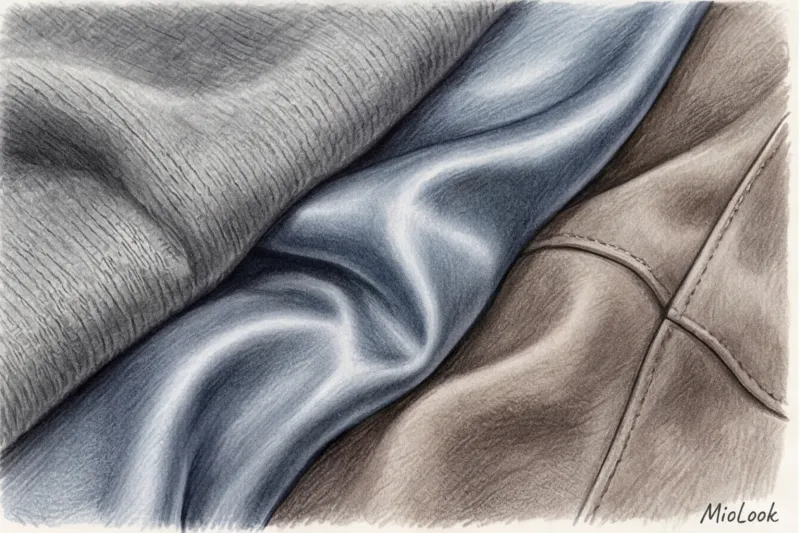
Your best textures:
- Reflective: Natural silk, high-quality satin, and viscose with a slight sheen make complex colors shine.
- Deep matte: Cashmere, fine merino wool, and natural suede lend a touch of nobility and class to dusty shades.
Cheap polyester or stiff linen will ruin the magic of your look. According to WGSN's consumer preferences research (2024), the fashion industry's focus has shifted from color to tactility. For Soft Summer, this isn't just a trend; it's a wardrobe survival rule.
Access to MioLook for €0.99 — one-time payment
A smart AI stylist will select the perfect look based on your personality and available wardrobe.
Get access — €0.99 onceCombination Rules: How to Blend in with the Background and Manage Contrast
There's a pernicious myth: Mild summer shouldn't wear contrasts; you should only dress tone-on-tone. The truth is that a complete lack of contrast will turn you into a blob. Harsh colors are contraindicated for you. color contrast (color block in fuchsia style plus light green), but you absolutely need it complex monochromatic contrast or contrast of textures.
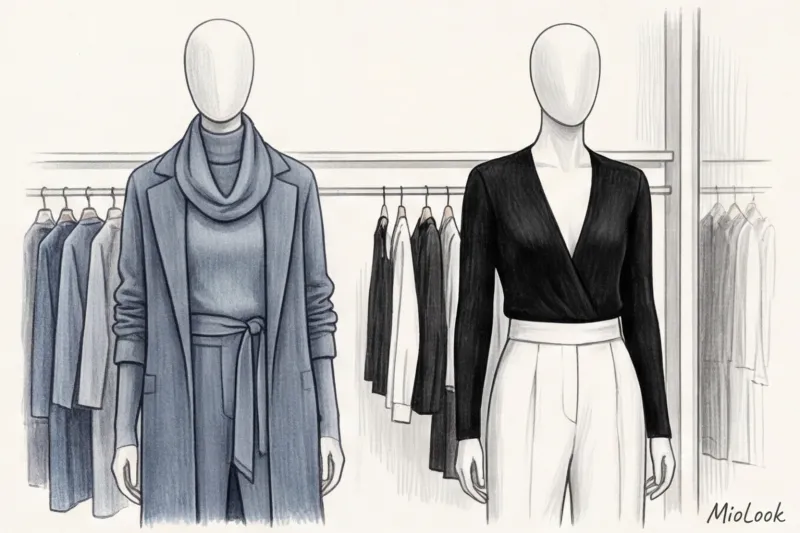
How to combine colors correctly:
- Gradient rule. Combine light and dark shades from your natural palette with a difference of no more than 3-4 tones on the Munsell scale. For example: a light blue shirt + a gray-blue cardigan + dark graphite trousers. This creates the illusion of volume.
- Analogue combinations. Take colors that are adjacent on the color wheel, but in muted versions. Dusty pine green + complex sea blue.
- Contrast of textures. Wear a smooth taupe silk skirt with a chunky cashmere sweater in the same shade. The difference in light reflection will create that "expensive" look that every fashion influencer is chasing.
If you want to make the process of choosing combinations easier, I recommend uploading your items to MioLook The AI algorithm will help you create monochrome and gradient capsules from what's already hanging in your closet, eliminating the risk of unsuccessful color blocking.
Capsule wardrobe for the soft summer color type: integration into business and casual styles
Let's move from theory to practice. What does the ideal capsule look like for real life, not just for Pinterest? Let's take a specific scenario: you need clothes for an office where there's a dress code, but smart casual is allowed on Fridays.
In the business capsule collection, we ruthlessly eliminate contrasting black and white suits. Your status base is a three-piece suit in a charcoal or deep stormy sky shade. The blouse underneath shouldn't be white, but ecru or pearl gray.
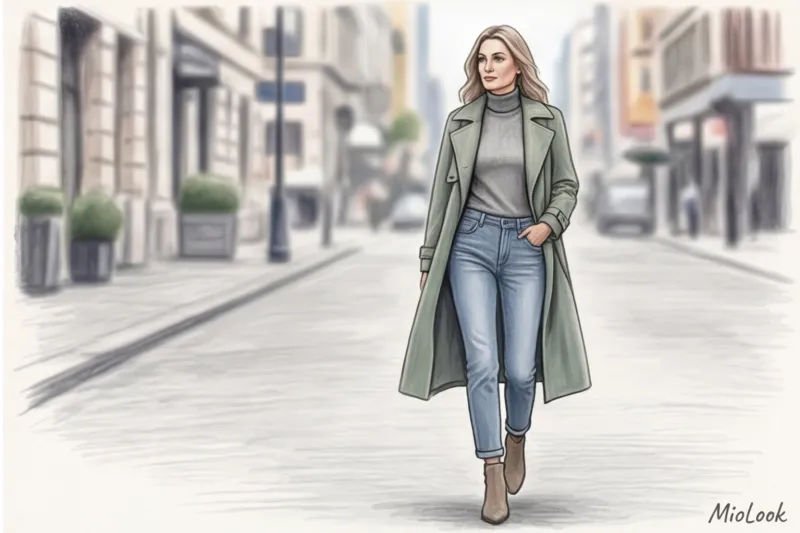
Smart-casual formula (Friday at the office):
The perfect denim for Soft Summer isn't classic indigo, but rather "muted blue" or washed gray. Pair these straight-leg jeans with a dusty rose cashmere turtleneck and taupe suede loafers. The look is put-together yet incredibly soft.
Formula for an evening out:
A thick silk slip dress (from 19 momme) in a cool cocoa shade. Layered over a voluminous graphite jacket. No sequins—your "glow" comes from the luxurious fabric.
Checklist: Makeup, Hair Color, and Jewelry for a Soft Summer
Clothing is only half the battle. Framing the face (hair, makeup, and metals) plays an equally important role.
1. Makeup without harsh lines
The biggest mistake is graphic black eyeliner. It cuts into a soft face. Replace the black pencil with a smudged graphite, taupe, or complex plum. Choose dusty pink blush, not peach. The goal is a watercolor effect, not gouache.
2. Hair color: leave the blonde alone
Nature doesn't make mistakes. That ash-blond shade, often called "mousy," is the perfect complement to your eyes. If you're looking for a change, don't go all-out blonde. Ask your colorist for a complex, textured coloring (like the Airtouch technique) with cool highlights, leaving your natural root base intact.
3. Debunking the myth of gold
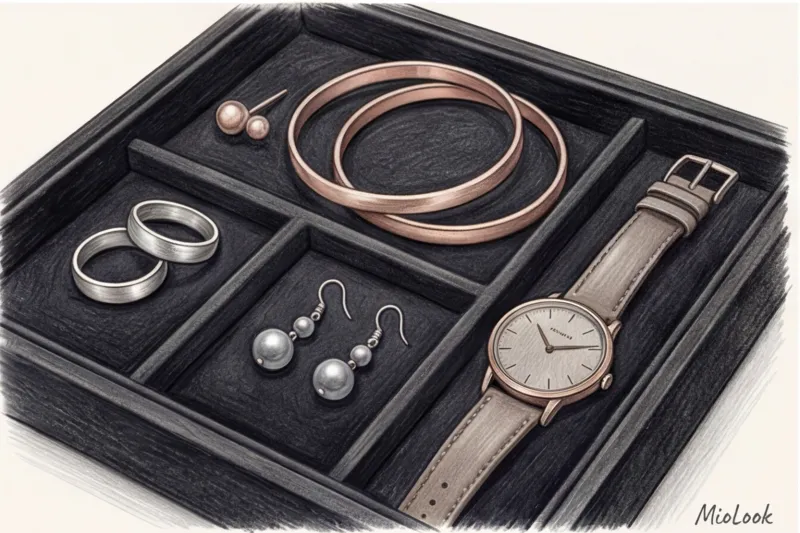
It is believed that Summer only wears silver. This is an outdated dogma. Soft Summer has a skin undertone neutral-cold , not completely icy. Therefore, rose gold, white gold, and aged, blackened silver are ideal for you. The only thing to avoid is overtly yellow, shiny gold. Choose jewelry with a matte, satin, or slightly textured surface.
Your appearance is a delicate, filigree work of nature. Stop trying to drown it out with bright colors or black it out with a marker. Allow complex, muted shades to reveal your natural aristocracy. Invest in quality fabrics, play with textures, and you'll see your wardrobe's status soar to a whole new level.