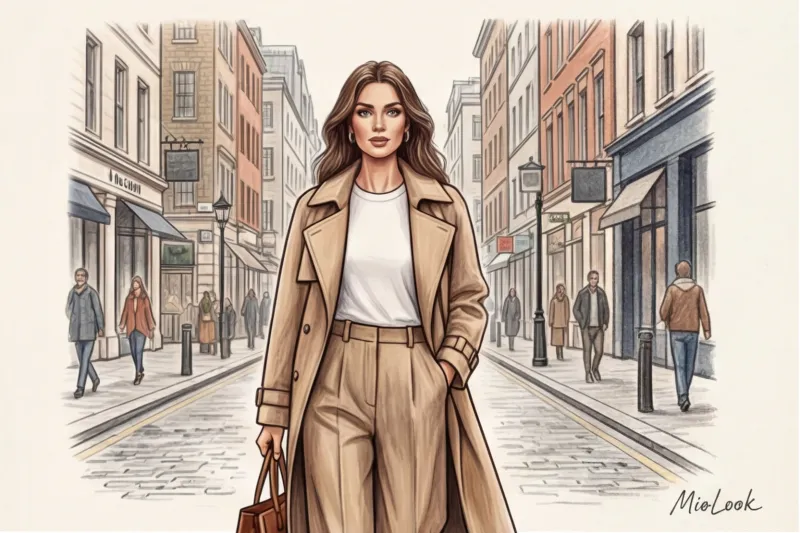
Did you know that, according to a 2023 Business of Fashion study on post-pandemic wardrobe transformations, 68% of women experience genuine stress when receiving an invitation labeled "casual yet elegant"? With the rigid constraints of corporate dress codes crumbling, many found themselves at a loss for freedom of choice.
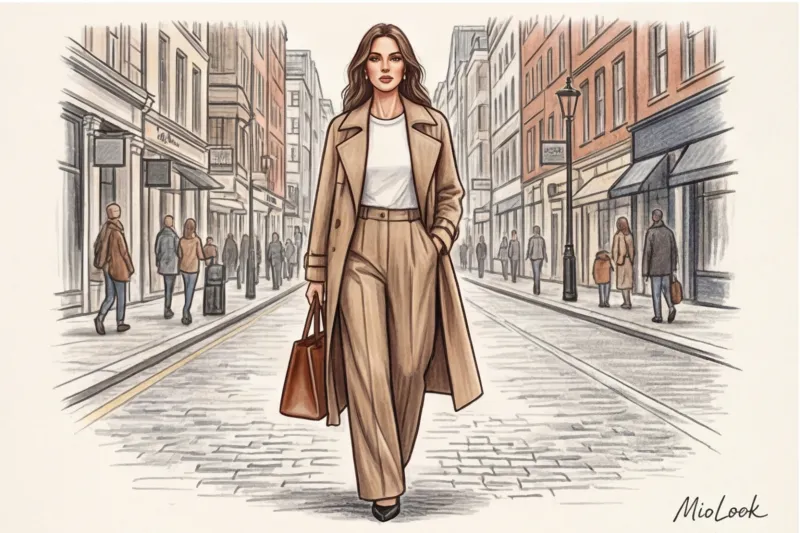
I understand them perfectly. One of my clients, Anna, recently took over as CEO of a Silicon Valley tech company. She needed to project authority to investors while still fitting in among the hoodie-clad developers. A formal three-piece suit would have looked comical and aloof, while simple jeans and a hoodie would have undermined her leadership status. The solution was carefully crafted smart casual for women—a style that conveys power through relaxed style. We discussed the evolution of these requirements and the context in more detail in our complete guide to Dress code types: from White Tie to Smart Casual , but today I want to talk about the practical side, about how to make this aesthetic work for you.
What Smart Casual Really Means for Women: Reading Between the Lines
The authoritative British etiquette guide Debrett's Guide describes this style as "informal yet sophisticated." The difference lies in subtle nuances of texture and cut. While Business Casual is simply a relaxed version of the corporate uniform (for example, removing your tie and unbuttoning the top button of your shirt), Smart Casual is an everyday basic elevated to a status-conscious extreme.
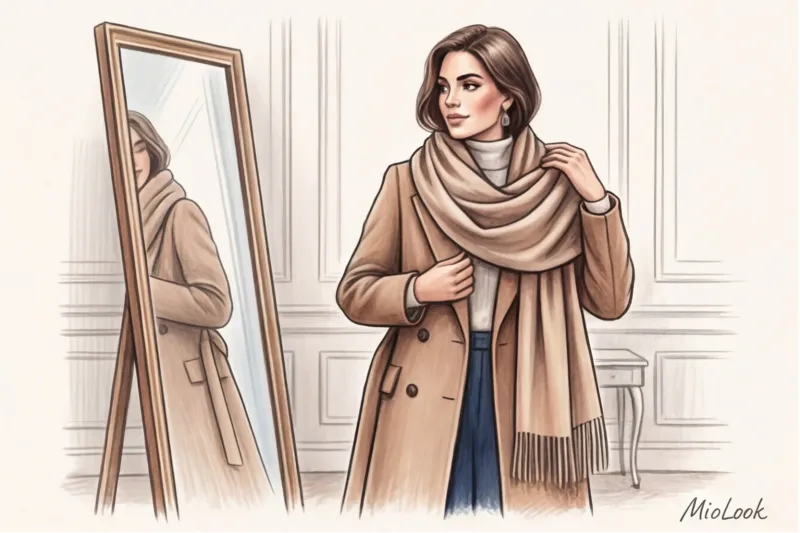
While working as a stylist at Milan Fashion Week, I constantly observed a phenomenon that Italians call sprezzatura — considered casualness. Street style dictates new rules: true luxury doesn't scream logos. It's evident in the masterful way Italian women pair a perfectly tailored camel coat with simple, minimalist sneakers and a cashmere sweater worn next to nothing.
Access to MioLook for €0.99 — one-time payment
A smart AI stylist will select the perfect look.
Get access — €0.99 onceThe Secret Formula of Stylists: The 70/30 Balance Rule
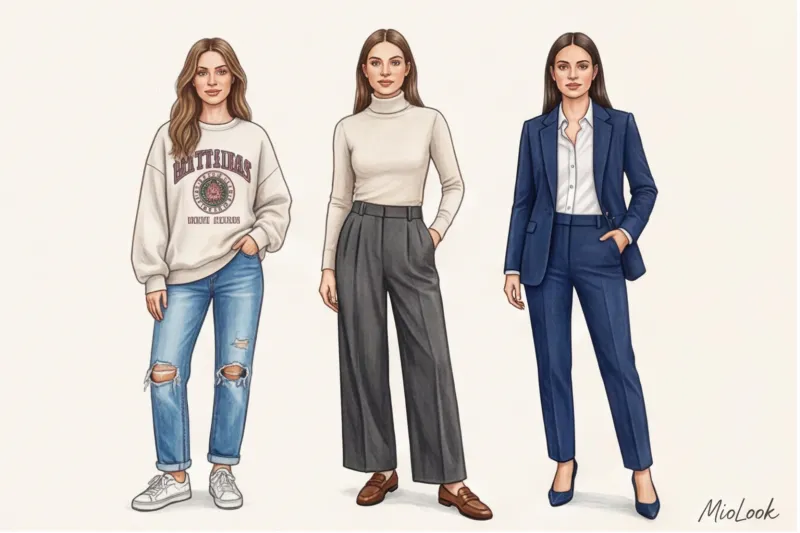
The biggest mistake I see on the street is trying to mechanically split an outfit in half. When 50% formal pieces (like a work-appropriate pencil skirt and pumps) are paired with 50% overtly sporty pieces (like a cotton hoodie), it creates visual chaos, as if you've changed in the dark or forgotten some of your clothes at home.
The secret lies in the 70/30 ratio. You choose a dominant mood—it will take up 70% of your look—and then dilute it with a contrasting accent for the remaining 30%.
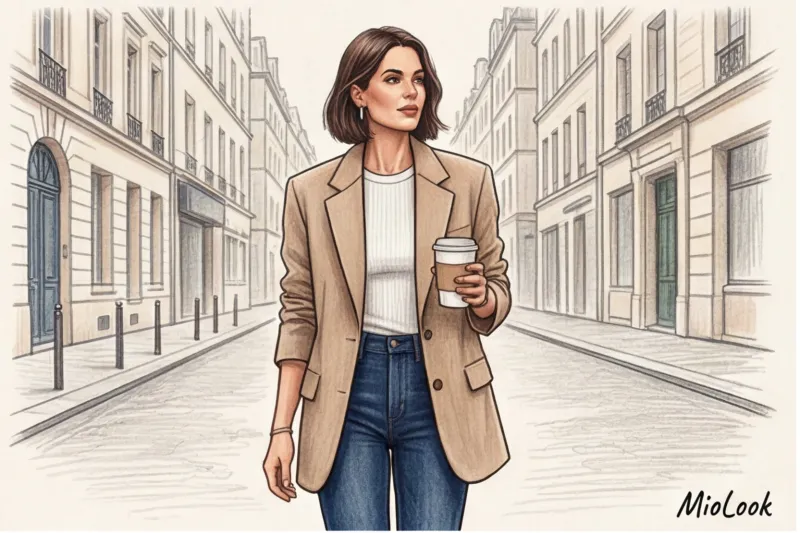
- 70% relaxed + 30% strict: Straight-leg jeans, a basic white tee, soft loafers (these are the basics), plus a structured straight-cut blazer with a sharp shoulder line.
- 70% put together + 30% casual: A trouser suit made of fine wool (a formal base), but worn with a white T-shirt of at least 180 g/m² instead of a shirt and complemented by simple leather sneakers.
When I help clients create digital capsules through MioLook We always factor in this compatibility algorithm. It mathematically guarantees that you'll never look too dressed up or too casual.
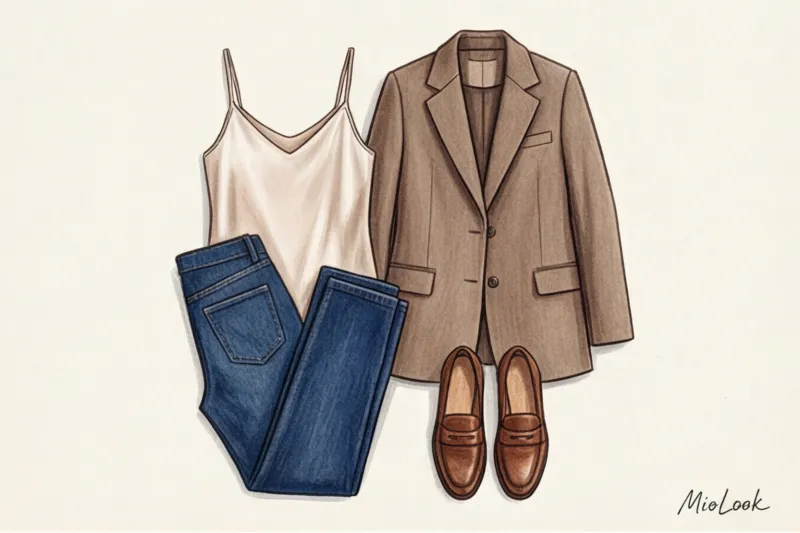
The Biggest Myth: Why Jeans and a Jacket Are Not the Ultimate Dream
Ask any girl about smart casual style, and she'll almost certainly name "blue jeans and a blazer." It's the most common and, frankly, the most boring look. Moreover, classic denim often falls short in comfort when you're spending eight hours sitting in front of a laptop.
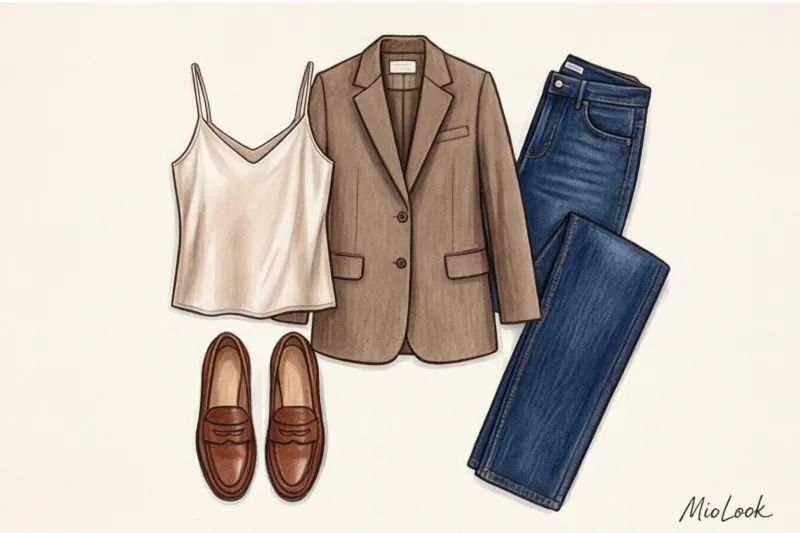
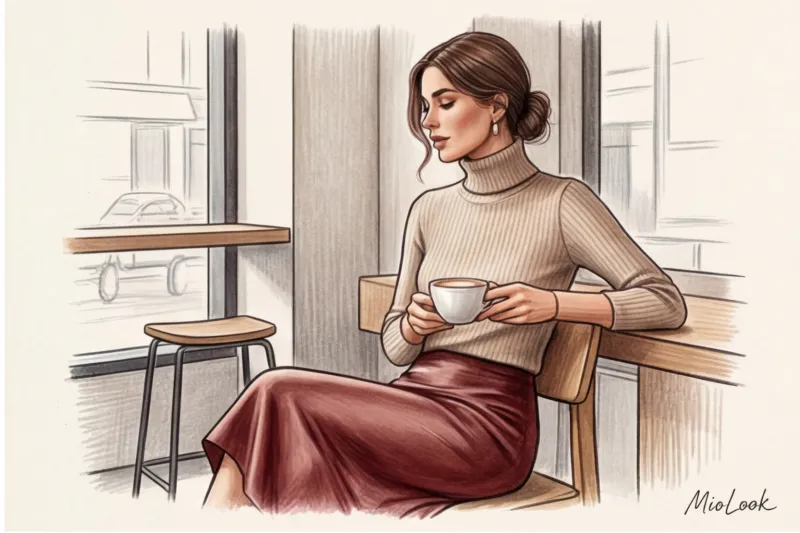
My advice: consider alternatives that look ten times more expensive but are just as comfortable as pajamas. Straight-leg knit trousers or palazzo pants made of a wool blend (merino with 5-10% cashmere) are much more elegant and office-appropriate. Bias-cut midi skirts paired with a chunky, chunky sweater create a stunning movement that denim simply lacks.
If you do choose jeans, remember: smart casual style requires a solid, deep color (dark blue indigo, graphite, or off-white), a high or mid-rise, thick denim of at least 12 ounces, and absolutely no frayed edges, rhinestones, or torn edges.
Investing in texture: fabrics that make a look
Since smart casual deliberately avoids rigid boundaries, complex avant-garde cuts, and excessive embellishment, the entire visual focus shifts to the quality of the materials. Cheap, shiny synthetics or thin, translucent cotton will instantly ruin the look, making it appear unkempt.
Over 12 years of working with technologists at Italian factories in the Biella region, I've learned to determine the quality of yarn literally with my eyes closed. The holy trinity of a premium, casual wardrobe is built on three pillars:
- Silk: It creates a delicate, refined highlight near the face. Choose a dense, matte Mulberry silk with a density of 19 mm or more, rather than a shimmery polyester imitation.
- Cashmere: Responsible for tactile softness and conveys status. Genuine Mongolian cashmere is 8 times warmer than sheep's wool and drapes softly and luxuriously.
- Thick coat or skin: create that very structure and form (in jackets, bags, shoes) that keeps the entire relaxed look within the bounds of elegance.
This is where the cost-per-wear concept, so beloved by financiers, comes into play. A basic cashmere sweater for $500 that you'll wear 100 times over three seasons (with a real cost per wear of just $5) is more cost-effective than a mass-market acrylic equivalent for $50 that will pill unsightly after the third wash (with a cost per wear of $16). Invest your budget in pieces that fit snugly and set the tone.
Your perfect look starts here
Join thousands of users who look flawless every day with MioLook.
Get access — €0.99 onceStatus accessories and shoes: anchors of your style
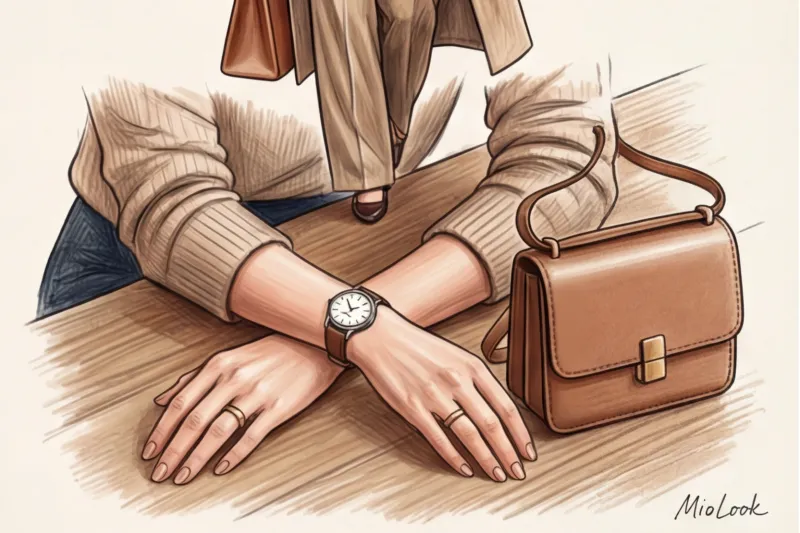
You can wear perfectly fitting basic trousers from Zara and a cotton T-shirt from Uniqlo, but your shoes, bag, and watch must be impeccable. In smart casual, they act as social markers that elevate the entire outfit to the premium segment.
"Invest in the things that keep you grounded: shoes, tires, and mattresses"—this old Italian proverb perfectly describes the approach to building a wardrobe.
Avoid shapeless, soft tote bags made of thin faux leather. They'll dull your look. You're looking for a structured bag made of smooth or grained calfskin with a rigid bottom that holds its shape even when empty. Shoes should be closed, well-groomed, and have a clean, geometric shape: classic oxfords, leather loafers with a thin sole, or ankle boots with a pointed toe (a round toe makes the foot look heavier and more childish).
As for jewelry, large, flashy plastic costume jewelry remains a 2010s staple. Today, understated gold, sleek geometric shapes, and classic Swiss watches on leather or steel straps reign supreme. We discussed how to choose the right pieces in more detail in the article. Status Accessories: What Marks a Successful Expert.
5 Scenarios: Adapting Smart Casual to the Situation
Theory is dead without practice, so let's look at specific life situations that every woman faces.
1. Creative office or IT company
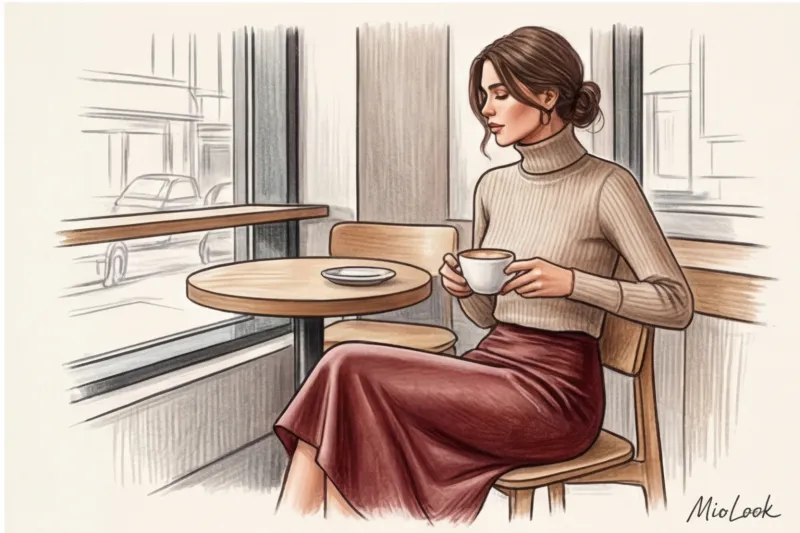
Returning to my client Anna, her new "uniform" is thin smooth wool turtlenecks, pleated banana trousers in thick twill, and suede Loro Piana loafers. It's unquestionable boss status, but without the aggression and distance that a formal jacket creates.
2. Social brunch or exhibition opening
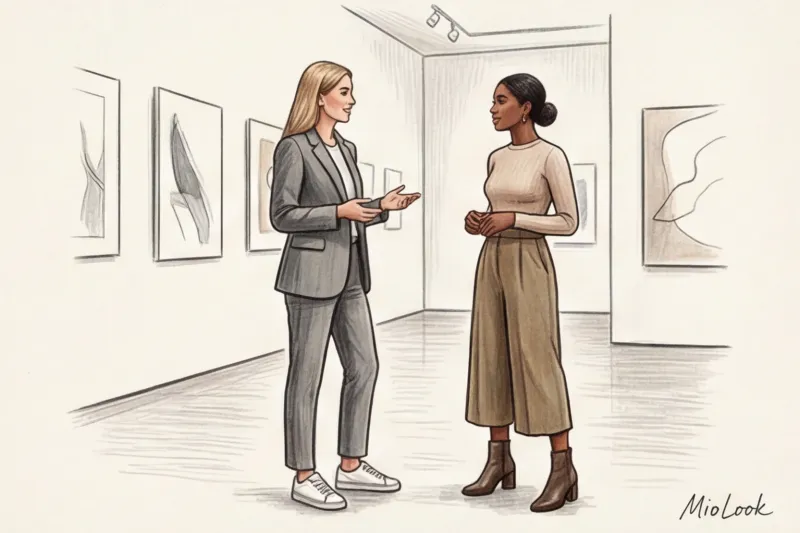
In this situation, we can afford to add artistic elements. Swap out a basic cotton top for a flowing silk blouse with an ascot collar (leaving the ribbons loosely undone) or choose ankle boots with a unique, sculpted heel. The basics remain clear, but the details speak volumes about your taste.
3. Fly straight to a business meeting
You want maximum comfort in your airplane seat without it looking like pajamas when you arrive at the airport. The perfect solution: a high-quality knit suit made of thick viscose, layered over a classic beige gabardine trench coat. The structured trench coat instantly ties together the relaxed inner layer.
4. Friday dress code (from the office to the restaurant)
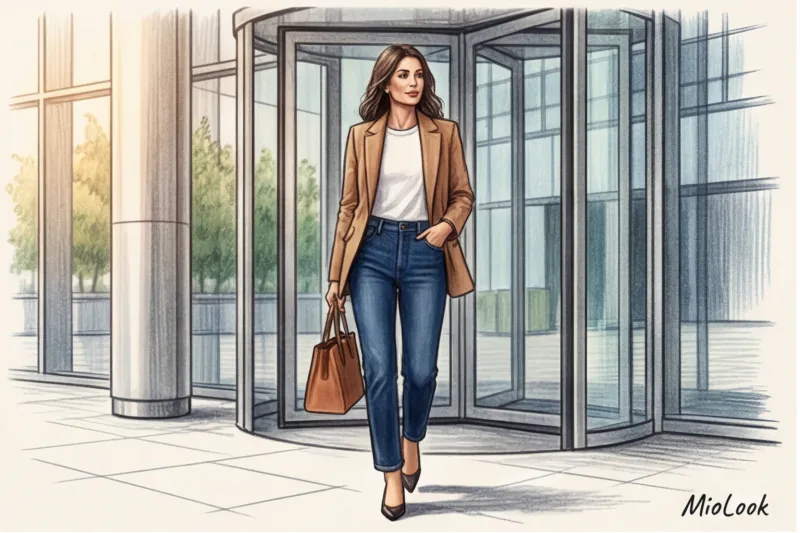
In companies where denim is allowed on Friday, the magic lies in just one change of detail. In the morning, you're wearing dark blue jeans, a white men's shirt, a blazer, and basic loafers. In the evening, before heading out to dinner with friends, you simply swap the loafers for elegant slingbacks, throw on large hoop earrings, and apply a bold red lipstick. The basics remain the same, but the level of dressiness skyrockets in two minutes.
Checklist: How to check your look before going out
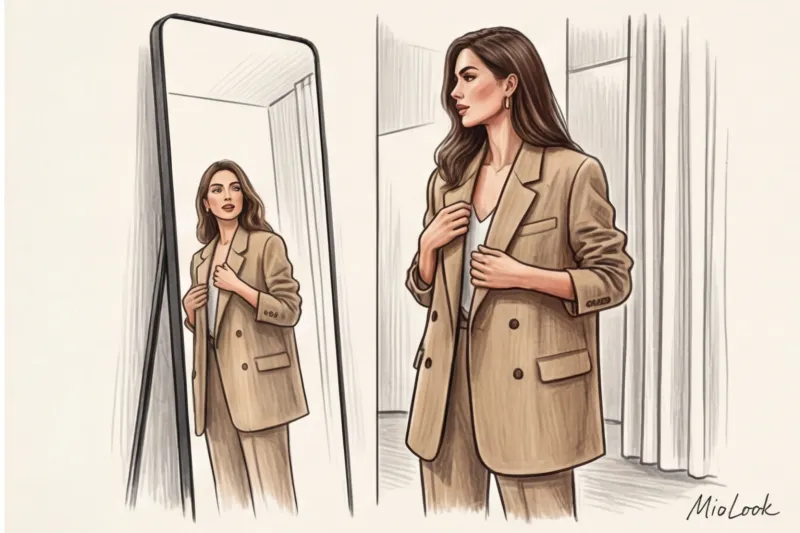
Before you head out the door, do a quick audit of your outfit in front of the mirror, based on three key parameters.
The Rule of Third Things
Count the pieces you're wearing. Basic trousers and a shirt are two. Does the look feel flat and unfinished? Add a "third piece": a structured vest, a chunky knit sweater draped over your shoulders, or a classic jacket. This third layer adds complexity to the silhouette and shows that the outfit is styled, not just thrown on hastily.
When it does NOT work: Be careful if you're petite (up to 160 cm) and choose a stiff, oversized, and overly masculine-cut jacket as your third layer. This will throw off your proportions, making you appear to be drowning in the fabric. A better choice would be a cropped, waist-length tweed jacket or a lightweight cashmere cardigan.
Neatness test
Smart casual absolutely abhors sloppiness. Intelligent casualness is defined by beautifully rolled sleeves on a perfectly ironed shirt, not a wrinkled collar. Note the immaculate cleanliness of the shoe toes, the even creases on the trousers, and the absence of even the slightest pilling in the knitwear. In this style, the devil truly is in the details.
Relevance test
Ask yourself two polar questions: am I showing too much? A plunging neckline, ultra-miniskirts, or an exposed midriff are absolutely out of the question. Conversely, am I buttoned up too much? If you're feeling overly formal, simply unbutton the top button of your shirt, roll up your jacket sleeves to slightly reveal your slender wrists, and swap your rigid satchel for a softer clutch.
The true elegance of smart casual lies not in the number of zeros on your clothes' tags, but in how freely and proudly you carry yourself. This is the style of confident women who value their personal comfort as highly as their social status. Remember: a well-curated wardrobe should work for you, opening doors and making friends, not requiring constant tugging and compromise.