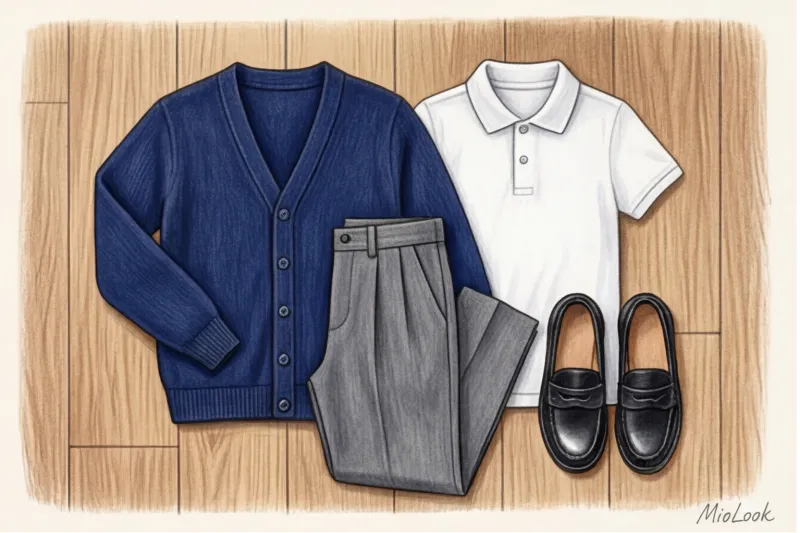
Did you know that your child spends about 1,200 hours a year in their school uniform? Come to think of it, it's the most worn item of clothing in their life. Yet every morning in thousands of families begins the same way: searching for a clean shirt, complaining about an itchy sweater, and arguing about what to wear. As a digital stylist, I see this problem all the time. And the solution isn't buying a dozen new items, but rather taking an engineering approach to your closet.
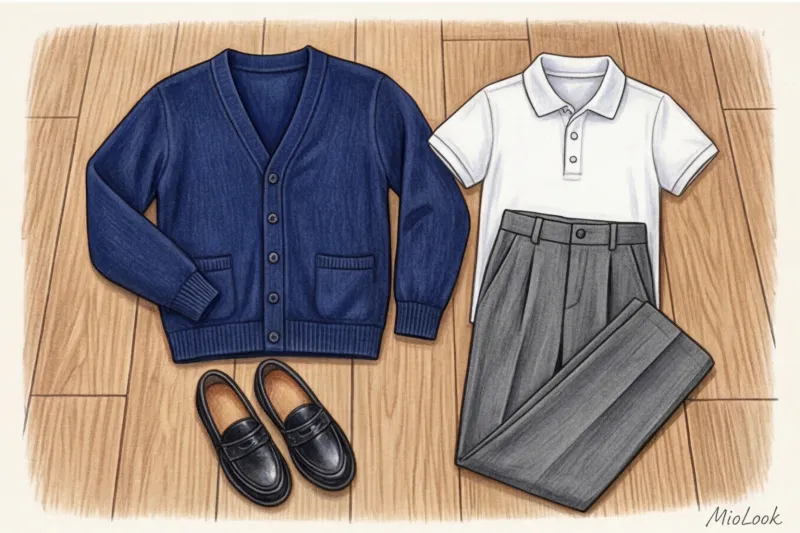
Properly assembled school capsule clothing — it's not just identical dark blue items. It's a closed ecosystem where any bottom matches any top geometrically and color-wise, and a child can get dressed in the dark and still look great. We discussed the basic principles of creating such a system in detail in our The complete guide to a child's capsule wardrobe , and today we will apply this mathematics to everyday school life.
What is a school capsule wardrobe and why does it need math?
Let's do the math. If you bought your child a formal wool jacket for €80, which they wore three times to school assembly, the cost per wear (CPW) would be approximately €26. But if you bought a high-quality cardigan for €50, which they wear 100 days during the school year, the CPW drops to 0.50 cents. A uniform is an investment, and a capsule approach makes it cost-effective.
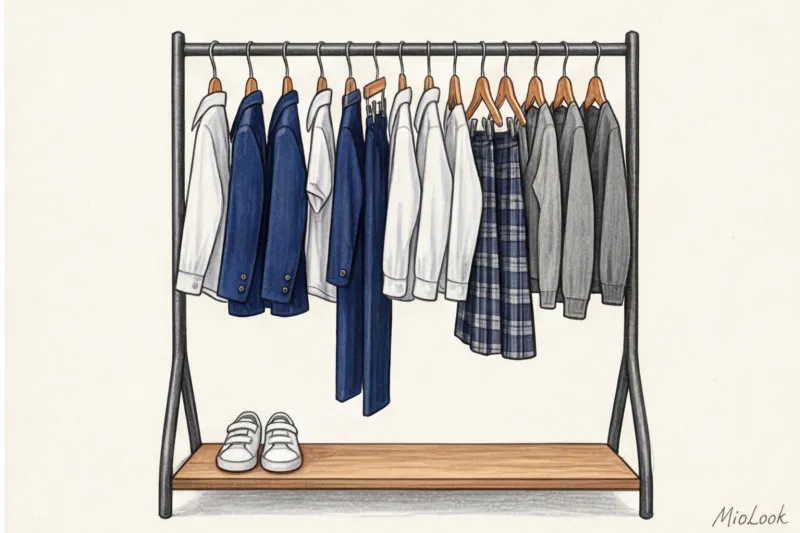
How many items do you really need? It depends on your laundry cycles. My favorite formula for busy parents is the "2+5 Rule":
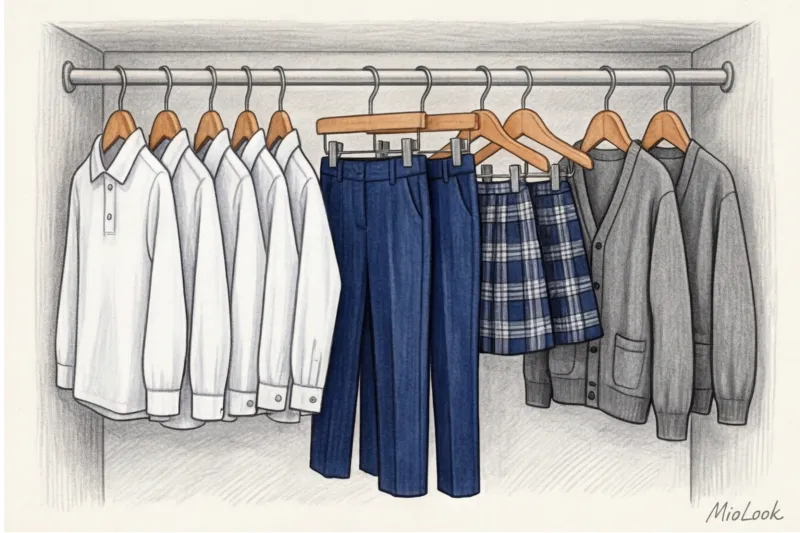
- 2 bottoms (trousers/skirts) that do not wrinkle and are easy to clean locally.
- 5 tops (shirts, polos, turtlenecks) - one fresh one for each day of the week.
- 2 second layers (cardigan, vest) for thermoregulation.
These 9 items offer at least 20 combinations. You wash the tops once a week on the weekends, and alternate the bottoms every other day, allowing the fabric to "rest" and regain its shape.
Access to MioLook for €0.99 — one-time payment
A smart AI stylist will select the perfect look for you and your child.
Get access — €0.99 onceThe Hidden Enemy: Why Kids Hate Uniforms (and How a Sensory Approach Can Save Their Mornings)
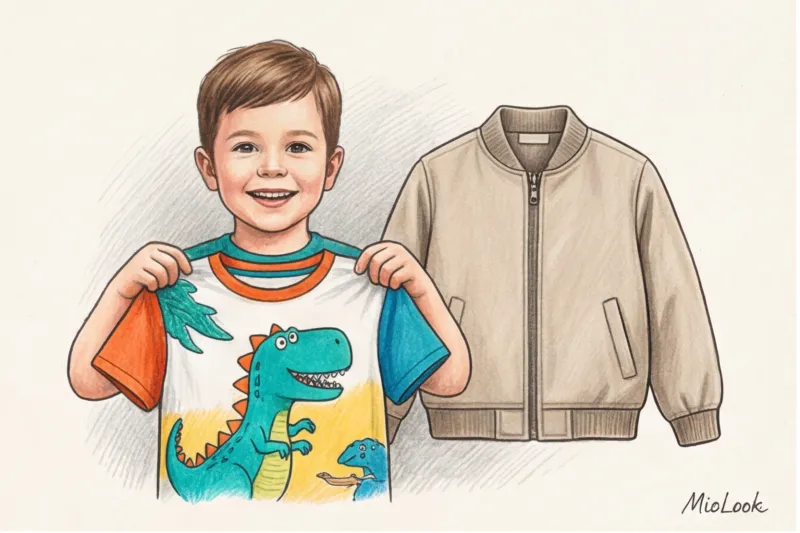
One of my clients struggled with her first-grader's morning tantrums for six months. He absolutely refused to wear his uniform. When we sorted through his closet, the problem became obvious: his stiff shirt collar was chafing his neck, and his classic jacket made it difficult to lift his arms. We replaced the jacket with a soft, thick-knit bomber jacket and his classic shirts with long-sleeved polo shirts. The tantrums stopped the next day.
A 2023 study by the American Psychological Association (APA) confirms that physical discomfort and decision fatigue in the morning directly reduce a child's concentration during their first few lessons. A perfectly colored capsule will fail if the fabric bites.
"The main rule of a school capsule: if you can't crumple something in your fist and return it to its smooth form a second later, it's not suitable for school."
Read the labels. 100% wool is bad for school (it's hot in the classroom and hard to wash). 100% cotton wrinkles so much you'll hate ironing. The ideal composition I'm looking for for children's capsules is polyviscose (approximately 60% viscose, 30-35% polyester, and 5% elastane). This blend is breathable, allows for unrestricted movement, and can withstand 50+ machine wash cycles.
Basic School Capsule Clothing: A Stylist's Checklist
Over 12 years of working with style, I've developed the optimal proportions for a school capsule. Here's a basic checklist that will cover 95% of your needs for the school year.
Bottoms (3-4 items):
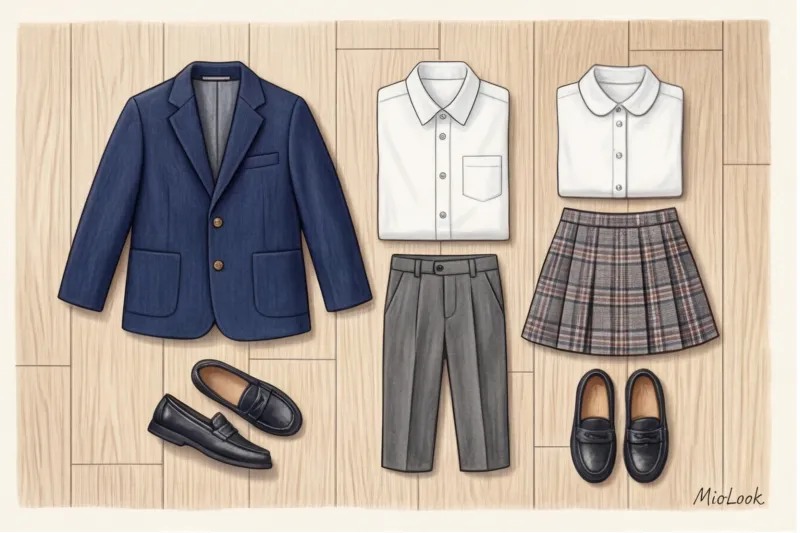
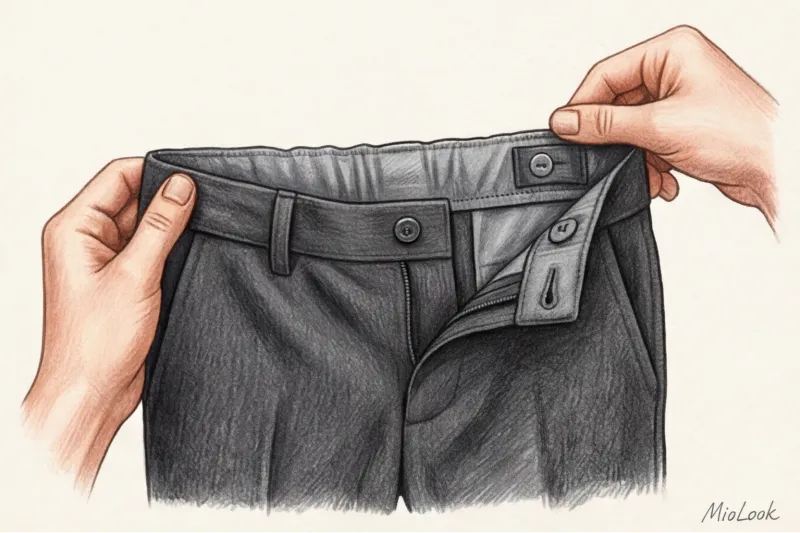
Look ONLY for styles with an elastic or adjustable waist. The waistband should have an elastic band with a button inside. Children grow in leaps and bounds, and a stiff waistband will become too tight faster than the pant legs get too short. Culottes are great for girls—they look like a skirt but allow them to run freely during recess.
Tops (5-7 items):
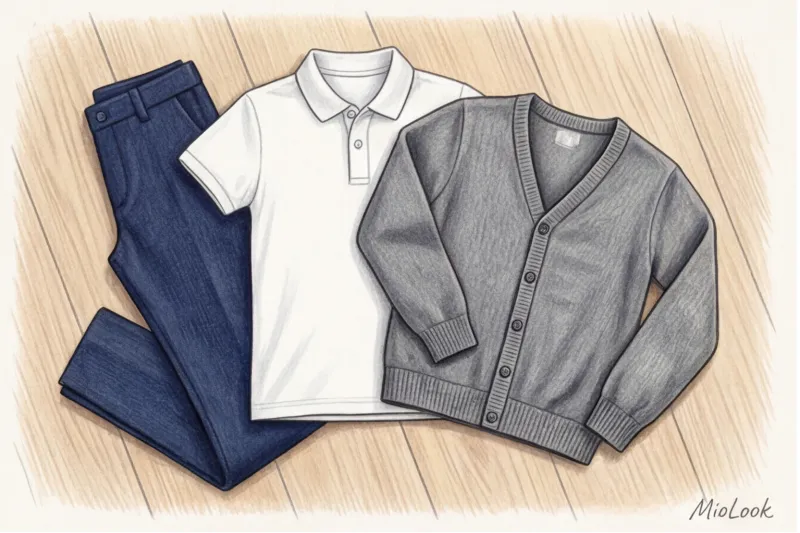
Minimize buttons. Polo shirts made of heavyweight pique cotton (180 g/m² and above) are a lifesaver. They look quite formal because of the collar, but they can be worn like a T-shirt. Save one classic white shirt for formal occasions, and for casual wear, grab two white polos, two light blue/gray (less easily soiled) ones, and a couple of turtlenecks.
Second layer (2-3 items):
Avoid formal, lined jackets if they're legal. Replace them with chunky knit cardigans, cotton vests, or heavy jersey jackets. Your child should be able to remove this layer and stuff it into a backpack without worrying about wrinkling it.
Fair limitation: this checklist won't work if the school's charter strictly requires purchasing uniforms from a specific manufacturer. In such cases, we can only make up for it with the first layer (shirts) and shoes.
Shoes and accessories: the foundation of comfort
A change of shoes is the most important investment. Classic, stiff Oxfords can deform growing feet and slip on linoleum. Choose soft suede or leather loafers, brogues with microporous soles, or minimalist leather sneakers without logos (schools often turn a blind eye to sneakers if they're completely black or dark blue). As for your backpack, don't try to match it to your uniform. Instead, opt for a pop of color: burgundy, emerald, or mustard.
Your perfect look starts here
Join thousands of users who look flawless every day with MioLook.
Get access — €0.99 onceThe "Grow-In" Myth: Why It's Killing Style and Budget
Now I will say something that many mothers will want to argue with. Buying a uniform that is 2 sizes too big is a major financial mistake. It seems like you're saving, but in reality you're losing money.
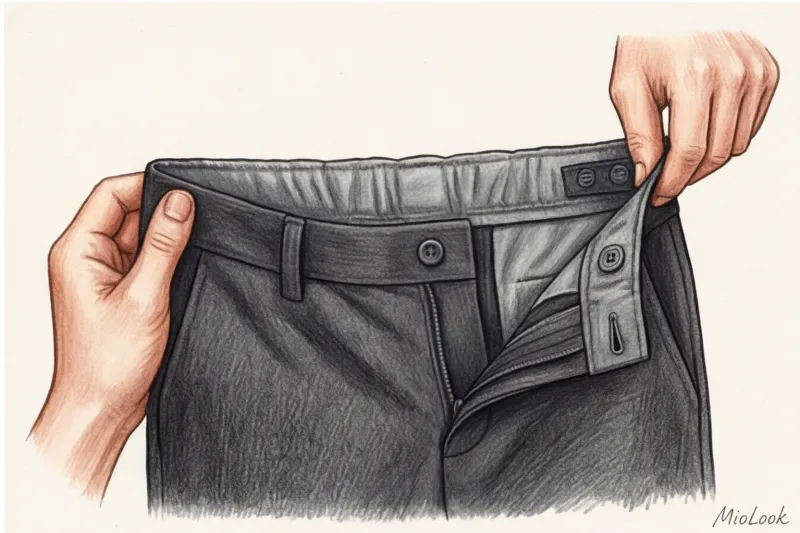
What's the physics behind this process? When you buy pants for growth and fold them up, the fabric at the fold is subject to double friction. After three months, a whitish, frayed strip forms at the fold. When your child finally reaches the right length, you unfold the pants and see a ruined garment. The result: you still have to buy new ones.
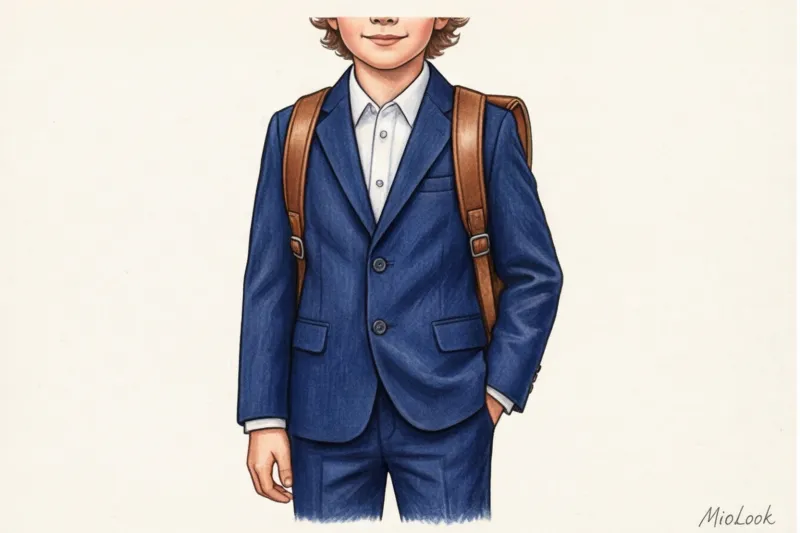
Moreover, a baggy, sagging jacket "off the shoulder" puts psychological pressure on a child. According to the Fashion Psychology Institute (2022), teachers subconsciously perceive ill-fitting clothing as sloppiness, which can influence prejudice.
What to do instead? Buy true-to-size items, but with smart cuts. Look for brands (such as back-to-school lines from Marks & Spencer, Next, or Uniqlo) that offer hidden extendable cuffs (the seam unravels, adding an extra 3 cm of length) and elastic waist panels.
Dress Code vs. Personal Style: How to Legally Express Your Individuality
Even within the strictest regulations, there are always gray areas. Check your school rules: they usually specify colors (for example, dark blue) and the absence of prints. But they rarely regulate textures and fittings!
How to add style without incurring the wrath of the head teacher:
- Invoices: Instead of a smooth blue vest, buy a cable knit vest.
- Micro trends: colored thick tights (burgundy or emerald) with a gray skirt, textured knee-highs.
- Fittings: Enamel pins (badges) on the lapel of a cardigan. Today it's a dinosaur, tomorrow a rocket. This gives the child the illusion of control over their appearance.
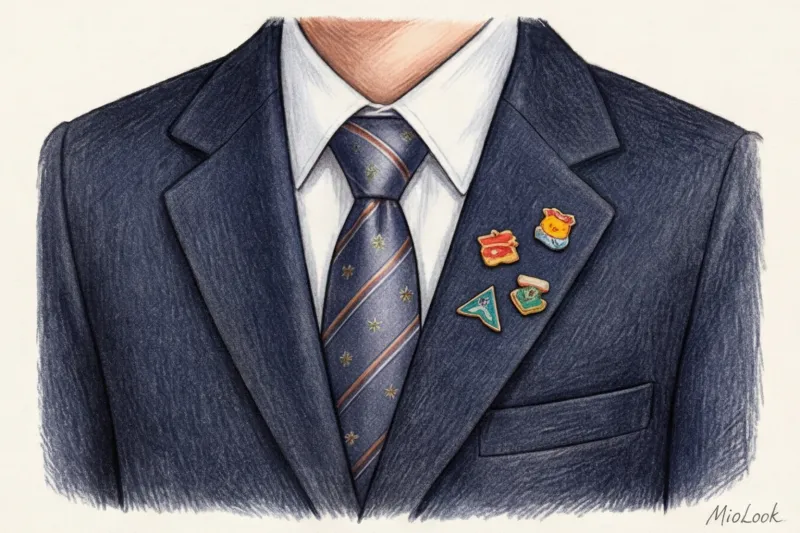
Don't forget about color types. If the regulations call for "blue," remember that blue comes in different shades. A child with a warm skin tone (spring/fall coloring) would look best in a blue with a turquoise or sea green tint, while a cool skin tone would look best in an inky navy. The right shade for the face instantly eliminates the "pale, tired schoolchild" look.
How to digitize a student's wardrobe using the MioLook app
I recently digitized my ten-year-old niece's wardrobe using MioLook applications We downloaded all of her clothes and, after a month of using statistics, discovered something astonishing: 80% of the time, she wore the same wide-leg pants and two favorite polo shirts, ignoring skirts and blouses. It's a classic example of Pareto's principle in action.
How to use technology for school:
- We take pictures of the base: Take photos of these 10-12 purchased items (or find similar photos in the catalogs inside the app).
- We create lookbooks: Create pre-made outfits with your child in the app. Name them clearly: "Monday - Physical Education" (pants + polo shirt for quick changes), "Formal" (shirt + vest), "Warm" (turtleneck + cardigan).
- We delegate the choice: In the morning, the child simply opens the phone, clicks on the desired lookbook, and takes the things from the chair himself.
This is amazing gamification. Your child feels grown-up and independent ("I decide what to wear"), and you feel at ease because every choice in the app is the right one. This completely eliminates morning conflicts.
Your action plan: get your uniform together in one weekend
The capsule doesn't assemble spontaneously. Forget aimlessly wandering around the mall at the end of August.
Here is your algorithm:
- Step 1: Audit. Get out all the uniforms from last year. Let your child try them on. Ruthlessly discard anything that's short, pilled, or has stubborn stains.
- Step 2: List. Check the checklist (2 bottoms, 5 tops, 2 second layers). Write down only what's missing.
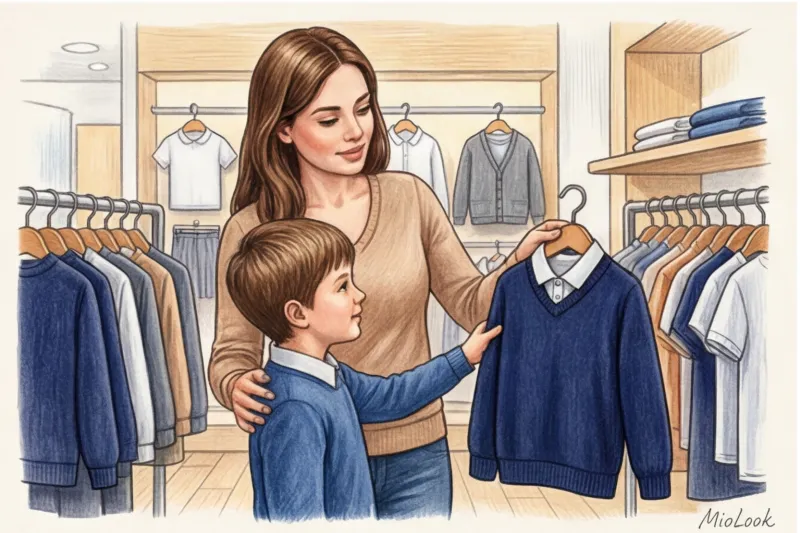
- Step 3: Spot shopping. Don't take your child shopping all day—their psyche can only handle 40 minutes of trying on clothes, at most. Order items online for home delivery or visit a single multi-brand store with a specific list.
Creating a school capsule is a one-time investment that pays off every day. By stopping buying random items "because they're on sale" and focusing on tactile comfort and compatibility, you'll give yourself and your child the most precious gift—a calm, good morning free from stress.