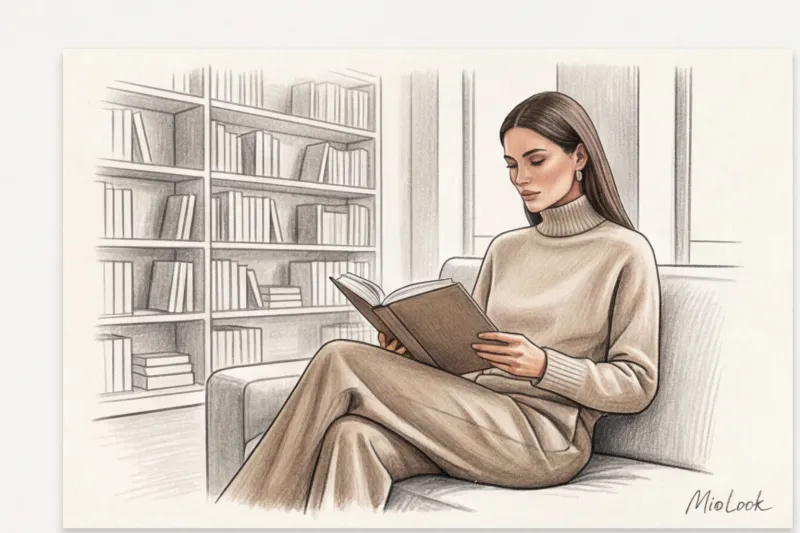
What is the Sage archetype in style: from a gray mouse to a Quiet Luxury icon?
Have you ever noticed a curious paradox? The higher a woman's expertise, income, and inner confidence, the quieter her wardrobe becomes. Flashy logos, neon, and complex layering magically disappear, giving way to clean lines and impeccable textures. In style psychology, this phenomenon has a clear name: archetype sage in style.
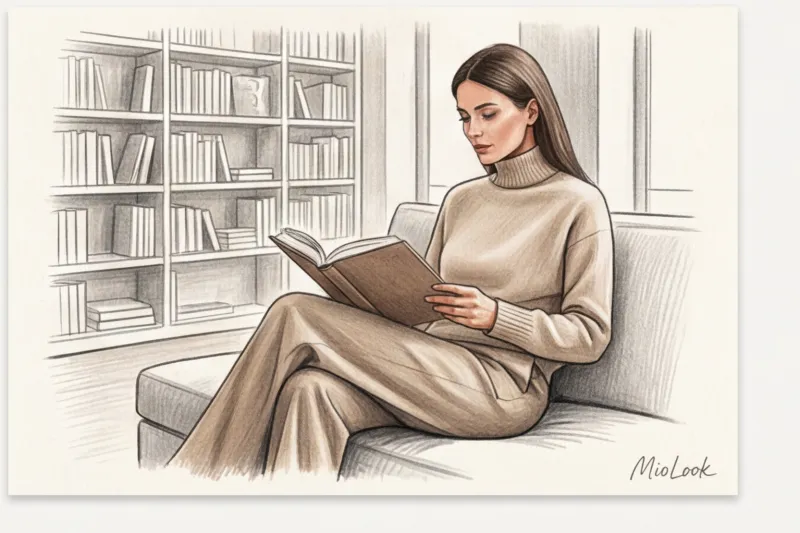
In my experience as a stylist, this request comes up most often during moments of career and personal transition. I vividly remember one of my clients, a brilliant university professor. To emphasize her status, she bought several stiff, structured suits at exorbitant prices. The result? She looked less like an intellectual and more like a woman in an uncomfortable shell, terrifying to approach with questions.
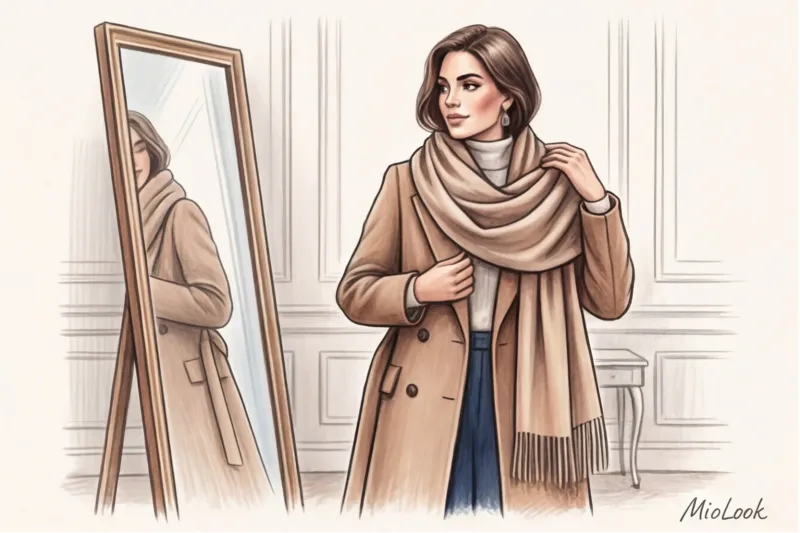
We completely changed our strategy. We replaced the stiff jacket with a flowing cardigan made of thick cashmere, and the formal shirt with a matte silk blouse in the spirit of the Lemaire brand. The clothes no longer "screamed" over her personality and became a luxurious matte matte for her greatest asset—her intellect. We discussed in more detail how character and body shape dictate our stylistic choices in our a complete guide to style types and clothing archetypes.
The Formula of Intelligent Fashion: The Sage Archetype and Your Style
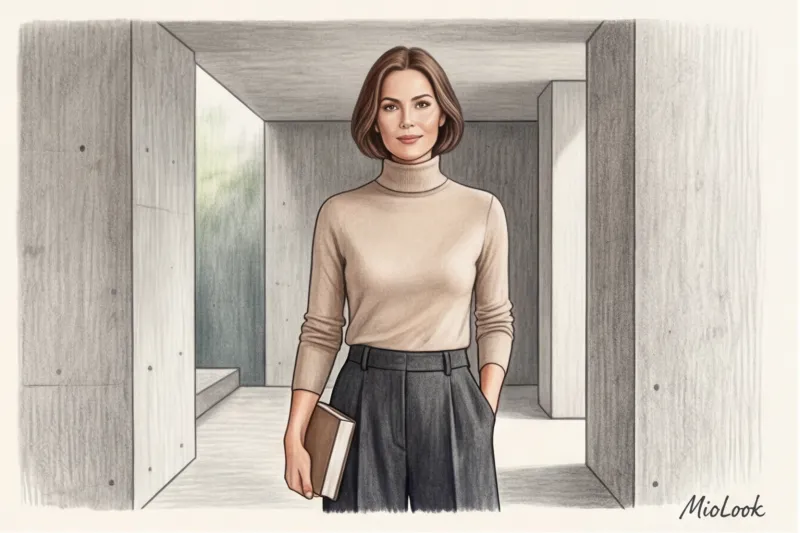
What fashion magazines today call "Quiet Luxury" is, in fact, a classic rendering of the Sage. The fundamental characteristics of this style are absolute simplicity, high functionality, and a complete rejection of visual noise. There's no room for rhinestones, bold hardware, or frivolous ruffles.
A wise person doesn't want to waste their morning hours wondering if this print goes with that skirt. They build a system. And that's where technology comes in. If you want to audit your pieces and see how they fit this archetype, try MioLook — a smart AI stylist will help you digitize your closet and identify blind spots in your collection.
Color palette: beyond black and white
Many people mistakenly believe that intellectual fashion is a boring black-and-white dress code. This is absolutely not true. The Sage palette is complex and multifaceted. It features deep, natural, and slightly dusty shades: wet asphalt, rich camel, sage, dark chocolate, and ecru.
Monochrome looks in these shades work as a powerful tool for creating verticality. By combining an entire outfit in a single color (for example, deep chocolate), you visually elongate the silhouette, adding stateliness and that elusive "luxury" quality to the look.
Fabrics and Textures: Tactile Intelligence
If the Sage archetype is devoid of prints, what makes the eye linger on the image? There's only one answer: texture. The Sage physically detests cheap synthetics—they creak, don't breathe, and cheapen the look.
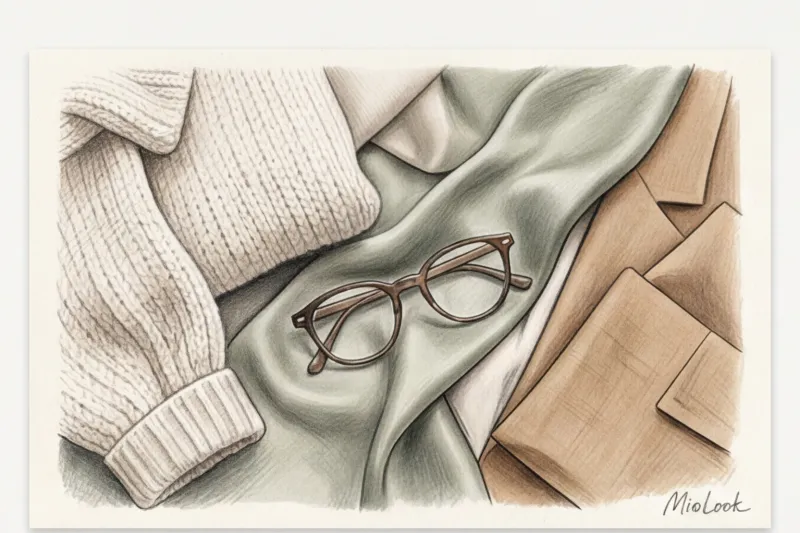
The focus is always on tactile intelligence: dense cashmere, natural mulberry silk (at least 19 momme), structured linen, and superfine merino wool. The combination of smooth, cool silk and fluffy, warm cashmere in a single look works better than any complex pattern.
Access to MioLook for €0.99 — one-time payment
Start creating perfect looks with the help of artificial intelligence and get your wardrobe in order.
Get access — €0.99 onceThe Myth of Boring Minimalism: Why Things Fit "Like They Don't Fit"
Now here's a counterintuitive insight that's rarely written about in fashion blogs: minimalism is the most difficult Style is executed perfectly. Why? Because when a garment lacks embellishments, ruffles, or bold patterns, the bare architecture of the cut takes center stage. If a seam is crooked or a dart is out of place, everyone will notice.
Clothing in the Sage style must strictly adhere to your bone structure. As stylist David Kibby notes (and Dwyn Larson's work confirms), our body geometry is primary. If you're a petite Gamine with a sharp, detailed appearance, a trendy oversized trench coat with no details will simply swallow you. You'll look less like an intellectual and more like a lost teenager.
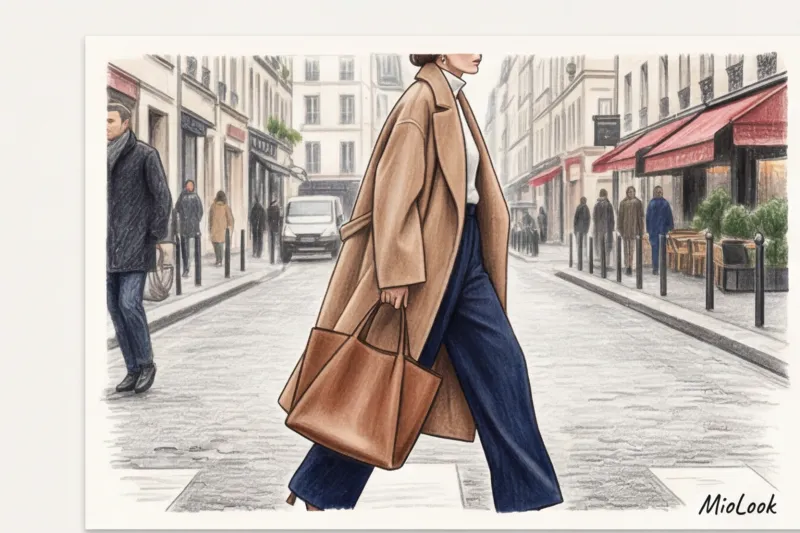
Conversely, on a tall, Dramatic figure with a large bone structure, a completely sleek, long, straight-cut coat will look regal. I had a client who bought a basic cashmere coat for €1,800, but it "killed" her look, as the soft, shapeless shoulder line was completely unsuitable for her Romantic type. Remember: archetype is only a mood, while the cut is always dictated by physiology.
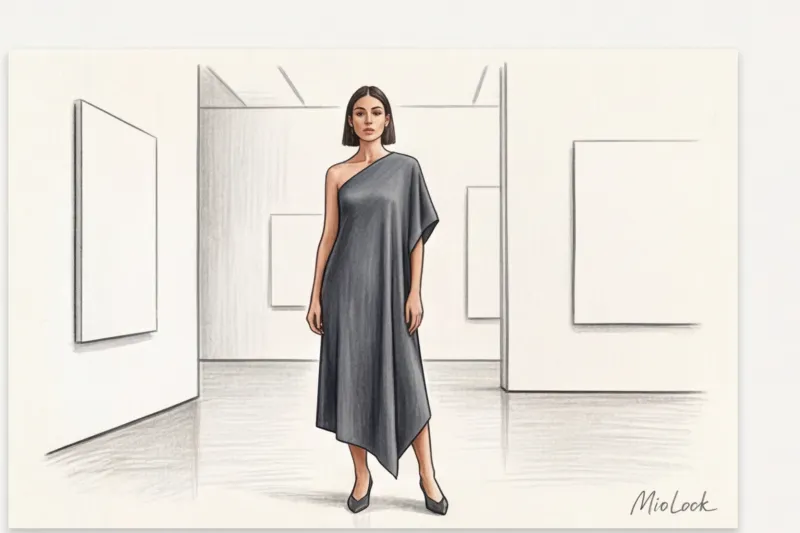
Conscious Consumption: A Wardrobe as an Investment Portfolio
The shift from fast fashion to slow fashion isn't just an environmental trend; it's the very core of the Sage's philosophy. According to McKinsey & Company's "The State of Fashion" report for 2024, 65% of today's premium consumers value a garment's durability over its trendiness. The Sage understood this long before marketers.
Let's calculate the mathematics of style using the metric Cost Per Wear (CPW) – price per wear Let's say you buy a basic mass-market sweater (acrylic with 5% wool) for €50. After three washes, it's covered in pills and loses its shape. You wear it five times. CPW = €10 per wear.
Alternative: You invest in a cashmere jumper from a quality mid-range brand (like COS or Massimo Dutti) for €250. You wear it for three seasons in a row, at least 100 times. Your CPW is only €2.50 per outfit. The Sage's conscious minimalism always saves you money in the long run.
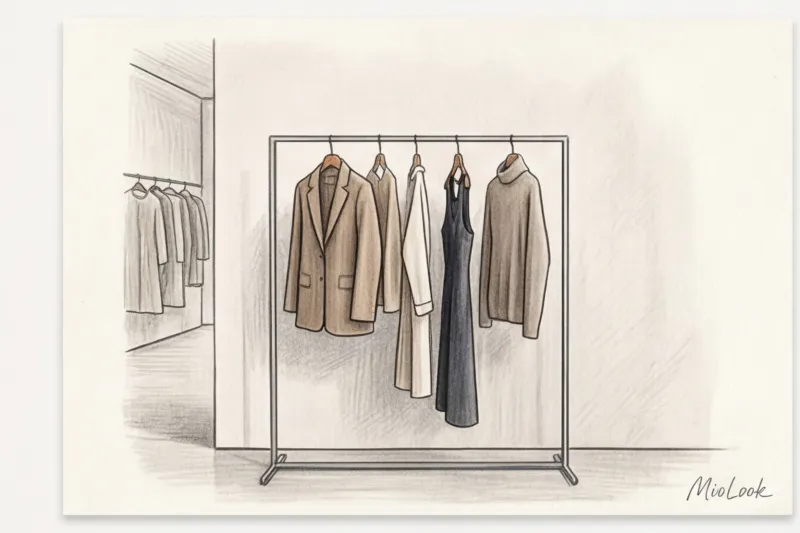
The Sage's Capsule: 5 Formulas That Create 50 Images
My signature approach to work is not to give abstract advice like "buy quality basics," but to offer concrete mathematical formulas. A Sage's wardrobe is like a construction kit, where every piece fits together perfectly. Here are three ironclad formulas that work without fail.
- Formula 1: Relaxed elegance. A loose cashmere sweater (V-neck) + a bias-cut silk midi skirt + leather loafers with a thin sole. It's the perfect mix of textures, where the fluffy top softens the sleek bottom.
- Formula 2: Modern smart casual. A straight-cut architectural jacket + straight-leg jeans in heavy denim (no fraying or stretch!) + square-toe ankle boots. This outfit is perfect for anything from a lecture to a board meeting at an IT company.
- Formula 3: Intellectual femininity. A shirt dress in heavy cotton (180 g/m² and up) + a wide geometric leather belt + a minimalist watch. Strict, yet incredibly attractive.
If you download these basic elements in MioLook , the app will show you dozens of hidden combinations that you didn't even know about, saving you 15 minutes in the morning in front of the mirror.
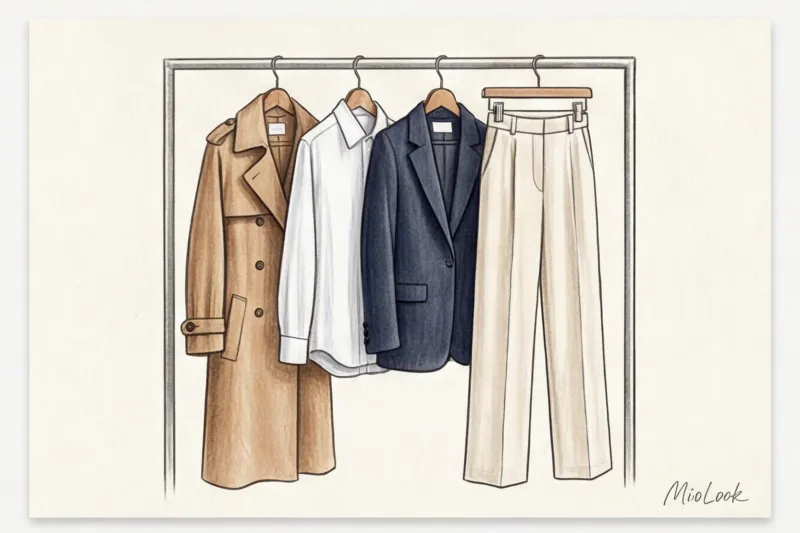
Your perfect look starts here
Join the thousands of users who look flawless every day with MioLook without having to spend a second in front of their closet.
Get access — €0.99 onceDetails and accessories: how the Sage places accents
Accessories in this style aren't meant to attract attention—they emphasize status and complete the point. Glasses are traditionally considered the ultimate "intellectual" accessory. An important rule: to avoid looking like a "stern '90s schoolteacher," choose trendy geometric frames (like those from Celine or lightweight titanium Lindberg). Avoid narrow, rectangular lenses.
The Sage's jewelry is a triumph of form over brilliance. Smooth metal, complex architectural lines, stud earrings. If you love stones, let this be it. baroque pearls non-standard shape, not the classic ideal thread that can add age.
Bags follow the same rules: rigid geometry, perfect stitching, and a complete absence of large metal logos. A Sage bag should sit on a table without losing its shape.
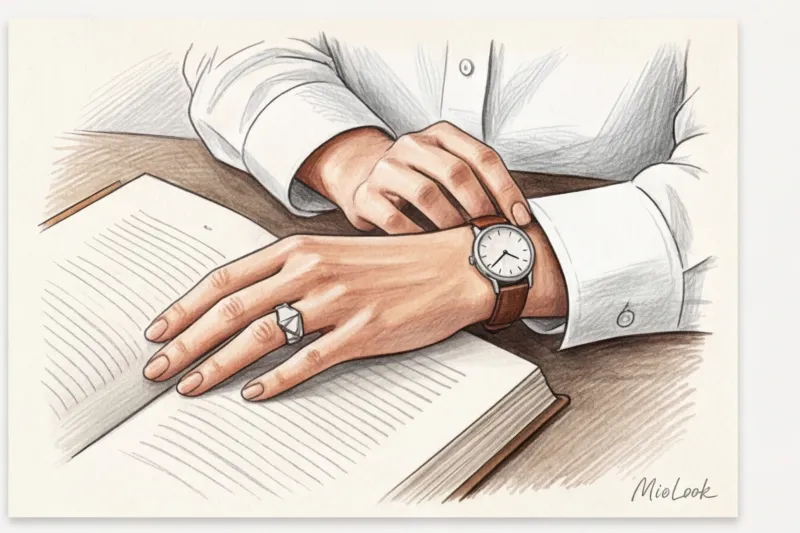
How to Integrate the Sage Archetype into a Business Dress Code
The corporate environment and the Sage archetype are made for each other. But to avoid looking like a dry bureaucrat, the classic office dress code needs to be loosened up a bit.
Let's be honest: a classic starched white shirt isn't flattering for everyone, often creating the illusion of a waiter's uniform. A wise man replaces it with a thick silk top or a thin viscose-cashmere turtleneck. This tones down the formality while maintaining professionalism.
The foundation of the expert's wardrobe is a menswear-inspired pantsuit. The key is the fit of the trousers. A wise man chooses full-length trousers with a crease or elegant palazzo pants, which, when paired with matching shoes, create the effect of endless legs. Avoid cropped, skinny trousers—they ruin the monumentality of the look.
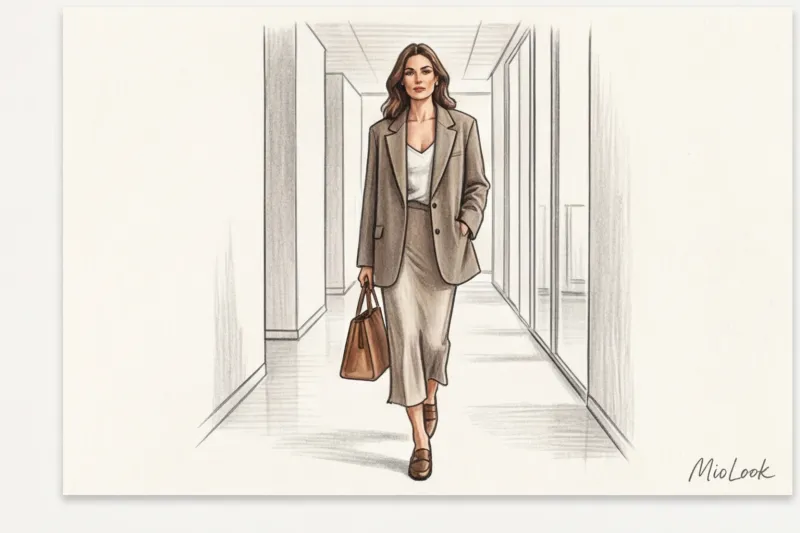
A Stylist's Checklist: A Wardrobe Audit Through the Lens of the Sage
To test how this system works in practice, I once conducted an experiment: I put together a capsule wardrobe of exactly 15 items inspired by the Sage aesthetic and wore it for a whole month. The results amazed me—my morning "decision fatigue" completely disappeared. Every item paired perfectly with every other item.
How can you conduct such an audit at home? Use my three professional filters:
- The 3-second rule. If you have to tugg at or adjust something while trying it on, if it's slipping or squeezing, give it away. A wise man values the comfort of his thoughts, and it's impossible to think of great things when a strap is digging into your shoulder.
- Color noise analysis. Leave no more than 3-4 deep neutral shades and 1-2 accent shades (but noble ones, like burgundy or emerald) in the base.
- Inventory of tactility. Close your eyes and touch your wardrobe. Ruthlessly get rid of everything prickly, glassy, or squeaky.
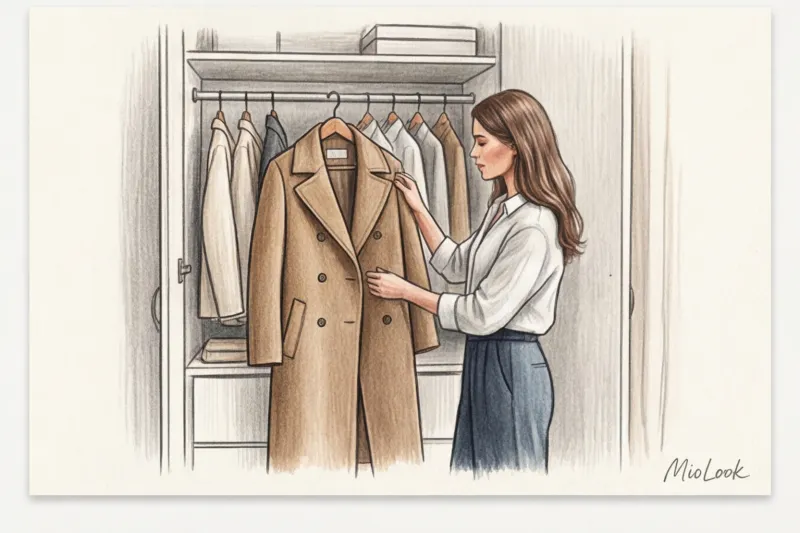
The Sage archetype isn't about giving up fashion. It's about reaching a level of confidence where you no longer need to prove anything to others through your clothes. You allow your style to be quiet because your thoughts, your work, and your personality speak loudly enough.