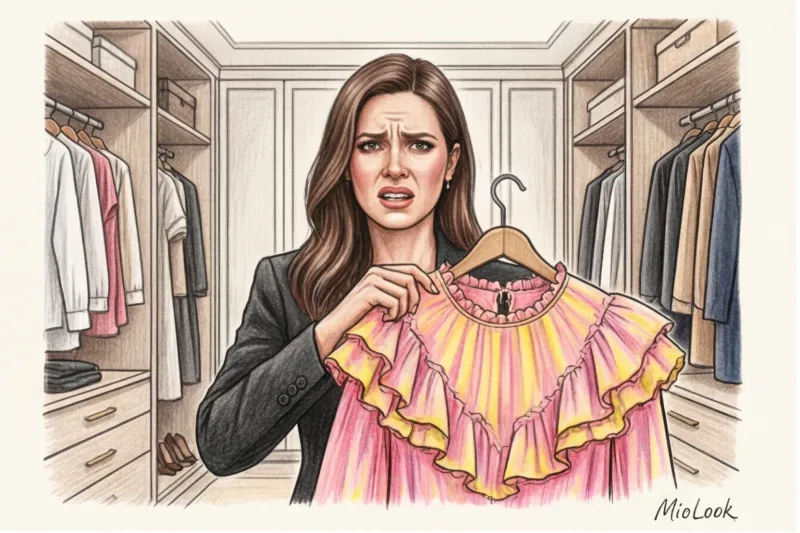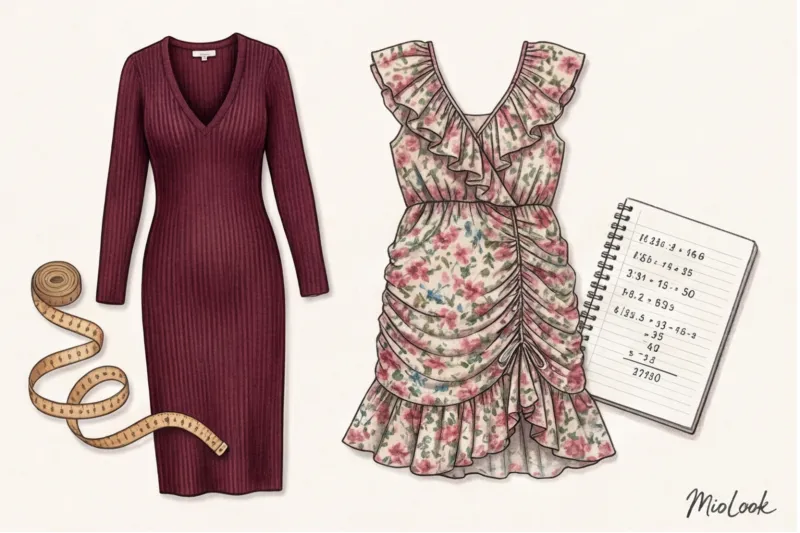
When my client Anna, five months pregnant, sent me a photo from a specialty store's fitting room with the words, "Darina, I look like a sad cupcake in these frills, please help me," I understood the core pain of expectant mothers. The industry forces us to believe that as our bellies grow, our personal style must disappear, giving way to childish bows, strange prints, and shapeless robes of dubious quality.
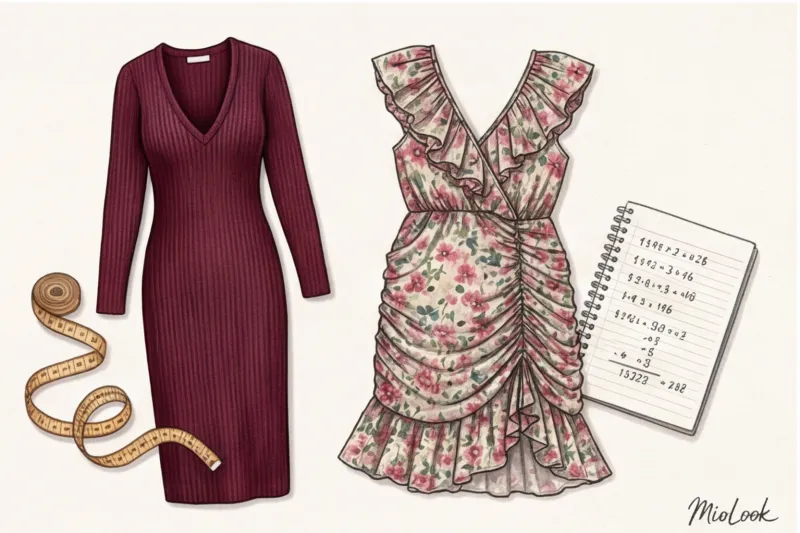
But as a stylist and colorist, I am absolutely sure: regular maternity clothes — that is, skillfully styled items from your regular wardrobe are not only a huge savings, but also the only way to stay yourself during a period of major body changes. Instead of buying one-time-only items, we'll use an architectural approach to styling: working with shape, drape, and fabric density. We discussed the foundation of this approach in more detail in our The complete guide to a basic maternity wardrobe Today, we'll explore specific mechanics for adapting what's already hanging in your closet.
Why regular maternity clothes are more cost-effective than specialized lines
Let's be honest: most mass-market maternity brands skimp on fabric. Marketers know you're buying this garment for 4-5 months, so instead of thick viscose, they'll sell you thin cotton jersey that will pill after the third wash.
In my practice I always rely on the concept Cost per Wear (price per outing). Let's do the math. You buy a special maternity dress for 120 euros. You wear it maybe 15 times during the remaining months. The cost per outing is 8 euros. Now let's take a high-quality basic noodle dress made of thick knit (for example, Massimo Dutti or COS) for the same 120 euros. You wear it before pregnancy, during (it's very stretchy), and after. 100 outings brings the cost down to 1.2 euros. The math is merciless.
According to a 2023 report by the British organization WRAP (Waste and Resources Action Programme), extending the life of an item by just nine months reduces its carbon, water, and waste footprint by 20-30%. Ditching the disposable maternity wardrobe is not only about style but also about the environment.
The Oversized Myth: Why You Can't Just Buy Two Sizes Bigger
The most fatal mistake I see pregnant women make is trying to go to their favorite store and just buy a size L or XL instead of their usual size S. Spoiler: you won't get a stylish oversized look; you'll get a "hand-me-down" effect that will visually add 10 kilograms to your weight.
Why does this happen? Because of the laws of clothing design (pattern gradation). When a manufacturer increases a size, they're not only increasing the belly area. The shoulder width increases, the armholes deepen, the neckline widens, and the sleeves lengthen. As a result, the shoulder seams sag sadly, and the armpits hang loosely.
The golden rule of a stylist: The shoulder seam should always be in place. Look for the right cut (loose, A-line, cocoon) in in his own your natural size, rather than going up a size range for tight-fitting items.
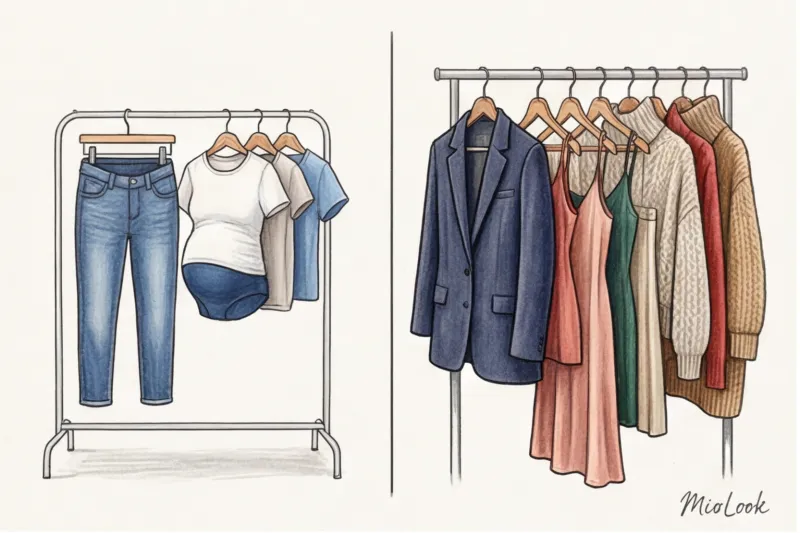
Closet audit: what regular clothes can you wear until 9 months?
Before you run to the store, open your closet. I'm sure you already have 60% of your future capsule wardrobe there. The "smart wardrobe" feature will help you digitize these items and create new outfits from them. MioLook app What are we looking for first?
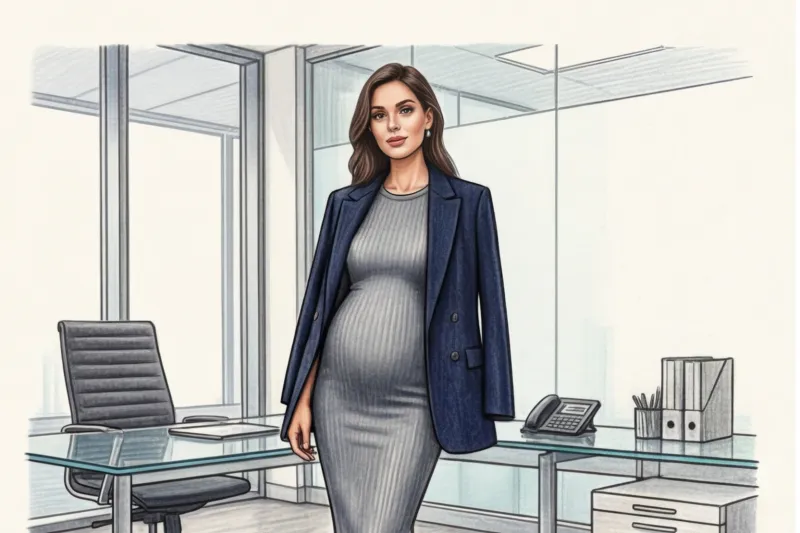
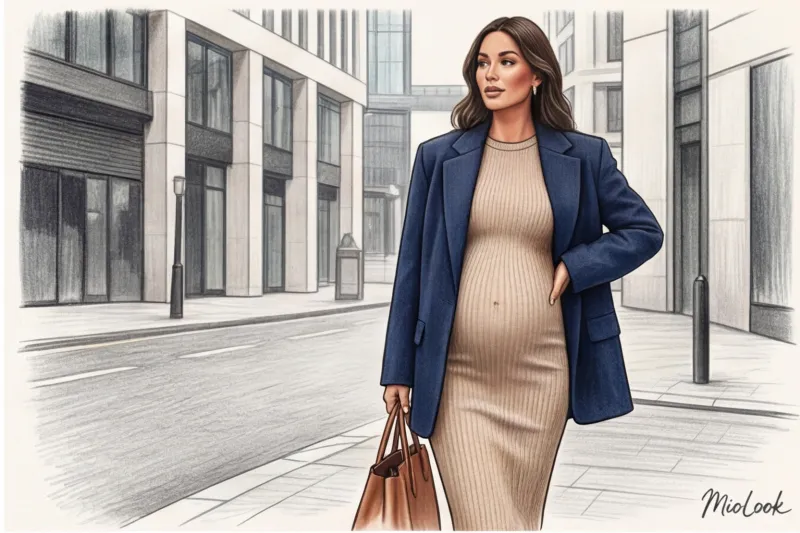
- Ribbed Knit: Dresses and skirts made of dense "noodle" knit. The secret is in the fabric's structure: look for viscose with at least 5% elastane. This knit stretches in width, hugging the stomach, but instantly returns to its shape after washing, without shrinking at the knees and buttocks.
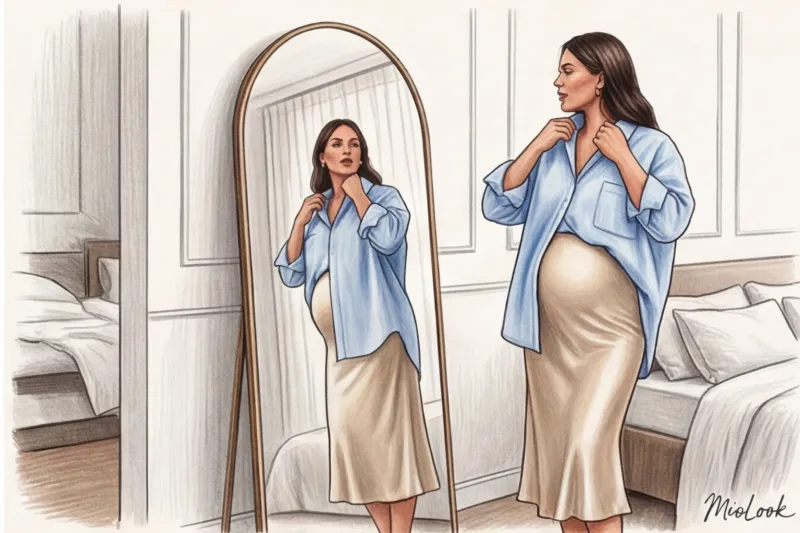
- Men's shirts and straight jackets: We use them exclusively as an unbuttoned top layer. They create two strong vertical lines on the sides of the figure, which phenomenally "gather" the silhouette, making it more compact.
- Bias cut and empire style: Slip dresses and silk skirts cut on the bias (at a 45-degree angle to the grain) have a remarkable property: they smoothly follow any curves of the body without creating any tension.
Fair Limit: The bias-cut advice does NOT work for dense, non-stretchy fabrics like stiff linen or heavy cotton. On a large belly, they will simply stick out and ride up in the front.
Secret Styling Tricks: How to Transform Old Clothes into New Shapes
In my experience, 8 out of 10 clients can wear their favorite pre-pregnancy jeans and trousers up to 5-6 months (and sometimes longer) if they know a couple of professional tricks.
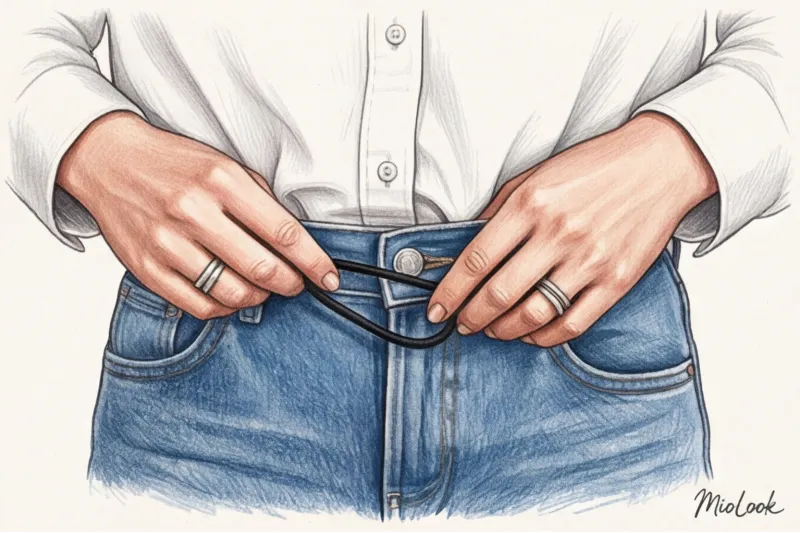
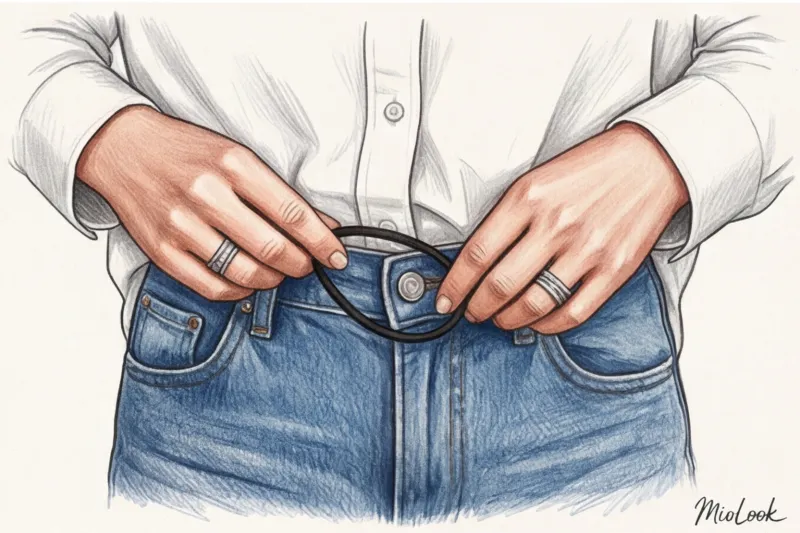
My favorite life hack is a trick with a rubber band or a hair elastic Thread a strong hair elastic through the loop of your jeans, then loop both loops over the metal button. This will give you an extra 3-5 centimeters of slack in your waistband. To hide the open zipper, layer it: a long basic t-shirt, a long untucked shirt, or a peplum top.
Another architectural technique is playing with contrasting lengths. If you have a larger belly, try a cropped top (ending just above the belly, emphasizing the narrowest point under the bust) paired with a long, below-the-knee, unbuttoned cardigan. This balanced proportions look incredibly stylish and shifts the focus from volume to geometric lines.
The Magic of Color: How a Palette Saves Proportions
Regular maternity clothes often end up in all-black. Women instinctively embrace dark clothes, hoping they'll make them look slimmer. As a certified colorist, I'm committed to busting this myth. All-black on a big, round belly isn't slimming—it creates the visual effect of a "heavy, monolithic mass."
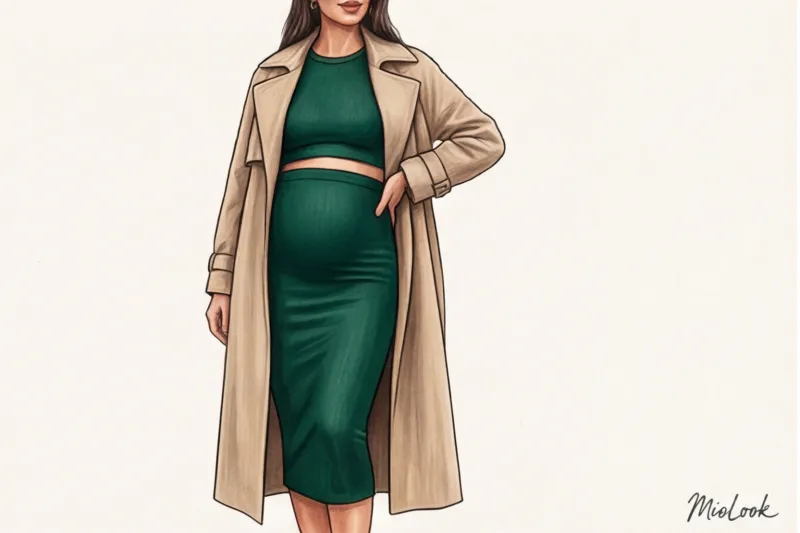
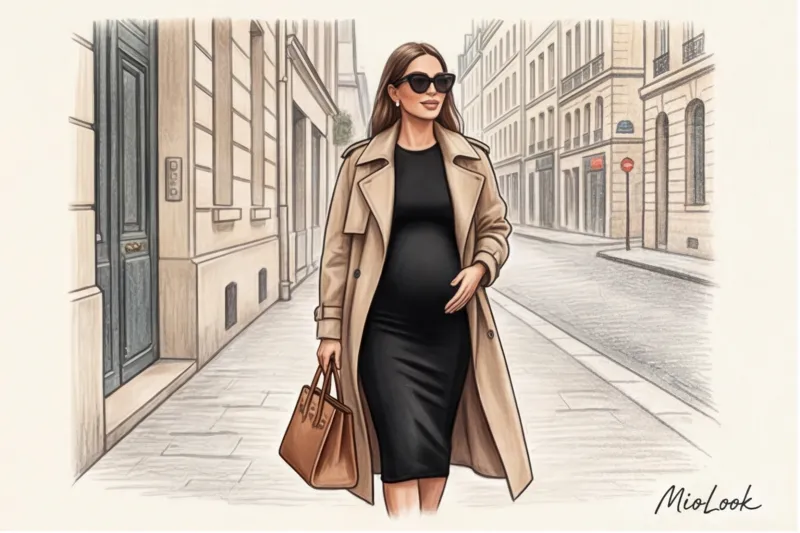
Use technology instead "color column" Wear a top and pants (or skirt) in the same light or rich shade—for example, emerald, burgundy, or warm beige. Layer a contrasting jacket or trench coat over the top, open. This technique works like an optical illusion: the eye only notices the narrow inner band of color, ignoring the actual volume on the sides.
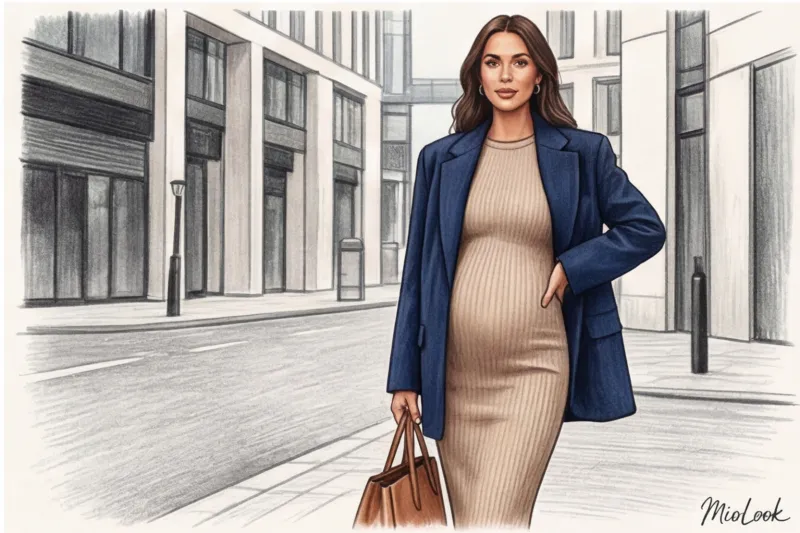
Another important detail that few people talk about: During pregnancy, hormonal changes often lead to changes in skin tone (redness, pigmentation, the notorious "pregnancy mask"). The shade that looked great a year ago suddenly starts to make your face look tired. Therefore, a facelift is essential. Reach for deep, complex shades (navy, chocolate, marsala) and actively use bright, pure colors in accessories—shoes or bags—to draw attention away from your face and belly.
Access to MioLook for €0.99 — one-time payment
A smart AI stylist will select the perfect look.
Get access — €0.99 onceChecklist: 5 things worth buying in regular mass-market stores
If after a closet overhaul you're still missing some basic items, head to regular stores (Zara, Uniqlo, COS, H&M Premium). Here's my personal shopping list of items that will be worth every penny:
- Seamless microfiber tops and leggings. Look for the Seamless line. They stretch in all directions, have no hard seams that will dig into your skin, and make the perfect base layer.
- Midi-length shirt dress with a loose fit. Ideally made from Tencel or heavy viscose, wear it as a dress (with a strap under the bust) or as a lightweight summer cape over a top and shorts.
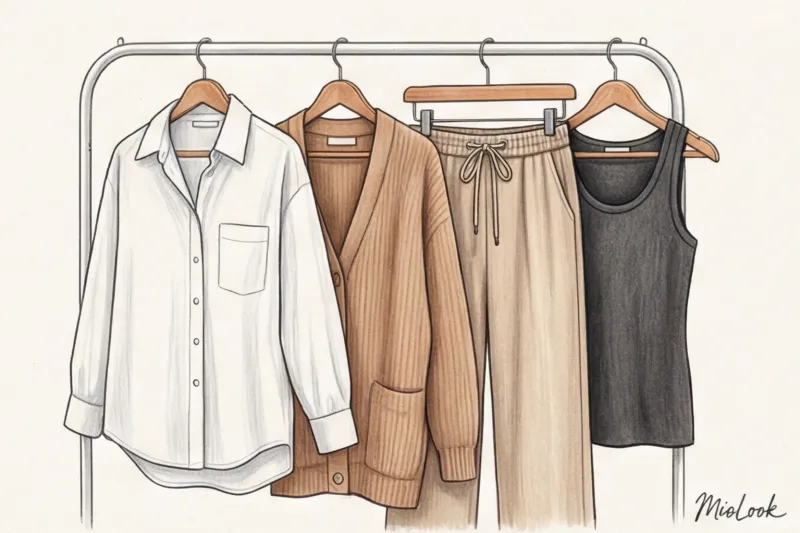
- Knitted suit with wide trousers and drawstring. A soft tie allows you to adjust the fit: first at the waist, then under the belly.
- A voluminous sweater with side slits. Slits are the key word. They relieve the tension on the fabric around your stomach, preventing the sweater from riding up unattractively in the front.
- Elongated white shirt of men's cut. It must be made of thick poplin (not translucent). It's an absolute canvas for dozens of looks.
Action plan: assemble a capsule from what we have
So, let's move from theory to practice. Set aside a couple of hours on the weekend and take three simple steps to make your closet work for you in the new reality.
Step 1: Filtering. Ruthlessly put away (either on top shelves or in boxes) all items with stiff, non-elastic waistbands, fitted shirts, bodysuits, and sheath dresses made of suiting fabric. They will only frustrate you in the mornings.
Step 2: Resource grouping. Designate a separate area (a rail or a couple of shelves) for knitwear, stretch fabrics, flowy dresses, and oversized straight-leg pieces. This will be your new base.
Step 3: Image formulas. Create 5-7 basic formulas using the third layer rule (top + comfortable bottoms + unbuttoned top). To avoid having to keep these formulas in your head, take a photo of them and upload them to MioLook - this will save you a lot of time in the morning.
The main takeaway I want you to take from this article is that your personal style doesn't go away during maternity leave. It's just the way you style your clothes. Invest in quality, use layering tricks, choose deep colors for your portrait area, and the pregnancy period will be a great opportunity to fall in love with your wardrobe all over again.