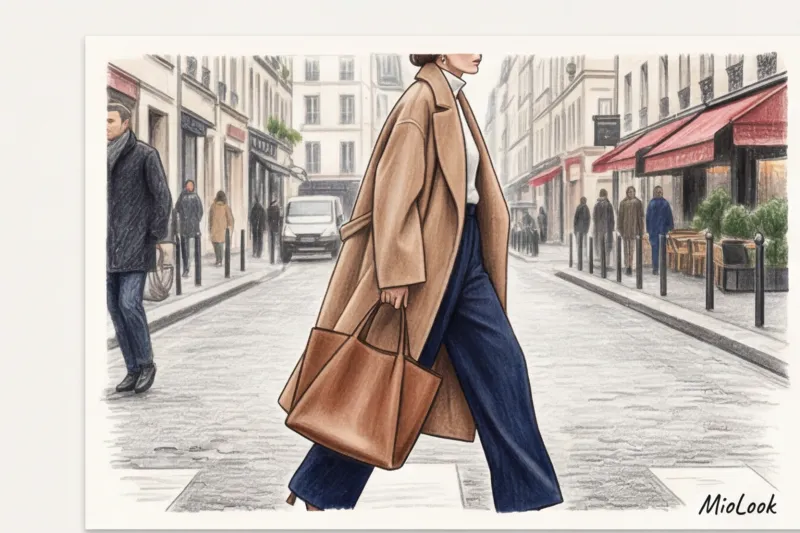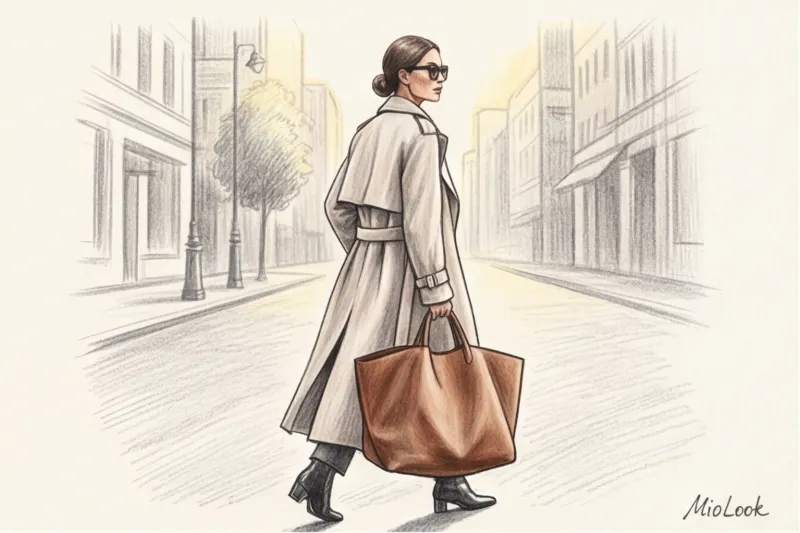
Recently, at a board meeting of a major financial corporation, I witnessed a classic, yet no less offensive, scene. A female executive was brilliantly presenting an anti-crisis strategy. She was wearing an impeccably tailored wool suit, her hair perfectly styled, and her posture confident. But the magic was shattered the moment she placed a shapeless polyurethane bag with cracked handles and a suspiciously shiny "gold" zipper on the conference table. Her entire image of authority instantly paled in comparison to this single detail.
Let's be honest: your status isn't determined by the tag on your jacket, but by the quality of the leather on your bag and the sound of your heels. We've already discussed how to build this base in more detail in our full article. A guide to status accessories for women Today I want to examine the most complex and most attractive aesthetics of our time. The right ones accessories in the style of quiet luxury It's not just the absence of logos. It's the complex architecture of something that speaks for itself before you even utter a word.
The Anatomy of Status: What Quiet Luxury Accessories Really Mean
In cognitive psychology, there's a concept called the "framing effect." It's simple: the frame in which a painting is placed changes the perception of the painting itself. In the context of an executive wardrobe, the clothes are the canvas, and the shoes, bag, and watch are the frame. Expensive, structured accessories can elevate a basic suit from mid-range to premium status. But a cheap bag will instantly devalue even a Loro Piana cashmere coat.
Why does it work this way? A 2006 Princeton University study by Alexander Todorov proved that the human brain needs only 100 milliseconds to form a first impression of a stranger based on visual cues. We are evolutionarily programmed to instantly read markers of status and security. A person's eye notices the refined matte shine of brass hardware and the density of vegetable-tanned leather much faster than it perceives the intricate cut of your jacket.
The main myth I combat daily is that many people believe that a "basic" black bag from a mass-market store with no identifying marks is quiet luxury. No. The lack of a logo can't hide crooked seams, the loose texture of faux leather, or lightweight hardware that will peel within a month. True quiet luxury is tactile and structural superiority.
Access to MioLook for €0.99 — one-time payment
A smart AI stylist will select the perfect look based on your wardrobe and suggest which accessories to add.
Get access — €0.99 onceInvestment Portfolio: 3 Essential Quiet Luxury Accessories for the Executive
Over 12 years of practice, I have come up with a sad statistic: 8 out of 10 new clients who come to me for image of an expert , make the same mistake. They're willing to spend huge sums on dresses and suits, but skimp on shoes and bags. This is a fundamentally flawed approach.
Your bag, shoes, and watch form the "supporting structure" of your business look. The golden rule of an investment wardrobe is that these three items should account for up to 40% of your entire closet's value. To justify this spending, we use the Cost-Per-Wear formula.
A $2,000 bag you wear 300 days a year for five years costs you $1.30 per outing. A $200 bag whose handle cracks and zipper sticks after 30 days costs you $6.60 per outing—and yet, every day it wears you down, it's working against your personal brand.
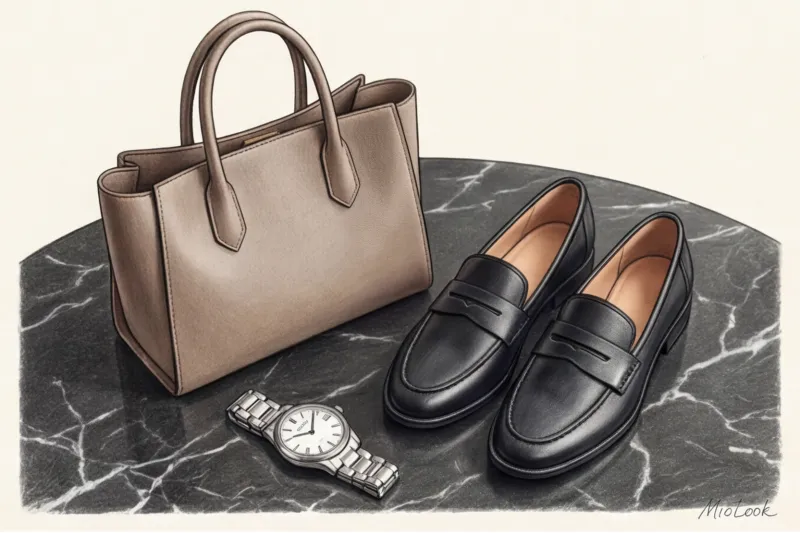
Structural Bag: The Architecture of Your Authority
Forget about soft shoppers and shapeless totes if you're heading to important meetings. A soft shape conveys a relaxed, creative, and disorganized attitude. An executive needs a structured bag with a rigid frame that sits upright on the table, not a shapeless puddle.
What do I look for when choosing a bag for a client?
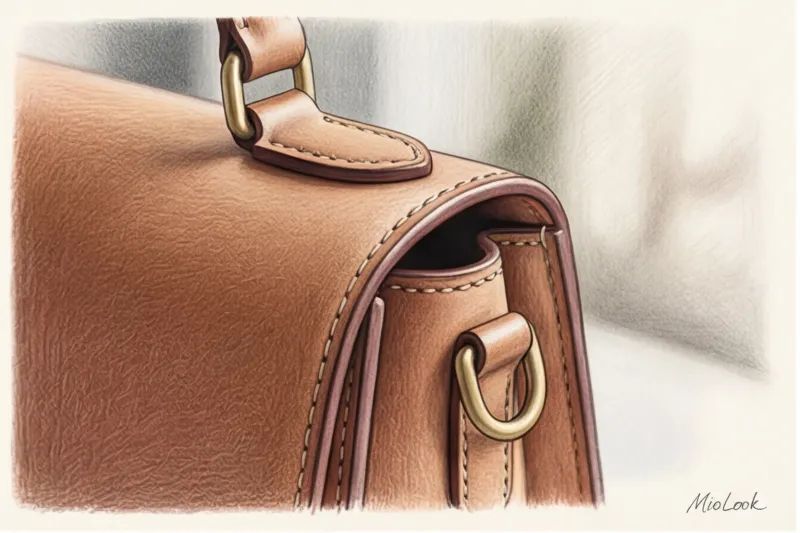
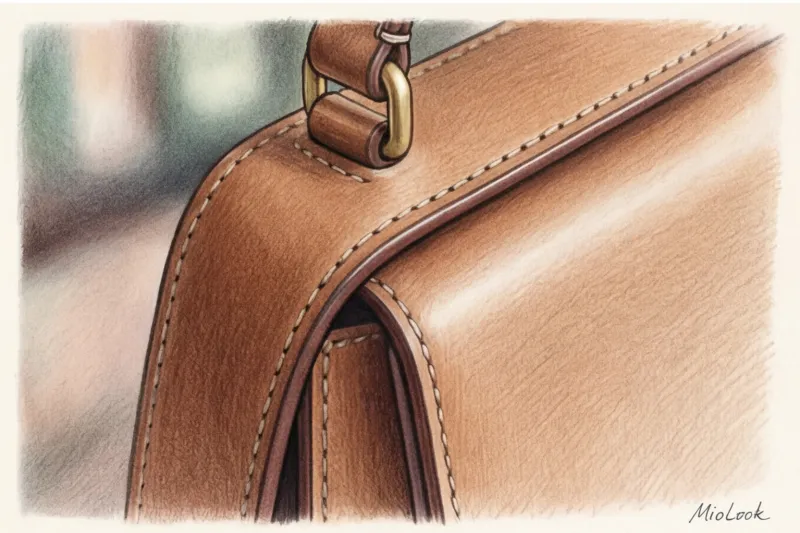
- Edge paint: The edges must be hand-sealed in several layers, forming a smooth, slightly convex roller without cracks.
- Fittings: Matte brass or palladium. No dazzling "samovar" gold.
- Tanning type: Vegetable-tanned leather develops a fine patina over time, while cheaper chrome-tanned leather simply becomes covered in unsightly scratches.
Shoes with the perfect last: a guide for decision making
Oxfords, minimalist loafers, and classic pumps with 5-7 cm heels are the basics. A worn-out toe or a worn-out heel instantly ruins the expert look, even if you're wearing a tailored suit.
Expensive shoes are always identified by their leather soles. Yes, in our climate, they require a light wear and tear, but the very presence of a leather sole means the manufacturer used traditional lasting techniques. These shoes "remember" the anatomy of your foot.
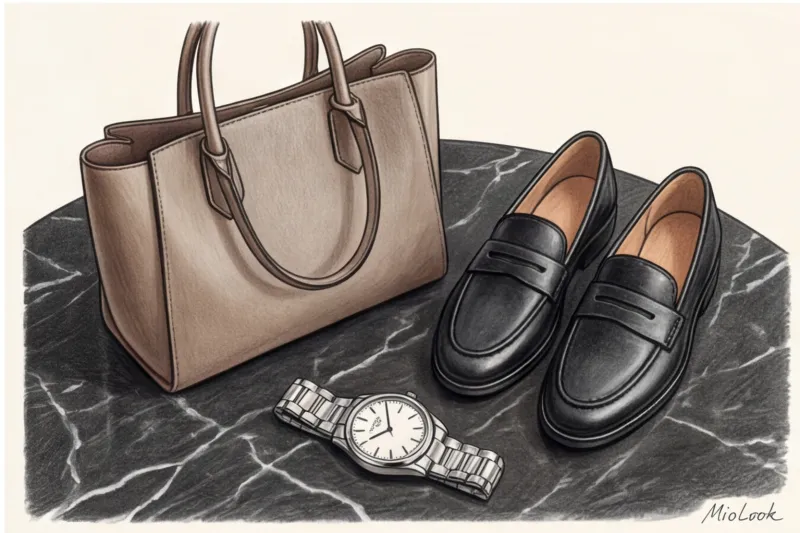
Watches as a time marker: Swiss precision without the glitz
Smartwatches are a great gadget for the gym and activity tracking. But during high-level negotiations, a glowing screen with instant messaging notifications looks out of place. Classic mechanics are the signal: "I manage my time, not algorithms manage me."
Choose a steel or bimetallic (steel and gold) case, a simple dial, and a leather strap or a cast bracelet. Avoid diamond-studded bezels—they're considered a faux pas in a daytime business attire. The dial size should be proportionate to your wrist: massive men's chronographs on a slender woman's wrist are long out of fashion.
Your perfect look starts here
Join thousands of users who look flawless every day with the smart wardrobe planner MioLook.
Get access — €0.99 onceAn Expert's Jewelry Wardrobe: Between Minimalism and Status
Working with decorations for public speaking This requires special delicacy. The "three-point" rule applies here: no more than three accents should be present simultaneously in the portrait area and on the hands. For example: earrings, a watch, and one ring. Or a necklace, studs, and a bracelet.
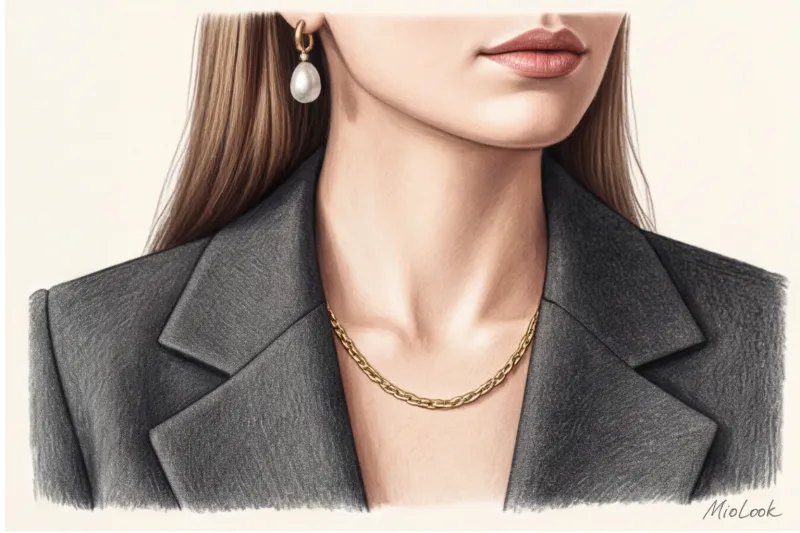
One of the most subtle markers of status in jewelry is the weight of the piece. Hollow gold chains from mass-market stores not only deform easily, but also feel completely different on the body than solid metal. Heavy, dense gold has a different tension and a refined, muted shine.
Acoustic comfort is a whole other story. I once prepared a brilliant financial analyst for a presentation at a major forum. She wore a set of several rigid bracelets. During her speech, the bracelets constantly jingled against each other and the table, the sound picking up on the microphone and terribly irritating the audience, distracting them from the important figures. Jingling jewelry and long chandelier earrings are an absolute no-no for a speaker.
Micro-markers: glasses, belts and silk that give away class
The devil is in the micro-markers. They are the ones that are unmistakably read at a subconscious level by those in your circle.
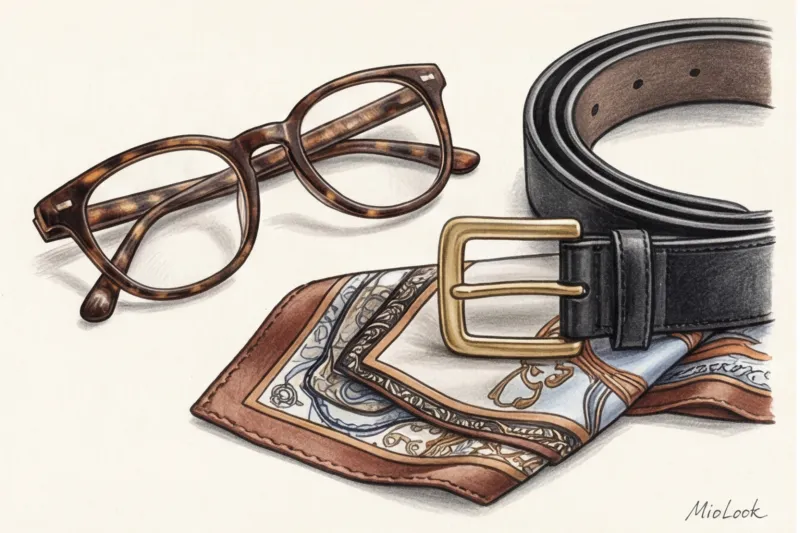
- Eyeglass frames: Forget about huge gold logos on the temples. Choose thick cellulose acetate, natural horn frames, or classic tortoiseshell patterns. Hand-polished acetate has a deep, multidimensional color that can't be imitated in cheap plastic.
- Belts: A matte rectangular or D-shaped buckle. No flashy H, GG, or LV. A width of 2.5–3 cm is ideal for classic trousers. Pay attention to the stitching—it should be close and perfectly even.
- Silk scarves: The main hallmark of a luxury bob is the hand-finished edge (the so-called "hand-rolled edge"). Craftswomen at Hermès and other historic houses fold the silk edge to the right side and stitch it by hand with a blind stitch. This is painstaking work that cannot be imitated on a factory overlocker.
The biggest mistake newbies make: why mass-market products don't work without logos
"I'll just buy a simple black bag from Zara or H&M, it looks minimalist and doesn't have logos" is the most dangerous misconception on the path to quiet luxury style.
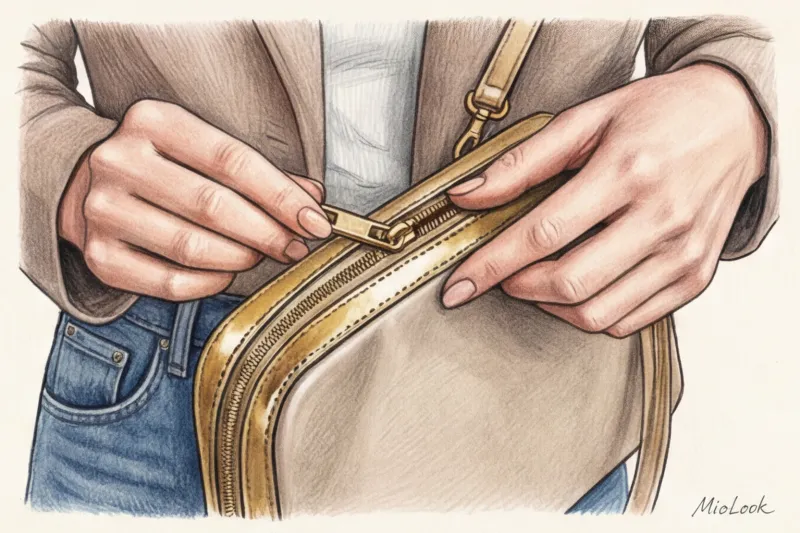
The thing is, mass-market fashion doesn't skimp on design (they perfectly copy designs from catwalk brands), but on materials and assembly technologies. What makes such a thing stand out?
- Too yellow gold. Cheap galvanic coating of fittings always takes on an unnatural lemon or copper hue.
- Loss of shape. After a month of use, a polyurethane bag will start to bubble in the cold, and the cardboard seal inside will break, creating unsightly creases.
- Jamming zippers. Luxury brands use molded zippers (such as Riri or YKK Excella) with hand-polished teeth. They glide like butter. Cheap zippers will scratch your hands and snag.
One of my clients decided to save money on shoes before an important conference. They looked like the perfect pumps. But because of the cheap, non-supportive last, she couldn't stand up straight by midday. Instead of exuding confidence during networking, she was looking around for a chair. The true cost of skimping on status accessories is your own insecurity.
Ready to get started?
Conduct a wardrobe audit and create a shopping plan using artificial intelligence. Try the free plan—no commitments.
Get access — €0.99 onceA Stylist's Checklist: How to Choose Quiet Luxury Accessories for the Decade
Before investing a significant amount in an accessory, I always have my clients do a series of tests in the boutique. Keep this process in mind for your next shopping trip.
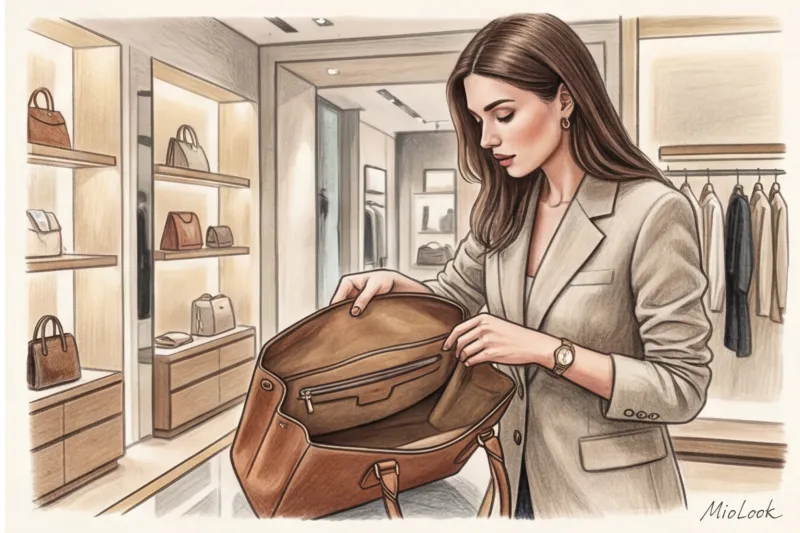
- Checking the seams: Look at the stitch pitch. Premium stitches have slightly angled stitches (French seams), and the thread is thick and waxed. There shouldn't be any loose threads.
- Hardware test: Weigh the bag in your hands. Good solid brass hardware is heavy. Click the lock—the sound should be dull and solid, like the closing door of an expensive car.
- Inspection of the lining: Take a look inside. Cheap brands use rustling polyester. Luxury brands always use genuine suede, thick cotton twill, or fine leather in a contrasting shade for the lining.
- Recognition test: If a piece screams brand recognition even without a logo (due to a recognizable pattern, like the Bottega Veneta Intrecciato weave that everyone is copying right now), it's no longer quiet luxury, but a loud trend. Opt for less overtly hyped styles.
To be fair, I should point out that this strict, conservative approach doesn't work for everyone. If you work in a creative industry (art director, designer, PR), excessive "quietness" and correctness can backfire, making your image bland. In this field, bold accents, ironic shapes, and avant-garde shoes are acceptable and welcome. But for traditional business, law, finance, and consulting, these rules are unwavering.
Summary: How the Right Accessories Can Enhance Your Personal Brand
Returning to the framing effect we started with: your accessories aren't just pretty things. They're an investment in your professional positioning.
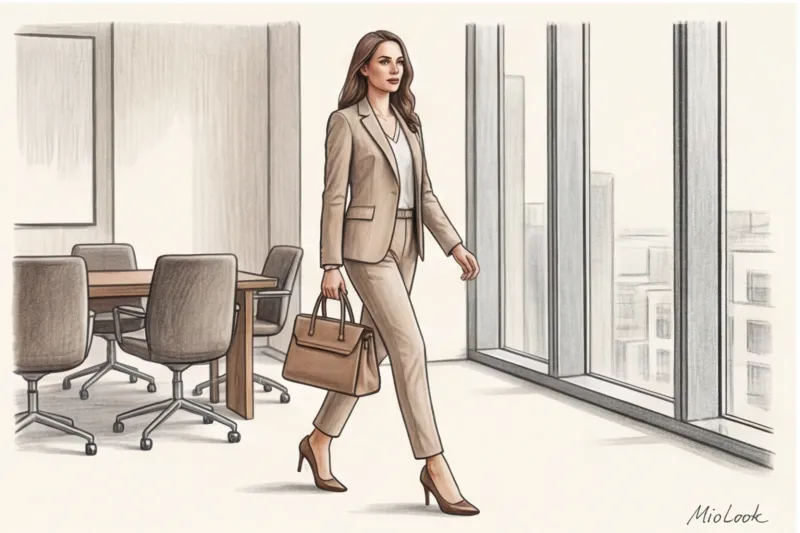
I see it at every fitting: when a woman puts on shoes with a perfect last and picks up a flawless, heavy, structured bag, her body language changes. Her back straightens, her movements become smoother, and her fidgeting disappears. Her subconscious senses the quality of the items, and this confidence is conveyed to others.
Take stock of your accessories this weekend. Remove all worn-out, shapeless, and downright cheap items. Keep only what enhances your status. And to intelligently integrate new investment purchases into your existing wardrobe, use the "smart wardrobe" feature in MioLook The app will clearly show you what you can wear with your new bag and calculate its potential retail price.
Your authority is too valuable to be trusted to cheap fittings.